Lol Tolhurst
Role
Genre
Credits
Role
Genre
Credits
Lol Tolhurst's Gear


"I was really enraptured when I bought one of the first Yamaha CX5M computers. The idea of being able to program eight different tracks of music into it, and being taught to read music as I was writing into it, was very emotional -- especially for everybody else who lived around me at the time. I didn't have a monitor, so I had to use the only available television."
Find it on:


"A lot of things on the album are pretend versions of particular genres of music. We've got a pretend funk track, "Hot Hot Hot!!!," which sounds sort of like an old Chic track. On that, I'm using the Emulator for cello and some human voices. We've got pretend Motown too, "Why Can't I Be You?," which was a combination of a patch on the Roland JX-8P called "Stab Brass," MIDIed to a trumpet sample on the Mirage, together with and Emulator brass sound. "
Find it on:

"I bought the Boss Dr. Rhythm [DR-110 rhythm machine], and I was fascinated by the fact that you could actually play all the ideas you had in your head by just pushing some buttons."
Find it on:


"Basically, the synth is the only instrument that offers such a wide variety of sounds. It also lets you play instruments you could never play unless you spent ten years practicing. On the new album, for example, there are some [Ensoniq] Mirage sounds on "If Only Tonight We Could Sleep." With all the will in the world, you'd have to be very, very good to be able to play that on a sitar. But if you sit with the keyboards a minute, you can play it. Another example is the koto on "Kyoto Song" [from The Head On The Door], which was a [Yamaha] DX7 preset."
Find it on:

"Where we used keyboards as sampling devices, we'd sample a bit of guitar, say, and turn it 'round the other way, or sample a bit of noise and do something with it on the [E-mu] Emulator II, then just play it in a rhythmic fashion in the song."
Find it on:

"I'm most comfortable on the DX7 because it's got the easiest keyboard to play. It's definitely not the easiest to program, but in a live situation as well as in the studio, that's the one I use, MIDIing other things to it."
Find it on:

In this interview Lol states ". We also used an ancient ARP Solina [String Ensemble]. It only has three sounds on it, but you can't recreate those sounds on anything else...." and "We've had that Solina for about eight years, and we've never found anything that could supersede" it.http://www.musicfanclubs.org/cure/press/I15.html
Find it on:


In the interview "A Dose Of Keyboard Fever," Lol Tolhurst mentions, "We used to have an old Roland string machine as well, an SH-09 or something like that." Although he refers to the RS-09, which The Cure frequently used during the Pornography era, this statement highlights a common mix-up due to the similar appearance of the SH-09.
Find it on:

In this interview Lol states, " I found a woman who taught me for about four or five months; we used a [Sequential] Prophet-5"
Find it on:

"I'm using a rack system, composed of two Oberheim DPX-1 sample players, which play Mirage, Prophet, and Emulator disks. I've also got a rack-mounted DX7, a Roland digital piano module, a Roland Super Jupiter module, and a Roland DP-5 multi-effects unit. It's all controlled by a Simmons computer mixer, which has about 64 programs in it. Through that mixer I change all the MIDI channels on all the modules. I control the mixer through a Roland MIDI MKB-200 keyboard controller. You can assign split points to the keyboard, so I do that for a lot of songs where there is, say, a piano, a koto, then a trumpet sound. Rather than take an Emulator and things like that on the road, I wanted a very easy live setup, so that I could do most of the work beforehand. That's another reason for having those two Oberheim sample players. An Emulator disk takes a long time to load, and you can't say, "Sorry, Madison Square Garden, I've gotta load this disk." We've worked out a system where we can keep switching back and forth [between the DPX-1s]. The only other alternative would be to use something like a hard disk, which I don't really want to do because the hard disk has to be installed in the Emulator and is notoriously unreliable on the road. The good thing about having a rack system is that it can be well protected. You can throw it off the back of the truck and nothing will happen to it."
Find it on:

"I'm using a rack system, composed of two Oberheim DPX-1 sample players, which play Mirage, Prophet, and Emulator disks. I've also got a rack-mounted DX7, a Roland digital piano module, a Roland Super Jupiter module, and a Roland DP-5 multi-effects unit. It's all controlled by a Simmons computer mixer, which has about 64 programs in it. Through that mixer I change all the MIDI channels on all the modules. I control the mixer through a Roland MIDI MKB-200 keyboard controller. You can assign split points to the keyboard, so I do that for a lot of songs where there is, say, a piano, a koto, then a trumpet sound. Rather than take an Emulator and things like that on the road, I wanted a very easy live setup, so that I could do most of the work beforehand. That's another reason for having those two Oberheim sample players. An Emulator disk takes a long time to load, and you can't say, "Sorry, Madison Square Garden, I've gotta load this disk." We've worked out a system where we can keep switching back and forth [between the DPX-1s]. The only other alternative would be to use something like a hard disk, which I don't really want to do because the hard disk has to be installed in the Emulator and is notoriously unreliable on the road. The good thing about having a rack system is that it can be well protected. You can throw it off the back of the truck and nothing will happen to it."
Find it on:

At the 0:25 of this video and throughout the Roland JX-3P is visible
Find it on:

"In this post on Twitter, Lol Tolhurst mentions that he played the keyboard for the first time on the track "One Hundred Years," and the Boss DR-55 was used for the drum part.
Find it on:
This is a community-built gear list for Lol Tolhurst.
- Find relevant music gear like Drum Sets, Cymbals, Snare Drums, Drumsticks, Pianos, Keyboards and Synthesizers, Microphones, and other instruments and add it to Lol Tolhurst.
- The best places to look for gear usage are typically on the artist's social media, YouTube, live performance images, and interviews.
- To receive email updates when Lol Tolhurst is seen with new gear, follow the artist.
Discography
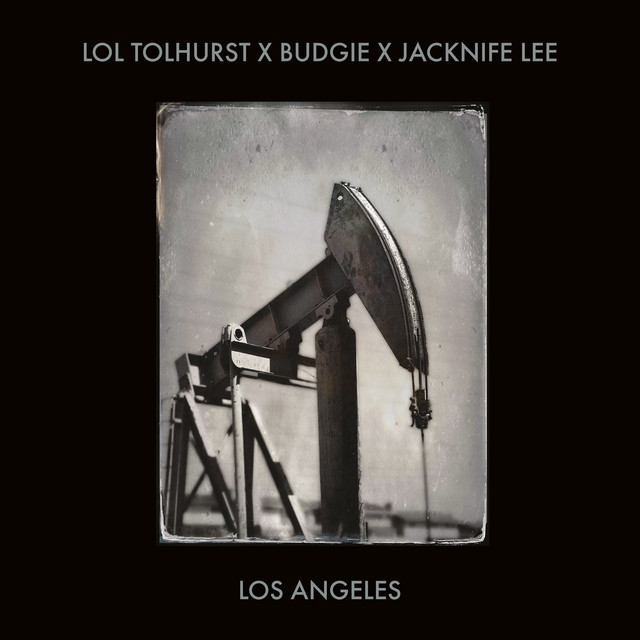
Album Credits
-
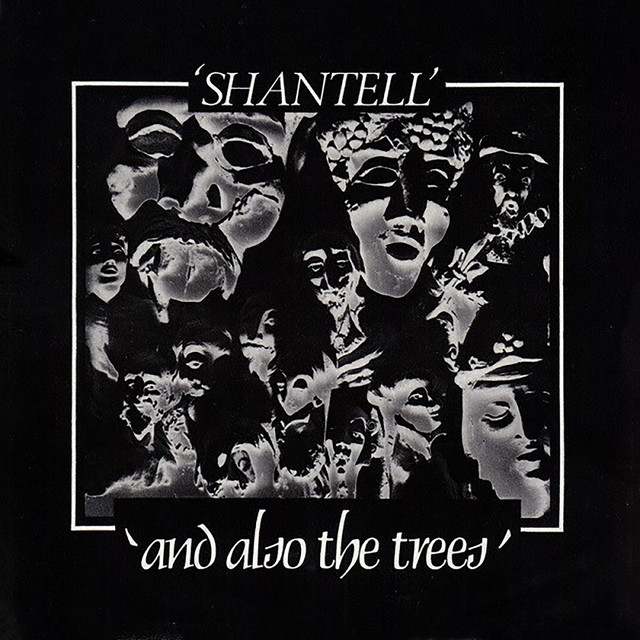
And Also the Trees · 1983
Producer




.webp)


.webp)