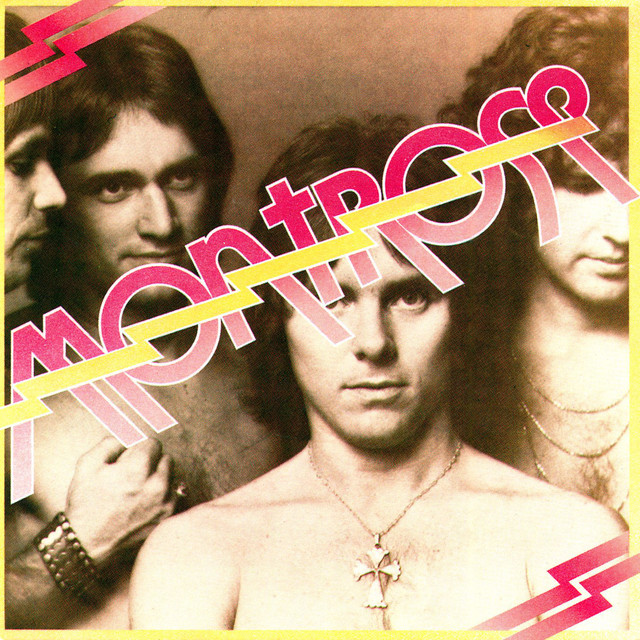
Montrose – Montrose
The music gear and equipment used by the artists, producers, engineers, and more involved in the making of the 1973 album Montrose.
Music from Montrose
Artists on Montrose

Gear Used On Montrose
Explore the instruments, equipment, software, and production tools used in the making of Montrose – Montrose (1973). Click more on each item to see exactly how it was used.

Ronnie Montrose
Roles:
Amplifiers used by Ronnie Montrose on Montrose

Fender 'Narrow Panel Tweed' Bandmaster 5E7 (1955-1960)
Avg price: $10,299.95
$90.00 Garage sale find 3x10 Bandmaster for the first "MONTROSE" album. Ran "Flat out" (full Volume) with Les Paul straight in.


Avg price: $1,444.99
Montrose owned a 1958 tweed Champ, which he claimed was rated at fifteen watts, during the time of the first two Montrose albums. It is attested by Mark Cameron (formerly of Bogner) and Gary “Mick” Lazer, the latter having traded Montrose himself for the amp shortly after Paper Money was recorded.
Metropoulos Amplification Forum, August 21, 2008 reply by MarkCameron on “Montrose” by Mr. Beasty (February 25, 2008)
Ronnie came into Bogner sometimes..I asked him what he used on this....and Its a 3x10 Bandmaster....the thing is ..........he found it at a garage sale the day before he whent in to record :lol: ..bought it for almost nothing and used it as is.. he said. Also I think a regular Champ on 10 for some stuff..Ted Nugent did this too
WoodyTone, March 8, 2012 comment by Mick Lazer on “Ronnie Montrose’s ‘Rock Candy’ Tone…” (February 17, 2010)
The Fender combo amp, in the video recorded at the record plant for the paper money session in Sausalito; was a Fender Princeton, which I traded Ronnie some Marshall equipment for, right after those sessions. It was modified by Ronnie himself, and had a 12″ JBL D120 and a Bassman transformer, so it was pretty loud. It sounded great! this amplifier was stolen from me in 1980 and yes, I still want it back after all these years. It is stenciled #2 Montose on the back of the amplifier. I continue to offer a $500 dollar reward for information that leads to its return.
Gary “Mick” Lazer
WoodyTone, March 20, 2012 comment by Mick Lazer on “Ronnie Montrose’s ‘Rock Candy’ Tone…” (February 17, 2010)
Ronnie owned 2 small amps at the time that he recorded the first album. He owned the modified blackface Princeton that I mentioned on the earlier post, and also a mint 1958 tweed Champ with an 8″ JBL speaker. The tweed Champ was part of the trade for the Marshall equipment. I still own the 8″ JBL, but stupidly traded off the Champ for some recording equipment and a new Rockman amplifier. If he found the bandmaster, it was after our trade. He may have used either small amp or both for recording. The Champ was the small amplifier that Sammy Hagar mentioned plugging into in his book while auditioning in Ronnie’s small Sausalito living room. The Princeton would have been way too loud to sing over. Ronnie claimed that the Champ was now putting out 15 watts, so he may have modified it in some way. We didn’t get into that, at the time of the trade. I had no reason to doubt that. It was plenty loud.

Effects Pedals used by Ronnie Montrose on Montrose

Avg price: $92.69
Used for "Bad Motor Scooter", "Make It Last" and "Rock Candy", according to the following sources.
The stage is free of pedals because, the artist maintains, they always "screw up," but in the studio he does use a Big Muff fuzztone and an Ampeg Scrambler (the former built into a heavy-duty box). Ronnie's chosen amp for the past three years has been an old single cabinet tweed Fender Bandmaster with three 10" speakers. He has used the Marshalls on a few tracks, but their volume makes them difficult to work with when other band members are recording in the same room.
Circus, July 31, 1982, "Ronnie Montrose's guide to guitar accesories"
Page Influenced Montrose
"I saw him use a wah-wah," he recalls. "But my first box was an Ampeg Scrambler. It was in the days when sustain, compression, and all the things we now take for granted were in the experimental stages. This box just added a lot of noise and messed up the harmonics. I later used it with a Big Muff distortion box. I put the Scrambler in front of the Big Muff and turned it wide open. I adjusted the Big Muff and got a second note a perfect octave higher. You can hear this on 'Make It Last' from the first Montrose album."
Before I forget about it, I want to inquire about a particular sound on the first Montrose-album. I’ve seen Hagar doing the “Bad Motor Scooter” intro in concert on a lap steel. Is that how you did it on the first album?
Well, one thing you ought to know is that the song almost didn’t make it onto the album! (chuckles) We thought it was a “loser” track; just a little ditty that Sammy had written, but it was missing something. Then one day I was sitting with my red, double-cutaway Les Paul Junior, and a Electro-Harmonix Big Muff fuzztone, and the one amp I wish I’d never got rid of, a three-ten tweed Fender Bandmaster. I’d gotten it for ninety dollars, and when I bought it, it was covered with woodtone Contact adhesive paper! The Contact paper peeled right off; it didn’t leave any residue and the tweed looked brand new. I used that amp so much I blew it up several times before I finally got rid of it.
I tuned the Junior down to Open D, and started dinking around with a slide; I was probably doing Johnny Winter riffs. I happened to hit something that sounded like a motorcycle, and everyone yelled “STOP!” all at the same time. (laughs) We all knew where that riff belonged, so we changed reels and did it as the intro to “Bad Motor Scooter”.
Vintage Guitar, February 14, 2002 (unabridged)
The first Montrose album, Montrose, set new standards for sonic quality, and the duo of producer Ted Templeman and engineer Don Landee of course went on work with Van Halen. You’d worked with Ted on Van Morrison recordings, but really, Montrose broke the ground and poured the foundation upon which modern heavy metal is built – what can you tell me about the sound and recording of that album? Did you have a distinct impression of how you wanted that project to sound?
We had told Ted that we liked the Zeppelin thing, which was why we did the song “Rock Candy” at Sunset Sound, to get that big room sound. But everything was just sort of loose and free. As I look back at it, an old band mate of mine, Mitchell Froom, who is a pretty successful producer, I mentioned to him, “That first Montrose album sounds so basic and simple and raw. Sometimes I actually listen to a couple of sings and I sort of cringe, because it’s just so junior as far as playing.” And Mitchell said, “But the point is, all four of you were playing up to 100% of your ability. And when you do that, it can’t be denied.” And that’s the truth, and it was a very enlightening thing to hear from someone. When you’re playing up to your ability, and you only know three chords, and you’re giving it your all – that’s it! So we just had a good time playing.
The guitar tones of that recording are stunning – rich in tone, but very much in-your-face…
I was the only one who would hang around for mixes, and Ted and I would experiment and mess around with sounds. Ted and Don, both were my buddies in the studio. We sat around and joked, but I was always hanging over the console watching. Don and I would come up with these ideas, like the whole beginning of “Space Station #5.” That was me experimenting with my voice through a Leslie and a fuzztone. In the background of the chorus of “Rock Candy” Ted’s playing a Hammond B3, but we didn’t just want a B3. So I took the back off the B3, took the preamp output and put it into my Big Muff fuzz tone, put it into the Leslie and just fuzzed it beyond belief. So sonically, we were always into trying. As far as their ears were concerned, Ted was really on top of it, and Don was as well. I called Don “The King of the Frequency Layers.” He’d say, “We need just a little more 4k there. What do we have around the studio that’s in the 4k range?” I was very impressed with that.
Guitar Player, "GP CLASSIC: Ronnie Montrose Interview" (at 3:43)
I did use a Big Muff fuzztone when I recorded "Bad Motor Scooter". That was once again through the same Bandmaster, but to get that super fuzztone, you know, I was just screwin' around one day, we actually, we weren't sure this song was gonna be on the record and, I was just sorta screwin' around with open D tuning slide and hit the—I don't have it, you know, it's not in tune now, but it's like [plays slide phrase] and, Ted Templeman and Donn Landee said "Stop! Stop! Stop!" They ran and got the tape, they put it on, 'cause it sounded, it just sounded so perfect for the song, but we weren't really intending it to be that way, it was just, it just happened, so... But it was a Big Muff fuzztone.
The Les Paul Forum, "What guitar did Montrose use?", comment #47 by Pope Bubba, July 5, 2013
A couple'a years ago, Greg Martin and I sat on their tour bus with Ronnie after one of their shows, and he told us all about the Fender 3x10 Bandmaster he used on that first Montrose album. he made the comment that he really wished he had never gotten rid of it. he also showed us the way Jimmy Page showed him to play the into to Zeps "Whole Lotta Love". he was a REALLY nice guy.
I remember that like yesterday, Jimmy. Ronnie was one of the nicest humans ever, a big influence on me in the 70's.
As Jimmy said, Ronnie used an old tweed 3x10 Fender Bandmaster, that had been recovered, for the first Montrose album. Since his 1959 'burst was stolen at a Edgar Winter Group gig earlier, I'm almost thinking the first Montrose album was done with a newer Les Paul or another 50's 'burst? I always envisioned Ronnie having stacks of Marshall's in the studio for "Montrose," it was all done on that tweed Bandmaster! He also told me he used a Electro-Harmonix Big Muff on "Bad Motor Scooter" and a Ampeg Scrambler on "Make It Last." Ronnie said the trick to making the Scrambler work, was rolling the treble all the way back on pickups and turning the volume all the way up. I own an old Scrambler, this works!!! Other than that, Ronnie said it was straight into the amp. You can hear a Eventide H910 Harmonizer added in on the mix by producer Ted Templeman or engineers Don Landee and Stephen Jarvis as well, set on 1.01 or 0.99. That gave it that doubling slap sound on solos. Ever notice the similarities in guitar tones on the Doobie Brothers "China Grove" and "Montrose"? Both produced by Ted Templeton....
I really miss Ronnie, we got to be really good friends. We had many conversations about music, guitars, amps, influences, even jammed about 3 times. He wanted to produce a Rufus Huff CD, sadly we never got to do it. He's a BIG reason I play a Les Paul today, I know Jimmy feels the same way. His talent and spirit was undeniable. Anytime I need a good kick in the rear, I put on that first Montrose album!
Greg
I asked what Ronnie used on the first Montrose album and he stated a Les Paul (probably a '58), Big Muff (not sure which issue, probably recently bought for the lp I would think) and a Fender Bandmaster which he purchased just before the recording.
The "Triangle" Big Muff was phased out for the "Ram's Head" in 1973, the year that Montrose was recorded, ambiguating the version used. Judging by the 1969 release of the Ampeg Scrambler and Led Zeppelin's 1969 debut, however, Montrose must have been exploring fuzzes rather quickly. This suggests a "Triangle" Big Muff. Big Muff Pi scholar Kit Rae seems to have come to the same conclusion.
Ronnie Montrose of Montrose - A Les Paul, Tweed Fender Bandmaster, and a V1 Big Muff was used on their first Montrose album in 1973.


Avg price: $477.80
Used for "Make It Last". It is mentioned in the October 1976 issue of Guitar Player, the July 31, 1982 issue of Circus and a July 5, 2013 recollection by The Les Paul Forum member Pope Budda.
The stage is free of pedals because, the artist maintains, they always "screw up," but in the studio he does use a Big Muff fuzztone and an Ampeg Scrambler (the former built into a heavy-duty box). Ronnie's chosen amp for the past three years has been an old single cabinet tweed Fender Bandmaster with three 10" speakers. He has used the Marshalls on a few tracks, but their volume makes them difficult to work with when other band members are recording in the same room.
Circus, July 31, 1982
Page Influenced Montrose
"I saw him use a wah-wah," he recalls. "But my first box was an Ampeg Scrambler. It was in the days when sustain, compression, and all the things we now take for granted were in the experimental stages. This box just added a lot of noise and messed up the harmonics. I later used it with a Big Muff distortion box. I put the Scrambler in front of the Big Muff and turned it wide open. I adjusted the Big Muff and got a second note a perfect octave higher. You can hear this on 'Make It Last' from the first Montrose album."
The Les Paul Forum, "What guitar did Montrose use?", comment #47 by Pope Bubba, July 5, 2013
A couple'a years ago, Greg Martin and I sat on their tour bus with Ronnie after one of their shows, and he told us all about the Fender 3x10 Bandmaster he used on that first Montrose album. he made the comment that he really wished he had never gotten rid of it. he also showed us the way Jimmy Page showed him to play the into to Zeps "Whole Lotta Love". he was a REALLY nice guy.
I remember that like yesterday, Jimmy. Ronnie was one of the nicest humans ever, a big influence on me in the 70's.
As Jimmy said, Ronnie used an old tweed 3x10 Fender Bandmaster, that had been recovered, for the first Montrose album. Since his 1959 'burst was stolen at a Edgar Winter Group gig earlier, I'm almost thinking the first Montrose album was done with a newer Les Paul or another 50's 'burst? I always envisioned Ronnie having stacks of Marshall's in the studio for "Montrose," it was all done on that tweed Bandmaster! He also told me he used a Electro-Harmonix Big Muff on "Bad Motor Scooter" and a Ampeg Scrambler on "Make It Last." Ronnie said the trick to making the Scrambler work, was rolling the treble all the way back on pickups and turning the volume all the way up. I own an old Scrambler, this works!!! Other than that, Ronnie said it was straight into the amp. You can hear a Eventide H910 Harmonizer added in on the mix by producer Ted Templeman or engineers Don Landee and Stephen Jarvis as well, set on 1.01 or 0.99. That gave it that doubling slap sound on solos. Ever notice the similarities in guitar tones on the Doobie Brothers "China Grove" and "Montrose"? Both produced by Ted Templeton....
I really miss Ronnie, we got to be really good friends. We had many conversations about music, guitars, amps, influences, even jammed about 3 times. He wanted to produce a Rufus Huff CD, sadly we never got to do it. He's a BIG reason I play a Les Paul today, I know Jimmy feels the same way. His talent and spirit was undeniable. Anytime I need a good kick in the rear, I put on that first Montrose album!
Greg

Studio Equipment used by Ronnie Montrose on Montrose

Eventide Clock Works H910 Harmonizer
Avg price: $924.50
Used for doubling on Montrose, as stated by Montrose in a conversation recollected by The Les Paul Forum member Pope Budda in a July 5, 2013 post.
A couple'a years ago, Greg Martin and I sat on their tour bus with Ronnie after one of their shows, and he told us all about the Fender 3x10 Bandmaster he used on that first Montrose album. he made the comment that he really wished he had never gotten rid of it. he also showed us the way Jimmy Page showed him to play the into to Zeps "Whole Lotta Love". he was a REALLY nice guy.
I remember that like yesterday, Jimmy. Ronnie was one of the nicest humans ever, a big influence on me in the 70's.
As Jimmy said, Ronnie used an old tweed 3x10 Fender Bandmaster, that had been recovered, for the first Montrose album. Since his 1959 'burst was stolen at a Edgar Winter Group gig earlier, I'm almost thinking the first Montrose album was done with a newer Les Paul or another 50's 'burst? I always envisioned Ronnie having stacks of Marshall's in the studio for "Montrose," it was all done on that tweed Bandmaster! He also told me he used a Electro-Harmonix Big Muff on "Bad Motor Scooter" and a Ampeg Scrambler on "Make It Last." Ronnie said the trick to making the Scrambler work, was rolling the treble all the way back on pickups and turning the volume all the way up. I own an old Scrambler, this works!!! Other than that, Ronnie said it was straight into the amp. You can hear a Eventide H910 Harmonizer added in on the mix by producer Ted Templeman or engineers Don Landee and Stephen Jarvis as well, set on 1.01 or 0.99. That gave it that doubling slap sound on solos. Ever notice the similarities in guitar tones on the Doobie Brothers "China Grove" and "Montrose"? Both produced by Ted Templeton....
I really miss Ronnie, we got to be really good friends. We had many conversations about music, guitars, amps, influences, even jammed about 3 times. He wanted to produce a Rufus Huff CD, sadly we never got to do it. He's a BIG reason I play a Les Paul today, I know Jimmy feels the same way. His talent and spirit was undeniable. Anytime I need a good kick in the rear, I put on that first Montrose album!
Greg