.jpg?v=1740528744)
ben_ferguson's Reviews
27 reviews Back to ben_ferguson's Equipboard
.jpg?v=1740528744)
378
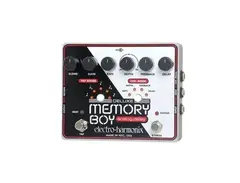
If you're after pristine, perfect repeats, this is NOT your delay. But if you want the best analog you can find, this might be The One.
As a metal player, the need for a delay pedal can be…. Let's say "limited". You'd usually just look for a basic digital delay that will give you some clean, uncluttered repeats, and call it a day. Metal guitarists' pedalboards often lean toward an "only the basics" approach: a wah, (maybe) an overdrive or distortion to boost the signal going into the amp, and not much more. Of course, there are those of us who not only like to get some unusual flavors and colors in our smithy o' doom, but also branch out into other styles here and there…. and for us, pedals with versatility, character, and personality help maximize our pedalboard space. A truly musical delay pedal transforms the signal you plug into it, ideally enough so that the pedal itself could almost be considered a separate instrument on its own. This is the breed of delay I was after.
"Tone" is a VERY subjective thing, so it's difficult to say with any authority whether a particular sound is "good" or "bad" - your mileage WILL vary. With that said, I made sure to check out as many reviews as I could find online to hear what the Deluxe Memory Boy actually SOUNDS like before I bought it. Mine sounds more or less exactly like what I heard online, after correcting for the sounds of my own rig that it's being plugged into - and I LOVE it! Rich, warm, chewy all-analog BBD repeats for days, plus all-analog chorus/vibrato/crazy modulation that stands alone even with the actual delay functions turned down to "0". If you're looking for pristine, sample-accurate repeats, keep walkin'.... this is an ANALOG pedal, and it's proud of it. The repeats decay as they're fed back through the BBD chips, just like they're supposed to - and the result is glorious! The short slapback tones, psychedelic "outer space" sounds, and long, cavernous echoes aren't just "realistic" - they're The Real Thing. It's not EXACTLY the same sound as its ancestor, the revered Deluxe Memory Man, but you can definitely tell where this pedal is descended from that one. The only "gotcha" to look out for is power - EHX includes the required AC adaptor, which is regulated, but I noticed that the pedal's clock can "leak" into the amp signal if the grounds for the pedal and amp aren't on the same rail. Nothing big, and easy to fix, but it took me a minute to figure out why a true-bypass pedal was "ticking" in my signal when it was bypassed. Pro tip: The DMB includes a low-cut/high-pass filter that you can use to adjust the tone of the repeats! This isn't obvious by looking at it, so as with any new device, RTFM.
I mentioned that this pedal is a descendant of the immortal classic Deluxe Memory Man pedal from the 70s, and shares some of the features that made that unit into a legend. However, this modern edition actually has MORE options than the original! Of particular note is obviously the tap-tempo feature, which is one of the key reasons that I (and doubtless many others) short-listed this unit in the first place. This works even better than expected, with excellent precision - if your foot can tap in time, this pedal will follow it! Having 6 different note divisions to choose from is phenomenal, this may be more than any other analog delay I've seen.
That's not all, though - the chorus/vibrato functionality of the classic DMM is replicated here, and some might even say it's slightly improved with greater range and new options on the "Depth" control. I do have to say that the right (clockwise) sound of this knob is puzzling; the square-wave modulation does something odd as it ramps up and down that I haven't figured out how to make musical use of yet. It's hard to describe, but you can hear it in many online reviews. However, the left (triangle-wave) side of the dial more than makes up for this - the range is TREMENDOUS! You can go from an almost-imperceptible shimmer to seasick sweeps to completely outrageous pitch bending, all controllable with the "Rate" knob next to it (which also has incredible range). Just like on the classic DMM, the "Blend" control can be used to tune the functionality of the modulation from chorus to vibrato to outlandish effects that don't really have a name, and these can affect just the delay repeats or your entire signal depending on the delay settings.
Another new feature is the "Gain" control. This replaces its ancestor's "Level" knob, and if you drop the delay and modulation settings to "0" and crank the "Blend" control for an all-wet signal, you can use this sucker as an overdrive! Pretty cool.
Finally, the pedal's additional I/O includes an FX loop so you can add even more tones to your delay repeats by patching in other effects, and an expression-pedal input that lets you control any knob except Blend or Gain with a treadle. This allows for some CRAZY effect sweeping at the tips of your toes, and IMO is something that more delay pedals should implement. There's even more to dive into with everything this pedal offers, but this review is already stretching its capacity so I'll let you play around and discover some of that for yourself.
If you've played with analog delay before, most of the basics are pretty intuitive - but with that said, READ THE MANUAL. I cannot stress this enough. If you don't like manuals, don't use technology. Just do it, and don't complain about it, either - the manual is your friend. It's not super-complicated, but the manual does a great job of explaining how the various knobs and buttons work together, and it reveals a couple of "easter-egg" functions that aren't obvious at a glance. Once you know how to operate the controls, the DMB is not just easy to use, it's insanely fun to experiment with how all the functions interact to create tones from the classic to the bizarre.
To summarize: This pedal is AMAZING. Sure, there are things it won't do, but it's not supposed to - you don't use a saw to drive screws, and you don't use an analog delay for crystal-clear repeats. But if you're after an all-analog delay with tap-tempo, super-flexible modulation, gain staging to fit any rig, and a personality that prompts you to have full-on musical conversations with it, it's easy to do worse and nearly impossible to do better.
378
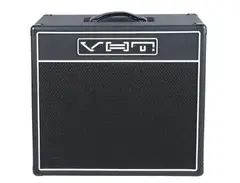
Probably the best closed-back 1x12" cab you can get for the money
......and believe me, I shopped around before I landed on this one! I wanted something to mount an Eminence Man O' War 12" that I've been sitting on. I tried hunting for an empty cab for a long while, but a decent-quality 1x12" box without a speaker in it turned out to be significantly more costly than one that's not empty. So, I turned my attention to reasonably-priced cabs that included my short list of must-haves. These were:
- Plywood (absolutely no MDF) construction
- Finger-jointed corners
- Closed-back
- Under $250
That's it - shouldn't be that tough to find, right? I don't even care what color it is! The first two restrictions are just because that Eminence speaker is really, really loud and aggressive, and I needed something that won't get rattled to dust in a couple years. The price - well, you're living through the same economy I am; I'm sure you can imagine ;) So I went through literally every candidate I could find, and narrowed it down to this and a couple others. When I found a reasonable deal on a used one at the Wichita Guitar Center, I gave them a ring and had it sent up North.
My plan was to pull the factory speaker and swap in the Man O' War, but I decided to do a quick before-and-after recording so I could compare them with a less-biased ear (you can hear the results on YouTube by searching "VHT Cabinet Speaker Swap" if you want). You can imagine that I did not expect the VHT "chromeback" speaker to be very useful, but I gotta say - I actually really like it! I'm still playing the Man O' War for now, but I kept the factory speaker, and I plan to track down another empty cab for that Eminence and put the original speaker back in sometime next year. I would - and probably will - buy another one of these cabs at some point.
Finally, what does it SOUND like (with the stock speaker)? Well like I said, quite good - especially considering the price! A BIG reason I insisted on a closed-back cab is that I needed to get as close as possible to that tight-but-powerful low-end "THUMP" that we associate with massive, expensive 4x12" cabs, but in an apartment-friendlier format that won't get me evicted. Obviously there's limits to HOW close a 1x12" can get, but this one does an excellent impression of it - especially when you're in the room with it! This sucker is plenty loud enough for rehearsal or small gigs with a heavy-handed drummer, with well-balanced bass and treble combined with what I'd call a "relaxed" midrange that's neither too scooped nor too honky. This balance of frequencies makes it a great choice for just about any kind of hard rock and heavy metal, but also excellent for other styles as long as they don't require TOO big a midrange presence. I was especially impressed with the cleans; it does a very nice job of reproducing those Fender-esque "crystalline" scooped-mid tones that I love so much (think "position 4 on a Strat").
The only thing I didn't like to see was the PCB that the input/output jacks are mounted on - it looked a little flimsy and might be too light-duty for heavy touring or constant unplug/re-plug action. But, this could easily be replaced if it ever wore out, and considering everything that this cab DOES get right, I don't consider that sufficient reason for me to subtract any points from its rating.
To be fair, there are certainly things it won't do. It's closed-back, so you're not going to get that "breathing" effect that an open-back cab produces. It's only got room for a single 12" speaker, so even with the 120W Eminence that I put in it, there's only so much volume it's physically capable of reproducing. And while the build quality is quite impressive, I don't think it's reasonable to compare an import that sells for $280 brand-new to US- or UK-build cabs that go for two to four times the price (although I did research everything those brands offer in similar price ranges, and found nothing but a bunch of MDF with butt-jointed corners). This one gets 5 stars from me, not because it's the best possible cabinet at any price (it's not), but because it IS the best available in its class - by far.
Preferred Settings + Usage:
Brief before-and-after video comparing the stock speaker to the Eminence Man O' War that I put in this cab: https://www.youtube.com/shorts/6aOdmhwjjOM
378
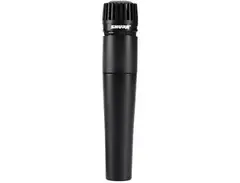
If you're a guitarist, drummer, and/or recording engineer/producer, you probably already have at least one.
What can you say about a legend that hasn't already been common knowledge for decades? We toss around the phrase "industry standard" for d@mn near anything these days, but this is one unit that's actually earned the title. If you want to hear what the SM57 sounds like, just listen to any of thousands upon thousands of of records (including countless hits that you're already familiar with) and take a second to notice the snare drum AND the electric guitar - chances are more than good that both were recorded with one or two of these. It's durable, it's affordable, and it sounds great. If I walked into a recording studio that didn't have an SM57 handy, I would just leave. You CAN do without it, but why?
378
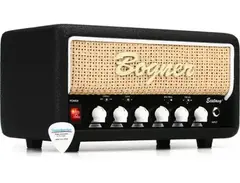
Worth the money and then some
My Marshall JTM30 had been misbehaving, and finally stopped putting out sound almost a year ago - which means no power section for my beloved ADA MP-1 preamp! Called around and found that fixing it will cost at least $200 - $300, and take months :( After trying everything I could think of to get a decent guitar sound at apartment-level volume, I finally decided it would be faster (and easier on the wallet, thanks to zZounds' EZ Pay) to just get another small amp with a series FX loop to stand in while I save up to fix the Marshall. I took a few weeks researching options and going through review videos, and this looked like the one to beat.
So I ordered it, waited FOREVER for FedEx to get it here (not zZounds' fault at all, they shipped it almost as soon as I ordered), and eagerly unboxed this adorable little amp. Plugged it into the Celestion Heritage G12 in the Marshall, plugged my Duncan-loaded Ibanez Xiphos into the front end, and powered up….. At which point my fiancee came into the room to say "Babe, the neighbors are gonna call the cops... Is that all the way up?" It was at about 2 (as in, 8 o'clock) on the master volume dial, with the other controls all at 12 o'clock. For only 30 solid-state watts, it's LOUD!
So, I backed off the volume most of the way, and started fiddling with the other controls. In the interest of not writing a full novel, I'll leave the detailed descriptions of what each control does to someone else, but I will say that this sucker sounds RAD. While I've always had a soft spot for a good solid-state amp, I don't generally expect them to sound like a tube amp, but this one really does replicate a lot of that feel! It obviously doesn't sound EXACTLY like a tube amp, but it does a good enough impression that casual listeners won't know the difference - and again, the feel is more tube-y than any transistor amp I've ever played, and even some tube amps.
One of the reasons I chose this over the Friedman, Soldano, or Diezel models is versatility. Every review and video I found noted that the others have a decent range of medium-high to ultra-filthy levels of gain, but only the Bogner will let you get anywhere near a clean tone. I haven't tried the others to confirm this, but I CAN confirm that the Bogner provides a mostly-clean tone with the gain control almost all the way down, and with some careful tweaking of the EQ and switch settings, there's a lot of range there. You can get convincing jazz, blues, or even (shudder) country tones if you want to, but I was just looking for a nice Fender-y chime - and I got it!
Of course, that's not why we're buying an amp based on the Ecstasy's Red channel, are we? The dirty sounds are well-represented, and I was again impressed with the versatility here. The toggle switches, gain knob, and 4-band EQ will get you everywhere from Mesa to Marshall to extreme modern metal. All those switches look intimidating at first glance, but after a few minutes you'll be able to dial in just about anything you can imagine. I've literally pulled tones from the 60s, 70s, 80s, and today out of this thing without changing guitars - taking the time to get to know how it responds will be amply rewarded. I've read a few reviews complaining that this amp doesn't put out enough low end, and I would ask those reviewers what cab and speakers they're using. The single Celestion G12 that I'm plugged into is delivering plenty of whatever frequencies I ask for.
Finally, the reason I justified a new amp to myself: I have also been using it as a power amp for my ADA MP-1 rackmount preamp. If anything, it's BETTER than the tube amp I was using before, just because the Bogner's effects loop is post-EQ (unlike the Marshall). Plus, the solid-state power amp provides much more headroom that allows the MP-1's legendary clean tones to shimmer and sparkle like they were intended to, and the dirty sounds rip with authority that the Marshall's Class-A power section can't match.
I can go on and on about how wicked this amp is, but this is probably enough for one review. The TL:DR version is: It's killer. If you think you should buy it, I agree with you.
378
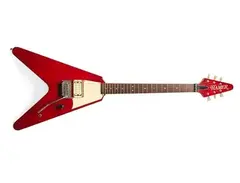
Rare, amazing guitar
I don't own one of these, but I REALLY wish I did! I've only ever seen one in the wild; luckily it was at the home of my band's drummer (and close friend) back in about '97 - '98, so I had a chance to put it through its paces. Hamer's parent company destroyed the brand's reputation with the "Hamer Slammer" series in the 90's, but the older guitars from the 70's and 80's were of impeccable quality - this model is a great example. The materials, build quality, playability, and attention to detail were on par with other high-end US manufacturers of the day (and better in some cases - that's why Gibson sued them ;) ). Everything about this guitar was incredible. Comfortably balanced with none of the neck-heavy feel some other V's have, and the neck.... OH THE NECK!!!! Have you ever picked up a guitar and found that it plays itself as soon as you get your hands near it? This is one of those. Since it was a Priest signature model, it even has the Kahler whammy bridge! To this day, I wish I had had the money to make an offer to its owner. I would absolutely love to get my hands on one of these again.
378
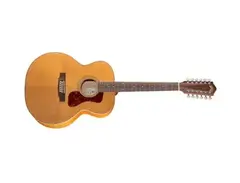
Looks good, sounds great
I'll preface with the note that I'm primarily an electric player, and I usually play a variety of styles from blues to classic rock to VERY heavy metal (with a focus on the latter) on guitars with wide/thin/flat "shred" type neck profiles (think Ibanez or Jackson). So, I'll be comparing neck profiles, fretwork, and playability to these types of guitars. I'll also be considering that this is a $550 import, not a $2K+ flagship model. With all that in mind, this beast is more than I was hoping for! This is my second "real" acoustic guitar (I'm not counting the crappy classical that my parents got me at a yard sale when I was 9), and my first 12-string - I am very pleased.
First things first: IT'S LOUD! I've played other Guild jumbos before, so I was expecting that, but it's been long enough that it was still a bit of a shock to hear and feel it again. They are NOT kidding when they say that the arched-back jumbo body really projects. Even so, it's really, really responsive to picking dynamics - you can get a much gentler sound if you pick lighter, and it doesn't compress too much when you hit it hard. I've read other reviewers mention it sounding a little brighter than they expected, and I noticed this as well, but this is pretty normal for a new acoustic guitar; the soundboard will "open up" after you play it for a while. Still, there's plenty of bass on tap, and the midrange is present but controllable - exactly what I was hoping for (and one of the biggest reasons I prefer jumbos over dreadnoughts).
I got mine from zZounds, and the specs that they publish differ from what's on the Guild site in one respect: zZounds says the fretboard and bridge are rosewood, while Guild says that they're pau ferro. To me they look and feel like pau ferro, but that's not a problem; just something that zZounds might want to update for accuracy. I actually like the tiny bit of extra "zing" from the pau ferro; it's like a cross between rosewood and ebony that feels and sounds nice. Everything else is on point: spruce top, bound maple body, mahogany neck, and what looks like real mother-of-pearl fretboard inlays and rosette. The Fishman/Guild piezo pickup and volume/tone preamp are very basic, but I especially like two things about them: The soundhole-mounted controls are a lot less noticeable than the more expansive preamps that usually sit on the side of the body, and I LOVE that they put the battery box in a jack-plate near the bottom strap pin instead of using an endpin jack.
Now for the playing experience: As noted above, it's loud, but responsive to picking adjustments. The change in tone as you play closer to the bridge or neck is especially notable; you can cut back on a lot of that "zing" by playing closer to the neck. I usually don't have guitars with pickguards, but in this case, the guard is shaped perfectly to cover exactly the area it needs to and nothing else - excellent design there. I haven't even listened to it plugged in yet; I've only plugged it in so I could tune it with the TU-3, but I'm sure it's "good enough" (seriously, is anyone buying a guitar like this to hear it through a piezo pickup? I'm not). Then.....
The Neck. Dude, I am REALLY stoked on this neck! Since it's not only an acoustic but a 12-string, I was prepared for it to be a lot less comfortable than my shred machines from Jackson, Ibanez, and Dean, but I have to say I'm impressed. Yea obviously it's thicker than those, but it's surprisingly NOT a baseball bat or 2x4. I haven't put a caliper on it, but I'd compare it to the thickness of some Schecter or ESP necks, just with a more D-shaped profile. Absolutely love it! The only complaint that I could imagine some people making is that there's no cutaway, so access above the 14th fret is nonexistent - but again, that's not what I wanted this for, so it's not a problem for me.
Chinese-built guitars have a middling reputation, and I'm sure there are examples of poor QC out there, but I guess I've been really lucky so far. This one looks, feels, and sounds really solid; I haven't found any of the issues you would normally look for in a guitar at this price point. Fretwork is clean and level (even after I adjusted the truss rod for the low action that I like), no glue drip, binding is tight and symmetrical, tuners are all straight and tight, nut and bridge are cut correctly, and no finish flaws that I can find. The nut pings a little when you tune, but this is normal with a bone nut, and I'm sure it will go away after I lube it up a bit.
There ARE a couple things that some people used to more expensive guitars might object to. The bits of MOP used for the rosette aren't cut COMPLETELY clean, there are tiny sections between where you can see a bit of filler if you look really closely. The boards used for the top and body aren't totally even-grained; there are color variations across them that are noticeable, but again, that's expected at this price range and not a problem for me (I kinda like it). Finally, the ONLY thing I don't love about this guitar: Satin finish. This is something that helps keep costs down, and some people actually prefer it, but I'm a sucker for the high-gloss finishes on everything. Not a deal-breaker; I might just grab some polish and see how shiny I can get it ;)
378
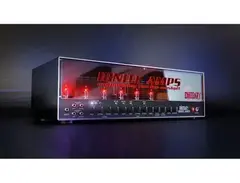
Just fantastic
I've been using the Emissary amp sim (along with a few others from Ignite) for a few years now, and it's still one of my go-to plugins. I also use paid amp sims, notably the Powerball sim from Amplitube, and the fact that this one sounds just as good blows my mind. Ignite builds custom hardware amps as their primary business, and they offer the amp sims as... Advertising maybe? I just can't imagine how they can keep putting out these plugins without charging for them, but I'm really glad they do. Excellent for high-gain metal sounds, with a HUGE range of tones you can get by dialing the controls around - but also good for the clean stuff, too. Give it a shot - the price is definitely right on this one!
378
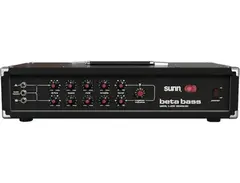
Quirky but very cool old bass head
I love this battered old beast! To be sure, it's not a good choice for modern, pristine, Top-40 sounds, but it has a lot of personality - think of the 60s and 70s blues-rock/classic rock/hard rock/early metal sounds, and that's the one. Two identical channels with drive (gain), bass/mid/treble EQ, channel volume, and then a master volume for the output section. What it does, it does very well.
As mentioned, the sound is "vintage", which is to be expected for a bass amp which was state-of-the-art in 1979. It produces old-fashioned tones that are suitable for just about any genre, as long as they're "of the era" - think Cream, Deep Purple, Ozzy-era Black Sabbath, Band of Gypsies, that kind of thing. These amps are also used by modern bands with old-fashioned sounds, especially garage, punk, retro, and stoner metal bands like Red Fang (you can see both Beta Bass and the Beta Lead guitar heads in several of their videos). Even Cliff Burton played through one for a while. It's "only" 100W of output power, but through a 15" speaker, it WILL compete with a full band.
Despite the seriously old-school vibe and sound, this amp has a couple of features that were pretty advanced when it was designed. The footswitchable two-channel design was almost unheard of on bass amps back then, and even cooler, it has THREE series effects loops - one for each channel, plus a master loop that effects both. Together, these features allow for more flexibility than most modern professional bass amps offer. Finally, the "DIGITAL C-MOS TECHNOLOGY" that is so proudly silkscreened on the front panel is no joke - the distortion on this sucker is GNARLY! Guitarists looking for wooly, 70s overdrive and distortion use these as guitar amps because the sound is so cool.
378
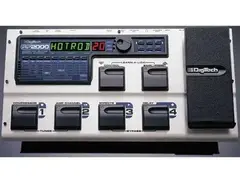
This was a decent unit for what it was at the time, and still good for a basic multi-effects board
One of Digitech's first entries into the guitar amp modeling world, this multi-effects pedal was their top-of-the line floor unit at the time it was produced. It includes 10 amp models, three cabinet models, two acoustic guitar simulations, 4-band EQ (with two semi-parametric mid bands), a collection of "standard" effects (wah, compressor, phaser, flanger, chorus, reverb, delay, tremolo, vibrato, etc) along with less-common options like a rotary speaker simulator, envelope filter/auto-wah, and pitch shifter. It also has several Digitech-specific effects including "Auto-Yah" (exactly what it sounds like), "Talker" (a now-rare vocoder/vocal synth), all the functions of the legendary Whammy manual pitch-shifter/harmony pedal, and even a few extra tools including a (very basic) drum machine, "Learn-A-Lick" phrase sampler, and "Jam-A-Long" input for playing along to any music player with a headphone jack.
OK great, that's like everything anybody could possibly want - Yay! Except, how does it actually sound?
It's a mixed bag. Like just about any multi-effects processor, it will sound better if you're not using as many effects at once, and progressively worse as you add more effects that require more processing power. This is a limit of digital technology in general, and here the RP2000 can really show its age compared to newer units with more horsepower and updated processing algorithms. But even today, it IS useful if you're just running a few effects at a time.
The individual effects vary pretty widely in how "authentic" they sound; some are quite musical, and some were probably better left out even at the time it was built. I'll be the first to admit that I've always preferred a real amp, even a good solid-state amp, over digitally-modeled versions, so I'm comparing this to other amp/effects simulators rather than any analog amps and effects. With that said, I bought this almost 15 years ago when it was still a reasonably competitive amp-sim (by industry standards, not mine), and I just don't like the simulations. They're "good enough" for late-night practice, but I would never use them for recording or playing live. I would say that other offerings available in 1999 were at least a little better - the old Johnson combos and the original Line 6 POD were more popular, and for good reason.
However, many of the other effects are pretty good, even today (with the caveat that they DO sound digital, which may or may not be a problem for you). The reverb and delay options are all usable, and there are several types for each of these. Most of the other effects have plenty of parameters to tweak, generally more than would be available on a pedal version of the same thing. These "bread and butter" effects are where the Digitech can actually shine a bit, as long as you're sticking to one or two effects at a time. I suspect that, rather than "modeling" analog versions of these entries, Digitech probably recycled algorithms from their EXCELLENT line of rack-mounted tube preamps from earlier in the 90s. Now THOSE are some processors I'd like to get my hands on again!
I do think it's interesting - and a little frustrating - that Digitech didn't include ANY distortion algorithms, instead leaving all of that functionality to the amp/cab sim and EQ sections. This may be because they knew people would be disappointed with this floor-based unit not having preamp tubes like the rack units that came before it, or maybe they just wanted to push their new amp-modeling entries - either way, it seems like the wrong decision to me. Ah, the 90s, right?
Now, for Digitech's proprietary effects - the Talker, Auto-Yah, and the Whammy! I've never tried the Talker; I don't have a dynamic mic to make it work, and I'm honestly not that interested. But I DO remember when the standalone Talker pedal came out; Digitech put out a magazine ad with a phone number you could call to hear what it sounded like, and I called the number. It was a pretty advanced-sounding vocoder and vocal synth, not at all like an old talk-box. I'm not sure how to describe it; I've never heard anything like it on a record. But I don't like the kind of music that you would use this for, so I can't rate it much further than that.
Ditto for the Auto-Yah, although I have played with that one enough to know how it works. It's essentially like an auto-wah, except it sweeps different frequencies so instead of "wahwahwah" it goes "yahyahyah". Again, interesting, but not something I'd use a lot.
Finally, what everybody's been wanting to hear about: the Whammy emulation, packed into a multi-effects pedal by Digitech themselves! I'm sure I don't have to list all the legendary players who used the standalone Whammy pedals on some of their biggest and best records; we all know what this thing is supposed to do, so I'll just compare the version included here with the dedicated pedals. The verdict is: Not bad, actually. Digitech included a treadle controller so you can do the same crazy dives and screeches, and switch the harmony settings back and forth, just like the original. It is a LITTLE glitchier than the standalone pedal, but if you've played any of those, you already know that they're pretty temperamental, and EXTREMELY digital-sounding - that's part of their appeal. The Whammy was never a pristine or "pretty" effect, and it wasn't supposed to be, so I would say that the version included with this pedal is reasonably faithful to the original when you consider how much more is actually packed into the unit.
Overall: Not something I would take to a gig, even 20 years ago, but I do still use it in the effects loop on my ADA-MP1 preamp (which allows you to switch the loop out of the circuit, so no digital sound unless I want it). The reverbs and delays are especially handy, and I have several presets that use the Whammy harmonizer. Usually I'll just use one or two of these effects at a time, and it holds up well for that. The 3-star rating is largely due to its age; it's just not reasonable to give it more when there are so many newer units that sound better. But if it was 1999, that rating would be 4 stars. I'm going to keep playing it.
378
My favorite Dimarzio, but still swapped it out
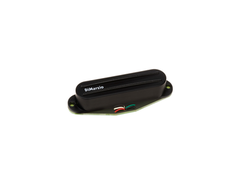
This is the stock neck pickup from my Ibanez Xiphos, and while it's plenty good enough to get through a gig, I've never found a Dimarzio pickup that had the "mojo" (at least not for me). They're definitely pro-quality, but to me, they always sound... Sterile. Bland. Polite. I'm not sure how to put it without making the countless Dimarzio fans out there angry, but they just don't sound inspiring to me.
The Air Norton S is the single-coil-sized version of the Air Norton humbucker, and it sounds almost identical to the full-sized model. Like many Dimarzios, it's not intended specifically for the bridge, neck, or middle positions, but this one is popular in the neck slot. I would consider it a "vintage" style pickup in terms of output, but the voicing is definitely more modern. Fairly balanced bass and midrange with a slightly reduced treble, but to me the midrange sounds very prominent. Not bad for neck-position soloing, but it has a "nasty" (their words, not mine) character that reduces the "sweetness" that I like in a neck pickup.
All in all, it's NOT "bad" - it's actually my favorite Dimarzio pickup. But when it came time to upgrade the bridge pickup in the Xiphos, I knew I wanted a neck pickup that was better for me, too. I replaced it with a Seymour Duncan Little '59, and I'm happy I did. But this one might make an appearance in another guitar someday, if I can find one that would make better use of it.
378
Serviceable, but not for me
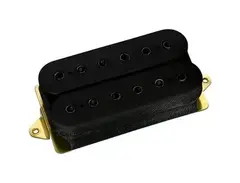
This is the stock bridge pickup from my Ibanez Xiphos, and while it's plenty good enough to get through a gig, I've never found a Dimarzio pickup that had the "mojo" (at least not for me). They're definitely pro-quality, but to me, they always sound... Sterile. Bland. Polite. I'm not sure how to put it without making the countless Dimarzio fans out there angry, but they just don't sound inspiring to me.
The D-Activator is Dimarzio's take on the classic EMG 81, but I feel like it got all the wrong things right, and all the right things wrong. What I like about the 81 is the massive output and sustain, crazy harmonics, and that "molten metal" feel and tone. By contrast, the D-Activator seems like it's much lower in output than many passive humbuckers, and it just doesn't sustain like a lot of other pickups do. Harmonics are there, but not really prevalent. What is there is a BIG midrange that's hard to EQ out, with a "controlled" (read: lackluster) bass response. I think Dimarzio was going for a "dynamic, uncompressed feel with a tight low end", but the way it came out just isn't for me.
Again, it's NOT a low-quality pickup - plenty of professional guitarists use this, and it's the stock pickup in most of the metal-focused guitars that Ibanez has put out for the last 13 years or so. It's just not what I want out of a bridge pickup. I replaced it with a Seymour Duncan Black Winter, and I will never look back. In a word, the D-Activator is "serviceable".
378
The "industry standard" for a reason
OK so, yea, a tuner isn't exactly the sexiest bit of gear available - it doesn't affect the sound at all (except for muting, which is useful but not fun), and even the case is about as utilitarian as you can get. But you know what's NOT sexy? Being out of tune.
So, at some point, you should get a tuner. Yes, YOU. It doesn't have to be this one, but there are several reasons why it should, and only a few reasons to choose anything else. I'll mention those first:
If you're a professional setup tech or luthier who's setting intonation on guitars all the time, then you should spring for the ultra-expensive rackmount strobe tuner. Not the "digital strobe" version, the real one. Nothing else can come close to the accuracy of a true strobe tuner, and if people are paying you to intonate their guitars, you do need it.
If you're a touring player with a rack, then a rackmount tuner makes more sense. Again, more expensive, but if you're rocking a rack then you're already in for at least several grand, so the tuner won't be a huge bite in comparison.
If you're an acoustic-only guitarist who doesn't have a 1/4" output on your guitar, then some kind of "contact" tuner is a better choice. Most of these clip to your headstock and sense the vibration of the guitar that way, so you don't need to plug in.
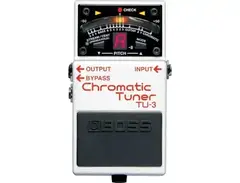
If none of these describes you, then you need a proper stage tuner, and the TU-3 is the unit that all others are judged against. It has a bunch of tuning modes, +/- one cent accuracy, 21-LED meter, dual outputs (more on that in a second), DC power pass-through so you can daisy-chain other pedals off of it, and that legendary Boss enclosure which is I assume is literally bulletproof.
One thing I love (and actually the reason I bought it) is the dual outputs. The "Main" out will mute when you activate the tuner function, and the "Bypass" out does not - it's active all the time. This lets you send the "Main" out to your amp, while running the "Bypass" output to a DI or recorder, so you can monitor through your live rig while recording a clean DI signal that you can re-amp later. Your recording engineer WILL thank you for having a DI signal, and this is a cheap and easy way to get it.
Bottom line: It's durable, reliable, affordable, versatile, and it does its job very, very well. When it comes to pedal tuners, this is the one to beat.
378
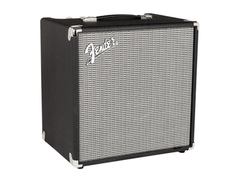
Excellent bass amp for practice, rehearsal, and small gigs
As noted on my other bass-guitar product reviews, I'm not a dedicated pro bassist by any stretch of the imagination; I'm a guitarist who likes playing bass so I can lay down demo tracks, fill in when there's no bassist, and have a decent bass rig handy when friends stop by to jam. But I have been doing all this for almost 30 years, so I have some experience with different bass gear, and I've always found Fender amps to be some of the best you can get.
As an apartment dweller, I can't get away with turning my 100W bass head/1x15 cabinet up to 0.5 before the neighbors call the cops, so I needed something much smaller - but still beefy enough to reproduce the low "B" string on my bass. After reading up on the available options, I went for something I knew wouldn't disappoint, and I'm very pleased with the results. This amp has a single 10" speaker and 40W of power, so while it won't be a great choice for a stadium gig, it's plenty loud enough for practice, basement or back-porch jam sessions, and small gigs (do people still do "coffeehouse gigs"?). It's actually loud enough that I still can't turn it up past about 3 without rattling the windows, and the 10" speaker puts out the low notes with clarity, definition, and a lot of BASS! Really impressed with the volume and headroom available.
And it's LIGHT! At 18lbs, it's about the same load as 2 gallons of milk, but it feels like even less. That's incredibly light, especially for a bass amp that puts out this kind of low end. Like, disarmingly so. Every time I pick it up, I just about fall over backwards because it looks and sounds like it should weigh 2 - 3 times as much as it does. With that said, it doesn't feel (or sound) like it's made of balsa wood, either - appears to be standard Fender construction, so I'm guessing that they've achieved this with reduction to the weight of the speaker magnet more than the cabinet.
The control layout is straightforward - Input gain, switchable distortion with gain and volume knobs, 4-band EQ, and master volume, plus three "character" switches for Bright, Contour, and Vintage voicings. The controls are all highly interactive, and the "character" switches make a BIG difference in how the amp sounds. These can modify the sound from vintage Bassman/Portaflex, to jazz, R&B/funk, modern metal, and just about anywhere else you want, and different switch combinations yield some great tones. The distortion isn't super-fuzzy; it tops out at a grindy overdrive, but with a bass that's more than OK. If you want more, you can always plug in a pedal (see my review of the EHX Battalion for more about this - now THAT thing has some gain!)
The rear panel has a few nifty features, too. There's the requisite headphone out for silent practice, a 1/8" stereo mini ("aux") input so you can play along with anything that has a headphone output, an XLR DI output for running to a PA or recording device, and a 1/4" input for the (not included) footswitch. The footswitch just turns the distortion channel off and on, but I don't need it since I have the aforementioned Battalion preamp/DI for distortion. There's no separate output for an external speaker cab, but with only 40W of power, that wouldn't be a great idea anyway.
All in all, Fender amps have never disappointed me, and the Rumble 40 won't be the first. Very versatile, lightweight, loud, clear, responsive - this amp is stellar for anything up to small gigs, and if you need more power, you can always run the DI output to the PA. Love it.
378
Awesome for what it is
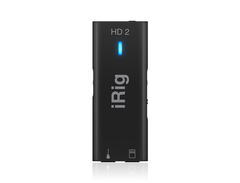
I'll start by saying that this review will focus on the interface itself, and not on the bundled mobile software - that's a different subject which I'll touch on, but it's not really the point. The point is, for what this is, it's pretty fantastic.
What this is to me is a way to plug my guitar into my phone and headphones, hear "guitar amp" coming through the headphones in a convincing way, AND not bug the hell out of the lovely lady sitting next to me on the couch (let alone the neighbors) with the kind of volume that is required for these tones in the real world. 24-bit/96kHz resolution provides excellent sound quality and undetectable latency, at least when used with an iPhone.
Does it sound EXACTLY like a 100W stack rattling the windows and thumping my ribcage every time I hit those low palm-muted chugs? Of course not - the physical feeling of the amp moving air is part of that experience, and this device is specifically trying to avoid that. But when you dial in the software correctly, it SOUNDS like an amp. And if you're using the right software, it sounds like a big room full of amps that I can't afford, which is cool. You have to set the "Gain" knob on the interface right, but that's the case with anything - too hot and it distorts, not hot enough and the tone sounds wimpy. Easy to fix - roll that knob back and forth until it lights up green, back it off if the light turns red. The other "Volume" knob is even easier - if it's too loud coming through the headphones, turn it down; if not, turn it up. Easy.
Now to touch on the software a bit - I haven't downloaded the version of Amplitube for PC that's included yet, since I already have the CS amps that I want loaded up in Amplitube 4 and 5 on the computer - and also because IK Multimedia expects us to pay for each version separately when switching from mobile to desktop, and I'm not willing to do that. I don't see any reason why those purchases can't carry over across different platforms, and I'm not going to buy them again.
So rather than giving IK more money for software I've already bought (in addition to this hardware), I took advantage of Positive Grid's sale on the first (paid) tier of Bias FX Mobile for $10, and NOW this thing is cooking. It's been a while since I played with Bias on the PC (mostly because my computer is old and cranky and doesn't load it very well), but maybe the phone just has better hardware or whatever - I do NOT care. Playing with settings on different amps and pedals, as well as different guitars with different pickups, everything comes through. From the crazy high-gain metal to ultra-clean single-coil tones to in-between bluesy stuff, it all sounds like it should. I'm especially impressed with how well the interface translates the pick attack and volume/tone knob settings coming in from the guitars, this is something that modeling doesn't always do well and it's really cool that this little bit of hardware allows it to work right. Sound quality is excellent throughout; it does not sound like a cheap plastic box whatsoever.
So, ignoring the bundled software, this is WELL worth the money, at least for playing on the couch while my girl is watching her shows (and especially when we're in bed and I can't sleep!). I haven't plugged in the "Amp Out" to an actual amp yet, but I expect that the performance will be as good as with headphones if not better. Same with the PC integration, I can't imagine that it will have any serious issues as an interface for a full-sized computer running good amp-sim software. No headphone amp will ever provide the "Full Stack on 10" experience, but as long as you're not expecting that, you'll be happy with it.
The only reasons this doesn't get the full 5 stars are:
Build quality: I would prefer that it be in a metal, rather than plastic, enclosure. I don't plan on gigging with it, but as an "on-the-go" device, I would like to see it as close to bulletproof as possible - guitarists are notoriously hard on our gear ;) It seems sturdy enough, but it would feel better if it was encased in metal.
Software: IK Multimedia's lack of better software bundled with a hardware device is frustrating. I don't necessarily expect them to provide a LOT of extras, BUT when I've already paid for software on one platform (Amplitube), there's no technical reason why that same software add-on (DLC, basically) shouldn't work with every version of the software, and more importantly, when you're already buying hardware then there should be enough software included to get something really special without paying more for add-ons.
378
Great for metal - and any other style you want
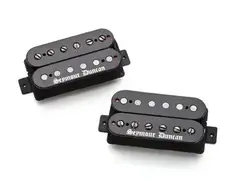
Seymour Duncan markets this one for "extreme metal", and it's certainly great in that application, but there is SO much more loaded up in this thing. Balanced tone across the spectrum, and really amazing response to pick attack and volume/tone control adjustments. After installing this pickup, I dialed in a high-gain lead tone on the ADA MP-1, and just for kicks I rolled the volume control back to see how well it handles. Well, it handles - I got an edge-of-breakup clean sound WITH THE AMP STILL ON THE HOT LEAD SETTING.
A+ tone for metal, but also REALLY good for blues, classic/hard rock, jazz (with the tone and volume knobs backed off a bit) and, yes, even COUNTRY. I wired it up for coil-splitting, and due to the high output level, it does a very convincing Telecaster single-coil sound. I haven't been able to get a bad tone out of this thing.
378
Great for neck-position soloing in any style
It's.... Well, it's a Little '59! Single-coil-sized version of Duncan's original "P.A.F." style pickup, and it's very close to a regular '59 in the sound and response. The way they approach it is totally different of course - this one uses a ceramic magnet instead of the Alnico V in the full-sized '59, as well as a different winding and dual rows of polepiece screws - but that's expected when trying to get a P.A.F. sound out of a single-coil housing.
"Vintage" output level, balanced low and high end with a slightly scooped midrange, somewhat "spongey" or "loose" feel. It's great for smooth, articulate neck-position soloing; clean, overdriven, and heavily-distorted rhythm across a range of styles; and really nice coil-split or out-of-phase tones using the 4-conductor wiring (I go with coil-split). And as you'd expect, the Little '59 is spot-on for jazz with the volume and tone controls rolled back a bit.
378
Fantastic for the money
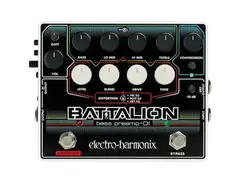
Disclaimer: I am NOT a pro bassist, nor even especially skilled at it - I'm a guitarist who likes playing bass, and recording parts when I'm writing. With that in mind, I really wanted an all-in-one pedal for my bass that will cover everything I need in case I have to go lay down tracks somewhere without lugging my giant Kustom 1x15 cab around, and this one checked all the boxes: - All-analog - 4-band EQ - Footswitchable OD/distortion with "Blend" control - flexible DI I'll talk about the unit overall, then touch on each feature briefly, so this review doesn't go on forever ;) Is it 5 stars if price was no object? No. But this thing costs less than pedals that don't do half of what it does, or sound as good doing it, so yea.
First, the pedal itself is well-constructed. Heavy duty enclosure and footswitches, solid-feeling knobs and jacks, and overall good build quality means I don't worry about stomping on it. Lots of controls, but they're laid out in labeled, color-coded sections to keep things organized. Push-button switches to engage the compressor, -10dB pad, XLR ground lift and bypass, and two stomp switches to engage the pedal and switch distortion on or off.
First up in the signal chain: a -10dB pad button for active or high-output basses. Pretty straightforward, but the first pedal I received was missing this button - luckily I had ordered from zZounds, who sent a replacement before I even shipped the first one back. The second one is in perfect shape, and the input pad works as expected.
Next is a one-knob compressor with an on/off button and blue LED to tell you if it's engaged. This is one thing that I think many dedicated bassists won't care much for; it works fine, but some people would probably want more control. I've noticed that it slams the signal hard enough to distort if I turn it up past about 10 o'clock on the dial, but I'm using high-output pickups, and I've read that there's an internal trim pot to adjust the signal level going into it, so I'll try that eventually. For now, it works as I expect it should, and wasn't why I bought the thing anyway.
After that, you have a 3-way switch that re-orders the EQ and distortion circuits in one of 3 configurations: "Pre-EQ" (distortion before EQ), "Post-EQ" (EQ before distortion), and "Dry EQ" (distortion and clean EQ'd signal in parallel, blended with the distortion's "Blend" knob). This gives you a LOT of flexibility in how you want your distorted signal to sound. Personally I like the "Dry EQ" option best, but play with it and see what you can come up with.
From there, depending how you set the 3-way switch, is a 4-band EQ with knobs for Bass, Lo-Mid, Hi-Mid, and Treble. Again pretty self-explanatory, but VERY effective in getting different sounds. There are pedals that cost the same amount of money for just a 4-band EQ alone, and this one does the job really well.
Next up: Distortion! Again, I've seen bass pedals with less control than this cost more for OD/distortion alone, and again, this one does a very good job. Knobs for Level, Blend, Drive, and Tone, with a REALLY wide range on each. The drive control in particular will go from just a little gritty texture to full-on stoopid levels of fuzz that nobody could possibly need, and the whole range sounds musical. I like setting it to a fairly crunchy overdrive, then using the "Blend" control to get a lot of the clean EQ'd signal with the "Dry EQ" switch engaged.
Last in the signal chain is a single-knob noise gate, which I don't see much use for. The pedal really isn't very noisy, so unless your signal is noisy going in, you might wind up just ignoring the gate like I do. The single threshold knob works fine, but there is a noticeable click when the gate closes - probably fine for live stuff, but I would turn it all the way down for recording.
From there, the output section. There's a master output volume control for the wet 1/4" output, dedicated volume, ground-lift and effect-bypass buttons for the XLR DI output, plus separate dry (no-effect) and wet (including stereo headphone support, cool bonus!) 1/4" outputs. Again mostly self-explanatory, but worth knowing they're there - especially the XLR controls. The bypass button gives you the option to output the sound of the pedal through the XLR out, or push the dry signal through with no processing if you want to use it only as a DI. The dry 1/4" out lets you send an unaffected signal wherever you like, and the wet output can go to an amp, audio interface, or even headphones for silent practice - and it sounds good!
Cons: Not many, especially considering the price tag. I do think the noise gate could have been skipped to make room for more controls on the compressor, and I would prefer an additional footswitch to toggle the EQ on and off for even more flexibility, but neither of these complaints are serious deal-breakers.
Overall: Ummmmm, yea. It's awesome. It's a quality all-analog EQ, OD/distortion, and DI with tons of flexibility at a price that nobody else is even coming close to. It's burly, flexible, affordable, and it sounds great. If it broke, I would get another one.
378
Sweet Japanese Jackson
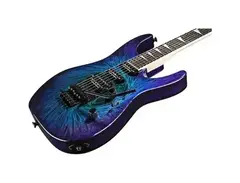
I HATE "traditional" guitar body shapes, especially the Stratocaster style, so I never thought I'd buy a Dinky. But when I saw this beat-up gem in a pawnshop, I couldn't help thinking "Maaaan.... a Jackson neck and three Seymour Duncan pickups for $80? Maybe I should....." Talked it over with the lady, slept on it, and went back to pick it up the next day. Bought new strings and a whammy bar to replace the missing one, tore it down to get everything cleaned up (according to the neck pocket, it's a 2007), reassembled everything, strung it, tuned it, and now it's my girl's favorite out of all my guitars! The gorgeous trans-blue finish helps - the maple top is just a veneer, but that's probably a good thing since the combination of the alder body, maple bolt-on neck, and Duncan JB/STK-1/STK-1 pickups are bright enough that a full maple cap would probably be too bright.
Pros: Jackson necks are among the fastest you can buy, especially from the factory. Hardware selection is perfect for a Super-Strat; this sucker nails literally every 80's (and much of the 90's) tone I could ever ask for. The JT580LP bridge turned out to be really good quality, it's super-stable to the point that I don't see any need for a whammy stabilizer despite abusing it constantly. While I've had great experiences with my Korean, Indonesian, and Chinese guitars, the Japanese dual-obsession with high-precision engineering and artistic soul really stand out here.
Cons: It's shaped like a Strat. And I guess I would prefer chrome hardware on a beautiful transparent finish, but that's a very, very minor complaint.
378
YYEAAAAAAHHHHH!!!!!!!
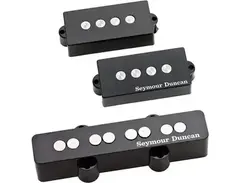
I ordered this set to replace the crappy stock pickups in my old Alvarez "Villain" bass, and the difference is night and day. These pickups have more of everything! More clarity, more output, more punch, more lows, more highs, and especially more of just the right midrange. They cut through my guitar tracks without overpowering the mix. Both pickups are great on their own, but with them both full-on they get that semi-scooped sound you hear on so many records (especially Duff McKagan's sound off the first few GnR records). In a word: "meaty". In two words: highly recommended.
378
FAST AS H3LL - Awesome for the money
Tama isn't kidding when they call this sucker "Speed Cobra". It is FAAAST! I haven't played double-kick in about 20 years, and in less than an hour after opening the box I'm kick-rolling into my cymbal hits. It has what I'd consider just the right level of adjustability; I know that higher-priced pedals have a lot more things you can tweak, but I can't imagine wanting more than the options here. FTM: 10/10.
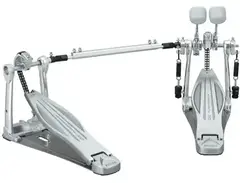
The entry-level Speed Cobra is fast and accurate. Two different options on the beater heads (just turn them around to switch between them). Highly adjustable, including adjustments for beater/footboard combined angle, beater angle separate from footboard, beater height, dual-head beaters, distance between pedals, angle of each pedal, and spring tension. Springs have a locking mechanism that keeps them from twisting. Two adjustable carpet spurs on each baseplate. Dual-chain drive. The Cobra Coils that come standard on Tama's more expensive models are not included, but baseplates include the slots to mount them so you can add them if you want. Heavy-duty drum key included to make all adjustments.
Super-easy to assemble and adjust, includes detailed instructions in English and Japanese with diagrams to explain each process. I had everything assembled and working in about 20 minutes, with most adjustments made in another 20.
The pedal appears very sturdy, considering that some parts are made of aluminum to reduce weight. I'd prefer to see a steel rather than aluminum connecting rod between pedals, but that's a minor complaint.
Features, durability, and functionality are well above its price-point. There's cheaper pedals, but I'd be very reluctant to go near them after trying this one. I've read countless reviews of pedals in this price-point, and this one is always regarded as a winner - now I see why.
This thing is fast and accurate, to the point that I can hear and feel deficiencies in my playing more easily (which is a really, really good thing). It's affordably priced, with the options to add and/or swap out critical parts to upgrade it to the level of higher-priced models if you want to - but I can't imagine ever wanting to. This thing is RAD.