creepingnet's Amp Rig


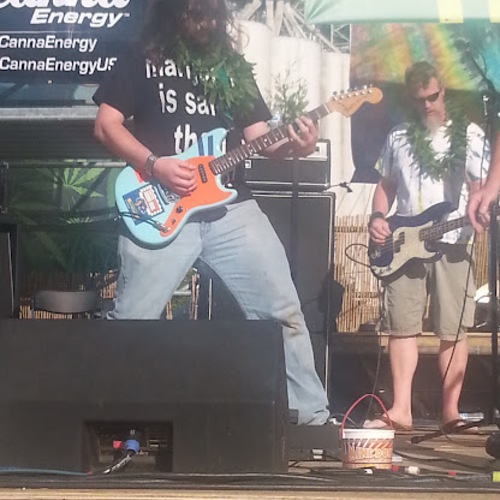
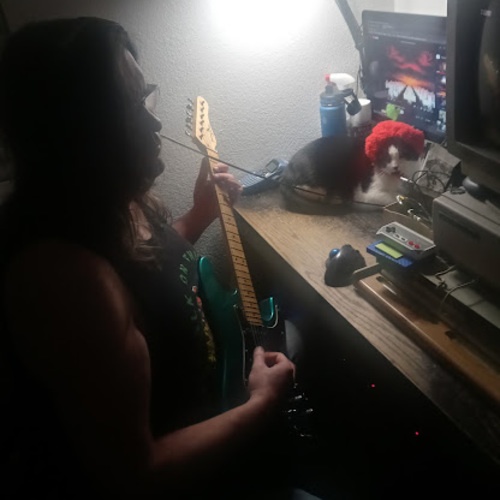
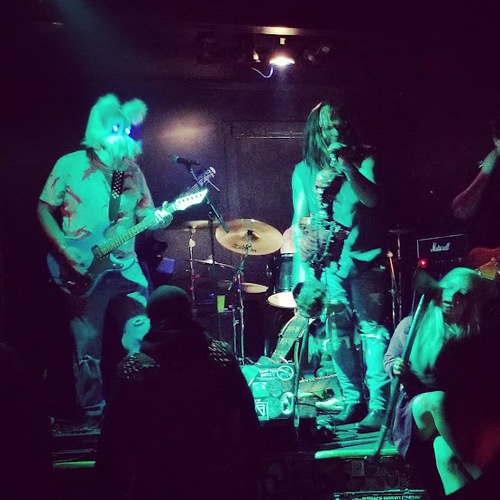
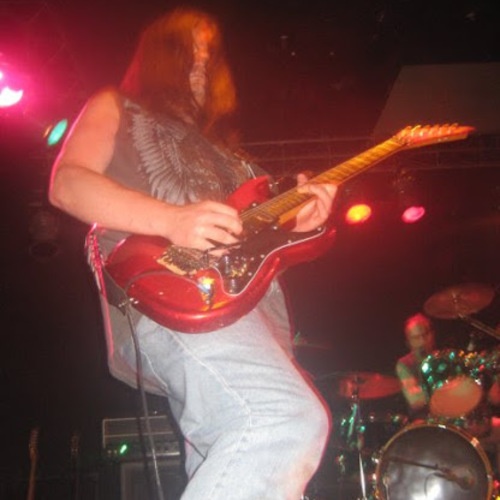
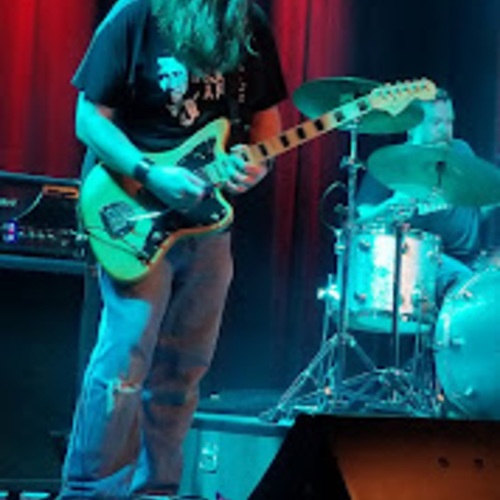
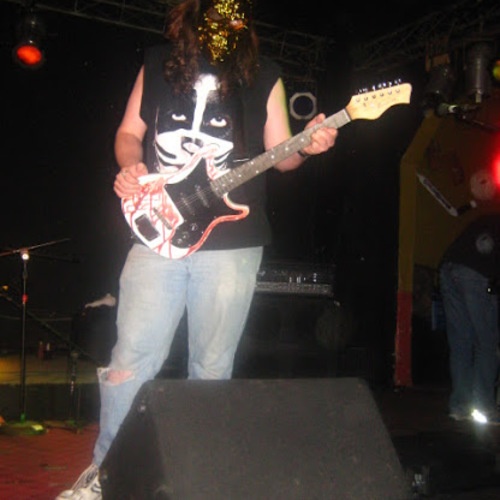
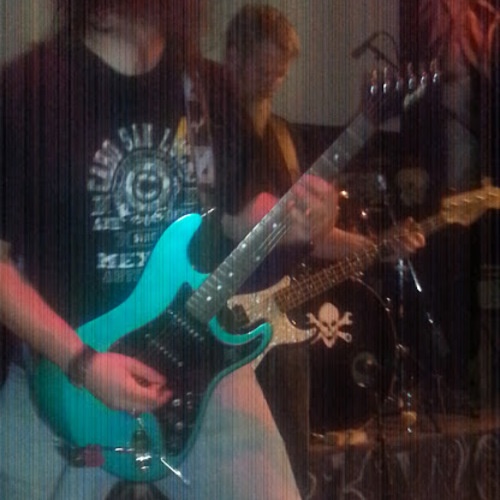
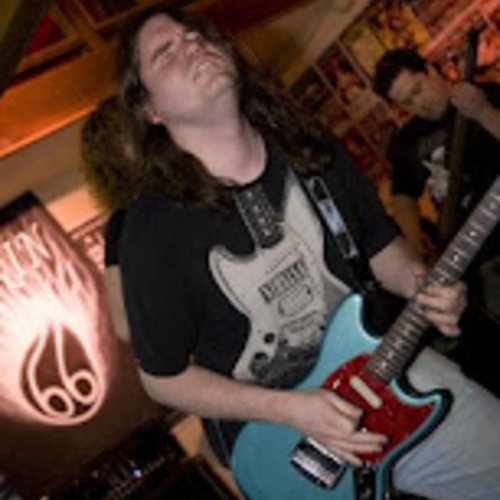
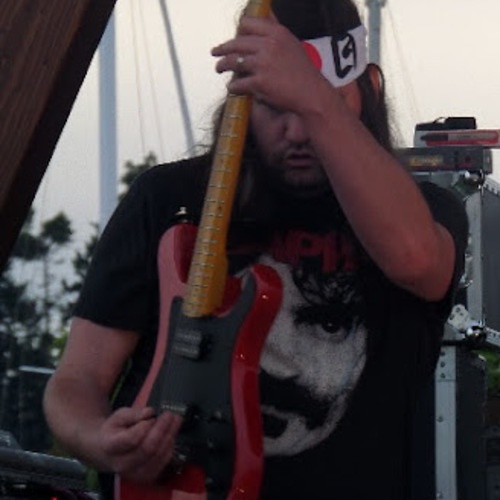
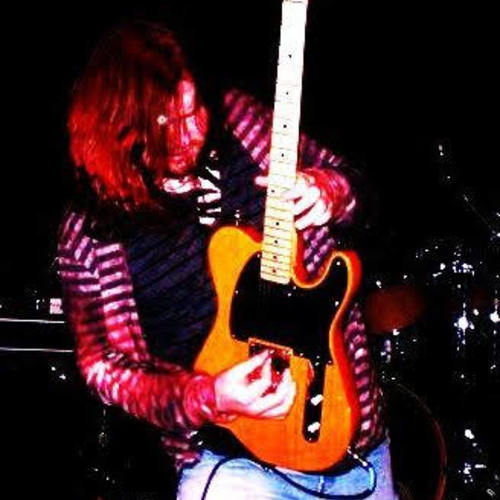
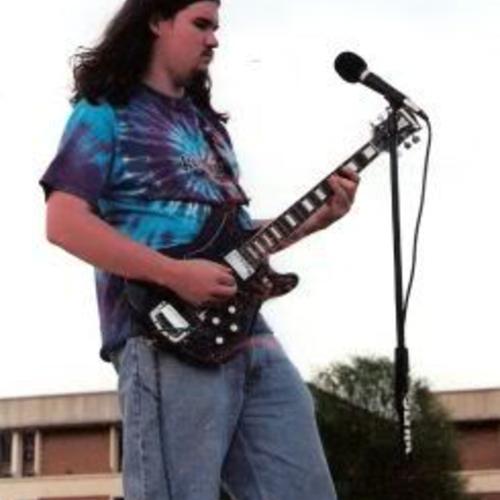
1971 Fender Musicmaster at the Ale House in Reno in 2019. This was after the switches broke and the neck pickup was rekmoved briefly. That gig was a bit of a technical nightmare because a few things broke.
More gear photos from creepingnet







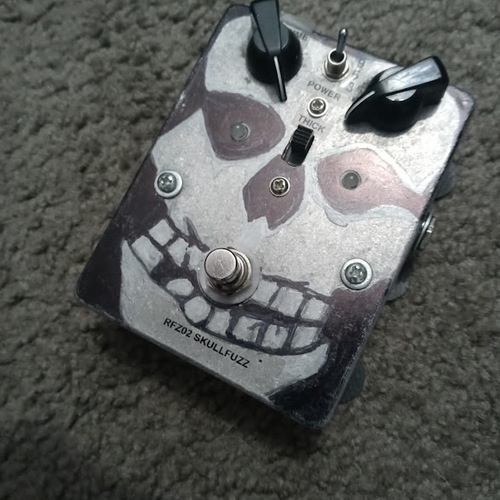

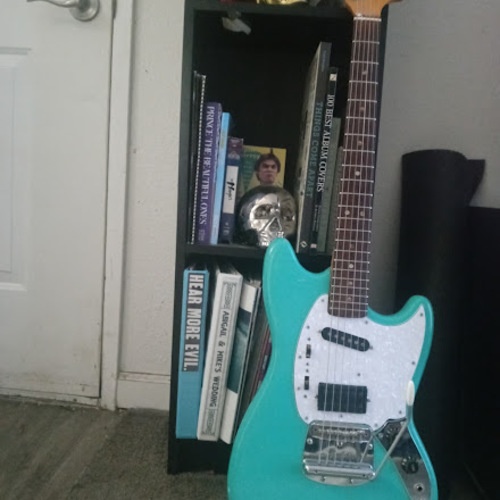
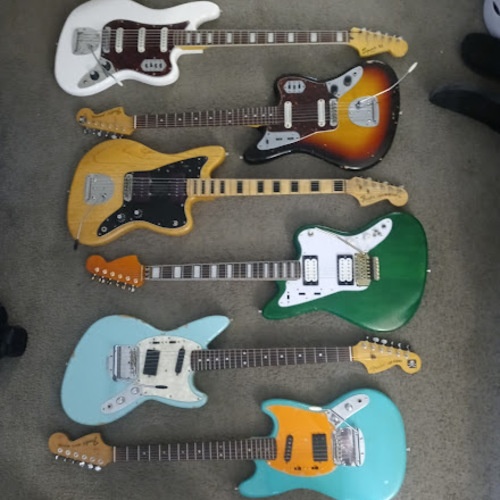
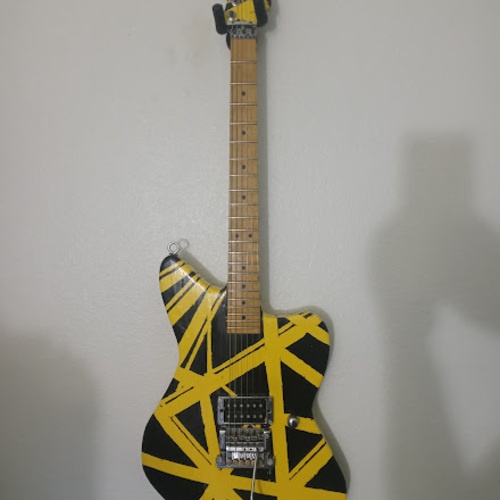
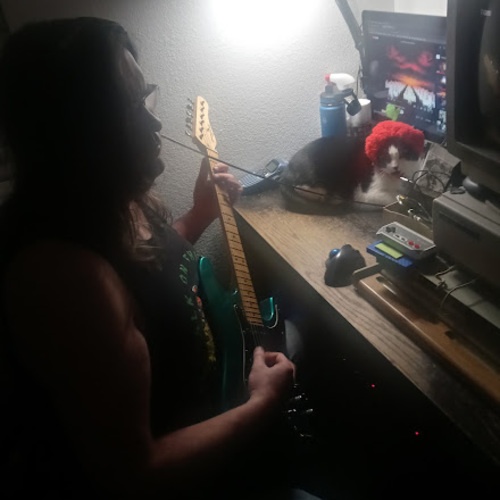
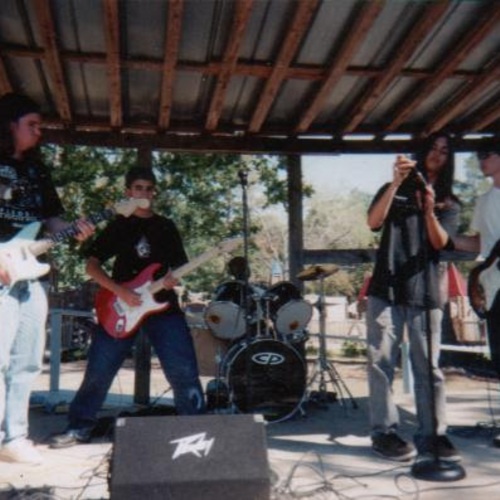
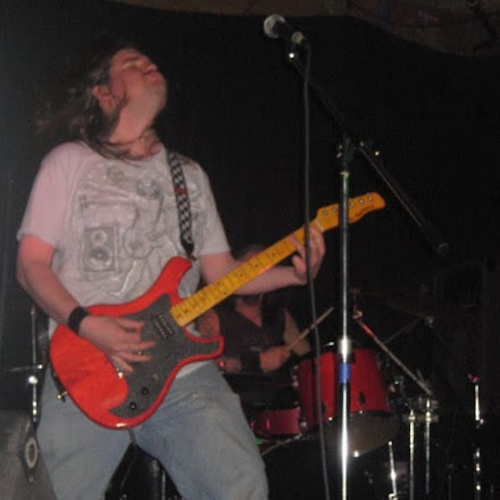

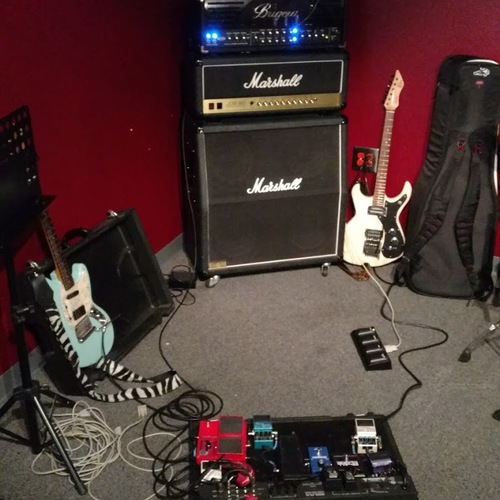
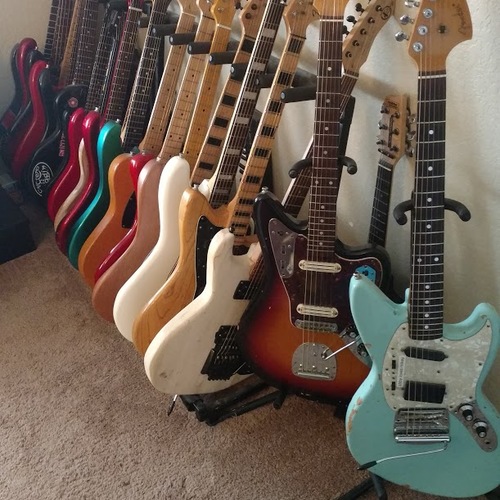
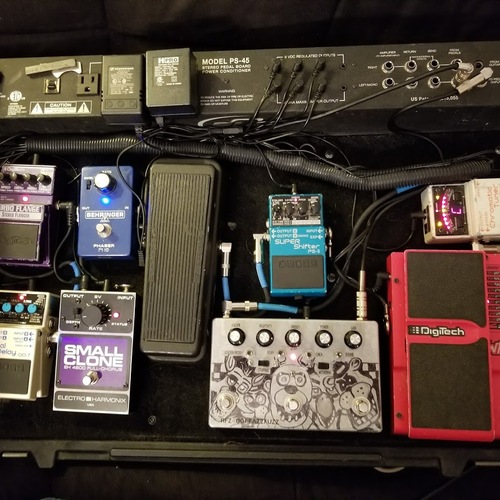
Gear in this photo
This rig
~$2,139
Value by category
- Amplifiers 53.3%
- Guitars 46.7%
Price mix
Mix of standard and high-end

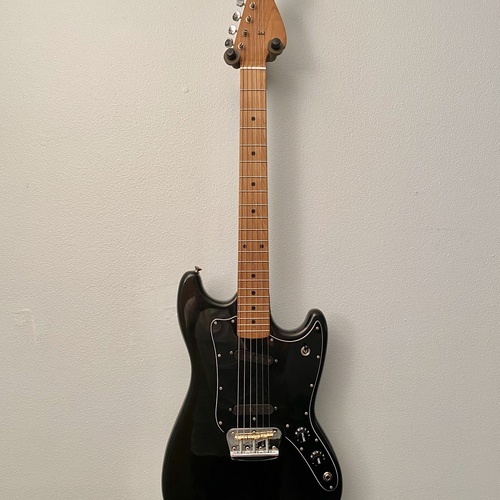
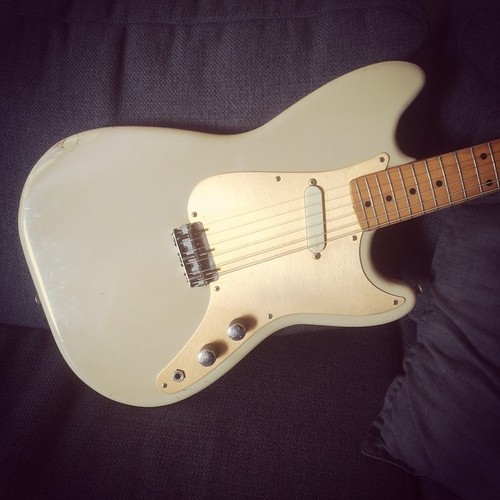
Fender Musicmaster Electric Guitar
Avg price: $999.00


A good player, modded or stock, with one of the best necks from the vintage batch
Ah, the Fender Music Master, the little one-pickup wonder Fender introduced in 1956 as a 22.5" Scale student guitar, that managed to hang on the longest of any of the original Fullerton run guitars.
While I own a 1971 model, I'm kind of also reviewing Music Masters in general.
It seems when Fender kept producing the Music Master through the second generation and third generations of Student models from 1965-1981, these guitars were default to a 22.5" scale or 24" scale 22 fret vintage maple neck in the thinnest "A" Nut width, making these the skinniest necks Fender made, and also making these the preferred neck of Nirvana guitarist Kurt Cobain (his Jag-Stang and Mustangs were all based on these same necks as they were also used on the Duo-Donic II, Mustang, and Bronco as well as the Music Master, it's just on at least some of those other models, it appears one had a choice of neck width).
The bodies are typically made of Ash, Alder, Poplar, or I've heard reports of Mustangs having fabled Mahogany bodies (not sure why Fender would be using Mahogany, but then I DID know they made acoustic guitars too at that time - which I think everyone forgets). Mine has a poplar body.
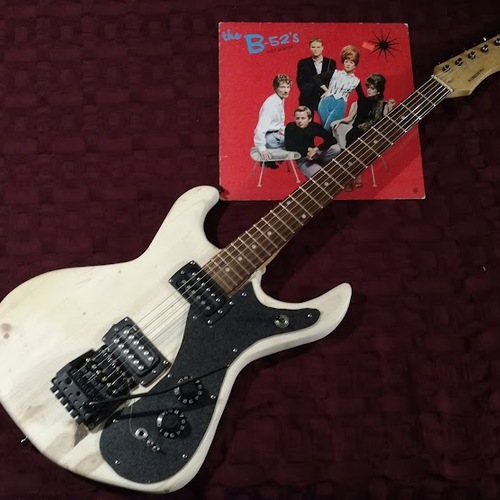
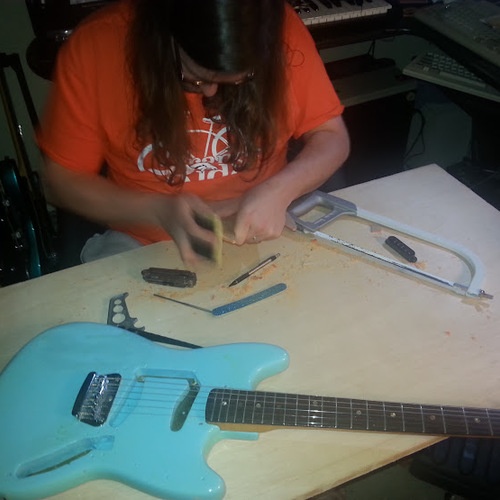
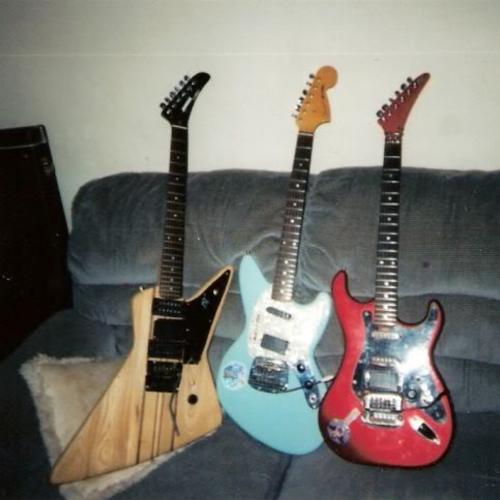
The one I have is tricked out and modded, the only original 1971 parts are the body and neck. IT started off an ex-Grunge band guitar of some sort probably used by some Seattle grunge scenester decades ago and then lost in a closet before handing it over to the guitar store to use for parts.
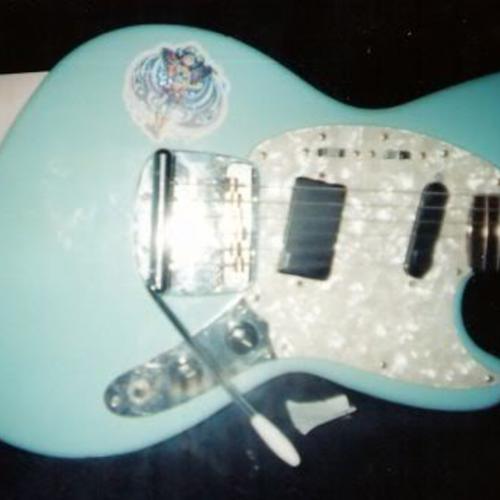
Stripping off the paint reveals quite a bit of Bondo was used on this body to level-out the finish at finishing time. It's original color was Dakota red, then over it's lifetime it was repainted black, white, sort of a darkened vintage-white, and then some kind of odd jade-on-foam-green sort of color, and it must have been badly done because you could see where it had stickers once upon a time.
Someone routed it for an extra switch, probably because a second pickup was added at some point, a common modification to the Music Master as stock it lacks a bridge pickup, which in certain genres is extremely limiting.
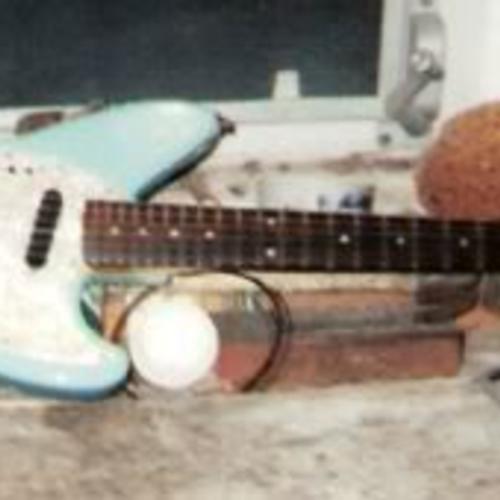
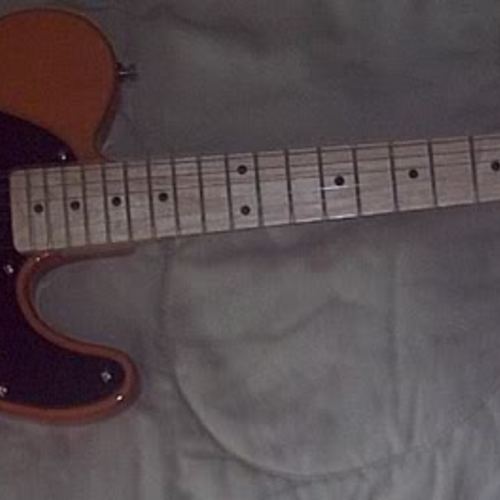
I assembled this guitar from the cast-off body and neck in 2014 after sitting for 3 years unfinished but strung up and playable at least with a Fender Tornado string through bridge (another butchering a previous owner did was drill it for a string through Stratocaster bridge). I finished it for a total of $9.40 in parts including the Tap Plastics orange acrylic pickguard. The stickers were stocking stuffers from the previous x-mas.
In the bridge I have a Peavey P12 humbucker from a 80's Peavey Falcon that weighs in at around 14.6K Ohms resistance, and in the neck a super-tall Strat single coil from a 1993 Washburn MG-43. Everything dumps into a single 500K Audio pot and 3-way switch, with a 3-way series/parallel/split switch for the humbucker, allowing me to get a wide array of Mustang type sounds. Intiially it had a home made pickup in the bridge to test an idea with hum cancellation that kinda-sorfta worked but I have put on the back burner for awhile to focus on other projects.
With the original home-built pickup the guitar premiered with Zombie Jihad at Hempfest 2014 and was quite loud. There's a video of it being used through a Bugera 333XL head into a Mesa Boogie 8-ohm 4X12 on the seely stage playing a Led Zepplin cover.
After leaving ZJ the guitar was modified for my current (as of this writing) 90's cover band as a Nirvana Style guitar for doing Nirvana covers. Bye bye hempmaster - hello Kurtmaster.
So far this is one of my favorite hardtails, only eclipsed by the Hondo Paul Dean II.

Avg price: $890.11


A great amp.......with some debugging.......no pun intended.
The Bugera 333XL is a creation of Behringer corporation in the late 2000's to cash in on the desire for decent Tube Amplifiers at an accessible cost. The original lineup consisted mostly of copies of Peavey's most popular models such as the 5150/6505, the JSX (this one, the 333XL), and the XXX (333). These amplifiers were designed to fit into the lower-mid priced price bracket.
These amps started to ship in late 2007 and within 5 or so months, the issues with these amps started to come to light.
I bought my 333XL in this 5 month period in March of 2008, for just shy of $1000 w/ Bugera 4X12 cabinet. The main draw was that the head itself had 3 channels, decent reverb, a noise gate, had amazing tone (especially considering the price), and was exactly what I wanted for cheaper - as I was not ready to fork $3000+ for a Marshall TSL JCM2000 setup.
However, problems became apparent quickly. The main problems with these amps were....
The high power input transformer that supplies power to the tubes is connected via a nylon molex connector not up to the job of supplying such a voltage for the duration of many gigs and rehearsals. What happened was the Molex connector gets hot from shoving 120 Watts of 120VAC 60 Hz current into a quartet of EL34s (or 6L6's) and a quartet of 12AX7's, eventually reaching the nylon melting point, severing the connector from it's pins, cutting power to all tubes, and creating the problem where you turn on the amp, the tubes don't light up, you get no sound. This was resolved by me desoldering the original pin connector and then soldering lengths of wire down the traces on the other side of the board to make sure the solder could not get hot enough to cut-connection to the tubes.
The next problem is footswitches, especially now. The FSB104B footswitch does NOT have a modular cable. The cable is a proprietary mini-Din 5 pin connector with a L-shaped key so it only fits the right way. The cable is not up to the task for gigging for over 2 years and can break. Since it's not removable from the footswitch, it the cable is bad, you either have to replace the whole pedal, or go through a specialty electronics shop to buy the proper connector, then buy your own 5-6-wire cable to cobble your own setup. Once I could no longer replace these pedals - as Bugera I spose' expects us all to go throw $500+ down on a new Infineum model of this amp - I took matters into my own hands, and rewired it for D-SUB 9 pin Serial port connectors and use Serial port extension cables - so now I can go 31' away from the amp live with the footswitch, or scale it down for smaller stages, reducing tripping hazards - now THAT is a solution.
The input jacks can break under frequent use. When I first bought this amp - I was playing 3-5 shows a week with an original rock band and relied on this amplifier to work every night. That meant a LOT of cable installation and removal. Eventually the plastic anchors that hold the connectors to the chassis broke off, and I had to replace them. Ultimatley, my other main tonal Behringer product - a V-Amp Pro I bought in 2004, at 11 years old, blew up, and so I had some OEM replacement parts to cannibalize from that.
Since then, the amp has not been any trouble thankfully. I'm looking at buying up one or two more dead 333XL's to fix up as backups.
That said, the sound it makes makes all this trouble worth it. Some amps just have a "magic" about them, and this amp has some kind of sonic magic to it.
Cleans have very high headroom - I have put this thing on 12 before, and it does NOT break up even with a set of EMG actives pounding the shit out of the preamp. Very Fendery, even with EL34s. Bright top end sparkle. I think the Tone Stack was designed to appeal to those of us who like Fender Twin Reverb-like cleans.
The Crunch channel is classic Marshall. Nice midrange and upper mid spike, with a bit of a lay-back on the lows. With the XL switch engaged it gives a nice wider bass boost to things giving a slight Van-Haleny effect to the down. It can get pretty distorted, most of the time I run this around 5.
The Lead Channel is much like Crunch, but with a lot more saturation. It does have a "slight" fizz to it if you manipulate the tone stack too much with the active EQ. I don't actually use this for a lead channel so much as to push the gain up on my single-coil guitars.
The biggest feature though to me - for leads - is the FX loop - which also works as a volume boost for solos. This is perfect for my style since when I play solos I don't like my tone to change at all, just get about 3 or so db louder so that I can be heard. This takes a load of work off the Soundman, and takes a load of worry off myself because how do you expect your average sound guy at a dive bar to know exactly when your guitar break is if this is the first time he's heard you.
Since addressing these issues, it's become a rather reliable amp and I've not needed a backup for over 2-3 years, including a period of about 2 years where I was gigging 3-5 shows a week again after all repairs. My ex-bandmates Egnater was more trouble than this amp.

Avg price: $249.95
Best Fluke Buy I Ever Made
One of the most vital parts of my "tone quest" was over as soon as I found this cabinet for $114, beaten and road-worn, in a Everett WA Pawn Shop in 2008. The shop did not know what it was, the only spot on the entire cab that said "Peavey" on it was the nameplate in back, it had heavy duty casters all grungy and beaten suggesting decades of hair metal, grunge, punk, and other hard rocking shows.
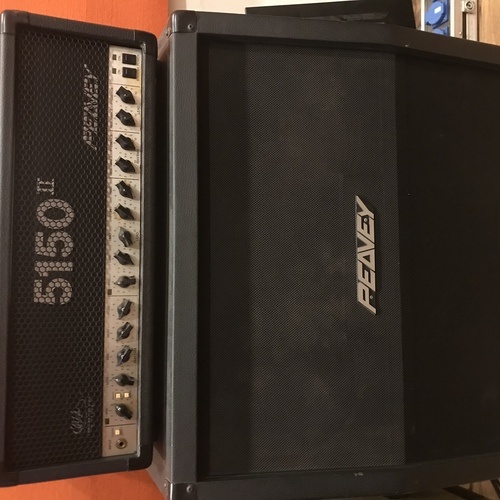
The 412M in the picture is the newer version, I have the older VTM series version from 1988 - these 412Ms came with 4 Celesion GK-85S speakers - precursor to the GK-100. Honestly, after having a Line6 Cabinet with a GK-100 in it, I prefer the GK-85s better, they are a bit warmer, and have midrange, and that midrange is in EXACTLY the right spot for my tonal preferences. Need an idea of the kind of midrange I like - go listen to Eddie Van-Halen, George Lynch during hte Under Lock & Key era Dokken, Elliot Easton on the early Cars records, or George Kooeymans in pretty much any decade of Golden Earring - THAT is where this cab sits tonally - with a 120 watt Bugera 333XL head with EL34s and 12AX7's pushing the speakers.
It's a tough as nails cab too. Last band I was in, this thing got regularly loaded into an old panel van and beaten around on it's way to gigs. Our rhythm guitarist had a Marshall cabinet just as old, and his looked like HELL! This thing's tolex could stand up to a nuclear blast, only had to glue one patch of it. All 4 casters still work despite being rolled up and down western Washington streets for the better part of 3-4 decades. Will never let go of this cab.
And just a hint on the other variatns this cab has....
The 1988 version is what I have which came with the old Peavey VTM series amp heads - a set of amps with Dip-Switch "modification" circuit tweaker stuff.
Then in 1989-1990ish, Eddie Van-Halen joined Peavey and the 412M became his cabinet of choice for the 5150, except with Sheffield Speakers.
I think later these got equipped with the GK-100 speakers sometime after the 6505, correct me if I'm wrong.
About this setup
This gear photo by creepingnet features 3 pieces of gear, including Fender Musicmaster Electric Guitar, Bugera 333XL, and Peavey 412M (Straight Cab). The setup spans Amplifiers and Guitars, with a mix of standard and high-end pieces. Artists with this kind of gear are most often found in the Rock, Pop, and Indie rock scenes.








.jpg?v=1784902512)