creepingnet's Music Gear Setup

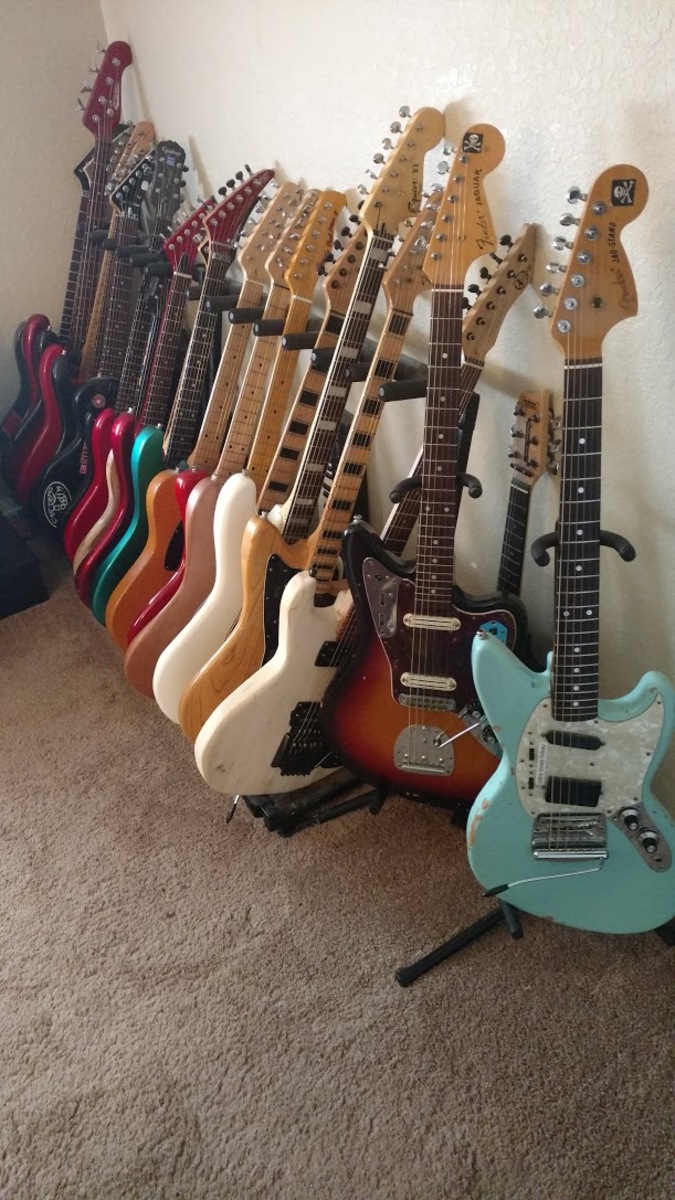
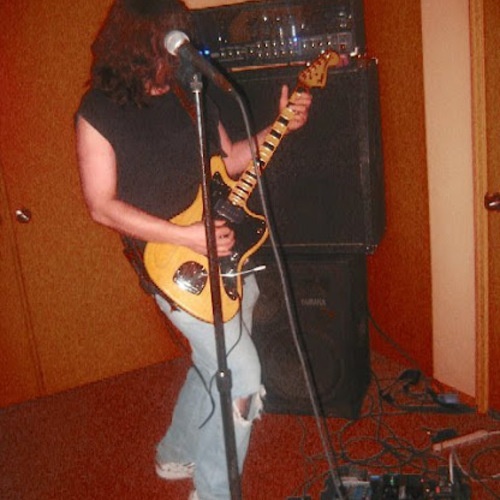
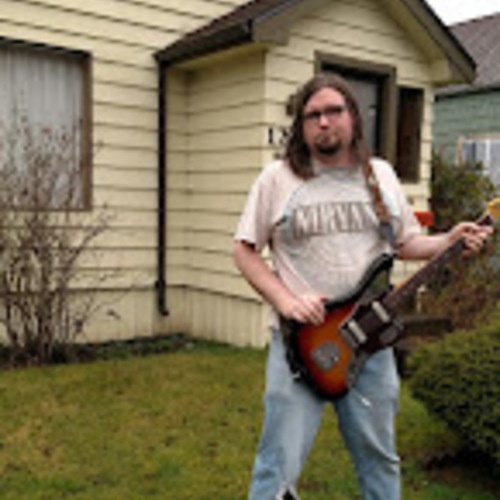
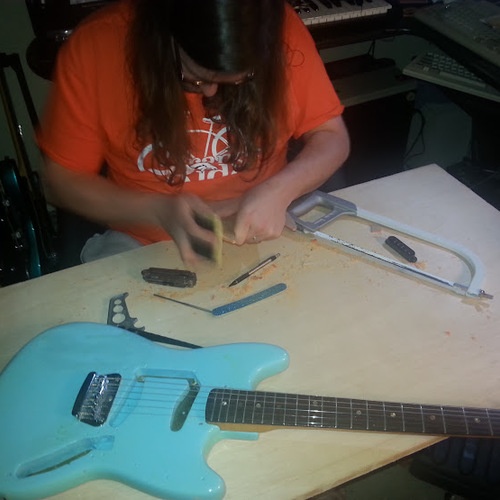
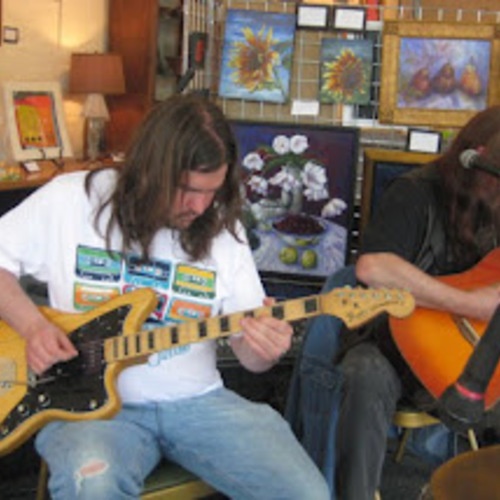
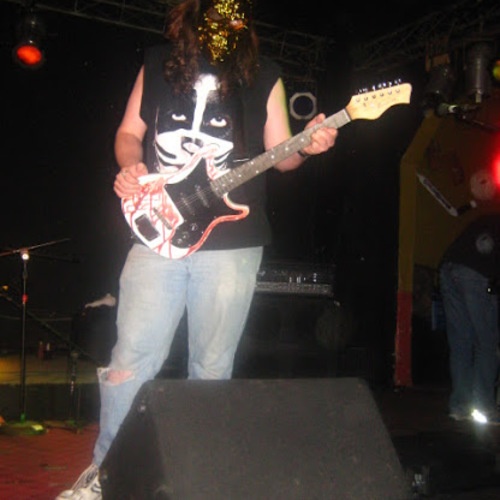
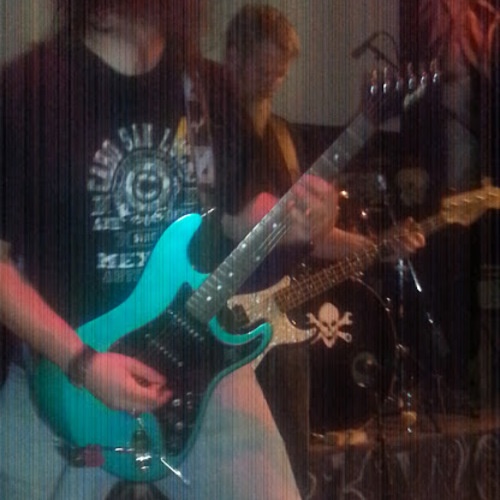
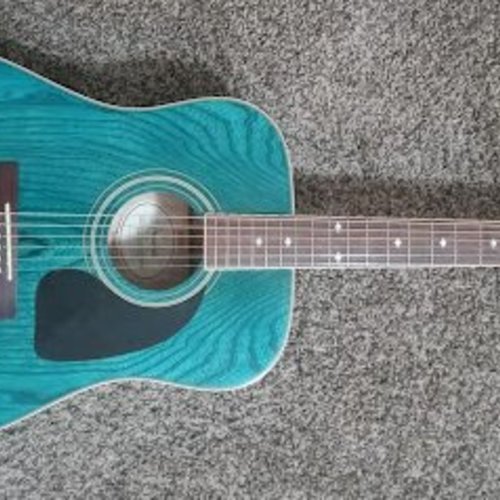
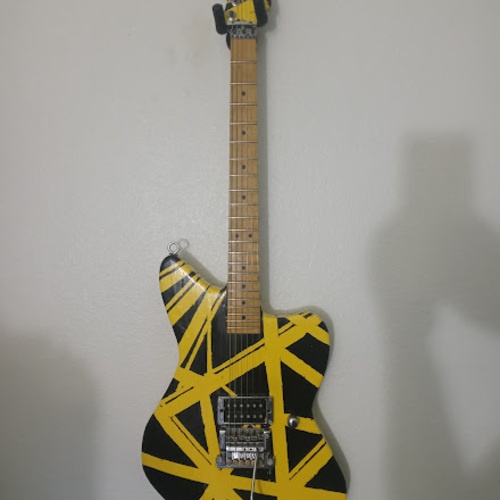
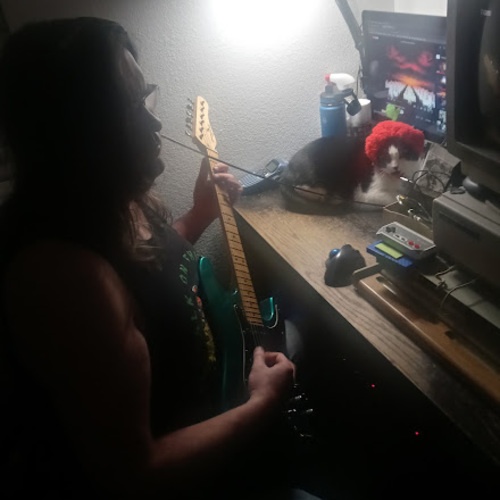
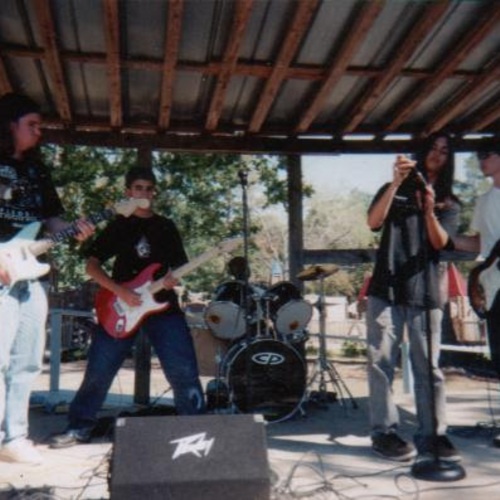
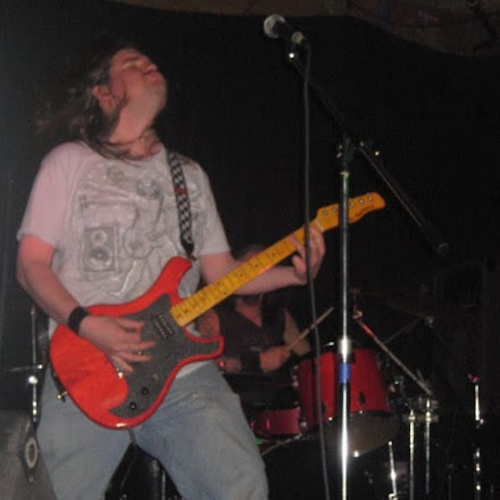
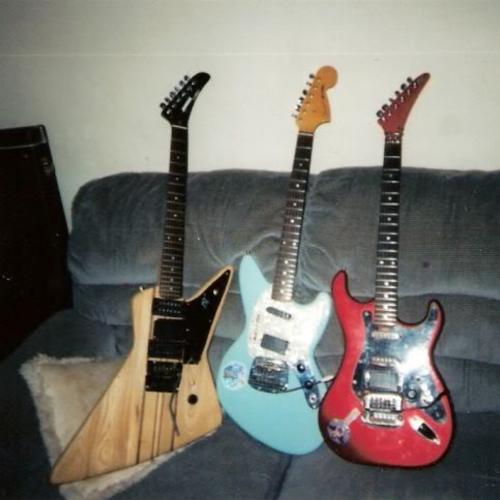
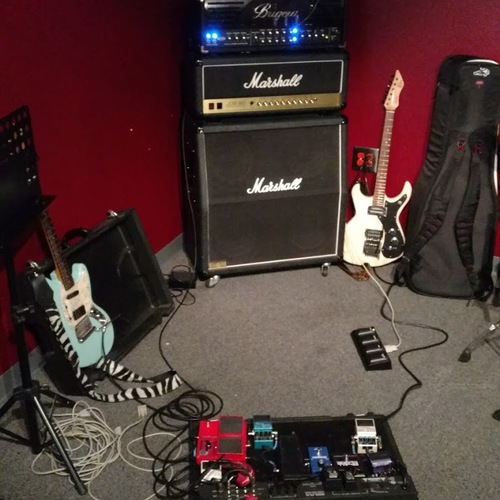
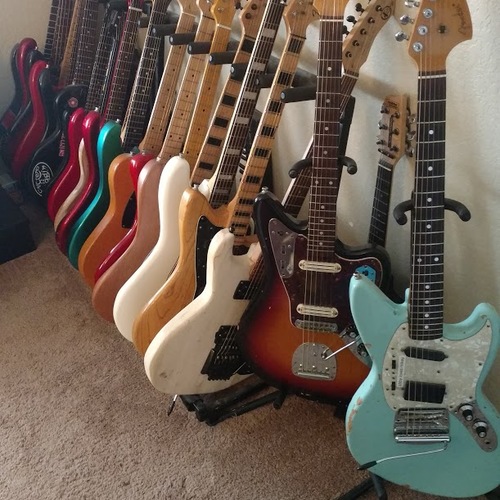
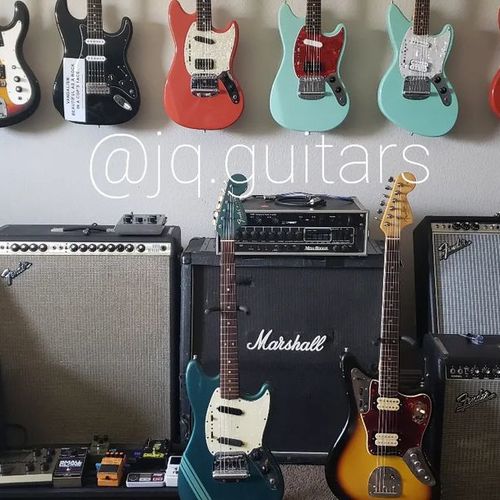
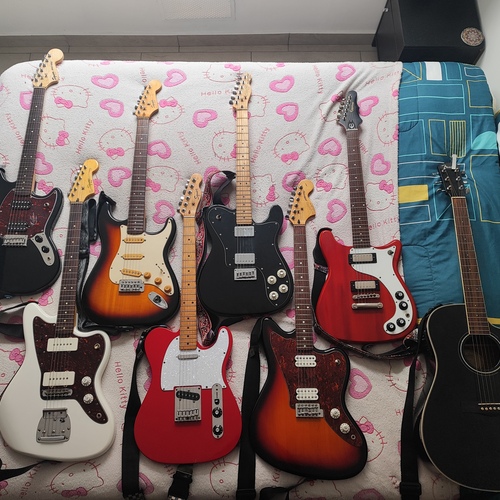
My Personal Armory of Electric guitars, some bought, some modded, some built by me both from parts or even scratch.
More gear photos from creepingnet

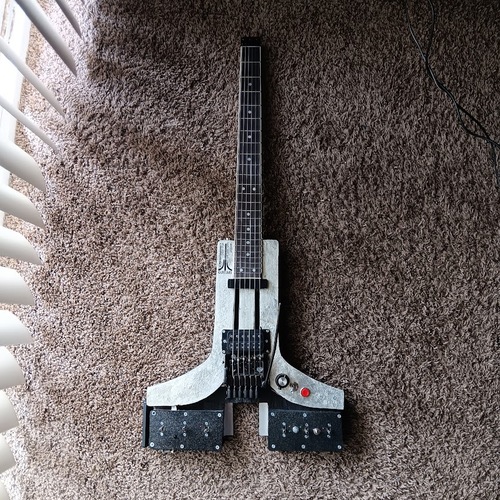


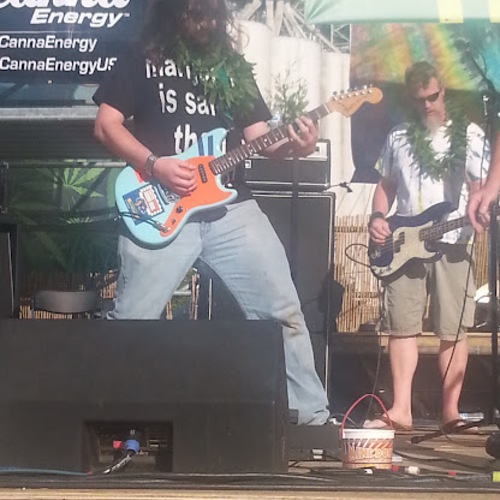

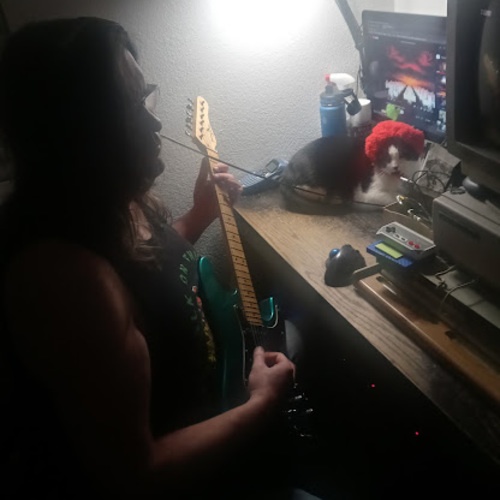











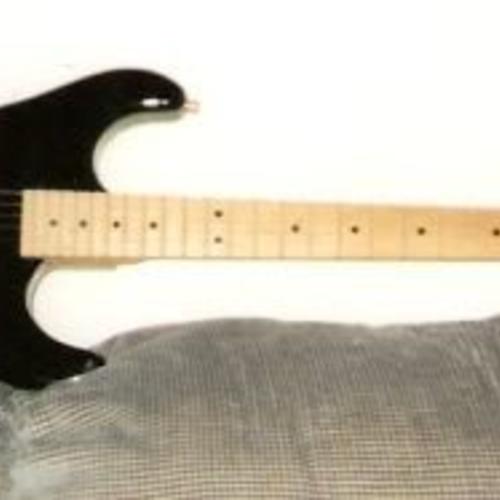
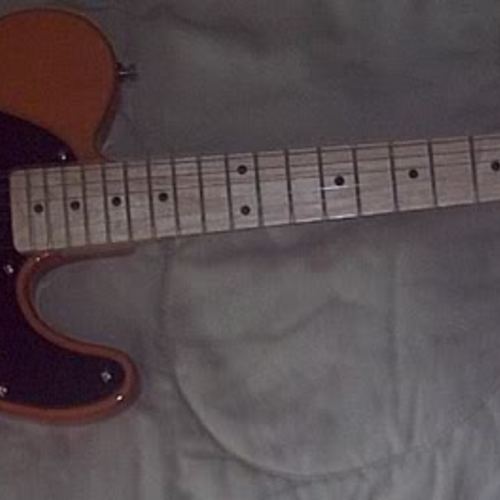
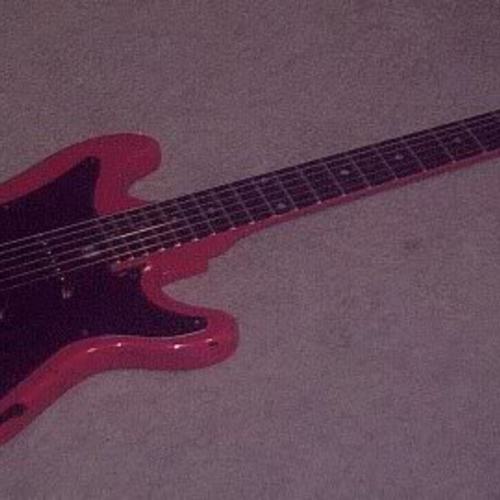
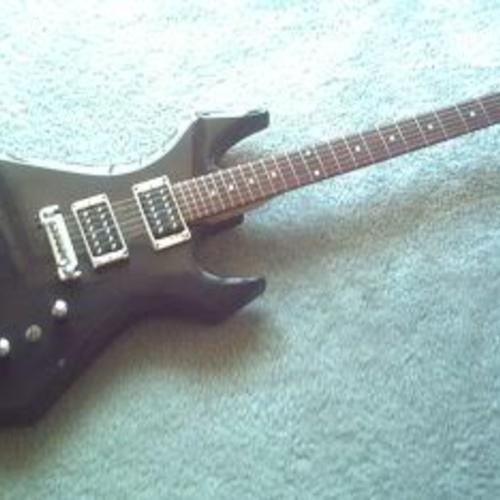
Gear in this photo
This rig
~$3,891
Value by category
- Guitars 86.0%
- Bass Guitars 14.0%
Price mix
Mix of budget and high-end

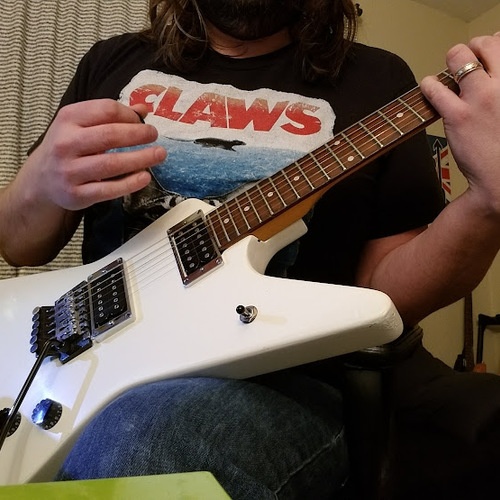
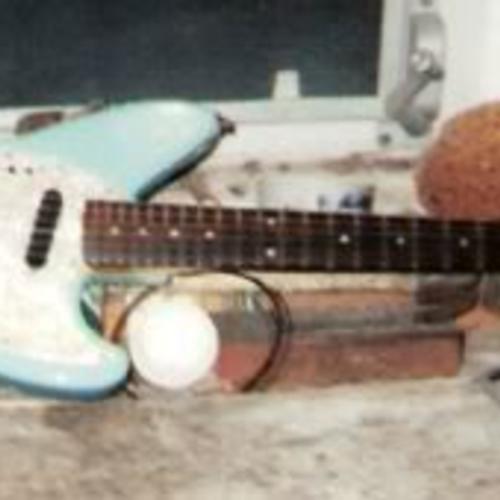
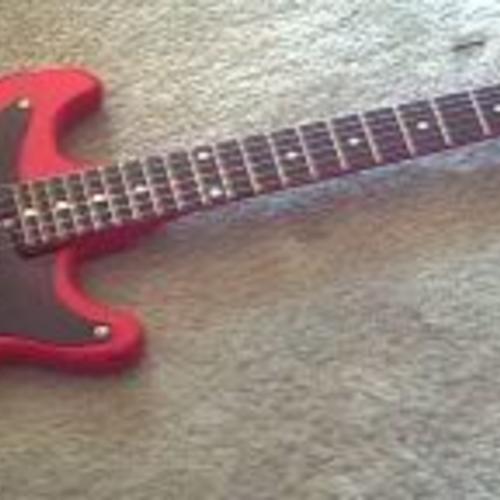
Fender Jag-Stang Electric Guitar
Avg price: $1,049.99


My #1 goto Guitar of over 17 years........
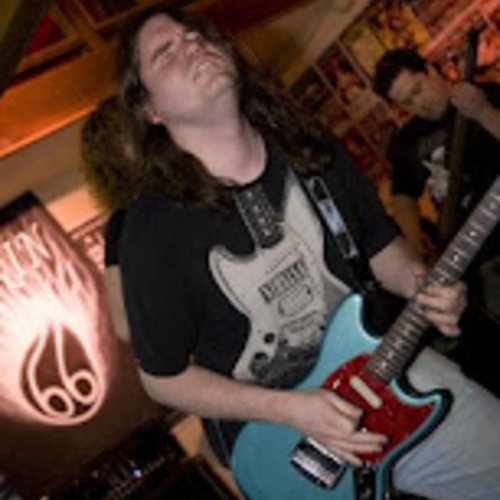
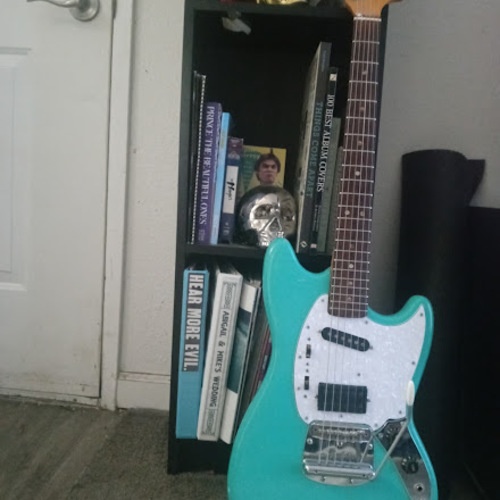
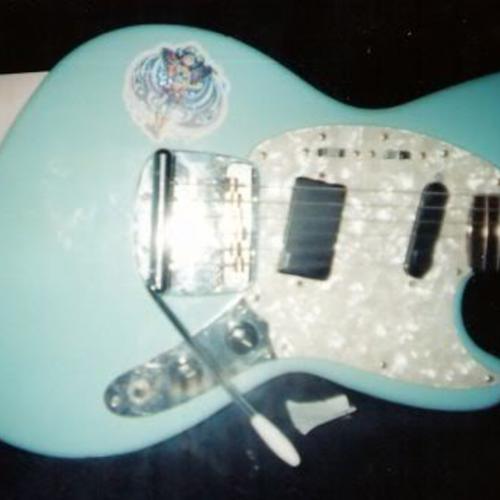
The Fender Jag-Stang in it's stock form is a decent enough guitar, but I play one with EMG pickups in it that I got on my 17th birthday that has been my favorite "go-to" ever since, and she's got the scars to show for it.
In it's stock Format, the Jag-Stang is a quality instrument built from Fujigen Gakki (1995-1997) or Dyna Gakki (1997-2001, 2003-2006) in Japan for Fender Japan. Despite being a "unfinished" design as the second prototype was to go to designer and Nirvana frontman Kurt Cobain the day he died that fateful day in 1994, it's surprisingly great. It's only real shortcomings only being the bridge pickup which is a bit anemic at 7.4-8.2K ohms on the earlier models (which had a DiMarzio sourced H3 or H8 humbucker) - the later Alder bodied variants featured a Fender Santa Ana humbucker that addressed all these tonal issues. In my case, the previous owner replaced the original pickups with an EMG SA in the neck, and an EMG 81 in the bridge sometime about 1998 per date code on the pickups (my Jag-Stang is a 1995 1st run model with the 60th Anniversary and "Designed by Kurt Cobain" stickers on the back of the headstock, confirmed by body and neck build dates).
The early Jag-Stangs were made of basswood, which tends to absorb extreme highs and mids a bit, making it a much woolier guitar. Playing an alder model gave a more balanced response due to a thicker wood density. This also affects finish durability - my 95' is a literal relic, dents, dings, scratches everywhere, all of them from 17 years of hard gigging and studio work. It does not help that the paint on these, particularly the early ones, was just one giant thick glopping coat of sonic blue or Fiesta Red.
Now to one of my favorite features, the vibrato. The Fender Dynamic Vibrato is one of my favorite units of all time. It's smooth, like a Kahler, but I don't need to drag an entire pile of hex keys with me to tune, or make small adjustments. It's also more economically sound than a Floyd Rose because replacment parts are cheap, and I burn through things like pivot points and knife edges a LOT less as fast as I do on my Floyd Rose guitars. I can whammy all day on this thing and it never goes out of tune.
However, in 17 years, I have made some mods and improvements. The EMG Pickups in this thing sound amazing - TBH, I've only ever played one out of the hundreds of guitars I've played that matched the Jag-Stang with that particular set of pickups, and it was a Fender Prodigy. I added a Pi2 Phase inverter preamp to allow me to still get the out-of-phase sounds the Jag-Stang is somewhat known for having (but minus the volume loss), added tone recovery cap brought to an extreme, giving me more tonal versitiliy, no-load tone control. All of these turned the Jag-Stang from a great "grunge" guitar into a Pensa Suhr terrifying, Tom Anderson scaring tonal chameleon. It makes an EXCELLENT platform for hopped up circuitry once you figure out how those 3-way switches work. Also, my modification improved on the pickup selection on-the-fly because I designated one switch to pickup selection and the other to tonal edits.
17 years of everyday hour or more play on this thing and of course I had to replace some parts. I had to replace the tuners in 2006 because the originals wore plum out from all the tuning changes I do, CGDGBE, Drop-D, whole step down, 1/2 step down, and back again a lot. The Ping sourced Kluson copies are just not up to the task for a lifetime, I ultimately got a set of proper fitting Kluson Revolutions on there and had my split shaft sealed gear cake and eat it too.
Another thing is that Cobain bumped into the perfect combination of size and shape on this by accident (with help of Fender Custom Shop luthier Larry Brooks) - the result is a guitar that looks a little odd at first glance but is extremely comfortable despite not having contours, and the way the shape sits makes it not look stupid on hulky tall guys like me - like I've been told Mustangs tend to do to me.
Basically put, the Jag-Stang is a well balanced (especially the later stock models), fast playing, great sounding guitar with a few quirks that are easily ironed out. Sure some might want to ride the Nirvana legacy to death, but after picking up a pre-modded version, I felt like taking the Jag-Stang into it's own place, which it also can do just as well as any Strat or Telecaster.

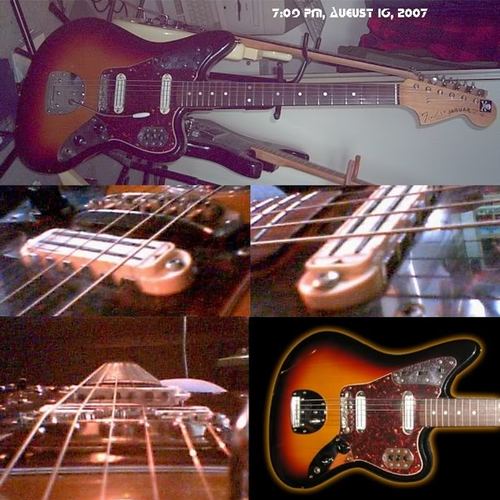
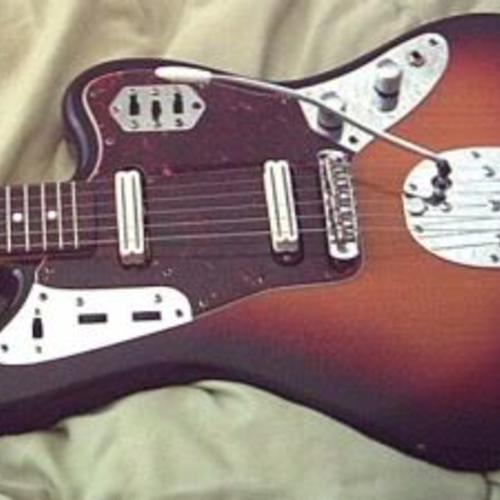
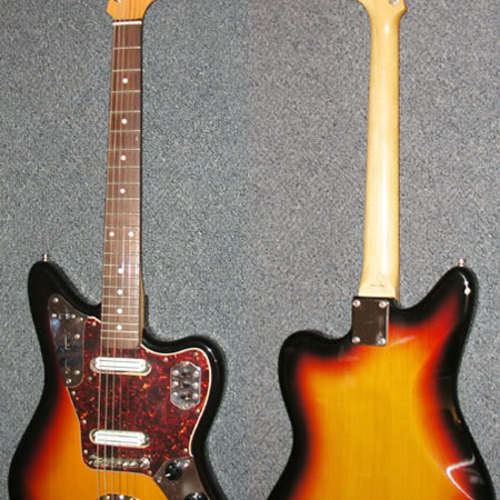
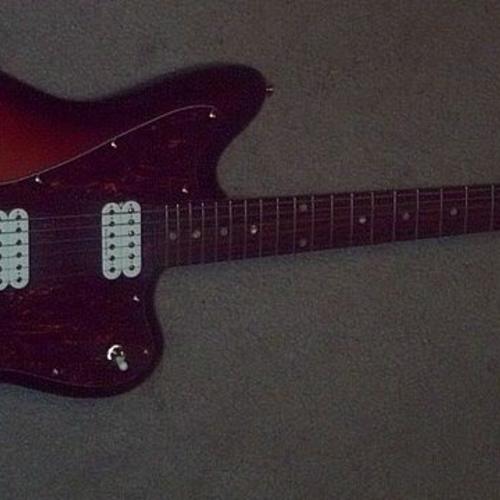
Fender '62 Jaguar Reissue Electric Guitar
Avg price: $1,723.57
Another rock solid axe from Fender Japan
I bought my Jaguar in December of 2005, it's a 1998 Model built at the Dyna Gakki plant for Fender Japan in December 97' (Neck Date), and January 98' (Body Date). I bought mine already customized.
SPECIFICATIONS (STOCK)
NECK: Maple neck, 24" scale, 22 Vintage frets, pearl dot inlays 7.16" Fretboard radius, Kluson Ping replication tuning machines
BODY: Basswood, or Alder (mine's Alder) Jaguar style body with vintage routing
PICKUPS: 2 Fender 62' Jaguar reissue single coils, 6.4K Each, Alnico V or Ceramic Magnets
CONTROLS: Separate Rhythm and Lead Circuits, Rhythm volume, Rhythm Tone, Rhythm/Lead Selector Switch, neck pickup on/off (Lead), bridge pickup on/off (lead), Strangle/Bass Cut (lead), Lead volume, Lead tone
BRIDGE/TAILPIECE: Fender Floating Vibrato with rocker bridge with adjustable string spacing
COLORS AVAIL/COLOR COMBOS 3 Tone Sunburst w/ Tortishell Pickguard Olympic White w/ Tortishell Pickguard Candy Apple Red w/ W/B/W pickguard and Matching Headstock 3-Tone Sunburst Foto Flame (fake Flame Kodak overlay on body under finish) w/ red Tortishell White Blonde finish w/ Red Tortishell Pickguard and gold hardware
Mine came from the Guitar Hangar in December 05' with an unbranded Jaguar/Jazzmaster hardshell case, modified with a pair of Seymour Duncan SCR1B Cool Rails, 500K pots in the lead circuit (tone being a push/pull coil split for the cool rails), and a Gibson ABR-1 Tune-O-Matic filed down to fit the fretboard radius.
The original Cool Rails were found to sound so close to Jaguar pickups in timbre with the 500K pots I chose to leave those in, and put cut-off Jaguar pickup covers and Jaguar claw side-pieces onto them - all that did was redistribute the magnetic field a bit just bringing the tone more inline with a Jaguar, but with hum cancellation.
I also took out that crappy Tune-O-Matic that was chopping my hand up and eating up the strings (I use the vibrato on this guitar, HARD and OFTEN), and replaced it with a bridge identical to the one that the Japanese Jaguars regularly come with. I did, however, take some time learning the hows and whys of the Jaguar bridge on my own and came up with my own way of dealing with said bridge and it's so laughably simple. Basically, I play my Jaguar with .009's on it - most people say to put 11's or higher on them because they are short scale and heavier strings stay in place - but they actually don't because beyond a certain point, the strings being too big for the slots (especially the Low E which is the #1 culprit in this problem) can cause them to jump the saddles even more than light strings would at lighter tension because there is less material deep enough to hold them in place.
The second problem with this bridge that people misunderstand is the breakover angle, anything 10 degrees and over is sufficient enough string tension, the real problem is tolerances. The looser tolerances of guitar production say versus, something NASA would have made, are what really causes all the problems people think goes with breakover angle. Mastery gets around this by putting deeper saddles into their bridges as well as a pair of fixed allen key adjustments on a pivot for each pair of saddles. and Staytrem just uses Mustang-style saddles that are only rounded on top, cut to the radius of the guitar, and have nylon-embedded fixtures meant to hold them still. I do this on the Jaguar by cutting a strong humbucker spring in half - putting one half on the low E, the other on the High E, and angling the E string saddles upward on one side to wedge them in. Doing this makes it rock solid stable even without a shim or a breakover over 10 degrees, and it keeps the extra behind-the-bridge ringing that I love so much.
So far though, in the 10 years I've played this guitar, it's been an unstoppable companion. It's only broken one string at a gig, it's never broken down or spent a period of time in limbo due to parts. I did have to fix one grounding issue with the rhythm circuit and I replaced the tuners just as they were wearing out because those Ping manufactured Kluson copies just don't last - I put Kluson Revolutions in as I prefer seald gear durability but wanted to retain the split shafts and vintage look. I've hard the stock pickups these guitars have, honestly, mine more closely matches a Classic Player with the stock 60's wiring or a Squier VM due to the hotter bridge pickup.
And you'd think with all the pickup/electronics mods it'd sound different, but to tell you the truth, the Jaguar offers so much uniqueness in it's overall design that it sort of has a sound that transcends the pickups put in it because much of it's sound, the attack, the decay, the resonance, all the harmonic overtones from behind the bridge - are the result of that bridge system. All the pickups really do is amplify those things more if they are hotter. The cool rails just make it sound like a noiseless Jaguar. And sustain? I can make this thing sustain for days at stage volume using controlled feedback, and even then, plugged in, sustain is not really a problem at all on this guitar.
The only real cons are the original pickups I hear were not so great - microphonic, and tinny, probably due to incorrect construction, and the machine heads are crap. The rest of the complains most people have about the Jaguar I can look past because I know how to work with them or very frugally "fix" them in a way that does not affect the guitar or change it from what it is into another boring blahcaster. The EQ of the Cool rails might be what's making the 500K's work so well - aside from being quality switchcraft pots - as the Cool Rails have a tonal profile similar to a Jaguar except in ways that the 500K pots would help exaggerate to keep pushing the "overwound single coil" sound they are trying to emulate. Split I get more of a Goya/Teisco/Kawai/Sansui guitar sound, plinky, ice pickey, it's like 2 Jaguars in one - a Pre CBS with hot pickups (the first Jaguar I ever played), and a later CBS era model where they started winding them a bit less as hot.
And I'm not giving the 62' Reissue Jaguar high stars for mine alone. I've played quite a few other Japanese "62' Reissues" over the years and they have all been consistently great instruments. That's why the Jaguar became my #1 "off the rack guitar" - it's just buying my first one meant cutting cost by buying one modified, and then finding modding it back won't make any change serious enough to make it worth the money, leaving me with a bit of an "easter egg" from the previous owner via those Cool Rails.
And for those wondering on the Sound. The Typical Jaguar sound consists of a very balanced sounding neck pickup, and a very snarly, yarly, coarse sounding single coil in the back with tight lows and very present highs, together it sounds a bit like a Tele, but a little sweeter and floppier due to the shorter scale, a bit more harmonically rich. The Jaguar does have a fitting name, because, in the bridge especially, it has a very good "Bite" to it, especially when the gain is pushed, almost like a Gretsch with heavy overdrive, just not as sthick in the lower mids.
If you are used to a traditional setup, the Jaguar might be something you'd want to try out before buying because it does feel and play a bit differently, as well as the "duffy" or "tchak" type attack is not of the traditional electric guitar ilk in a lot of ways. It does not play like a Gibson or a Fender - it plays like a Jaguar, it's it's own thing capable of bringing something extra to all those it can emulate, and that's what I like about it.


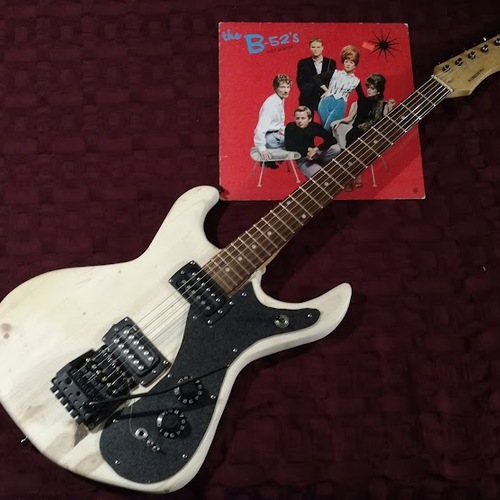
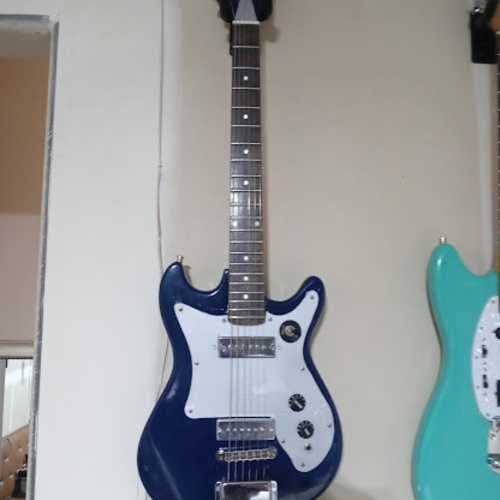
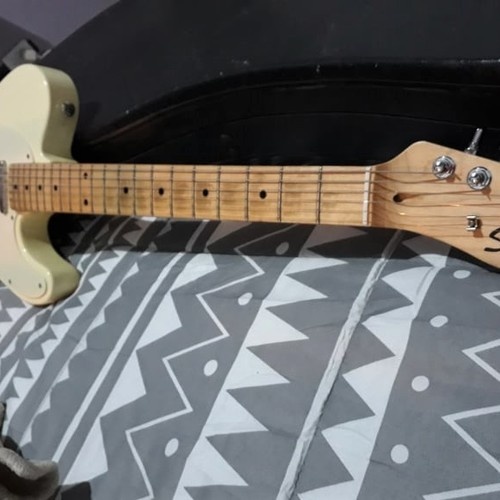
This is a prototype for a Mosrite style guitar built in MY style......
The inspiration for this guitar was Kurt Cobain's Univox Hi Fliers and Mosrite Gospel, and the Mosrite Ventures and Mosrite Mark V that Ricky Wilson was using in the B-52's early days (R.I.P. dude). I had a Kay KE-17 neck laying around, and no body for it, and I felt it would make a great neck for a Mosrite inspired guitar.
SPECS NECK: 2004 Kay KE-17 neck, Kluson Revolution Tuners, 25.5" Scale, 22 Vintage frets, skinny profile BODY: Pine multi-piece table bank sandwhich body inspired by the Mosrite Mark V and Ventures PICKUPS: First Act Humbuckers, an 8.4K in the neck, and a 16.8K Jammed right up against the bridge CONTROLS: 1 Volume, 1 Tone, 3-way pickup selector, and a tone switch for each pickup allowing for split/humbucker/parallel operation, giving a wide array of tones from thin and twangy to thick and grungy BRIDGE: Washburn Wonderbar/Shift 2001 vibrato unit compensated to act as a poor-man's trans-trem PICKGUARD: TAP Plastics ABS Haircell Plastic pickguard based on a Mosrite Mark V style guard FINISH: Bare Pine .), I've been making quite a few small tweaks/refinements as needed that would damage putting a permanent finish on it HARDWARE: Black CASE: None, yet, plan to build one STRINGS: currently using Dunlop .009-.042's as those were what I used to set it up, might move to Ernie Ball Paradigms to test next
I built this guitar on a whim. I wanted a body for that neck, so I went to Lowes for some unrelated things, and looked around the lumber section, and found a large chunk of pine sticks glued together that could be cut in half and made into a guitar body by sandwhiching the layers. I bought a pull-saw, and a coping saw - the whole mess cost me $15.00 total. Not bad. I've made other bodies out of pine before - but those were with power tools - this was in an apartment with HAND TOOLS - well, until the final shaping part and the final routing that was thicker than half the body thickness.
I came up with the shape by going through my giutar collection and matching lines of my other guitars up with photos of Ricky Wilson and Kurt Cobain's guitars I pulled up via google image search. I started off like Semie Moseley did for the original Ventures shape - tracing a Stratocaster backwards. Then refinements came by some free-hand alterations, adding in some Jaguar and Harmony H-802. The resulting shape was very much Mosrite-ish, but with some small differences.
The body contained some various experiments in construction. After the top half was cut out with the pull saw, it was glued and screwed to the back half using some coarse wood screws. Before doing that, I cut the neck slot using the coping saw.
When I was done, I did some of the initial pickup routing using a Chisel, but later went to using a router to refine everything. There were some mistakes on this body though, pickup routes were too wide because I had not decided weather I was going to use Univox style, Mosrite style, or some other pickups I had, I even toyed with using EMGs at one point ( an H and a 60 - both vintage 80's models). I finally decided to go with a pair of orphan First Act pickups I had laying around that never sounded that great in other guitars, but somehow wound up sounding PERFECT in this one. Possibly the biggest jack-up though was the neck slot, which has been under various tweaking from the start - but desipte, sustain and resonance on this guitar is crazy good. I've been filling it in, and reshaping with Basswood, and had to move the front shelf forward and cut the end of the rosewood board on the Kay neck flat to make sure it intonates properly - now this sucker is dead on and by god does it resonante now.
There are some key things in this guitar that makes it sound the way it does. The Pine body absorbs some of the lows and some of the highs, giving a balanced midrange effect - pair that with a big, monster pole equipped 16.8K Ceramic humbucker at the bridge, and it's like a super-high-gain mosrite kind of tone I'm getting out of it, even when full humbucker, it's still got that twang to it, just noiseless, and with a rididulously good amount of distortion - with a large amount of bite and a low end that never gets flappy or muddy, but is very thick.
The neck position is perfectly balanced, it compensates for it's very close position to the neck heel with less winds, smaller poles, and a lower ohms reading (8.4K, more in the traditional PAF vein). Split it does the whole Ricky Wilson/Ventures/Surf thing really well - in full humbucker it's like Insta-Bleach.
Overall though, it has kind of it's own unique voice, sort of like a shredder's surf dream, or a surfer's metal weapon. Which was the whole goal. so mission accomplished.
The last, and another interesting part of this things construction, was the use of a Washburn Wonderbar vibrato - a really weird old also-ran that competed with the Floyd Rose and Kahler vibratos in the 80's (originally called the Shift 2001 vibrato), and best noted for no need of routing to be useful.
But one neglected thing about this vibrato unit is it's ability to transpose chords around on at as many as 4 strings at a time, as a result of a set of "jaws" behind the tension rollers that change the rate of pitch drop each string recieves. So far I've gotten it close enough it's usable almost like a trans trem - which saves time for tuning down at concerts/gigs/etc. I'm working out a way to make all SIX work that well that way as the primary problem is the amount of pitch drop on the high E just can't get close enough - need something that matches up with a .009 gauge high E better in tension. Once I have that figured out - I might break my GAS for a Steinberger Trans Trem equipped axe of my own design.

A Luthiery Self Assessment
It was 2009, Hipster-dom was riding high, and Jazzmasters were starting to go for a premium. and I wanted one because I always loved the Jazzmaster since playing a Foto Flame 1994 MIJ model with Seymour Duncan pickups. When the only Jazzmaster you can find costs at least $800 - why spend it all at once when you can spend it gradually over time.
But Jazzmasters had some things with them that I did not like, in particular, only 21 frets, out of the box the bridge usually needs some work, the fretboard radius is a bit too round for the scale length, the tuners are flimsy on some of hte reissues, and the bridge pickups on every Jazzmaster I ever played were anemic and/or imbalanced to the neck (ie, the hotter pickup always was in the neck for some reason).
So this was my attempt to tweak the Jazzmaster into what I think a modern Jazzmaster should be. A Jazzmaster that can rock out with the best of them but not lose any of the unique traits that made the Jazzmaster such a special sounding, playing, and feeling guitar.
I started off with a Swamp Ash body, so as to have a pretty finish, light weight, and some dampening for the high frequencies - basically to absorb some of the "Ice Picky-ness" of the Jazzmaster but not lose the highs so much it sounds less like a Jazzmaster and more generic.
The next thing addressed were the electronics, in particular, the pickups. In the bridge is a Alnico 2 10% overwound Pickup Wizards Jazzmaster pickup, measuring in at 8.8K Ohms resistance, with a Alnico V AVRI 62' Jazzmaster pickup in the neck to add a little more spank and sparkle to the neck position whilst keeping that signature Jazzmaster sound to it. The pickups are NOT RWRP as Fender and Pickup Wizards seemed to have done it differently.
These two are wired into a standard Jazzmaster wiring harness wired with cloth wire - 50's style - with no alteration from the standard Jazzmaster schematic at all. The Jazzmaster is rather versitile to begin with so no need to fix what's not broken to begin with. When you play one, you have to think with a bit of inverse logic of other guitars though - on the lead circuit, you want to turn the volume DOWN to warm things up and increase the gain, not the tone, and turn it up if you want to clean things up and gain more twang. The sweet spot is around 7 - gives it a very P-90-like output, flat out sounds like a Pissed off Telecaster on steroids with more bass and naturally scooped mids.
I forewent a vibrato unit with the Trem Lock both for budget reasons and that I've never had to use that feature on any offset I've ever used with this vibrato, and I use my own special setup that increases the vibrato range, bringing it into first album Van-Halen territory - that's right, I use this guitar to dive bomb - people said it could not be done, so I looked at the mechanics, figured it out, and did it!
I used the much maligned stock bridge, one of the import variants. I did the same mod to it I did to my Jaguar, 2 thicker springs on the outer E saddles to box the middle ones in, and angled the Low E saddle upward to lock the low E string in place and prevent it from jumping. Works just as great, and it increases sustain from both the scale length and the "3rd bridge" behind the bridge - which is like having a whole second instrument there - either that or a built in reverb tank made of sympathetic vibrations - one of my favorite features of the Jaguar/Jazzmaster vibrato setup. The main problem with these bridges has almost always been part tolerances rather than breakover angle.
The Neck was the other major upgrade to the design - I wanted something skinny, with a flat radius, 22 frets, and something that looked late 70's/early 80's - so what I wound up with is a Tommy's Custom Bodies and Necks 22 Fret Maple neck with maple fretboard and a CBS Fender headstock. I put a CBS Fender Decal on it just to see how many people would think this was a custom shop build, LOL. I'm planning to remove it in the future and put my own waterslide on there (just a sponge away from that). The flat 12" Radius and bi-directional truss rod has allowed this guitar to be probably one of the fastest playing Jazzmasters ever made - J.Mascius would HATE this thing I'm sure, strung up with .009's and only something like a 10th of an inch between the 22nd fret and the strings with little to no buzzing if you play light and fast like a metal player. The added 22nd Fret means I can do some mondo bends up to F#-A on the high E at the 22nd fret, effectively pushing the guitar's overall pitch range up a little bit too.
That said I have had some improvements to make to it. The original selector switch I used was a tad junky, had to re-bend the leafs inside the switch to keep contact. Switched to a Gibson switch and the problem went away. Have been toying with installing a "Super Switch" on it at some point to add even more tonal options like series/parallel/phase reversal. Another change soon coming is Kluson Revolution tuners because I found the Kluson Tone Pros I originally used are a bit too flimsy for frequent gigging as I played this guitar out a lot and found those tuners made the tuning stability a bit of a crap shoot - but I've been testing the Revolutions and they sound better as they add a little more mass to the headstock, and also are a LOT more stable, less drifting, and no play in the keys.
Either way, I've toyed with building small batches of hand-built guitars and I consider this a prototype to my own tribute to the original Jazzmaster. Sort of the Caroll Shelby Jazzmaster if you will - looks like a production guitar because at it's core, it is, but has all the right tweaks in the right places to make it play fast, stay in tune, and be versitile enough to not be limited to just being a Grungy Fuzzer and a Surfy Plinker. It's just as at home growling out UFO and Scorpions songs as it is getting fuzzed up for some Bush, Sonic Youth, and Dinosaur Jr, or dripping in reverb and taking the classic Ventures route, or the wacky B-52's route.

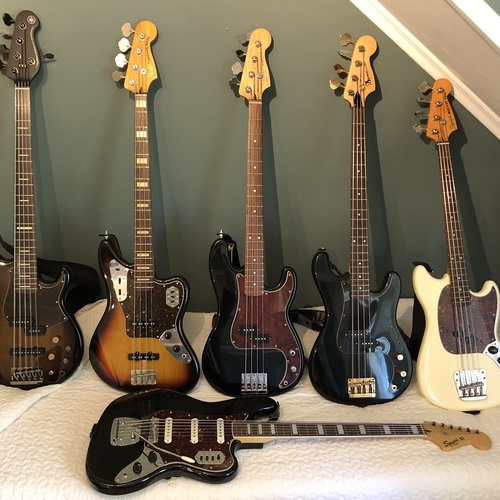
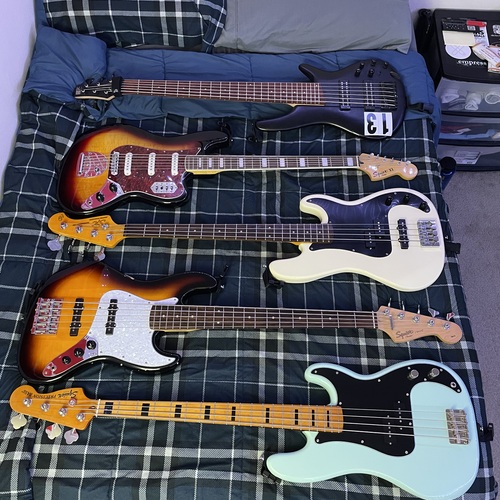
Squier Bass VI Vintage Modified
Avg price: $545.00
My Stage & Studio Jack of All Trades
While more recently wideley accepted as a "Deluxe Bass" - it seems in the years prior to the past few, this bass was a "whatchamacallit" - is it a Baritone? A Bass? Both? The answer is Yes.
I sold my Fender Mustang guitar and Bass and replaced it with this after seeing Phil-X demo a few vintage ones on Youtube, and at the time, on a huge B-52's kick - I started looking more and more at this as a possible solution to try some "Ricky Wilson-Esque" things out along with the alternate tuned guitars thing I was already latching onto. In the end, I found a shocking jack of all Trades.
The Bass VI is a 30" Scale Six String Bass with a timbre more like a guitar thanks to a trio of Alnico V magnet 6.4K Ohm Fender Jaguar pickups in all three positions. With a skinny fast neck, split shaft tuners, and a Jaguar-like circuit, a Jag-a-holic like me could not resist. Anyting that can lay down some bass tracks, go battle the Rock Lobster, and then go hang around in Korn-ville like a 7-string can with some creativity and extra tightness makes it now my current go-to bass - and with 3 pickups and rather responsive volume and tone controls, it can emulate just about everything else - this bass basically replaced 4 bass guitars in my collection.
Prior to this bass, I used a 1987 B.C. Rich Ironbird NJ, a 1986 Segovia Bass Guitar, a 2009 Fender MIJ Mustang Bass, and a 2008 Epiphone EB-0 bass - out of all those, the Mustang was my favorite but it just did not have the "kick in the ass" of the B.C. Rich or the Segovia, and the EB-0 was just an awful piece of crap that would not stay in tune and was really just a one-trick pony - and it's rare I'll trash a Bass or guitar, but the EB-0 I feel is deserving of it.
The Bass VI can be like a Danelectro longhorn bass in the bridge, a Jazz Bass with both bridge and middle on, does a fairly interesting P-Bass rendition in the middle somewhere between a P-Bass and A Mustang or Musicmaster Bass, and the neck position has all the tonal character I did sort of like in the EB-0, but this one actually stays in tune and is not a one-trick pony due to an overbearing 32K ohm mudbucker in the neck. As a bass, very versitile, I find my Segovia does not get played much anymore because the VI does a tighter version of that sound with careful EQ.
As a baritone, this thing nails that Ricky Wilson "Rock Lobster" tone in the bridge position like a champ. Apply distortion and it can range from being the sonic version of a concrete drill, to being able to roam around in Nu-Metal/Death Metal/Doom & Gloom sludge lands with ease, and enough frets (21) are there to get up in the Guitar range for some decent soloing - and on top of it, it has a decent tremolo bar!
I mostly play lead guitar and I have used this thing on several recordings.since 2014, including Zombie Jihad's "You Will See Demons" and my own Mad-Mike stuff on Soundcloud. It's also going to be playing an expanded role in a future metal project of mine. I've been considering now doing some arrangements using 2 Bass VI's where they interleave between bass and guitar ranges. It's just been quite a catalyst for creativity because it's an instrument that is so undefined on a specific role or pigeonholed by a specific artist, leaving an open door for all sorts of interpretations on how to play it creatively.


I prefer this to a Les Paul or an SG......really unique voice....great for more than just Loverboy songs...
The Hondo Paul Dean series guitars are guitars designed by Canadian rock guitarist Paul Dean (obviously), best known for this work in the band Loverboy.
Paul had a 64' Fender Stratocaster he smashed and rebuilt imitating Pete Townshend back the late sixties/early seventies, and after it's intentional destruction, it was rebuilt and had amazing resonance - that guitar became Paul's favorite, but also became the basis upon which these Hondo Designer Series guitars were derived from from a sonic standpoint.
The Hondo Paul Dean II version of this guitar features a Sen Ash 2 piece, non-bookmatched and specially tuned body with a tapered, unplated, 4-bolt neck joint for easy upper-fret access, a 3 piece maple neck with a maple 21 fret fingerboard, featuring a pair of 1/4" resonance slots routed parallel to both sides of the truss rod, and a 10 degree headstock tilt and straight string path to avoid the need for string trees. It also features a single volume, tone, and 3-way switch setup, ABS plastic haircell textured black "Anti-scratch" pickguard, Leo Quan Badass-style wraparound bridge, and the choice of the base level Hondo 7.4K Ohm ceramic humbuckers, or for $60 more you'd get DiMarzio DP104 Super II Humbucker pickups just like the ones the original Odyssey version came with.
The Hondo Paul Dean II's biggest draw would be the sound of this guitar. It's very unique, very thick and warm like a Gibson, but the Spank and clarity of a Fender, with a hollow upper midrange "yowl" to single notes that gives solos sort of a vocal like quality, almost like a slow-moving Wah Wah pedal. There is a small difference between the stock and upgrade pickups. The stock pickups are a bit thinner sounding due to the lighter wind, more inline with a Fender sound like a Jazzmaster, while the Super II's add more bottom end to the mix but the sharp crystalline highs are retained and there's a small spike in the midrange.
One impressive thing about this guitar though is the neck. If you like fat necks, don't bother, this is probably the skinniest neck of ANY production guitar I've ever played or heard about - only 1" at the nut! And the back profile from fretboard to neck back is very thin as well. While out of the box the fret leveling leaves some to be desired, if you give a Paul Dean a good fret level, it will give back in spades. AFter doing this, the action was lowered to PRS levels - with about 2/8" at the 21st fret.
Despite the thin profile of the neck, and the fact it has a tilt headstock with no volute, it surprisingly is an EXTREMELY Strong neck. Stringing this guitar up with .013's does not even pull the neck enough to need more than 1/8 turn on the truss rod to keep the relief just right. Most of the time it just stays perfectly straight and just barely tightening the truss rod will put it in good territory for .009s. Too loose though and the nut will rattle, so some might not handle light gauges (.010 or less) very well - which is how I Found out Hondo actually DID the "resonance slots" like Paul designed, that rattling nut makes it sound like there's hornets living in your neck, LOL.
I bought mine in 2010 and it's got to be one of the most well built guitars in my collection. I've only set it up twice in the years I've had it and it does not need to settle at all. I've gigged it multiple times and the only thing holding me back from gigging it more often is how bleedingly rare these guitars are (I'm working out plans to build a few copies of this one, with some special updates). It only seems more Paul Dean II's and even the Odyssey versions came out of the woodwork as soon as I started posting a bunch about them on social media and forums in reply to curious guys looking for Paul Dean's guitar tone or looking to figure out what that "Fender Lead III looking thing" was that he was playing on the 2nd and 3rd Loverboy records/tours.
I find also this guitar, with the Super II pickups, does GREAT for metal. With the low action, skinny neck, and good medium output pickups, it really growls, shreds, and sings with the best of them. And the sustain happy string path, paired with the chambering, make this guitar almost like a "poor man's sustainer" at stage volumes.
The only downsides are no whammy (Which could be worked around using the Schaller Les Trem or similar non-destructive to install device), the electronics (pots, jack, switch) are not the best quality, but they are not bad either, and the original hardshell these came with was the same Korean cheap junk Hondo sent out with their Plywood strats. Also, the pickguard does have a tendency to warp under the stress of the pickup springs in some cases, mine had this when it had the original pickups in it.
Otherwise, great guitar, 5 out of 5, highly recommend, assuming you can even find one.

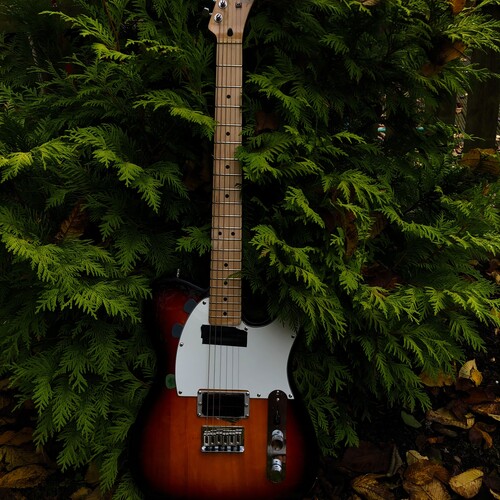
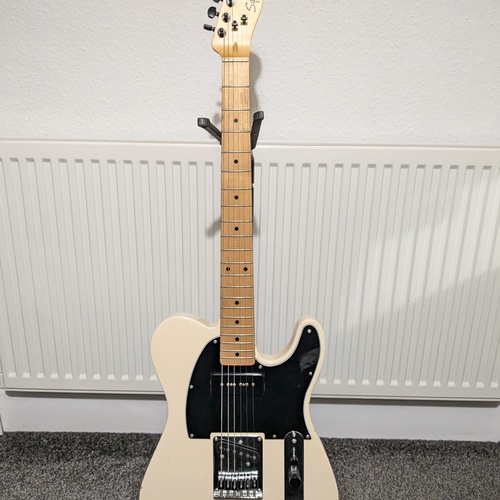
Squier Affinity Series Telecaster
Avg price: $288.35

A decent guitar that can be obtained cheaply
Memphis guitars was a badge brand associated with a Chicago music store in the sixties, and are best known as being one of those "Pawn Shop" brands. Over the course of the 1970's they did all the same things most of the Japanese guitars did, lawsuit copies (including apparently one of the best Les Paul Lawsuit copies of the era), but by the mid 1980's, Memphis had become a bargain basement brand.....except one thing.....their humbuckers!
The Memphis 302HB had 2 production runs actually - there's the earlier Matsamoku built Japanese production run, which was basically the same guitar as a Hondo Deluxe or Fame series fat strat model, and then there's this version, the later Korean made variant that shares the same body, hardware, and tooling with the Kramer KS400 and Harmony H-80T Strat copy.
NECK: Maple Neck, Rosewood board, 21 Jumbo frets, plastic inlays, cheap tuners, tilt back pointy headstock, plastic Gibson style nut. The neck has a wide and slightly chunky profile.
BODY: Plywood strat style body, open space between spring cavity and bridge humbucker from the factory, it's a slightly wider and boxier shape than a regular strat, as the edge roundover is not as extreme as an actual strat.
PICKUPS: 2 tall Matsamoku style Strat pickups in the neck and middle positions, and a very amazing 12.7K Ceramic humbucker in the bridge on par with a DiMarzio Super Distortion, surprisingly these were lifted from the earlier Japanese version.
WIRING: 5-way selector, 1 volume, 2 tones, and a coil split switch
BRIDGE: What appears to be a Stratocaster copy vibrato, but with a twist, instead of a standard "intertia block" in the back, the intertia block is really a C shaped plate with a threaded collar welded to it for the whammy bar. On a lot of these it sits a bit further from the back of the pickguard than is aesthetically pleasing.
FINISH: These came in black, cobalt blue metallic (which ages to a Ocean Turquoise sort of color if under UV light too much), and red. The red and black seems more common than the cobalt blue, it may have been available in more colors.
TRIM: B/W/B plastic scratchplate with black plastic hardware and chrome metal hardware
HARDSHELL Case with Locks
The upside is this is an amazing sounding guitar, especially when you consider the money. It's very much on the Van-Halen end of things through an appropriately voiced amp and is not very microphonic at all, something I don't exactly expect out of a Korean mid-80's copy guitar. It also stays in tune amazingly well despite a janky stock vibrato and those classic "el-cheapo" machine heads.
That said, these do have a few flaws from the factory, making them good guitars for learning to mod/fix guitars on.
The necks on these are NOT level at the fretboard. Most of them have some action issues because the fretboard needs leveled and so do the frets. That said, doing a "redneck" level did get it into acceptable territory (a redneck level is using 800 grit on a 3M sanding block and a sharpie). I replaced mine with one from a Behringer strat copy with Kluson REvolution tuners on it, much better.
The tuning keys tend to have play for 1/6th a turn but at least they hold tune
The vibrato unit is a luck of the draw. Some of them are properly placed, some are too far forward or back. Also, that collared piece in the inertia block should be welded at the top, bottom, and sides from the factory, or it will break if you use the vibrato bar with any frequency (I use it all the time). In the end, I replaced it with a 2 point Korean unit (fittingly) with larger mass to compensate for the lighter metal used in the replacement. The guitar gained a few more points through that modification.
Also, the pickups are either out of phase in the neck and middle positions to the bridge, or the factory was wiring the humbucker up the wrong way. These humbuckers typically work by grounding off the series link between the coils but on the Memphis pickups it works more like a EMG Select in that you have 3 wires, one for single coil mode, one for humbucker, and one for ground, and the switch switches between the two (it's a SPDT switch obviously). The Choice of 500K pots was a very smart move on this guitar, which allows that bridge humbucker to crunch and has a tone very close to old Van-Halen, not too bassy, not too thin, just nice, tight, brown sound.
Usually these can be picked up for as little as $10 and as much as $200 depending on condition, and who is selling. I tend to think the $50-150 range is perfect for these, with $150 being a perfect 10 in new condition, and $50 being for a really beat and broken one in which the pickups are still functional and the rest of the guitar can be whipped into shape.


My attempt to bring Harmony's Bizzaro 40 year run into the modern age....
I always loved the Harmony H-804, and the H-802 especially with it's wacky chrome pickups of mysterious origin.
So what I did here was took a Harmony H-804 body, with a more stable neck (well, mostly, might replace it eventually wiht a different neck as the Memphis neck has it's issues), and a pair of H-802 pickups by putting one in the stock neck position, and the second in the bridge - sscrewed into the wood - where this guitar body once hosted a humbucker.
Those H-802 pickups have a magic all their own, with a very thick low-end, sort of like a P-90, but a little rattier and raspier, and a very twangy, metallic din to the high end, sort of like hitting a metal bowl with a metal pen. Distorted it sounds glorious and thick, but clean it sounds very warm and balanced. What's shocking though, is that it's not very noisy or microphonic, which is the antethisis of what a lot of reviews of the H802 would lead you to believe. When wired right, it has that thrashy garage rock quality to it - but with some class to it.
I built out the pickguard by tracing the one from my 02813 and cutting it out for just one pickup. All the other aesthetics are the same. I used TAP Plastics ABS Anti-Scratch acrylic on it like I did my mad-rite prototype.
The whole shindig is wired up using a replacement 3-way pickup switch and the original Harmony H-802 wiring harness from the 1970's/1980's - which was in amazing shape. The bridge is an ABR-1 style Tune-O-Matic, and it has a 02815 stamped clamshell tailpiece on it (I will be replacing that with the bigger mass tailpiece of the H-802 later as they make reissues of them on E-bay for stupid cheap).
The resulting guitar was quite satisfactory, it came out giving a sound somewhere between a Les Paul Special and a Telecaster - it's twangy, but it's thick. It's not piano-like like a Jazzmaster, but not ice-pick like a lower-output Jaguar. It sounds absolutley crazy with high gain.
Currently I'm looking into turning my Harmony 02813 into a THREE pickup variant of this using another trio of old H-802 pickups.

Avg price: $284.17


About this setup
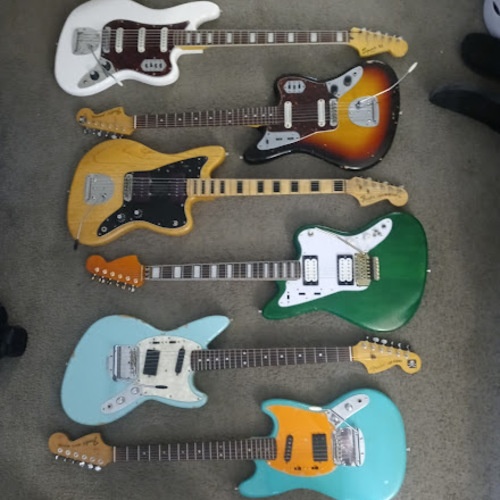
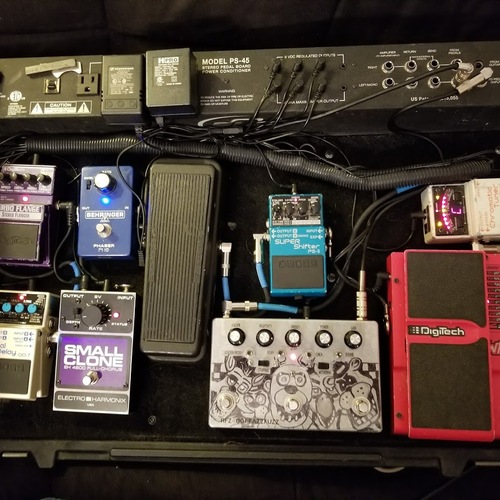
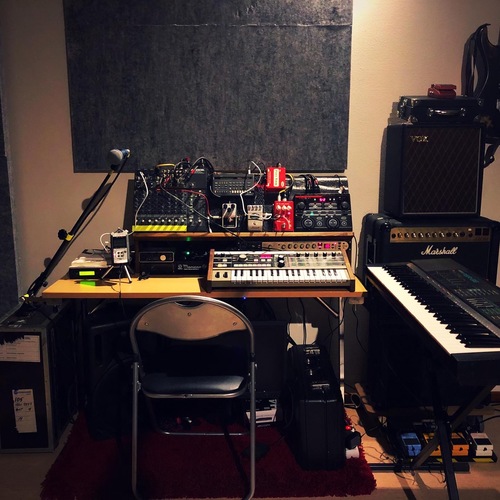
This gear photo by creepingnet features 14 pieces of gear, including Fender Jag-Stang Electric Guitar, Fender '62 Jaguar Reissue Electric Guitar, and 2017 M.Robedeau "Mad-Rite" Prototype. The setup spans Guitars and Bass Guitars, with a mix of budget and high-end pieces. Artists with this kind of gear are most often found in the Rock, Pop, and Indie rock scenes.










Cool stuff!
nice jagstang!