sofamusician's Pedalboard

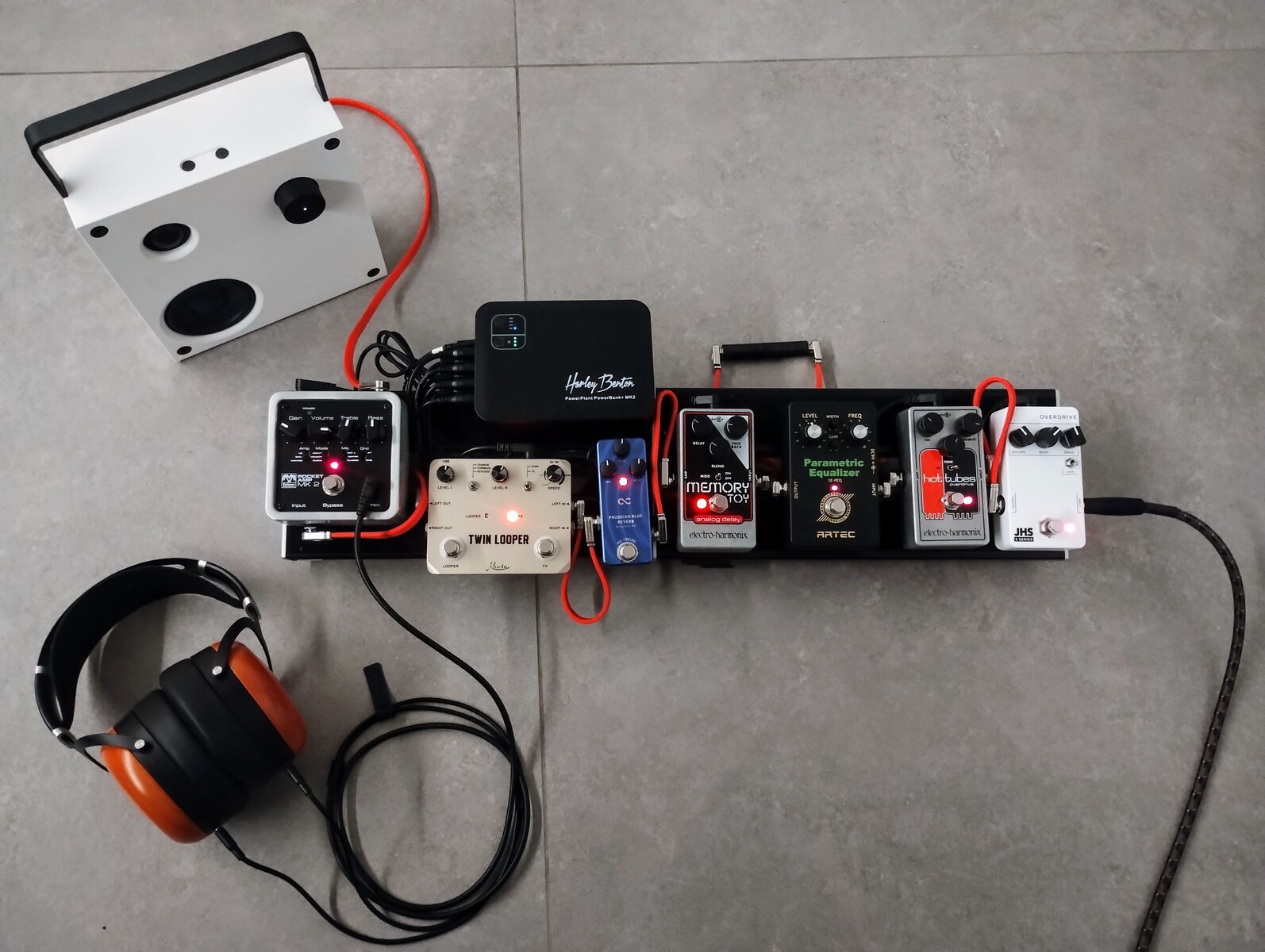
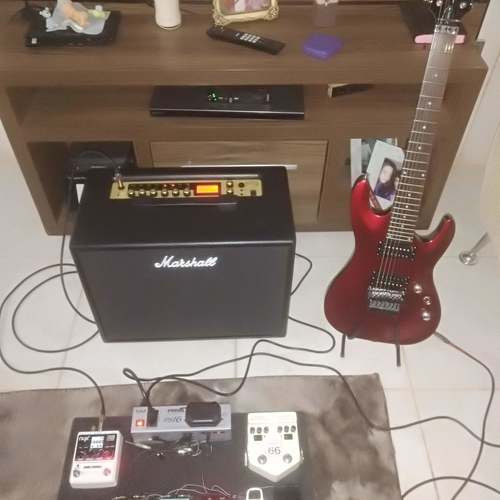
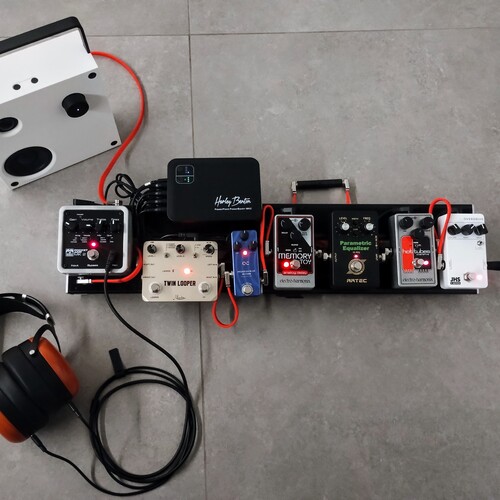
A minimal and portable pedalboard for practicing. Pedals have simple controls with just 3 or 4 knobs, and a few switches for quick adjustments. This provides enough versatility to adjust the tone to cover multiple needs, while avoiding distractions from practicing.
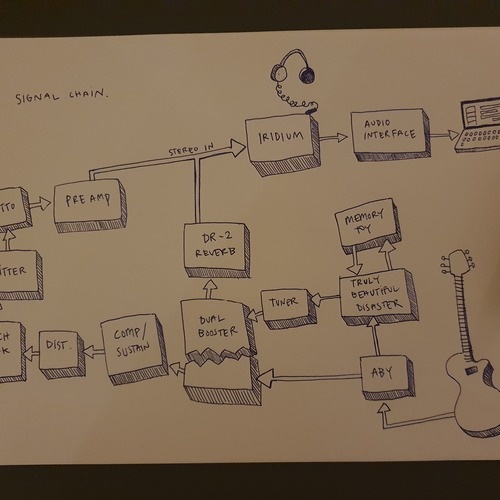
The pedals represents a variety of different classic circuits. These circuits are analog, or respect the analog signal. The signal chain is detailed below.
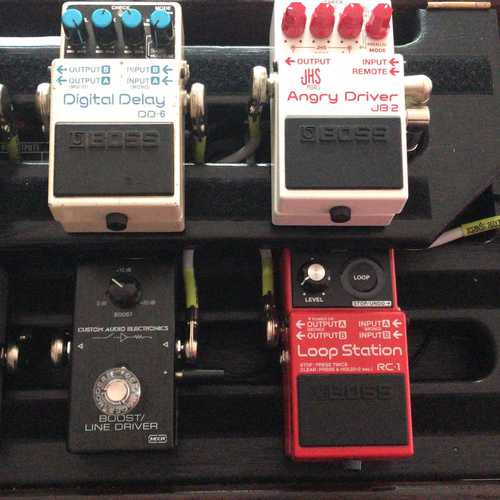
JHS 3 Series Overdrive for a low-to-mid gain soft-clipping overdrive. The pedal replicates the discontinued Japanese HAO Rumble Mod boutique pedal, which was inspired by the tones of Dumble amps, which were inspired by the tone of Fender Bassman amp pushed by a Tube Screamer. Cleaner with the gain toggle up (led) and more compressed with the toggle down (silicon).
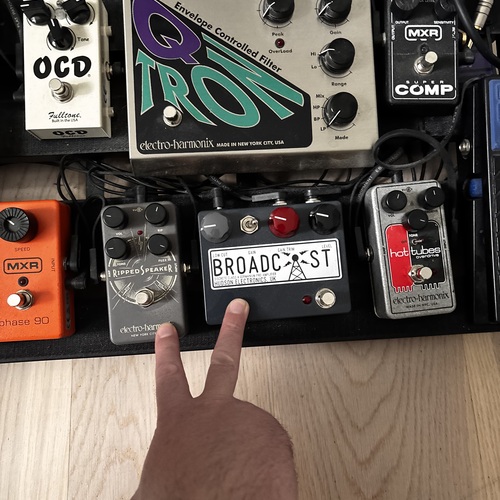
EHX Hot Tubes used for a darker higher gain overdrive flavour. Combining both overdrives gets to fuzz territory.
A Parametric EQ for further tone shaping and volume boost to compensate volume differences when different pedals are engaged. Between the drives and the EQ, a detachable connector makes it easy to use in an effects loop (with overdrives in the front of the amp and the rest in the loop).
EHX Memory Toy analog delay for a quick slapback echo with the degradation of the repeats that the bucket brigade chips provide, and some modulation.
Prussian Blue is Bjorn Juhl's take to create a natural reverb that combines the best of spring, room and hall reverbs. The digital reverb is blended with the original dry analògic signal.
Twin Looper provides easy to operate two-button looper that is helpful for hearing back what you played when practicing and experiment with multiple sound layers.
Palmer Pocket Amp provides analog amp simulation capabilities in the style of SansAmp. The multiple outputs avoid the need of a separate practice amp.
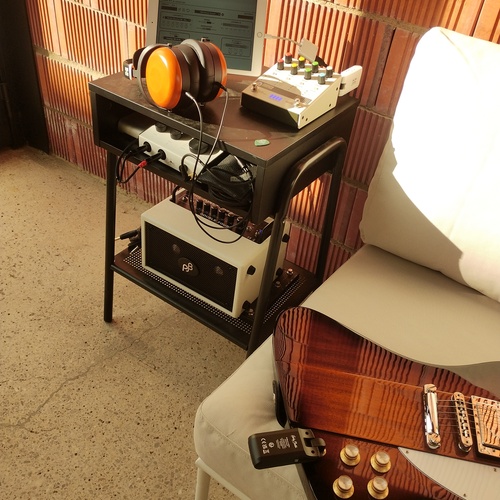
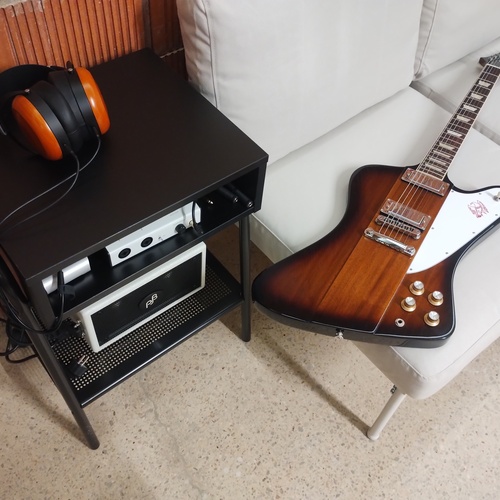
The Sundara closedback headphones are connected to the headphone out of the Pocket Amp for silent practice.
The Ikea Vappeby speaker is used to hear the sound in the room. The speaker aux input provides an immediate response with zero delay, and with extra portability with the battery.
The Harley Benton Power Bank battery provides the 9 volts needed for all the pedals. I. This way, the whole pedalboard can be taken anywhere without the need of a plug.
More gear photos from sofamusician



Gear in this photo
This rig
~$1,057
Value by category
- Effects Pedals 75.4%
- Headphones 14.7%
- Music Accessories 5.0%
- Studio Equipment 4.9%
Price mix
Mix of budget and standard

Boldest pick: D'addario XPND Pedalboard - Single Row
Only 2 pro artists on Equipboard own it, but it's ranked #19 in Pedalboards.

Avg price: $94.11


Great overdrive to get many tones
The 3 Series Overdrive is a versatile low-to-mid gain soft-clipping overdrive, and it is the main dirt pedal of my practice pedalboard.
I'm quite new to guitar but I have already tried a bunch of overdrive pedals. What I found special about the 3 Series Overdrive is how its sound does not get muddy. It is possible to play chords and still get good definition when using significant gain.
In addition, it is very versatile, enabling for a wide range of usable sounds. Its simplicity makes it easy for me to know which knob to adjust in order to get closer to a particular sound. I use the pedal to get an overdrive tone that fits the type of song I'm practicing, and also to stack it with an EHX Hot Tubes when fuzz is needed.
This pedal replicates the discontinued Japanese HAO Rumble Mod boutique pedal, which was inspired by the tones of Dumble amps, which were inspired by the tone of Robben Ford using a Fender Bassman amp pushed by a Tube Screamer. So it has a connection with the Tube Screamer while being different, as JHS describes in a surrealistic way.
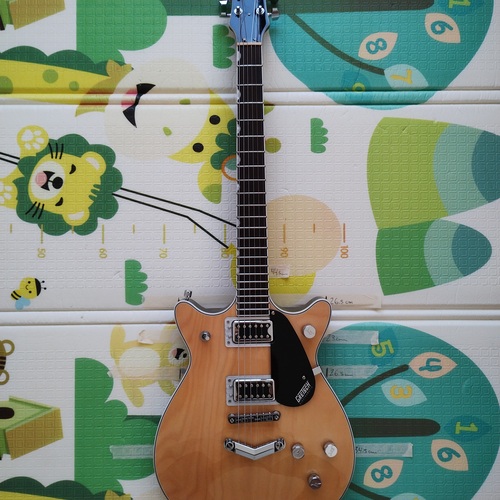
Other reviews indicate that the pedal sound is too bright. I'm using a Gretsch guitar with blacktop Broad'Tron humbuckers, and the brightness level of the pedal works really well for me, finding usable sounds in most of the "body" knob range. For brighter pickups, the story may be different.
The "gain" toggle provides another level of versatility: a cleaner sound with the gain toggle up (led clipping) and more compressed with the toggle down (silicon clipping).
The only minor negative considerations for me are related to volume discrepancies:
- The last 15% of the "body" knob becomes noisy, requiring to reduce the volume to fix it.
- The gain toggle has a significant difference in volume. I have adjusted my EQ pedal to compensate for the volume difference quickly.
-m.webp?v=1784871316)
Electro-Harmonix Hot Tubes Nano
Avg price: $71.43


Avg price: $34.00


Avg price: $94.30
Great simple analog delay part of a classic family
I needed a simple slapback delay for my practice pedalboard, and the Memory Toy does the job well.
I didn't need extra features, but the pedal comes with a modulation option which I have been using it more often than I expected.
Although it is the smallest member of the Memory Man family, it seems to be using the bucket brigade chips that provide the classic analog delay sound of the bigger relatives
Something to consider: the pedal seems sensitive to power supply characteristics, in my case it was affecting the point of the feedback knob at which self-oscilation starts.
Initially, I tried the pedal with an EHX power adapter (that came with another pedal), and the Memory Toy was self-oscilating quite early (around 40% on the feedback knob). That EHX adapter have been working well with many other pedals, but I noticed that the adapter was actually providing 9.6V instead of just 9V. So maybe that was causing the issue.
For a moment I considered adjusting the internal trim pots, but I was concerned about messing it up. Finally, I didn't had to since the issue was fixed when I added the pedal to the pedalboard.
I connected the pedal to a 9V power bank with isolated outputs in the pedalboard. The issue was fixed. The self-oscilation now takes place much later (about 70% of the feedback knob). This gives a much broader range to adjust the settings.

One Control Prussian Blue Reverb pedal
Avg price: $145.22

Avg price: $80.75
Simple affordable looper for practice with questionable built quality
I had this looper in a portable pedalboard for practicing with my guitar. It has been useful to create a base track to play over, recording what I played to listen/compare after, and experiment creating multiple sound layers. Unfortunately, after a couple years of moderate use at home, overdubbing results in harsh noises.
It has been unfortunate since it is not easy to find an affordable looper with these features:
- Having two buttons for the simplicity of operation. With two buttons the options are clear in every moment. No extra effort required to think how many times I need to tap a single multi-function button (while my brain is already busy playing).
- Long recording time. 10min of looping time seems more than enough. I never had to worry about exceeding this time.
- Analog dry-through. Being from a more affordable brand, I can accept the recorder quality not being excellent, but I didn't want interferences in my signal when the looper is not used. The Twin looper keeps the dry signal unaffected when it passes through.
Sound quality was good, with minimal but noticeable degradation from the digital conversion. I was not expecting it to last forever, but it broke much sooner than expected.

Avg price: $92.88

Perfect portable pedal platform on a budget
The Palmer Pocket Amp has been quite useful as a portable pedal platform for my practice pedalboard. It is affordable, takes pedals well, and provides multiple connection options (headphones, xlr, jack out, and aux in) to support multiple uses.
I use the Pocket Amp at the end of a battery-powered pedalboard, making it a truly portable solution. I can connect my headphones for silent practice, or a battery-powered speaker for others to hear. In this way, I can play anywhere without looking for power sockets, or the need to carry an amp.
With three types of amp simulations, the Pocket Amp may not be as versatile as other digital solutions. You'll find more options in modern amp simulators, modellers, or profilers. However, I find the simplicity of this all-analog pedal to be quite appealing in order to focus just on playing without distractions.
Most of the time I use the clean "Vintage" (Fender-style) option for a clean sound, with different pedals in front. Normally I just tweak my main overdrive to approach a tone that suits the song, and keep the rest of the pedals (higher gain, EQ, delay and reverb) at their usual sweet spot
Occasionally I used the British (Marshall style) setting too, and found it quite convincing on its own or pairing with the EHX Hot Tubes.
Preferred Settings + Usage:
"Vintage" option in "clean" setting with gain at 10:00.

Avg price: $155.00
Affordable planar headphones with quality sound
I'm not an audiophile, and I lack experience with high-end headphones. My point of reference are the Bose Quiet Comfort headphones with noise cancelation, which I use for work meetings and listening to music.
I was looking for some headphones for silent guitar practice (which I could use for listening to music too).
I did not need Bluetooth or noise cancellation. Actually, I preferred to be able to hear the environment (in case someone talks to me) while not disturbing others. I was attracted to the idea of trying some headphones using planar technology, and most of the options were quite expensive.
The Sumdara Closedback have been a clear improvement in sound quality over my previous headphones.
Currently the Sumdara Closedback are available at less than one third of their original price. After launch, the Sumdara Closedback got bad reviews due to the comparisons with the open back version. However for someone who has not tried the open back version, I find the Sumdara Closed backs to be very good headphones at an affordable price.
They are easy to drive. I have been able to use them on all kinds of devices from mobile phones to amps and headphone amp pedals.
The only drawbacks are minor:
- Weight. The use of nice materials such as metal and wood make them more heavy than the previous headphones I had, which were made mostly out of plastic. Wearing them feels comfortable, but after a long practice session, I have a slight feel of relief when taking them out.
- Cable connection. A Y-shaped cable is used to connect each side of the headphones. This makes it a little harder to get the cable out of the way when playing guitar compared to other headphones where the connection is only done to one side of the headphones.

Harley Benton PowerPlant PowerBank+ mk2
Avg price: $81.00
A good solution for a truly portable pedalboard
I have used this PowerBank on two pedalboards already, with overall positive results.
I wanted these pedalboards to be very portable: using them without an amp, and having no need to plug them into a socket. Just plug the guitar to the pedalboard, and either some headphones or a battery-powered speaker.
By using an amp simulator and a headphone amp pedal at the end of each pedalboard, I just needed a battery to power the pedals.
The PowerBank+ has been powering my pedals and keeping them quiet. Connecting the pedals to the bank has solved some issues in terms of noise and unexpected behaviours (EHX Memory toy was self-oscilating too early). The capacity is enough for weeks of playing without having to charge.
I only experienced a particular case where pedals got noisy, but it was possible to fix it. A chain of seven true-bypass pedals was producing some electric noise, even when they were bypassed. But the issue only happened when pedals were connected to a particular combination of the battery outputs. I'm not sure if it may be an issue of the pedals, or a problem with the specific unit. But I didn't had such issue with another unit which is powering my larger pedalboard (using all the outputs).
Fortunately, for my practice board I just needed 7 of the 9 outputs available, so I could connect the pedals to different outputs and avoid the issue.
Another minor issue I experienced was trying to make the Power Bank fit in the pedalboard. I was planning to attach the battery to the back of the pedalboard in order to keep more space in the surface for the pedals. However, the PowerBANK+ is thicker than other non-battery power plants. While I could fit the battery at the back of my larger pedalboard, I had to keep it in the surface (partially overflowing) in my smaller pedalboard.
D'addario XPND Pedalboard - Single Row
Avg price: $102.60


Avg price: $52.00

A battery-powered speaker with zero latency and good design.
The Vappeby (formerly Eneby) speaker is mainly intended as a portable Bluetooth speaker. However, it has an aux input without any latency. In combination with a battery-powered amp-like pedal (amp simulator, headphone amp, etc.), it enables a very portable setup.
Sound is good for home uses, and the internal design seems solid.
Being an Ikea product, it provides a nice design at an affordable price. Visually, it has its roots in a previous collaboration between Ikea and Teenage Engineering (whose products are often priced much more higher).
About this setup
This gear photo by sofamusician features 12 pieces of gear, including JHS 3 Series Overdrive, Electro-Harmonix Hot Tubes Nano, and Artec Parametric Equalizer. The setup spans Effects Pedals, Headphones, and Music Accessories, with a mix of budget and standard pieces. Artists with this kind of gear are most often found in the Rock, Pop, and Electronic scenes.