
jimmarchi1's Reviews
801 reviews Back to jimmarchi1's Equipboard

41028
Juno time!
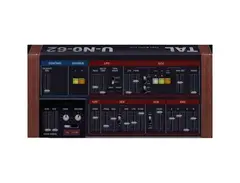
This is a VSTi emulation of the venerable Juno 6 and Juno 60 (they are pretty much the same synth). It is very thick and fat sounding, all the features are laid out and work as expected. It has all the limits of a real Juno. This plugin sounds thicker than my MKS 50 rack (which is basically a rackmount juno 106). It sounds just as good as my hardware Korg Poly800. It really nails the Roland 80s PWM thing. Its best feature is the lush Roland chorus emulation that really nails the original. TOGU also has a free standalone chorus plugin that sounds just as awesome, like the chorus that was on my Roland Chorus Echo rack. Even the GUI on this emulation looks perfect. Nice work all around. The version I use is freeware, you can DL it for nuttin'. There's a pay version, but a real Juno lacks an impressive feature set and so this is an ideal emulation with all the benefits and limits of the original. Its nice having a 106 in a rack and a really solid emulation of a 60 for doubling and such.

273
i got him too

5453
Wondered about this guy, thanks!
41028
Years later I acquired a juno6. The plugin still ain't bad if you're not tweaking controls while playing. Good for doubling. My original has some idiosyncratic voice behaviors that the plugin just doesn't do and the filter is only 80% as juicy but as a juno6 owner I still can't fault this emulation though its getting long in the tooth now. Gets the overall vibe.
41028
Is it meant to be a 6, 60 or 106? Who cares!
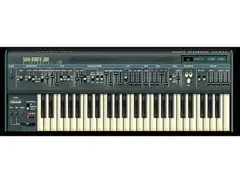
Elektrostudio did a pretty good job with Sixth Month June. Its laid out to look like a Roland Juno of some sort. It sounds like a Juno 106 or my MKS50 to me. Not super thick or punchy, but nice. The built-in chorus effect on this VSTi is not particularly lush, but it gets the job done well enough. Easy to program just like a real Juno, but very limited in its capabilities due to a stripped down feature set and fixed architecture. But when you just need some cool PWM sounds that are totally 80s, this softsynth will do the job. Its really enjoyable detuned a few cents and delayed a few miliseconds doubling an actual 80s Roland or another Roland soft-synth. Its freeware, go download it.
41028
I call her mello yel-- I mean TRON! MELLOTRON!
These eastern European dudes make great VSTi's. Way to go Elektrostudio. And thanks for giving them away free. WOW!
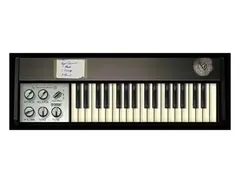
Obviously Tapeotronic is a mellotron simulator. It has 3 sounds, voice, flute and strings and they are blendable. You can open the virtual cover and adjust the bias of the virtual tape loops and detune shit. Its amazing. I've heard slightly better Mellotron sims, but not ones that are as tweakable... and not FOR FREE! If you put this thru a guitar amp plugin or re-amp thru one of your old tube amps you can really throw down some amazing "Strawberry Fields" sounds. But its useful for a lot more. Go to my sound cloud and check out the electronic song titled "September 1985?" I used Tapeotronic for most of the strings and all of the choir parts:
https://soundcloud.com/james-marchione-1/sets/electronic
41028
Supersaw me!
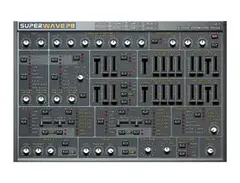
SuperWave P8 is a vst simulation of the old Roland JP8080 that introduced the synth world to supersaws. The 8080 was an early analog modeler, so I don't see any difference between having a real one and a VST other than ease of use if you want to plug it into an amp to move some air. I never owned a JP in the 90s, but I played around with lots of them and this piece of software pretty well nails the sound, particularly the supersaw/detune thing its famous for. Those sounds were a big deal in trance music when I was a young buck. I don't use this a lot, but once in a while it is really fun. Easy to program patches, just like the hardware it simulates. And its free.
273
ahhh this takes me back in the day
41028
awesome
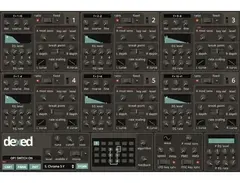
DEXED simulates the mighty Yamaha DX7 FM synthesizers of my youth. I still have one. Basically this thing is 98% a real DX7 sound but what you lose in sound quality DEXED makes up for with ease of programmability. While maintining the vintage Yamaha look in their GUI, Digital Suburban have incorporated the best virtual-knob and graphical controls from various popular DX7 midi-patch-creation freeware. This is much easier to program than your DX7, can load up actual DX7 saved patches and is just a joy to screw around with. I still use my DX7 when I want to grunge up an FM sound through a guitar amp or something, but if I want crisp, DI Yamaha sounds I go for DEXED.
41028
ugh
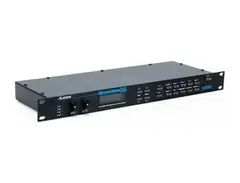
I think I've owned 2 of these, neither of which I paid for. These are quadraverbs with hi-z inputs available and 'guitarist friendly' presets. Alesis made great efforts not to have these sound as bitty as a lot of the affordable digital multi-fx racks of the era, but in doing so they seems to have filtered out a lot of the treble. This is a funky sounding box with a weird frequency response. The effects sound very compressed as well whether there's a compressor running or not.
I renamed all the factory presets on the 1st Quadraverb I owned. For instance, King's Hall became King's Dungeon and 5 Band Graphic EQ (who the hell uses a digital multi-effects box to EQ their guitar signal?) became 5 Man Anal BBQ.
There are some interesting delay, modulation and verb things you can pull off with this, but I prefer the Yamaha spx90's sound. Its unabashedly early digital. Or if I want good digital sounds TC and Lexicon stuff is miles ahead.
41028
cheap and handy
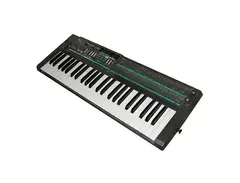
What can I say about Korg's Poly-800? Its sort of a paraphonic PolySix with 2 more available voices and midi compatibility via its digitally controlled (instead of voltage controlled) oscillators. The DCOs are pitch-stable too. Some say they sound less thick than VCOs. I like them fine. Tuning guitars is one thing, tuning electronic instruments feels like a hassle to me. Also, the internal memory has a better battery that doesn't deteriorate and leak PCB-eating battery acid into your synthesizer like the battery in the PolySix.
Bad news? These are cheap because they have virtually no tweakable controls. Just look at the Spartan front panel. Really lame for an analog subtractive synth in the post-acid-house world. Like the notorious Roland Alpha Juno, this can be remedied by hooking up a midi knob box like a Phat Man. Without that piece of gear this is still a fun performance synth that is easy to program cool patches on. This guy excels at 80s leads.
41028
almost perfect
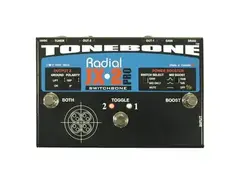
This ABY box does its job perfectly. The Radial 'drag' control really lets you tune the buffer circuit (used to not halve your volume between amps) to sound just like your guitar straight in. The switches are sturdy and roadworthy. The boost/mid-boost function sounds awesome in any of the settings. In mute mode the boost button is hand for putting your tone-sucking Boss TU-2 (or 3 or whatever) on the tuner out and still having silent tuning. The only problem with this bad boy is the odd-voltage/current power supply! The Radial wall wart is not sturdy. I have destroyed 3 of them. No one else makes a power supply that will sub in. You cannot hook the Tonebone pedals to your multi-pedal power supply either, they need too much current. If I toured with the Radial again I would make sure to travel with at least 2 radial wall warts.
41028
I found a 3rd party wall wart on the web that's low noise, has the right barrel end, amperage/voltage and si way cheaper. Bought a few of them as backup because even ignoring this pedal's intended function it has that drag control as well as a nice high voltage boost that can do mid only or gain with fully adjustable gain boost trim and 2 settigns for the mid-hump that also effect the gain mode so its like 2 mid-boosts, a gain boost thatc an eb transparent or have 2 different mid voicings. The thing is a swiss army peamp and the fidelity is killer. It can cop a lot of different popular Fet boost sounds including ones form delay units like the EP3 or the Korg SDD3000. So anyway, yeah, there's a company making the right power supply and it works and its not noisey. Still wish I could run it off a big DC power brick like most pedals.
41028
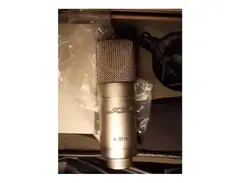
Favorite affordable vocal mic.
This is a fixed pattern, side-address, tube condenser... I believe it to be loosely based on the venerable Neumann U67. It has ZERO features. 1 pattern, no pad, it doesn't need any of that. It sounds fantastic on EVERYTHING when you want to flatter your source. If a track has to stand out in the mix, this will make it pop. I don't know if ADK makes this exact model anymore, but they are killer. I once had an issue with the microphone and fading out and ADK were incredibly helpful helping me identify the problem as a bad tube. being a guitarist I replaced it with some NOS stuff and the mic got even better. Anyway, I recommend any of ADK's higher range mics. Wonderful sound quality, good signal to noise for a tube mic (unless we're talking Rode NTVs and NTKs, oh boy they're quiet). Just a great condenser. Prices can't be beat for a microphone of this quality.
41028
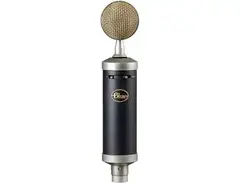
Thickens whispy vocals, loves bass-heavy sources. Takes a lickin'!
The baby bottle is a solid state, side-address large diaphragm condenser. Cardioid pattern only. Though it has the german bottle thing going, the capsules is not removeable/changeable. This mic adds girth to every sound you put it in front of. I don't know if it has an output transformer, but maybe it does. I really like this microphone on whispery and croony singers. Its also a great about 2 feet from a bass amplifier. Hypes the low end just right while getting all the stringiness. Not great for much else. Not bad, but not great.
I traded mine to a pal for a marshall 1960 cab when I needed a spare. No regrets.
41028
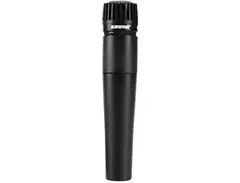
You can use this to record sound if you don't have a microphone.
You point a 57 at a sound source, adjust the gain on your preamp, and what you record sounds vaguely like the sound you recorded. One time me and a buddy drowned a 57 in a toilet, flushed for the heck of it, then plugged her in and used her and she sounded exactly the same. No worse off.... but no better either! Indestructible, cheap, I used to own like 8 of these but now I think I just have my vintage 60s one.

1062
Hey man, gonna start recording some of my own stuff in a slightly more professional way. Or much more really but I have too little money to get the equipment wrong. If you ever got some time to talk me through some stuff I'd really appreciate it. No worries if not.
Also how do you upvote stuff?
41028
@23tmr:
1) sure, I am up right now waiting to hear from my ex about my kid, whaddaya want to know? I can be reached on Skype at jim.marchi1 to IM or I guess take a video call... I am not a big facebook or IM sort of guy so that's the best I can do for real time without putting in any effort and I am sleepy
2) the little orange circle with an arrow next to a number is the upvote. If you click it, it will go up and the original poster will be notified that you gave them the 'ol thumbsup
1062
Cool man erm can't right now I'm in England and it's like 4 in the morning so gonna get some sleep. Don't do facebook neither so no worry there. Can't find the orange circle is it sposed to be next to the iq number.
41028
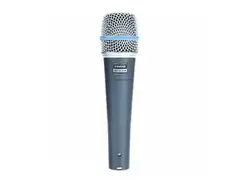
Hypercardioid response?!
I have an original Beta 57. I keep it for 1 purpose... TOP OF SNARE. It has an sm57ish voice on snare with a Hypercard response that rejects the hihats well. I usually like to throw a sennheiser E609 side address dynamic gitar amp mic udner the snare to get some extra strainer crack/rattle (that nasal sennheiser really helps the Beta get the job done).
You can use this on other sources where great side and back rejection is needed, but it won't give you precisely what a 57 does. Its a little more hifi, but not in the same way as an Audix i5. These are cheap so its worth having one around.
41028
Pretty solid all-rounder.
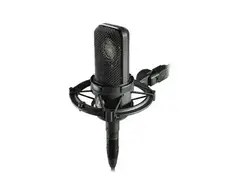
This is an AT 40 series fixed pattern large diaphragm side address condenser. I've had mine for YEARS. Easily a decade. Its a transformerless circuit so it has a very modern voice. It features a pad and a high pass filter. The HPF is a bit sharp for most applications, but with it engaged this is y favorite microphone to capture a cranked' AC30. I even prefer it to the venerable AKG C414 and Royer ribbons in that application. This has a silky, uncolored sound on vocals, but the esses can be a bit harsh through some preamps. She makes a good room mic for softer sources and really excels at recording orchestral instruments and brass close. You can pretty much put this condenser on any source that needs a mostly-transparent sound with a slight presence lift going into the recorder and get satisfying results. I bought a BLUE baby bottle at the same time I got this mic and while the baby bottle wowed me at first on a female vocal and then an upright bass, the AT4040 stayed with me. Its just more versatile.
Recently sold. I hadn't used it in years since I seldom record anything at home that the 4040 excels at. I kinda regret it, but fixed pattern 40 series mics are common and I prefer the 4047 ever so slightly.

41028
I learned the absolute basics on this as a wee bairn.
This was my uncle's guitar in the 60s, then my dad's classical up until the 2000s when he gave it to me after purchasing a serious classical for himself. Its got a cedar top, rosewood sides, back, neck and finger board. Typical classical guitar trestle bracing. Super wide classical guitar nut/string spread with a comfortable oval profile that really makes proper classical left hand position a snap to master. Lacquered all over or maybe shellac and French polish, not sure. Made in Finland, of all places.
Mine has a crack in the top that was inexpertly repaired by my father in the 80s. He liked to sit me on this guitar as a baby and the cedar got sick of supporting my weight. I began my musical journey as a toddler futzing around with this guitar while my dad explained the basics to me. Then I learned my 1st chords on it around the time I was picking up the viola and violin in school and learning to read. I learned my guitar scales/modes and lots of chord theory on this guitar in Jr High after giving up bowed instruments (I stink at bowing) and had to join the junior high jazz band in order to get my dad to front me the money for my 1st strat. The man was right about the jazz band. 6+ years of big band experience was incredibly helpful.
This guitar has a nice round sound and medium projection. I prefer her strung with Savarez High Tensions...
I still play this guitar a lot (especially for my son before bed) and I am gad to be the 3rd Marchione to cherish her. One day I will hand this heirloom off to my boy to begin his own musical journey. Wow, I'm getting misty eyed just thinking about it.
Anyway, if you ever see one of these its an amazing student guitar that is both challenging and inspiring to play. The nylons keep it easy for newbies, but the huge neck and nut also are a challenge and will help beginners develop flexibility, dexterity, and a variety of proper left hand positions for various styles. And good left hand position for a given style is the basis of good touch as your student advances to an intermediate level. There is nothing that struggling with this model of guitar will teach you that won't translate to electric. If you know better than Segovia, speak up now so I can set you straight.


41028
Easier to dial in than a G Major but not as spiffy.
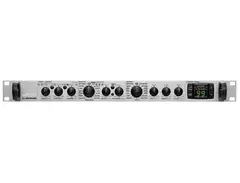
The G Sharp came out with the original TC G Major as a knob-tweakin', low cost and stripped down variant of TC's then-flagship guitar processor. I bought it because it has ZERO menus and the onboard effects and verb incude the 2290 ducking delay and TC's famous plate simulations including gold plate and my favorite, tin plate! Now, I have a Lexicon with their fantastic 90s plate simulations, but they're a different animal and I'm tired of those sounds. Plus, being older and wiser when it comes to legit EMT plates I have realized that the Lexicons sound good but not right.
This cute little fella fits in 1 RU and has a digital encoder knob for every parameter but tap and rotary knobs for selecting your 1 effect/delay and 1 reverb. I hate that the Delays share space with chorus, vibrato, phase etc because some of those TC effects turned out to sound really neat and are really stereo. I use delay more than verb and would rather have the modulation share with the reverb (though stereo vibrato routed in series into reverb at 100% wetness in a wet/dry/wet setup is a great effect). Anyway, I guess it was to keep it down to 2 DSP engines, but 3 woulda been nice. But would 3 sets of parameters fit as knobs on this little box? Why not spring for G Major and begin the headache of programming it like programming the good 'ol Lexi units or my SPX90? This thing is meant to be a fast and dirty basic solution for guy who don't use a ton of effects, like the old alesis midi-verb (only good).
So all of the delays sound really cool and are reputable enough simulations of the analog stuff they are meant to emulate, at least once the band is rockin' out. The reverbs are world class and I do not hesitate to use them to mix tracks. There's no piece of software that has EMT plates I prefer. The spring reverb is awesome and even captures some of that fender long-pan bounce at high settings... wow.
The real standout to me is a setting called Lo-Fi delay that simulates nothing... Its got a mix of analog BBD decay with this bitty distortion like a 1st generation digital delay from the late 70s. Its shockingly great in the mix. The ducking delay is, of course, incredibly useful for soaring leads and solos combined with the tap tempo.
Did I say tap tempo? With my G Sharp I got an analog 3 button switch with on/offs for the effects/delay engine and reverb engine and an old school tap-tempo button that never gave me a bit of grief. Its a sturdy metal box with chunk EHX type stomps that you can't F-up. plugs in with a 1/4" jack to the back. Screw MIDI, this is so easy.
The last feature I like about this unit is the your dry signal passes through the unit 100% untouched by converters or DSP. And for those of us (like myself) who got this for use in a wet/dry/wet rig? There's a "dry kill" switch on the back! My rig initially involved my plexi into a 16 ohm hot plate feeding a tv cab, then the line out from the plate would hit the TC with the complete distorted power amp sound, get the effects with no dry, and then hit a 70s stereo ASR power amp that would drive a couple 4x10s.
No for the bad news. There's just something plastic and off about the top end of the effects/delay section on this little guy. The Line 6 green delay stomp and purple modulation stomp have the same quality. Its like the anti-aliasing they use on the cheap D/A converters does something unnatural to the sound that a sensitive dog ear like mine can't get next to. Anyway, it can really bug me in a stereo setting when I'm surrounded by oddall treble on all my echo. With lo-fi delay mode it doesn't matter because of the bitty, gritty, furriness, and lo-fi delay is really cool and fun. The 2290 ducking delay sounded pretty much okay too. Weird. I don't know why. Also, lots of effects are kinda lame. I found myself having the wet part of my rig muted so much of the time other than when I kicked in a fuzz face or tonebender for a solo and wanted some tasteful echo. And sound guys in clubs hated me.
If you have a use for a complex rig with a simple but tasteful effects generator that ties your hands when you want to spread on the cheese a lil too thick? this is FOR YOU. If you think rack gear for guitar shoulda stayed in the 80s or you are really fussy about your effects sounding JUST RIGHT? Then stay away. These can be had for less $100 on the internet used.
41028
Balls out tele tone that doesn't sound modern.
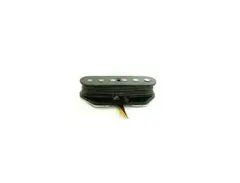
This is a replica of a broadcaster or an early esquire pickup. I have it in my esquire. Its got A3 polepieces and is wound with 43awg wire - made from the finest old school flatwork, zinc plated extra thick baseplate and black colored wax and I assume 'vintage spec' cotton string to protect the coil. My buddy Ken makes these to order outta his house... check him out. He's a fender maestro.
True to many vintage examples and the very similar champion lap steel pickups of the era this thing is flaming hot, like P90 output. This is my favorite rock n roll bridge pickup in a tele. I dock it 1 star because its a bit of a 1 trick pony and delivers more snarl and bark than twang. More GE Smith than James Burton. Really great tone though, buy one.
Check out my soundcloud to hear this pickup in action as the main rhythm guitar on the unfinished track "Bitchslap"... then you'll get what its about and you'll want to buy one.
41028
Another great pick.
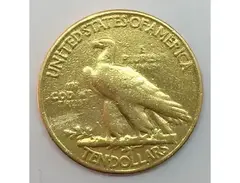
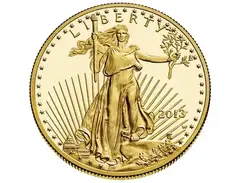
These old 10 dollar pieces are really pure gold. They also have more rounded edges to the serration around the rim so they don't need to be filed or modified in anyway to use as a guitar pick. They are also softer and wear out faster than later 10 dollar gold pieces. They lack the top end luster of debased gold currency when used with a humbucker, but they feel better in your hand and are just a joy to play 1 line lead parts with. Please see my other review of vintage USA gold pieces as picks for more info.

2154
Now, this was unexpected. hmm. I may need to read further.
41028
Thick AND chimey.
A friend of my family (for reasons I cannot begin to comprehend) gave me a couple of these gold coins when I was about 27. I wasn't sure what purpose they could serve since they are (to the best of my knowledge) no longer legal tender. I filed one edge on each into point and use them as guitar picks. The gold is easy on your strings because its so soft for a metal. It has a thick midrange and chimey attack. You can also use the ridged edges on the non-filed side to create some cool effects like Brian May and his English pence. I later branched out into older gold pieces that are purer (as in a higher or even unadulterated gold content), but I still prefer the original 2 gold coin picks I made. I don't use these a lot, but there are certain parts where nothing else will do. The weight of these things really effects the way you play. Makes you more aware of your touch and dynamics.
41028
This is a sturdy way to support drums and cymbals.
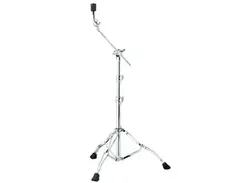
I always keep some tama cymbal and drum stands around just in case I want to add to someone's kit. The ones I have are super sturdy and easy to adjust. I think mine were made in the 90s. If there are better drum stands for this kind of money I am unaware of what they are.
41028
Two DX7 engines, one massive keyboard.
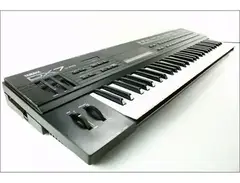
This synth originally belonged to my Dad and Uncle who used it to create some really strange relaxation/meditation music called Stress Break. Their idea was to market it along with this crazy waterbed in a cone of silence stress relief dome-thingy that a guy they knew designed. The package never made it into the Sharper Image and busy 80s stock brokers and hedge fund managers continued to turn to Alcohol and Qualudes to decompress after a long day defrauding hard working American laborers. But I grew up on the sounds of this synthesizer (as well as stereo field recordings of crickets and lofi Drumulator kicks EQed to sound like a heartbeat), so I justy love the DX7.
This synth is a baffling monster at first. It is the biggest, baddest FM synth on the planet. FM stands for Frequency Modulation. The digitally controlled oscillators are called operators and they are used is specific algorithms to modulate eachother and mix together in certain ways (think super-omega ring modulators) based on a series of envelope settings that effect amplitude and pitch and therefore modulation amount andfrequency. This brave new world of synthesis coupled with the DX7 mk 1's impossible pushbutton interface made the classic FM synths of the mid 80s preset boxes for most musicians (though what a great set of presets, you all know that hard and bright DX7 electric piano simulation that was used by artists as diverse as Aaron Neville and Pearl Jam). That said, for serious nerds like me, deciphering FM synthesis and creating strange new patches was a holy mission when these synths fell out of favor during the grunge era and all-analog Acid House boom that followed.
The DX7-IIFD addresses some of the problems of the DX7 for gigging musicians who just use presets. They added a cartridge memory port so you could buy new preset cartridges programmed by the MIT-elves at Yamaha (they look very Atari) and load them in for instant gratification. They added a good LCD display and improved the push buttons so it might just be possible for a rocket scientist to program a patch using the actual user interface. They also put 2 DX7 engines under the hood and improved and expanded the keyboard allowing you to split the keyboard between 2 patches or to layer patches. The action felt a lot better too so the MIDI functionality got a lot better when it came to aftertouch and velocity, which is awesome on a synth with so many envelope parameters for each of its 6 operators (and did I mention all these envelopes can be made to effect and interact with eachother in wild and unimaginable ways?).
Even after wrapping my pointy head around FM synthesis as a concept and the complex architecture of the DX7-II I didn't unleash its full potential until Windows 95 and the internet exploded and nerds of an even more terrifying bent than me started creating mouse friendly graphical editors that could help you program the Yamaha FM synths... and best of all, they were released as freeware. Doom anyone? This was my Doom! Achievement unlocked.
In my opinion the DX7-IIFD is the best of all the Yamaha FM synths. It has more voices, more operators, more functionality as a sound design tool, performance instrument AND MIDI module and is just totally inspiring in every way. But don't got screwing with one of these f you don't have a day to waste learning the architecture and another few hours the next morning to get absorbed in the awesomeness you can create when you stop trying to emulate natural sounds and start generating tones no one has heard before because they never could exist in nature.
I dock this synth 1 star for being so powerful, complex and alien in conception and implementation that only the most determined dweebs can tame her. I don't think Yamaha could have made an on-board user interface that would be intelligible and streamlined with the technology of the day, but it doesn't change the fact that this synth is not for the faint of heart and can only be truly appreciated when slaved to your computer with 3rd party software.

2532
The DX7 was the second synth I owned, and a source of much frustration. I finally wrapped my head around programming the thing, but the menu diving was just too much for me. I sold it before computer editors became available.
To illustrate the complexity of the DX7, one simply need look at this hardware controller that was designed for it (that's a lot of knobs):
http://m3.i.pbase.com/g2/58/139858/2/149069403.hiNHQWLa.jpg
All that said, I'd still love to play with one again someday. It's a powerful synth.
41028
I shared your pain with the menus.... those hardware controllers are IMPOSSIBLE to find too! I don't feel like a knob or fader for some of these parameters would give you the detailed control you need either. Only software with a graphical ADSR envelope display for each parameter cuts it when you have a sound in your head and want to make it a reality....

210
I got good memories with the DX7. We got one too in one of my first bands and we play some tunes from The Chick Corea E Band and of course we can never achieve a sound like him but closer and also an strong keyboard but...that's long ago

103
I had one of these. Never figured out how to program it and sold it. Shame really cos it is capable of so much. https://www.youtube.com/watch?v=u_zKk2kNkH4
41028
she is, indeed, a pain to program... even with a software programmer via midi yo STILL can't always predict exactly what you are doing as you adjust modulation levels and operator frequencies (though after the 1st decade the algorithms start making more sense lending a smidgen of predictability without doing post graduate work)... I am better now at guessing than I was in the 90s, but there's still an element of luck creating all but the most obvious sounds like 'lately' and 'reese' basses or bells/clangs using only 3 or 4 operators and a fast overall envelope. This synth is like my wildcard for pads and unusual lead stuff. If I want a layer of ringing, squawking, grinding, then I hook up the DX7 and start fucking around. I like my TX817 a lot but decided to elt her go last year in favor of software for non-sine operators... Sytrus really ickles my fancy for the jobs I used to use the TX81Z for.