
jimmarchi1's Reviews
801 reviews Back to jimmarchi1's Equipboard

41028
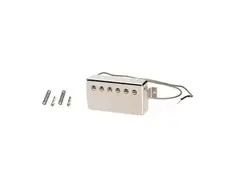
Review for both positions.
My 3 star review is because this review is for both the enck and bridge pickups in this set. These came stock in my LP Platinum. They're alnico V powered, but otherwise are a burstbucker 1 in the neck and 2 in the bridge. I hated the bridge pickup (labeled 'pro lead wound by PS April 2009', the same guy who wound my regular BB2), but the neck sounds good now that its dialed in. Maybe the 'Pro Lead' will sound better in another guitar, but in an LP with an ebony fretboard it had hazy bass and harsh top with a real lack of subtlety.
41028
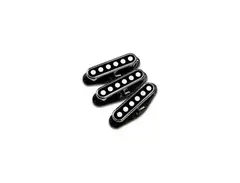
Cheap but sweet.
This is my favorite mass market strat bridge right now. Its supposed to sound like a burns trisonic. Maybe it does a bit, but its made like a mutant strat pickup. It has giant A5 slugs and a metal surround that seems like a tele pickup cover with the top lopped off, but in this case its made of steel. I added a fralin steel base plate to mine to add to the already expanded magnet field. This pickup sounds thick and meaty on its own, like a chimier P90. Defintiely capable of queen tones when combined in series with the middle pickup or series/out-of-phase with the neck.
Did I mention these are cheap? But they don't sound cheap.
41028
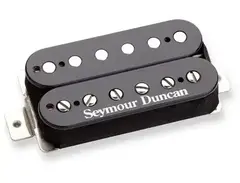
Aww hell yeah.
For those unaware, the Duncan 59 custom hybrid is a bridge pickup with 4 conductors and 2 seriously mismatched coils. The slug coil is from a Duncan 59 wound with 42awg lain enamel wire and its about 4k DCR. The screw coil is actually from a Duncan 'custom' wound to about 7k with 43awg wire. With a total DCR of about 11k I expected this to be a really hot bucker that would overpower the burstbucker pro neck that was installed in my LP Platinum which is under 8k. Surprisingly the 2 pickups paired really well for output. I ahd a Burstbucker 2 ready to pop in if the pro didn't mate well with the Duncan outputwise (also I ahd been unhappy with the neck bucker I received the guitar with, but swapping the bridge pickup and adjusting the height and polepieces on both pickups to get them working well together made me really warm up to the burstbucker pro rhythm pickup). These pickups work really well in the middle position using the dual volumes to balance a really pretty clean tone that can really cover any music you want to play that doesn't need to rip.
The Duncan hybrid really knocked my socks off. Best humbuggy bridge clean tone I've heard in a while. Or ever. It has extended, chimey top, creamy mids and a really well defined low end that's almost fender. But it still has the PAF thing too. There's a little p90 to the mids as you push your amp into overdrive. This is seriously a great bridge pickup for any Gibson. I had 2 of these sitting around unused and I am so happy I decided to try it in the Silver Bullet. She brought the guitar to life. This is a cool vintage/modern tone that really is a best of both worlds scenario. I highly recommend this pickup to anyone who likes sounding good all the time no matter what genre of music they're performing.
41028
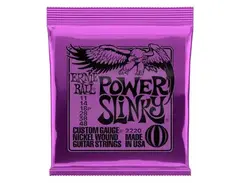
11s, the 'regular' gauge string
When you want more tension on Gibson scale or just a stonger fundamental, Ernie's Power Skinlies get the job done. I am also really fond of doing a heavy top, light bottom set with Regular Slinkies for wound strings and these for plain strings. Ernie does heavy bottom with light top, for loads of chunk but easy bending, don't know why they don't sell a set that ahs the opposite. It'd be easier on your guitar neck and on a Gibson scale the extra tension doesn't bother me on the plain strings and the tone is so good up top. anyway. I like Ernies in any gauge. They're 'just okay' in a consistent way.

554
These are the best, they just don't have the longest shelf life. If you practice eight hours a day, they're super dull sounding by the end of the week.
41028
when I was in a serious band I ran through 2 to 3 packs of ernies a week per guitar... wore them out every 2 days and fresh strings for a gig were dead by the end of the set. Still like them.

5314
I used these forever but now use D'addario 12s
41028
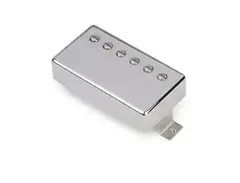
An okay neck pickup for any application.
This is Gibson's current standard in pickups. They are wound a little hotter than vintage with some change in the 50s-70s formula that gives them a little extra upper mid. The coils are potted, so are the covers if your guitar comes with covered 490s. The neck pickup has an Alnico 2 magnet.
I am not a huge fan of the 490T and I loathe the 498T (soooooo nasal), however the 490R neck pickup sounds good as a hot neck with good articulation as well as doing a passable job in the bridge position with a low-side-of-vintage-output bucker at the neck.
All in all these are nothing to write home about, but they do provide serviceable sounds for most genres of music. Considering they are a stock Gibson option on a lot of affordable models they are impressive and can sound better than a Gibson 57 classic in some instruments for certain applications.
That said, there are some pretty affordable aftermarket humbuckers that own the 490 pickups...
41028
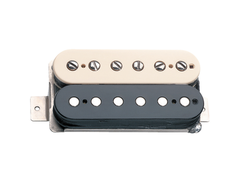
Pretty solid tones.
Though I don't have a Duncan 59 in any of my guitars right now, I really like this model and have one laying around in the parts drawer. I think its the same low-wind, matched coils as a Duncan Seth Lover with a long, rough cast Alnico 5 magnet. Reminds me of the T-Top in my SG. Just not as, I dunno.... good? Its good though. Just not as smooth... it nails the clarity and bass character. I think I just like shorter Alnico 5 magnets.
Interestingly, I believe a lot of real '59 PAFs had Alnico IV bars rather than V. I am sure V was used during the 60s transition to patent sticker pickups, but I know of a lot of examples, particularly from thinline and archtops (and pretty much ALL of the gold covered examples) that had Alnico IV bars. I guess Seymour was less concerned with doing a proper '59 than representing all the transitional PAF/patent sticker, non-t-top buckers we know and love from early SGs and the better small block inlay 335s.
41028
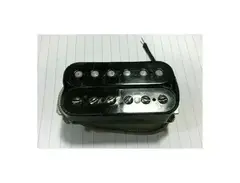
Totally into it.
I have an early 70s T-Top in my SG's bridge position. Its a pretty typical double black with a short, rough cast A5 magnet that reads around 7.7k DCR. She has a lot more apparent output than that DCR measurement might indicate. Tight and full lows, open mids and highs that really cut through in a single-coil way with the pickup cover removed. Zero harsh. This pickup really takes my SG to Angus-land. It doesn't have the vocal quality of good PAF copies (or real PAFs for that matter, but who can afford them or even a guitar equipped with them), but that's okay because it does a different classic rock sound that is just as viable. I would not recommend this pickup in a les paul standard or any other heavy carve top with the traditional mahogany/maple/rosewood combination. Maybe in the neck, but not in the bridge. Still one of my favorite pickups.

41028
Feel like modding 'bursts! Dwee, doo-doo.... feel like modding 'bursts to yooooooooooooou!
This is the Mick Ralphs signature model, designed by Mr Mott the Hoople himself with Fuji Gen Gakki's head luthier during a Bad Company tour of Japan in the mid 70s (or so the legend goes). Mick Ralphs, then guitarist for Bad Co, had for years been into double cut LP Jrs, but had recently gotten his first '59 burst and was diggin' it to. He musta missed the fret access and wraparound bridge because while he was in japan he came up with this hybrid design. These were mainly sold to the Japanese market and given to popular players like Mr Ralphs and Ace Frehley (who seemed to really dig this model). Greco's factory, Fuji Gen later tweaked this design and released it to the USA market as the Ibanez Artist model (one of Bob Weir's favorite solid bodies, dude still plays his Artist all the time and he has every vintage guitar on the planet).
Mine was sold to me as an MR800, the middle model between the P90 equipped 600 and the 1000, but as it turns out this is probably an MR1000. Good for me, I only paid $480 shipped from a dealer who doesn't typically handle vintage MIJ stuff. These usually go for anywhere between $750 to $1500 based on condition and the year. '77 is a really good year I gather. I feel lucky.
These guitars have a really long, really tight-fitting neck tenon that runs all the way to the end of the neck pickup cavity and shames modern Gibson craftsmanship. They feature a badass type intonatable wraparound that has an extra bolt to secure it better while changing strings and to prevent leaning and inconsistent tone. Its no tonepros locking stud, but its a reputable solution to a classic Gibson design flaw. This guitar has 2 cutaways and a 2 octave neck that required a slight adjustment of the neck pickup position fro a 59 burst making this a REALLY long tenon and a super secure neck joint. She has a 2 piece solid maple plaintop, a 1 piece Honduran mahogany back and neck, single ply binding on the body and headstock, a brazillian rosewood fingerboard with real shell inlay and nice binding with nibs and she is equipped with 4 nice 500k pots, black Sprague tone caps and a pair of Maxon made U-3000 PAF copies. They finished her in lacquer like all their LP copies of the mid 70s sporting model numbers 800 and up.
First impression... WOW!
This guitar is fairly light for a carve top ade from traditional materials. I noticed that its a little thinner than a real LP. Add in the removed chunk from the upper bout and that explains it. The neck is slimmer than I expected. More of a '66 nut width and way more in the 1960 LP Standard camp. Very comfortable though. Something about the shape and the taper. Mine needs a serious setup, but even with too much relief in the neck and funky action this guitar is a player.
What surprised me most is how good -no, GREAT- the humbuckers sound. These are killer vintage-to-moderate output PAF style pickups. Very vocal in a vowel-like sense of the word. Complex sounds roll out of this guitar that encourage you to use more and more nuance with both your hands. I am totally surprised. I was all set to put some nice Duncans in this guitar, but now I don't think I should. I can only imagine what a neck adjust will do for her, because the lack of setup is eating sustain I'm sure (and she sustains really well out of the case). This poor guitar did not enjoy her cross country trek. Sorry Old Girl, I'll get you fixed up.
The craftsmanship on this guitar is just outstanding. The binding and inlays are superbly executed. The body binding gets wider as it approaches the neck joint with thise asome zebra-stripe angle to it. Hard to describe. Just great attention to details.
One of the many nice touches is that it has a really cool heel shape that really blends into the body as the neck depth increases. Its not abrupt like an LP, its a gradual thing (a kinda curved, evolving angle? like very fibonachi spiral sort of shape). In an age where CNC routers were not prevalent (if they existed at all) the heel must have been eyeballed on every guitar after the neck was fitted. I want another one of these. Seriously.
Interestingly, this guitar came with a really nice OHSC and in the little storage compartment I found a pack of 70s or 80s Fender Super 150 strings, never opened. Weird. I'm considering framing them for shits and giggles.
Domo Arigato previous owner.
Update after a full setup: This guitar is amazing and I have named her Number One.
Update: I can't put this guitar down. It plays so well and it sounds amazing. I got curious and unscrewed the pickup rings to have a looky. They are not Maxon U-3000 humbuckers as claimed in the 77 catalog, they are the fabled "Dry Z" PAF copies that MyLP forum guys pay $1k+ for on ebay... they are really good, I get the hype.

278
On the next episode of forensic guitar investigations! Amazing review man. Hope you get her all fixed up!
41028
Hahaha. I think my day job makes me too detail oriented about everything. Shes already playing a lotbetter today after a truss adjust, thanks for asking.
41028
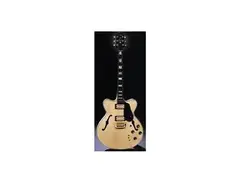
Almost Carvin, almost.
This is the last Hofner-made Carvin model I am aware of. The SH225 is an 80s Hofner verithin model with a Carvin headstock that was hand crafted in Germany out of European tone woods usually reserved for orchestral instruments. All of the inlay work is beautiful and the unbound ebony fretboard is a really lovely piece of wood. The sort of ebony usually reserved for Steinway keys.These guitars are only 2/3s the depth of a 335 or less and they are really light and resonant.
Now the bad news. Hofner would ship these bad boy over to LA raw, unfinished. Carvin then routed for their crappy 80s humbuckers, added lots of questionable electronics, and set them up for weird bridges and things. Worse still they glopped on thick layers of polyesther resin. It must not have been self-leveling because the finish work has some real sketchy spots. Now, everywhere I've accidentally chipped this finish I find another thick layer of some kind of white primer that reminds me of the stuff I roll onto new drywall! Mine is a solid black one and for years I assumed some of these had unbound bodies as well as the common ubound fretboard... but time reveals all wounds (or something) and as this thing has aged I have noticed that Carvin just sprayed over the multi-ply body binding that a hand-worker in West Germany (this was made while the Berlin Wall was still standing, kids) probably spent days getting just right. After 30-odd years the finish over the binding is cracking and coming away revealing the utter barbarity of the spray booth employees at Carvin in the 80s.
The pots in this guitar are crap. Also, I guess to make up for the intolerable muddiness of their shallow-coil ceramic buckers (the routs are not deep enough as stock to accommodate any legit bucker in Gibson, Gretsch, Guild or whoever else's format), carvin (henceforth lower-cased for spite) added 2 coil taps and a phase switch using these awful mini-switches that have failed over and over on me since the late 90s. The guitar is also wired with a dual output control plate with switching jacks for stereo operation. These jacks are also utter junk and have given me nothing but grief.
The Schaller M1 tuners are great, but for reasons defying logic, carvin decided to eqip this model with a 1 piece Schaller bridge/fine-tuning-tailpiece combo. The bridge is really heavy, but the fine tuning assembly and 2 bolt attachment prevent the strings from transmitting much bass into the block and wings making this guitar terribly thin in tone acoustically as well as plugged in.
This was my 2nd 'good' guitar. Right now she is retired pending major surgery that I just keep putting off. I miss my Guild Starfire 1 even though she only had a neck pickup. Bad trade. You live and learn. I give the carvin SH-225S 3 stars, but only because the German craftsmanship and quality of wood is so spectacular.
41028
I think you can decode the SH-225S moniker this way: semi hollow model 225 shitwefuckedupareallynicepieceofgermancraftsmanshipnexttimebuyagibsonoraguilddumbass.
41028
and by the way, 80s Hofner Verithins are great... good luck finding one in the USA though

2154
LOL so you aren't a fan of carvin, huh? :)
2154
With specs and details like this, I can understand why. Sounds like they royally screwed up a really awesome guitar.
41028
So heavy!
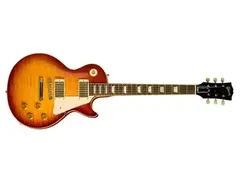
For a while in the late 2000's I had an '89 (or maybe 88, I'm getting old) cherry burst standard. You know how the post-norlin standards were made until the introduction of weight relief so I won't bore you with details.
I wanted to love this guitar, but it had some classic LP flaws. For starters, there was a rise at the heel that made her tough to set up. Next, she would not hold tune when I was doing a lot of bending on the B string. Classic Gibson. Adding to my set-up woes, the bridge was bending in the middle because the previous owner had player her with 11s and 12s ("they call em regular strings for a reason, regular guys use em," you shoulda seen what this guy did to this 61 SG reissue he won in a raffle at GC... took me forever to take the twist out of the neck so he could sell it!). Also, the stock electronics sounded kinda boxy and blah even through an ac30 or a Plexi.
That said, I made everything work and got her playing well without investing more dough into her and took her on the road for a while. Months of chiropractor sessions later I decided she was too heavy and sold her back to my friend (he missed her anyway). This LP clocked in just shy of 10lbs. SO heavy. TOO heavy.
It occurs to me now as I write this review that this guitar was kinda boxy and sterile unplugged and didn't have the vibrancy I now expect from a carve top. Maybe the pickups were okay and the guitar's weight was to blame. I find the LPs under 9lbs without weight relief or chambering truly sound the best. At approximately 10, this LP was at a serious disadvantage. The strings just couldn't drive the body to resonate nicely. What reached the stock pickups just wasn't special. Even a set of real PAFs with magic winding patterns achieved by rube goldburg (read: leesona) machines, alnico cast using forgotten lore and fairy dust judiciously sprinkled in the adamantium covers by the wee folk who inhabited the old kalamazoo MI shop (which vintage enthusiasts imply must look a lot like that tree the Keebler elves inhabit, though now its the Heritage factory and its manned by mortal men) probably couldn't have made this guitar good.
This guitar taught me a lot about weeding through a lot of Gibsons before buying and also not getting too attached to one until you've played a lot of shows with it. Gibson from any affordable era is a crap shoot, even custom shop stuff. I let my ears and hands decide these days because in this instance I was blinded by the looks of this les paul and a little jealousy of the new rhythm guitarist's standard. Not that his paul was really special, it just looked special...
So I chanced my LP Platinum just for the flash looks, but next time out I will weed through a stack of well worn Gibbies or just get a Greco or Tokai with proper 59 specs. Those bad boys are fairly light from old-growth wood and all that. And the craftsmanship is more consistent than anything Gibson has done since '60? Well, anything they've done LP-wise. The irony is that I am not a big LP guy. I like 2 cutaways on an electric. But I always feel obligated to own at least 1 singlecut carve top. Its like a requirement to bring the rock.
41028
Holy run-ons, Batman! What a load of tangents in this review. Note to self: tone it down or start proofreading and editing before hitting post!
278
wow she is beautiful.
41028
Mine was a little more worn, but pretty identical burst. More of a looker than a player. Heaviest guitar ever. Don't miss her.
41028
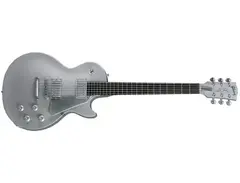
This is one of the new girls.
Okay, I got this guitar off the interweb based on its looks. I had played one and really dug one in a store but wouldn't pay the asking price.
Features an unbound ebony fretboard without position markers, mahogany back and neck, unbound maple top, brushed nickel hardware, 490R and 490T pickups and grover rotamatics. Finished in a satiny metallic pewter lacquer all over the damn guitar and even the pickup rings have some silver going.
First off, what a glam rock looker. 100 points for style. Okay, moving on. She has a nice rounded 50s neck profile. Points there. She's not particularly heavy for an LP, more points. Played great out of the case? Check. More points. Phenomenal sustain and a balanced tone unplugged? WOW this is on uncharacteristically great stock Gibby! Wrong. While I have nothing against the 490 alnico humbuckers (I hate the 498T, but the 490R is pretty okay and the 490T can sound cool, if modern), they sound awful in this guitar. Sterile, boring, all wrong for a Gibson geared towards a strong upper midrange. The Neck pickup is a bit boomy and masks the best frequencies this guitar projects acoustically and the bridge lacks any bass response and is a mess of upper mid snarl without any genuine sparkle clean or dirty. You could sue this guitar stock to be in an Nickelback tribute band assuming you had a stock mesa triple-rec. UGH! Not me at all.
Fortunately I have A couple different humbuckers sitting around. I am thinking a Burstbucker 2 in the neck and a Duncan 59 custom hybrid to start. Keep things hotter-than-vintage to match her hot looks, but get some seriously mismatched coils going to reveal the guitar's voice. The finish is thin and well executed, the guitar resonates wonderfully... I may need to put some bourns 500k pots in too. we'll go lazy to start....
Overall I recommend this particular les paul as a unique spin on the tired, old formula that is dazzling to behold in the right lighting.... not for stodgy, conservative types though. Sadly for those of you shopping, the good version (this all silver one) was only made for a year or two and is apparently quite rare. Go figure. Guess I was being a dick when I lowballed the dealer. I have named mine Silver Bullet and will probably keep her after I perform a 'lil surgery.

15320
Sounds like a real shame, but perhaps the potential is there for a hidden gem with a little polishing. I'd love to see an addendum to this review if you make any modifications to the guitar. I'm curious as to how this story will end!
41028
I'll do a follow up. I opened her up and she has good pots wired 50s style so its really just unsoldering 2 grounds and 2 hots and dropping in some fancy buckers. I also need to solder a pickup cover onto my spare burstbucker if I want to preserve the look... what a PITA though. Maybe tonight.
41028
Addendum:
I took the guitar apart today for a set up and when I pulled the pickups out I found they were a set of Alnico V Burstbucker Pros. The wiring LOOKED stock, but then again, my wiring can look stock. Maybe the previous owner was really handy with an iron, because I am 99.9% sure that this guitar was stock with 490R & T pickups.
I decided to leave the neck pickup (as its been growing on me), but I yanked the bridge and decided to try out a Duncan 59 custom hybrid. World of difference right off the bat. While adjusting the pickup heights and pole pieces to get the 2 pickups working together I got the neck sounding really good too. They sound great together. Still dialing in the set-up, but every action and neck tweak helps the guitar to sound better. This is a good Gibson.
I did solder a pickup cover on my A2 Burstbucker 2 anyway. Maybe it'll go in another guitar.
15320
I'm a big fan of Duncan pickups as well, so I think that was a great improvised solution. Glad to hear the guitar's coming around! In the photos I've seen, the Platinums look gorgeous. If the sound matches, I can easily imagine it turning out to be a keeper.
41028
The photos don't do her justice. Its a really attractive guitar if you're an extrovert like I am. I would recommend this guitar to anyone who is handy with a soldering iron and who doesn't look at their hands a lot while playing. Also, the huge neck will be a deal breaker to some folks, but it contributes to the guitars monstrous sustain and complexity. I just wish it didn't have a Nashville bridge. I hate the nashcille bridge's extra width compared to a legit ABR1. It makes it hard to cram the stop bar low enough for max sustain without the strings contacting the edge of the bridge. And I am not a fan of wrapping my strings over the top of my stop tails like the Reverend Billy F Gibbons. My SG has a Nashville bridge too. Maybe a Callaham upgrade is needed for both.

1062
It does look stunning, and am well surprised you said it's not that heavy. Not a huge fan of Gibson's for a few reasons, weight being one of them but if I had the money...
41028
Its not that heavy FOR AN LP... on the high side of 8lbs (4kg for Europeans)... my last LP was much heavier
because of the weight I do not typically reach for this guitar to jam with friends even though she is quite a player
if I can only play 1 guitar all day while standing in a band setting, its going to be my SG standard... light, versatile, fat-ass neck profile that is never fatiguing, great sustain and overall timbrality

1038
I found this last week and thought it was really cool, mainly the platinum color. I almost bought it, but I ended up doing a bit more searching and instead bought a new Gibson Les Paul Classic Custom Flower Pot Inlay in natural from Guitar Center. I traded in a couple of guitars and got it at a good price.
41028
I'm not a big LP guy, so unless its a good year R7, R8 or R9 I'm usually not interested, but a completely SILVER lester was a no-brainer for me, now I can finally form my Slade tribute band! jk
1038
So, I finally got my hands on one of these. It's on its way now.
41028
mine is really kicking ass now that I have her tweaked to suit me... hope you like yours as much.... did you get the 1st year with the silver headstock and everything? or a recent one that's got some black on it?
1038
I got the 2003 version, the limited all Platinum Edition like yours pictured. I saw that new one and it sparked my interest to hunt this one down. The new one isn't as pretty.
41028
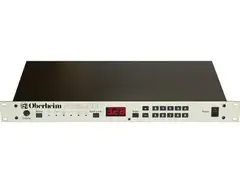
Not bad as a MIDI module.
Another 1RU analoger in the Roland MKS camp. The Matrix rack does a lot if you can stand the menus, but I give Roland's juno-in-a-rack the edge because its easier to program due to a simpler feature set and it has a certain timbrality my ear seems to prefer to the oberheim.
41028
Another member asked a question.
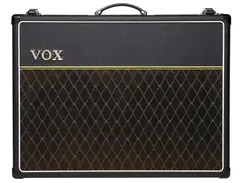
As a die-hard Vox amplifier enthusiast I feel compelled to answer d_foster14's question, "Is the Price justified?"
Yes.
Yes the price is justified for the right model from the right year. While there are a variety of AC30 variants vintage and modern that do different spins on the vox tone (and I really dig some of the variants I've played more than the amps people view as quintessential Voxes), the AC30s to have to get 'THE top-boost sound' are (in order of tastiness) the following:
1) coppertop (AKA candy panel) JMI, early 60s (I plan to be buried with mine if my son doesn't take up the guitar)
2) grey panel JMI, mid-to-late 60s (if you are looking at a coppertop with the treb and bass controls on the faceplate then its pretty much the same amp as a grey panel so save a few beans and scout out a grey panel because only crazy collectors will care about what color the control plate is... even the grey painted speakers are pretty much the same as the blue painted ones from the coppertop period (some will argue) and even the RI blue alnicos sound fab once they break in... if the tone controls were added to the back of the amp, then your coppertop will be a little different and I have a definite preference in this regard)
3) black panel AC30HW2x Korg, current production (I would not sell mine to you, you would have to trade me something better and I already have a coppertop and don't really need a grey panel)
4) candy panel AC30/6TBx Korg, 90s (this is really a tie for 3, I only give the HW2x the edge for its reliably repairable turret contruction and spiffy 'hot mode', but if a PCB doesn't worry you and you want closer accuracy to a JMI for features and voicing get a 90s RI)
5) grey panel Dallas Arbiter, 70s (no tube rectifier, but that's why Brian May likes them, can Brian May be wrong? that's its own forum topic, right there)... I recently acquired one of these but it needs some love as it appears to have been on the road continuously since it was made without being serviced at all. To its credit it still works, its just beat to shit and sounds a bit unhealthy. Defintiely a 'firmer' sound than y other 2 voxes, but a different feel than the matchless. Once I work on her I'll be able to really get a sense of what sets her apart from a JMI and a reissue.
6) grey panel Rose Morris, 80s (multiple PCB facsimile of the Arbiter version... these AC30s can sound quite good and seem to be pretty reliable)
https://equipboard.com/jimmarchi1/photos in 4th and 5th gear porn photos you can see my 2 favorite ac30s, the HW2 and the recently serviced 1962 bass model (not good for abss guitar, just a fatter voicing, it came in treble and normal until about '65.... all front panel top boost models are normal though).... you will also see a photo of the 'JMI product' logo on the control panel. if you see an affordable ac30 with this logo then snatch it up, even if its in bad shape it will be worth your while to restore it. If it has a similar logo with the word vox instead of JMI then it's a crap shoot and you could be looking at 1 of 3 or 4 newer models raging in quality. If it has a VSEL logo then its pretty much made by vox employees with leftover JMI parts and its a winner... if it has no logo under the mains switch then it could be an arbiter, rose morris etc and you'd better do more investigating.
15320
Wow. In just a few short paragraphs, you provided a more useful guide to historic AC-30 models than I've read on entire websites. Hell of a review!
41028
haha, I left out half my knowledge, that's the hands on buyers guide to getting the top boost tone from easily identifiable and readily available ACs
41028
Here's an addendum to my post I will call Top Boost on a budget....
So you want the ac30 thing but you need to keep it under a grand. What is a poor guitarist to do?
1) Ceriatone Dizzy 30 - made in Malaysia, these clones of the matchless C30 amps of 90s fame are built on turrets instead of being true point-to-point, but JMI built the original voxes on turrets and terminal strips, so this isn't a bad thing. This has the matchless TB channel which is a little gainier and a little more complex due to it using a parallel triode input (Mark Samson couldn't stand wasting the second half of V1 but couldn't squeeze a 3rd channel to cop the 60s normal channel Brian May favors I guess). Channel 2 is the mighty EF86 pentode channel, a hot-rod, super-tweakable version of the original AC30/4 black panel brilliant channel. I could go on and on about how you'll never touch the TB channel, but find out for yourself! These amps are very well built, but have mediocre transformers and a weak chassis. You have to weld aluminum all over guys. However, Nik's prices reflect these downgrades and his customer service is A#1. He's a true enthusiast who will chat you up. Mine has seen a lot of gigs and sessions and I love her.
2) Orange double terror - Okay, it doesn't have the top boost active tone circuit really, but it IS very much in the ac30 camp and sounds great for the scratch. Add an open-back 2x12 with blues? You're the Queen of May! Though this is a PCB amp it is extremely well ventilated (voxes get really hot, so PCBs in this circuit are scary). Anyway, over some of the other maintenance whores in this rundown I will trust a current production orange with a good warranty any day of the week and twice on sunday.
3) AC30 custom classic 1st series - The original Custom Classics were better amps than the current ones. They were voiced a little better and the cabinets were built better. Add a pair of blue alnico speakers (or mix a blue with the stock wharfdale G12H30 clone) and you can get in the right ballpark. These seem to be built adequately well, especially for a Chinese product, but the traditional Vox lack of ventilation scares the bejeezus outta me. The bigger vents are nice, but they only make me feel better on the HW series. A PCB vox needs more air flow guys. I've seen 60s JMI AC30s burst into flames. Straight up, dude... smoke, then fire.
4) Gibson Goldtone GA30RVT 90s - these are Trace Elliots by a different name. There's an equivalent Trace model with a simple tonestack that this amp is based on (the Trace Elliot Velocet is their ac15/matchless spitfire interpretation and it sounds pretty good and the 30 watt Trace may also be a Velocet but it has a fender deluxe style tone knob like the orange terror so I'll stick to the Gibson version with the full cathode follower tone section that's closer to a top-boost circuit). The Trace made Gibbies are pretty well made, really voxy and only fall down in their oddball 12"+10" speaker cab which is a nod to the original GA20s and 30s of the 50s that had a 12" and an 8"... but those amps had little to do with a vox apart from cathode bias. Okay, they maybe had some influence on vox in later series like the 2 tones, but by then the speaker configuration had changed and.... I digress. Sorry. This amp will get you close if you put a blue in the 12" slot. I hear they made a head version, but I've never seen one. This amp is a good bet as I've never seen a broken one. Just a heads up, around the time Gibson bought Trace they also bought Orange. Many of you will not recall Gibson's attempt to revive the Orange brand in the early 90s because they rapidly switched dears to rebranding Trace amps as Gibson Goldtones, but I think the current Orange staff with their many Vox influenced offerings might containin more than a few former Trace engineers since the whole Trace line was super Voxy. So yeah, this one is a good start.
5) 90s Laney VC30 - It has too many of the wrong features, but under the hood its still basically an AC30. It sounds like Ken Bran of 60s Marshall's take on the vox thing. Once again, add the right speakers and you are getting in the right territory. These are PCB but well ventilated and I thin they were built in the UK by people who sort of care. They're from the period of the GH50L so they're not as bullet-proof as an 80s Marshall, but better than a lot of the far east dreck out there today.
6) Crate Vintage Club 30 90s - These sound REALLY AC30ish. The cabs are crappy, the PCBs are flimsy, they need more ventilation and pretty much everything is under-spec in typical St Louis Music fashion (hell, these are the folks who resurrected Ampeg by making bastardized reissues that crap out every week and putting out a ton of solid state 'SVT' amps... WHAT?! humph)... all that said, the Crate will get you there with a good pair of speakers installed (good=blue). Don't rely on this as your main gig amp unless you have 2... or 3. If you can find more than 1 that still works....
7) Bugera V22 current production - this amp was just brought to my attention by another EB member.... she appears to be a PCB based Chinese knockoff of a modern classic, Bad Cat's Hot Cat 30R. That's a good circuit! A little true top-boost, a cascaded triode hi-gain channel and a matchless power amp. I have no personal experience of this amp, but on paper it should do a pretty good vox impression with proper speakers installed. Its made in china, but so is the dual terror and the Custom Classic. If you're on a budget you're stuck with china sadly. And if you don't care about your amp having a famous British name badge (the thing ain't made in the UK, you may fool some, but not me)... well, if you don't want brand recognition, this Is probably a good bang for buck Chinese voxer.
So that's my whole jam here... hope it helps some top-boost seekers with shallow pockets.

179
I always wanted this amp. I will add this to my gear list someday. Nice review
41028
I have since writing this acquired an Arbiter with the 70s greenbacks and solidstate rectifier as well as having one of the 90s Marshall PCB-build reissues fall into my lap. Next to eachother they are all really different. Even though I need to service it, I am really digging how aggressive the arbiter version is. Its much more rockin than any other version of the ac30. Really good.
5314
what a great review you like this allot man

273
i finally got it
15320
Hey Jim, did you ever get that grey panel Arbiter serviced? I'd be curious to know what your conclusion on that one was.
41028
@nikfarr I serviced it myself (it just needed filter caps and a few joints reflowed where they looked dodgey like on the tube sockets) and decided to sell it recently for a profit. I liked it a lot but I don't like PCB amps (purely service reasons) andmine was a PCB arbiter, not an early terminal strip one... also, it was pretty fucking loud. It could hang with a 50 watt amrshall combo, loudest ac30 I've ever played. It sounded great though, a little more harsh than my other ones but also very mean when cranked up, very much like a 50 watt plexi actually and close to that volume... if you wanna see sme legit gear porn I added some pics of my '62 ac30 to my gear porn section a little while ago. That girl just went through a round of servicing and was fitted with some broken in reissue celestions for safe gigging and is kicking ass.
15320
@jimmarchi1 That is wild, man. I'd love to try one of those, even though it doesn't sound like exactly my cup of tea. Thanks for reporting back on that :-)
41028
@nikfarr, for real, go check out my gear porn for pics of the crème de la crème of ac30s, agreed by most who ehar it to be particularly good sounding even as this era goes

41028
studio workhorse
This was my 1st amp. Not my 1st tube amp, my 1st amp. It was given to me by one of my uncles who is primarily a classical guitarist. At first I played it with my 1st guitar, an mij squire strat. Classic 60s tones. Fender Princeton Reverbs feature 1 channel with volume, treble, bass, trem speed, trem intensity and reverb controls. The 2 effects can be controlled via the classic 2 button footswitch with an RCA jack. The back features a courtesy outlet for another amp or whatever (but its non-polarized with no ground pin) and an external speaker jack to add a 2nd cab for more projection. The preamp is classic blackface 2 band EQ like channel 1 on a bandmaster head feeding a cathodyne phase inverter instead of a long-tailed pair that keeps the preamp tube count down to 3 12ax7es (2 stages for preamplification, 1 stage trem oscillator for the swampy bias-vary tremolo, 1 stage phase inverter, and 2 stages for reverb drive and recovery). The amp runs 2 6V6 tubes in fixed bias for a respectable 15 watts of clean tone through a 10" speaker (the PI structure probably cuts the wattage a bit, but its part of the sound) and she is tube rectified. The tube chart calls for a 5U4 rectifier (which is way overspec for a 15 watter, Leo was the man), but mine had the stock RCA rectifier, the robust and manly GZ34 (that can easily power a 40 watt amp with only a hint of tasteful sag). I have seen many 60s Princetons and they always have a GZ34, whereas the silverface ones have 5U4s.
This amp is almost a single channel deluxe reverb, but the difference in the style of tremolo phase inverter and plate voltage on the 6V6es give this fender a softer, touch sensitive sound and feel that's closer to the brownface amps preceeding it. This was my only amp from '92 to around '99 and remained my go-to until '02. I paid my dues, jazz, rock and blues on this little demon. I particularly liked it paired with a Guild SF1 or my Carvin sh225. I pretty much ran her right at the edge of overdrive in all scenarios with both tone controls around 5 and then added drive and level with a conservatively set tubescreamer (at 1st a TS5, later a TS9). A guy I was in a rock band with collects all different princetons from brownface to silverface chasing my old sound. Go figure.
Mine had an alnico JBL speaker installed by the guy who sold it to my family (who I know personally, what a crazy, awesome dude). Stock it had an oxford, so I was happy to have the JBL. The story goes that this cat who installed the JBL had done some tech work for Blood Sweat & Tears and wasn't paid, so he swiped this from the guitrarist in payment. Being a bassist he didn't want to keep it, so he upgraded the speaker and gave it to my dad who promptly sold it to my uncle. Then I was born and the rest is history.
In the blackface line I feel there are no amps sweeter than the princetons. Being older and wiser I now know that the non-reverb models sound better. The reverb bogs the circuit down. Unless you are a die hard Fender surfy reverb fanatic (and don't have scratch for a Fender outboard reverb), get a non-reverb. They are cheaper and better. Ask Mike Campbell of Tom Petty's Heartbreakers.
I do not recommend turning this amp way up into distortion. As you get her past a semi-dirty tone she exhibits the boxy and ill-defined power-amp saturation that most blackface amps have. The dimed small amp thing is not her forte because she is not built or voiced like a small, student amp. If you want that sound get a tweed deluxe or Gibson equivalent (like the ga14 or ga6).That said, her edge-of-breakup tones are to die for and the clean sound is pure 1960s Americana. Through a larger cabinet wired for 8 ohms she can keep up with a drummer set dead clean (unless you have really hot tubes in V1 and V2). I used to keep a handful of different tubes with me for V1 (12au7, 12at7, 12ax7 and super hot European ecc83 ax7 varieties) to vary my gain for each gig. Also, the bias vary trem on this amp (erroneously termed vibrato by fender) is to die for. This is the tweed tremolux and vibrolux sound you have heard so much about. In fact, the preceeding brownface and white knob princetons with their single tone control are direct descenats of those late 50s tweeds with trem. Pretty much any version of the Princeton from 1960/61 until about 1981 (when Rivera added lame-o overdrive circuits to everything and put a 2 after their model names... GAAAAH! damn you mooooooother-FUCKER!) is a total winner and you should buy one if you see one for under a grand these days.
41028
I thought I didn't need to include in the review that this amp was virtually indestructible. It only went down once in 10 years when the ORIGINAL blackplate RCA 6V6es from 1960-whatever finally got weak and then started to cut out. The amp was still technically working, it just lost headroom, definition and had some randome volume drops and crackles. The actual circuit Rand from the mid-60s until the mid-2000s with virtually no maintenance (there was a power tube swap and rebias). This amp just kept trying to work and succeeded no matter what kind of abuse I threw at it. And I got her as a pre-teen, so you can imagine my lack of knowledge and respect at first.
41028
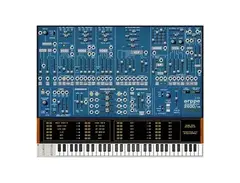
Nice sim.
This is a reasonable simulation of an ARP at least if your goal is to create deep, depeche mode basslines. I pretty much dial up a similar patch on this guy for the bottom end of every synthpop tone I write that doesn't want a harder FM bass. Good vsti. Get it.
41028
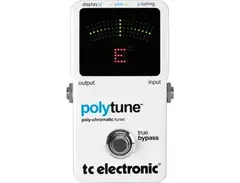
A quick way to tune up.
Strum your guitar and the polytune will tell you what strings are sharp or flat so you don't waste time tuning strings that are in. Pluck a single string and it automatically goes into classic tuner mode. Its pretty acurate and responds quickly. My one gripe is that the display could be bolder and brighter for dark stages. I think the brightness was addressed in v2. And this tuner is true bypass. Sweet.



41028
Love it.
The wave soft synth is a really cool wavetable synthesizer capable of creating some unique timbres.. It can be a little hard to learn but is really worth the effort. When i have a cool part programmed but can't seem to get it going on I try the wave. There's some other stuff in this plugin suite that I don't use a lot.
41028
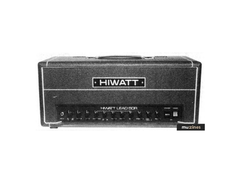
The end of an era.
After Dave Reeves died Hiwatt trudged on as a subsidiary of the Biacrown Company. Biacrown did some serious cost cutting (no more partridge transformers, damn man) and these Hiwatt Lead series amps of the 1980s are the culmination of the drastic decrease in quality.
That said, these amps sound really damned good! I tried one on a whim at a music store in MD while I lived there. WOW. This amp is what a channel switching JCM800 aspires to be. The clean channel produces straight ahead Hiwatt punchy clean until the amp is dimed to ear-bleed level, but the overdrive channel does a nice, Hiwatty "Live at Leeds" grind at reasonable stage levels. The switching works adequately well. But like I said, the whole JCM800 gain scheme works really well with Hiwatts unique tone section, I went back to the store to buy that Hiwatt amp but some wiser man had already scooped her up. Total bummer.
I think this was Hiwatts last ditch attempt to go toe-to-toe with Marshall in the era of big hair, crunchy guitars, and operatic shrieking. Look at those telltale rocker switches! But sadly This amp doesn't have the gain of an 800. It was never a competitor for hard rock amp of the year in 1981, That said, what it did accomplish is really wonderful for those of us who seldom 'shout at the devil' but often ask 'who are you?' I need to get one of these.
41028
When I say 'reasonable stage level' keep in mind I am used to playing in theaters that seat at least 200 people. Reasonable to me is unreasonably loud to many people.
41028
Not too bad, not good, not an 800. Barely a Marshall.
This is the only tolerable JCM900. The SLX is a single channel that was meant to be a hot-rodded 2203 JCM800. They added a bunch of diodes to the circuit and goosed some extra gain from the pre to make massive shred sounds. If I recall it has an effects loop. Which is lame and un-marshally. But everyone in the 80s had to mod their 2203's so they could use their huge racks of digital processors, so by the 90s Marshall decided to get with the program and give the people what they wanted.... then "10" and "Nevermind" hit the shelves and the poor old 900 went right outta style as 70s EHX and MXR stompboxes flew off the shelves of pawn shops everywhere. Those were the days!
In this vein I think the Silver Jubilee sounds a lot better... and even the channel switching 800s have the edge on the 900SLX to my ear (though not by much). Still, the SLX is pretty tolerable (when compared to the rest of the 900 series that is) and you can use it to amplify your guitar in a punk or hard rock setting if you don't have a real Marshall at your disposal. I just gave you the skinny, so caveat emptor on this overgrown paperweight.
41028
Bang for the buck.
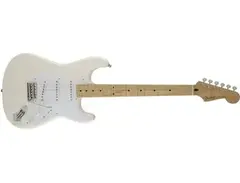
The story goes that Jimmy Vaughan wanted a signature strat based on his 50s model that was cheaply made so he wouldn't be afraid to wreck them on tour with the Fabulous Thunderbirds. Enter Fender Mexico.
This stratomicastro-thingy has a 50s style soft V neck with a maple board and skunk stripe but a convenient headstock-adjusting truss rod. The 1 ply pickguard is period correct. the texmex pickups sound pretty good stock. The guitar sports an AVRI bridge and cold rolled steel sustain block. The pots are good quality CTS 250Ks and the tone cap is a good quality chicklet type. The wiring incorporates JV's own simple mod of putting the 2nd tone control on the bridge rather than the middle pickup. I much prefer this wiring scheme and since getting this guitar always make this switch on strats. These guitars are slathered in thick layers of polyester paint which probably masks some tone, but what do you want for the kinda scratch these go for?
Mine has been modded and hacked up so many times over the 10+ years since I bought her used for 250-odd bucks at Dadddy's Junky Music in New Britain CT. I also had a real tendency to throw this guitar off the stage if I broke a string and it survived admirably apart from 2 small heel cracks that were easy to manage. The finish has seen better days.
Currently mine is taken apart. I have a custom celluloid tort shell pickguard sitting around that's based on the GFS brian may pickguard kit. Mine has a straight bridge pickup. Its half-wired right now as I keep losing interest in doing the soldering required to put it all together.
When done it will have my own proprietary hum-cancelling system (I love inventing shit, go science!), 2 Angeltone prototype pickups (A2 stagger poles neck, A5 flat poles bridge) and 1 GFS Brighton Rock bridge pickup, a brass sustain block (just to try out, I may switch back), 3 on-off switches, 3 phase switches and 2 push-push pots to switch the mid and bridge pickups between series and parallel wiring. its a cool scheme, but I am a bum sometimes. Instead of working on the wiring I am typing this review and listening to records.
I did up a prototype of this wiring that was great but I also had left spots with alligator clips and stuff to work on fine tuning my noise cancelling design... so I have to rebuild the thing on the new pickguard to accommodate my finished hum-canceller circuit. I also have a pair of really awesome looking black bakelite knobs w/aluminum metal top inserts for the master volume and tone. Its going to be a very retro guitar with its peeling Olympic white finish and Queen-meets-JackWhite appointments.
This guitar is usually referred to as Strato-Castro. Just because it sounds funny... Cuba libre, bendejos!
41028
update, I finished the wiring, it all works and sounds great in every position (although parlell out-of-phase is, obviously, thin unless you add a third pickup in series or parallel in phase, which creates some really interssting overtones). Oddly enough I barely play this guitar as I have been all about my SGs.
5314
wondering where you stand on the trem cover of or on debate?
5314
I agree
5314
on your gear porn bit you have a modded white strat wondering where you got the pickguard with the non angled pickup because the guitarfetish one is angled and also the nobs where are they from the y are awesome. I want to do a strat like that because of all the tonal capabilities. thanks.
5314
if you made it how did you cut it if you dont mind me asking
41028
I had someone make the non-angled pickguard. I probably could have done it myself but I didn't like the sheets of tort I could buy, even the celluloid stuff was kinda weak looking but this guy had some really nice swirly stock so I had him make me a guard. He was a pain to deal with though. I won't name names. He's pretty well known though and ahs lots of great material, not just the all parts stuff. The knobs? I found them on ebay. They're bakelite. I think they were on a piece of test equipment originally. 50s...