
miguel_angelo's Reviews
98 reviews Back to miguel_angelo's Equipboard

983
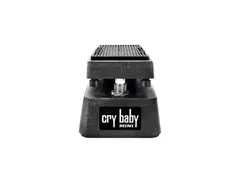
My 1st wah pedal
This is my first ever wah pedal. It sounds great, it's super sturdy, takes an internal 9v battery and its tiny! Looking at the inside it seems to be wired in True Bypass. Consumption at 0.9 ma should give very long operation time on a 9V battery. I like the middle voicing, not too dark, not too bright, probably not messing with that any more. The footswitch was very crackly and rusty and hard to press, not giving much feedback on my foot, but nothing a little spray of good'old WD40 wouldn't fix right away. Included is an allen wrench to adjust drag. Loving it!
983
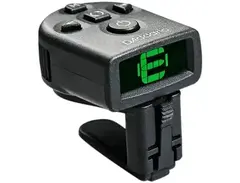
The smallest tuner I found
It's great because it's super small and stays hidden on the headstock. Coloured display is nice. Works great on 8 string electric, classical and bass. Very discreet and precise. I don't really use for its visual metronome. Also the battery seems to last for an eternity, I have mine for more than a year and still didn't need to replace it.
983
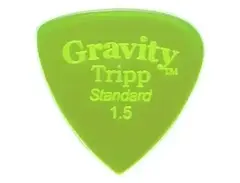
The only pick that I don't loose
I'm a huge fan of the Dunlop Ultex Mini Jazz III because I like to play with it's rounder edges to get a fatter and warmer attack, but it's a bit too round and small to perform faster scales. I found this one on a store and loved it because it has the standard Jazz III tip along with two rounder profiles, so it's a very versatile pick. Personally I don't like the shiny finish (which I have) as it was too bright for my taste, so I just sanded it down around the edges and polished it, now it delivers an even fatter tone than the Jazz III! Also because of the material it's made from it kinda glows around the edges, so it's very easy to spot it if it falls on the ground.
983
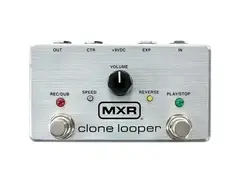
Straightforward and Fun
For 180€ in Europe this is certainly a looper on the expensive side, compare it to the RC30 by Boss (which is the same price) and Boss gives you just way more features. But some times less is more, and this was one of the cases. I went on a musicstore and tried the RC30... I really didn't like it, so many buttons and tweaking and crazy zapateado instructions of tap twice on right and tap once on left... Then I tried the clone looper, instant musicality. No doubt it appealed to me much more than the RC30, and it sounded way better also. It's a really clever no frills MXR design, because it has all the features (undo, redo, half/double speed, reverse, buffer/true-bypass, analog dry-through) and it only has a goddamn knob!
No more double taps to stop a loop!! I never imagined this would feel so right! It just instantly stops whenever you tap the right footswitch, and instantly restarts from the beginning once you tap again! Everything is just right on this pedal, it's small, it's simple and easy to operate, it has the most basic features and effects, and sounds great! I think MXR really nailed it right, I've had tiny complaints about other loopers I owned, but the Clone Looper I just can't find any flaw really.
But if I reaaaaally have to point something (very picky stuff...) this would be it: - It's machined out of aluminium I believe, it makes the pedal lighter, and although it is sturdy it's just not as war resistant as other mxr enclosures, such as the M134 Stereo Chorus for example... Easily collects dents if you drop something on it. - Volume knob is kinda small and low height. Just replace it with a bigger knob... Also the tapper on the knob is not as silky smooth as usual, it's like the M300 Reverb, rotating it you feel this grainy friction. - The press to reach reverse effect or silent erase takes a bit of a long time to engage, 1 and half second for reverse, and 4 seconds for silent erasing. Also it has a bit of a delay when engaging half/double speed. Anyway, via the External input you can engage any effect instantly.
It's assembled in China but feels solid and well made as any MXR product. I think it was a great idea having a dedicated start/stop footswitch and dedicated rec/dub. Everything just flows way better, I can stop my loop and launch it again instantly with no crazy zapateado. Effects work great, you can record a loop with speed set to double time for more resolution, and then you can do a double octave down which is crazy. Another thing I personally love is the silent delete of a loop, long press volume knob and when Rec/Dub starts to blink just hit it and your loop is deleted silently (great!). The fact it has True Bypass / Buffered option was another selling point for me since I'm running long cables through my fx loop. Analog Dry-Though and 88.2kHz of max resolution (when double speed is engaged, also shortening by half the max recording time to 3 min) proves MXR's commitment on putting out a great future proof looper that's simple, fun and reliable. Highly recommend!
*issues I had with other loopers: Double tapping the mini TC Ditto to stop it just on time requires a bit of effort/concentration that I disliked while playing, because you have to double press relatively quick. Of course you can press and hold once to stop it, but that also erase your loop. Not good if you want to restart it later - The Clone Looper just hit once to stop!;
With the Ditto X4 if I stoped all loops and then resumed their playing, undo function is not possible, it just erases the loop. - Clone Looper ALWAYS allows you to Undo or Redo, no matter what instructions you gave it before. It even does so after power cycling! Bravo MXR!;
Boss DD8 / EHX Canyon - Are great pedals and the looping capability is just a great feature for the money! But you can't have any delays while looping...
2020 EDIT: I noticed while playing quieter loops the unit is susceptible to capture noises/interferences, Including the press of the rec switch. Solved it by inserting small foam washer under the footswitch head, so the metal parts dont bang on each other when pressing
983
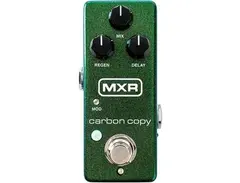
Simple and great sounding
Gotta love 3 knob pedals. From all the way down to around 2 o'clock on the delay knob the repeats sound great. Past 2 o´clock repeats become more gritty and drop volume, also noise and aliasing artefacts increase, actually I never heard these artefacts on the original version tho. For me past 2 o'clock is not really usable, only for ambient/psychedelic stuff. Regen oscilation is very predictable and controllable, and the trails have that distinct Carbon Copy filtering which sound super cool. The bright switch is a great bonus, I feel like it boosts a bit of the highs and definitely cuts low end, so it has more of a tape echo vibe to it, after alternating monthly between both modes I think I settled in the bright mode, for my own surprise. Modulation works great, I like to just set it to slowish rate and lowish depth for a subtle moody movement. It feels super well built and the knobs have a nice tough drag (maybe a bit to tough for such tiny knobs) and feel high quality, the pointers glow in the dark. Only thing I can complain is that tiny son of a gun of the bright switch, once you engage i's kinda hard to disengage it, you really need a super small screw driver or toothpick to take it out or else you will ruin it very soon... Would much prefer to see other type of switch, like the modulation switch, maybe someday I will try to mod it. Oh, and it comes with a power supply, adding nice value to the purchase, 188€ in Portugal. A bit on the expensive side. Anyway, if you want mini delay pedal and don't need modulation I would recommend the Ibanez Mini Delay.
Edit: I just noticed it comes with the more recent Bucket Brigade Chips by Cool Audio V3205D (like the SD Vapor Trail and Boss DM2W) instead of the old Beilling BL3208. Dunno how that affects overall sound though since I never tried the original Carbon Copy. You can check it in this image https://frankmeffert.de/wp-content/uploads/unnamed.jpg
983
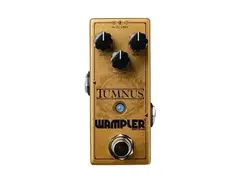
Hands down my favourite overdrive
Almost a year after I got this pedal, and after experimenting lot's of different circuits (Tubescreamer and many variations, Blues Breaker, Timmy, etc) I'm happy to say this is my favourite overdrive pedal. I love it, kinda feels like playing a Class A amp, super quick attack, super responsive to pick/fingerstyle dynamics, very rich harmonics. I wouldn't say it is "transparent", only if you have the drive knob all the way down, when you start going up on the gain those mids start warming up, not adding anything on top of your sound, just making it warmer like on the verge of breakup, stacks wonderfully before or after some distortion and makes valve amps sing. Sounds really cohesive and genuine, instead of multi layered or "parallel" like a TS where your dry signal feels like it's sitting under the overdriven signal (great for some applications but not what I was looking for). It really makes you "dig in" and play with pick dynamics. Sometimes at higher gain settings I wish I could take out some of those mids since it gets really pronounced, but anyway I just embrace it or dial a bit back the mids on my amp.
It's not meant to be a 100% exact copy of a Klon/KTR, although it is very similar. it employs silicon diodes instead of the "mythical" germanium ones, which is a sensible decision in my opinion. I never tried a germanium klon clone, but from what I hear the difference is that silicon has more gain available, "harsher" clipping, more pronounced low end for a chewier sound, and simply allows more consistency during production and less prone to temperature changes. Maybe someday when I try an Archer or other germanium clone I will change my mind, or maybe not.
Overall compared to the Tube Screamer (which I owned) I would say the Tumnus is way more open and dynamic, whereas the TS is more articulate and compressed. Gain knob is way more responsive on the Tumnus, it's a dual gang potentiometer that adjusts gain and signal summing (not really traditional blend), progressively increasing dirt dynamics and warmth. Full on gain sounds absolutely rock n'roll! Oh and the tone knob is perfect, it's an active high pass shelving filter, very usable throughout its entire range. Thanks to this it can be used as an efective treble booster (kind of).
Brian Wampler confirmed in an Instagram post that the circuit on the V2 is exactly the same as in the V1, just newer graphics to avoid copyright conflicts with CS Louis I recon. Looks really cool... Some kind of watchmaking signs going on. I really recommend it to any guitarist, jazz, fusion, country, sludge, rock n'roll... It just delivers, it's simple and small, hard not to fall in love. BTW it sounds great through my little Roland Jazz Chorus (which has no valves to push).
983
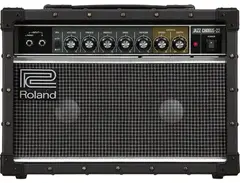
Great classic tone in small shell
Finally made the move to a Jazz Chorus! I wanted a small amp mainly for home use, of course I was testing and looking at all the Yamaha THR's, Boss Katana's... And although they all sounded great and were really versatile I was not really that engaged or excited about them, maybe because of too many options. I wanted something simple to focus on playing and not on tweaking. I never truly considered buying a Jazz Chorus, but when I saw the little JC22 sitting by it's bigger brothers JC40 and JC120 at my local music store it was love at first sight.
It's an amazing little amp that really lets the true tone of the guitar and pickups come out, unlike the other modelling amps which make all guitars sound identical. Very dynamic and refined sound. EQ is flexible and has a reasonable impact on the tone, but for the most I just leave everything at noon. Reverb is digital, definitely not spring inspired, I would say something more like Hall Reverb, sounds very good and has a decent range from subtle to quite spacious, not missing a dedicated reverb at all. Kicking the chorus in (wich is also probably digital) drops the bass in the right speaker in a noticeable way, but sounds great. Basically what the amp does is pure pitch vibrato to the right speaker, and when the sound of both speakers mix in the air you get this great spacious chorus effect. I use it all the time and always feel transported to the 80's. If you plug your guitar to the right input only the right speaker works so the chorus is gone and you're left with pure vibrato.
Like it's bigger brothers it has stereo inputs, stereo line out's, and stereo return FX Loop that you can toggle from series to parallel, although I never quite understood the advantages of parallel loop. Headphone out is a welcome, it turns the speaker off when you plug your headphones and works OK, it has no Cab Sim but it's much better then DI since you have pre amp stack, reverb and chorus. I say OK because with my Beyerdynamic DT990 headphones (250 ohms) I really need to crank it to get reasonable volume, I recommend using lower impedance headphones. Also has external jacks to switch Chorus and Reverb off/on.
I can confirm the stereo line outs sound amazing direct into an audio interface. Really good.
The 6.5 inch speakers deliver more than enough for home or studio use, and for a jazz gig I bet you wont be needing to go past 6 on the volume... Its a 30 watt class D amp and can get really loud. It has a gigantic headroom that just wont clip or even compress (well it actually overdrives a bit but only past 14 o clock, sound really sweet but I really can't truly enjoy it in my apartment) , so I enjoy using a compressor in front once in a while. I can't stress enough of how organic and defined it sounds at loud volumes, it kind of reminds me the Deluxe Reverb cleans, but without the negative feedback pulling on those mids, it feels more true to your pickups and guitar, more "hi-fi".
As far as taking pedals, Tumnus and Carbon Copy are sounding great in the front, although there are no valves to be pushed the JC's preamp responds very well and surprisingly dynamic to overdrive. Ended up leaving the carbon copy in front since the FX Loop caused the delayed repeats to trail out in an unnatural way, like if a noise gate was being applied making the trails disappear in a crumbly manner instead of fading out progressively and smoothly.
It's great to see the Roland expanding their Jazz Chorus family, it's a great amp used by many great artists. I fell transistor amps are certainly a technology that will not be overshadowed by the new digital modelling type amps/plugins, the simplicity and authenticity of a guitar combo amplifier is invaluable. Digital modellers are really great, but they kinda take away some of the magic of having to sound good with the gear you have, which is always possible, even with the simplest and cheapest gear. For me digital modelling is mainly useful for studio or session musicians on the fly who need more than one amp tone or lots of effects, but for live practicing or gigging most of times it just gets in the way of your playing with so many options. it's really about feel and interaction with your gear and not so much about tone.
Anyway, I highly recommend this amp for anyone who wants a great clean tone and build upon that with pedals, semi-hollow guitarists who praise their acoustic abilities and picking/fingerstyle dynamics are also going to love it, specially with vintage open sounding pickups.
983
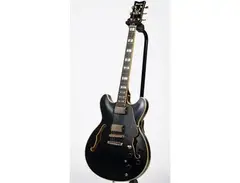
Great Instrument, be sure to test before buying though
This guitar has various versions, the first gen were made in China with maple body, then production passed to Indonesia and the second gen (the one I have) features a Linden body. Third generation onward they changed the bridge (possibly due to many patina and buzz complaints), the body was maple again and the mini tri-switch was replaced by a sturdier one. What I can say from my experience is that the maple guitar is considerably heavier and brighter sounding. I'm glad I got the linden version, since it's light and very well balanced.
It's rare to see this type of wood (Linden or Tilia, AKA Basswood) in a semi hollow guitar. All my previous guitar were basswood and I loved it for its neutral and clear tone, and specially their light weight. The guitar sounds great acoustically, very balanced tone, it kinda lends itself to a more midrangy sound since the softness of the basswood seems to absorve high treble frequencies, combined with it's lightweight this basswood semi hollow guitar has more acoustic beef than other Semi Hollow's I've tried with conventional maple bodies.
Neck and scale are my favourite things on this guitar, they feel absolutely great, so easy to play and comfortable, satin neck finishes are definitely my favourites. Fretwork is top notch with Ibanez's artstar fret edge treatment, they are on the jumbo side (I hate thin frets as I hate fret nibs), ebony scale and abalone/mother of pearl inlays look stunning, and the bone nut is a very nice premium touch not typically found on guitars at this price point.
Finish is just gorgeous, definitely the sexiest guitar I ever owned, black satin finish (not full on matte, you kinda see texture of the wood, specially on the neck and back of headstock) and gold hardware are really dope. Pickups sound very good, chinese made super 58's, according to online sources they are Alnico III and I bet they are unwaxed as they sound very open and dynamic, bridge is a bit hotter output, neck is super sweet and mellow, and has a nice round punch for jazz. The neck pickup Measured 7K (3.6k splitted) and the bridge 7.5K, so they are really on the low output side of pickups. The Tri-Switching is pretty cool also, the difference from Split Coil to Parallel is quite subtle, basically single is a tad more bright and beefy, parallel gives you single coil feel with hum cancelling and overall rounder/softer sound, but not as full range and twangy as in single position. Note that single and parallel have the same volume drop compared to full serial humbucking.
Things to be aware of: I went to a local guitar shop and asked to test the guitar, it had just arrived and was unopened. The guy from the shop opened it up and the guitar was in a not so great condition, pickup rings were misaligned (making the pickups not sitting perfectly parallel to the strings), body binding had three little flaws/scratches, freatboard had oil residue all over, and the guitar made a horrible buzz sound when played acoustically. I was shocked to see such a poorly finish and setup on that guitar, Ibanez Quality Control in Indonesia clearly revealing some inconsistencies. Luckily they had a second one also unopened and it was way better, still some tiny bits of oil residue on fretboard, but pickups were aligned, finish and binding was way better (still a tiny flaw on the binding of the f holes but I see it in every picture online) and the buzz sound was gone. The factory setup and intonation was surprising on this one, although I had to mess around with the bridge to get rid of a small buzz. Comes with a hard case with very nice locking mechanisms.
Overall I'm in love with this guitar, the headstock is the same as the original early AS100 and AS200 which you can only find on Scofield's signature now, it's smaller, maintains correct string angle all the way to the tuners, and has a classic look that I prefer compared to newer headstocks on semi-hollow lineup. Overall 5 star instrument, full sounding and comfortable, great sustain, great tone (both plugged and unplugged), awesome neck and frets, super easy to play. Just make sure you get a good unit.
I recommend replacing: The pickup selector and tri selector switches as they feel very cheap; The bridge quickly began to tarnish and sometimes makes a buzz sound because the screws get loose over time, just lighly push them and its gone; The tuners are also not the best. I tried the cheaper AS73, to me the JSM feels and sounds substantially better, so I think it's worth it. I also tried some D'Angelico in the same price range, really underwhelmed with those, terrible factory setup and not so great neck and way to hot pickups.
983
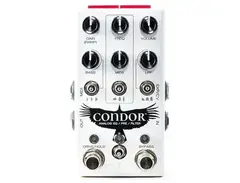
Swiss army knife of tone
This pedal covers so much ground that it may be overwhelming, but on the other hand can also be pretty straightforward.
Think of it as an EQ pedal with bass, parametric mids and a treble knobs. You can boost or cut bass by 12dB and the lower left toggle determines the range of bass frequencies that it's affecting (to the left you cut/boost a small area of lower bass frequencies, and to the right the range gets bigger).
The mids control is parametric (which is what makes this pedal super powerfull) and has 18dB boost/cut. With the freq knob you set the pivot point of the mid frequencies you are affecting, all the way counterclockwise is 150 Hz, noon is around 1250Hz, and all the way clockwise is 4kHz. Again with the lower 3 way toggle you select how broad or narrow the range of the boost/cut is.
Finally the highs/trebles gets both a standard treble cut (like a guitar tone knob) with the lower switch all the way left, and then you also have two resonant low pass filters, the middle one being more subtle and the most to the right being very resonant and powerful for the deepest filter sweeps you ever heard your amp putting out. So the treble side of the pedal wont let you boost or cut high frequencies like a standard EQ, instead the low pass filter let's you shape how much of that high end will be preserved or not. All the way clockwise the low pass filter is making nothing since all the frequencies are passing through, but when you start dialing it counterclockwise the high frequencies progressively get filtered out, and since the middle and most to the right low pass filters are two-pole wave shape it means it will actually boost the frequencies right that are right behind the threshold of the LPF, making them very resonant (even harsh some times, you gotta tame it).
The LPF is great for ramping to get crazy and deep wah and phaser tones. One of my favourite settings (stored in a preset) is a faux envelope filter effect that is activated with the footswitch in momentary mode (hold). I set everything at noon except the LPF which is all the way clockwise (to make the pedal unnoticeable in the chain when it's on). I set the pedal to hold (momentary bypass) and LPF dipswitch to ramp up from the lowest value to the actual knob value (wich is at max) and stoping there since bounce is off. I also turn Reset dip switch on. So when I play a chord and at the same time click the footswitch the LPF instantly resets to counterclockwise position and starts raising all the way clockwise (and stopping there, no bouncing) giving it a very deep and resonant envelope filter like sound, except it has no actual envelope, just your foot and Condor's magical ramping. If I had not engaged the Reset dip switch what would happen was that instead of reseting to the begging of the ramping "path" every time I clicked the footswitch it would simple continue ramping starting off whatever value it was left on previously. The addition of a Reset on the dip switches really shows just how much well thought out this pedal was, leaving you to decide if the momentary switch is only temporarily starting and stoping the ramp "path" (awesome for varying cocked wah tones) OR if it actually resets the ramp to the starting values of it's "path" (for awesome faux envelope filter effects).
So yeah, there is ramping, you can ramp Volume for Tremolo effects or any other of the knobs for all kinds of modulation tones, Univibe, Tremolo, Phaser, Wah...
But what I really love is its drive mode, I would describe it as transparent and low-medium gainish, perfect for any pre-amp application. It also sounds to my ears like it preserves some wet signal in there as a Tube Screamer or a Klon would. Pair this smooth overdrive with the powerfull parametric mids and you can really nail Klon and TS sounds. I had my mini TS next to the Condors and was able to perfectly match them. I stored that preset on the Condor and sold the TS...
I have this hell of a pedal before the Bothers Gain Stage, and the possibilities are endless and massive.
I also have to mention it is also great to achieve really fat and defined jazz tones, with the help of the Para Mids filtering out high mids (Freq almost all the way up), LPF a hair before noon with lower toggle to the left and just a small touch of extra bass.
This pedal easily earns the "if I could only bring one pedal to my gig" award. Possibly also wins the "best guitar pedal for synths" award. It's really that good.
983
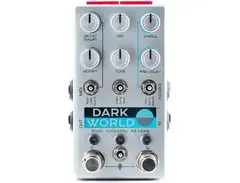
Monster Reverb
Ok, so this will be a long review since I plan to give a broad impression on all the modes.
To start off I want to say that this is the best reverb I ever had, my previous reverbs were the MXR M300 and the Catalinbread Talisman. To me Dark World is by far a superior reverb workstation then the previous two.
To start off it has a huge headroom that I wasn't able to clip in anyway (unlike the Talisman which clipped very easily), just like the MXR M300 with it's internal voltage doubler. It's just super clean and defined.
World Channel: The difference between Plate and Hall is subtle, I will describe the Plate as more focused, fuller dynamic range, and fuller bodied sound where you feel your guitar sound hitting this thin metallic wall. The hall has a softer attack, your reverb fades in rather than "kicking" in, it sounds to me that it has less bass and less high-end compared to the Plate, overall it's a softer reverb. Both sound absolutely fantastic, pristine and evolving, very natural sounding, and the dynamics of the reverbs with a long decay really tell that these are top notch algorithms (great job from Robert Keeley's crew!). The Talisman's Plate with high pass all the way CCW felt more "realistic" compared to the DW's Plate, but the clipping rendered it useless. The spring reverb maybe has the "cleanest" tails, what I mean is that it sounds closer to your original wet sound, with a quite pronounced spring drip, although it doesn't feel as responsive or authentic as my Deluxe Reverb's spring tank it is still very usable and sounds great for rockabilly or surf slapback type of tones. If your amp doesn't have a spring reverb this will definitely make you happy.
Dark Channel: The World Channel sounds glorious, but the Dark Channel is really what sets this pedal in whole different league. Mod sounds beautiful... You heard it, you loved it... I can only add to that saying that it you fell some short delay lines in there, almost like a warped slapback. The modify is very responsive and I would say it has 3 stages of dirt. The first third of the knob goes from very clean digital reverb with short and subtle delay lines to the same with a very mild modulation (almost like a vibrato being introduced after the reverb). The second third the modulation gets deeper and more unpredictable. The last third starts adding noise and kicking all those lovely vhs/retro filters, besides giving the modulation perfectly random rate, with moments of greater depth (more warp) and others of milder depth. A lovely nightmare.
Shimmer mode is for me the most innovative of all. The problem I had with previous shimmers was that it kinda of allways sounded the same, always had the same vibe to it. Please note something if you're considering getting the DW: It may sound like a "glitchy" effect with little usability, but once you start routing it into the world channel you really understand that what Joel has done here was to give the user the maximum possibilities on shaping this shimmer. Yes it can sound pretty glitchy, but it can also sound majestic and as "natural" as any other shimmer pedal, it just requires some time to get acquainted to it's tricks. Note that with the modify knob at 12 o'clock there are no octaves being introduced, so you're left with "two freeze pedals that have an LFO attached, one is freezing incoming audio, the other is playing back the frozen audio, and they're switching roles (LFO) and the rate that that's happening is determined by the Decay knob" (Joel Korte). It's hard to describe, but it has a very interesting feel to it, sometimes sounds like a gated or reversed reverb. Being able to blend in just the right amount of octave up or down is killer. Since the decay knob controls the rate that the two freezing blocks change roles a smart way (and only way) to actually make it have a longer decay is by routing any World program into the Dark's Shim. Route it the other way around D>W and suddendly the glitchiness is tamed and melted inside the World's reverb's. Lush and magnificent.
Finally Black. You can think of it as a more standard freeze pedal, where the Decay knob sets the threshold for new incoming audio to be frozen and played back. On it's own it sounds very digital (naturally), but again, route it into the World Channel and it completely changes its character. You can play a hard note and play a bit more quiet over it's infinite trails. It's great for studying scales and it's also a very creative tool. One of my favorite tricks is to have the Dark World Channel set to Momentary Bypass and into > the World Channel. This way I can control with greater precision when I want a new chord or note to take over the previous frozen one, I just temporarily hit the Dark footswitch, play a new note, and let go of it - infinite trails on the World Channel (note that this is only possible if you have Trails set to ON). Also thanks to the Pre-Delay (which is another fantastic feature, especially when routing D>W or W>D) you can determined if the new note fades in faster or slower.
Just a quick mention to the tone knob also, it's SUPER versatile on the Dark Channel since it's a resonant low pass filter. In mod mode you can have a full crispy degenarated sound with defined white noise or various mild versions of it where there is not much noise anymore, this allows you to keep the modulation vibe and getting rid of that noise and take more advantage of the modulation.
So I'll finish with some of my favourite settings:
1 - Black (momentary) > Plate. Minimum decay and maximum modify on the Black side. Dwell at around 2 o'clock, Mix, pre-delay and tone at 3 o'clock. Dip switches: MODIFY; MOT B D; TRAILS; MODIFY (RISE). Ramp set to 2'clock.
2 - Shimmer > Hall: Decay at around 2 o'clock, modify at 9 o'clock. Pre-delay at 4 o'clock, Tone at 10'clock, mix at 1 o'clock. Dip Switches: MODIFY; TONE; BOUNCE; TRAILS; SWEEP (TOP). Ramp set to taste, I prefer it slower.
So a lot is happening in this mode, we are ramping not just the tone (giving it a swoosh feel) but the octaves as well. And also we are getting a mild modulation via the pre-delay ramping. You can also flick the Modify or Tone control to Fall instead of rising wether you want the upper octave to coincide with full tone or not.
3 - Mod > Hall: Any setting of knobs is great but I like to have the modify almost maxed out and the tone quite low around 10 o'clock. Very haunting sounding. If you want it sound even more haunted just route W>D. Actually it also sounds great in parallel.
What an amazing pedal on such a small footprint. Any other reverb with this level of complexity and quality of sound will be at least double of its size. Another keeper from Chase Bliss.
983
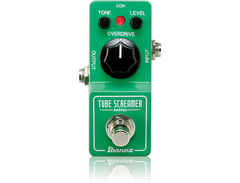
Bang for Buck
My first tubescreamer, now I understand all the fuss. Lovely mid hump, I used it before other drives to turn a rhythm tone into a lead one, not really my kind of overdrive, but still awesome. As a standalone drive is best to have your amp cranked on the edge of breakup, as it's tone seems to have some dry signla in it like a parallel overdrive, which makes it great for stacking with other pedals. For 65€ it's hard not to give this pedal 5 stars. Very raw sounding and instant "vintagizer".

41031
you're going to love it until you don't.... most people outgrow the TS9 eventually
983
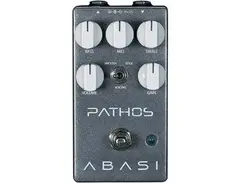
Glorious lead and chug
The Pathos is my first "high gain" type of pedal so I really don't have any other comparison. It really feels like a cranked Mesa tube amp, with that tube like compression, lots of body and presence, not overly tight, great sweet spot between tight and rich (you can make it tighter with the incredibly powerfull EQ section). I prefer the smooth side of the pedal where you can go from soft compressed crunch to full on distortion (there is a LOT of gain on tap). The edge side makes it a tad more focused on the low end and adds a good amount of presence (high end), very modern sounding, you can really feel Tosin's signature here. Playing the Ibanez TAM 10 - Pathos - Fender Deluxe Reverb I could easily get very similar tones to AAL's stuff. I also enjoyed some Meshuggah riffs through it, also some Govan tones with some chorus added. It's not a "transparent" overdrive where you retain the original dynamic range with dirt added, instead it compresses and sharpens your signal and makes it more mid range focused, but not tube screamer territory at all (at least to my ears). The description "several dirt boxes in one" is reflected in the gain range of the pedal, which is insane, and the EQ really lets you tailor from massive scooped Pantera tones to a rich mid rangy OD that is great for fusion, all the way to an impressive Djent tone. It really shines for lead solos with some delay. Massive low end chug, lot's of singing sustain, very rich sounding indeed. I would say note separation is very good, all the different string frequencies have the same distorted texture, I guess it's the nature of a high gain pedal. I don't believe it's really designed for stacking it with drives other than a boost before it. Tried different dirt pedals before and after it, I really only enjoyed the boosts into Pathos, but that's really personal and subjective. Since it's not very transparent don't think of it as an EQ/boost for other OD since it will compress your signal even with the gain knob all the way down. Again, this is not a negative point, it's just the way it's designed. Tried it between 9 and 18 Volts and really could't hear any significant difference. Overall I am very impressed and highly recommend it to anyone who has valve amp that doesn't have a gain knob or is not primarily designed for high gain, but wants a real cranked metal head tone and feel out of it.
Edit: Later I learned about the Dracarys pedal from Wampler (wampler also makes the Pathos for Abasi Guitars), and couldn't help to find me really similar in layout. Anyone knows if this is a retweaked and rehoused Dracarys? Certainly it was the starting point for Brian Wampler when developing Pathos.
983
Simple and versatile
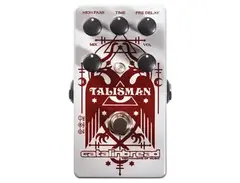
I don't like digital pedals with lots of different algorithms/voices, lot's of options keep me from focusing on the actual playing. Rule of thump, the simpler the better. Plate reverb is really the reverb I use in 95% of my stuff, and this one is really exceptional. It just blends perfectly with your sound. The high pass and pre delay are god send, especially the high pass knob: CCW is a full bodied plate with lots of organic character, perfect for slow staccato's, CW the Talisman progressively filter's out that heavy mass of the plate leaving only the tail of the reverb and avoiding too much muddiness if you're playing faster/heavier. The only negative thing I can point out is that if you're signal is too hot you it will clip and sound nasty (especially with the high pass CCW). I recommend running it at higher voltages 12-18V to give it more headroom. The volume boost knob I don't really see a good use for it... I thought it would be handy if you're clipping, just roll down your drive's master/volume a bit until it stops clipping and compensate for the volume drop with the Talisman's boost and you were good to go. Except not, the boost comes before the reverb so it will clip anyway. This is the reason why I don't give it 5 stars. Besides that it is really an absolutely great sounding reverb.
983
Simple & transparent
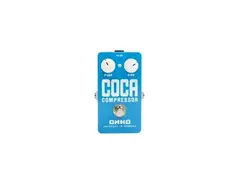
This is the first compressor that I actually like a lot. I doesn't mess with your tone, just makes it bigger. Since it's optical compression the attack is not the fastest and the ratio is somewhere around 1 : 4, wich is great if you want something subtle. I really like it, it's always on.
EDIT: I tried the first white version with blue 3d logo and based the up comment on that, but I just a bought a more recent version (blue with round black and white logo) and it sounds (a lot) fuller to me. It also sounds faster, I don't get any blooming like I sometimes got on the first version. Also unity gain seems to be at a lower setting, around 9 o'clock.
983
Extra lush
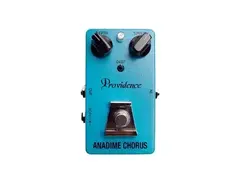
I have the adc-4 which is an upgrade to the original Anadime with reduced noise and a mix knob. I can confirm, yes, it's THAT good. Really versatile and sooo lush I can't turn it off. The mix knob does a pretty good job blending more or less of the wet signal. Although it doesn't go to full wet the last quarter of the knob does reduce the dry signal a bit, definitely entering vibrato territory, maxed out I would say 20% dry and 80% wet. The deep switch acts like a Lag control, offering you from a very faithfull and tight 80's Boss CE-2 to a full on, deep and modern sound that can get pretty wacky. I love the most deep setting with the Depth knob around the first third of travel, really lush and 3D sounding. Awesome leslie sounds too. The blinking led in perfect tempo with the LFO is the cherry on top of a brilliant analog chorus. Oh, and on the lowest deep setting with the speed all the way back you get some really nice flanger sounds! Get one and chorus GAS is over.
983
Best compact digital delay/looper
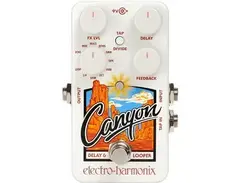
I'm not much of a fan of multi algorithm pedals - Too many options makes me crazy (I like to keep it simple). Delay knob range on this one is just too much for me, I rarely use more than half a second, and makes it more difficult to fine tune. But the Canyon is probably the best compact digital delay I ever played, not just tone wise (way ahead the Boss DD7 IMO) but feature wise also. Tap tempo works fine, trails switch, subdivisions, silent switching 1 MegaOhm input and 800ohm output, and the sub parameters are awesome. I think this pedal wins out any DD7 or Flashback, by miles... Inside of it are also a Reverb, a POG, and a Looper (with undo/redo). The sounds I enjoyed the most where the Shim and Tape. The DMM mode is also very good, way better than DD7's analog mode. The looper is the best compared to the competition, not only it offers a generous 1 minute recording time as it features undo/redo, but even better, all of this is always available until you intentionally erase it by long pressing the footswitch, so that means if you power cycle it or change delay modes your loop will always be stored in the memory, along with it's undo/redo. Fantastic!! It's like having a portable recorder! It's a shame the first "Echo" setting has no secondary parameters, it sounds exactly the same as the second "mod" setting with the modulation turned down. Highly recommend it to everyone who wants to buy a first delay pedal. I also recommend it to someone who is not sure whether they prefer a tape emulation delay, digital, or analog, since it has all those voices. Given it's price and features it's really unbeatable. The graphics on the pedal however, as with most EHX pedals, are just awful IMO... Why do they keep putting these silly cartoonish graphics on such great pedals?? Like the Crayon, Hot Wax, Blurst... C'mon Mr. Mathews...
983
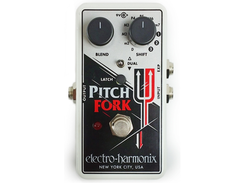
Whole Orchestra Inside
Really inspiring tool. I built a small expression knob that sits along with this to control the ramp speed in momentary mode or even to play it like an instrument in latch mode. Compared to a POG the timbre is a bit more metallc on the lower octaves, not a bad thing, just different, the POG is more "Organ-esque" on the low end, but blended in with the dry signal I really can't tell the difference.
983
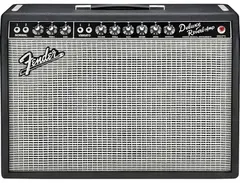
A delight to the ears
One of the best amps I've owned and most beautiful spring reverb I've heard. Beautiful singing cleans, let's your guitar's pickups and effects pedals really shine. Note that if you use dirt pedals on channel 2 make sure to put the volume above 3 or 4 to bypass the bright cap and avoid ice picky high frequencies, those can sound nasty.
-s.webp?v=1784979972)
983
New best friend
I read a lot of bad reviews on it, saying the volume was too low or too loud, that the app was unreliable, etc.
My experience so far as been flawless and perfect. It sits in the end of my entire signal before the Deluxe Reverb. The signal it records is obviously very tinny (hasn't been amplified yet), but it actually normalizes your signal once you send it to your Iphone via Bluetooth. That's brilliant!
The app works like a charm, the only thing I can point is that if I'm sending a very big riff (like 5 minute riff) to my Iphone I can't let it automatically lock or turn off the screen, as it will stop the transfer.
I haven't even uptaded the firmware and I'm not having any trouble, so I don't see why I should.
If TC folks wanted to make this even more awesome with future firmware, they should include a cab sim alongside with the normalize process, THAT would be killer.
Did I mention it's dirt cheap??? got it new for 49€ in Amazon.
983
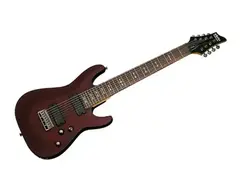
Nice entry level 8 string
This was my first 8 string guitar. Had the stock pickups swapped by emg 808's and later to Seymour Duncan's Sentient and Pegasus (needless to say it it got MUCH better). Overall guitar feels quality made, I had the black one and it felt like a premium guitar. The tuners are the worst part of the hardware, but they get the job done. One thing I didn't like (for my style of playing) was the string spacing (nut width). I prefer it a bit wider like the Ibanez guitars, for for shredding it super comfortable, possibly better than the Ibanez. Had some issues with neck stability also, but I was a bit careless at the time also. Overall I truly enjoyed this guitar and recommend it for a first 8 string.