
miguel_angelo
Film, Chess and Guitar. Classical guitar background. Jazz enthusiast. GAS therapist, consult me if you suffer! My Reverb shop https://reverb.com/shop/leugim-gear
Every rig tells a story. Start yours.
Catalog your gear, wishlist what's next, and share the setups behind your sound — free.
Create your EquipboardMics 2

On the hunt for a mic to use on my mirrorless camera to shoot some documentary video and with little time to read reviews I stumbled upon the VideoMic NTG. I was very reluctant to spend 260€ on this mic however, recently before I've bought the Line Audio CM4 small condenser mic which is an outstanding mic for only 130€, and surely this Rode mic couldn't match the CM4... But the guys at the store did their job and convinced me that "it's actually quite cheap considering its quality and features"...
The mic survived mildly rough 15 days, tossed in and out of bags, operated from temperature between 35ºC to -10ºC and very dusty environments through Bolivia, Chile and Peru. When I got home I was completely wowed with the audio quality of my video clips, so I decided to try it on classical guitar, vocals, some percussion and melodica (USB out straight into computer) and compare it with the CM4 mic (plugged into the Motu M2). To my surprise the noise floor was the same, and through my headphones (Sony MDR-7506) the differences were very subtle, of course there were different preamps and polar patterns (wide cardioid vs supercardioid). I'm not really a "mic connoisseur", but I am picky about a flat frequency response, and honestly the VM-NTG sounds as flat as the CM4. The latency figures I got were also impressive... Well, the VM-NTG impressed so much that I just finished selling my Motu M2 and both CM4's... Not saying the VM-NTG is a better mic, but really it's not worse in any way I tested. I feel this mic optimized all my audio capture needs (music and video).
It packs very nice features, for camera use the auto-sensing input was marvelous, no need to turn it on or off, it just knows wether the camera is on or off, every single time. The dual output (where only one of the two channels has the -20db applied) is also a very clever feature for video work, definitely saved a couple of takes where the gain was not set correctly. There are the usual Lo Cut filters, -20dB pad and also a high frequency boost to sparkle the top end a bit. Rode confirmed to me all these filters are being applied BEFORE digital conversion, which is nice to know. They also confirmed me the size of the capsule, which is just under 3/4" at approximately 1,7 cm.
Build quality is very nice, all metal build, nice rubbery buttons with firm clicks, smooth gain knob, included quality rycote lyre and adjustable hot shoe (to adjust for viewfinder or lens obstruction), a bunch of cables (including one for Iphone) and foam shield... The hot shoe adapter also has some cable management slots and 3/8 thread under for tripod or boom usage.
Final note, the 3.5mm output is an unbalanced one (that also doubles as headphone out) measuring 10 ohms. So if you plan using really long cables it's advisable to get the VXLR Pro adapter, which balances the signal and also downconverts phantom power to 3-5V.
Overall, even if you don't need a camera microphone, this is a serious option to consider in the realm of usb mics, highly recommend it.
EDIT:
So, I went from 5 stars to 3 stars, because:
- I found out for close miking the max SPL of 120dB is a big limitation
- So the "gain knob" is not really a gain knob. It's just more like an output level or volume control. Gain is fixed, only way to change it is via -20dB pad, but....
- For some reason the mic started developing a hissing sound when -20dB pad is engaged. The hiss comes on when sound hits the mic. Feels like some mysterious noise gate is kicking, not good.
- The -20dB pad sometimes clips and distorts even when the peak light is not actuating, seems like some internal switching/relay problem, as when I cycle the options sometimes it behaves as it should, but only for a couple of minutes, then it goes berserk and...
- Sometimes the mic will just introduce crazy interference/noise
- USB C interface is a bit unreliable, the Led goes from blue to green and there's a shift in sound, this happened sometimes mid recording with no apparent reason
- Given its high price point and these unpredictable behaviors I'm selling it and cannot really recommend it anymore unless you find it really cheap.

This is the successor of the very well known CM3. This tiny handmade (in Sweden) condenser microphone costs only around 120€ and gives you virtually flat frequency response. The next mic I know that offers this flat response is the Schoeps, which costs around 10 times more.
The polar pattern is a slightly wide cardioid, which is a bit tighter than the CM3 and makes it more versatile IMO. Might not be the best choice for loud and tight stages, unless you're close mic'ing. It doesn't feature any switches so having a low cut filter somewhere to deal with proximity effect might come in handy. It's quite sensitive to plosives, so for vocals a pop filter or the included foam shield is advisable. Very respectable figures for SNR and Noise, there's really nothing like it at this price point. I use a pair in AB configuration to record classical guitar and other acoustic instruments, and I am super pleased with the results. If you play any acoustic instrument and work hard on your timbre and dynamics, you will love this mic.
Studio 11

This device marked my transition to digital guitar rig's, I just couldn't properly enjoy my amps in my apartment and I also wanted something I could take with me to a hotel bedroom when out for work for long periods of time. I was blown away with the results, it gave me the best tones I ever had and helped me manage my GAS. The convenience of plugging headphones and play silently with awesome quality and the portability factor have totally converted me. My girlfriend also enjoyed the extra space my amp's left in our apartment.
High quality converters and preamp, amazing headphone amp (using DT770's, 80ohms, loud and clear), internal DSP and Unison tech makes this a very appealing interface for the guitarist on the go, very simple operation, just plug and play using Console.
I eventually grew tired of the limited guitar oriented plugins available from UAD. But I can say the Fender Tweed and Marshall Plexi sounded phenomenal with no latency and amazing response to boost pedals and interaction with the volume of the guitar.
Positive points:
- Gain staging is a breeze, the main controller knob cycles between preamp level, another preamp/tone control, and master level;
- Plug and play with only a thunderbolt cable, the unit and console automatically recall your last settings. I didn't even have to open any software, just turned on the computer, plugged apollo in, waited no longer than 5 seconds, and bam!
- Internal DSP means your computer is really just a controller, so no load on your cpu and absolutely no perceivable latency (only with DSP driven UAD plugins of course).
- Beautiful and robust design, simple yet powerful interface, amazing sound quality. Very inspiring unit indeed.
Negative points:
- Doesn't include a thunderbolt cable (and those are quite expensive)
- No tuner included. Not even possible to buy a Tuner plugin.
- Guitar Amp Sims take up a LOT of DSP power. Using Fender Tweed I could only throw in either a Chorus or a Reverb, not the two.
- Not possible to manually adjust the instrument input impedance, which is a shame since it can actually do that, but only automated depending on the plugin you're using on the Unison slot. But would like to mess around with that.
Although this is a high quality device I think guitarists that simply plug Direct in instrument input are better of using something like a physical amp modelling unit (Helix, Iridium, etc) or if they have a capable computer just a regular audio interface with good dynamic range on the instrument input and use VST's (Amplitube, Bias FX, etc).
But to record your own amps and microphones this is a really outstanding unit that doesn't get in the way of your creative process.

The interface is solidly built and sounds very good indeed. Compared to other interfaces in the same spec/price the Volt is better at almost everything, including headphone amp, input dynamic range, and noise floor. Also it's built in EQ filter (vintage button) was the most usable of all other brands I tried, but that's all subjective of course.
Midi I/O is a welcome as well as power switch and also the possibility to power via DC adapter or USB-C. Vintage mode adds a nice colour to your sound, which can be useful. Instrument button toggles to 1 Mega Ohm impedance, which is great for connecting passive instrument pickups. 48V phantom power has 5 second delay, blinking warning and mutes your out's to avoid loud pop's, nice. USB-C connection is also a plus, and UAD even includes a USB to USB-C cable and USB to DC power cable! I was really surprised because the more expensive Apollo's don't include any cable. Power button is there! Love it, although it is kind of hard to press, since the unit is so light I had to hold it with one hand while pressing the power switch with the other.
Things I dislike:
- Poor visual metering, only two tiny LED strips, the top one changes to orange to display -3 db and red is clipping.
- The controls layout feels a bit too cramped next to each other, many times I was hitting the wrong switches, thankfully the 48v has 5 second delay but still it's impossible to cancel it's activation, if you press it accidentally you must quickly unplug any sensible gear. Also it's really difficult to operate it with low light because all the buttons in the two rows are identical;
- Monitor knob is not linear, instead the volume get's a lot louder only in the last quarter of travel;
- Direct Monitor button is nice, but it's impossible to blend DI with Processed sound, you have to lower your master out on your daw to get the same level;
- Headphone amp is very good but it could use a bit more power, although I had no problem using 80 ohm cans, but I had to max the output level, so I would't recommend using higher impedance headphones;
- No loopback feature (which is handy nowadays but inexplicably absent from this unit as the time of writing this review);
- No dedicated virtual controller/mixer (as of time of writing this review);
- Bundled software could be better. Relab LX480 Reverb is very nice and also Softube's "Lite" version of the Marshall Plexi is great, one of my fav Marshall emulations.
Why do UAD include Ableton Live Lite and not adapt their amazing Apollo Console to the Volt series, so it integrated with Luna? Beats me.
As far as sound quality and I/O performance It's a solid 5 star interface. I'm thinking about upgrading to the Volt 276 just for the cleaner layout and proper metering display. If that's not important to you then I highly recommend this unit.

This is a high quality device made in Italy. It specs out most of the competition with amazing dynamic range and amazing headphone amp, but what really sets this interface apart is:
- The amazingly simple impedance knob, which really allows you to taylor your sound and the way your guitar's volume pot works in conjunction with the amp sims you're using. So simple yet it enhances passive pickup experience, I rediscovered some Marshall Amp Sim Plugins thanks to this simples knob, get's rid of a lot of harshness, it round's and warms up your overall tone.
- The multiple input topology is another amazing feature, the inferface easily accepts active pickups, passive pickups, ultra low noise and hi-fi DI or warm JFET input. Simply amazing. Plugin my PRS SE Hollowbody II piezo output to channel 2 line input and the humbucker output to passive JFET input.
- CV inputs, built-in tuner, and programable rotary/switch knob really set this interface apart from the crowd. You can plug a conventional expression pedal and two switch selector and have them mapped to anything in seconds. You can also program it's preset selector to control any parameter on your DAW, like presets, start/stop, markers, etc.
- Tuner switch can also double as a monitor mute.
- Superb headphone amp, with huge power to drive high impedance headphones.
- Comprehensive controller application (although it always asks to be updated, even though it has the latest firmware)
Highly recommend this one. I also recommend Amplitube 5 Max pack (I got this one), although I had a couple of issues using the standalone app in Macbook M1.
Only thing missing is loopback, hope they add it in future firmware upgrades.

I previously had (and reviewed here on Equipboard) the Volt 2, but it had some minor quirks I wasn't enjoying so I decided to replace it with the 276 mainly due to better control layout and proper visual metering, but I was also curious about the compressor. I was pleasantly surprised by the upgrade and can say the 100€ price difference is worthy, and not just because of the compressor. I'm not sure if the Volt 2 has a different Quality Control (maybe the 276 has tighter tolerances?) but really the 276 feels a bit better in almost everything, so here are the 4 main differences I noted between the two units I tested:
- Layout and metering are obviously much improved on the 276, the Volt 2 front panel was just too crowded and made me accidentally hit wrong buttons. Operating the 276 is way more convenient.
- It's heavier and bigger! Now I can switch the power button without pushing the unit out of it's place.
- Headphone amp on the 276 definitely has a bit more power, at least on my units. Julian Krause didn't notice it in his measurements, that's why I'm guessing it has to do with tighter QC on the 276.
- Monitor knob on the 276 feels to have a bit less steep logarithmic curve, in other words it feels more linear compared to the Volt 2.
- 276 doesn't make speakers pop when turning on power, unlike my previous Volt 2.
- And of course, the 276 has the built in compressor/limiter.
If none of these are important to you then I suggest you spare yourself 100€ and check out the Volt 2, as it sounds just as good as the the 276.
The interface is solidly built, sounds terrific and has a really nice design with that vintage mojo to it. I like it's "vintage" EQ setting and found the compressor very useful to limit and beef up piezo equipped guitars.
As for the compressor, "inspired by the UA 1176 limiting amplifier"... Of course it's not even close to an 1176, I'm really not sure what kind of circuit it is, but my guess is just a very simple FET limiter/compressor. You can't blame Universal Audio for the Marketing, and you can't expect for it to behave like a unit that costs 10 or 20 times more... Switching it on it boosts your signal by +7dB, which also raises noise floor (as expected). The FAST preset is nicely tuned for the maximum gain of the 276 preamp so that you can never actually never clip your signal, it limit's it (very hardly indeed) to -3dB, even if you use boost or overdrive pedals. It has a fixed ratio of 6:1, and the 3 different presets have different values of attack and release. According to the manual these are the values (approximated):
- VOC Attack 2 ms / Release 300 ms
- GTR Attack 1.5 ms / Release 700 ms
- FAST Attack 30 µs / Release 35 ms
Since you can't clip your input using the FAST preset it makes me guess that the compressor circuits are placed after the preamp and before the AD conversion. This is a unique feature on the Volt 76 range, since it allows you to intentionally generate from light to pretty intense analog distortion without clipping the digital converters, which really lends itself to experimentation, like you would on an analog console. I found myself using the unit standalone without plugging it to a computer (yes, it's possible!) using a 5V phone charger (don't risk plugging anything with more than 5V!) and enjoy really dirty console like distortion, using the fast setting on the compressor you guarantee your converters never clip (thanks to ultra fast attack time). Actually you can power it and play "direct" standalone from a 5V phone charger with both USB-C and standard 5.5mm x 2.1mm barrel DC connector, center negative! The unit even recalls your last settings compressor and vintage settings after power cycling, really nice touch!
If you think about it you actually get no one, but two independent compressors, one for each input, as simple as they are it's a feature that adds value to the Volt 276 IMO. There maybe some very nice compressors on the market around 100-150€ price range, like the Wampler Ego Mini, and you can say that's a way more flexible compressor, yes, but the convenience of having a simpler compressor that's built into a bus powered audio interface with xlr combo inputs and phantom power, that might appeal to a lot of people.
Overall I liked the Volt 2 very much, but I gotta say I love the Volt 276. I highly recommend both.
I hope UA adds loopback functionality in future firmwares and develops some kind of virtual console. If you could tweak the compressor values and direct monitoring level on this hypothetical virtual controller (it must be possible since the analog compressor is most likely digitally controlled), that would definitely place the 276 as the new King of non DSP audio interfaces.
Oh, and for guitar players, there is an AMAZING discount for Softube's Marshall Plexi Super Lead 1959, the plugin costs 100€ but registering your device you get something like 85% discount!! I just payed 12€ for it!I honestly think it's one of the best Marshall plugins out there.

I was mostly decided on going to Genelecs 8010's, but after reading so many great reviews I had to give these one a try and see what the fuss was about, I would return them. Indeed they live to their reputation!
+ Excelent price
+ TINY speaker pair - great for a tight bedroom studio and travelling in it's small soft case.
+ Provides full and detailed near field soundscape that's great for playing, mixing and listening to music
+ Bass reflex wizardry make them sound way bigger then they actually are
+ Plastic shell but overall robust construction with metal grills for the speakers and tweeters
+ Bluetooth! So your girlfriend can also enjoy them!
+ They don't rattle or make weird noises
I had the smallest Roland Jazz Chorus combo amp that had two 6.5 inch speakers in them, and I can confidently say these 3 inchers pack a SERIOUS punch and provide more than enough power to fill a small bedroom.
I bought them to play my guitar through my UAD Apollo Solo interface, using the Fender Tweed Amp or Marshall in the unison slot (for near zero latency) really give me the best sound and feel I ever had in my bedroom!
The advantage of such small speakers - besides their portability - is that you can get a very hi-fi and loud near field soundscape (like 1,5m away from you) and not cause the sound to propagate to much into your ceiling/floor/walls/neighbours house like a bigger speaker would.

Had the DT990 and loved them, but since there was no lower impedance option on that model I migrated to the 80ohm 770. They are just as good, a bit more focused bass sound and much higher isolation.


I've had a couple of audio interfaces and I can safely say the Motu M2 was my favourite of the non dsp interfaces.
Latency wise it's honestly as good as the UAD Apollo Solo, my RTL figures were under 4ms, which is quite impressive.
Soundwise it's crystal clear, and I enjoyed the ability to link both channels when using a stereo pair, so it hard pans left/right the two inputs for latency free direct monitoring. The screen is a nice bonus although the lack of proper meter scale makes it a bit redundant IMO. Headphone output is solid, although I only tried it with Sony MDR7506 which is 63 ohms, comfortable listening level was about 3 o'clock on the volume knob.
Build quality is rock solid (I got the revised version that features two screws on the inputs), absolutely no wobble on the knobs or inputs.
If you're looking at the completion with UAD Volt, Focusrite Scarlet, etc, I highly recommend the Motu M2 instead. It doesn't have all the bells and whistles like EQ, pad, compressors, etc, but honestly you'll have better results doing it in your DAW.
For live use I think it's one of the best out there for the price.

For the money I think they're the best there are. Make sure to plug them do a decent source with enough power to properly drive the 250 ohm drivers.


Love the concept, but I think it deserves a more "serious" version.
It's very easy to use, 4 tracks with infinite bounces available, so you can really make a whole song just with this device. The audio quality is very good, and having the 32 bit float means no gain staging, so it's really fool proof.
It has many effects available and you can insert them in two slots, one for guitar amps and mic preamps and another for compressors, filters, delays, reverbs, even an octave (which btw sounds VERY good, like EHX Pog good, polyphonic and fast tracking with almost no warble at all, really). The effects are competent, but overall sound a bit generalist and simplistic - again except the octave which is uncanny good - tweaking parameters is also a bit limited. A shame to only be able to apply them to mic input A or the internal omni mic, but you can work around this limitation by bouncing the track.
The limitations of device actually make it fun to use, I find it very refreshing and inspiring to have "limited" arsenal, reminded me of an old tape multitrack recorder I tried in my teenage years, except this one sounds cristal clear and is much easier to use and flexible, with undo/redo, metronome, effects, etc. For songwriting and laying down ideas this is really good, and can also serve as an instrument study tool, for improvisation work or scale study, you can lay down some chords and then slow down the tempo and practice.
I used it to record out of my Roland MC101 Groovebox, and also recorded audio with a stereo pair or condenser mics. The faders are nice to balance the tracks, and there is a very handy normalization/export function, to 24 or 32 bit.
Don't know why Zoom went with non locking XLR combos, but that's ok.
Honestly I really like and recommend this multitrack recorder, there is nothing quite like it on the market. I hope Zoom may bring us a more fully featured one and the same compact format, but with more effects and a better build.
If you're looking for a "dawless" experience of music making, this is a great starting point.
My last rig (I stoped playing electric guitar) 8

It's all been said in other reviews, great open sounding "amp-like" overdrive with no big EQ changes, very dynamic response to pick attack and pickup volume, super flexible drive pot from cleanish boost (a lot of it!) to medium gain crunch and everything in between, it pairs amazingly well with my Fender Pro Jr IV. The tone control is a passive one that works great to tame higher frequency harshenss, depending on your setup (speaker, pickups, etc). Honestly this is one of the best overdrives I ever played and I love that it was also the cheapest one.
Nice to see 1MegaOhm input and great quality buffer at this price point, also nice that it only draws 10mA, so a 9V battery lasts at least 80+ hours in continuous use, as long as you don't forget to unplug the input when not using. Suprisingly quiet unit, up there with the boutique manufacters such as Wampler, Earthquaker, etc.
I first had the newest one made in Malaysia which features SMD components and it's pcb only occupies less than a third of the inside of the pedal. That's OK for me, SMD have much tighter tolerances which results in better consistency and reduced values drift, many boutique manufacters have gone this route.
Later I got an earlier one with Through-Hole components, because I really like the pedal and most likely this one will hold the best value. Honestly they feel the same, if anything maybe the non SMD has a bit more bass? I didn't have them side by side, so don't quote me on that. Anyway I'm planning on doing a simple mod to reduce it a bit, namely reducing the C13 33nf capacitor to a 22nf. It's the advantage of Through hole components, much easier to mod/replace/diagnose.

My favourite chorus pedals (Waterfall and Anadime) were based on the CE-2, but the Waza marketing/concept kinda bugged me and I was avoiding the CE-2W with it's modes switch, I wanted something really simple not to waste time tweaking and also a pedal with low power consumption that could run on 9v battery for quick setup. The Micro Chorus was under my radar, until the graceful day I stumbled upon an absolutely mint 1989 MIT CE-2 with original box and documents whose owner was willing to trade in another item I had, so I pulled the trigger! I can now say the legend is true, this pedal is MAGICAL! I love it's simplicity and warm dimensional sound, not too pronounced, not too fast, just right. The fact that it's used on countless recordings I grew up listening to lends it some extra special mojo no doubt. So if you're in the market for a "boutique" chorus I strongly suggest you spare some extra 50 bucks and grab this legend while they still sell for <300€!

Those DM2's are just too overpriced for my liking, so I took an opportunity on a mint DM3 that costed less than a completely wasted DM2. The slightly less dark repeats where one of the main reasons I was convinced this was the right choice, indeed it has clearer repeats that degrade very nicely. Past the 150ms mark the repeats begin to display those nice textured artifacts without becoming unusable. I also feel the DM3 handles greater feedback/repeats/intensity without going into unusable self-oscilation madness too soon, so I really enjoy it's pad like behaviour with high intensity settings, very musical. There's a sweet spot around 14 pm on the repeat rate that if you max the intesity (repeats) it only starts oscilating if you stop playing, if you play anything while on the verge of oscilation it somehow prevents that crazy build up of delay. Very musical indeed. It's also super quiet, more than most modern analog delays.
I started using 9V batteries on my pedals and this one only draws 15ma, making it one of the most economical out there.
I also love the knobs, they're more tweaker friendly than the standard Boss knobs.
It's nowhere near the clarity of a DMM or a Tonal Recall, but that's what makes it unique. Nice middle ground between dark sounding delay (DM2, Carbon Copy, Vapor Trail) and the cleanest possible (DMM, Tonal Recall, Clockworks).

Earlier this year I entered my local music shop to buy a new amp. I was looking for a modern digital modeller like the Katana or the Catalyst, I previously had a THR, great amp for home, not a viable option to gig unless you plug it to a PA.
So after trying the digital modeling amps I was not particularly impressed, I didn't spend too much time tweaking, sure they are versatile with lots of sounds and fx, but of the batch none the amps didn't make me smile in with 5 minutes of tweaking. Before exiting the shop I stumbled upon this little guy, I had tried an early tweed Pro Jr IV in the past with the alnico Jensen and found it way to loud with piercing highs, but I asked to try this newer (and cheaper) SE version out of curiosity, the guys at the shop laughed as it was nothing like what I said I was looking for (on board attenuation and fx, headphone out, etc) . Well, just 30 seconds after I plugged it in I decided to buy it immediately.
This amp is AMAZING for it's modest price, I paid 400€ for it brand new. it's also very light and portable for a 15 watt tube amp, I can fit it inside my motorcycle top case! Very flexible amp, I can play around 2 volume at home with a solid and dynamic clean sound, throwing an overdrive when I want more grit and compression, around 3 to 5 it provides very loud yet defined clean tone, perfect for a Jazz combo, and above 6 it doesn't really get much louder, instead it starts overdriving and tightening up while not sounding boxy or flabby, just blissful. Maximum I tried was 9 (it goes to 12) and IT FREAKIN' RIPS. For fat clean tones at bedroom levels I just put it on 4 and dial the volume down on the guitar, best clean and warm tone I ever had at home. Fender seems to have modified the volume pot to provide more usable tones throughout the whole range, indeed I'm very pleased with it at low volumes, the volume knob feels like a dual gang gain potentiometer on a Klon centaur pedal, raising volume and progressively introducing compression and distortion. Unlike the digital modelling amps with their infinite tweaks and twerks the Pro Jr IV SE just feels WAY more direct and lively, expressing the true voice of my guitar and playing. I'm also quite happy with its ceramic speaker, but will try other options when opportunity arises.
If you feel digital modelling is killing your creativity with thousands of options and infinite tweaking, just get this small two knob beast and embrace it's simplicity, it will make you a better guitarist!
January 2023 EDIT:
So I've had this amp for 3 months now, and I love it more and more. After reading about the excessively hot fixed bias on the Hot Rod series amps and the way they smoked valves and pct's I found an interesting post on TDPRI https://www.tdpri.com/threads/pro-junior-iv-cathode-biased.1104745/ where the OP says he found out to his surprise that his recent Tweed Pro Jr IV showed that fender moved to cathode bias. I decided to open my SE and to my surprise the guts are very identical with the same and newer black pcb (just some minor US / EU Voltage differences), featuring an identical 270 ohm resistor coming out of pin 3 of each EL84. So I guess the Pro Jr IV SE is now Cathode Biased, which makes way simpler to bias and also improves reliability. Regarding fixed vs cathode bias tone and recalling my first experience with an early Tweed Pro Jr IV (fixed bias), I agree with the words another user posted on el34world forum: "Fixed biased tends to be louder & it has a crisper and cleaner tone than the cathode biased which I tend to think of as a softer and perhaps more compressed tone".

Tuning stability is top notch with perfect intonation. They sing loud and clear, as the NYXL.
Silky smooth strings that play like a fresh set for a very long period of time... Or not...
Unfortunately the wound D string started to loose it's coating after just 5 days of light Jazz playing with nylon pick.
Contacted D'Addario to check if this might be a defective D string batch, since all the rest of the strings are still as new.
EDIT:
After reaching out to Daddario they sent me a brand new pack, and the D string lasted quite a bit longer. Still, I definitely prefer non coated strings.

Back in my metal days I was exclusively using the smaller jazz iii nylons, but playing heavy riffs I would worn those out pretty fast, so I changed to the ultex version which I used and loved for a long while. Then when I started playing jazz I switched to the much bigger and heavier Jazztones 208's (also made from ultex). Now Ultex is probably the material I like the least, I find it way too trebly and noisy on the wound strings, like playing with a piece of matte polished glass. Recently I rediscovered the classic nylon Jazz III's but in XL size and I find it to be the best pick (under 5€ a pack of 6) if your goal is to have the least possible string/pick noise on the wound strings and a super smooth and fat release on the trebles. They are very balanced, much more flexible than thinner tortex gauges, which I think aids with achieving different timbres with the same pick, allowing both snappy or round release depending on the angle and how firmly you hold it. The size is perfect for me. A brief polish once in a while restores the bevel smoothness. I don't love the embossed logo and letters, but they allow a firm grip.

Been mainly using the XL Jazz III for more technical stuff, but bought these for a bit more snappy release.
The flexibility is similar to somewhere between a yellow and green tortex (around .80mm), but since it's fatter at 1,25mm you get the best of both worlds, a rounder attack with reduced string noise, but the right snap for funky riffing and rock n'roll bite.

This is my fourth semi-hollow body guitar, it's also the cheapest, and by no means the worst. At 719€ you get a beautiful and resonant spruce top (used a lot on acoustic guitars, violins, cellos, etc) on flamed maple back and sides (laminate I bet), a 3 piece nyatoh-maple-nyatoh neck with luxurious ebony fingerboard with amazingly finished medium-jumbo frets, the great super 58 AlNiCo humbuckers, bone nut, great binding including the f-holes (not an easy task to perform) and a high quality ABS hardcase, the MS100C, which alone costs 167€. This is by far the best value for money available out there.
I previously had the Ibanez JSM20 Scofield Signature that costed 999€, and this is basically the same guitar with better tonewoods, different headstock, and upgraded hardware that didn't tarnish after 1 month of use, yet it costs almost 300€ less. Also love Ibanez sure grip knobs.
I went to two stores to choose the best model, the first one had some finishing issues on the f-holes and binding, oil residue on the neck, and the bone nut was a bit cracked, but it had a perfect setup off the factory and played wonderfully, I immediately fell in love with it. The second one had flawless finish with almost imperceptible spruce top joint (these are two solid pieces glued together on top of the center maple block), but didn't have the same great setup off the bat, especially the high E string had some buzz on a couple of frets, but still I got the second because because I knew a proper setup would make this guitar play as good as the previous, while looking much better. The bridge was mounted in a wrong position and I had a slightly high 5th and 11th frets, so I took the guitar to my local luthier to have the frets aligned and setup with .11's, adjusted neck relief and intonation and WOW! What an amazing guitar!!
Playing acoustic I've got to say this is one of best semi-hollow I ever had, only rivaled by the 3300€ Gibson ES-335 Figured, the AS113 is really the only that had ZERO internal noises, it feels super solid while resonating wonderfully. The spruce top is a really nice choice as it is known to age pretty well with time, so in a couple of years this will be even better. The Super 58's I already knew, but compared to my previous JSM10 that were definitely unpotted these feel like they're been wax potted, as they don't pick up as much noise. Still, great sounding pickups with medium ouput and three-way switch to split the neck into single coil or have it wired in parallel. The single coil split sounds really really good, the parallel setting is a bit duller but eliminates hum noise. I prefer them to the the Calibrated T-Types on the ES-335. The neck pickup has 4 cable condutor while the bridge has the more classic single conductor, nice touch! It doesn't have treble bleed wiring, which I became a fan of with the PRS, maybe I will upgrade that later on. I love the quick-change stop bar as it makes restringing MUCH more convenient, and the new artstar bridge feels very good, easy to setup up and no buzzing.
As I didn't care for the ABS case (although it's a very high quality one featuring TSA locks) I immediately sold it for 90€ and for the same price bought the AMAZING Ibanez PowerPad Ultra Gig Bag, model ISHB724, which offers great impact protection with 25mm foam padding, fully rain proof, light, and I can carry on my back which is I find more convenient.
Final thoughts:
American made guitars are indeed wonderful instruments, nitro-cellulose finish is magical, and an original Gibson ES-335 just has some special mojo which makes it very inspiring to play. But for almost 1/4 of the price Indonesia is really putting out some truly astounding guitars. So wether you're a student, gigging musician or hobbyist, you're really not missing out much on buying a Gibson besides mojo and style. If you want a slightly better instrument that costs 3x times as much, I would go for the Yamaha SA2000 or the Ibanez JSM100, and if money is really no issue and you really want that nitro mojo the Heritage H535 seems to me the best semi-hollow out there. Just don't compare it side by side to this Indonesian 719€ AS113, as you'll end up asking yourself what you could have done with the spare money.
On a final note, the PRS Hollowbody SE's have better quality consistency, but they are more expensive. To make this guitar a truly nice guitar you will have to take it to a Luthier.
Guitars 2

Super well built instrument with very nice finish and overall playability, made in China to Yamaha Japan Specs, there's really nothing to a put a finger on. Spruce top and flamed maple sides and back. Nato neck (similar to mahogany) and beautiful rosewood fingerboard with mother of pearl inlays. Bought mine around 2010 and with time passing the spruce top is getting sweeter sounding and overall more lively sound. Mine is the mocha black which looks amazing in sunlight.
It doesn't have as much volume compared to other top shelf guitars I've tried, but for the price it's a really balanced and refined sound with endless sustain. Intonation after 13 years is still top notch.
A.R.T. preamp (Acoustic Resonance Transducer) sounds amazing, for two times I've had sound guys telling me (like, 12 years ago) how great it sounded direct to P.A. (I was working on live music video crews at the time, as a camera operator, and lugged my CPX around)
I've had a small accident with mine where the spruce top cracked near the bottom and had a luthier repair it (who did an amazing job) and he also said todays guitars of equivalent value don't sound as good as this one.
The on board tuner stopped working for some reason recently though, I've read several other people on forums complaining about that. Will update on that later

Excellent medium level guitar, more than enough for conservatory study.
I really like Alhambra's overall, the 7P was quite popular at the time, although I personally prefer cedar top over spruce.
Solid cedar top, laminated rosewood back and sides, cedar neck reinforced with ebony and ebony fingerboard. The 5P was their a fine instrument for it's fair price (500€ at the time, year 2006 or 2007?)
After 10 years, as the woods ages, tone is enhancing, more sustain, more dry focused sound and resonant body.
Be sure to play one before, mine allways had fret buzz on the high E string at 12th fret. Anyway an experienced luthier could solve it, I just adapted to it and used higher tension strings.
Strings, picks, accessories 14

My favourite pick for a long time was the Jazztone 208, then I discovered these primetones and enjoyed them very much, the material used is identical but the primetone has a clearer attack (most likely because it is thinner). Unlike the 208 (which has the flow shape) I just use the pointy tip and not the sides. They glide super smooth on the strings and have a nice grip while being plain (I kinda dislike those grippy bevelled picks like max-grip). They are brighter and make more string noise than tortex, especially on the wound strings. Brand new of the shelf these feel instantly amazing thanks to the nice and smooth bevelling (unfortunatelly for me the right-hand bevel doesn't match the way I pick). A polish once in a while restores their initial amazing feel, so they last really long. Worth the price tag? If the bevel direction suits you, then yes.

High quality strings!! From my experience the plain steel strings are not as strong as D'Addario NYXL, but they do have a special bark that sets them apart, definitely more mid-bass pronounced and a little higher output in comparison with the NYXL's. "Beefy" is the best word I can think of to describe their tone. Rotosound blends 52% nickel and 48% iron to achieve this highly magnetic string. I always lower my humbuckers a bit when I put these on which gives me really great dynamics and clarity. I also learned to avoid using string conditioners on these, like GHS fast fret, as it seems to accelerate their corrosion, so I just wipe them with some soft and dry tissue.
Color coded ball ends are convenient and the packing is simple and effective, producing minimal waste.

My new favourite for jazz, super smooth sounding. Large and hard with the right texture to ensure proper grip. I just polish the tip a bit more to get an even smoother release. Very durable and precise.
EDIT: actually this is my favourite pick for everything now, I just order the 36 piece pack and embrace it as my new nails.

Can't go wrong with these, They feel great and last long. No doubt the strongest string I ever tried, never broke one. They're definitely on the bright side with high output. Lots of finger grunge on the wound strings. Compared to the .10's these sing louder and impart a bigger more full bodied sound, great for Jazz. Thumbs up for environmental friendly packaging and paints. Colour coded ball ends are super convenient also.
-m.webp?v=1785017067)
Can't go wrong with these, They feel great and last long. No doubt the strongest string I ever tried, never broke one. They're definitely on the bright side with high output, lots of finger grunge on the wound strings. Thumbs up for environmental friendly packaging and paints. Colour coded ball ends are super convenient also.

As good as the 208, but with smoother release for extra fatness. Great for jazz.


Can't go wrong with these no matter the style you play. I like their mellower attack and reduced string noise compared to Ultex (especially on the wound strings) and I also prefer their texture which to me resembles more that of the fingernail. I like to polish them on the edges and tip to have more of that clear and natural delrin tone with fast and smooth release. I tried the greens 0.88 and purples 1.14, to me the blues 1.0 hit the sweet spot of articulation and snap. The size is also perfect for my fingers, the top of the pick just fits super nice on my index phalange giving it a very ergonomic grip. Available everywhere dirt cheap and consistent quality. Perfect all-rounder pick.

I love the Jazztone 208 shape (now called Flow) and been loving the regular blue 351 tortex so I decided to try these out, seemed perfect on paper but somehow at first I didn't really like them, they just sounded thin to me. I noticed however the Tortex Flow was getting better after two days of playing and "breaking in", so I grabbed a new one, sanded the pointy tip juuuuust a little bit (0.3mm) and then polished it. It made a HUGE difference! The Flow's rounder hips are it's main novelty and what gives them the ability to literally and effortlessly "flow" so well from string to string, especially when sweep picking. On the other hand it's a less forgiving pick than Standard 351 or even the Jazz III since it has a faster release and doesn't grab onto the string as much, so it requires more precision. Somehow it also seems to produce slightly less string noise on the wound strings compared to the Standard 351, but that might be just the way I naturally hold a pick. Tortex is no doubt my favourite pick material, it has that warm and defined delrin tonality (even more if you polish it), great grip and long life. For less technical playing the Standard 351 Tortex is still King however, and sound great right of the bat without the need to sand or polish.
Tuning stability is top notch with perfect intonation. They sing loud and clear, as the NYXL.
Silky smooth strings that play like a fresh set for a very long period of time... Or not...
Unfortunately the wound D string started to loose it's coating after just 5 days of light Jazz playing with nylon pick.
Contacted D'Addario to check if this might be a defective D string batch, since all the rest of the strings are still as new.
EDIT:
After reaching out to Daddario they sent me a brand new pack, and the D string lasted quite a bit longer. Still, I definitely prefer non coated strings.
Back in my metal days I was exclusively using the smaller jazz iii nylons, but playing heavy riffs I would worn those out pretty fast, so I changed to the ultex version which I used and loved for a long while. Then when I started playing jazz I switched to the much bigger and heavier Jazztones 208's (also made from ultex). Now Ultex is probably the material I like the least, I find it way too trebly and noisy on the wound strings, like playing with a piece of matte polished glass. Recently I rediscovered the classic nylon Jazz III's but in XL size and I find it to be the best pick (under 5€ a pack of 6) if your goal is to have the least possible string/pick noise on the wound strings and a super smooth and fat release on the trebles. They are very balanced, much more flexible than thinner tortex gauges, which I think aids with achieving different timbres with the same pick, allowing both snappy or round release depending on the angle and how firmly you hold it. The size is perfect for me. A brief polish once in a while restores the bevel smoothness. I don't love the embossed logo and letters, but they allow a firm grip.

Can't go wrong with these no matter the style you play. I like their mellower attack and reduced string noise compared to Ultex (especially on the wound strings) and I also prefer their texture which to me resembles more that of the fingernail. They sound great of the bat but I like to polish them on the edges and tip to have more of that clear and natural delrin tone with faster and smoother release. I tried the 0.88 and 1.14, to me the 1.0 hits the sweet spot of articulation and snap. The size and shape is also perfect for my fingers, the top of the pick just fits super nice on my index phalange giving it a very ergonomic grip. Available everywhere dirt cheap and consistent quality. Perfect all-rounder pick. The blue one - like any other pick - vanishes out of existence once it falls off your hand, so might as well just have them in black, scientists say it retains heat better :p
Been mainly using the XL Jazz III for more technical stuff, but bought these for a bit more snappy release.
The flexibility is similar to somewhere between a yellow and green tortex (around .80mm), but since it's fatter at 1,25mm you get the best of both worlds, a rounder attack with reduced string noise, but the right snap for funky riffing and rock n'roll bite.
Guitars I had 6

Before talking about the PRS let me just do a quick intro that may inspire you to save some money... Before this I made the crazy move and bought a brand new 2021 Figured Gibson ES-335, a 3300€ guitar which I later sold, it featured:
- Pleked fretboard, 5 star playability
- Most beautiful guitar I ever laid my eyes upon, stunning figured top and back, amazing gloss nitro finish;
- Played very well, great action, great intonation, some minor buzzes;
- Didn't love the pickups (too hot and compressed).
- Volume pot developed severe cracking very fast.
- Didn't love the weight (4,5 kg)
- Tiny workmanship flaws in fingerboard, binding, headstock...
- Terrible tarnishing start appearing fast on the nickel hardware.
Although I loved it I decided it was just too much value to hang out of home, and was a bit disapointed with some quirks on the finish, a lot of cracking on the pots and noisy/faulty neck pickup, so I decided to sell it and re-invest on a new mid-priced guitar that was as well constructed but didn't cost + 2000€, something like a used Ibanez JSM100 (I previously had the JSM10 and loved it).
I never before played or even considered buying a PRS guitar, although I always digged the idea of a guitar body design that had both Fender and Gibson influence. I knew I wanted a semi-hollow maple body with 24.75 scale on a mahogany neck with quality fingerboard and even frets. So my research was down to:
- Japanese Ibanez JSM100 (2300€)
- Japanese Yamaha SA2200 (2000€)
- Indonesian Ibanez JSM10 (1090€+600€ hardware upgrade and plek service) * I had this guitar before
- And the last-minute contender from China, the PRS SE Hollowbody II (1359€)
I was aware of the American made 4600€ PRS Hollowbody II Piezo with it's beautifully carved solid maple tops and backs, but not an SE version of it with more traditional laminate construction and a nice 1300€ price tag. I was very interested as soon as I learned about it, but was uncertain about two things, the slightly longer 25 inch scale and the solid wrap-around bridge instead of the most classic ABR-1 bridge and tailpiece.
It was really great to find it in a local store of mine, had the chance to try it in person, 30 min after testing, I imediatelly bought it. I believe it's actually the most expensive SE at 1300€, and you can feel a lot of effort and attention was put into this guitar... My honest first impression was that it felt at least as good as my previous Gibson ES-335, and even better in some areas.
- Amazing and flawless construction, oiled neck, polished frets, damn even the maple binding on the F-Holes is exquisitely finished;
- Superb action and intonation;
- Very light weight with no neck dive;
- BIG resonant sound with great dynamics, great to play unplugged;
- Amazing pickups
- Amazing tuning stability
- Internal buffer and flexible outputs
- and of course, the most distinctive spec, the LR Baggs preamp.
Man I've got to say the bridge feels like a work of art. It's super confortable to rest your hand, super stable, and allows for fine adjustments in any direction for proper string setup (intonantion, buzz, string height). It definitely can deliver excellent performance, I dare to say it's just better than the ABR thanks to longer sustain and better tuning stability. Underneath the bridge there's a small plug that connects the piezos through a tiny hole under the bridge to the preamp. Basic maintenance is a breeze.
Ebony fingerboard (à lá Gibson Custom) with mother of pearl bird inlays looks and feels stuning, old-school mahogany neck and sides, laminate maple top and back with figured maple veneer and binding (yes, it costs 1/3 of a Gibson and it has figured maple binding, including on the F-Holes!). I must really applaud the craftmanship, Cor-Tek make these guitars to PRS specs, but make it in full style and attention to detail. The guitar is completely hollow inside (almost), with the only exception being a block of wood connecting bridge and back of the guitar. I was afraid it would neck dive due to mahogany neck and ebony freatboard, but the maple and mahogany on the body nicely balance the instrument.
At first I didn't really pay attention to the piezo side of it, but meanwhile I ended up incorporating it's dedicated piezo output to great success, the LR Baggs piezo bridge produces very big and rich acoustic sounds, as good as my Yamaha CPX 900 with state of the art transducers and preamp, and the ability to mix it just a tiny bit with the magnetic pickups is really a work of magic, especially if you're playing jazz and want to bring additional presence and body to your magnetic sound, the scooped nature of the piezo preamp really compliments the AMAZING 58/15 S pickups. The pickups are low-medium output with amazing dynamics and a nice warm and midrangy sound. Honestly these are some of the the best pickups I ever played, and they are potted(!), I don't know what kind of black magic PRS incorporated here.
My favourite feature on this guitar is it's routing options, you can run it as simple passive pickup guitar via the "MAG" output with all of it's impedance variables and no buffer or battery, just pure passive experience. Or, you can just run the "MIX/PIEZO" output and have the whole signal cleverly buffered inside the guitar with independent volume for pickups and piezo. Honestly this is the best way to get full power from your passive pickups, no matter the ammount of effects or size and quality of your cables, the internal 9V battery powers a super transparent buffer that can drive even low input impedance interfaces. I remember before with my Ibanez JSM-20 I had a crazy ideia of taping with velcro a mini buffer pedal on the lower back of my guitar, had a small but super high quality patch cable running the output directly to input of pedal (I was using the Xotic Super Clean for this, with 9v battery inside). My objective was to avoid as much as possible losing high end due to cable impedance, but I didn't want to use active pickups. This PRS SE Hollowbody II Piezo does the same (or not, as you desire), except it is much more conveniently installed inside the guitar. Here is a link to PRS wiring diagram https://support.prsguitars.com/hc/article_attachments/4420458056219/prs-se-hollowbody-piezo-wiring-diagram.pdf It looks like the tone and volume are wired to a 50's wiring, but I'm not sure...
The way I'm running it for practice is both outputs direct to the two inputs of my Volt 276 interface, the MAG pickup into hi-z instrument input (1 MegaOhm) and the piezo into mic input (3 kOhm, although you can get extra high end if you switch to Hi-Z, but it has too much volume for me and I honestly enjoy the warmth of the Lo-Z mic input), one going left and the other going right, then I have Guitar Rig 6 running 100% wet effects (delay and reverb) and I toggle direct monitor on the Volt so I have glorious fat and defined DI sound with no A/D conversion, just the Volt 276 Compressor and Vintage EQ and a wet digital insert on top running reverbs and delays. To record or play with amp simulators I disable direct monitoring, compressor and EQ, and mix wet/dry on Guitar Rig. Super happy.
Once you have both outputs being used the mix/piezo output only outputs the piezo. So on my left channel I have my traditional 100% passive pickup tone experience with nice and clear 1MOhm input impedance. Here I can place any fuzz, wah, delay, and play around with the volume and tone pots of the guitar and get proper passive behaviour from those (also important if you're running virtual amp modellers). And on the right channel, whenever inspiration asks, I have a hi-fi piezo tone, to beef up some parts or to completely change to an acoustic character. And then a whole new world of effects come to mind, like running 100% wet effects on the piezo output like a dirty tape delay that you summon anytime with a simple volume sweep on the piezo knob and let it trail out on the background while you riff your humbuckers. That's IMO a killer feature and a hell lot of value for the price.
This guitar can do everything and anything, and do it in style. The flamed maple veneer is very beautiful and the Black Gold Burst (kinda like a deeper sunburst) contrasts nicely with the ebony fingerboard and mother of pearl bird inlays, lending it a modern classic look. It plays as well as 3300€ Gibson yet costs 1/3. If you're looking for a set neck ES-335 inspired guitar I strongly suggest you try this guitar. If you don't notice the SE on the headstock it will probably feel like a USA made instrument to you. Sure it doesn't have a nitro finish, but one day I might honestly get a luthier to refinish it in high gloss nitrocellulose. That would be like a 150€ job at worse. The Gibson's lacquer was very effective in keeping dust and fingertips off the finish, as well as looking STUNNING. This sticky Polyurethane finish is the only slightly negative point about the guitar. It's well applied and all, but just can't compete with the neat shine of Nitrocellulose.
Also worth to mention these Chinese made guitars are set up at PRS United Kingdom headquarters before being delivered in a decent hardcase with some tools to EU clients and stores, like a final QC control with a QC check chart. Indeed the guitar was PERFECT straight from the case, featuring Daddario NYXL strings. The guitar had been sitting in the store for only 1 month. Nicely delivered, bravo PRS!

This guitar has various versions, the first gen were made in China with maple body, then production passed to Indonesia and the second gen (the one I have) features a Linden body. Third generation onward they changed the bridge (possibly due to many patina and buzz complaints), the body was maple again and the mini tri-switch was replaced by a sturdier one. What I can say from my experience is that the maple guitar is considerably heavier and brighter sounding. I'm glad I got the linden version, since it's light and very well balanced.
It's rare to see this type of wood (Linden or Tilia, AKA Basswood) in a semi hollow guitar. All my previous guitar were basswood and I loved it for its neutral and clear tone, and specially their light weight. The guitar sounds great acoustically, very balanced tone, it kinda lends itself to a more midrangy sound since the softness of the basswood seems to absorve high treble frequencies, combined with it's lightweight this basswood semi hollow guitar has more acoustic beef than other Semi Hollow's I've tried with conventional maple bodies.
Neck and scale are my favourite things on this guitar, they feel absolutely great, so easy to play and comfortable, satin neck finishes are definitely my favourites. Fretwork is top notch with Ibanez's artstar fret edge treatment, they are on the jumbo side (I hate thin frets as I hate fret nibs), ebony scale and abalone/mother of pearl inlays look stunning, and the bone nut is a very nice premium touch not typically found on guitars at this price point.
Finish is just gorgeous, definitely the sexiest guitar I ever owned, black satin finish (not full on matte, you kinda see texture of the wood, specially on the neck and back of headstock) and gold hardware are really dope. Pickups sound very good, chinese made super 58's, according to online sources they are Alnico III and I bet they are unwaxed as they sound very open and dynamic, bridge is a bit hotter output, neck is super sweet and mellow, and has a nice round punch for jazz. The neck pickup Measured 7K (3.6k splitted) and the bridge 7.5K, so they are really on the low output side of pickups. The Tri-Switching is pretty cool also, the difference from Split Coil to Parallel is quite subtle, basically single is a tad more bright and beefy, parallel gives you single coil feel with hum cancelling and overall rounder/softer sound, but not as full range and twangy as in single position. Note that single and parallel have the same volume drop compared to full serial humbucking.
Things to be aware of:
I went to a local guitar shop and asked to test the guitar, it had just arrived and was unopened. The guy from the shop opened it up and the guitar was in a not so great condition, pickup rings were misaligned (making the pickups not sitting perfectly parallel to the strings), body binding had three little flaws/scratches, freatboard had oil residue all over, and the guitar made a horrible buzz sound when played acoustically. I was shocked to see such a poorly finish and setup on that guitar, Ibanez Quality Control in Indonesia clearly revealing some inconsistencies. Luckily they had a second one also unopened and it was way better, still some tiny bits of oil residue on fretboard, but pickups were aligned, finish and binding was way better (still a tiny flaw on the binding of the f holes but I see it in every picture online) and the buzz sound was gone. The factory setup and intonation was surprising on this one, although I had to mess around with the bridge to get rid of a small buzz. Comes with a hard case with very nice locking mechanisms.
Overall I'm in love with this guitar, the headstock is the same as the original early AS100 and AS200 which you can only find on Scofield's signature now, it's smaller, maintains correct string angle all the way to the tuners, and has a classic look that I prefer compared to newer headstocks on semi-hollow lineup. Overall 5 star instrument, full sounding and comfortable, great sustain, great tone (both plugged and unplugged), awesome neck and frets, super easy to play. Just make sure you get a good unit.
I recommend replacing:
The pickup selector and tri selector switches as they feel very cheap;
The bridge quickly began to tarnish and sometimes makes a buzz sound because the screws get loose over time, just lighly push them and its gone;
The tuners are also not the best.
I tried the cheaper AS73, to me the JSM feels and sounds substantially better, so I think it's worth it. I also tried some D'Angelico in the same price range, really underwhelmed with those, terrible factory setup and not so great neck and way to hot pickups.

After owning a signature Ibanez Scofield model (inspired on the AS100) I finally gathered the funds to treat myself with the quintessential semi-hollow guitar. Quite an expensive instrument, and I've got to say although the craftsmanship is beautiful there were some tiny little details where QC wasn't right there:
- Fretboard had some machining marks, could have been polished with more attention
- Neck Pickup had some problem, first it had a little buzz sound on the output, then one day it just stopped working. I took it out, cleaned the inside, adjusted the coils and now it's ok.
- Scratchy neck volume pot
Besides all that I must say the guitar came well intonated, with perfect action, zero fret buzz or any other internal noise when played acoustic.
Every time I pick it up I can't help but smile! Very inspiring instrument that makes me travel back in time.
The Calibrated T-types feature alnico V magnets and although Gibson doesn't mention wether they are wax potted or not my bet is that they aren't since they pick up my voice if I scream at them and also the plectrum sound when I hit the pickups. I wasn't so sure about the pickups in the beginning but they definitely grown on me. Their overall very balanced, medium output and have this open airy quality that you would expect from a nice PAF style pickup, maybe not as dynamic as other pickups I tried, they seem to compress a bit when digging in. The wiring and knobs feel very responsive (50's wiring with orange drop caps) and can go from mellow jazz tone to bright and punchy rock. Really versatile pickups.
The neck (the fattest I ever played) is super comfortable and the action and intonation were just perfect. And man does it sing unplugged! I find myself playing unplugged a lot of times, and this acoustic quality really translates into the pickups. There are no buzzes or weird vibrating noises. Truly versatile and inspiring guitar... And that nitro smell... Man, they should make a perfume out of it!!

This is the way to go if you want a great sounding, super confortable and versatile 8 string guitar.
Really, this is ridiculously versatile, it's a real Ibanez... with that twangy and roundish modern stratocaster feel, to les paul jazzy warmness, to tight and massive "meshuggeshk" sound, to... really anything! Think of any iconic guitar tone from different genres... I bet this guitar puts that tone out, or at least the "essence" of it.
Superbly built... I mean this neck is just a joy to hold and play.. I simply love its smooth natural finish. Super fast and ultra accessible, yet bulky enough for rock n'roll shredding. The tuners are very precise. The bridge is very comfortable and well designed. The body resonates so much! It has a very long delightful sustain, very well assembled woods, and quality ones for sure. The string spacing (nut width) is perfect for me, maybe for some players with smaller hands it can be a bit too large, but for me is perfect since i have some classical guitar formation, i can play fingerstyle bossa nova or any classical guitar piece in this pretty girl.
It's so more sexy in real life... i'm in love with the looks Tosin put out for this one, reminds me of Cobains olimpic white jaguar with tortoise pickguard <3 Cant wait for this to age into that sexy ivory white...
I would describe the pickups, overall, as "airy" (i'm not sure if that is the right word), like lower output vintage humbuckers, but so articulate, clear and warm, with a nice midrange body, that you can do anything with them. And it does have the output to shreed, fear not... It's absurd... I have this guitar for 2 weeks now, and i still get amazed every day when i arrive home to pick her up...
It's the first 8 string i play that doesn't sound like an "8 string". It sounds like a guitar ;) , and a very good one.
Believe me, a great instrument right here, prestige quality no doubt...
I am sure i will never sell this guitar.
(just to mention, Ibanez discontinued this guitar due to Tosin's new signature model)

Had a nice time with this guitar back in the day.
Loved it's ease of use, finish and the shorter 24 inch scale was a joy to play.
It was borrowed from a friend who Modded this guitar heavily, scuffed the paint off, installed acoustic pickups (terrible idea).
The pickups sounded quite nice. For the price it's an excelent guitar that covers pretty much all your needs.

This was my first 8 string guitar. Had the stock pickups swapped by emg 808's and later to Seymour Duncan's Sentient and Pegasus (needless to say it it got MUCH better).
Overall guitar feels quality made, I had the black one and it felt like a premium guitar. The tuners are the worst part of the hardware, but they get the job done.
One thing I didn't like (for my style of playing) was the string spacing (nut width). I prefer it a bit wider like the Ibanez guitars, for for shredding it super comfortable, possibly better than the Ibanez. Had some issues with neck stability also, but I was a bit careless at the time also.
Overall I truly enjoyed this guitar and recommend it for a first 8 string.
Amps I Had 7

One of the best amps I've owned and most beautiful spring reverb I've heard. Beautiful singing cleans, let's your guitar's pickups and effects pedals really shine. Note that if you use dirt pedals on channel 2 make sure to put the volume above 3 or 4 to bypass the bright cap and avoid ice picky high frequencies, those can sound nasty.

Finally made the move to a Jazz Chorus! I wanted a small amp mainly for home use, of course I was testing and looking at all the Yamaha THR's, Boss Katana's... And although they all sounded great and were really versatile I was not really that engaged or excited about them, maybe because of too many options. I wanted something simple to focus on playing and not on tweaking. I never truly considered buying a Jazz Chorus, but when I saw the little JC22 sitting by it's bigger brothers JC40 and JC120 at my local music store it was love at first sight.
It's an amazing little amp that really lets the true tone of the guitar and pickups come out, unlike the other modelling amps which make all guitars sound identical. Very dynamic and refined sound. EQ is flexible and has a reasonable impact on the tone, but for the most I just leave everything at noon. Reverb is digital, definitely not spring inspired, I would say something more like Hall Reverb, sounds very good and has a decent range from subtle to quite spacious, not missing a dedicated reverb at all. Kicking the chorus in (wich is also probably digital) drops the bass in the right speaker in a noticeable way, but sounds great. Basically what the amp does is pure pitch vibrato to the right speaker, and when the sound of both speakers mix in the air you get this great spacious chorus effect. I use it all the time and always feel transported to the 80's. If you plug your guitar to the right input only the right speaker works so the chorus is gone and you're left with pure vibrato.
Like it's bigger brothers it has stereo inputs, stereo line out's, and stereo return FX Loop that you can toggle from series to parallel, although I never quite understood the advantages of parallel loop. Headphone out is a welcome, it turns the speaker off when you plug your headphones and works OK, it has no Cab Sim but it's much better then DI since you have pre amp stack, reverb and chorus. I say OK because with my Beyerdynamic DT990 headphones (250 ohms) I really need to crank it to get reasonable volume, I recommend using lower impedance headphones. Also has external jacks to switch Chorus and Reverb off/on.
I can confirm the stereo line outs sound amazing direct into an audio interface. Really good.
The 6.5 inch speakers deliver more than enough for home or studio use, and for a jazz gig I bet you wont be needing to go past 6 on the volume... Its a 30 watt class D amp and can get really loud. It has a gigantic headroom that just wont clip or even compress (well it actually overdrives a bit but only past 14 o clock, sound really sweet but I really can't truly enjoy it in my apartment) , so I enjoy using a compressor in front once in a while. I can't stress enough of how organic and defined it sounds at loud volumes, it kind of reminds me the Deluxe Reverb cleans, but without the negative feedback pulling on those mids, it feels more true to your pickups and guitar, more "hi-fi".
As far as taking pedals, Tumnus and Carbon Copy are sounding great in the front, although there are no valves to be pushed the JC's preamp responds very well and surprisingly dynamic to overdrive. Ended up leaving the carbon copy in front since the FX Loop caused the delayed repeats to trail out in an unnatural way, like if a noise gate was being applied making the trails disappear in a crumbly manner instead of fading out progressively and smoothly.
It's great to see the Roland expanding their Jazz Chorus family, it's a great amp used by many great artists. I fell transistor amps are certainly a technology that will not be overshadowed by the new digital modelling type amps/plugins, the simplicity and authenticity of a guitar combo amplifier is invaluable. Digital modellers are really great, but they kinda take away some of the magic of having to sound good with the gear you have, which is always possible, even with the simplest and cheapest gear. For me digital modelling is mainly useful for studio or session musicians on the fly who need more than one amp tone or lots of effects, but for live practicing or gigging most of times it just gets in the way of your playing with so many options. it's really about feel and interaction with your gear and not so much about tone.
Anyway, I highly recommend this amp for anyone who wants a great clean tone and build upon that with pedals, semi-hollow guitarists who praise their acoustic abilities and picking/fingerstyle dynamics are also going to love it, specially with vintage open sounding pickups.

My previous amp was a Roland JC22 which I really loved, and I still claim the JC has THE best Jazz clean tone, but after 1 year I ended up trading it with a limited Deluxe version of the Blackstar HT5 (mk I) Combo with a Vintage 30 speaker. I was missing some valve overdrive dynamics in my sound and was not enjoying the tones I was getting through overdrive pedals, in fact my goal was to again sell all my pedals and just play with looper and amp, and I actually enjoyed the HT5 very much for that, so I decided to sell it and get the newer version because of the main new features such as USB, attenuator, and that new british clean voicing seemed like worthy upgrades.
- First of all, it´s less noisy, which is great. My previous HT5 had this humming drone not sure why, even in standby. This one is incredibly quiet unless you push it of course...
- It feels more like a traditional amp in the sense that it breaks up as you crank the normal channel, especially with british voicing. My previous ht5 stayed mostly clean all the way cranked, possibly due to the higher performing Vintage 30 speaker.
- The gain sweep on the overdrive channel is more usable, the previous version I really wouldn't go beyond 10 o'clock on gain, now the sweep is more progressive and the actual overdrive feels smoother and more responsive.
- The voicing switch on the clean channel is my favourite new feature, disengaged it has a deep bass and glassy treble à lá Fender Blackface, very defined and full sounding. Engaging the second voicing the EQ changes quite a bit and gives you a tad looser bass, mellower treble, and beefier mids, along with a slight increase in volume and break up dynamics. Love it. Blackstar claims this switch changes a lot of the preamp section. And it's foot-switchable!
- The tone knob on the clean channel is worth to mention that feels much better as well, usable sounds through its entire sweep, like a tilting EQ, and helps you to balance the right amount of overdrive (more bass = earlier breakup)
- The Reverb also feels improved IMO. Quite modern sounding, no spring emulation (thank god, I really hated the reverb of the Laney Super Cub), I would say it's kinda of a Hall with a bit of pre delay. The decay time is always the same no matter where you set it, almost 2 seconds, so the pot works like a "mix" knob for Reverb.
- The attenuator (my second favourite feature and main reason I upgraded) works very well, bringing the amp down in volume but not loosing any dynamics, just volume, so you can cranck the british clean a bit more to have more gith and just take some dB's of volume down. Great job on that, super useful for late night practice. Of course the amp feels best at full power moving more air...
- The mini chicken head knobs are much better looking and easier to operate.
- The amp receives a great facelift from their limited run of "Deluxe" HT5's with Vintage 30 (wich was my previous amp). It's a very good looking amp, nice smooth texture, really small and light for a 12 incher, very well assembled and premium looks.
Things I didn't enjoy that much:
- The weakest aspect of the amp is naturally it's 20W factory speaker, it falls apart with hotter pickups and may sound too dark at low volume. Overall a dark sounding speaker with little character. The amp deserves a better speaker. I installed an 8hm Celestion Greenback and it completely opened the amp up, cleans are way more punchy and refined, and the overdrive just sings in a vicious 60's and 70's vibe. Also worth to mention, I can now crank it without any fizz. I didn't enjoy half as much the Vintage 30, way to nasal for my taste. I highly recommend the Greenback for this amp, with my low output pickups it starts breaking up at around 1 o'clock in volume on the clean channel.
- Blackstar changed the Line/headphone output impedance, making it MUCH lower to play better with weaker headphones. I happen to have 250ohm Beyerdynamics that sounded AMAZING with the previous version of the amp, now they just don't cut... Plugin in some cheap smartphone headphones gave better results, but I honestly prefered the higher impedance output. Anyway, I guess the majority of people will actually find this a good change, since many folks were complaining about distorted and fizzy sound from the previous version into their 12 ohm cheapo headphones... Using apple headphones (mini jack) provided very nice volume and tone, loud and clear all the way cranked. The stereo reverb sounds absolutely gorgeous through headphones and the emulated 4x12 and 1x12 are simple but effective... I ended up selling the DT's and got the Sennheiser HD25 (70 ohm) and they sound fine, however for more volume I would recommend even lower impedance headphones, like 32 or lower.
- Recording clean tones via USB requires you to digitally gain your input levels, so It wont be noise free. It connected flawlessly to my Macbook Pro, but the signal is very small and needs to be digitally amplified. The output is controlled via the Volume knob, so If I crank the amp the signal becomes nice and big, but then, because of the preamps lower headroom it's just overdriving all over, not clean anymore. Sounds very good nonetheless, and is a handy feature if you don't have an audio interface. The noise is perfectly acceptable, I recorded clean tracks with volume on 10, gained them up in Garageband using the EQ master volume, and it's really acceptable and great sounding. if you need to record a clean track with nice fat signal just use the line out or XLR (very nice) into an audio interface and gain it up there.
- Also regarding USB, It would be nice to be able to bypass the speaker emulation and have dry signal, but unfortunately can't do that. Only way to do it is maybe to take effects loop out into an audio interface if you want to use it as a preamp, will try it later.
- The voicing switch on the overdrive channel. It's just not my cup of tea, unless I really want a ratty harsh distortion sound. It seems to sound best if I split coil my humbuckers, so low output single coils should sound good with this voicing. It basically compresses everything, tighter bass, scooped mids, and treble boost. My least favourite feature on the amp, at least with my guitar with low output alnico humbuckers.
In summary:
I am mostly practicing Jazz and enjoying some fusion/rock riffs right now. I tried a lot of amps in the meantime, Laney Super Cub 12, Fender Blues Jr, Pro Junior, Blackstar Studio 10, Vox AC15, I really liked the Vox over the others. But yeah, when I tried the Blackstar at my local store I immediately felt it was the wisest choice for apartment versatility, excellent cleans, a flexible overdrive channel, very good fx loop (which is a must for multiple channel amps). The Greenback was the missing ingredient really. I gotta say it's a great choice for bedroom, living room or small studio use. I've had Fender Deluxe Reverb, Roland Jazz Chorus, and while they all sounded glorious I just couldn't properly enjoy them at home because they need to be turned up way louder than I can in my apartment. This amp delivers amazing sounds at very polite levels, and it gets better as you turn it up of course, and yes it can get loud, not near as loud as an AC15 or Deluxe Reverb, but still loud. The overdrive channel feels indeed like some solid state IC's interacting with V1, or in other words like a specially tweaked "overdrive" pedal built into the amp. Thing is... That's exactly what it's suppose to be and It sounds preeeetty damn good. It has the flexibility of both master and non-master volume amps, it's a very competent guitar combo that any guitarist could plug into and certainly find a great sound. I'm not sure about it's overdrive typology, I believe Blackstar uses a pair of mosfets in the preamp, but I also remember reading that all the gain comes from the ECC83.. I don't really know and that's not of much importance imo, I just wouldn't recommend this amp for serious fuzz users, naturally. An amp with simpler topology will always yield purest results with fuzzes, diode distortions, etc. (EDIT: The CockFight’s Fuzz from EHX has a Fuzz and it sounds KILLER into the HT5!)
15W Blues Jr or AC15 are great but I really can't cook them at home and was not feeling like spending extra cash on a separate attenuator... The HT5 II while I still can't crank it to it's max I can run it at a cooler "medium heat" without calling the cops. With the Celestion Greenback, trust me, it freakin rips!
A very solid amp from Blackstar, just spend a few extra on a nice speaker and you won't regret it.

This is the same amp as the regular HT-5R, but with a 12" Celestion Vintage 30 and a premium tolex finish with a nice velvety touch. Very neat and well assembled.
I would describe it overall has a woody tone with lots of beef, and while it doesn't have the DR's glassyness (possibly because of no negative feedback, lending it more midrange) it certainly has a bright and clear top end that cuts very nicely for a punchy tone. Also it doesn't seem to have as much low end power as the DR or even the JC, but I'm guessing that has to do with the Celestion Vintage 30. Nonetheless it's a pretty versatile.
Cranking the clean channel with medium/low output pickups (Super 58 Humbuckers, Alnico II) to my surprise it stays clean all the way cranked allowing for a nice small rehearsal/gig volume. If you play with hotter ceramic or Alnico V pickups the clean headroom should be a lot less, so I would not advise to buy it if one just needed loud clean tones.
The overdrive channel is a lot louder and where the amp really shines, with flexible EQ, interesting ISF knob which makes quite an impact on your sound, effectively giving a "Voxier" sound with looser bass and very nice midrange texture, or a more "Fendery" sound with tighter bass and sharper treble. Very flexible indeed. I really like the first quarter of the gain knob, it allows a very dynamic overdriven sound that I'm really enjoying, and for me the best part is that it actually sounds pretty damn good with the volume really down for "bedroom apartment levels". Cranking the gain you see that this amp is really voiced to this thick lead tone, surprisingly quiet and very modern sounding, perfect for any kind of metal or hard rock I would say. More "vintage" rock tones are also available at lower gain volumes and messing with the ISF. Anyway, it's too much gain for me, until 9 o'clock I'm perfectly fine.
Reverb sounds pretty good, especially through the headphones out (stereo), which sounds superb and actually drives my high impedance headphones pretty damn loud and defined. I must point out also that the channel switching is very smooth.
Overall it's a pretty complete amp, good edge of breakup sounds, killer lead sounds, with a very flexible tone stack. All for a very affordable price and cool styling. I just don't enjoy the cumbersome connections on the rear of the amp, not the most practical solution, but it keeps it neat looking.
Undoubtedly the best amp I owned to enjoy great valve tones at bedroom levels. Maybe a bit sterile or hard sounding for some, but unbeatable for price and features.

This was my first valve amp, and I really loved it. Started my pedalboard quest with it also. It's a great amp, 100% valve tone, 12 inch speaker. Super versatile, clear and warm clean channel, and the lead is maybe even more versatile, from a little hazeyness, to tight crunch, to devilish lead overdrive. I enjoyed cranking it and going down on my guitar volume knob. I only cranked it once with max volume guitar and it looses a lot of clarity and becomes very compressed sounding with very little dynamics. But for bedroom levels and small gigs sounds very good.
Very characteristic spring reverb, a bit splashy at higher values (you have to tame it), but great for spacey stuff.
I play it with an 8 string, sometimes tuning my 8th string to E (an octave bellow standard low E string ong 6 string), and it didn't have to mud, it's quite a tight sounding amp.... Even huge chords retain string clarity and definition.

This was my very first electric guitar amp back in a day. Had a great time with it. Small and portable, tough as steel and good power for home playing. Cleans were ok, overdriven sound was not very dynamic, and the insane mode was just insane (not in a good way), but the cleans are pretty usable.
Now you can find these dirt cheap on the used market, and I think it's still a good purchase for a begginer or anybody who just wants a cheap, small and rugged practice amp.

After ditching out amps with 12" speakers (sad reality of living in an apartment) and having integrated to great success small studio monitors with 3" speakers in my bedroom setup I decided to give this amp a try, it should sound and feel as good as my iloud Micro Monitors. Well to my surprise it felt even better! The amp features slightly bigger 3.5 inch full-range speakers (a must for my Piezo equipped PRS), each outputting 15W to a total of 30W of power.
This is a phenomenal piece of gear that every guitarist must try. The convenience of having a totally wireless unit (also using the Line 6 G10 Relay) is amazing and invites you to take it everywhere. But besides this convenience this little fella puts out KILLER tones, Yamaha's VCM technology is still really up to date and doesn't shy away from ANY of the competition, Spider V, Katana, Catalyst... I tried them all and somehow the THR was the one that struck me the most regarding the amp's response to playing dynamics and volume changes on the guitar. Just unreal for a solid state amp. The Gain and Master knobs are the true magic of this amp and offer really impressive pre and power amp interactions. And then the extreme convenience of a global volume output let you dial ANY combination of Preamp and Poweramp at ANY volume. From perfectly civilised to outrageously loud for such a small amp. I have not gigged with it yet, but I have tried some louder settings and man, I really think it can hold up against a loud drummer, definitely suitable for small gigs. I can surely summon the police with ease.
The THR editor app for Iphone and Mac works like a breeze. Bluetooth connection is instantaneous and the handy "audio" knob at minimum position makes sure I don't get scared if my phone rings while I'm playing, and also allow to find perfect blend between Backing tracks and Amp volume. With the app you can access more settings and effects, like different guitar cabinets, a noise gate and compressor, as well as settings for the effects. Worth noting is that all the standard modes on the amp have their own combination of cabinet, and if you change say the noise gate and cabinet, toggle to another mode, and then go back to the previous, it has reseted to the factory setting again. The only setting that is actually globally memorised throughout the modes is the delay type you choose (digital or tape). So I'm not sure why the Reverbs, Compressor, and specially noise gate (which I never use and ruins the special mode IMO) don't behave like this. Fortunately there is a workaround (kind of), saving your changes into presets, my 4th and 5th memory presets are set as effect presets, 4th preset I have the Modern Lead Amp with noise gate off and Plate Reverb and 5th the Classic Special Amp also with noise gate off and Plate Reverb. It wastes two of the five available preset banks, so it's not great. The idea with the presets is that once you recall them you should only mess with gain, volume and EQ, if you touch the effect section or amp mode it will forget your setting and go back to factory setting. For example for preset 3 I have 100% wet delay and reverb with long decay, but if I touch the effect knob just slightly it will reset the whole setting... This is really the only slightly negative point I can find in this amp. But hey, this is designed to be simple and straightforward, not to be a full blown modeller. And I love it's simplicity and the factory settings for the effects are nicely tuned. I just really wished the effects types (Gate, Compressor, Reverbs and Modulation) would be globally set like the Delay Type.
I wont stretch to much on commenting on the amps, you have all the classics emulated and all share the same quality overall, of course I have my preferences, the Modern Clean, all the Crunches sound terrific, Classical Lead is amazing Marshall emulation, and the special modes are ultra responsive to volume changes.
The flat mode is also nice to achieve Solid State like tones or to plug other instruments. The piezo, mixed feeling, the mic emulations are not that great IMO, but the gain knob acts as a blend between piezo pickup and microphone emulation, in in between you can get very nice acoustic tones, I just don't really like it all the way to mic side. None of these modes feature cabinet sections.
The effect section are OK, not being the strongest trait in this amp, but their more than decent and good enough for me to ditch any effect pedal, I'm not interested in using external effects that defeat the wireless features. The amp features Compressor, Noise Gate, Chorus, Flanger, Phaser, Tremolo, Digital and Tape Delays, and 4 Reverbs (Spring, Plate, Room and Hall). Each effect has control (via THR editor) over classic parameters such as tone, speed, depth, mix, delay time and repeats, reverb decay and pre-delay, etc. Very nice to have them on board. I just wish there was a wow and flutter parameter for the tape delay, as the stock is a bit too much fluttery for me. I just stick to digital delay with tone all the way down.
Finally there are the extremely cool Line Outs, which is just awesome to have since it turns this amp into a head amp that can go direct to a PA or sound interface.
The USB out works well and provides low noise and nice level at any gain setting. Unfortunately it's fixed 16 bit, with choice of running at 44 or 48 Khz. Not a big deal since you have the line outs, but worth noting. You do have the possibility to choose between Amp output or DI output for clean recording or use with other amp simulator VST's.
One last comment regarding the aux in... If you think this is a stone age feature you are wrong. You can use it with the line outs to create a Post Power Amp FX Loop! For example, you take the stereo line outs into a stereo looper/delay, then the outs of the pedal adapted to a stereo trs mini jack into the aux in. How cool is that??
Positive points:
+ Classy looks (my girlfriend loves it)
+ Possibly the best overall wireless desktop amp, portable and lightweight
+ Line 6 GT10 integration
+ Incredible dynamic response and volume
+ Top notch amp sims with amazing pre and power amp interaction
+ Great bluetooth integration for music playback and THR editor
+ Line outs are a great bonus and make it possible to use as main amp in gigs and rehearsals
Negative points:
- Very weak headphone amp (can't drive my 80ohm Beyerdynamics)
- USB out limited to 16 bit
- Missing global settings for the effects
- Only 5 presets available
- A bit on the expensive side
Pedals I had (ordered by favorites) 44

I have the adc-4 which is an upgrade to the original Anadime with reduced noise and a mix knob.
I can confirm, yes, it's THAT good. Really versatile and sooo lush I can't turn it off. The mix knob does a pretty good job blending more or less of the wet signal. Although it doesn't go to full wet the last quarter of the knob does reduce the dry signal a bit, definitely entering vibrato territory, maxed out I would say 20% dry and 80% wet.
The deep switch acts like a Lag control, offering you from a very faithfull and tight 80's Boss CE-2 to a full on, deep and modern sound that can get pretty wacky. I love the most deep setting with the Depth knob around the first third of travel, really lush and 3D sounding.
Awesome leslie sounds too. The blinking led in perfect tempo with the LFO is the cherry on top of a brilliant analog chorus.
Oh, and on the lowest deep setting with the speed all the way back you get some really nice flanger sounds! Get one and chorus GAS is over.

Almost a year after I got this pedal, and after experimenting lot's of different circuits (Tubescreamer and many variations, Blues Breaker, Timmy, etc) I'm happy to say this is my favourite overdrive pedal. I love it, kinda feels like playing a Class A amp, super quick attack, super responsive to pick/fingerstyle dynamics, very rich harmonics. I wouldn't say it is "transparent", only if you have the drive knob all the way down, when you start going up on the gain those mids start warming up, not adding anything on top of your sound, just making it warmer like on the verge of breakup, stacks wonderfully before or after some distortion and makes valve amps sing. Sounds really cohesive and genuine, instead of multi layered or "parallel" like a TS where your dry signal feels like it's sitting under the overdriven signal (great for some applications but not what I was looking for). It really makes you "dig in" and play with pick dynamics. Sometimes at higher gain settings I wish I could take out some of those mids since it gets really pronounced, but anyway I just embrace it or dial a bit back the mids on my amp.
It's not meant to be a 100% exact copy of a Klon/KTR, although it is very similar. it employs silicon diodes instead of the "mythical" germanium ones, which is a sensible decision in my opinion. I never tried a germanium klon clone, but from what I hear the difference is that silicon has more gain available, "harsher" clipping, more pronounced low end for a chewier sound, and simply allows more consistency during production and less prone to temperature changes. Maybe someday when I try an Archer or other germanium clone I will change my mind, or maybe not.
Overall compared to the Tube Screamer (which I owned) I would say the Tumnus is way more open and dynamic, whereas the TS is more articulate and compressed. Gain knob is way more responsive on the Tumnus, it's a dual gang potentiometer that adjusts gain and signal summing (not really traditional blend), progressively increasing dirt dynamics and warmth. Full on gain sounds absolutely rock n'roll! Oh and the tone knob is perfect, it's an active high pass shelving filter, very usable throughout its entire range. Thanks to this it can be used as an efective treble booster (kind of).
Brian Wampler confirmed in an Instagram post that the circuit on the V2 is exactly the same as in the V1, just newer graphics to avoid copyright conflicts with CS Louis I recon. Looks really cool... Some kind of watchmaking signs going on.
I really recommend it to any guitarist, jazz, fusion, country, sludge, rock n'roll... It just delivers, it's simple and small, hard not to fall in love. BTW it sounds great through my little Roland Jazz Chorus (which has no valves to push).

I was looking around for a new chorus on the internet untill one day I accidentally came into this Spanish "boutique" pedal shop and saw this awkward looking unit and asked the store owner about it, he just said "it's the best, try it". Well I did, and the outcome was straightforward, bought it immediately. No doubt the most unexpected and impulsive purchase I ever made. That's how much I like it. Best sounding chorus I ever played. The left toggle, although Jam Pedals don't specify, acts like a Lag control that widens the sound further and adds more body and depth to it, while the minus position keeps it more focused and "classic" sounding. In Vibrato mode you can hear the triangle LFO modulating your signal from slight out of tune to mad seasick warble. At first I was feeling I wouldn't be able to make the triangle LFO vibrato sound good to my ears, a sine LFO would definitely make it rounder, but due to the nature of the NOS chips inside (IC) you can only get triangle with it. But the depth and rate knobs are so responsive to each other I was able to find good vibrato sounds that don't sound to "trianglish" and blend in quite well, especially with faster and more staccato playing. It's curious that in chorus mode you really dont feel the triangle shape LFO, but you do in vibrato mode (100% wet), which I found curious. The rate knob range isn't the biggest, but it's perfectly tuned from what I would say medium-slow at minimum setting to medium-fast (leslie) maxed out. You can make it faster (or slower) via an internal dip-switch, which didn't touch for believing the factory setting is the best compromise. This thing is really really good, I don't think I would buy it only from hearing it on the internet, but once I played it (a-b'ing it along with other expensive chorus) it was clear that this unit was VERY special and stood out from the others. It's able to make a mono speaker sound like a stereo one. Really!!! Slays in bass as well. Highly recommend

Powerhouse!!! Both sides individually sound absolutely awesome, like having 6 god made pedals in 1. Overall, for single channel use, I prefer the JFET channel as it lends itself more to a type of distortion I'm really enjoying, but the IC side Is also great sounding, the fuzz being more of vintage 70's muff, more compressed, but really the stacking options set this guy in a whole new different championship and the IC channel really complements so damn well the JFET channel and vice-versa. Parallel mode really feels like a two amp configuration, such a great value. I'm getting sounds out of my guitar and amp I never got before, they just sound and feel way better now. Really really versatile and great value.

This is a very special pedal indeed, it does so much and yet is very simple to operate. It's a booster, a preamp/overdrive, a buffer (1MegaOhm Input 100kohm output), and an active baxandall style EQ. Beautiful build, amazing sounds, really high end stuff.
The unit features 3 different and totally independent boost circuits, an 18V transparent JFET boost, a MOSFET "amp-like" boost reminiscent of the Echoplex inspired preamps (like the EP booster), and a Silicon Treble Booster. Of course Jackson Audio went for silicon and not germanium... It's just more reliable, has more gain, and of course is much cheaper... This Color mode is definitely the cherry on top of the cake, simply amazing!
When you engage the right mini 3 way toggle you actually hear the internal relays engaging to send your signal to it's respective circuit (there is the slightest silent delay when switching them). The other 3 position mini toggle works like a "drive" knob, but instead of a potentiometer Jackson Audio gave us a switch, I like it, it basically runs the circuits hotter or cooler, the coolest being the highest headroom and hottest being the dirtiest and most characterful.
Anyone who enjoyed pedals such as the Chase Bliss Brothers and Condor will definitely love this. The post boost active EQ is genius and sounds soooo good, just perfectly tuned for guitar, really allows you to taylor your sound without ever sounding over the top. You can also use it as mids boost, since it cuts or boosts frequencies, just cut a bit of highs and bass and there you have your mids hump.
Honestly, one of the best pedals I ever tried, it's really that good.

The search for the dream analog delay was over when I got this one.
Trails, tap tempo, presets... What can you ask more? CV control and Midi compatibility? Check!
3 LFO shapes for super deep modulation, organic breakup and versatile tone (from Vapor trail dark to DMM clear), this guy is the swiss army knife of analog delays.
I don't use the ramping that much, although I have a preset set to ramp from 0 to their knob values and stay there (no bouncing), for nice transitions. The momentary bypass is another interesting selling point, pair it with trails and ramping (time for example) and this pedal turns into momentary time bending machine. Unlimited creativity with this one.
Absolutely amazing technological achievement by the great folks at Chase Bliss Audio.
Only downside, for me, is that at high modulation depth (past 2 o'clock) and slow rate (from 0 to 8 o'clock) the LFO gets asymmetric, sudden phase jumps occur especially if the delay time is less than 12 o'clock, would prefer it to be centered for that really slow, wide and round modulation. Tamed it a bit with the internal Max Depth Trim Pot. Don't recommend doing this without mailing someone at CBA first.
(edit: It's been a year since I have the pedal and I'm still discovering new sounds! Meanwhile I learned to enjoy the asymmetric modulation I talked about, somehow it resembles the unpredictability of tape wow and flutter, I also use a lot Both mode now, it's really like a dual head echo setting and I can dial in sounds somehow similar to a vintage and dark drum echo with some mild square modulation. Loving it with repeats at minimum for some tasty slapback)

This pedal covers so much ground that it may be overwhelming, but on the other hand can also be pretty straightforward.
Think of it as an EQ pedal with bass, parametric mids and a treble knobs. You can boost or cut bass by 12dB and the lower left toggle determines the range of bass frequencies that it's affecting (to the left you cut/boost a small area of lower bass frequencies, and to the right the range gets bigger).
The mids control is parametric (which is what makes this pedal super powerfull) and has 18dB boost/cut. With the freq knob you set the pivot point of the mid frequencies you are affecting, all the way counterclockwise is 150 Hz, noon is around 1250Hz, and all the way clockwise is 4kHz. Again with the lower 3 way toggle you select how broad or narrow the range of the boost/cut is.
Finally the highs/trebles gets both a standard treble cut (like a guitar tone knob) with the lower switch all the way left, and then you also have two resonant low pass filters, the middle one being more subtle and the most to the right being very resonant and powerful for the deepest filter sweeps you ever heard your amp putting out. So the treble side of the pedal wont let you boost or cut high frequencies like a standard EQ, instead the low pass filter let's you shape how much of that high end will be preserved or not. All the way clockwise the low pass filter is making nothing since all the frequencies are passing through, but when you start dialing it counterclockwise the high frequencies progressively get filtered out, and since the middle and most to the right low pass filters are two-pole wave shape it means it will actually boost the frequencies right that are right behind the threshold of the LPF, making them very resonant (even harsh some times, you gotta tame it).
The LPF is great for ramping to get crazy and deep wah and phaser tones. One of my favourite settings (stored in a preset) is a faux envelope filter effect that is activated with the footswitch in momentary mode (hold). I set everything at noon except the LPF which is all the way clockwise (to make the pedal unnoticeable in the chain when it's on). I set the pedal to hold (momentary bypass) and LPF dipswitch to ramp up from the lowest value to the actual knob value (wich is at max) and stoping there since bounce is off. I also turn Reset dip switch on. So when I play a chord and at the same time click the footswitch the LPF instantly resets to counterclockwise position and starts raising all the way clockwise (and stopping there, no bouncing) giving it a very deep and resonant envelope filter like sound, except it has no actual envelope, just your foot and Condor's magical ramping. If I had not engaged the Reset dip switch what would happen was that instead of reseting to the begging of the ramping "path" every time I clicked the footswitch it would simple continue ramping starting off whatever value it was left on previously. The addition of a Reset on the dip switches really shows just how much well thought out this pedal was, leaving you to decide if the momentary switch is only temporarily starting and stoping the ramp "path" (awesome for varying cocked wah tones) OR if it actually resets the ramp to the starting values of it's "path" (for awesome faux envelope filter effects).
So yeah, there is ramping, you can ramp Volume for Tremolo effects or any other of the knobs for all kinds of modulation tones, Univibe, Tremolo, Phaser, Wah...
But what I really love is its drive mode, I would describe it as transparent and low-medium gainish, perfect for any pre-amp application. It also sounds to my ears like it preserves some wet signal in there as a Tube Screamer or a Klon would. Pair this smooth overdrive with the powerfull parametric mids and you can really nail Klon and TS sounds. I had my mini TS next to the Condors and was able to perfectly match them. I stored that preset on the Condor and sold the TS...
I have this hell of a pedal before the Bothers Gain Stage, and the possibilities are endless and massive.
I also have to mention it is also great to achieve really fat and defined jazz tones, with the help of the Para Mids filtering out high mids (Freq almost all the way up), LPF a hair before noon with lower toggle to the left and just a small touch of extra bass.
This pedal easily earns the "if I could only bring one pedal to my gig" award. Possibly also wins the "best guitar pedal for synths" award. It's really that good.

Ok, so this will be a long review since I plan to give a broad impression on all the modes.
To start off I want to say that this is the best reverb I ever had, my previous reverbs were the MXR M300 and the Catalinbread Talisman. To me Dark World is by far a superior reverb workstation then the previous two.
To start off it has a huge headroom that I wasn't able to clip in anyway (unlike the Talisman which clipped very easily), just like the MXR M300 with it's internal voltage doubler. It's just super clean and defined.
World Channel: The difference between Plate and Hall is subtle, I will describe the Plate as more focused, fuller dynamic range, and fuller bodied sound where you feel your guitar sound hitting this thin metallic wall. The hall has a softer attack, your reverb fades in rather than "kicking" in, it sounds to me that it has less bass and less high-end compared to the Plate, overall it's a softer reverb. Both sound absolutely fantastic, pristine and evolving, very natural sounding, and the dynamics of the reverbs with a long decay really tell that these are top notch algorithms (great job from Robert Keeley's crew!). The Talisman's Plate with high pass all the way CCW felt more "realistic" compared to the DW's Plate, but the clipping rendered it useless. The spring reverb maybe has the "cleanest" tails, what I mean is that it sounds closer to your original wet sound, with a quite pronounced spring drip, although it doesn't feel as responsive or authentic as my Deluxe Reverb's spring tank it is still very usable and sounds great for rockabilly or surf slapback type of tones. If your amp doesn't have a spring reverb this will definitely make you happy.
Dark Channel: The World Channel sounds glorious, but the Dark Channel is really what sets this pedal in whole different league. Mod sounds beautiful... You heard it, you loved it... I can only add to that saying that it you fell some short delay lines in there, almost like a warped slapback. The modify is very responsive and I would say it has 3 stages of dirt. The first third of the knob goes from very clean digital reverb with short and subtle delay lines to the same with a very mild modulation (almost like a vibrato being introduced after the reverb). The second third the modulation gets deeper and more unpredictable. The last third starts adding noise and kicking all those lovely vhs/retro filters, besides giving the modulation perfectly random rate, with moments of greater depth (more warp) and others of milder depth. A lovely nightmare.
Shimmer mode is for me the most innovative of all. The problem I had with previous shimmers was that it kinda of allways sounded the same, always had the same vibe to it. Please note something if you're considering getting the DW: It may sound like a "glitchy" effect with little usability, but once you start routing it into the world channel you really understand that what Joel has done here was to give the user the maximum possibilities on shaping this shimmer. Yes it can sound pretty glitchy, but it can also sound majestic and as "natural" as any other shimmer pedal, it just requires some time to get acquainted to it's tricks. Note that with the modify knob at 12 o'clock there are no octaves being introduced, so you're left with "two freeze pedals that have an LFO attached, one is freezing incoming audio, the other is playing back the frozen audio, and they're switching roles (LFO) and the rate that that's happening is determined by the Decay knob" (Joel Korte). It's hard to describe, but it has a very interesting feel to it, sometimes sounds like a gated or reversed reverb. Being able to blend in just the right amount of octave up or down is killer. Since the decay knob controls the rate that the two freezing blocks change roles a smart way (and only way) to actually make it have a longer decay is by routing any World program into the Dark's Shim. Route it the other way around D>W and suddendly the glitchiness is tamed and melted inside the World's reverb's. Lush and magnificent.
Finally Black. You can think of it as a more standard freeze pedal, where the Decay knob sets the threshold for new incoming audio to be frozen and played back. On it's own it sounds very digital (naturally), but again, route it into the World Channel and it completely changes its character. You can play a hard note and play a bit more quiet over it's infinite trails. It's great for studying scales and it's also a very creative tool. One of my favorite tricks is to have the Dark World Channel set to Momentary Bypass and into > the World Channel. This way I can control with greater precision when I want a new chord or note to take over the previous frozen one, I just temporarily hit the Dark footswitch, play a new note, and let go of it - infinite trails on the World Channel (note that this is only possible if you have Trails set to ON). Also thanks to the Pre-Delay (which is another fantastic feature, especially when routing D>W or W>D) you can determined if the new note fades in faster or slower.
Just a quick mention to the tone knob also, it's SUPER versatile on the Dark Channel since it's a resonant low pass filter. In mod mode you can have a full crispy degenarated sound with defined white noise or various mild versions of it where there is not much noise anymore, this allows you to keep the modulation vibe and getting rid of that noise and take more advantage of the modulation.
So I'll finish with some of my favourite settings:
1 - Black (momentary) > Plate. Minimum decay and maximum modify on the Black side. Dwell at around 2 o'clock, Mix, pre-delay and tone at 3 o'clock. Dip switches: MODIFY; MOT B D; TRAILS; MODIFY (RISE). Ramp set to 2'clock.
2 - Shimmer > Hall: Decay at around 2 o'clock, modify at 9 o'clock. Pre-delay at 4 o'clock, Tone at 10'clock, mix at 1 o'clock. Dip Switches: MODIFY; TONE; BOUNCE; TRAILS; SWEEP (TOP). Ramp set to taste, I prefer it slower.
So a lot is happening in this mode, we are ramping not just the tone (giving it a swoosh feel) but the octaves as well. And also we are getting a mild modulation via the pre-delay ramping. You can also flick the Modify or Tone control to Fall instead of rising wether you want the upper octave to coincide with full tone or not.
3 - Mod > Hall: Any setting of knobs is great but I like to have the modify almost maxed out and the tone quite low around 10 o'clock. Very haunting sounding. If you want it sound even more haunted just route W>D. Actually it also sounds great in parallel.
What an amazing pedal on such a small footprint. Any other reverb with this level of complexity and quality of sound will be at least double of its size. Another keeper from Chase Bliss.

This is the first compressor that I actually like a lot. I doesn't mess with your tone, just makes it bigger. Since it's optical compression the attack is not the fastest and the ratio is somewhere around 1 : 4, wich is great if you want something subtle. I really like it, it's always on.
EDIT: I tried the first white version with blue 3d logo and based the up comment on that, but I just a bought a more recent version (blue with round black and white logo) and it sounds (a lot) fuller to me. It also sounds faster, I don't get any blooming like I sometimes got on the first version. Also unity gain seems to be at a lower setting, around 9 o'clock.

Amazing delay pedal. Not as dark as the Carbon Copy, also less filtered and more of a gritty sound. Since the mix knob allows for 3db boost of delayed signal it is the pedal I found most enjoying to do runaway echos max feedback echos, since it has the possibility of never ending delays when you're messing with the time knob from one extreme to another, those +3db boost will always get something to delay, to some point it's just noise, but I like it. At max delay time it sounds much better then the Carbon Copy IMO. CC is has that clock aliasing like filter sound at 600ms which I don't love.
Modulation is great to have on top of the pedal. Nice build quality, not a big fan of the of 9v door, but it is handy. The footswitch however (I had two units) feels really rusty and hard to press, definitely one of the least pleasing footswitches I had the chance to click.
Honestly this is as good the Carbon Copy and even the DM2W. The Wet insert is another very interesting feature although I never used it. I imagine a pitch shifter or a phaser would sound amazing in its loop.
And even with the flashing led this pedal only consumes a tiny 11ma, so a 9V battery would last at least double time then it does on the CC or the DM2W.

This is my first dedicated analog phaser pedal, and only recently while trying a phasing effect on a demo version of Bias FX I realised the lot's of fun I've been missing in past jam sessions, so I decided to get one ASAP. For about one week I was searching the internet and listening different demos on different pedals, but there was not one pedal that I necessarily liked much more than other, so it was being complicated to decide... I don't know why but I never really paid much attention to small sized pedals (besides the Ditto Looper and the SP Compressor). One of the main things I look for in a pedal (besides good analog tone) is versatility, so I was not keen on the fact that the most famous phasers only had 1 speed knob. And then I learned about 2 stage phasers, 4 stage phasers, even 6 stage phasers, so wich one is more appropriate to me? That being said, as soon as I learned about the Phase 95 I was pretty much sure that would be it, the small size was not the selling point for me, but the possibility of alternating between 2 stage Phase 45 and 4 stage Phase 90, and then the option of adding or removing feedback via the script button, in an affordable good quality build analog device. But what really made my mind absolutely clear this was it was something that is not even mentioned on it's page. Something simple that I love and all my pedals have that "requirement". The damn blinking led in sync with the speed of the modulation!!! The left led blinks whenever the phase changes direction. Some may find it insignificant, but I find it soooo nice to be able to visualize what you're doing to your sound, being able to eye-sync your effect before kicking it in. My M134 Stereo Chorus also does this. Gotta love the simplicity and straightforward efficiency on these analog circuits... Nice touch MXR!! Although they don't advertise the pedal as being analog I'm pretty sure it is, as the current draw on this one is just 8mA (a digital unit would definitely require more power). I am extremely happy with this purchase, costed me 119€ in Portugal, it sounds absolutely cosmic, and it really is versatile while keeping it's traditional simplicity, from subtle 2 stage script, to full on 4 stage warble, although it lacks the dedicated knobs you CAN adjust its depth and intensity to each style/song. Great job from MXR, instant modern classic and one of my favourite pedals at the moment!
Update: having spent more time with the pedal I have two minor things to mention that I dislike a bit (although I still give it 5 stars):
The not so slight volume boost that happens when you engage it (typical from MXR phasers);
2 stage mode with script feels a bit too much filtered IMO, like suddenly my guitar is playing on a radio.
Here is a spectral frequency test I made: https://www.youtube.com/watch?v=Wp3G5Q9yuIE&t=3s

I wanted a good sounding plate and shimmer reverb with a simple interface, Reverb is one of those effects I like to keep simple and not have to many knobs or options. Went to my local music store and tried some pedals. This was it. All of the modes sound really good, especially the plate, which I think is the best sounding of them all. I really like the Epic and Mod mode as well, although I wished the Tone knob would change the speed and depth of the modulation (as it changes the octave up/octave down in Pad mode), but it's in a nice sweet spot of slow rate and medium depth of modulation and sounds great with volume swells, sending your trails into a warped region of space past by a small black hole. Analog Dry-through, buffered bypass for huge trails and those 20 Volts of constant headroom are the cherry on top of an instant classic by MXR, even with my Brothers Gainstage throwing it a huge boosted signal this guy keeps it clean and shiny.
The only negative things I could point out are the lack of dedicated stereo outputs (i cant find angled Y cables to accommodate it in my pedalboard), the tone knob feels loose and rusty (c'mon MXR this is not a cheap unit...), and what I believe to be a design flaw by MXR - the power input is right next to the audio input so I cant use my flat right-angled patch cables because it obstructs the power input. I also would have liked preferred two switches to toggle between true-bypass/buffered trails and Wet+Dry/Kill Dry instead of having to do the whole number of unplugging the power to enter startup mode. But anyway i'm not messing around with those that much. Overall I'm pretty happy with it.

I don't like digital pedals with lots of different algorithms/voices, lot's of options keep me from focusing on the actual playing. Rule of thump, the simpler the better. Plate reverb is really the reverb I use in 95% of my stuff, and this one is really exceptional. It just blends perfectly with your sound. The high pass and pre delay are god send, especially the high pass knob: CCW is a full bodied plate with lots of organic character, perfect for slow staccato's, CW the Talisman progressively filter's out that heavy mass of the plate leaving only the tail of the reverb and avoiding too much muddiness if you're playing faster/heavier. The only negative thing I can point out is that if you're signal is too hot you it will clip and sound nasty (especially with the high pass CCW). I recommend running it at higher voltages 12-18V to give it more headroom. The volume boost knob I don't really see a good use for it... I thought it would be handy if you're clipping, just roll down your drive's master/volume a bit until it stops clipping and compensate for the volume drop with the Talisman's boost and you were good to go. Except not, the boost comes before the reverb so it will clip anyway. This is the reason why I don't give it 5 stars. Besides that it is really an absolutely great sounding reverb.

Super versatile unit, from subtle tone enhancer, to peak limiting, studio parallel compression, classic squash and with infinite sustain. It really does it all!
Way better than the SP in my opinion. Much less bloom/thump on the Ego at higher compression settings, and far more transparent, especially with the tone switch to the right (which is bypassing a capacitor that removes very high frequencies - aka presence). It's also super quiet, really impressed. Works as a standalone boost to further excite overdrive pedals or preamps. Perfect compromise of flexibility, simplicity great sound in a small form factor thanks to choise of tiny 2 way switches over rotary potentiometer. Superbly tuned, super straightforward, yet super tweak-able. One of the best modern Ross type compressor, sounds great with blend at 100% compressed. Certainly the new king of mini sized compressors.
EDIT: This is my third Wampler pedal, I gotta say I'm a fan of the brand: nice packaging, great sound, flexible settings, great build quality, great quality parts (switches, pots, jacks) and very neat and clean soldering of the surface mount components. All for a competitive price overall, in Europe Wampler is actually cheaper than MXR.

Amazing responsiveness on this unit, resonance and sweep have a great range so you can make sound like a mild vintage 2 stage phaser or a space warping 4 stage one. The cycle on the 1 position with rate at minimum is veeeery slow, maybe as slow as the Whetstone, and in 3 position you ALMOST get into ring modulation territory. The 2 position is much more responsive and tone shaping than the Whetstone. Make sure to keep the Depth knob maxed in the 2 position or in any Vibrato mode (acts like master volume). Oh and the blinking LED in tempo with the LFO is the cherry on top of the icing, possibly the most well achieved tempo LED I've ever seen as it fades in and out rather than blinking. Top notch device.

I had the smaller Canyon and enjoyed it very much, I reviewed it as a great alternative to the more established Boss DD7/8 and the TC Flashback. For a couple of months now I sold ALL my pedals and only kept a looper for practicing, but the Grand Canyon caught my attention one day sitting at my local guitar shop and I couldn’t resist it:
- 225€ Competitive price, considerably cheaper than most comparable stompbox delays (only 80€ more than the Canyon, half the price and size of a Strymon Timeline)
- Relatively simple layout and quick operation with no menus
- Very small and compact.
- Unique looper integration
I’m really enjoying the GC, right now it's actually the only pedal I have. It can do simple and great sounding analog delays in a quick and intuitive manner, but it can also surprise you when feeling in the mood for something special but you don't have the pedal right there... like a pitch shifter/octaver, a reverb, a bit crusher, chorus, vibrato, double tracker, rotary, some wicked flanging sounds and also a very cool synth/swell voice. The delays sound really good.
But to me what really sets this pedal apart in this price range is the nifty way the looper is integrated. The magic of the Grand Canyon lies in it's powerful 16 min post-delay looper where you can loop your delayed sounds to create big and intricately evolving sonic landscapes, and then speed/pitch it all up and down, reverse it, layer it, undo/redo, and doing all this hands-on with zero menu browsing.
It replaced my MXR Clone Looper and I’m not missing it, the GC looses true bypass analog dry through but makes up in extended looping time and the amazing variable speed/pitch control.
EHX states the pedal features a “high quality analog buffered bypass”, what I believe this means is that your signal is not going through any Analog to Digital converters when bypassed, but if you switch on Tails the manual states you enter “DSP Bypass” mode, and most likely your signal is being converted in this mode, and you can definitely feel a tiny difference on the noise floor, but I have no problems using either, and I love the Tails + Momentary combination. The manual states “24 bit resolution” which is nice to know, but it doesn’t state its sampling rate. The buffer feels very good indeed. Also worth mentioning is the pedal consumes a very modest 150ma and never gets hot, which is very surprising for such a compact pedal. it wakes up in 3 seconds and - like the Canyon - always recalls your loop and the “undone” parts as well.
Build quality I must say is very good for the price, big thumbs up to EHX. All the switches and potentiometers feel very sturdy with zero rattling, the only minor rattle you get when shaking the pedal are the footswitch cables hitting the main board (see gut shot), the soft relay type footswiches feel great. It comes with a dedicated power supply, another thumbs up. And the pedal looks very sexy, I felt the Canyon looked a bit cartoonish but I don’t know why the Grand Canyon just looks a bit more serious. The pedal is very responsive, every switch and pot feel very immediate like an analog unit, the DMM mode responds very much like an analog delay. There’s the tiniest “delay” when switching from delay+looper to looper only mode (can't figure why). The tiniest I mean something like less than half a second. Everything else is dead on responsive, including switching delay modes with the rotary dial. EHX went for this approach on this pedal like it did with previous pedals such as the Hazarai Memory Man or the Cathedral, with a list of delay modes and sub parameters with corresponding red led for each. The labels and secondary parameters have a very small lettering, so it may take a while for you to get acquainted and navigating the delay modes. The selector knob doubles as a preset switch, each delay mode only has 1 preset, but it works very well and is super responsive, very easy to re-tweak small details on saved presets. Note that the delay trails of a selected mode do not carryover when you switch the delay mode.
Thanks to the Delay/Looper switch you can use the pedal just as a delay with dedicated tap tempo / runaway feedback, just as a looper with dedicated rec and stop, or you can use both together, and you can you can easily cicle between all modes without interruption of the looper. While in Delay + Looper the delay footswitch doubles as a tap tempo just like the Canyon did, but you can also disable this feature if you want.
Using the delay by itself is very simple and straightforward with the 3 classic Time, Feedback and Level knobs. The subdivisions switch allows for a total of 9 different tap tempos.
Now for the delay modes. All modes are well thought out and sound good, and the secondary parameter editing is very rich yet simple and super responsive. But this is not the most exquisitely realistic Tape or Drum emulator, and that is not saying it's not good, the Grand Canyon sounds amazing don't be fooled (for most part sounds better or at least as good as any Boss DD8/200, TC Flashback, Line 6 DL4, it's just less focused on ultra realistic tone tweaking like the more modern digital modelling analogue/magnetic delays as the Strymon's, Source Audio's, and the newest Universal Audio's. Also no MIDI or USB means it's a frozen design with no future firmware updates, which honestly doesn't bug me at all, it's a guitar stompbox not a DSP sound interface. My favourite modes are DMM and Tape, I also really like Shim and Reverb. Reverse sounded surprisingly good although I don't use it that much. If you play a stereo rig the Doubler is also a superb feature. Tape mode sounds very good, but the Flutter Depth is really just a mod depth LFO with a sharper sine curve, usable, the distortion adds a cool character to the repeats but only until 12 o'clock, after that it's just too much. Drum mode is also very cool but nowhere near the Volante, but its curious the way the delay time responds in this mode, you really feel the drum speeding up and down. Drum Age is not as good as the Tape Distortion, its more of a tone control really. The pedal features two hidden secondary modes for Drum (unlocking a total of 21 head patterns) and the Pitch mode also, allowing you to have cascading pitches like the default Canyon or only 1 pitch shifted. Oh and in pitch mode you have a basically a Pitchfork available to you with lot's of different interval combinations. Echo and Mod are the the same base engine with different secondary parameters, both sound really good and allow lot of different combinations, with flanging sounds, chorus, vibrato, or old videogame-like tones with the bitcrusher, the high/low pass filtering is also very cool on the first echo and allows very cool yesteryear digital delay sounds. I must say the Multi mode and the Sample/Hold are also surprisingly good and creative options, possibly the most well thought out modes that allow for very interesting echo effects.
Looping on this pedal is great, the best Looper integration I’ve seen on a delay pedal. I only wished you could overdub automatically when finishing the first loop phrase, so the delay trails would fill in the beginning of the Loop. The speed/pitch control is super fun and works flawlessly, and it’s even possible to record these speed variations, which is super fun:
When you start recording your first loop (that will set the loop duration) you are stuck recording in "normal" speed mode. But after that you can speed it up to its max (octave up) and record another layer on top which will get pitched down when you go back to normal speed. Also super cool if you have an expression pedal is to actually change the speed of playback WHILE recording. Your recording will be time stretched for very cool effects.
Of course it also record any delay variations you do, delay time, modulation, all get recorded when overdubbing, so it’s an amazing pedal for ambient and experimental stuff. The Delay path is allways pre Looper, so unlike the Timeline, you can't have the delay effects effecting the loop. It would be cool to have that but honestly I'm ok only having the pre-looper routing option. The fadeout knob works very well, as well as the Dry Cut, although I was hoping this knob would cut all the recorded Dry guitar loops and only leave you with the wet delayed parts, but it’s just a level control for input of the Looper, handy if you want to do a lot of layers. The Dub Level is also great, progressively fading out older loops. You must set your looper settings in Looper mode and those will be active when in Delay+Looper mode.
EHX favored a simpler hands on approach to the pedal where everything you can control is readily available at your fingers and foot, including tails and momentary buttons on the surface of the pedal which is a great combo for freeze/drone parts. It feels very well thought out, although one could easily point out things that could be designed differently. The dedicated loop Level pot for exemple, maybe it could double as a tone control for the delays, or even the dedicated ping pong or expression switches, they may seem a bit of real estate waste since they could have been ANYTHING else or have a more complex switching. For better or worse EHX went for the “Keep it Simple”. I can feel just by looking at this pedal the many hours of R&D meetings the folks at EHX must have had. They are big, and they can compete with any big name in the pedal industry. Their PCB boards and components ARE actually made oversees to keep price low, but everything else that matters on a digital delay pedal is pure EHX. This is not just a gimmicky pedal or toy, you feel Mike Mathews and his great team at EHX in NYC wanted a pedal that could deliver great delay tones and a really great looper integration, like a modern and smaller DL4. And for sure they got the job done right.
Least positive aspects:
- I would personally prefer to have some way of storing different loops (or at least two, a live loop and a preset loop...) instead of only having one loop with 16 min available, and most probably they discussed this, but then again, it would complicate the design and add another 10 pages to the manual.
- Navigating more complex parameters with the black trim pots can be a bit cumbersome, especially when selecting different head patterns in drum mode or different pitch combinations in pitch mode.
- Although it is simple compared to other delay workstations it still has a bit of it's own learning curve, with such small lettering and combinations of footswitch instructions, it may be too complicated for someone just looking for a simple short delay.
Overall I highly recommend this pedal to ambient/drone players or anyone who wants a fully featured and modern delay pedal with awesome looper integration without busting the bank. The ability to loop the delays opens this pedal up for a lot of creativity, with pitch shifted bass lines, shimmery synth leads, rhythmic patterns, etc. The stereo outs are a great feature even if you play a mono rig, you can always hook it up to an audio interface and recorded BIG and WIDE stereo delays and doubler effect, or even to use with synths/keyboards. At half the price of a Strymon Timeline the Grand Canyon kicks some serious ass, really worth checking out. It's my newest and only pedal right now.
Here’s a quick test loop I did:
https://m.soundcloud.com/miguelangelodp/loading

I'm not much of a fan of multi algorithm pedals - Too many options makes me crazy (I like to keep it simple). Delay knob range on this one is just too much for me, I rarely use more than half a second, and makes it more difficult to fine tune. But the Canyon is probably the best compact digital delay I ever played, not just tone wise (way ahead the Boss DD7 IMO) but feature wise also. Tap tempo works fine, trails switch, subdivisions, silent switching 1 MegaOhm input and 800ohm output, and the sub parameters are awesome. I think this pedal wins out any DD7 or Flashback, by miles... Inside of it are also a Reverb, a POG, and a Looper (with undo/redo). The sounds I enjoyed the most where the Shim and Tape. The DMM mode is also very good, way better than DD7's analog mode. The looper is the best compared to the competition, not only it offers a generous 1 minute recording time as it features undo/redo, but even better, all of this is always available until you intentionally erase it by long pressing the footswitch, so that means if you power cycle it or change delay modes your loop will always be stored in the memory, along with it's undo/redo. Fantastic!! It's like having a portable recorder!
It's a shame the first "Echo" setting has no secondary parameters, it sounds exactly the same as the second "mod" setting with the modulation turned down.
Highly recommend it to everyone who wants to buy a first delay pedal. I also recommend it to someone who is not sure whether they prefer a tape emulation delay, digital, or analog, since it has all those voices. Given it's price and features it's really unbeatable. The graphics on the pedal however, as with most EHX pedals, are just awful IMO... Why do they keep putting these silly cartoonish graphics on such great pedals?? Like the Crayon, Hot Wax, Blurst... C'mon Mr. Mathews...

Very cool and feature rich device. As a standalone looper it's better than most I've tried:
+ Dedicated Rec (doubles as undo/redo) and Stop footswitches, since the "band" footswitch acts as a master Stop function;
+ Pressing Rec arms the looper and it automatically starts recording once you strum the first chord. Never thought I would appreciate that so much, since now I can use it with my hands on top the amp rather than on the floor;
+ 5 banks for storing different parts of your song that you can both sequence or manually queue. KILLER;
+ 12 song memory banks for saving your compositions. KILLING SPREE;
+ Sequencing mode allows you to setup the exact order of each loop bank, and also the amount of times each one plays before passing to the next;
+ Manual control of tempo, quantizing your recording to different tempos and keeping it's original pitch;
So far it's allready an astounding looper pedal. But then you also have all the Band in a Box features:
+ Same level of control over sequencing, including different genres, tempos, bass lines for each bank.
+ 12 different "styles" for each genre, 9 in 4/4 and 3 in 3/4 time signatures. Each one with two "intensity" settings, which makes 24 different variations for each genre, a total of 288 different band settings (12 genres x 24 styles)!
+ Simple but effective "Simple Bass", "Alt Time" and "Guitar FX". Simple Bass does what it says in 3 different settings (normal, simple, simpler). "Alt time" also does what it says, alternative time, usually it doubles or halves the tempo of the drums. Guitar FX I believe it's meant to be used if you're just plugged to the pedal with headphones and no amp. It has 3 settings (off, 1 and 2) and while they don't sound amazing they are handy to "colour" different loop layers, so that they separate better from one another. These FX vary according to the Genre, but most of them are just overdrive/distortion, reverbs, and compressor.
+ Dedicated "Bass" and "Drums" knobs for volume.
Overall the band sounds very good and covers a lot of different grounds for practicing, laying out some ideas, or just having fun gigging with your digital bassist and drummer. They both do a great job learning what you teach them, although you must adapt a bit to their digital algorithmic ears, playing in either whole, half or quarter beat and avoiding fancy chord voicings. Re-teaching the same idea in different ways has a big impact on their learning, as well as the style you have pre-selected. Bassist learns Major and Minor 7th chords with ease, although he doesn't really play the 7th note of the scale, he will play root, octave, perfect fifth, thirds and sometimes 9th and 11th and some chromatic passages. It's perfect to study jazz standards, I was able to teach them "Nardis" by Miles Davis and "Autumn Leaves" by Bill Evans (jazz style number 6 is my favourite) and boy these cats swing! Also gotta mention the audiolastic feature to slow down or speed up tempo is really handy to practice harder passages at slower rate, or test your with faster swing.
In conclusion:
This is no toy or just a drum machine in stompbox format. I've had a LOT of different loopers , and honestly this one keeps up with the best I've tried and is now my personal favourite. The ability to record different parts and queue or sequence them at will is just killer. It's really a very well thought out unit, fantastic as a standalone looper, even better with the awesome Band in a Box capabilities, sequencing up to 5 different parts with different styles, intensities, bass lines... There's also a handy Trio Manager software for both Mac and Windows to import/export songs and manage your memory banks. I'm really impressed by the amount of R&D that must have went into making this pedal. Since it's so feature rich It requires a read of the quick guide at first, but then it's very intuitive and responsive. Very well assembled and sturdy, the controls give good haptic feedback, also has built in fx loop, external control... Mini SD card (Sandisk 16Gb) and power supply included... You really get a lot for you money.
Oh, and the cherry on top of it all: 80 ohms impedance headphone output with dedicated volume control! You can use it without an amp! It's really the ultimate guitar practicing tool. 6 Stars!!

Really inspiring tool. I built a small expression knob that sits along with this to control the ramp speed in momentary mode or even to play it like an instrument in latch mode. Compared to a POG the timbre is a bit more metallc on the lower octaves, not a bad thing, just different, the POG is more "Organ-esque" on the low end, but blended in with the dry signal I really can't tell the difference.

My first tubescreamer, now I understand all the fuss. Lovely mid hump, I used it before other drives to turn a rhythm tone into a lead one, not really my kind of overdrive, but still awesome. As a standalone drive is best to have your amp cranked on the edge of breakup, as it's tone seems to have some dry signla in it like a parallel overdrive, which makes it great for stacking with other pedals.
For 65€ it's hard not to give this pedal 5 stars. Very raw sounding and instant "vintagizer".
DAW - VST 4


I love it because it's medium/low gain sound is so rich and responsive to the guitars volume pot, I think it's one of the best amp sims out there, period. Never played the real thing but I believe Softube and Marshall made an effort to replicate a very specific "golden unit" from Marshall's vault.
This plugin just delivers amazing results in a very simple yet very flexible plugin, featuring the classic non master volume amp section with jumpable inputs and 3 "channel strips" to power up your tone, each with it's own unique character: VALVE, FET, DYNAMIC and OFF.
Each of the 3 modes feature a different mic preamp topology with two corresponding speaker microphones and one room microphone (for some air), and some handy high and low cut filters on the main out. Each microphone has independent volume and pan. One stop shop for great guitar tone!
I can easily enjoy some of the best Hendrix single coil tones I ever heard, as well as some Mark Knopfler Humbucker tone (seriously tasty Brothers in Arms tone*), some Jimmy Page tones... The resemblance to the original records is uncanny. I bought it with crazy 90% discount via the plugin suite that's included with the UAD Volt 276 interface, what an amazing value! Sounds so good that I never used other IR's with it.
If I could only have one Amp Sim, it would most likely be this one.
Highly recommend!
*Mark Knopfler recorded Brothers in Arms track with a Gibson Les Paul and the Marshall JTM45, not the 1959 Super Lead


Pretty happy with this M1. Runs DSP heavy VST's with ease. Some bugs using Amplitube, but Guitar Rig 6 is super well implemented and stable. Also there are no drivers whatsoever for any device you plug in, every operation is straight forward taken care of by opening Audio Midi Setup.
For new players Macbook comes with Garageband, which is pretty incredible for a first DAW.
Also, since it has the magic touchbar, there is this unique and free synth app called Samplr Touchbar, any user MUST try this app! Also I've seen some folks integrate it for various commands and customisable controls for various softwares.
Other gear I had 11


I'm a huge fan of the Dunlop Ultex Mini Jazz III because I like to play with it's rounder edges to get a fatter and warmer attack, but it's a bit too round and small to perform faster scales. I found this one on a store and loved it because it has the standard Jazz III tip along with two rounder profiles, so it's a very versatile pick.
Personally I don't like the shiny finish (which I have) as it was too bright for my taste, so I just sanded it down around the edges and polished it, now it delivers an even fatter tone than the Jazz III!
Also because of the material it's made from it kinda glows around the edges, so it's very easy to spot it if it falls on the ground.

I'm not a sound engineer or recording guitarist, I just started using Amp Sims mainly for convenience, to practice/play quietly and with minimal gear, so this is by no means a "technical" review, just my personal thoughts/experience for anyone interested.
There are two main things I don't like about amp sims, one is the option paralysis I end up finding myself into when I'm given 50 amps, 300 cabs, 100 effects, 30 microphones... I just can't find a sound that I say "ok, this is it" and stick with it. I'm lured into tweaking a bit more, and swapping and changing, and it makes me kinda anxious. The thing I learned most from buying pedals and amps and building pedalboards and managing my Gear Acquisition Syndrome was that the quality of my practicing or jamming sessions is always better the least gear/options I have. There's people that don't have this problem, but I do, I guess that's a difference between real musicians and hobby players...
The other one is even more pathetic, but I don't enjoy "computerized" User Interfaces... I don't like dialling in scales of values, faders, mixers, dragging icons, scrolling lists, you know... This may seem silly but it's my honest and subjective opinion and worth what it's worth.
So Neural DSP and Cory's Archetype solves these two things I dislike: It presents you with reduced virtual gear in a stylish and familiar UI that can even run as a standalone app, with no need for a DAW pesting you about new projects and inputs and tracks... You just open it and bam, you're live with the exact same settings you had when you turned it off. You have a nice tuner, a noise gate, handy midi mapping... The UI design is really neat...
You get 3 amps, according to a Neural DSP's post on FB, the "DI Funk Console" is based on an SSL Console Channel Strip, the "Clean Machine" on the Roland Jazz Chorus, and the "Amp Snob" on a Dumble amp. Honestly if you're not looking for high gain metal tones you will be perfectly happy with these, it's a really sensitive choice of emulations since it gives you not 3 amps, but 3 different "topologies" really, for the ultimate desert island guitar amp simulator. You have DI console topology (overdrives sound terrible, as they would on a real console, but it's a sound), you have a transistor based amp (overdrives sound OK, as they would on a real transistor amp), and you have a tube based amp (overdrives sound amazing). I love all of them. The Clean Machine and Amp Snob are so versatile you can get very convincing Fender and Vox voicings, respectively. The Amp Snob, being the only featuring a valve power amp emulation, is the only amp that doesn't get excruciatingly loud when you engage the overdrives, it simply overdrives/compresses more. The Big Rig overdrive into the Amp Snob FREAKING RIPS and feels soooo responsive and dynamic, really top notch. I'm really happy and impressed of the way both the Clean Machine and especially the Amp Snob react to the guitar's volume knob, effectively giving you control of overdrive dynamics via the volume knob.
I can't comment too much on the cabinets as a I have very little experience with IR's and stuff. But I can say that they really are 50% of the final sound. I don't know what speakers they're emulating here, and I wont dare to guess. They sound very nice, you can have any cabinet with any amp and you can bypass the cabinet (cool with the Funk Console, not so cool with the others).
As for effects, their chain is fix and i'm glad it is that way, one thing less to lure me into tweaking. You get a wah (cool), an envelope filter (very cool!), a compressor (very useful), a tube screamer boost/overdrive (ok) and another overdrive/distortion (ok). I'm not really interested in the overdrives but it's nice to have those two options, the "Big Rig Overdrive" is kinda but not really a Rat emulation, I would say Rat inspired but not near as hard hitting as a Rat or other "Diode Overdrive" emulation. The Postal Service envelope is just awesome, super easy to dial and very flexible. The Wah is also super convincing but I didn't enjoy the auto-wah function as much as the envelope filter pedal, and they have very different feel and tone.
After that there's a super effective 9 band EQ, very very powerful indeed.
Finally you have a very nice sounding delay with hi and lo cuts that you can route in stereo ping pong but you cannot perform runaway oscillations (shame). And finally you get a reverb pedal which I enjoy at very low decay settings. At long decays it's a bit too much "modern" for my taste, and it's a shame it has no pre-delay control. By "too modern" I mean it's very hifi sounding, with a lingering mysterious modulated tail... I mean it's beautiful sounding really, but not my cup of tea. The shimmer is also beautiful, but again, waaaay to worshipy to me. And I cannot even tame it's octaves or anything. Honestly this reverb feels completely misplaced here, I would much prefer to have an octave pedal instead of this shimmer reverb. Yes, it sounds beautiful, but at longer decays it's such a specific sound that it quickly becomes distractive and feel misplaced if you play anything besides that cosmic unicorn worship deal. I would prefer something more authentic and less futuristic, I can't even turn those freaking modulated trails off... Something like a plate or spring reverb would have been much better suited for this plugin's vibe IMO.
Things I didn't like:
- Presets are heavily Stratocaster Single Coil oriented and I can't delete them;
- Can't run in full screen;
- Final Fantasy Reverb with no control over pre-delay, modulation, or shimmer;
Of all the sims I tried (Amplitube 5, Amp designer and Helix Native) this was definitely the one I enjoyed the most, which is not saying it was the "best sounding", all of them sound good, but this Archetype was the most pleasant to operate and play.

After completely migrating to a totally digital guitar rig with the Universal Audio Apollo and Softube Plugins I decided to change to Amplitube 5 with the Axe I/O interface. The Axe I/O is a superb interface, but using Amplitube 5 standalone app with a M1 Macbook was not that pleasing with multiple bugs such as:
- Axe I/O controller software always asking for updates when it was up to date;
- Impossible to open projects directly from project files, must run amplitube in default mode and then open project after saying no to save the current default project I didn't even touch;
- Sometimes when running dual amps the app simply crashed, I would say 30% of times;
- No count in for recording (maybe there is, I just couldn't figure it out);
- Expression control pedals as wah and volume wouldn't get recorded (again, maybe I'm just dumb);
- Effect pedals and racks we're on the avarage side, none of them really stood out, octaves are just bad IMO.
- Very confusing to switch between record mode, looper mode and live mode, as changing between them also changed the whole rig;
- Older legacy amps and effects just can't compete with newer stuff, but everything is mixed up;
- Navigating amp or effects section is not smooth, since the drop down menus won't stay collapsed if you switch menus from amp to pedals for example.
- Only a few wah pedals have auto-off option...
What I did like was the ease of use and sound of the amps, super easy to assign midi controlls including expression pedal connected to the CV input of the AXE I/O. I really liked the Fenders and Orange, didn't really like the high gain amps. The tuner is very good and the cabinet section is just amazing with infinite and simple tweak-ability.
If it weren't for a couple of minor annoyances related with operation with M1 macbook, I think this is a really solid product from IK Multimedia well worth it's price.
I was also disappointed the MAX version didn't include the new X pedals.

Competitively priced, great sounding, available everywhere, classic feel, balanced tone, played by legends... I love them and I also prefer the brass ball ends looks. But comparing it to the competition and discriminating every single trait, there is one negative aspect: packaging.
One pack produces considerably more waste than any other string set I've bought. Besides the dense plastic outer wrap each string is individually packed inside a paper wrap. So it produces way more waste than a set of D'Addario's for example. I mean it's not the end of the world, I always recicle the packaging, but these are probably the most sold string set on the Planet, and being such a high grossing company they could set an example.

I'm the kind of guy who prefers EL34 to EL84 power tubes, but can't really discern between Sprite and 7Up.
These strings sound and feel as good as Ernie Ball Slinkies, but come in a more environmental friendly packaging, like D'Addarios. These PRS strings feature brass ball ends which I enjoy most, for the looks. So it's the perfect match for me, great playability, less waste, nice looks.
I read around the internet they are rebranded D'Addarios made to PRS specs. I also read that Marlboro uses the same tobacco leaves as L&M, just a different cut and pack.
Right now I prefer Marlboro cigs, Sprite, and PRS strings.
Have a nice day!
Edit: I turned down to 4 stars because the strings don't offer the same tuning stability as other brands. I thought it was my guitar's neck that was changing due to temperature and humidity, but even after 2 weeks the strings still don't offer the same tuning stability as say the NYXL's.


It doesn't have the biggest reach, but it works pretty well, providing no audible latency or noise.
You can plug and unplug it without any noise or pop's, once it's unplugged it just shuts off.

So this pick uses some Polyester Elastomer which is like a middle ground between plastic and rubber, feels really good under the fingers, soft yet grippy, very premium feel. It's glides effortlessly through the strings.
The pick is 2.2mm thick but offers some malleability. The difference between the HARD and SOFT picks is precisely this degree of malleability. The soft was way to loose for me, but for strummers should be awesome.
It resists abrasion even better than ultem, and light years more than acrylic or nylon. I really like soft attack/release, I'm always wrecking my nail polishers by polishing my picks instead. With this one I don't need to, it's always amazingly soft as new. I believe they marketed it for acoustic players, and indeed it plays wonderfully for acoustic, thick and warm sound with round soft release, but also for electric it's amazing for big fat jazzy tones.
I played ultem jazz III's for years for their round attack and abrasion resistance, I also like Gravity's acrylics (if well polished, or else it's too bright for me), lately I also enjoyed quite a lot Dunlops JazzTone 208's (also need to be polished once in a while), and while they all are amazing picks they tend to wear down and I am constantly OCDing with their polish.
Really this pick is magical, both on electric and acoustic, no more bright pick rattle, just pure fatness.
Great solution for acoustic players who want to minimize pick strumming noise.
EDIT: well, it ended up wearing down a bit... But lasted quite a bit. Just polish it.

Wishlist 9
Gear Photos 7

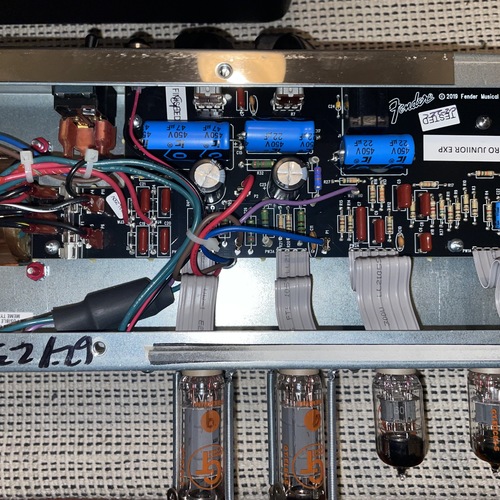
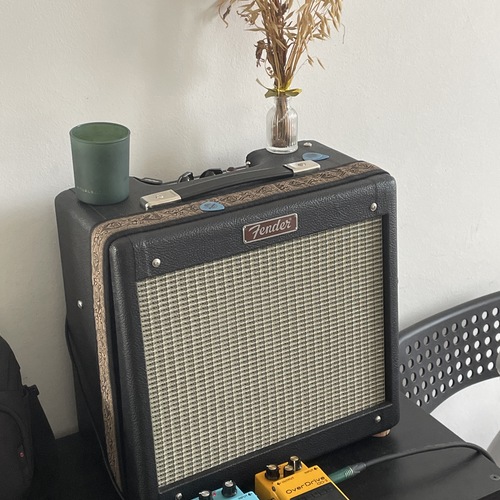
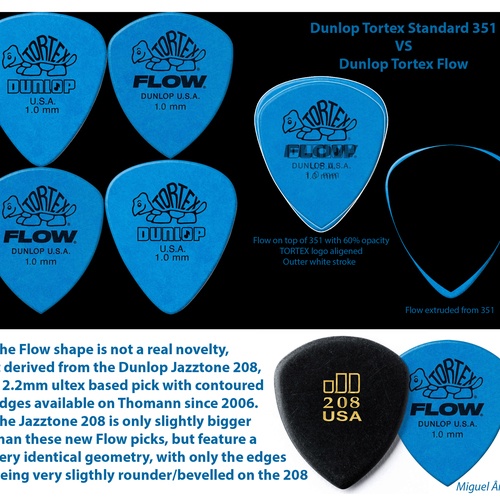

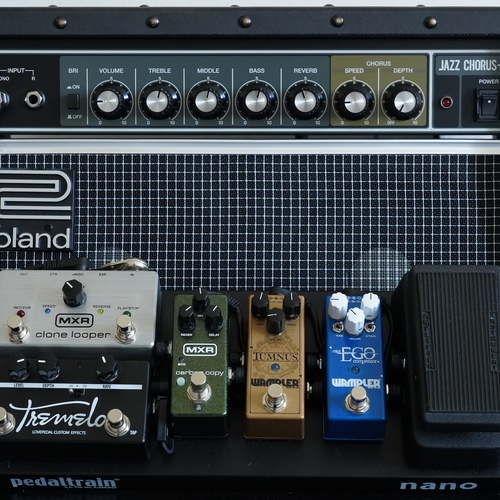
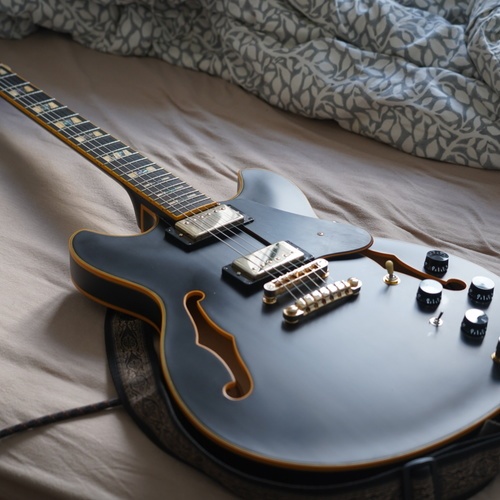
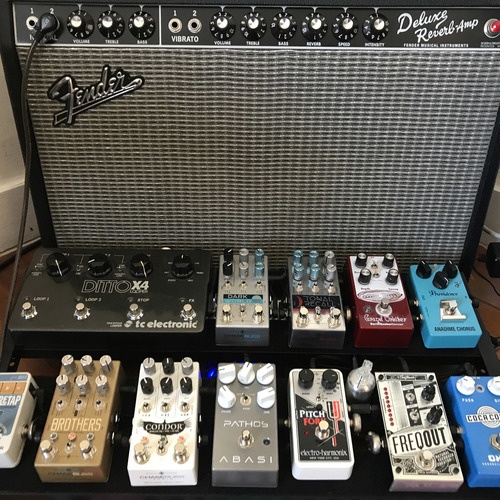
Top artists 3
The artists miguel_angelo has added the most gear to.


