
miguel_angelo's Reviews
98 reviews Back to miguel_angelo's Equipboard

983
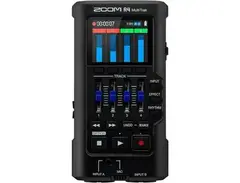
Portable 32 bit multitrack recorder
Love the concept, but I think it deserves a more "serious" version. It's very easy to use, 4 tracks with infinite bounces available, so you can really make a whole song just with this device. The audio quality is very good, and having the 32 bit float means no gain staging, so it's really fool proof. It has many effects available and you can insert them in two slots, one for guitar amps and mic preamps and another for compressors, filters, delays, reverbs, even an octave (which btw sounds VERY good, like EHX Pog good, polyphonic and fast tracking with almost no warble at all, really). The effects are competent, but overall sound a bit generalist and simplistic - again except the octave which is uncanny good - tweaking parameters is also a bit limited. A shame to only be able to apply them to mic input A or the internal omni mic, but you can work around this limitation by bouncing the track. The limitations of device actually make it fun to use, I find it very refreshing and inspiring to have "limited" arsenal, reminded me of an old tape multitrack recorder I tried in my teenage years, except this one sounds cristal clear and is much easier to use and flexible, with undo/redo, metronome, effects, etc. For songwriting and laying down ideas this is really good, and can also serve as an instrument study tool, for improvisation work or scale study, you can lay down some chords and then slow down the tempo and practice. I used it to record out of my Roland MC101 Groovebox, and also recorded audio with a stereo pair or condenser mics. The faders are nice to balance the tracks, and there is a very handy normalization/export function, to 24 or 32 bit. Don't know why Zoom went with non locking XLR combos, but that's ok. Honestly I really like and recommend this multitrack recorder, there is nothing quite like it on the market. I hope Zoom may bring us a more fully featured one and the same compact format, but with more effects and a better build. If you're looking for a "dawless" experience of music making, this is a great starting point.
983
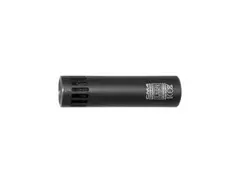
Best cheap small condenser mic in the world
This is the successor of the very well known CM3. This tiny handmade (in Sweden) condenser microphone costs only around 120€ and gives you virtually flat frequency response. The next mic I know that offers this flat response is the Schoeps, which costs around 10 times more. The polar pattern is a slightly wide cardioid, which is a bit tighter than the CM3 and makes it more versatile IMO. Might not be the best choice for loud and tight stages, unless you're close mic'ing. It doesn't feature any switches so having a low cut filter somewhere to deal with proximity effect might come in handy. It's quite sensitive to plosives, so for vocals a pop filter or the included foam shield is advisable. Very respectable figures for SNR and Noise, there's really nothing like it at this price point. I use a pair in AB configuration to record classical guitar and other acoustic instruments, and I am super pleased with the results. If you play any acoustic instrument and work hard on your timbre and dynamics, you will love this mic.
983
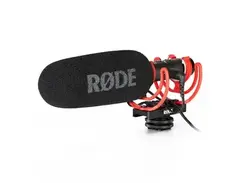
More than just a video mic
On the hunt for a mic to use on my mirrorless camera to shoot some documentary video and with little time to read reviews I stumbled upon the VideoMic NTG. I was very reluctant to spend 260€ on this mic however, recently before I've bought the Line Audio CM4 small condenser mic which is an outstanding mic for only 130€, and surely this Rode mic couldn't match the CM4... But the guys at the store did their job and convinced me that "it's actually quite cheap considering its quality and features"...
The mic survived mildly rough 15 days, tossed in and out of bags, operated from temperature between 35ºC to -10ºC and very dusty environments through Bolivia, Chile and Peru. When I got home I was completely wowed with the audio quality of my video clips, so I decided to try it on classical guitar, vocals, some percussion and melodica (USB out straight into computer) and compare it with the CM4 mic (plugged into the Motu M2). To my surprise the noise floor was the same, and through my headphones (Sony MDR-7506) the differences were very subtle, of course there were different preamps and polar patterns (wide cardioid vs supercardioid). I'm not really a "mic connoisseur", but I am picky about a flat frequency response, and honestly the VM-NTG sounds as flat as the CM4. The latency figures I got were also impressive... Well, the VM-NTG impressed so much that I just finished selling my Motu M2 and both CM4's... Not saying the VM-NTG is a better mic, but really it's not worse in any way I tested. I feel this mic optimized all my audio capture needs (music and video).
It packs very nice features, for camera use the auto-sensing input was marvelous, no need to turn it on or off, it just knows wether the camera is on or off, every single time. The dual output (where only one of the two channels has the -20db applied) is also a very clever feature for video work, definitely saved a couple of takes where the gain was not set correctly. There are the usual Lo Cut filters, -20dB pad and also a high frequency boost to sparkle the top end a bit. Rode confirmed to me all these filters are being applied BEFORE digital conversion, which is nice to know. They also confirmed me the size of the capsule, which is just under 3/4" at approximately 1,7 cm.
Build quality is very nice, all metal build, nice rubbery buttons with firm clicks, smooth gain knob, included quality rycote lyre and adjustable hot shoe (to adjust for viewfinder or lens obstruction), a bunch of cables (including one for Iphone) and foam shield... The hot shoe adapter also has some cable management slots and 3/8 thread under for tripod or boom usage.
Final note, the 3.5mm output is an unbalanced one (that also doubles as headphone out) measuring 10 ohms. So if you plan using really long cables it's advisable to get the VXLR Pro adapter, which balances the signal and also downconverts phantom power to 3-5V.
Overall, even if you don't need a camera microphone, this is a serious option to consider in the realm of usb mics, highly recommend it.
EDIT:
So, I went from 5 stars to 3 stars, because: - I found out for close miking the max SPL of 120dB is a big limitation - So the "gain knob" is not really a gain knob. It's just more like an output level or volume control. Gain is fixed, only way to change it is via -20dB pad, but.... - For some reason the mic started developing a hissing sound when -20dB pad is engaged. The hiss comes on when sound hits the mic. Feels like some mysterious noise gate is kicking, not good. - The -20dB pad sometimes clips and distorts even when the peak light is not actuating, seems like some internal switching/relay problem, as when I cycle the options sometimes it behaves as it should, but only for a couple of minutes, then it goes berserk and... - Sometimes the mic will just introduce crazy interference/noise - USB C interface is a bit unreliable, the Led goes from blue to green and there's a shift in sound, this happened sometimes mid recording with no apparent reason - Given its high price point and these unpredictable behaviors I'm selling it and cannot really recommend it anymore unless you find it really cheap.
983
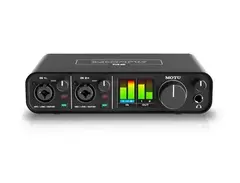
King of low latency
I've had a couple of audio interfaces and I can safely say the Motu M2 was my favourite of the non dsp interfaces. Latency wise it's honestly as good as the UAD Apollo Solo, my RTL figures were under 4ms, which is quite impressive. Soundwise it's crystal clear, and I enjoyed the ability to link both channels when using a stereo pair, so it hard pans left/right the two inputs for latency free direct monitoring. The screen is a nice bonus although the lack of proper meter scale makes it a bit redundant IMO. Headphone output is solid, although I only tried it with Sony MDR7506 which is 63 ohms, comfortable listening level was about 3 o'clock on the volume knob. Build quality is rock solid (I got the revised version that features two screws on the inputs), absolutely no wobble on the knobs or inputs. If you're looking at the completion with UAD Volt, Focusrite Scarlet, etc, I highly recommend the Motu M2 instead. It doesn't have all the bells and whistles like EQ, pad, compressors, etc, but honestly you'll have better results doing it in your DAW. For live use I think it's one of the best out there for the price.
983
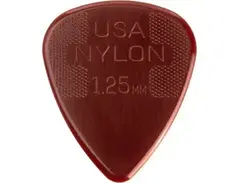
Good 351 shape alternative to the Jazz III XL
Been mainly using the XL Jazz III for more technical stuff, but bought these for a bit more snappy release. The flexibility is similar to somewhere between a yellow and green tortex (around .80mm), but since it's fatter at 1,25mm you get the best of both worlds, a rounder attack with reduced string noise, but the right snap for funky riffing and rock n'roll bite.
983
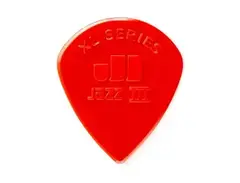
The #1 for warm tone without busting the bank
Back in my metal days I was exclusively using the smaller jazz iii nylons, but playing heavy riffs I would worn those out pretty fast, so I changed to the ultex version which I used and loved for a long while. Then when I started playing jazz I switched to the much bigger and heavier Jazztones 208's (also made from ultex). Now Ultex is probably the material I like the least, I find it way too trebly and noisy on the wound strings, like playing with a piece of matte polished glass. Recently I rediscovered the classic nylon Jazz III's but in XL size and I find it to be the best pick (under 5€ a pack of 6) if your goal is to have the least possible string/pick noise on the wound strings and a super smooth and fat release on the trebles. They are very balanced, much more flexible than thinner tortex gauges, which I think aids with achieving different timbres with the same pick, allowing both snappy or round release depending on the angle and how firmly you hold it. The size is perfect for me. A brief polish once in a while restores the bevel smoothness. I don't love the embossed logo and letters, but they allow a firm grip.
983
Perfect strings, for 5 days...
Tuning stability is top notch with perfect intonation. They sing loud and clear, as the NYXL. Silky smooth strings that play like a fresh set for a very long period of time... Or not... Unfortunately the wound D string started to loose it's coating after just 5 days of light Jazz playing with nylon pick. Contacted D'Addario to check if this might be a defective D string batch, since all the rest of the strings are still as new.
EDIT: After reaching out to Daddario they sent me a brand new pack, and the D string lasted quite a bit longer. Still, I definitely prefer non coated strings.
983
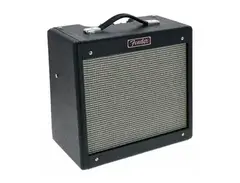
Simplicity and affordability at its finest
Earlier this year I entered my local music shop to buy a new amp. I was looking for a modern digital modeller like the Katana or the Catalyst, I previously had a THR, great amp for home, not a viable option to gig unless you plug it to a PA.
So after trying the digital modeling amps I was not particularly impressed, I didn't spend too much time tweaking, sure they are versatile with lots of sounds and fx, but of the batch none the amps didn't make me smile in with 5 minutes of tweaking. Before exiting the shop I stumbled upon this little guy, I had tried an early tweed Pro Jr IV in the past with the alnico Jensen and found it way to loud with piercing highs, but I asked to try this newer (and cheaper) SE version out of curiosity, the guys at the shop laughed as it was nothing like what I said I was looking for (on board attenuation and fx, headphone out, etc) . Well, just 30 seconds after I plugged it in I decided to buy it immediately.
This amp is AMAZING for it's modest price, I paid 400€ for it brand new. it's also very light and portable for a 15 watt tube amp, I can fit it inside my motorcycle top case! Very flexible amp, I can play around 2 volume at home with a solid and dynamic clean sound, throwing an overdrive when I want more grit and compression, around 3 to 5 it provides very loud yet defined clean tone, perfect for a Jazz combo, and above 6 it doesn't really get much louder, instead it starts overdriving and tightening up while not sounding boxy or flabby, just blissful. Maximum I tried was 9 (it goes to 12) and IT FREAKIN' RIPS. For fat clean tones at bedroom levels I just put it on 4 and dial the volume down on the guitar, best clean and warm tone I ever had at home. Fender seems to have modified the volume pot to provide more usable tones throughout the whole range, indeed I'm very pleased with it at low volumes, the volume knob feels like a dual gang gain potentiometer on a Klon centaur pedal, raising volume and progressively introducing compression and distortion. Unlike the digital modelling amps with their infinite tweaks and twerks the Pro Jr IV SE just feels WAY more direct and lively, expressing the true voice of my guitar and playing. I'm also quite happy with its ceramic speaker, but will try other options when opportunity arises.
If you feel digital modelling is killing your creativity with thousands of options and infinite tweaking, just get this small two knob beast and embrace it's simplicity, it will make you a better guitarist!
January 2023 EDIT:
So I've had this amp for 3 months now, and I love it more and more. After reading about the excessively hot fixed bias on the Hot Rod series amps and the way they smoked valves and pct's I found an interesting post on TDPRI https://www.tdpri.com/threads/pro-junior-iv-cathode-biased.1104745/ where the OP says he found out to his surprise that his recent Tweed Pro Jr IV showed that fender moved to cathode bias. I decided to open my SE and to my surprise the guts are very identical with the same and newer black pcb (just some minor US / EU Voltage differences), featuring an identical 270 ohm resistor coming out of pin 3 of each EL84. So I guess the Pro Jr IV SE is now Cathode Biased, which makes way simpler to bias and also improves reliability. Regarding fixed vs cathode bias tone and recalling my first experience with an early Tweed Pro Jr IV (fixed bias), I agree with the words another user posted on el34world forum: "Fixed biased tends to be louder & it has a crisper and cleaner tone than the cathode biased which I tend to think of as a softer and perhaps more compressed tone".
983
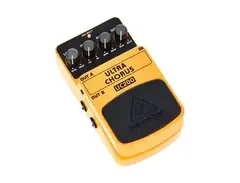
Featuring CoolAudio MN3207 BBD!
That's right! It's a clone of the CH1, but it's still analog! The current CH1 uses a digital processor to generate the delay for the Chorus, which is fine for most part EXCEPT if you're planning on running it on a 9V battery. A digital circuit will draw much more current than an analog circuit. The UC200 employs a good old BBD chip (Coolaudio VD3207, at this price point it's a steal), so battery operation lasts MUCH longer.
Regarding sound, no surprise since it's a clone. Sounds great as the early analog CH1! It distorts a bit with EQ and level set to max, but nothing crazy. Side by side my 1989 CE2 blows this UC200 out of the water (thankfully!), but for the price the UC200 is worth checking out if you want a pedal that you mind breaking or loosing.
Only con is the plastic shell and footswitch that don't inspire much confidence, I would happily pay extra for a proper metallic casing. But tone-wise they are awesome.
983
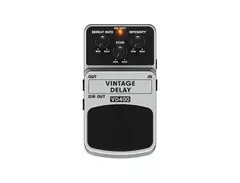
Best cheap analog delay out there
I ordered a pack of Behringer pedals to put them head to head with it's Boss counterparts. They sound is amazing for their price, it's a fact. Only con is the plastic shell and footswitch that don't inspire much confidence, I would happily pay extra for a proper metallic casing. But tone-wise they are awesome.
I compared it side to side with an original 1984 DM3. They are very similar indeed. The DM3 costed me 300€ and the VD400 30€, and it features and identical CoolAudio MN3205 Bucket brigade... This chip alone costs around 6-9€, of course Behringer has the upper hand since it owns Coolaudio.
So, comparing both here's my thoughts:
Obviously DM3 is built like a tank, VD400 feels like a cheap toy.
DM3 has a less noise and a softer/rounder character, which makes it more musical.
VD400 will oscilate like crazy at any delay time setting, DM3 is much more controlable and only oscilates above 3 o'clock
DM3 has more pad-like repeats that sustain in a more controllable manner, VD400 has dirtier repeats with more top end clock noise.
VD400 has way more volume available, the max echo setting on the DM3 is about 50/50 (dry/wet) equivalent to 12 o'clock on the VD400, so the Behringer can even boost the repeats making them louder than your dry signal.
Overall DM3 is MUCH easier to dial and more polite, VD400 requires finer and more regular tweaking.
Make no doubt the DM3 is a superior pedal, but for 90% less €€€ the VD400 is a good alternative if you want to spend the least possible. If 300ms are enough for you anyway (I wouldn't mess with the trimpots to make it longer, it will just sound like trash).
983
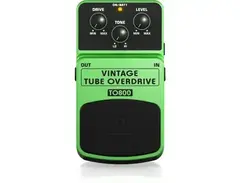
Really great sounding
I ordered a pack of Behringer pedals to put them head to head with it's Boss counterparts. They sound is amazing for their price, it's a fact. Only con is the plastic shell and footswitch that don't inspire much confidence, I would happily pay extra for a proper metallic casing. But tone-wise they are awesome.
The TO800 sounds really good, very dynamic with that classic but not overly exaggerated mid hump, I actually like it better than my previous Tube Screamer mini! Somehow I don't get that wet-on-dry layered sound, which kinda bugged me in the TS mini. I really only used it with gain bellow 9 o'clock with humbuckers and max 12 o'clock with single coils. Anything higher than 2 o'clock sounds a bit harsh and way to compressed for me.
983
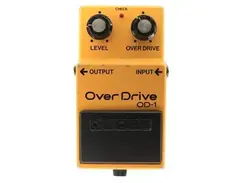
Classic overdrive for rock n'roll
I have the 14 pin chip, reissue version, sounds really good, very warm mid hump. I recommend it to anyone who finds the regular Tube Screamer too compressed, this one has gnarlier character, more open sounding and dynamic, or at least it feels like so under the fingers. Lots of drive available, I like to set the drive to less than 9 o'clock and level above 2 o'clock to get those valves cooking. The lowest setting on Drive knob provides almost no distortion at all, which is handy to use as mid hump boost, although it cuts a lot of low end, much more than a TS808. I prefer more transparent overdrives for what I play, like the OD-3 or even a klon at low gain settings. I believe this overdrive is more oriented to rock n'roll rather than blues. I was skeptical about the 220Kohm input impedance, but it's fine, it only changes you volume pot curve a bit, so at 7 on guitar volume pot it sounds a bit warmer and lower volume than a pedal with 1Mega input, which might actually be handy to clean up sooner. Only reason I give it 4 stars is because I found it too expensive and not much versatile, cuts way to much low end. I prefer the OD3.
983
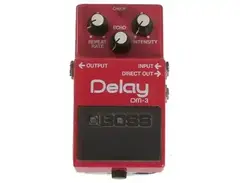
Vintage analog delay tones without busting the bank
Those DM2's are just too overpriced for my liking, so I took an opportunity on a mint DM3 that costed less than a completely wasted DM2. The slightly less dark repeats where one of the main reasons I was convinced this was the right choice, indeed it has clearer repeats that degrade very nicely. Past the 150ms mark the repeats begin to display those nice textured artifacts without becoming unusable. I also feel the DM3 handles greater feedback/repeats/intensity without going into unusable self-oscilation madness too soon, so I really enjoy it's pad like behaviour with high intensity settings, very musical. There's a sweet spot around 14 pm on the repeat rate that if you max the intesity (repeats) it only starts oscilating if you stop playing, if you play anything while on the verge of oscilation it somehow prevents that crazy build up of delay. Very musical indeed. It's also super quiet, more than most modern analog delays. I started using 9V batteries on my pedals and this one only draws 15ma, making it one of the most economical out there. I also love the knobs, they're more tweaker friendly than the standard Boss knobs. It's nowhere near the clarity of a DMM or a Tonal Recall, but that's what makes it unique. Nice middle ground between dark sounding delay (DM2, Carbon Copy, Vapor Trail) and the cleanest possible (DMM, Tonal Recall, Clockworks).
983
Best in class
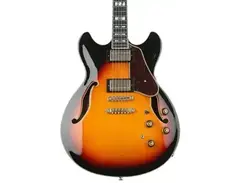
This is my fourth semi-hollow body guitar, it's also the cheapest, and by no means the worst. At 719€ you get a beautiful and resonant spruce top (used a lot on acoustic guitars, violins, cellos, etc) on flamed maple back and sides (laminate I bet), a 3 piece nyatoh-maple-nyatoh neck with luxurious ebony fingerboard with amazingly finished medium-jumbo frets, the great super 58 AlNiCo humbuckers, bone nut, great binding including the f-holes (not an easy task to perform) and a high quality ABS hardcase, the MS100C, which alone costs 167€. This is by far the best value for money available out there.
I previously had the Ibanez JSM20 Scofield Signature that costed 999€, and this is basically the same guitar with better tonewoods, different headstock, and upgraded hardware that didn't tarnish after 1 month of use, yet it costs almost 300€ less. Also love Ibanez sure grip knobs.
I went to two stores to choose the best model, the first one had some finishing issues on the f-holes and binding, oil residue on the neck, and the bone nut was a bit cracked, but it had a perfect setup off the factory and played wonderfully, I immediately fell in love with it. The second one had flawless finish with almost imperceptible spruce top joint (these are two solid pieces glued together on top of the center maple block), but didn't have the same great setup off the bat, especially the high E string had some buzz on a couple of frets, but still I got the second because because I knew a proper setup would make this guitar play as good as the previous, while looking much better. The bridge was mounted in a wrong position and I had a slightly high 5th and 11th frets, so I took the guitar to my local luthier to have the frets aligned and setup with .11's, adjusted neck relief and intonation and WOW! What an amazing guitar!!
Playing acoustic I've got to say this is one of best semi-hollow I ever had, only rivaled by the 3300€ Gibson ES-335 Figured, the AS113 is really the only that had ZERO internal noises, it feels super solid while resonating wonderfully. The spruce top is a really nice choice as it is known to age pretty well with time, so in a couple of years this will be even better. The Super 58's I already knew, but compared to my previous JSM10 that were definitely unpotted these feel like they're been wax potted, as they don't pick up as much noise. Still, great sounding pickups with medium ouput and three-way switch to split the neck into single coil or have it wired in parallel. The single coil split sounds really really good, the parallel setting is a bit duller but eliminates hum noise. I prefer them to the the Calibrated T-Types on the ES-335. The neck pickup has 4 cable condutor while the bridge has the more classic single conductor, nice touch! It doesn't have treble bleed wiring, which I became a fan of with the PRS, maybe I will upgrade that later on. I love the quick-change stop bar as it makes restringing MUCH more convenient, and the new artstar bridge feels very good, easy to setup up and no buzzing.
As I didn't care for the ABS case (although it's a very high quality one featuring TSA locks) I immediately sold it for 90€ and for the same price bought the AMAZING Ibanez PowerPad Ultra Gig Bag, model ISHB724, which offers great impact protection with 25mm foam padding, fully rain proof, light, and I can carry on my back which is I find more convenient.
Final thoughts: American made guitars are indeed wonderful instruments, nitro-cellulose finish is magical, and an original Gibson ES-335 just has some special mojo which makes it very inspiring to play. But for almost 1/4 of the price Indonesia is really putting out some truly astounding guitars. So wether you're a student, gigging musician or hobbyist, you're really not missing out much on buying a Gibson besides mojo and style. If you want a slightly better instrument that costs 3x times as much, I would go for the Yamaha SA2000 or the Ibanez JSM100, and if money is really no issue and you really want that nitro mojo the Heritage H535 seems to me the best semi-hollow out there. Just don't compare it side by side to this Indonesian 719€ AS113, as you'll end up asking yourself what you could have done with the spare money.
On a final note, the PRS Hollowbody SE's have better quality consistency, but they are more expensive. To make this guitar a truly nice guitar you will have to take it to a Luthier.
983
Best all-rounder... In black
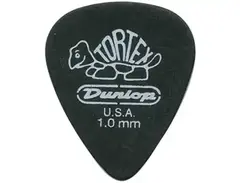
Can't go wrong with these no matter the style you play. I like their mellower attack and reduced string noise compared to Ultex (especially on the wound strings) and I also prefer their texture which to me resembles more that of the fingernail. They sound great of the bat but I like to polish them on the edges and tip to have more of that clear and natural delrin tone with faster and smoother release. I tried the 0.88 and 1.14, to me the 1.0 hits the sweet spot of articulation and snap. The size and shape is also perfect for my fingers, the top of the pick just fits super nice on my index phalange giving it a very ergonomic grip. Available everywhere dirt cheap and consistent quality. Perfect all-rounder pick. The blue one - like any other pick - vanishes out of existence once it falls off your hand, so might as well just have them in black, scientists say it retains heat better :p
983
Legendary
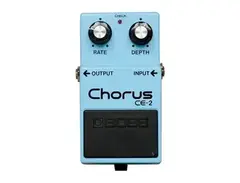
My favourite chorus pedals (Waterfall and Anadime) were based on the CE-2, but the Waza marketing/concept kinda bugged me and I was avoiding the CE-2W with it's modes switch, I wanted something really simple not to waste time tweaking and also a pedal with low power consumption that could run on 9v battery for quick setup. The Micro Chorus was under my radar, until the graceful day I stumbled upon an absolutely mint 1989 MIT CE-2 with original box and documents whose owner was willing to trade in another item I had, so I pulled the trigger! I can now say the legend is true, this pedal is MAGICAL! I love it's simplicity and warm dimensional sound, not too pronounced, not too fast, just right. The fact that it's used on countless recordings I grew up listening to lends it some extra special mojo no doubt. So if you're in the market for a "boutique" chorus I strongly suggest you spare some extra 50 bucks and grab this legend while they still sell for <300€!
983
Spectacular
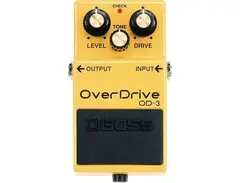
It's all been said in other reviews, great open sounding "amp-like" overdrive with no big EQ changes, very dynamic response to pick attack and pickup volume, super flexible drive pot from cleanish boost (a lot of it!) to medium gain crunch and everything in between, it pairs amazingly well with my Fender Pro Jr IV. The tone control is a passive one that works great to tame higher frequency harshenss, depending on your setup (speaker, pickups, etc). Honestly this is one of the best overdrives I ever played and I love that it was also the cheapest one.
Nice to see 1MegaOhm input and great quality buffer at this price point, also nice that it only draws 10mA, so a 9V battery lasts at least 80+ hours in continuous use, as long as you don't forget to unplug the input when not using. Suprisingly quiet unit, up there with the boutique manufacters such as Wampler, Earthquaker, etc.
I first had the newest one made in Malaysia which features SMD components and it's pcb only occupies less than a third of the inside of the pedal. That's OK for me, SMD have much tighter tolerances which results in better consistency and reduced values drift, many boutique manufacters have gone this route.
Later I got an earlier one with Through-Hole components, because I really like the pedal and most likely this one will hold the best value. Honestly they feel the same, if anything maybe the non SMD has a bit more bass? I didn't have them side by side, so don't quote me on that. Anyway I'm planning on doing a simple mod to reduce it a bit, namely reducing the C13 33nf capacitor to a 22nf. It's the advantage of Through hole components, much easier to mod/replace/diagnose.
983
Best All-Rounder
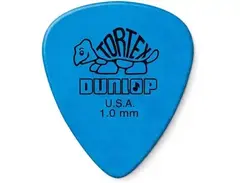
Can't go wrong with these no matter the style you play. I like their mellower attack and reduced string noise compared to Ultex (especially on the wound strings) and I also prefer their texture which to me resembles more that of the fingernail. I like to polish them on the edges and tip to have more of that clear and natural delrin tone with fast and smooth release. I tried the greens 0.88 and purples 1.14, to me the blues 1.0 hit the sweet spot of articulation and snap. The size is also perfect for my fingers, the top of the pick just fits super nice on my index phalange giving it a very ergonomic grip. Available everywhere dirt cheap and consistent quality. Perfect all-rounder pick.
983
They really flow
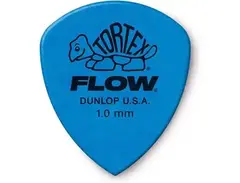
I love the Jazztone 208 shape (now called Flow) and been loving the regular blue 351 tortex so I decided to try these out, seemed perfect on paper but somehow at first I didn't really like them, they just sounded thin to me. I noticed however the Tortex Flow was getting better after two days of playing and "breaking in", so I grabbed a new one, sanded the pointy tip juuuuust a little bit (0.3mm) and then polished it. It made a HUGE difference! The Flow's rounder hips are it's main novelty and what gives them the ability to literally and effortlessly "flow" so well from string to string, especially when sweep picking. On the other hand it's a less forgiving pick than Standard 351 or even the Jazz III since it has a faster release and doesn't grab onto the string as much, so it requires more precision. Somehow it also seems to produce slightly less string noise on the wound strings compared to the Standard 351, but that might be just the way I naturally hold a pick. Tortex is no doubt my favourite pick material, it has that warm and defined delrin tonality (even more if you polish it), great grip and long life. For less technical playing the Standard 351 Tortex is still King however, and sound great right of the bat without the need to sand or polish.
983
Hand polished Ultex
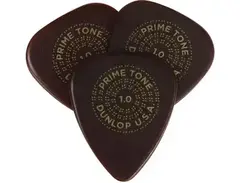
My favourite pick for a long time was the Jazztone 208, then I discovered these primetones and enjoyed them very much, the material used is identical but the primetone has a clearer attack (most likely because it is thinner). Unlike the 208 (which has the flow shape) I just use the pointy tip and not the sides. They glide super smooth on the strings and have a nice grip while being plain (I kinda dislike those grippy bevelled picks like max-grip). They are brighter and make more string noise than tortex, especially on the wound strings. Brand new of the shelf these feel instantly amazing thanks to the nice and smooth bevelling (unfortunatelly for me the right-hand bevel doesn't match the way I pick). A polish once in a while restores their initial amazing feel, so they last really long. Worth the price tag? If the bevel direction suits you, then yes.