Paul Dean's Gear


This custom Odyssey guitar with a Paul Dean style body was seen in the Working for the Weekend video and is often mistaken as a B.C. Rich or a Larrivee because of the headstock (B.C.) or the body shape and Canadian origins of the band (Larrivee - whom used a very similar body shape to Paul Dean's on several of their guitars over the decades).
This guitar has several features that make it likely a very early, maybe even the first, Paul Dean prototype...
3X3 headstock with a 24 fret neck, this was a standard design for Odyssey Guitars based out of Vancouver (whom started before Loverboy existed and was the company Paul commissioned 50 of his final version of his design from)
Bound body with a (presumably) maple top with binding
Control layout that is a mish mash of Paul's Partscaster strat (extra switch) and the regular PD2
2 open coil humbuckers, could have been Odyssey pickups, could have been an earlier pair of DiMarzios or Seymour Duncans.
Leo Quan Badass Bridge
Find it on:


http://web.295.ca/~gtmadore/article%2016.htm - A reprint of a March 1983 interview with Paul Dean covering everything on these guitars including the Hondo versions.
Frustrated by guitars that played out of tune and didn't have the right sound, Paul constructed what he affectionately refers to as his "Dean Machine." Realizing its commercial potential, he contracted Attila Balogh of Vancouver's Odyssey Guitars {15 Bowser Avenue, North Vancouver, British Columbia, Canada V7P 3H1} to build 50 Paul Dean models to be sold on a limited basis. But before the instruments had a chance to become well publicized, Hondo Guitars became interested and Paul signed a contract to produce two models on a large scale: The Hondo Paul Dean II will have two pickups, while the Paul Dean III will be equipped with three pickups and a vibrato bar. Both will sport several unique features of Paul's own design as he explains in the following interview.
Dean also played home built versions of these prior.
Find it on:

Starting sometime later in the early 2000's, Paul started using Fender Stratocasters with Floyd Rose vibratos and HSS configuration. The Specific model of Stratocaster(s) is virtually unknown. Very likely he started using these so they could play some of the "Lovin' Every Minute of It" and "Wildside" era material played using Kramer Paul Dean models that had a Floyd Rose locking vibrato unit.
He mentions them as just Stratocasters usually in interviews. He uses them quite a lot. He has/had a white one, a silver one, a Jade green metallic one (in the video source), and more recently a red/black one with a maple neck (probably to look like his old funky strat).
Find it on:





MAIN INFORMATION
Paul Dean's main guitar during the early Loverboy days (not to mention Streetheart) started life as a 1964 Fender Stratocaster with a home-built neck that he completley rebuilt. The guitar featured many modifications/features that inspirte the later Odyssey and Hondo Paul Dean guitars.
Home Built Telecaster style neck with a break at the 10th fret (and lots of hollow spots in the neck) which gave it that unique resonance. This was later reproduced on the home-built prototypes + Odyssey and Hondo guitars by routing 1/4" resonance slots under the fingerboard parallel to each side of the Truss Rod.
Grover Machine Heads
Presumably an alder Fender Stratocaster body, chambered, tuned, and filled/reinforced with Fir or Pine, another element in the tone. Part of the body chambering is filled in with DAP Plastic Wood.
Pickups include 3 aftermarket single coils, possibly hotter than normal.
Gibson Stoptail tailpiece for a bridge
Metal backed, rubberized "Anti-Scratch" pickguard, which now is missing all the rubberized material from the front.
This was the guitar Paul used on almost all of Loverboy's hits including "Turn Me Loose", "The Kid Is Hot Tonight", and "Working for the Weekend", and he still uses it apparently in his home studio from the looks of a recent guitar lesson posted on Youtube called "Lesson for the Weekend" which provides MANY closeup shots of the guitar.
REFERENCES
GUITAR PLAYER - MARCH 1983 - PAUL DEAN LEAD LOVERBOY http://web.295.ca/~gtmadore/article%2016.htm
This is the entire story of this guitar's construction.
How did you get interested in building?
I knew a guy who made a bass, and I guess that I got the idea from him. The first instrument I ever built was a 6-string bass I made in high school work shop. Then I had this old Les Paul--I think it was the '58 double cutaway with the little round horns. I picked it up for $125.00 because the neck was broken. Ifixed it and traded it to a guy for a '64 Strat, which I ended up totally smashing onstage trying to imitate Townshend.
What did you do to fix it?
I was really broke at the time, and even though I had another guitar--a custom one that I wasn't crazy about--I wanted the Strat back so I decided to fix it myself. I glued the neck back together--it broke at the 10th fret--using LePage's Bondfast and three drumsticks fro splints. I held the whole thing together with an elastic bandage. Believe it or not, it turned out great even though it was missing a few chunks of wood.
Why did it sound good?
Because the neck had been glued and filled in places with plastic wood, it had a particular resonance that was unbelievable. Shortly after that I left the guitar in a hot car trunk and the glue softened, which made the neck go for a total shit. Then I put on a new Tele neck, but it sounded worse than ever. I tried everything to make it better. I took the finish off and shaved it down. I even soaked it in a the bathtub and put it in the oven. I ended up making a new neck with a joint in the same spot as the original break.
Did you ever do anything else to the neck?
Yes, and I've never revealed this before. I put a couple of hollow grooves under the fingerboard to help the resonance--they weaken the structure and allow it to vibrate in a certain way. Actually there are three grooves; one for the truss rod and two resonance slots.
What happened to that body?
I had to reinforce it because it was totally wrecked; I used either fir or pine. Then I mounted a different bridge in the wrong place, so I had to fill in the holes and start over. Finally I got the whole thing back together, but it still sounded awful, it had a great sustain, but no real tone. So I took a screwdriver and hammer and chiseled out a bunch of wood underneath the pickguard. But I carved away too much so I filled up the cavity with plastic wood--it turned out to be right on. That guitar had a totally unique sound. I used some of those ideas on my Paul Dean guitar, including the neck slots, the body cavity under the pickguard, and a three-piece hard rock maple neck that resonates like the one I patched together.
RECENT PAUL DEAN INTERVIEW MENTIONING THE STRAT - Rocky Mountain Entertainer http://www.rmemag.com/pauldeanInterview.htm
RME/LFC - Jane: Do you have a favorite guitar, one you prefer over others?
PD - Yes. I just got this new Les Paul. It's my favorite 'live' guitar. You'll see it in the video. It's the one in the hotel room. It is a pretty interesting guitar. It's called a Les Paul Axcess. I think it's Alex Lifeson - the guitar player from Rush - I believe it's the one that he's endorsing. I changed the nobs, picks ups, the things that hold the strap on, the tuning heads, the nuts where the strings go through - basically everything except for the wood and the paint.
Now there's another guitar that's my favorite. REALLY MY FAVORITE GUITAR. You'll see it on the "No Tomorrow" video. It's the guitar I played "Working For The Weekend", "Turn Me Loose", and "Jump" on AND the whole first two Loverboy albums, plus the album I recorded with Streeheart as well. It's the one I built in Edmonton in 1973.
Find it on:

Probably one of the better known amps of the early Loverboy sound, a Hiwatt 50 Watt Amp (Most likely a Hylite era DR105 as some people on various forums have mentioned). Paul used this alternatley with a Marshall in the early days of the band. You can usually pick this amp out on the early albums based on the midrange - if it's buzzier, and a bit more 3D, it's the Hiwatt, if it's more midrange grindy and has a bit more grainy-ness to it, it's the Marshall. A good way to tell the difference is to listen to the first two tracks of the first album and compare them.
Paul's Hiwatt was a Canadian spec model, and most likely was one of those modded by Harry Joyce after import. Canadian Spec Hiwatts were typically modified so the first input was a regular gain input, but the second one added an extra gain stage, giving that thick, saturated goodness that made the sound he had on those early Loverboy records. This is what he meant by "I had the channels ganged" - basically, additional gain stages by connecting channels together, giving it that tone.
Here's Paul Referencing the Hiwatt in the source material, it's hard to find pictures of him using this amp, there used to be one on Google photos for the Hondo guitars he was promoting, but I'm no longer able to find that specific picture anymore.
How did you get the hollow, echoey effect on the solo intro to "Always On My Mind"?
I have this '75 Les Paul with ceramic pick-ups--it's an anniversary copy of the '55 flat-top with the wraparound bridge. I used it with my 50-watt Hi-watt that I've had for five or six years. I'm on the neck pick-up, and I've got the tone off, with full bass, no treble, and the volume up all the way. I have a Boss graphic equalizer that I use to punch it up at 800 cycles. You put this combination together, and you get that smooth Brian May sound. I also triple-tracked it.
Where does your distortion come from?
From my Hi-watt amp. I had the two preamps ganged, and that made it sound like God. It drives either two or three cabinets that use Celestion 12s. I had those enclosures built to copy Marshal bottoms because it was cheaper than buying them. Onstage I have a monitor to the left of my mike--that's what I play to all night.
Also, a forum referenced finding an actual Hiwatt cab that may have toured with Loverboy - http://vintageamps.com/plexiboard/viewtopic.php?f=3&t=11664
Postby charged on Mon Jul 04, 2005 2:04 am For what its worth, there is a guy at my practice space that has a Hiwatt 4x12 cab that has a "Lover Boy" designated serial number plate and it is a Sterling Imports cab.
Cheers Charged
Find it on:

I actually had an e-mail from a man who talked to Paul Dean after a recent Loverboy concert where he mentions using this - but I can't find it anymore for some reason. Paul Dean I'm sure like most guitarists from the 1980's had a Rack Rig somewhere hidden backstage and unlike other guitarists of the time there's not a lot about it. Apparently also his fellow Canadian Alex Lifeson from RUSH used these during Permanant Waves as well. However, I found it referenced on a forum elsewhere. - here's the Excript....
(POST) Loft 450 Delay/Flanger
This unit is my personal favorite.
The flange is very thick and rich like the Tycho unit. It also has great delay and chorus as well. There is a slave jack to run 2 units together for true stereo or through zero flanging.
Alex Lifeson used these units in the studio during "Permanant Waves" and then added them to his rack where they remained through the "Power Windows" tour. They are also a favorite of Paul Dean from Loverboy. (END OF POST)
Paul Dean had a very distinctive flanger sound ("When It's Over", "Gangs in the Street", "Prime of your Life") that has been incredibly difficult to replicate. That's because he uses a rackmount studio effects processor to do it - the Loft 450G Delay Line Flanger.
Find it on:

Starting around 1984-1985ish, for the album "Lovin' Every Minute Of It" in particular, Paul jumped from inexpensive guitar manufacturer Hondo to the quintessential guitar brand of the 1980's - Kramer - best known for being used by Edward Van-Halen.
With Kramer, Paul redesigned his previous "Dean Machine" design to be a neck-through, mahogany bodied, Seymour Duncan HSS equipped (2X Duncan Vintage Flat strat pickups and a Seymour Duncan Jeff Beck (J.B.) Humbucker), Floyd Rose original vibrato equipped guitar shaped just like his previous Hondo/Odyssey/Home-Built guitars. Kramer created a production model, with some early guitars being manufactured by Larrivee in Canada, some being made at the Neptune New Jersey Kramer factory, and others being made in Japan.
Paul had multiple variants of these guitars including a single humbucker EVH style one from an 85' Loverboy concert, and several that may have been home-built bodies and necks that Paul used to cobble variations of these guitars in various configurations in the studio between takes on the Wildside album (those were bolt-on necks though).
More info on these guitars is availible at vintage-kramer.com https://www.youtube.com/watch?v=BaJ00sEgLEU
Find it on:

Paul Dean crafted his own guitars before collaborating with Hondo/Odyssey, including the prototype "Dean Machine" with humbucker pickups, likely two DiMarzio Super IIs. This early version appears subtly in the shadows of the "Gangs in the Street" music video. It seems this prototype was later modified to match his other "Dean Machines," featuring an anti-scratch pickguard, as seen in the "Queen of the Broken Hearts" video. Notably, during the sandstorm scenes, the guitar reveals a rear-routed control cavity—a feature unique to this version, dubbed "Gangs," due to its initial video appearance.
Find it on:

In an interview with Guitar World, Paul Dean discusses his gear setup, mentioning his use of the TC Electronic G-System.
Find it on:

From an Interview with Guitar World - http://www.guitarworld.com/interview-paul-dean-and-loverboy-are-set-rock-n-roll-revival
What guitars/amps are you using now?
I thought you’d never ask. 2011 Gibson Les Paul Axcess, with a Floyd-Rose whammy. I changed the pickups to Gibson T500’s and put a big ol’ brass block in the Floyd. TC Electronics G System into a Marshall 900 50-watt. Four Marshall 900 cabs, but I just use the top two, that way I‘m not too loud for Mike.
Find it on:


Paul used a Roland RE-301 Chorus Echo as a preamp for one of his Marshall amps on the 2nd Loverboy album, and he seems to have used this sound on other songs as well.
Excript from Interview provided as proof below.
What about the raspy sound on "Take Me To The Top"?
On that I used a guitar that was one of the first prototypes to my Dean Machine; it's got Seymour Duncan Vintage Staggered Strat Pick-ups. I used a Marshall amp with the preamp taken out and replaced with a Roland Chorus Echo.
Find it on:

Prior to Odyssey and Hondo, Paul built his OWN guitars. One of the first builds he started to use with Loverboy was a custom P-90 equipped guitar like that seen here, which looks almost identical to the Odyssey Paul Dean and Hondo Paul Dean II models, but features a pair of P-90 pickups and a regular pickguard instead of the haircell anti-scratch stuff.
Paul used this guitar through the 1981 "Get Lucky" tour and on the Get Lucky album. This is one of the first 3-4 prototypes for Paul's Odyssey/Hondo guitars. There were at least 2-3 others which inlucded a Sunburst Odyssey prototype with no pickguard, a 2 Humbucker "Dean Machines" with a MusicMan Stingray Bass pickguard style design, and a 3 single coil version that appears in the "Hot Girls in Love" video.
It makes it's primer in the "When It's Over" Music video, but also appeared in concerts from 1981-1983. This guitar MAY have been modified to a twin humbucker setup for the Get Lucky tour.
(NOTE TO MANAGEMENT: This is not a "partscaster", it's a guitar Paul Dean built himself from scratch)
Find it on:

Paul Dean here is playing a custom "flat top" Les Paul of some kind, probably the same one used to record "Always On My Mind" on per the excript from the Guitar Player article from 1983 below this paragraph. It appears it has been modified to have the pickup selector by the volume and tone knobs. According to Paul it's one of the "reissues of a 55' Flat Top".
http://web.295.ca/~gtmadore/article%2016.htm How did you get the hollow, echoey effect on the solo intro to "Always On My Mind"?
I have this '75 Les Paul with ceramic pick-ups--it's an anniversary copy of the '55 flat-top with the wraparound bridge. I used it with my 50-watt Hi-watt that I've had for five or six years. I'm on the neck pick-up, and I've got the tone off, with full bass, no treble, and the volume up all the way. I have a Boss graphic equalizer that I use to punch it up at 800 cycles. You put this combination together, and you get that smooth Brian May sound. I also triple-tracked it.
Find it on:


I'm going to hazard a guess this is the BOSS GE-10 Graphic EQ he was talking about as the GE-10 is a popular EQ amongst guitarist's from Paul's era including George Lynch and Eddie Van-Halen.
http://web.295.ca/~gtmadore/article%2016.htm How did you get the hollow, echoey effect on the solo intro to "Always On My Mind"?
I have this '75 Les Paul with ceramic pick-ups--it's an anniversary copy of the '55 flat-top with the wraparound bridge. I used it with my 50-watt Hi-watt that I've had for five or six years. I'm on the neck pick-up, and I've got the tone off, with full bass, no treble, and the volume up all the way. I have a Boss graphic equalizer that I use to punch it up at 800 cycles. You put this combination together, and you get that smooth Brian May sound. I also triple-tracked it.
Find it on:

This came up on the Odyssey Guitars facebook page on February 28th.....
https://www.facebook.com/pg/odysseyguitars/posts/
However, despite the Facebook page, this is an actual photo of the REAL original round pickguard "The Dean Machine" guitar built by Paul Dean of the band Loverboy and used on the "Get Lucky" tour. As it turns out, it was sold or given to a Fan sometime in the early 80's with a late 70's Fender Hardshell case.
The guitar features an early version of the "Dean Machine"/Odyssey Paul Dean/Hondo Paul Dean II/III body shape, but rear routed for different electronics. The neck appears to be VERY thin, with a smaller, almost Fender Telecaster-like headstock with "The Dean Machine" written on it in the apropriate Loverboy courier font.
Contrary to my previous post about the twin humbucker Dean Machine with a similar appearance (if there ever was one), this was likely the guitar also used in the "Gangs in the Street" video, and can be confirmed to be a different guitar than that which was in the Hot Girls in Love video based on Paul Dean saying in a Facebook post that he still has one of the Dean Machine prototypes with 3 single coils, and this one was sold/given to a fan a long time ago....here's an excript froom the Unofficial Odyssey/Hondo Paul Dean Facebook group....
Some mentions on Facebook and Instagram and whatnot have mentioned Dean still has one of hte original prototypes, it has 3 single coils, and a black switch tip. Also, earlier this year, a picture was posted of his "body parts strat" (mexican strat parts guitar) mentioning the switching scheme which most likely applies to this - the neck and bridge pickups are attached to the 3-way toggle, while the smaller toggle turns the middle pickup on and off to allow all three or two of the three pickups together plus the neck+bridge combo.
Find it on:

"I thought you’d never ask. 2011 Gibson Les Paul Axcess, with a Floyd-Rose whammy. I changed the pickups to Gibson T500’s and put a big ol’ brass block in the Floyd."
Find it on:

Prior to Odyssey and Hondo, Paul Dean Built 3-4 "Prototypes" of his original guitar design called the "Dean Machine". This one is the 3 single coil pickup version which appears in the music video for "Hot Girls in Love" and was said to have been used on "Take Me to the Top" on "Get Lucky" - here's some excripts about this guitar from the March 1983 Guitar Player issue "Women Who Rock/Paul Dean Lead Loverboy"
http://web.295.ca/~gtmadore/article%2016.htm Frustrated by guitars that played out of tune and didn't have the right sound, Paul constructed what he affectionately refers to as his "Dean Machine."
What about the raspy sound on "Take Me To The Top"?
On that I used a guitar that was one of the first prototypes to my Dean Machine; it's got Seymour Duncan Vintage Staggered Strat Pick-ups. I used a Marshall amp with the preamp taken out and replaced with a Roland Chorus Echo.
Find it on:

At this rare recording of a 2000 Loverboy show, Paul is using a Gibson Les Paul Standard in the classic gold-top finish. He used this for awhile along side another strat I assume is a Partscaster (a sunburst one).
Find it on:

What kinds of guitars do you own?
I have two Les pauls, four or five Paul Dean model prototypes, my Strat, a Chiquita travel guitar that Billy Gibbons gave me, an old Framus 12-string that has only six strings on it, and a bass that I built that may make it into production with Hondo.
Find it on:

In 2021, Paul Dean and Sean Mara of the newly revived Odyssey guitars of Vancouver B.C. briefly got together and basically built ONE instrument relevant to the artist, a remake of his 1983 "Dean Machine" model, but with some modernized updates.
The "Paul Dean Pro" was a non-production, unique guitar that was used by Paul Dean live on Loverboy's 2022 Unzoomed Tour. It featured a chambered neck with 2 resonance slots parallel to the truss-rod ala. the 1982-1983 originals, 10 degree headstock tilt, but had Tone Rider Generator pickups (made in Canada), Floyd Rose original locking tremolo with locking nut, an opaque Loverboy red finish, and black pickguard with chrome hardware. It's unknown if he still has or uses this guitar or not, probably so. It was used EXCLUSIVELY on the Unzoomed Tour with REO Speedwagon and STYX, and then It was quickly retired in late 2022 and replaced with the Godin custom guitar he's using now.
The original idea was - per Sean's posts on Facebook and Instagram - to work with Paul to make an inexpensive model fan's could afford that would be a reliable road guitar. Unfortunately things did not work out, and they had to rebrand the remaining stock including a custom run of NINE custom guitars and disassociate the model from Paul as he's looking to get his guitars made by a bigger manufacturer.
The remaining builds have been sold and came in 2 variants...
There's the Sweetheart Black Bar S series which were Canadian built guitars using Chinese parts (bodies...maybe necks). And were sold via Reverb in 2022, and 2023.
Then there's the Sweetheart Customs a series of nine guitars featuring custom finishes and non-Paul Dean-esque accoutrements based on this platform. They are supposed to go up for sale but it looks like that has not happened yet.
Find it on:

Paul Dean has confirmed his use of the Neural DSP Quad Cortex, stating in an interview with Guitar World that it is his favorite piece of gear. He mentioned, "I have a modified 50-watt JCM 900 Marshall that I’ve had forever – a tech came up with the brilliant idea of putting an electronic power soak across the preamp tube – and that amp is sampled and profiled into the Quad Cortex. I used it all summer long on tour – the best thing about it is that it’s the same every night." He emphasized the consistency it provides, noting, "You’re not relying on the power in the building, and you don’t have to dial it in at sound check as it’s identical every night. And what’s so great about that is it’s identical not only for you, but identical for all the other guys in the band and the sound guy out front. There’s no need for tweaking; it’s totally consistent." This information is sourced from an article by Joe Matera in Guitar World.
Find it on:
This is a community-built gear list for Paul Dean.
- Find relevant music gear like Microphones, Guitars, Amplifiers, Effects Pedals, Software Plugins and VSTs, Keyboards and Synthesizers, Instruments, and other instruments and add it to Paul Dean.
- The best places to look for gear usage are typically on the artist's social media, YouTube, live performance images, and interviews.
- To receive email updates when Paul Dean is seen with new gear, follow the artist.
Discography
Album Credits
-
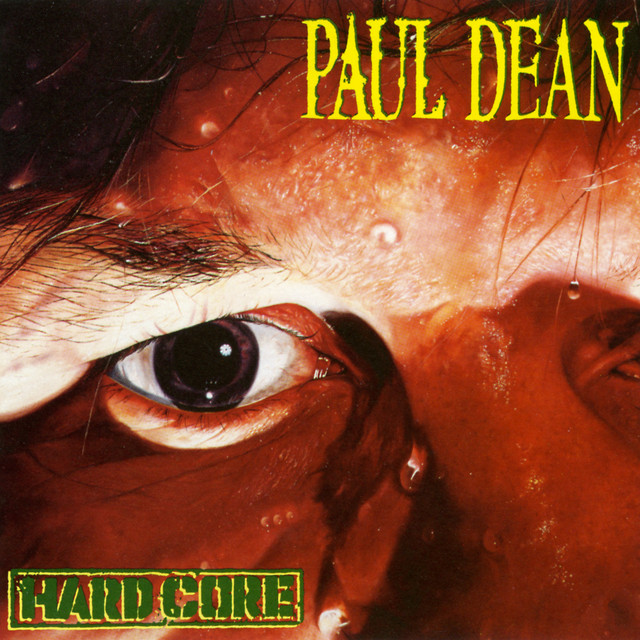
Paul Dean · 1989
Mixing Engineer Producer