

Pricing and availability
We compare 600+ stores and found this item at 1 store. Prices updated .
Store
Reviews
Price




Average Price: $3,995
High-end/Boutique
$500
$1501+
Price Tier
Budget
Standard
High-end
* Product prices and availability are updated by Equipboard every 24hrs and are subject to change. Equipboard may receive compensation for purchases made at participating retailers linked on this site. This compensation does not affect what products or prices are displayed, or the order of prices listed. For more information, please refer to our affiliate disclosure.
Description
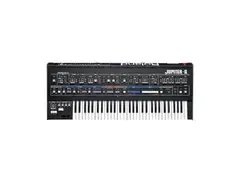
Rediscover the magic of the 80s sound with the Roland Jupiter-6. Initially launched as a cost-effective sibling to the legendary Jupiter-8, this six-voice polysynth has carved its own niche in the annals of music history. Offering the rich, warm tones synonymous with classic Roland analog sound, the Jupiter-6 boasts a unique charm that has earned it a loyal following among enthusiasts and professionals alike. Introduced in 1983, this 61-key synthesizer was a pioneer in its day, consolidating advanced MIDI capabilities and greater oscillator stability compared to its predecessor. Don't be fooled by its origin as a budget alternative to the Jupiter-8, the Jupiter-6 stands tall as a classic synth in its own right, delivering a unique blend of affordability and quality that continues to resonate with musicians worldwide.
Key Features:
- Six-voice polysynth: Offers a rich, full-bodied sound
- MIDI capabilities: Allows seamless integration with a wide range of modern music gear
- Improved oscillator stability: Ensures a consistent, reliable sound
- 61-key keyboard: Provides a wide range of musical expression
- Classic Roland analog sound: Delivers the iconic warm tones Roland is famous for.
Product specs
| Brand | Roland |
| Model | Jupiter 6 61-Key Synthesizer |
| Finish | Black |
| Year | 1983 - 1985 |
| Made In | Japan |
| Categories | Analog Synths, Keyboard Synths |
| Analog / Digital | Analog |
| Key Size | Full Size |
| Keyboard Action | Synth Action |
| MIDI I/O | MIDI Input, MIDI Output |
| Number of Keys | 61 Keys |
| Polyphony | 6 Voices |
FAQs
-
Is the Roland Jupiter-6 synthesizer polyphonic or monophonic?
-
The Roland Jupiter-6 is a polyphonic synthesizer with 6 voices, allowing you to play six notes simultaneously.
-
What type of synthesis does the Roland Jupiter-6 use?
-
The Roland Jupiter-6 uses analog synthesis, featuring dual oscillators per voice with various waveforms and modulation options.
-
Does the Roland Jupiter-6 have MIDI capabilities?
-
Yes, the Roland Jupiter-6 includes MIDI input and output, allowing it to be integrated with other MIDI-compatible equipment.
-
What are the standout features of the Roland Jupiter-6's sound engine?
-
The Jupiter-6's sound engine is notable for its dual oscillators, selectable filter types, and extensive modulation options, providing a wide range of sonic possibilities.
-
How does the Roland Jupiter-6 differ from the Roland Jupiter-8?
-
The Jupiter-6 has 6 voices of polyphony, compared to the Jupiter-8's 8 voices, and features MIDI connectivity, which the original Jupiter-8 lacks.
Videos

musictrackjp
ROLAND JUPITER-6 Demo&Review [English Captions]
![Video thumbnail for ROLAND JUPITER-6 Demo&Review [English Captions] by musictrackjp](https://img.youtube.com/vi/xEoYmoiEETo/mqdefault.jpg)
ROLAND JUPITER-6 Demo&Review [English Captions]
musictrackjp
Jupiter-6: The Dystopian Synth

Alex Ball
Roland Jupiter-6

SynthMania
The Roland Jupiter 6 is great (because it's unique).

mylarmelodies
The Roland Jupiter 6 is funky and nasty!

Matt Johnson Jamiroquai
The Story of the Roland Jupiter-6

Johnny Morgan Synth Dreams
ROLAND Jupiter 6 // Let's pretend it's a new analog synth!

Starsky Carr
Roland Jupiter-6: Is It Worth It?

Alamo Music Sound Lab
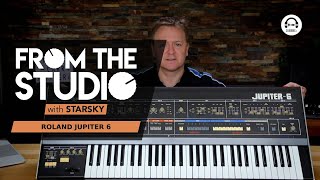
From The Studio - The Roland Jupiter 6 : A Very Expensive Classic

clubbingtvofficial
Reviews
PROS
-
Intuitive layout/interface allows for full creative control
-
Capable of very complex evolving pads and aggressive, spiky sounds
-
Built like a tank, durable and reliable
-
Multimode filter (HPF, BPF, LPF) with unique sound characteristics
-
Excellent for unconventional programming and sounds
-
Offers detailed sound sculpting with features like cross modulation
-
Digitally controlled envelopes and LFOs for stable performance
-
Unison detune feature for rich, expansive sounds
-
Europa upgrade significantly enhances functionality
-
Iconic for both classic 80s analog sounds and modern productions
CONS
-
Does not sound like its sibling, the Jupiter-8; less "creamy" and "lush"
-
Harder to fit into mixes due to buzziness of top end
-
Some parts are nearly 40 years old and expensive to repair
-
Overpriced on the secondhand market due to hype
-
Basic MIDI implementation without upgrades
-
Lacks the warmth of some other vintage synths without modification
-
Mono output only, limiting stereo soundscaping options
Owner Insights
We analyzed real musician discussions from forums and Reddit to find what players love, question, and tweak about Roland Jupiter-6.
Features and functionality
-
The Jupiter-6 offers key tracking envelopes and the ability to combine up to three waveshapes per oscillator, including a highly regarded Triangle wave.
Source -
Owners appreciate the Jupiter-6's split voicing and extended performance control, offering more keys and an extra LFO compared to some newer models.
Source -
A unique aspect of the Jupiter-6 is its ability to produce different cancellations due to phase relationships between oscillators, in contrast to the fixed phase of Juno sub-oscillators.
Source -
The Jupiter-6 has a smart voice assign feature, which re-triggers the envelope using the same voice for repeated notes, unlike earlier Roland models.
Source
Comparisons
-
Users note that the Jupiter-6 has more filter types (LP, BP, HP) and features like LFO delay, which are not available on the Prophet 10.
Source -
Some users find that the Jupiter-6 excels in producing 1980s soundtrack-like soft drifty pads, a tonal quality that may not be matched by newer models.
Source -
Many note the Jupiter-6 and Juno-6 can sound nearly identical when programmed similarly, challenging the value of vintage synths if tone is the only consideration.
Source
User experience
-
Some users feel a strong emotional connection to the unique tones of the Jupiter-6, describing them as magical despite its perceived abrasiveness.
Source -
Owners emphasize that the Jupiter-6 can deliver a wide tonal palette, including powerful tones distinct from the Juno-60's juicy low end and well-known chorus.
Source -
Owners note that the Jupiter-6 lacks modern conveniences such as built-in effects and extensive MIDI integration, which can be a consideration when comparing with newer analog polysynths.
Source
Mods and upgrades
-
The Europa upgrade significantly enhances MIDI functionality and adds features like new arpeggiator modes and random patch generation, improving the Jupiter-6's flexibility in modern setups.
Source -
Florian Anwander’s resonance to signal ratio mod is recommended to enhance the synth’s sound, though it requires modifications per voice.
Source
Value and pricing
-
Despite its age, the Jupiter-6 can be a worthy investment due to its rarity and potential for increasing value compared to some modern analog polysynths.
Source
Use cases and applications
-
Some users prefer the more "chorus-like" and resonant sound of the Jupiter-6 for creating warmer, more natural tones, ideal for nuanced compositions.
Source -
The synth's rubbery and snappy envelopes are particularly praised for creating atmospheric and complex soundscapes, with effective use of reverb to enhance its character.
Source
Setup and maintenance
-
Owners have found that replacing sliders and pots is necessary for used Jupiter-6 units, and fixing bad traces can resolve voice-specific issues like PWM malfunctions.
Source
Critic Reviews
4.5 out of 5
Based on 10 Reviews and 37 Ratings
47
The last and best Jupiter synthesiser
So, little story time and very long comment, ever since i got into Roland synths (thank you Charlie Puth) I wanted a Jupiter 8. They're going for quite the fortune, around 20'000€ up to 40'000€, and the prices are going up without any sign of stabilisation. I watch a video by Alex Ball about the synth, and I think to myself, "hah ! This synth definetly has its character, it's cool, but I still prefer the 8". It's true, it has 8 voices, dual mode, and it's reviered for its warmth, that cold coloured copycat couldn't possibly beat the JP-8 (see the alliteration there ? Im smart hehe), but it can do some bits and things the JP-8 can't, it's a classic synth, no special features. But wow, this band pass and hi pass filter complete with modulation capabilites and resonance is really a nice option, too bad it isn't on the JP-8... Then i research a bit more into the JP-6, the "emo little brother" of the JP-8, and I realise they're similar, yes, but the 6 is not a scaled down version of the 8. The JP-6 has its die-hard fans who will angrily, with fervour, defend the violet tinted keyboard against the people who think it sounds bad. While I agreed with them, I thought "hah ! I'll NEVER be this type of person though, Jupiter 8 is still the king". And at this point of the story, I propose I point out the differences between the two synths :
The JP-8 uses Roland's own VCO ICs which had some issues and were not cheap to make as their engineers designed the ICs without prior knowledge of how to make one. As a cost cutting measure, the JP-6 uses the same ICs as the Prophet-5, giving you the possibility to mix vaweforms on a single VCO on the JP-6, which is the reason why there are so many cyberpunk-looking LED buttons on the front panel instead of flickable switches and knobs of the JP-8. So now, a sound that would have required the Dual mode of the JP-8 if you wanted a sawtooth, PWM and noise, using 3 oscillators per voice, would now be achieveable with ONE oscillator. Both have Roland's famous and well behaved IR3109 VCF ICs, but they were implemented in series in the JP-8 which resulted in a normal sounding filter, switchable between 2-pole and 4-pole, with a separate HPF that's only used for EQing the bass, whereas the multimode filter design of the JP-6 forced the circuit designers to implement the ICs in a funky way (again, they didn't really know how to actually implement a multimode filter and came up with their own way), and basically the filter is now more "wild" and the resonance will give the filter a slightly more grimm sound. But people like it, so much that there are eurorack versions of the filter for modular synths. Haven't seen a eurorack version of the JP-8 filter. Another problem with the JP-8 is that the enveloppes and LFOs where voltage controlled, which means they were prone to detuning. Normally that's great, it's what warmens the sound, to have slightly off enveloppes and a very slightly drifting LFO, the problem is, this could get quite extreme, to the point where even with the "auto-tune" option, the LFO that was advertised to go as far as 40Hz would no longer get near that frequency, and the enveloppes would sound distinctly different if you waited long enough. That was rare but Roland recieved complaints (for a 3'000$ synth, that's understandable !) and the JP-6 now features digitally controlled enveloppes and LFOs, while keeping the most important features voltage controlled. BUT, the LFO now goes to 100Hz, that's incredible ! Rarely seen in analog synths ! The cross-mod has a more linear behavior on the JP-6 which makes it more useful, but it goes farther that the JP-8 and it's more difficult to find really musical spots. It can be modulated by enveloppe 1 on the JP-6 and stays stationnary on the JP-8. That's useful too ! I don't know why that wasn't a feature on the JP-8, and being an owner of the TAL J-8 VST, i thought it had the option.The arppegiator doesn't feature a random mode on the JP-6 (sad...) the Dual key mode is no longer present (that would reduce the polyphony to 3 voices !) which is really a bummer if you use the synth on stage, but with some planning and an idea of where you want to go, that's not a problem in the studio. Also note that VCO-2 on the JP-6 has a high frequency mode, and while that doesn't sound very special, you can get very convincing glockenspiel, vibraphone, marimba, xylophone, organ, clavichord, EPs sounds with this. Some minor improvements is that on the JP-6 portamenti and glissandi can be assigned to the lower, upper, or both panels, as well as arpeggii, whereas on the JP-8, only the lower panel was arpeggio capable and the upper panel only could have portamento/glissando. And, you can start an arppegio sequence from the top if you click the DOWN button first in UP&DOWN mode. What else... Ah ! Yes, the JP-6 doesn't have a sine wave, only LFO-2 is capable of generating one, but VCO-1 is capable of being tuned by half-steps like VCO-2 instead of only by octave like the JP-8. This helps with the cross-mod, as your key will change when you modulate that parameter. I found out later that having a triangle LFO is much much more useful, you won't hear "plateaux" when doing PMW or pitch mod as the voltage stays constantly moving up or down, it sound better and more natural. And to finish, the JP-8 has stereo output, DCB (early MIDI but just for Roland products. Yes you can adapt DCB into MIDI), the JP-6 has very basic MIDI, but MONO OUTPUT !
I hope you can see by this long paragraph the improvements brought by the JP-6 to the Jupiter series, that really should make for a well-rounded synth ! Now, I'm one of them. Oh NO, the die-hard JP-6 fans !!! This synth IS better, at least in terms of capabilities, but how is the sound ? It's time I tell you, I may have done a little crazy thing... I bought it. I have it. It's sitting 3m away from me, covered because i don't want the buttons to yellow-out with time cause of UVs. The knobs are still grey, that's rare, look at the state of their tint in some cases !
Immediately, as I boot it up, I have the TAL J-8 VST on Cubase next to it (it's a VST done by a single guy in switzerland who has a JP-8 and wished to release a perfect recreation of that synth, you bet it's close sounding) and I start to compare the basic waveforms using an oscilloscope and an EQ to visualise the frequency peaks. No difference. The raw waves don't sound any colder, although they sound sharper on the JP-6 because the filter goes farther up, but you get the EXACT same result if you switch the JP-8 filter to 12dB mode. Now, the resonance is wild on the JP-6 ! Keep it low cause if you crank it all the way up, you ALMOST get self-oscillation. It distorts the sound in a lovely space-sounding way, and it's really an idea-sparker. The band pass and hi pass options are fantastic as well, you can get sweeps and sharp or hollow tones, you can really PLAY with the harmonics, that's the term, you PLAY with them until you like what you hear and you continue to sculpt the sound. The resonance does sharpen the sound and you'll lose a bit more hi bass than the JP-8, but you know what you can do to fatten the sound ? You add a triangle ! The option's there, use it ! The Jupiter X has an option to use a Juno 106 sawtooth instead of the JP-8 one, being more bassy, well shame on it ! Its ancestor had that feature 40 years ago ! I seriosuly got fatter and rounder tones with the JP-6 than the JP-8. And you know what ? It doesn't stop there. Unison. You get unison detune ! If you detune VCO-1 and VCO-2 enough, and THEN use the unison detune button enough too, oooh mama mia 3 voices supersaw here it is ! If you want a more convincing supersaw, add noise ! It will already be at a pretty low level, being mixed with a sawtooth and then mixed again with the other sawtooth of VCO-1, maybe even with the triangle waves if you decide to bring them out, and you'll get the "tsssssss" glue that holds the 4 saws together. That's why as the JP-8 is rooted in synthpop culture, the JP-6 is also rooted in rave, trance or techno culture. Wild resonance, supersaws, you can see why. So it's fantastic at doing what the JP-8 does, and can go farther in every domain. Think about it, the JP-6 came AFTER the JP-8, why would Roland release a worse synth if they want people to buy it ? My final argument would be that yes, the Jupiter-6 can sound cold. If you want it too. And it can sound very very lush and warm like a Juno (without chorus obviously although in some cases it doesn't need one). Actually you can make it sound very dated, like think Jupiter-4 stuff, 70's sounds, or, very contemporary and suitable for modern production. It's incredibly flexible. But cold sounds are as useful and warm ones, because while alone a Prophet-5 might sound fatter, the difference becomes trivial in a complete mix, and the Jupiter line, especially the 6, are master at knowing their place in a mix. If you only use bassy fat sounds your song will sound like you play it through beats headphones every time (mushy bass, no top end) so my long comment is also targeted at the dum-dums who only swear by fatness.
Okay so, if it's better then, why was it so unpopular and quickly forgotten by the synth community and keyboard players, even Roland themselves don't mention it anywhere on their site! The Jupiter-4 has got more coverage, it's got its own emulation on Roland Cloud ! Well to answer the first part, as I said it's very similar, 90% of the sounds you can make with a JP-8 you can also get on the JP-6, and they will sound the same, even with resonance (you'll just need to turn it down a bit on the JP-6). So in people's mind, where only polyphony counted at the time, the JP-6 was seen as the little brother. Then, more affordable options came to the market, and FM synthesis, and the Junos, and the JX-3P, it was burried by competition, it came too late, to the point where it had become a niche object by the late 1980's, only renowned EDM producers owned one. Even today, it's a collection keyboard. Most of them are in studios or EDM producers's homes. To answer the second part, is the JP-6 well-known ? Does it have a reputation, does it have rainbow buttons (i prefer the JP-6 colour scheme and design, but whatever)? Does it sell ??? Of course not, so who would buy a Jupiter 6 emulation ? The only reason the Jupiter and Juno X exist is because people know these synths, the sounds they made are recognisable and sought after, to the point where demand arose, and supply was brought.
In the end, what's the lesson here ? Well, firstly, reputation makes or breaks a synth, and lastly, it's a great space-sounding synth, especially with resonance. Make a sound with the JP6, it will take it beyond the exosphere. It shouldn't be seen as just a budget jupiter 8, but rather a improvement both in features and price of the jupiter series. You can listen to it in a demo i made not one day after recieving it, meanwhile i've got an album planned using only this synth as it covers every ground as far as music goes, even DX7 sounding stuff : https://soundcloud.com/mohafu/jupiter-6-demo?utm_source=clipboard&utm_medium=text&utm_campaign=social_sharing

27237
The Dennis Rodman of 80s Polysynths
This video nails the basic timbre and scope of mine.
Either you like these sounds, or you don't.
Mine is due for a recalibration and some repairs, but even in its weakened state, it still sounds like this video all day.
Play a JP6, then immediately try an Sh-101 (for example), and for a moment you'll wonder why 101s were ever known for their bass sounds... the JP6 is a big, angry synth, even when it's trying to sound polite.
People see the "Jupiter" name, and (reasonably) expect the Michael Jordan of Japanese polysynths... but I find the JP6 to be more Dennis Rodman: an imposing role player that isn't afraid to get under everyone's skin.

41022
its so twangy and hard sounding in that demo, I really didn't remember it this way, but I guess that's what it sounds like!
27237
I've heard smoother JP6's too. I'm curious to see what a good calibration can do for mine. Thinking of sending it to SynthSpa in Utah and having it Europa'd at same time.
27237
Well, I'll get this thing tuned up and back to 100% operational, and then neither of us will have to wonder any longer :D

Beautifully brittle sounding synth
If you're used to 'warmer' sounding vintage polys/monos then this one takes a bit of getting used to. Stop trying to think of it in similar terms to, say, a Prophet 5 or a Juno 6... as it wont help you. Instead think of it as a totally different manufacturer, let alone synth category.
Truly gritty/harsh sounds can be had out of this thing due to the LFO rates and other tweaks. Plus it has that rare, synth ability to think youve actually killed its internal chips with your knob-twiddling. Scary fun.
I hated it at first, then fell in love. So much that I even own an MKS-80 also.

257
The secret to early progressive house
Much like the Jupiter 8's Ive had I've also had half a dozen different Jupiter 6's over the past 20 years, i buy keyboards use them and sell them on so i don't have them gathering dust or get bored with them, but i always end up re-buying a JP6 at some point. The JP-6 is a superb synth and while its touted as the JP8s small brother.. its really not, its much much more. It holds its own against the mighty JP8 and sounds totally different for a starter. It has free wheeling pitch to its oscillators so intervals can be set, and it has a multimode filter, HPF, BPF and LPF 12db and 24db all resonant. I used this more than any other analog synth on my Automatic Records releases in the early 2000's, and the baseline on "can't stand the pain" is pure JP6.
41022
the 6 really has a sound of its own, I would like to own another one... its also a piece of MIDI history
257
I used to quite freely sell and re-buy them but those days are gone, they are going for crazy money now, my first one cost £450 imported from Canada in 1999, scary money now.
41022
I really wish I had bought the one I borrowed in the late 90s. The gy woulda sold it to me but I figured they were so ubiquitous supply would always outstrip demand (same thing I thought when I sold my 106)... hahaha
41022
I tend to sell/swap electronic music gear freely too... I go thru periods where I am in bands playing guitar and I look at the clutter in my closets and just want to unload shit that's collecting dust and my 1st instinct is to turn a bulky keyboard synth into cash or another Gibson. I almost always kick myself later. These days I am focused on modules whenever possible. If they fit in a drawer or a few can go in a rack I generally won't SEE them and won't be tempted to sell them!
257
Thats absolutely true, Paul Nagle who writes for Sound on Sound said exactly the same thing to me recently, don't sell it.. hide it !
41022
I know, as synthesists our lust for new and exciting sounds and interfaces is our achiles heel financially.

2532
More than a scaled down version of the JP-8
I love my Jupiter-6. The Europa upgrade is a must if you want to fully unleash this analog beast's full potential. It gives you expanded routing, modulation, and arpeggiation capabilities, in addition to significantly improving upon the otherwise basic MIDI implementation.

785
JP6 is a classic! I used to have the whole family.

1277
Not worth the $ they go for now.
It sounds pretty ok. It's not worth the price they go for, I got mine for around $500 in the early 2000s. Sold it in a studio purge and now they are so overpriced it's stupid.
It has ok tone, Nord is just as good. It has some modulation capibilities that is interesting. It sounded pretty ok in unison. Not the bestest of the best Roland.

165
One of the greatest synth ever made.
I own the Jupiter 6 since middle 80's. Its analog, it has preset storing, its polyphonic and it has a special cross modulation which make the synth sound rich and warm. Used this one for the main melody on Exit EEE "Epidemic", waaaay back in the early 90's. This "Epidemic" sound was tried to be reproduced by other artist and other synth with no luck. The filter/reso of the Jupiter 6 is very unique.

182
The most flexible Jupiter.
Pretty similar to other polysynths of this time period but still very good. What it loses a bit in sound quality compared to the other Jupiters it makes up for in interface and programming potential (multimode filter in a Jupiter is a huge plus). Don't go into it thinking you're going to get some massive-sounding 70's poly. Think more along the lines of a Drexciya or an eary D-Train track.

278
Roland Jupiter-6
Roland Jupiter-6 just needs no words i think we should do a moment of silence for the Roland Jupiter-6 ahhaa
Artist usage
Add artist

In this instagram post, you can see deadmau5 showing off his synths through a funny video of how to produce.You can see the Roland Jupiter-6 in this video along with some other neat synths!


In a SoundOnSound article, Daft Punk is noted for using the Roland Jupiter-6 synthesizer during the recording sessions for "Random Access Memories."


"I had a Jupiter-6, but because I’d only been doing music for a short while, I didn’t really understand it. I’d love to try it out again.”

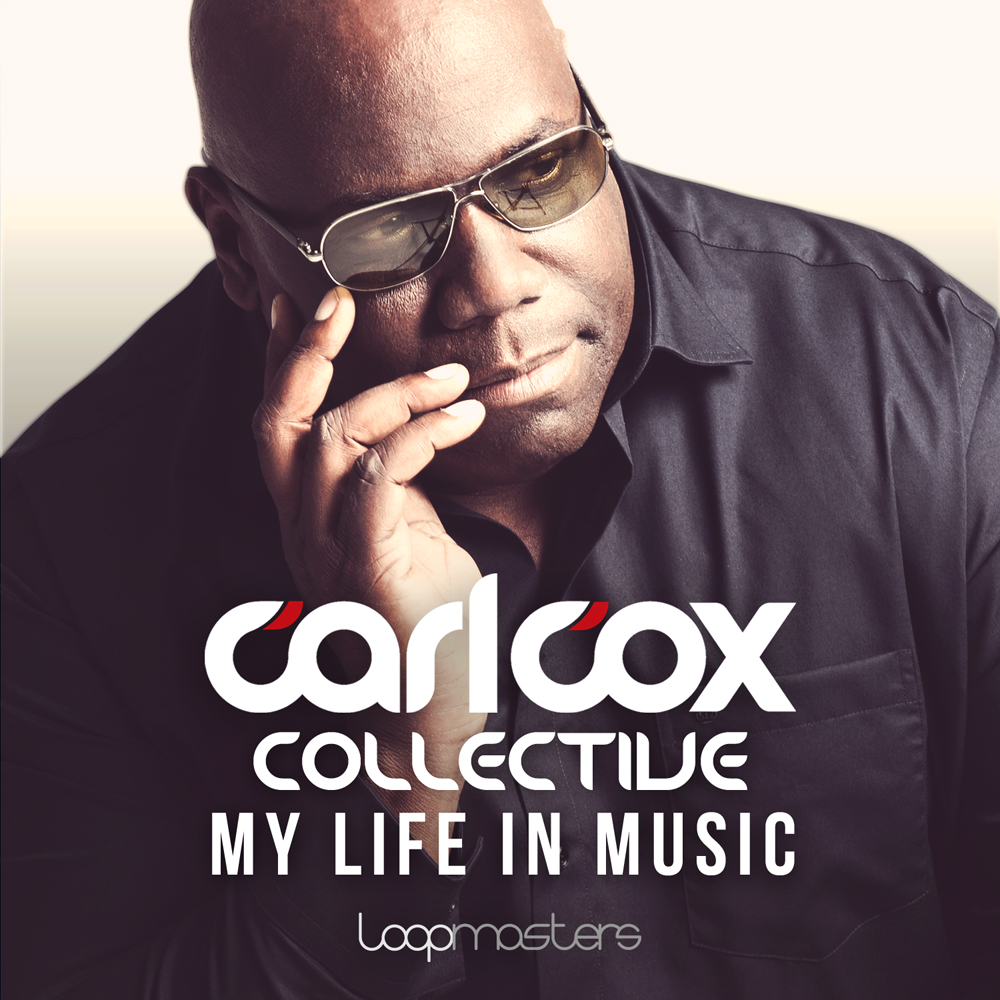
Carl Cox uses the Roland Jupiter-6 synthesizer in his project "Carl Cox Collective - My Life In Music," as detailed on Loopmasters.


"The [Roland] Jupiter-6 is one of my favourite hardware machines."


"Matt Cox tunes up a Roland Jupiter 6 polysynth prior to the Creamfields show. Note the custom-made covers that keep the gear dry backstage," read the caption to this image, found in this article.


"I've got two new synths, the Roland JX3P which interfaces best with the GR700, and the Jupiter 6. I'm also trying to get a Yamaha DX7, but you've got to be careful not to collect too much at once, or your life becomes dominated by buttons. The JX3P is coming out in a little rack mounted unit in August without the keyboard and I'm waiting for that as well."
.jpeg?v=1784399641)

In this photo from July 2021, The Weeknd shows the Roland Jupiter-6.

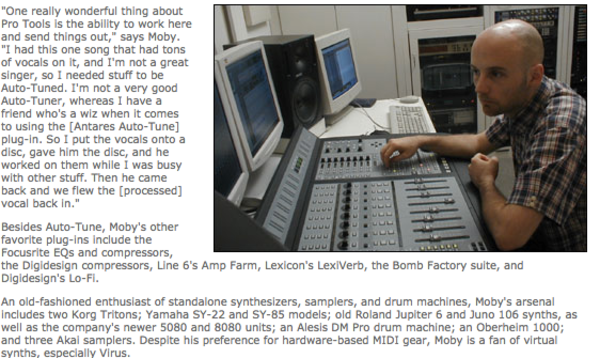
"An old-fashioned enthusiast of standalone synthesizers, samplers, and drum machines, Moby's arsenal includes two Korg Tritons; Yamaha SY-22 and SY-85 models; old Roland Jupiter 6 and Juno 106 synths, as well as the company's newer 5080 and 8080 units..." - Paul Verna


In this interview, Liam Howlett mentions he used to own at least one Jupiter 6.

According to this book, Vangelis has used a Roland Jupiter 6.


In this Roland Users Group article, the Hartnoll brothers are asked about "What Roland gear made it onto The Blue Album?" They reply, "God almighty. The 303, the 808, the 909, the Jupiter-6, the SH-09, which is still a personal favorite of mine... The Jupiter-6 has also been a favorite. It was semi-customized with two outputs before I bought it. That synth was our workhorse. All of our early albums just thrived on the Jupiter-6. I remember doing things for TV, and people would come up and try to put gaffer tape over the logo. I’d say, ‘What are you doing?’ I can honestly say that I’m not the kind of person who likes to display corporate logos and things like that, but I’ve always felt quite proud of the word Roland across my gear."
Album Usage
The Roland Jupiter-6 has been featured on the following albums:

Ghostbusters Remix (Yago Boss Remix)
Ray Parker Jr. (2021)

Sand, Moon & Stars
Carl Cox (2021)

Spectrum (Special Request Mixes)
Erol Alkan (2020)

Living on Video
Trans-X (2019)
Spectrum / Silver Echoes (Matrixxman and Machine Woman Remixes)
Erol Alkan (2019)

Spectrum / Silver Echoes
Erol Alkan (2018)

LONER
Caroline Rose (2018)

Green Twins
Nick Hakim (2017)

Providence
Nathan Fake (2017)

Dark Red
Shlohmo (2015)

Random Access Memories
Daft Punk & Daft Punk (2013)
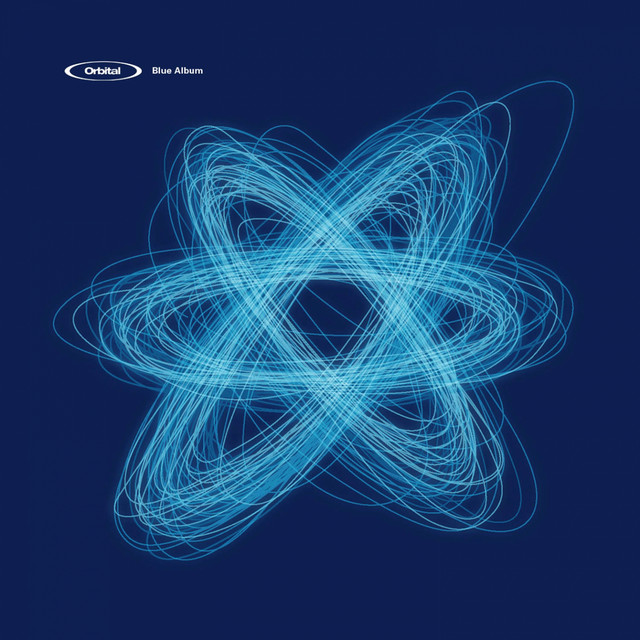
Blue Album
Orbital (2004)

The Altogether
Orbital (2001)

The Middle of Nowhere
Orbital (1999)
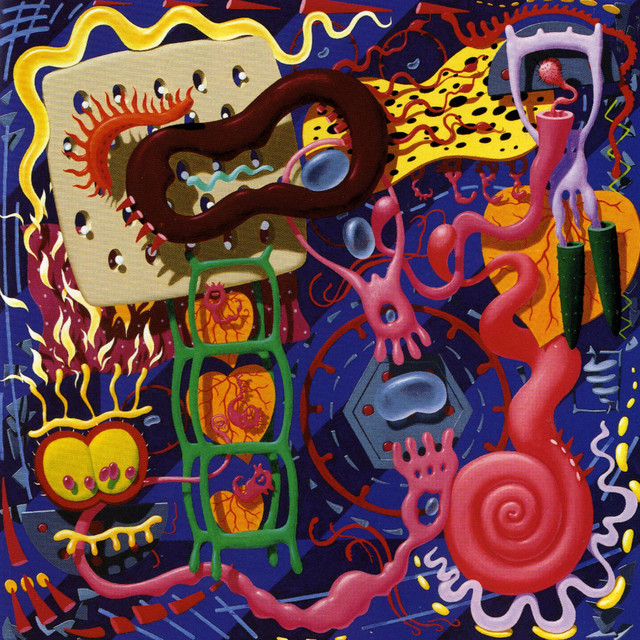
In Sides
Orbital (1996)
Alien
Larry Heard (1996)
Diversions
Orbital (1994)
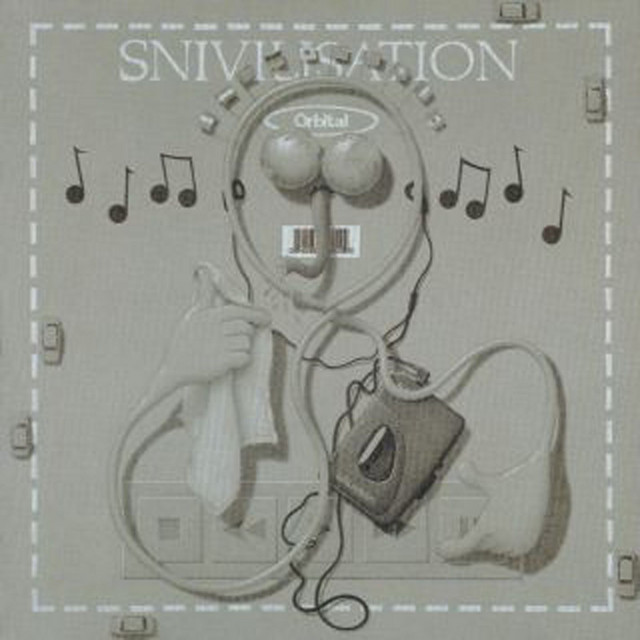
Snivilisation
Orbital (1994)
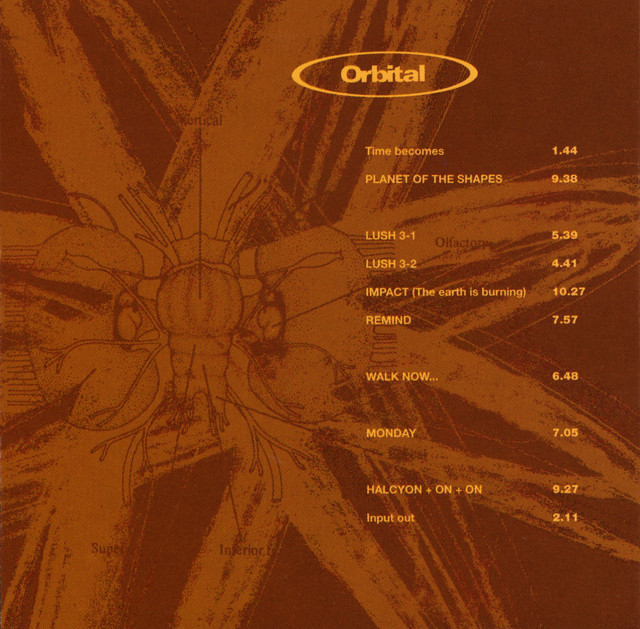
Orbital 2
Orbital (1993)

Sugar Tax
Orchestral Manoeuvres in the Dark (1991)

Orbital
Orbital (1991)
Can You Feel It
Larry Heard (1986)

Poland
Tangerine Dream (1984)

Clics Modernos
Charly García (1983)

Thriller
Michael Jackson (1982)
Genre Usage
Based on how artists on Equipboard use this gear, it is most commonly found in the following genres.
Used With
Based on how musicians on Equipboard use Roland Jupiter-6, it is most commonly used with the following gear.

-s.webp?v=1784331669)
-s.webp?v=1784473034)
-s.webp?v=1784386604)

-s.webp?v=1784386609)


-s.webp?v=1784473039)
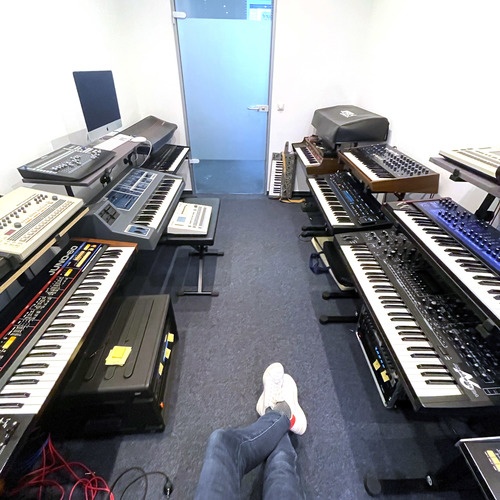
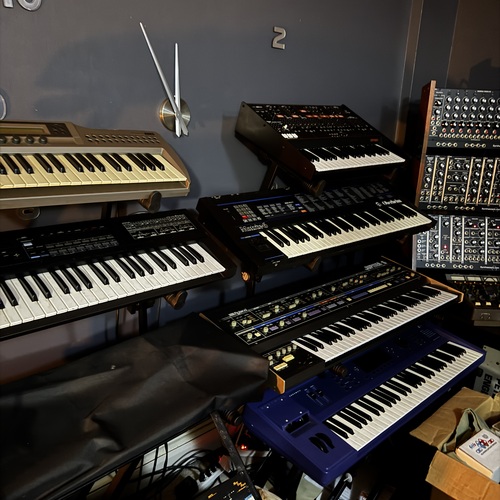
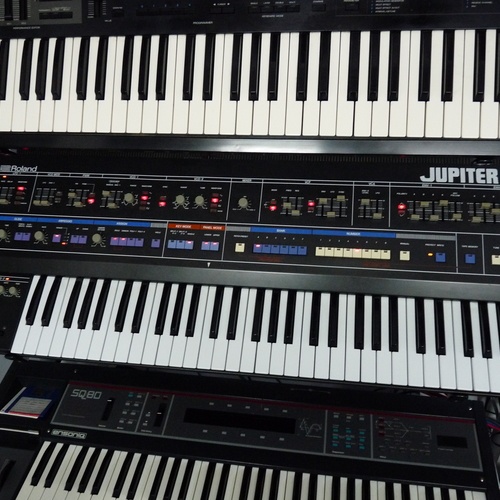
Community setups
Show yours


Similar
Add recommendation3 alternative and related items for Roland Jupiter-6, curated by the Equipboard community.

$139.00 - $179.00
Among its many semi-modular components, DIVA features explicit emulations of Jupiter 6's oscillators, and more-importantly, a model of the JP-6's unique multimode filter. Combining these two elements with DIVA's more generalized models of Roland-style analog ADSR envelopes, LFOs, and modulation options, enables some of the best (and only) Jupiter 6 emulation on the market.

$3,900.00
The MKS-80 Super Jupiter is an 8-voice analog rack mount module offering a voice architecture that shares similarities with both the Roland Jupiter 8 and Jupiter 6, but isn't an exact rack mount equivalent of either instrument. Regardless, if you want an all-analog rack synth with that big, classic Jupiter sound, this is your only option.

$49.00 - $59.00
More Roland Synthesizers

$20,000.00
in Synthesizers Rank


$2,000.00
in Synthesizers Rank


$281.08 - $1,763.18
in Synthesizers Rank


$325.00 - $1,332.49
in Synthesizers Rank

.jpeg?v=1784399641)


$499.99 - $719.99
in Synthesizers Rank


$307.08 - $915.00
in Synthesizers Rank


$1,372.08 - $2,159.99
in Synthesizers Rank


$479.99 - $1,099.00
in Synthesizers Rank


-m.webp?v=1784473034)
$967.05
in Synthesizers Rank


$740.00
in Synthesizers Rank


$350.50 - $494.99
in Synthesizers Rank


$196.86
in Synthesizers Rank


$404.99 - $819.99
in Synthesizers Rank


-m.webp?v=1784473039)
$1,124.32
in Synthesizers Rank


$2,000.00
in Synthesizers Rank


$2,199.99 - $2,639.99
in Synthesizers Rank


$799.99 - $837.73
in Synthesizers Rank


$614.00 - $1,199.00
in Synthesizers Rank


$149.00 - $368.00
in Synthesizers Rank


$344.00 - $479.99
in Synthesizers Rank


$499.00
in Synthesizers Rank


$892.66
in Synthesizers Rank


$1,229.72
in Synthesizers Rank


$888.00 - $1,199.99
in Synthesizers Rank


$918.00 - $1,249.99
in Synthesizers Rank


$1,544.53


$652.00 - $1,888.00


$1,252.00 - $1,869.99


$2,200.00 - $3,189.99
.jpg?v=1784405829)

Accessories & Related Items



Gear Guides









Most Popular Synthesizers
Most Popular Brands
-
Added to Equipboard on by
 equipboard
GearIQ 4934
-


