Table of Contents

Equipboard
Equipboard is the world's largest community of artists and their gear. Read our review process.
We are reader-supported. When you buy through links on our site, we may earn an affiliate commission. Learn more.
Our Picks


For the average musician, choosing how to amplify an acoustic guitar can be a bit overwhelming. You either have to select a pickup system from dozens of different options, or stand in front of a mic for your whole set. And neither of those situations are ideal by any stretch of the imagination.
Well if you’ve ever struggled in deciding how to amplify your acoustic guitar, you’ve come to the right place. The sections below will give you a basic rundown on the different types of acoustic guitar amplification systems, and what you can expect from each.
Terminology
Like any other type of technology, acoustic guitar pickups have a lot of terminology associated with them. The terms below are all commonly used to describe acoustic guitar pickups, and it’s important that you have a decent understanding of what they mean before making a purchase. Also, though this article may be aimed at guitar players, a lot of the terminology is going to carry over to any other acoustic instrument.
Piezo: While the mechanics at work behind piezo pickups are a bit complicated, involving special crystals that create an electric signal when put under pressure, the results are pretty simple. Piezo pickups are all around workable pickups, and considering that they’re relatively cheap to produce it’s no surprise that they’re the industry standard.
Contact/Transducer Pickup: Contact, or as they’re sometimes called transducer pickups, function by transferring the vibrations created by the top of your guitar into an electric current in a similar way to piezo pickup systems. Contact pickups are generally the easiest pickups to install, and relatively inexpensive.
Magnetic/Soundhole Pickup: Available in both active and passive variants (see definition below), magnetic, or soundhole, pickups function in exactly the same way as the pickups in an electric guitar. The wire wrapped around the magnet in the pickup allows the vibrations of your guitar strings to be transferred into an electric signal. Some of these pickups are designed to output a more realistic acoustic sound, while some cheaper models sound a bit cheesy.
Internal Microphone: While not technically a pickup, using an internal microphone system is a pretty common method of amplifying an acoustic guitar.
Multi-Source: A multi-source system is exactly what it sounds like, a combination of either two different pickup systems or a pickup system and an internal microphone.
Passive: When a pickup is described as being passive, it means that it simply passes the signal from your guitar to your preferred method of amplification with little to no alteration aside from the sound profile of the pickup itself. Think of this type of pickup as being similar to a standard microphone.
Active: Active pickups on the other hand operate a bit differently. Rather than just passing the signal along, active pickups generally give you more options to tweak your tone or adjust your volume. These pickups also add some gain to the signal, making them louder than their passive counterparts.
Which Type Is Right For Me?
When selecting an acoustic guitar pickup, you need to think very carefully about your needs. For instance, unless you’re drawing in fairly large crowds every night you don’t need to spend a lot of money on a pickup. No one at an open mic or some equivalent is going to care about what type of pickup system you use.
But some of you shell out for a nicer pickup, and that’s ok as well. If we wanted a cheap hobby we wouldn’t be musicians, now would we?
Regardless, the three subheadings below are going to break down the tonal profiles of the four basic types of acoustic guitar pickups, and some of the pros and cons of each.
Magnetic: Magnetic pickups are kind of a mixed bag. On one hand you have really nice magnetic acoustic pickups that sound great (check out a video of Justin Townes Earle rocking an LR Baggs M1 sometime), and on the other you have Asian manufacturers churning out pickups that make your guitar sound like a tin can strung with rubber bands. So remember, you get what you pay for here.
Not to say a magnetic pickup has to break the bank however. The Seymour Duncan Woody actually sounds pretty good, and though there are a wide variety of sellers they generally only cost between $30 and $40.
Sonically, magnetic acoustic guitar pickups emphasize the lower-mids to high frequencies, and generally don’t have the greatest bass response. However, nicer models generally maintain a pretty crisp and balanced tone, even if the lower frequencies tend not to carry through quite as well.
Piezo: Piezo pickups are generally the pickups that come stock on lower to mid-range acoustic guitars. They tend to sound a bit brittle and “quacky”, though if you purchase a nicer system you can get some very workable acoustic guitar tones out of them.
Contact: There are two main flavors of contact pickup. There’s the budget models (like Dean Markely’s stuff) which generally sounds pretty passable. And then there’s the higher end stuff, which attaches underneath the bridge of your guitar and sounds remarkably realistic.
Generally, the tonal profile of contact pickups are described as being very close to what you’d get out of a mic. The upper end models won’t do much at all to color your tone, which may or may not be a good thing depending on what you’re after.
Internal Mic: An internal mic will generally sound almost exactly like the guitar itself does, with little to no tone coloration. However, something you should keep in mind is that the positioning of the microphone can drastically change the tone you’ll get, so this type of pickup will require some experimentation in order to get the best results.
L.R. Baggs M80 Magnetic Soundhole Pickup
5.0 (5)






- Captures percussive body hits and string tapping sounds well
- Easy to control volume with integrated control
- Provides very natural, true-to-instrument sound
- Excellent balance from bass to treble strings
- See 6 more
- Passive/active switch is difficult to access
- Can be hit by pick, amplifying unwanted noise
- Active mode battery requires removal of strings for replacement
- Not suitable for small soundholes or certain guitar models
- See 2 more
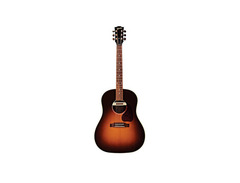
A different kind of magnetic soundhole pickup, the LR Baggs uses proprietary technology in order to capture the entire frequency range of your guitar. The unique free floating humbucker inside of the M80 acts as a 3D body sensor, faithfully recreating the tone of your guitar. The M80 also boasts the option to switch between active or passive modes, as well as an onboard battery check, volume control, and adjustable pole pieces to capture the perfect balance between each string.
See how artists use this





Seymour Duncan 1150030 Woody Series SC SA-3SC - Single Coil Acoustic Guitar Pickup
4.5 (4)



- Easy to install and adjust, no permanent modifications needed
- Provides surprising tone quality for its price
- Secure fit in the sound hole with soft foam mounting system
- Long, sturdy cable allows for easy on-stage movement
- See 6 more
- Prone to interference when used directly without a DI box
- Some users report imbalance between strings, especially lower strings
- Overwhelming middle tones may require EQ adjustments
- Thin cable may feel inadequate for some users
- See 1 more
If you need a no frills option for amplifying your guitar, look no further than the Seymour Duncan Woody. The choice of the musician on a budget, this passive magnetic soundhole pickup offers a great value to any musician. The pickup features a single coil design, moderate output, and an almost instant mount. The Woody is also a great option for the musician who doesn’t want to risk damaging their guitar by permanently installing a pickup.
Dean Markley DM3001 Artist XM Acoustic Pickup

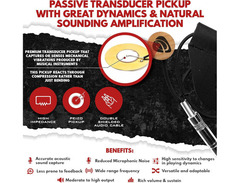


- Versatile across multiple instruments like guitar, zither, ukulele, mandolin, and double bass
- Allows for creative sound exploration by changing placement
- Portable and easy to install without permanent modifications
- Affordable option for amplifying acoustic instruments
- See 5 more
- Adhesive can leave marks on the instrument’s finish
- Requires trial and error to find optimal placement
- Sticky goop may lose effectiveness over time
- Sensitive to physical contact, amplifying unwanted noises
- See 1 more
If you’re a multi-instrumentalist, the Dean Markley DM3001 is the acoustic guitar pickup for you. Though it’s marketed as an acoustic guitar accessory, the DM3001 will work on any acoustic instrument because it’s a transducer/contact pickup.
According to general consensus, the Dean Markley DM3001 does a remarkably good job of recreating authentic guitar tone. It’s also reported to have a pretty great frequency response, ensuring that your guitar will always sound like your guitar.
Fishman Matrix Infinity Pickup and Preamp System
4.5 (4)

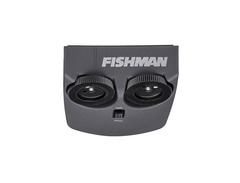
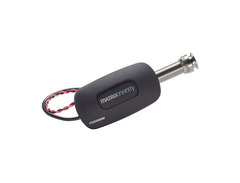
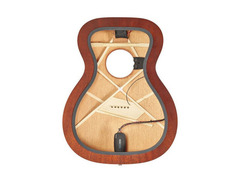
Fishman has become the industry standard in acoustic guitar amplification for a very simple reason, they’ve always put out great products at an incredibly reasonable price. No exception to this trend, the Fishman Matrix Infinity Acoustic Guitar Pickup offers a ton of great features that any musician will appreciate.
This active piezo system features soundhole mounted volume and tone controls, allowing you to dial in your preferred tone. The unique tone circuit in the Matrix Infinity also emphasizes treble and bass frequencies, allowing you to set the mids to your taste.
See how artists use this


.jpg?v=1784890825)
.jpg?v=1784890825)


.jpeg?v=1784640199)
.jpeg?v=1784640199)


Top Ranked Parts on Equipboard
-m.webp?v=1784905234)

$81.00 - $109.00
5.0 (79)
5.0 (79)

-m.webp?v=1784905251)

About the authors

Mason is a freelance music gear writer that contributes to Equipboard, Reverb, TuneCore, Music Aficionado, and more. He plays the guitar and mandolin and resides in Wyoming. Read more







.webp)