7 Best Electric Guitar Strings: Guide to Wonderful Wires


By Gear Experts

By Gear Experts
Table of Contents

Equipboard
Equipboard is the world's largest community of artists and their gear. Read our review process.
We are reader-supported. When you buy through links on our site, we may earn an affiliate commission. Learn more.
Our Picks
-l.webp?v=1784805957)
D'Addario NYXL Nickelwound Guitar Strings 10-46
One of the best strings we've ever tried. Great clarity and longevity, though they cost a little more.
Read more


Elixir Electric Guitar Strings w NANOWEB Coating, Light .010-.046
Very long lifespan and less string noise due to the corrosion-resistant coating, at the expense of a little brightness.
Read more
D'Addario EXL110 Nickelwound Guitar Strings 10-46
Inexpensive and dependable, bright sounding nickel plated steel strings.
Read more
Ernie Ball Regular Slinky Guitar Strings (10-46)
Evetremely popular, affordable, and great all-around strings.
Read more
Balanced and smooth sounding tone, with a bit of added brightness and good longevity.
Read more
Gibson Brite Wires Electric Guitar Strings
Another great candidate for your go-to guitar strings. Great feel, nice brightness and warmth, and USA-made Gibson quality.
Read more


Ernie Ball Regular Slinky Cobalt Guitar Strings (10-46)
Cobalt interacts with your pickups such that you get more output and punch. Long lasting, albeit pricey electric guitar strings.
Read moreLet’s face it, playing electric guitar can be pricey. Between the guitar, amp, tuner, cables, some pedals... it adds up quickly. However, for give or take $10, you can buy one of the most important things to how your electric guitar feels and sounds - strings.
In this guide we’ll talk all about electric guitar strings. For such a seemingly simple purchase, there are a surprising amount of things to consider, and finding the right ones for you is both an art and a science. We’ll clear up all the confusing terminology, and arm you with the tools to make a great choice. Last but not least, we’ll make some solid recommendations for the best electric guitar strings out there today.
Electric Guitar String Materials
To better understand the world of electric guitar strings, it’s important to first understand what materials they can be made out of. Acoustic guitar strings and strings for electric guitar are pretty different. While acoustic guitar strings use copper based alloys (a combination of copper and zinc for instance), in the electric guitar world nickel and steel are the metals of choice.
Why? The metal needs to be magnetically conductive, so the vibration of the strings is transmitted to the magnetic pickups. To the layperson the differences in tone between materials might seem subtle, but any seasoned guitarist will tell you different string materials exhibit pretty different characteristics. Strings are the first point of contact for your pick or fingers, which is why the old adage “tone starts with the strings” exists.
Remember, for a 6-string electric guitar, the three highest strings - the G, B, and high-E - will almost always be made of plain steel. The materials we’re about to discuss pertain more to the lower three strings - low-E, A, and D. Let’s talk about some of most common materials you’ll encounter:
- Nickel-Plated Steel: The most popular material you’ll find, synonymous with a very “even” tone and feel. They offer a good balance between brightness and mellow warmth. A good all-around choice.
- Pure Nickel: Described as sounding “warmer,” “smoother,” and “rounder” than nickel-plated steel. These are also the same tonal characteristics of a vintage tone, so if that’s what you’re after pure nickel strings are a great choice (you could, for instance, use pure nickel strings to tame a very bright single coil electric guitar). In terms of feel they are softer, which not only makes them easier to fret, but also wears out the frets on your guitar less aggressively. Another advantage of pure nickel is that they have a longer lifespan, since they start off “warm” and even as they deteriorate you can’t really perceive their decreased brightness as much, since there wasn’t as much of it in the first place!
- Stainless Steel: Tone will be brighter, crisper, and “cut through” more than nickel-plated steel or pure nickel. Just like pure nickel can tame a bright guitar, stainless steel can brighten up a guitar with a dull/dark tone.
There are other materials out there as well: cobalt, titanium, chrome, and some are even coated with special materials, making them more corrosion-resistant and last longer.
Electric Guitar String Windings
Let’s take a moment to learn about string windings. A wound string is a wire (a.k.a. a core which can either be round or hexagonal shaped) that has a wire wrapped around it over and over to create a tight spiral. The highest three strings of a 6-string set - G, B, and high-E - are not wound (sometimes the G might be). The lowest three strings are the wound ones. Here are the varieties of wound strings:
- Roundwound: Most electric guitar strings are roundwound. If you take a computer cable like a USB cable and wind it tightly around a pencil, you’ll get a good idea of what roundwound strings are like. In between each winding is a small bump, and this causes more squeaking or string noise as you run a pick across them. Also, because the surface has more friction they can wear out the fretboard faster. On the plus side you get a more “snappy” tone with more attack.
- Flatwound: Wound in the same way as roundwound, but each winding is more square and sits more flush next to the others, leading to a flat, smooth string. Less oils and dirt build up on these strings so they last longer, and they also have reduced squeak and don’t wear out the fretboard as quickly. Unfortunately it’s harder to bend flatwound strings. They sound a little more mellow and subdued than roundwound. Flatwound strings are popular with jazz guitarists, since in jazz you don’t mind a more mellow tone and bends aren’t as important.
- Halfwound (a.k.a. Groundwound): A mix of the other two.
What Gauge is Best?
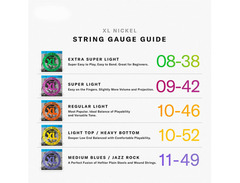
A guitar string’s gauge is the measure of how thick it is. It’s measured in thousandths of an inch; “measurements in inches are the de facto standard, regardless of whether Imperial units are used in a country.”1 The high-E string in a light pack of strings is .010, and the low-E is a .046. When asked about their string choice, colloquially a guitarist might say “I play with 10s,” or “I use lights.”
No one string gauge is best. It’s largely personal preference, and a variety of factors influence gauge choice such as what style of music you play, how beginner or advanced you are, what type of guitar you’re using, and just generally what feels good to you. According to various polls we found, light strings (or .010 gauge) are the most commonly used gauge by guitarists, followed by medium strings (.011 gauge), and then super light (.009 gauge).
So, why would you use lighter strings as opposed to heavier strings, or vice versa? Both have their pros and cons:
Pros of Light Strings
- Because they’re thinner they’re easier on your fingers, allowing you to fret notes on the fretboard more easily. Great for beginners who have not yet built up callouses on their fingertips (eventually callouses make it so that you can’t feel pain on the tip of your fingers as much).
- Easier to bend.
Cons of Light Strings
- Not as much volume or sustain as thicker strings.
- They break more easily, so you might have to spend more money to replace them more often.
- They might cause fret buzz.
- Tuning and intonation are slightly less stable.
Pros of Heavy Strings
- More volume and sustain.
- They hold tension better when you tune down.
- They can take more of a beating before breaking.
Cons of Heavy Strings
- The string thickness makes them harder to fret and play.
- They’re harder to bend.
- They exert more tension on the neck, which might not be good for fragile and/or vintage electric guitars.
While there’s no right or wrong gauge, we CAN provide some recommendations:
- Beginner? Use a lighter gauge (.009 or .010) while you build finger strength and callouses. Nothing’s worse than not wanting to play guitar because it hurts!
- Focusing on shredding and soloing? Go with a lighter gauge so you can be more nimble around the fretboard.
- Playing metal with a lot of drop tunings? Go with a heavier gauge (.011 or .012) for more volume, and to keep more tension on the neck when you tune down.
- Into blues and rock, mixing up rhythm and lead? Light or medium strings are best (.009, .010, or .011) so you can easily bend notes and rip a solo, but not give up too much volume and sustain overall.
- For jazz? Jazz players don’t bend strings as much, so go with heavy-gauge flatwound strings.
1. Source: Wikipedia
Why Should You Trust Us?
To come up with the best electric guitar strings, we ordered about two dozen sets and tested them over the course of a few weeks (we used as many of our electric guitars as we could so we could test more than one set of strings at a time).
The good news is, we’ll all need to change our strings sooner or later. The more you play, the more sets you will go through. We recommend starting by getting a single set of any of the strings we recommend below. When it comes time to change, try out another one! Eventually you'll settle on a brand and gauge that feels great to you, and you can buy the 3-packs (or 5-packs or 10-packs) to save money in the long run.
D'Addario NYXL Nickelwound Guitar Strings 10-46
5.0 (76)
-s.webp?v=1784805957)





- Exceptional tuning stability and fast break-in time
- Long-lasting without significant tone loss
- Bright, punchy midrange with stable lows
- Smooth, slightly waxy feel under fingers
- See 6 more
- Higher price compared to standard strings
- Slightly stiffer feel, which some players may not prefer
- Unwound strings can oxidize relatively fast in humid environments
- Requires a bit of setup adjustment when switching from other strings
- See 1 more
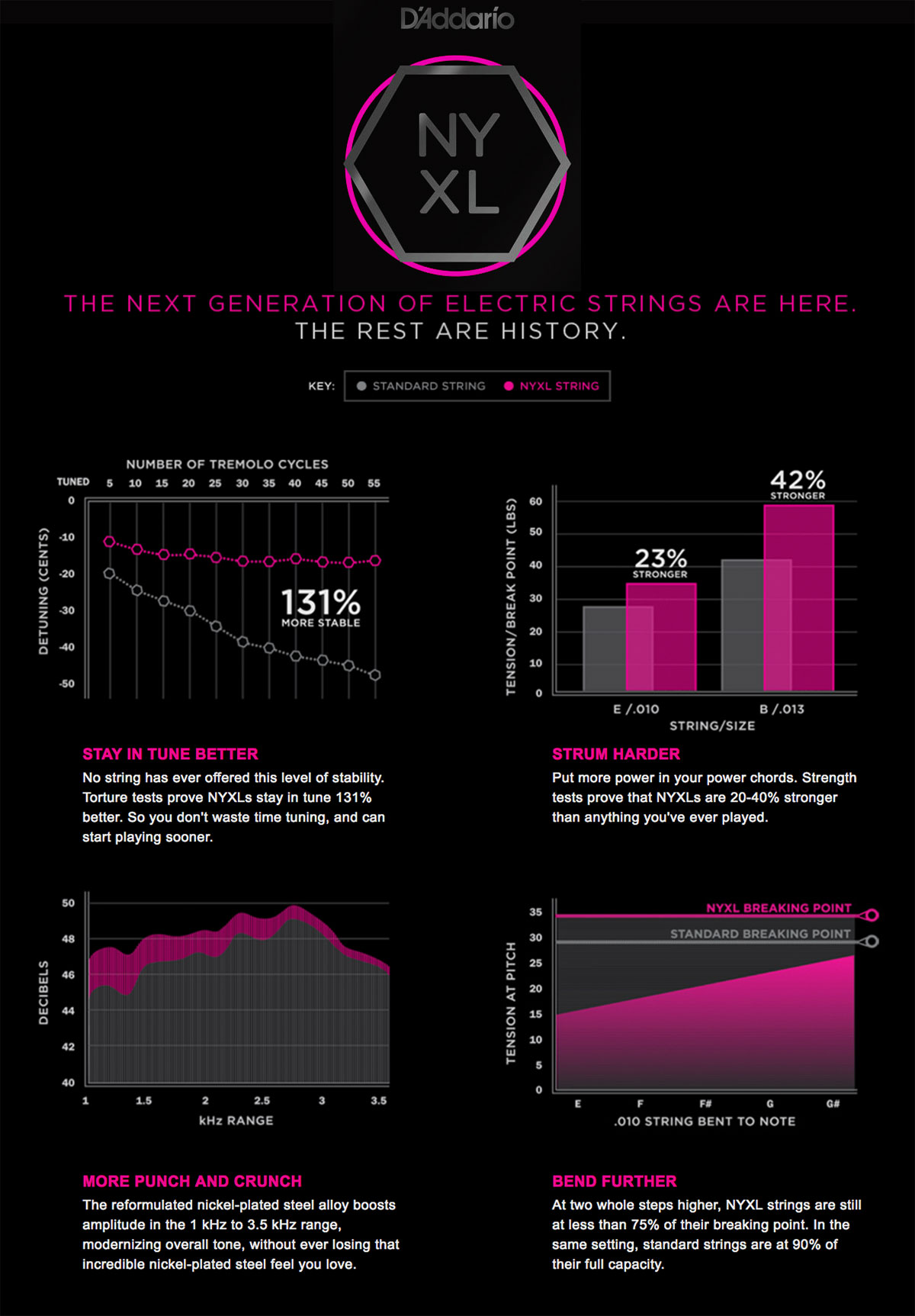
D’Addario NYXL Nickel Plated Electric Guitar Strings have gotten quite a bit of hype - they claim to be superior to competitor strings in just about every way, from holding tuning to breaking less easily to outputting more volume (D’Addario’s has all sorts of charts and graphs to support these claims). The most obvious downside to these strings is that a pack is roughly 2x the price of other popular strings. So, is the hype real? Are they worth it?
Based on our extensive research and play testing, we can absolutely say D’Addario NYXL are the best electric guitar strings we’ve ever tried. It’s a bold statement, but the hype is absolutely real and justified. These are nickel-plated steel strings , with a “high-carbon steel core.”
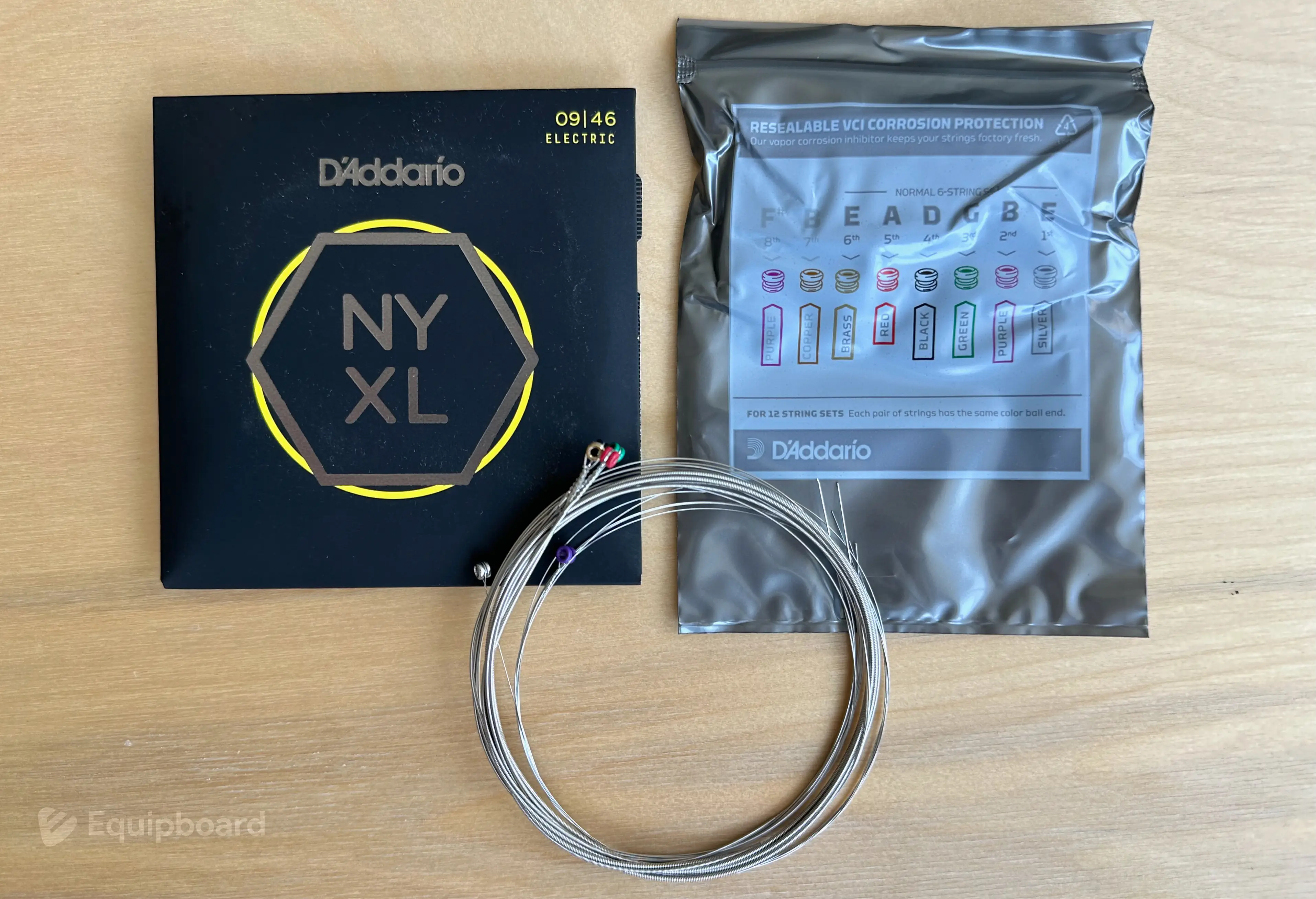
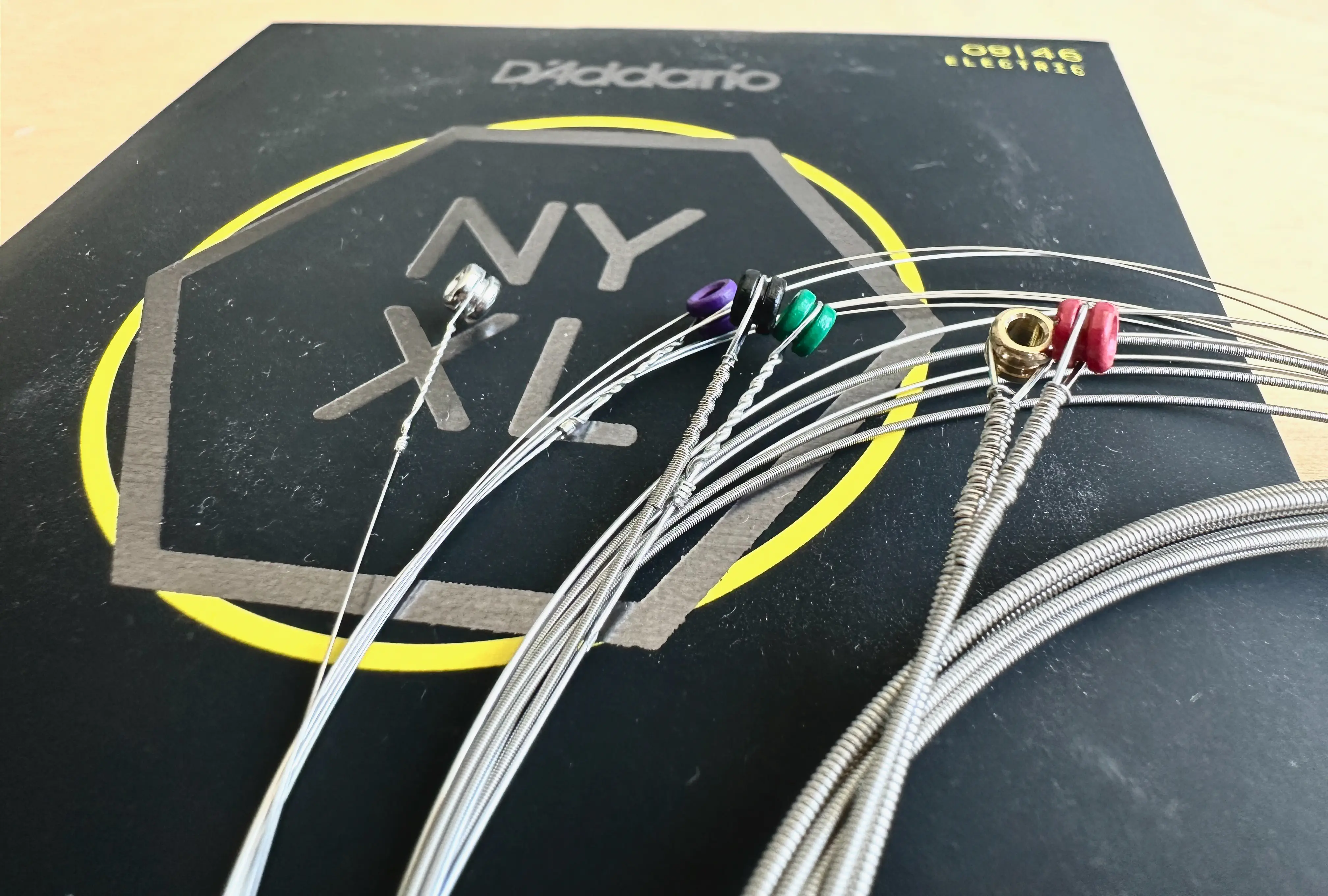
The strings are not individually wrapped in the package; that’s ok though, as that is the more environmentally friendly choice. Telling apart which string is which is easy due to the ball ends being color-coded.
After putting these on and tuning up, the first thing you notice is how they hold their tuning much better right from the start. With Ernie Ball Regular Slinky strings, for example, we had to stretch the strings and re-tune multiple times before they held. With the NYXL, just one good stretch was all it took for them to more or less hold pitch, which is quite impressive.
Tone-wise, they sound great. We noticed a very slight, albeit noticeable, bump in their volume and bite compared to other strings we tested. New NYXL strings have a sort of brightness to them, and only after a week of consistent playing do they even out to sound more like typical strings do when they are brand new. There's a subtle bump in the mid to upper-mid range frequencies, which goes along with D’Addario’s claim that these “boost amplitude in the 1 kHz to 3.5 kHz range.”
Finally, there’s the issue of lifespan. NYXL strings last significantly longer than most competitors (save for Elixir strings, which have a special coating to extend their life). While you are paying more as compared to other electric guitar strings, rest assured these will last you quite a while while maintaining a good tone.
Bottom Line: The main “issue” with D’Addario NYXL strings is that they’re pricey. If you play electric guitar regularly, paying the premium for these over and over hurts the wallet in the long run. To offset that, the durability of NYXLs is extremely good. Several weeks in we were amazed at how good and “fresh” they still sounded. To us, they are absolutely worth the price. They’re better than their competitors in just about every way - they hold tuning better, require less break-in, they have a very nice feel with less finger squeak, they sound fantastic, and they last longer. When it comes to electric guitar strings, D’Addario NYXL are the best thing out there.
See how artists use this







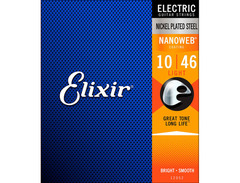
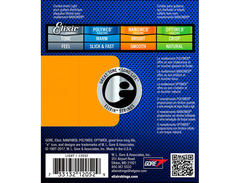
Elixir Electric Guitar Strings w NANOWEB Coating, Light .010-.046
5.0 (38)

- Long-lasting, often up to several months even with frequent use
- Nanoweb coating prevents rust and maintains string integrity
- Smooth, silky feel reduces finger friction and noise
- Retains bright, clear sound over extended periods
- See 6 more
- Higher cost compared to other string brands
- Some users find the strings too slippery for their playing style
- Reports of strings breaking during performances and bending
- Coating can wear off, lessening the protective benefits
- See 1 more
Unlike D’Addario and Ernie Ball, Elixir is a company that focuses on just one thing - guitar strings. Since all their research and energy is put into strings, you would expect a good product, and luckily Elixir delivers bigtime. Elixir 80/20 Bronze (with NANOWEB coating) easily grabbed the top spot in our Best Acoustic Guitar Strings rundown. With electric guitar strings, the competition is a bit stiffer. Still, Elixir Electric Guitar Strings with NANOWEB Coating get a solid spot in our top recommendations.
Reviewing these strings was simultaneously easy and difficult. It was easy because you know what you’re getting with Elixirs - strings that sound good and have an incredibly long lifespan because of their corrosion-resistant coating. The difficult part was comparing with another set of very long lasting strings, D’Addario NYXL. We tried hard to play both sets for the same amount of time and pitting them against each other. While the test was not 100% scientific and the difference was subtle, in the end Elixir strings sounded better per the amount of time they were played.
Like D’Addario NYXL, Elixirs are Nickel Plated Steel strings. Because of their coating, you’ll experience less squeaks and scrapes as you move your fingers across the strings on the fretboard. String squeak isn’t always bad, sometimes it can add a “raw” character to your playing or recording, but some players appreciate it going away. Elixir strings have a more slippery feel due to the coating, which again might be good or bad depending on your personal preference. A really fantastic thing Elixir does to increase string longevity is apply anti-rust coating to the three high plain steel strings, which ensures the whole set will last longer.
The matter of tone is where Elixir leaves some guitarists looking at other options. While the coating increases the lifespan of the set of strings dramatically, it subtly “deadens” the tone a bit. Comparing brand new sets, Elixir strings lack some of the top-end sparkle that you get with D’Addario NYXL, or even less expensive strings like Ernie Ball Regular Slinky. You could actually use this to your advantage if you want to take some of the brightness away from a single coil guitar.
Bottom Line: The choice is pretty simple - if you want the longest lasting electric guitar strings out there, it’s hard to do better than Elixir. If you’re concerned about tone, it’s a minor issue. They might not have that extra bit of sparkle, but what you’re getting in return is strings that will sound better than non-coated strings as they age. If for example you own many guitars, some of which don’t get played regularly, stringing them with Elixir strings ensures they’ll sound better over the long term; it’s all about the price/performance ratio. A set of Elixir strings is pricey - like the D’Addario NYXL, you’ll pay 2-3x what you would pay for other strings. Fortunately, these last 2-3x as long. Why NANOWEB coating as opposed to POLYWEB? NANOWEB is what most guitarists prefer since they aren’t as coated and slick/slippery.
See how artists use this





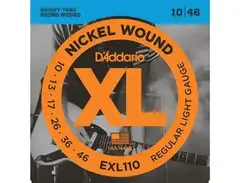
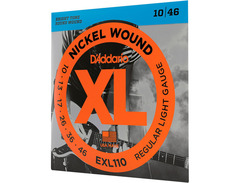
D'Addario EXL110 Nickelwound Guitar Strings 10-46
4.5 (217)



- Consistent quality control and reliable performance
- Long-lasting tone, typically up to a month or more
- Holds tuning well after initial stretching
- Suitable for various guitar types, including Floyd Rose equipped guitars
- See 6 more
- Some users find them slightly "plasticy" in feel
- Strings come in a single plastic bag, not individually packed
- Tone towards the treble side, which may not suit all players
- Rusts relatively quickly under certain conditions
Whether for classical, acoustic, or electric guitar, you really can’t go wrong with D’Addario strings. D’Addario XL Nickel Wound Electric Guitar Strings are the company's most popular strings, and as close to an industry standard as there is. They’re dependable, and best of all quite inexpensive. There are a lot of strings in the XL lineup, and the ones we’re focusing on in particular are the ELX110 Regular Light Gauge (D’Addario’s best selling set).
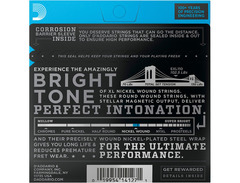
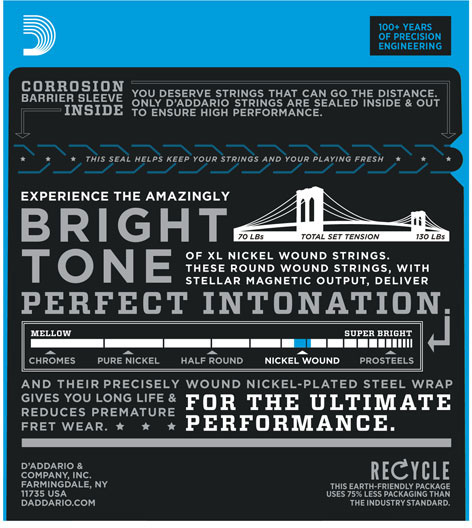
These are roundwound nickel plated steel strings , which means they’re going to give you a nice bright and “cutting” tone. They’re made in the U.S.A., and come in an anti-corrosion package. The ends of the strings are color-coded to facilitate telling the string gauges apart. The back of the string package is nice, as they walk you through exactly what the strings are made of and what type of sound character you can expect. In the case of the ELX110, they emphasize a bright tone. As we said, the world of electric guitar strings can be confusing, so we can appreciate a manufacturer that goes out of their way to inform their customers.
Quite honestly, in terms of tone there’s not a whole lot to talk about. These sound great, and we can attest to the fact that they are definitely on the brighter end of the spectrum. Whether you play chords all day long or you’re shredding up and down the fretboard, D’Addario XL strings will handle it well. After putting a brand new set on the guitar, we had to stretch them a handful of times before they came up to pitch. After that it was smooth sailing. No problem with bends, and no string breakage; they are holding up great even under some intense playing.
Bottom Line: If we were to blindly buy strings for a guitarist with no regards to budget, we would pick a set of D’Addario NYXL. If budget is an issue, we would go with these. They’re very inexpensive, especially when you buy them in bulk (a 3-pack is a steal). D’Addario XL gets you a good tone and a pretty decent lifespan at an extremely budget-friendly price.
See how artists use this


Ernie Ball Regular Slinky Guitar Strings (10-46)
4.5 (478)

- Affordable, high-quality strings
- Excellent tone for a wide range of music styles
- Retain brightness for a long time
- Smooth feel, comfortable for long playing sessions
- See 6 more
- Packaging produces a lot of waste
- Rusts quickly for some users
- Short break-in period where tuning is unstable
- May feel rough compared to other brands
- See 1 more
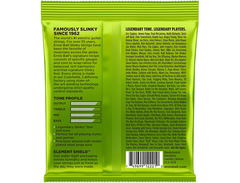
One thing is for sure - Ernie Ball strings are popular. Go to any music gear online store and sort the electric guitar strings by Best Sellers; Ernie Ball strings will always be at the top; particularly Ernie Ball Slinky Nickel Wound Strings. In the Slinky Nickel Wound range, Ernie Ball makes about 22 variations in brightly colored packages: 10-46 gauge are called Regular Slinky, 9-42 gauge are called Super Slinky, 11-48 are called Power Slinky... you get the idea. In this review we’re specifically referring to Regular Slinky (gauges .010, .013, .017, .026, .036, .046), which according to Ernie Ball is their top selling set.
Like the D’Addario XL Nickel Wound series, Ernie Ball Slinky Nickel Wound are a bit of an industry standard. In fact these two are probably the biggest head-to-head competitors - they’re similarly priced, and sound and feel quite similar as well. These strings are made from nickel plated steel wire wrapped around a hex shaped steel core wire.
Their tone is pretty balanced, and a tad less bright than D’Addario XL strings. As you would expect of a string this popular and used by pros on stages all over the world, they are dependable. They held their pitch after only a few stretches when we put them on. They have a good feel, not too much friction and not too slippery. Sliding around the fretboard and bending strings posed no problem.
Bottom Line: If we had to choose between D’Addario XL and Ernie Ball Slinky, we would go with D’Addario but only by a very small margin. You don’t get to be one of the most popular electric guitar strings in the world by doing a whole lot wrong; Ernie Ball Slinky are great all-around strings, and very competitively priced.
See how artists use this








.jpg)


GHS Boomers Guitar Strings
4.5 (24)

- Long-lasting durability and rarely break
- Excellent sustain and bright sound, even with a reverb pedal
- Comparable to higher-end brands like D'Addario NYXL
- Versatile enough for both hard rock and clean jazz tones
- See 4 more
- Can cause fingers to turn black
- Plastic-heavy, non-eco-friendly packaging
GHS strings might not be winning the popularity contest - perhaps their marketing efforts or artist endorsements aren’t as far reaching - but when guitarists try GHS Boomers , they don’t seem to want to go back to any other string.
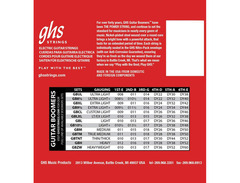
GHS Boomers are roundwound, nickel-plated steel on a hex core (the most popular type of electric guitar string by far). The packaging is not as informative as D’Addario nor as colorful as Ernie Ball, but it’s what’s on the inside that counts. Like D’Addario XL, these are on the brighter end of the tonal spectrum. A helpful graphic on the GHS website shows you where their strings are between more bright and more mellow:
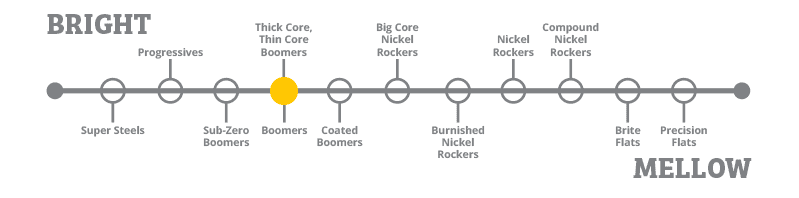
Stringing our Telecaster with these was straightforward. Stretching them and making them hold their tuning was no more or less difficult than with D’Addario XL and Ernie Ball Slinky. Once we started strumming them, we could see why the GHS Boomers have a bit of a cult following. They are remarkably smooth and just feel even and balanced (we feel silly describing strings like that but it’s what comes to mind). The brightness in the tone is absolutely present, and as they aged a bit the tone didn’t drop off too much.
Bottom Line: GHS Boomers are a very worthy alternative to similarly-priced offerings from D’Addario and Ernie Ball. They won’t last as long as coated Elixir strings, and don’t have that special something NYXL strings have, but they are solid, dependable strings nonetheless. With dozens of string manufacturers vying for your hard earned money, GHS definitely earn a top spot.
See how artists use this







Gibson Brite Wires Electric Guitar Strings
4.5 (6)

- Vibrant tones especially noticeable on Gibson guitars
- Long-lasting durability even with daily use
- Fantastic sustain with a smooth feel
- Bright, crisp attack with excellent volume
- See 4 more
We first came across Gibson Brite Wires after playing a Les Paul that happened to be strung up with a set of them. We were impressed enough to order a set for ourselves, which confirmed that these are some fantastic all-around electric guitar strings.
For starters, you get the Gibson quality. These strings are American made, nickel-plated steel (a Swedish steel "hex" core).
The "Brite" in the name implies tonal brightness, which is accurate. These strings sound very crisp and bright, and remind us of NYXL in that respect.
Gibson Brite Wires have a great feel - soft and easy to bend - which they maintain even after a few weeks of heavy use. Even after subjecting them to some punishment, the strings held up perfectly which speaks well to their longevity.
Bottom Line: No matter what type of guitar player you are, make sure to test out Gibson Brite Wires. They're the closest thing we've found to the feel and sound of D'Addario NYXL strings while being easier on the wallet.
See how artists use this




Ernie Ball Regular Slinky Cobalt Guitar Strings (10-46)
5.0 (30)
- Significant improvement in sound quality
- Suited for both electric and acoustic guitars
- Exceptional tone and playability
- Ideal for players with nickel allergies
- See 5 more
- Uneven highs and lows for some users
- May rust quickly compared to other strings
- Higher price compared to regular strings
- Sound may not appeal to everyone
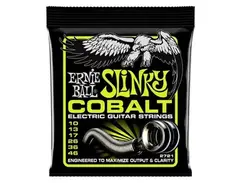
If you're just starting out or you're an "all-around" type player, you're best served by sticking to nickel plated steel strings like D’Addario XL or Ernie Ball Slinky. If you're tough on your strings or favor heavier styles of music, you'll want to test out Ernie Ball Cobalt strings.
A favorite of J Mascis and Kenny Wayne Shepherd, Ernie Ball Cobalt strings are made of an iron/cobalt blend that, according to Ernie Ball:
provides a stronger magnetic relationship between pickups and strings than any other alloy previously available.
One thing we noticed immediately after stringing up a guitar with the Cobalts is increased output. There's definitely a punchiness that isn't there with other strings we've tried. They also feel a little bit smoother to the touch.
For not being coated, the longevity of the Ernie Ball Cobalt strings is impressive. They're easily 2-3x as durable as standard steel strings, which is good because you'll pay a little more for them.
Bottom Line: Ernie Ball Cobalt strings are a great choice if you want to experiment with a different material. Their ever so slight increased output and durability lend themselves to the guitarist that strums hard, and plays harder genres where a little extra punch might be desirable.
See how artists use this





.jpg)


Top Ranked Strings on Equipboard

$6.20 - $8.49
5.0 (64)
5.0 (64)

$4.99 - $8.99
5.0 (188)
5.0 (188)

$5.00 - $8.99
5.0 (135)
5.0 (135)

$5.49 - $8.99
4.5 (245)
4.5 (245)

About the authors
Michael R. Pierce is the co-founder of Equipboard and a lifelong musician with over 25 years of experience as a guitarist and gear enthusiast. He blends solid music theory chops (thanks to formal training in guitar, piano, and trumpet) with real-world experience, always exploring and experimenting across genres like rock, blues, and hip-hop. Michael launched Equipboard in 2013 after graduating from The University of Texas at Austin, leveraging his unique blend of musical passion, technological acumen, and community building. His current go-to rig features a Fender American Original ‘50s Telecaster, Analogman King of Tone, Strymon Flint, and a Fender ‘57 Custom Champ. Read more
Giulio Chiarenza is the co-founder of Equipboard and a lifelong multi-instrumentalist with a deep passion for music gear. Born in Italy and raised in the U.S., he holds a Computer Science degree from The University of Texas at Austin and blends technical acumen with decades of hands-on experience across guitar, piano, drums, and electronic production. Early in his career, Giulio was signed to a San Francisco-based EDM label, releasing both remixes and original tracks. These days, he helps steer Equipboard’s vision while personally testing and reviewing gear. He's never too far from his go-to guitar: a vintage 1978 Fender Telecaster Custom. Read more
Comments
Sign Up or Log In to add comments

6806
GHS, Fender and Dadario strings are quite similar to each other. I do not like all three of them.

12
I noticed an error in the description of GHS strings. It says they are nickel plated steel wrapped around a hex core wire. GHS Boomers use round core wire. That is precisely why I love them. The wrap wire is in contact of the entire core wire which gives them a little more volume and makes bending easier. DR Strings use the same construction of round core wire. They aren't as stiff feeling and have better tone in my opinion than hex core wire in which the wrap only bites into the edges of the hexagonal inner wire. In the previous post the user said GHS, Fender and D'Addario strings are quite similar to each other. Completely not true. Because of the round core wire construction, that makes GHS completely different than the other two.

269
How come you didn't review Dean Markley Blue Steel strings? They are my favorites but only tried them twice because they are so hard to find here in the Philippines.
.jpg?v=1784736721)
37849
@daveabad777 We did not review them in this guide, but we did try them! I think my Jazzmaster is currently strung up with those if I remember right. It's difficult to narrow it down to five winners when there are so many good ones. We would give the Blue Steel an honorable mention :)

529
Ernie Ball strings feel and sound the best. I tried others but they don't compare to Ernie Ball.









.webp)