.jpeg?v=1784997318)
Roger Waters' Gear


According to this rig rundown, by Premier Guitar, Roger Waters uses Rotosound 66 strings.
Find it on:


In the interview for Guitar Heroes magazine (May 1983 issue), David Gilmour mentioned that Pink Floyd used a Martin D-35 acoustic guitars in early 1970s, most likely sometime between 1970 and 1975: "At the beginning we used Levins, which were quite good guitars, a bit like Martins, made in Sweden or somewhere, then we moved onto Martin D-35s and things like that and now we tend to use Ovations mostly for recording and things."
The Martin D-35 dreadnought model is most recognizable by its three-piece back and double non parallel seam bracing that Martin introduced as a result of shortage of Brazilian rosewood in 1965. This allowed them to use up small pieces of wood that would have been normally considered scrap. The D-35s are nowadays made of East Indian rosewood (back and sides) with sitka spruce top, hardwood neck, and ebony bridge and fingerboard.
On the below picture is Roger Waters during recording sessions of the Obscured by Clouds album (1972), struming a Martin D-35.
Find it on:


During most of the 70s Roger's rig consisted of Hiwatt Custom 100 DR103s and WEM Super Starfinder 200 (4x12) cabinets. This setup would last utnil about 1978 when Phil Taylor built him a new Phase Linear 700 amplified bass rig.
Find it on:


Roger Waters is associated with the Fender Precision Bass, likely acquired by the band around the time of the Actuel Pop and Jazz Festival in Amougies, Belgium, in October 1969. This information is detailed on Watersish.com.
Find it on:


On the official site of Rotosound (www.rotosound.com) in the Artist category, it is written that Roger Waters used these strings to record 'The Dark Side of the Moon'
Find it on:

"Waters uses an Ampeg SVT-6 Pro, with one spare, through three 4x10 cabs rewired to 8 ohms (two running with one spare). The same system is used throughout the Dark Side of the Moon and The Wall tours," according to this Premier Guitar Rig Rundown.
Find it on:

He can be seen playing a Squier Standard P Bass Special - Black & Chrome Special Edition (context: https://leejameskirkham.com/p-bass-special/why.php)
Find it on:

The Rickenbacker Roger played was officially a Rose-Morris Model 1999, as it was a special-order for the UK importer. Released in the US under the name Rickenbacker 4001S. Its finish is known as Fireglo.
After leaving Rickenbacker Waters went through a several color combinations of P-Basses before settling on the black body and maple neck.
Find it on:

Roger Waters started using his Pete Cornish custom pedalboard during In the Flesh tour (1977) and he continued using it on The Wall tour (1980-81). Surprisingly enough, this pedalboard could also be seen on stage during some of The Dark Side of the Moon Live shows in 2006 (see photos at Neptune Pink Floyd) and during the Wall shows, where it was kept in the back and controlled by Roger's guitar tech Colin Lyon.
Roger's pedalboard contains only two effects - Electro Harmonix Bassballs and MXR Phase 90, send/return switch for MXR Digital Delay, switch for spare amp, volume pedal, and output for Floyd's typical Conn Strobotuner ST-11. He now primarily uses the Bassballs, while the delays are controlled manualy via rackmounted TC Electronic D-Two units (Another Brick in the Wall, part II).
In the interview for Total Production International (TPi) magazine, Gilmour's guitar tech Phil Taylor explains the role of pedalboards in the original concert production of The Wall: “I was with the band while they were recording in America, and had to work out how many pedalboards I needed for the show. I ended up with 11, and because there were no faxes back then, I had to send drawings to Pete Cornish [famed custom equipment designer] by express mail and discuss them with him on the phone."
“We were not only adding a second guitarist — we also now had a second bass player who needed his own board, plus we had a complete second stage to equip and I needed another four mini pedalboards for this. I already had some spare send and return units to cover unseen eventualities. I put it all together by working out with David and Roger exactly which effects would be needed for the songs performed on each stage, and then making the boards as compact as possible by including only the necessary effects for each situation."
“Getting all those made when we were thousands of miles away from Pete was a bit of a headache, but he is someone who can always be relied on to deliver the goods.”
Find it on:

In this picture it is clearly shown that Roger Waters uses his signature model. http://www.musiciansfriend.com/bass/fender-roger-waters-precision-bass
Find it on:


Roger Waters played this natural color jumbo guitar that appeared to be Washburn J28 during his first year of In the flesh tour (1999). The next year he replaced it with an Eric Clapton signature models by C. F. Martin: Bellezza Nera and the 000-28ECB.
Roger's J28 is (most likely) a SCEDL model (the S stands for solid top, CE designates this model as a cutaway electric, DL indicates that this is the deluxe model).
The Washburn J28 SCEDL Cumberland series jumbo body acoustic-electric guitar features deep cutaway neck access, solid spruce top and natural finish. Other features also include quilted maple back and sides and a shaped rosewood bridge. When you need to plug in, you will use the B-Band tape mic and preamp. The Maple neck has a 20 fret rosewood fingerboard, and 18:1 gear ratio gold tone Grover tuners on the rosewood veneered headstock.
Find it on:

On the picture you can see Roger Waters posing with a Kubicki Ex Factor bass. This picture looks like one of the publicity photos made around the time of The Wall live in Berlin concert (1990), unfortunately, I haven't found any other info or any videos of him playing this bass so maybe he was just posing with it. According to Philip Kubicki - designer and manufacturer of the Ex Factor bass - he hasn't had any dealings with Roger Waters or his staff, suggesting that this bass could be a one of those made by Fender under a licence between 1988-91.
Also, Andy Fairweather Low can be seen playing a red one at The Wall in Berlin concert on Another Brick in the Wall, pt. 1 and Run Like Hell. Roger often lets members of his band use guitars and basses out of his own collection, so it's possible that Andy's Kubicki bass belonged to Roger.
Anyway, I would say that this Kubicki Ex Factor bass is a perfect match to David Gilmour's Steinberger guitar of the roughly same period, so here are some details and specs:
The Philip Kubicki Ex Factor Bass is so named because of the extended string that allows the “E” string to be “D” tuned without changing string tension or having to transpose. The patented string clasp, when released, gives access to the D# and D notes. Going from D to E is accomplished with a flick of the thumb. The standard head-mounted tuning keys were replaced by the patented body-mounted tuner. Factor basses are all fitted with proprietary humbucking pickups and circuit board. The 18 Volt circuit board has a stacked volume/pan control, a bass/treble control and a six position rotary switch that allows the player to select from a standby position through two active settings and three passive preset positions. The neck is made of 32 sheets of rotary-cut Eastern hard maple and an ebony fingerboard. The fingerboard has jumbo frets and a 7 1/2" radius.
Find it on:

At The Wall show in Berlin (1990), Roger Waters played an all black telecaster-style guitar Washburn SBT-21 on Hey You. The SBT-21 was a solid body acoustic guitar that Washburn made in the late 80s. It was designed for the guitarists who required the playability of an electric guitar but demanded the sound of an acoustic guitar. The SBT-21 featured slim, rock maple neck with rosewood fingerboard, mahagony body, and spruce top. The electronics was designed with a piezo pickup, master volume, master tone, and a midrange "fat" control to increase the presence of the instrument.
Find it on:

Roger Waters has been playing several basses over his career, and without a doubt prefers Fender Precision over any other model or brand. Besides his fireglo Rickenbacker that he used for a short while before he switched to Precision, there is another bass Roger can be seen with occasionally - the black Fender American Vintage '62 Fender Jazz Bass with rosewood fingerboard and tortoise pickguard. You can see this instrument in the "protest song video" featuring Roger singing We Shall Overcome, and was also used during In the Flesh (2002) and Dark Side of the Moon (2007) tours. First (possibly) as a spare, and then by saxophonist Ian Ritchie in Another Brick in the Wall, part 2. This bass also appeared at Live Earth 2007, and the Live 8 reunion performance where Tim Renwick played it in the second half of Wish You Were Here.
The Fender American Vintage '62 Jazz Bass features the offset waist, ultra-slim fast-action "C" shape neck, stacked concentric controls, full range bi-pole pickups, and a chrome bridge and pickup covers.
Find it on:

The 1959 Höfner President 500/5 was Roger's first (pre-Floyd era) bass he played around 1964-65.
Today, Höfner manufactures the vintage version of the 500/5 President bass, inspired by the Höfner models of the 1950s and 60s (as played e.g. by Stuart Sutcliffe in the early days of The Beatles). With a fully hollow 16,5" wide body and fitted with close spaced original Höfner 'Black Bar' pick-ups, and with the Höfner control panel to ensure a sixties style sound.
Find it on:

"Pink Floyd's Dark Side Of The Moon is famous for its extensive use of the VCS3 by Roger Waters, and On The Run is perhaps the classic VCS3 track... but there is no VCS3 on it!" says Sound On Sound magazine in its article 'All about EMS'. "Alan Parsons (the engineer on the album) later revealed that the track was recorded using a Synthi AKS. It was, as he put it, the 'hot synth of the year'.
Because of the lack of synchronisation technology at the time, the track (except for the spun-in sound effects) was recorded live. The sequence was laboriously programmed using the AKS's membrane keyboard, and then played back at high speed to produce the effect that you hear. Considering the complexity of the sequence, the amount of sound modulation going on, and the hi-hat sound that is also being produced by the synth, it's remarkable that everything worked as well as it did. More so when you realise that the same rigmarole was required before every concert -- there were no stage sequencers in 1972!"
The original VCS 3 is a portable analog synthesiser developed by Electronic Music Studios (EMS) in 1969. It has three oscillators, and a unique matrix-based patch system. Instead of patch wires, the VCS3 uses a patchbay grid in which the synth components are laid out, and signal routing is accomplished by placing small pins into the appropriate slots. The VCS3's basic design was reused by EMS in many other of their own products, most notably in the EMS Synthi AKS (1972) which had a built-in membrane keyboard and sequencer.
Find it on:

"We have three 4x10s which Ampeg has rewired the cabinets for use, to run 8 ohms instead of 4 ohms," says Waters' guitar tech, at 4:20 in this rig rundown video.
Find it on:

Waters started using this microphone most likely in 1970, confirmed to use it in 1971 and 1972 since he used it in Set The Controls For The Heart Of The Sun - Live in Pomepii (1972), along with guitarist David Gilmour and keyboardist Richard Wright. During the live show in Abbaye de Royaumount in June 1971, he also used it
Find it on:

First used during the In the Flesh tour (2000). Guitar could also be seen when Roger Waters & David Gilmour were together on stage for Palestinian Charity "Hoping Foundation" at Kiddington Hall, England (July 10th 2010).
Roger Waters | C. F. Martin 000-28ECB (Eric Clapton)
The Martin 000-28ECB Eric Clapton Signature Edition has been limited to no more than 500 instruments. The 000-28ECB has the shorter 24.9" scale length and the smaller "000" body size that Clapton prefers. The sides and back are constructed from solid Brazilian rosewood, and the top is bookmatched from Sitka spruce.
The rosette is embellished with inlaid herringbone pearl, and the body is bound with grained ivoroid. Eric Clapton’s signature is inlaid between the 19th and 20th frets. Each 000-28ECB bears an interior label, individually numbered and personally signed by Eric Clapton and Martin Chairman and CEO C. F. Martin IV.
The Martin 000-28ECB has a tortoise coloured pickguard. The Waverly nickel-plated open-geared tuning machines are equipped with vintage style "butterbean" knobs. The squared headstock bears Martin’s old-style logo.
Find it on:

David Gilmour says in his interview for Guitar Heroes magazine in 1983 that Pink Floyd used Levin acoustic guitars during 1968-70: "At the beginning we used Levins, which were quite good guitars, a bit like Martins, made in Sweden or somewhere, then we moved onto Martin D-35s and things like that and now we tend to use Ovations mostly for recording and things."
The Levin Classic 3 acoustic guitars were indeed manufactured in Sweden. They have Alp spruce top, back and sides of Brazilian rosewood, neck of mahagony with non-adjustable U-shaped steel truss rod, ebony fingerboard and black Van Gent strip tuners.
The below picture shows Pink Floyd at KQED TV in April 1970, performing Roger's song Grantchester Meadows. While Gilmour is playing his Gibson J-45 acoustic steel-string, Waters is using a nylon-string guitar that may as well be a Levin Classic 3.
Find it on:

Later on - during In the Flesh tour - Roger switched from his Torino red Fender Eric Clapton Stratocaster to a slightly modified black model of the same guitar that visualy resembles David Gilmour's Black strat - maple neck with black body, black pickguard, black pickup covers and black control knobs. See Bray Studios rehearsal (2002) footage or We Shall Overcome music video (at 04:55) with Roger covering an old classic.
Features of Fender Eric Clapton Stratocaster include an alder body, three Vintage Noiseless pickups (s/s/s), active mid-boost (25 db) and TBX (Treble Bass Expander) circuits, special soft V-shaped neck, and blocked original vintage synchronized tremolo.
Roger Waters occasionally used the Daphne Blue Eric Clapton Signature Fender Stratocaster between 1990 and 1991. However, he found the mid-range boost circuit did not suit his preferences, as noted in the "French and Saunders" guitar book sketch on Watersish.com.
Find it on:

"Back in the 70s I used a Strat with a Fender Twin..."
Find it on:
-m.webp?v=1784991509)
The original MXR Phase 90 was released in 1974, and it was the first pedal sold by MXR. Roger Waters used it during the 1974-75 and 1977 tours, mainly for Raving and Drooling (an early version of Sheep).
Find it on:

It is stated in the linked article that Waters was seen in the studio and on stage with his IC100 throughout the 1970s. The article also gives the example of studio use together with a Binson Echorec delay unit to produce the tremolo effect on One of These Days track, 2:00 - 2:30.
You can see Roger's stack behind Gilmour's arm, intercut throughout "the funk section" of Echoes on Pompeii, starting at 6:53. https://youtu.be/b6uA02ggGD0?t=413
Find it on:

In the video above we can clearly see how Roger is wearing the beyerdynamic dt 770 pro during the whole song.
Find it on:

The Martin OM-1 GT acoustic guitar (below), which was reported to be from Roger Waters personal collection, was donated to TECHO-Chile, a South American based charity organisation, to raise money for poverty-stricken people. Waters used the guitar to record an exclusive video of him playing Wish You Were Here. In November 2012, both, the instrument and the video, went to auction.
The Martin OM-1 GT Orchestra model is constructed with a polished gloss Sitka spruce top and bookmatched sapele back and sides.
Find it on:

Roger Waters used this guitar during the Dark Side of the Moon Live tour (2006 - 2008) and during The Wall Live tour (2010 - 2012). He has two of these.
C. F. Martin 000-ECHF Bellezza Nera (Eric Clapton)
C. F. Martin 000-ECHF Bellezza Nera was developed jointly by Eric Clapton and a Japanese trendsetter Hiroshi Fujiwara. At Eric Clapton's suggestion, the model is named in Italian - "Bellezza" meaning beautiful and "Nera" meaning black.
This Limited Edition guitar has black body, neck and headplate, and matching African black ebony fingerboard and bridge, and the specially made sterling silver-plated Schaller tuners with sterling silver-plated buttons. The fingerboard features Martin's Style 45 snowflake inlays, with "Bellezza Nera" inlaid in script above the last fret in mother of pearl. This guitar comes without a pickguard.
The body top is Italian alpine spruce, the back and sides are crafted from East Indian rosewood. Carved from solid mahogany, the neck features Martin's diamond volute at the base of the headstock.
Bellezza Nera includes a special black interior label personally signed by Eric Clapton, Hiroshi Fujiwara, Martin Artist Relations head Dick Boak and Martin Chairman C.F. Martin IV.
Find it on:

Roger Waters played his black '70s Fender Stratocaster during the original In the Flesh tour (also known as Animals tour) in 1977. In live versions of both Sheep and Pigs he shared electric guitar duties with David Gilmour, while backing guitarist Snowy White played bass. This was the last time Roger performed a major worldwide tour with the rest of the band.
Find it on:

In Pink Floyd's 23-minute long song Echoes, Roger Waters used a Binson Echorec to create the eerie underwater wind noise heard during the first interlude (10:40-15:02 on studio recordings, underneath the screaming seagull sound produced by Gilmour); he vibrated the strings of his bass guitar with a steel slide and fed the sound through the Echorec. Waters reproduced this sound during live performances.
Also One of These Days is an another typical example where the Binson Echorec was used on the bass. In the interview for Guitar World, Gilmour explains: "One of these Days evolved from some of my experiments with the Binson, as did Echoes. One day, Roger decided to take some of the techniques that I was developing and try them out himself on bass. And he came up with that basic riff that we all worked on and turned into One of these Days. The opening section is me and Roger. For some reason, we decided to do a double track of the bass. You can actually hear it if you listen in stereo. The first bass is me. A bar later, Roger joins in on the other side of the stereo picture. We didn't have a spare set of strings for the spare bass guitar, so the second bass is very dull sounding. We sent a roadie out to buy some strings, but he wandered off to see his girlfriend instead."
The Binson Echorec was a major part of the Pink Floyd sound-image until 1977.
Find it on:

Roger Waters, alongside David Gilmour, utilized the WEM Super Starfinder 200 Cabinets extensively throughout their career with Pink Floyd, as detailed on Watersish.com.
Find it on:
This is a community-built gear list for Roger Waters.
- Find relevant music gear like Microphones, Guitars, Amplifiers, Effects Pedals, Bass Guitars, Software Plugins and VSTs, Keyboards and Synthesizers, Instruments, and other instruments and add it to Roger Waters.
- The best places to look for gear usage are typically on the artist's social media, YouTube, live performance images, and interviews.
- To receive email updates when Roger Waters is seen with new gear, follow the artist.
Discography
The Pros And Cons Of Hitch Hiking
1984
Radio K.A.O.S.
1987
The Wall: Live In Berlin
1990
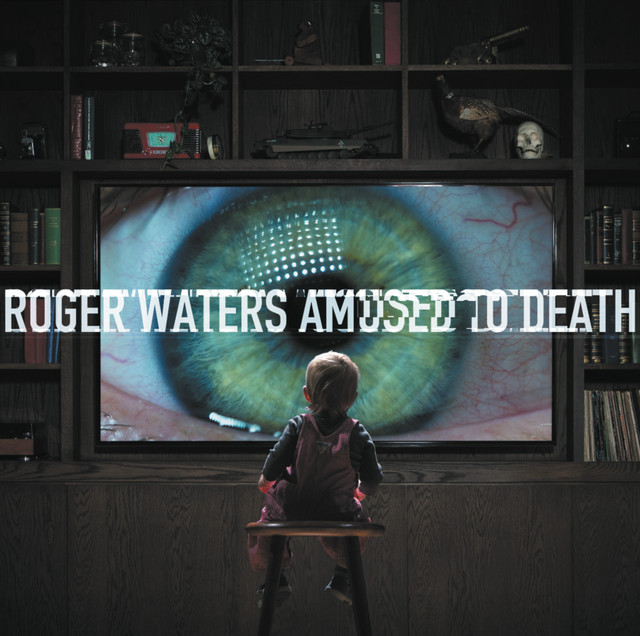
Amused to Death
1992
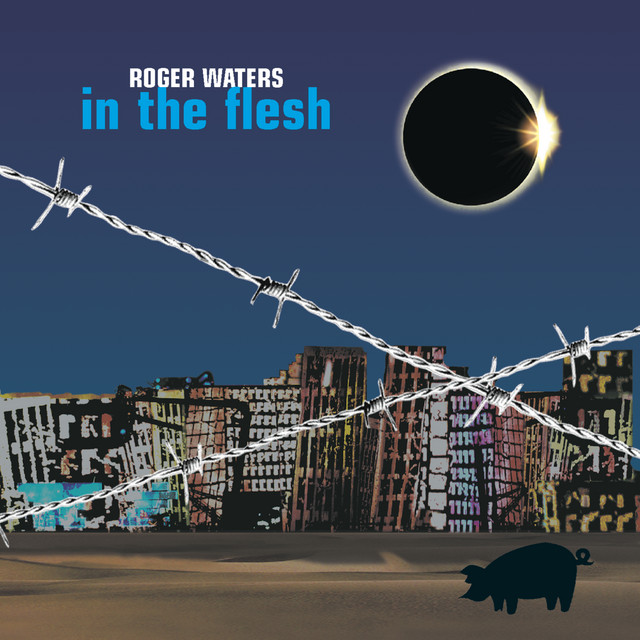
In the Flesh - Live
2000
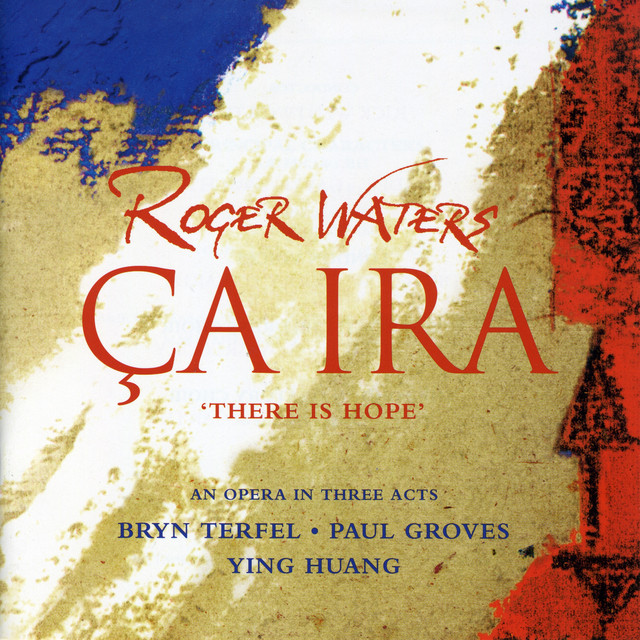
Ca ira
2005
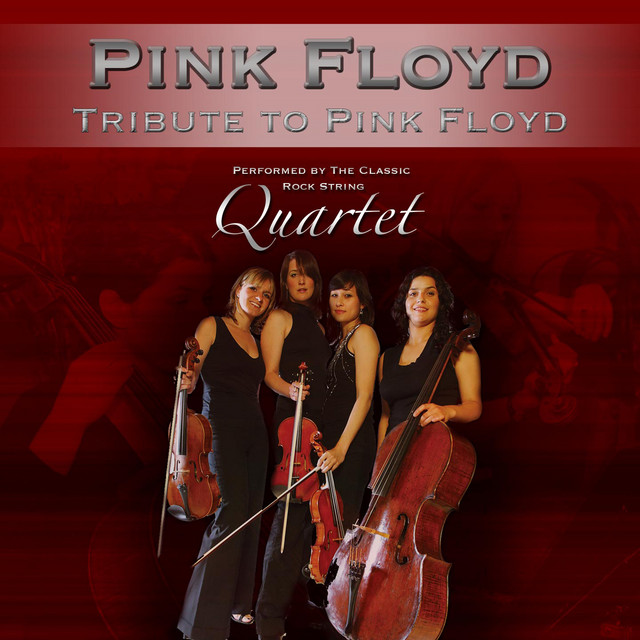
Tribute to Pink Floyd
2009
Roger Waters The Wall
2015
Is This The Life We Really Want?
2017
The Soldier's Tale - Narrated by Roger Waters
2018
Us + Them
2020
The Lockdown Sessions
2022
Album Credits
-
Is This the Life We Really Want? (Live From Prague May 2023)
Roger Waters · 2025
Mixing Engineer -
Wish You Were Here (Live From Prague May 2023)
Roger Waters · 2025
Mixing Engineer -
The Dark Side of the Moon Redux
Roger Waters · 2023
Producer -
Roger Waters · 2023
Producer -
Roger Waters · 2022
Producer -
Syd Barrett · 2016
Producer -

To Kill The Child / Leaving Beirut
Roger Waters · 2004
Producer -
Roger Waters · 1992
Producer -
Roger Waters · 1990
Producer -
Roger Waters · 1987
Producer -
The Pros And Cons Of Hitch Hiking
Roger Waters · 1984
Producer


.jpeg?v=1784656821)