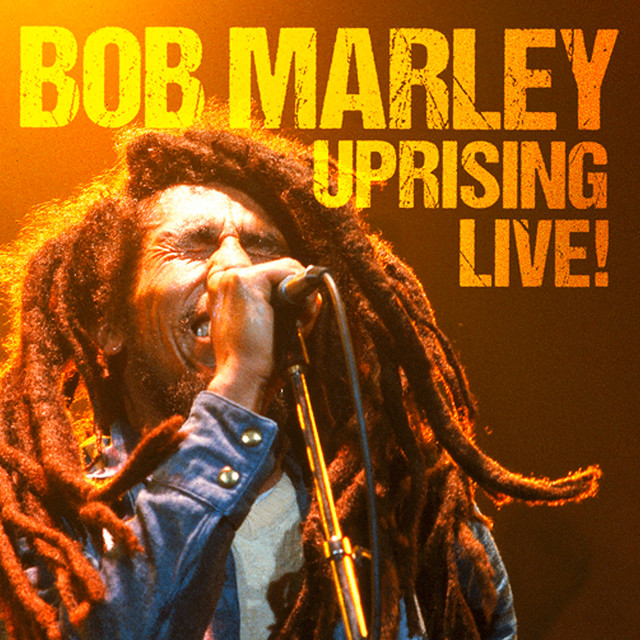
Bob Marley
Jamaican reggae artist
Genre
Genre
Bob Marley's Gear


Bob Marley owned just a couple of guitars; some say five, some say seven He’s mostly known for playing his brown colored Les Paul Special. This is reported to be Bob’s favorite electric guitar, used extensively throughout his career. There’s even a rumor that Marley was buried with this exact guitar by his side, but the truth is that the guitar is safe and sound at the Bob Marley Museum in Kingston, Jamaica. Unfortunately very little is known about the guitar’s history. Bob probably acquired it around 1972/73 in London. At that time the guitar already had few mods done to it; the ABR-1 Tune-o-matic Bridge was installed, and a white binding was added to the headstock.
The guitar remained in this state until 1979 when it was sent to Roger Mayer. Bob requested something unique done to it which will not influence the sound itself. Roger decided to install a custom made brushed hardened aluminium pickguard and replace the switch plate with the one that was shaped like a football. He also replaced the tuners with Schallers, and re-wired the guitar completely. The original P-90 pickups were not touched.
Find it on:


The guitar which Marley was most often seen playing; there are several modifications on the instrument, probably the most notable being that the original wraparound bridge was replaced with the more common Gibson setup of Tune-O-Matic and Stopbar. The switchwasher and pickguard on Marley's instrument were aluminium replacements, too. Headstock binding and Schaller machine heads are other modifications believed to have been made to the guitar.
In 2002, Gibson built a limited run of copies of this guitar closely mimicking both the hardware and wear on the original instrument, which is currently owned by the Bob Marley Museum in Jamaica.
Find it on:

In this article from the Telegraph, it is reported that Bob Marley's Washburn Hawk guitar is, "classified as a national asset by the Jamaican government and is one of the only seven guitars owned by the reggae icon."
Find it on:


The guitar is best known for the acoustic recording of “Redemption Song” (see video here: “Redemption Song Acoustic“).
Find it on:

Bob Marley played a Fender Stratocaster Electric Guitar before acquiring his Les Paul. This guitar featured a rosewood fingerboard and a sunburst finish, as seen in the "Stir It Up" performance. Unfortunately, it was reportedly stolen from his tour bus. A poster image on Panicposters confirms his use of this instrument.
Find it on:


Bob was presented this guitar by Yamaha whilst touring in Japan. After The Wailers' last tour in 1979, he gave it to the band's bassist, Aston Barrett. Barrett later lent the guitar to promoter Angus Reid. When he tried to retrieve it later, Reid refused to return the guitar, and later attempted to auction it. Barrett filed for a lawsuit, following which, the guitar was believed to have been returned to him.
Find it on:

It is important to note though that he used a couple of different amps, perhaps the most notably the Fender Silverface Twin which can be seen on many different photos. He also played on a couple of different Marshall and Ampeg amps.
Find it on:


In a live performance of "Redemption Song" in New York, Bob Marley is seen playing an Epiphone FT-365, not the FT-165, as captured in a video by Dekandence on YouTube.
Find it on:

This was used by Bob during a few early shows of the US Burnin tour in 1973. He famously played this guitar at both Paul's Mall in Boston and The Matrix Club in San Francisco (seen in picture above). In this photo, judging by the inlays and pickups, Marley is playing 1970 Gibson SG. It is unknown if the guitar was stolen or if it is still in possession of the Marley Family.
Find it on:

Bob Marley is mentioned as a user of the Roland RE-201 Space Echo on Vintage Synth Explorer.
Find it on:

Bob Marley appeared in two photos holding an Ovation Balladeer.
Find it on:


Bob Marley utilized the MCI JH500 series console in his recording sessions during the 1970s. This console, known for producing some of the era's finest sounds, was a staple in all studios Marley used, including his own Tuff Gong studio, as referenced in a Facebook post by Kike Egurrola.
Find it on:

Here Bob can be seeing playing a Les Paul Junior. Music Radar describes this guitar as "heavily modified" in this article.
Find it on:

In the YouTube video titled "Bob Marley Tuff Gong Studio Rehearsal 1980 Full session" by MrOseii Oseii, at the 17:38 mark, Bob Marley can be seen using a Shure SM57 microphone, identifiable by its size and characteristic grid. This classic version of the Shure SM57 was used by Marley to record this rehearsal session in 1980.
Find it on:

Bob can be seen playing a Gretsch 6120 Chet Atkins Nashville guitar while recording with Johnny Nash. This was taken sometime in the early 1970s (presumably 1971). Nash or the studio possibly owned the guitar.
Find it on:

According to a fact sheet from Christie's auction house "a 1972 Guild F112 acoustic 12-string guitar (has been) used by Bob Marley on the 'Kaya' album, 1978, Serial No. 64026... According to the accompanying documents, Marley asked Junior Marvin if he could use this guitar during the recording of the 'Kaya' album at Island Studios and played it specifically on 'Is This Love?' and 'Time Will Tell.' Aston "Family Man" Barrett also recalls Marley using this guitar during these sessions. According to Marvin, this was the only 12-string acoustic that Marley used in his recordings, although he certainly owned a Hohner 12-string that he used at home for composing purposes around the time of the 'Survival' album in 1979".
Find it on:
This is a community-built gear list for Bob Marley.
- Find relevant music gear like Microphones, Guitars, Amplifiers, Effects Pedals, and other instruments and add it to Bob Marley.
- The best places to look for gear usage are typically on the artist's social media, YouTube, live performance images, and interviews.
- To receive email updates when Bob Marley is seen with new gear, follow the artist.
Discography