Brian Eno
Role
Genre
Role
Genre
Brian Eno's Gear


Brian Eno uses and briefly speaks about Synplant in this BBC Documentary
Find it on:


In a YouTube video titled "Brian Eno On Apps And Albums," Brian Eno discusses his use of the u-he Zebrify plugin.
Find it on:

"Instruments that sound good inspire better music, and it's a struggle to make music with bad-sounding instruments, irrespective of how talented you might be. Software instruments are no different: although they are usually discussed and sold in terms of their 'features' what really makes you return to an instrument repeatedly is the much more elusive factor of inspirational sound quality.
I don't know enough about programming to understand why some software tools fascinate you while others make you want to get another job, but I do know that when I use anything by ES I get excited by what I'm hearing. These tools have the sonic richness of great analogue instruments - with the features of innovative digital ones."
Find it on:

In this video clip from an interview with BBC Click, Eno shows some of his techniques for playing and manipulating loops in Groove Agent. This interview with Sound On Sound indicates he's been using the software since at least 2005.
Find it on:

In this documentary about Eno, we can see a 57 laying on his studio desk in the foreground on the left at the 2:33 mark.
Find it on:


-m.webp?v=1783177069)
In this blog about the recording of the Eno/Karl Hyde album Someday World, Eno's then-recent studio upgrades are described as follows:
"To make all this possible, Peter installed two Focusrite Octopre preamps, and a Liquid Saffire 56 multichannel Firewire interface. The Liquid Saffire acted as the computer interface for the audio, but also passed the raw signals on to a Mackie CR-1604..."
Find it on:

In this interview (transcribed from Sound On Sound Volume 5, issue 12, October 1990), Eno is asked, "Do you use computers?" He responds, “Well, I’ve just got a Mac. I have Sound Tools, which is a very interesting program —you can do a lot of manipulation of sound in a rather different way from what I’ve been able to do before. They’re not things that were inconceivable before, but they were so awkward that you never bothered to do them. This is a very big point that equipment makers generally don’t realise: if you put options in that are really hard to get to, people won’t bother to use them.”
Find it on:

When Laurie Anderson talked to Eno for Interview Magazine, they had the following exchange:
ANDERSON: So are the horns on Lux real?
ENO: No.
ANDERSON: I thought those were real, far away horns.
ENO: Yeah, it does sound like that. There are real strings in there, though they’re all played by one person, my friend Nell Catchpole. There’s also an instrument called the Moog Guitar. It’s a fantastic instrument.
ANDERSON: Oh, I’ve heard about that.
ENO: It’s an amazing instrument. It’s a completely new instrument, actually. It’s called a guitar, but the people who have started using it to do interesting things are moving far away from any character guitars have had traditionally. The only instruments on the album are piano, strings, this Moog Guitar, and some synthesizers. But the synthesizer sounds I was using are ones that I’ve been working on for quite a few years, and they can sometimes sound like they might be horns.
Find it on:

Article: https://www.theguardian.com/culture/gallery/2010/may/16/seven-days-with-brian-eno
Picture: Table of tools... the junk that makes things sound better
Find it on:

In this undated image of Eno in his then-studio, a 1201 rack unit is visible behind him (it's the fourth one down from the top, and despite the blurriness of the photo, it can be easily identified by the large dot-matrix style font on the left side of the faceplate).
Find it on:

In this article on the making of Eno's album *Another Day on Earth," the sidebar lists (and depicts) the AirFX as being among the equipment used.
Find it on:

In this interview with Chris Everard from the October 1984 issue of Electronic Soundmaker & Computer Music magazine, Eno is asked, "I seem to remember seeing an old film of you with Roxy, I think it was The Old Grey Whistle Test or something similar, and you were playing what seemed to be an ARP2600, is that right?"
He replies, "No, I tell you what that was, it was essentially an EMS VCS3 synthesiser built into a unit that I designed. With Roxy you see, a lot of the time I was taking live instruments and feeding them into the synthesiser and treating them, so what I had was the basic synthesiser with some extra bits to help me... they are quite rough though, those early synths."
Find it on:

In this article in the December 1995 issue of Future Music magazine, the S1100 is named in the "Kit List" as being one of Eno's samplers.
Find it on:

In this live clip from 1995, Eno joins U2 to play "Miss Sarajevo" with Luciano Pavarotti. Eno's Omnichord is on the music stand directly in front of him, and we our first good look at the 1:10 mark.
Find it on:

Photographs accompanying the Sound on Sound article show Eno's setup to include a Korg Triton Studio 88 Workstation.
Find it on:

"Generative Music" is the term Brian Eno used and coined in 1995, whilst working with SSEYO Koan (built by us and superceded by Intermorphic Noatikl), to describe any music that is ever-different & changing, created by a system. The term has since gone on to be used to refer to entirely random music mixes created by multiple simultaneous CD playback right through to full on live rule-based computer composition.
Find it on:

In a late 1970s studio image from Fugitivesounds, Brian Eno is pictured with a Teisco MJ-2L guitar, highlighting his use of this instrument during that period.
Find it on:

In this blog about the making of Eno & Hyde's 2014 album Someday World, Brian's setup is described as involving an Oxygen 61 controller.
Find it on:


According to this Sound on Sound article, Eno used the Studio Vocalist unit extensively when recording his album Another Day on Earth.
Find it on:

In this image, we see Eno setting up for an installation at the Great Gallery of the Palace of Venaria Reale. Among his gear is a DM1000 mixer.
Find it on:
-m.webp?v=1783090997)
In this image, we see Eno tinkering with a PT-80, presumably during the course of an interview.
Find it on:

A PowerMac 7100 is featured in Eno's "kit list."
Find it on:

At 21:16 in this video, you can see Absynth on his screen.
Find it on:

In this transcript of an interview from Electronic Soundmaker & Computer Music in October 1984 by Chris Everard, Eno reveals that he didn't at the time own many instruments. One, however, was "an old, old Farfisa organ - it used to belong to Pink Floyd."
More detail is provided in this interview with John Kavanaugh who purchased the instrument from Eno. He provides much more detail about its history, including the name of the model:
"Earlier on John told me about his fondness for vintage gear and old mics, but the best piece in his collection is a Farfisa Compact Duo organ which was once owned by the Pink Floyd. 'It came to me when it was being sold on the Internet by Brian Eno,' John explains. 'Brian Eno got it from a guy called Bill Kelsey who's now sadly dead, but his son Marlon still works for Eno. Bill was the Pink Floyd's sort of gadget boffin and he would make up bits of effects and bits of stuff for their live sets in the late '60s and early '70s. When he went to work for Eno, he took the organ with him. I've actually got a film of it with the Pink Floyd in the Syd-era, I've also got a couple of photos of it on stage. Most Farfisa organs were pale grey with a black band around the middle, but this one is charcoal grey, it's a sort of early model of the organ and it's quite distinctive for that reason. Eno used it on two of his albums, on tracks on "Taking Tiger Mountain By Strategy" and "Another Green World". The organ comes with a certificate from Eno which says where it came from and now it has been restored and it works... The interesting thing is that the guy who fixed it found a plectrum inside. Syd wasn't much of a plectrum guy and Eno doesn't strike me as much of a plectrum guy. I can only assume that it may have come from David Gilmour. I also found on the front panel of the organ, on the little metal panel at the side of the lower manual, "accord to progression" written in pencil marks. I played that progression on another organ and thought it was "Saucerful of Secrets," the title for the second Pink Floyd album, but it was actually the prototype version of "The Massed Gadgets Of Hercules" and this was the organ part for the end of it which must have been penciled down there by Rick Wright when they were rehearsing the track in the first place. I remember I was home because I had lost my voice and wasn't feeling very well when I discovered this, but I felt like phoning everybody to tell them what I had found!'"
Find it on:

Working with Peter Chilvers, Eno designed this generative music app, which he used to create the entirety of his album also titled Reflection.
Find it on:

In this interview with Eno about the recording of 2005's Another Day on Earth, he states, "For instance, on the track 'This' I began with a bass part, and then tried to fit some drums to that. I have many wonderful drum programs, the best of all being Groove Agent." (Note that he subsequently indicates it was not used in the final track.) I've indicated that it was the first iteration of the software due to the date of the recording's 2005 release--the assumption being that the album would have been recorded starting at least roughly 1 year prior, although that may not be accurate.
Find it on:



Two modified ones were used for No Pussyfooting, as stated in this interview.
Find it on:

Photo 'table of tools' in 2010 Guardian interview with Eno
Find it on:

Photo 'table of tools' in 2010 Guardian interview with Eno
Find it on:

In this undated image of Eno in his then-studio, an H3000 rack unit is visible behind him (it's the bottom unit on the rack just over his right shoulder).
Find it on:
This is a community-built gear list for Brian Eno.
- Find relevant music gear like Microphones, Pianos, Keyboards and Synthesizers, Software Plugins and VSTs, Instruments, Studio Equipment, Headphones, and other instruments and add it to Brian Eno.
- The best places to look for gear usage are typically on the artist's social media, YouTube, live performance images, and interviews.
- To receive email updates when Brian Eno is seen with new gear, follow the artist.
Discography
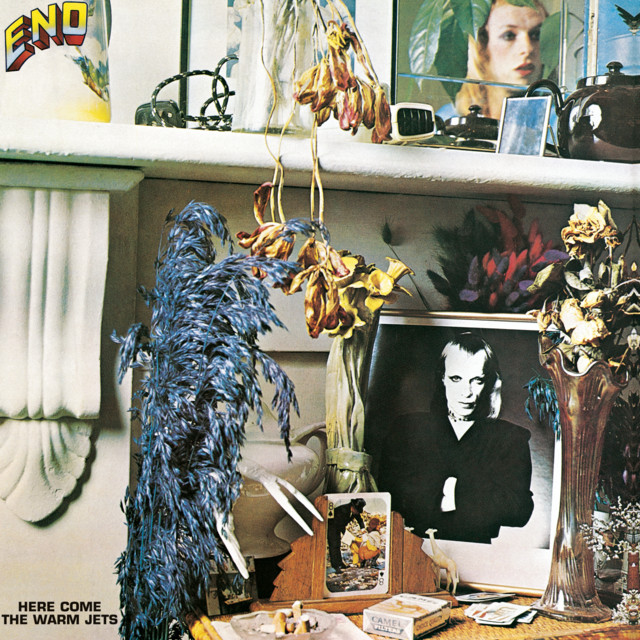
Here Come The Warm Jets
1973
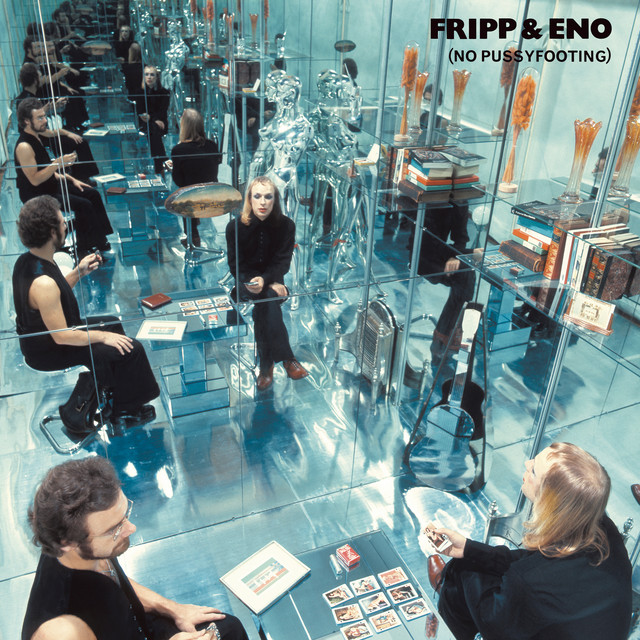
No Pussyfooting
1973
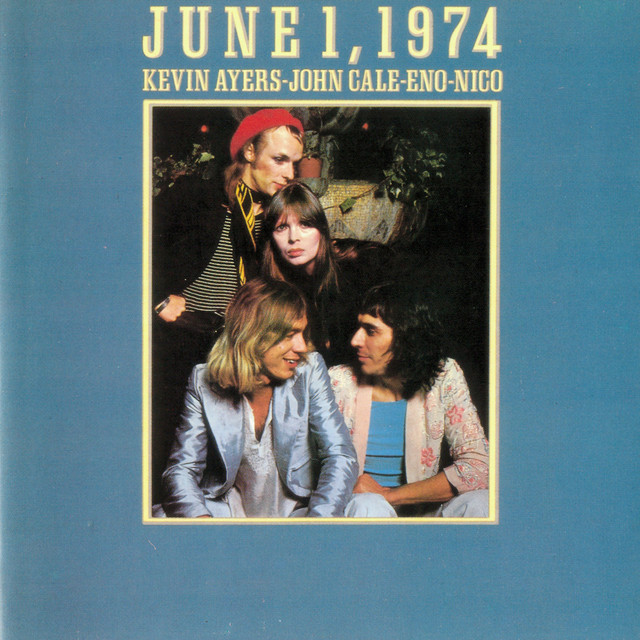
June 1, 1974 (Live At The Rainbow Theatre / 1974)
1974
![Taking Tiger Mountain (By Strategy) [2004 Remaster] album cover](https://images.equipboard.com/uploads/album/image/274230/taking-tiger-mountain-by-strategy-2004-remaster.jpg)
Taking Tiger Mountain (By Strategy) [2004 Remaster]
1974

Another Green World (2004 Remaster)
1975
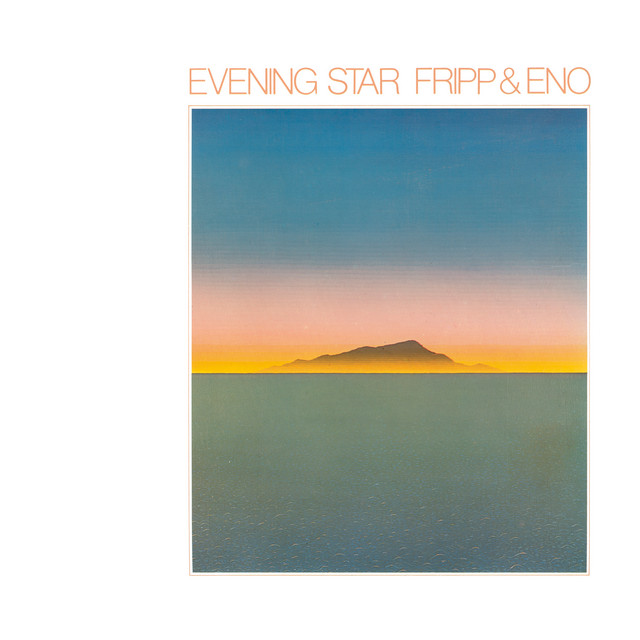
Evening Star
1975
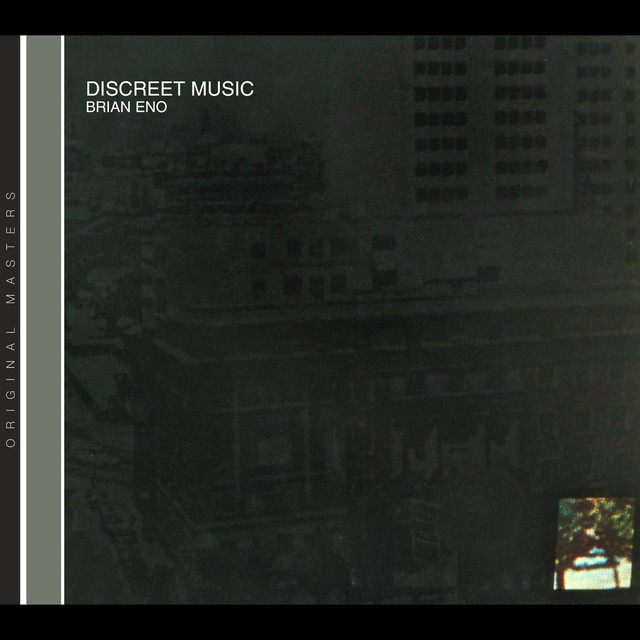
Discreet Music
1975
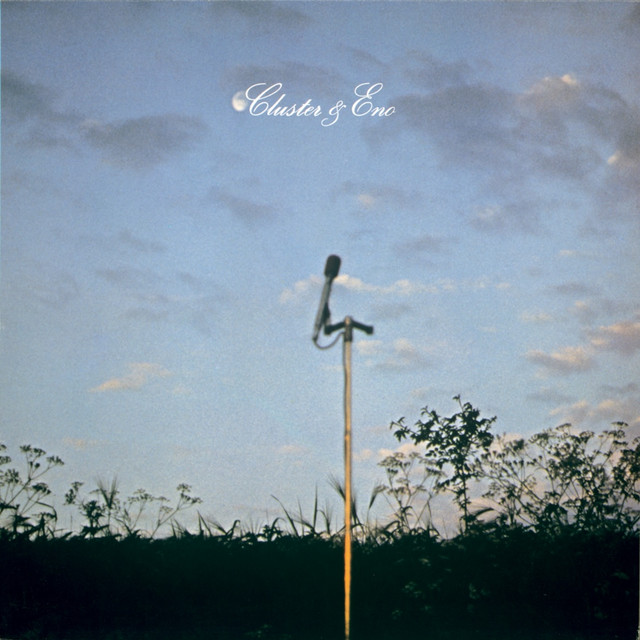
Cluster & Eno
1977
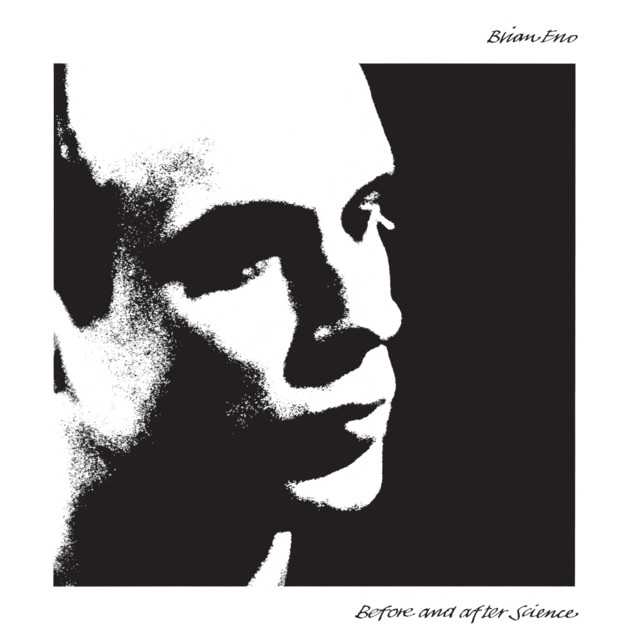
Before And After Science
1977
Ambient 1: Music For Airports (Remastered 2004)
1978
Ambient 2: The Plateaux Of Mirror (Remastered 2004)
1980
Ambient 3: Day Of Radiance
1980
Album Credits
-
Producer
-
Beatie Wolfe · 2025
Producer -
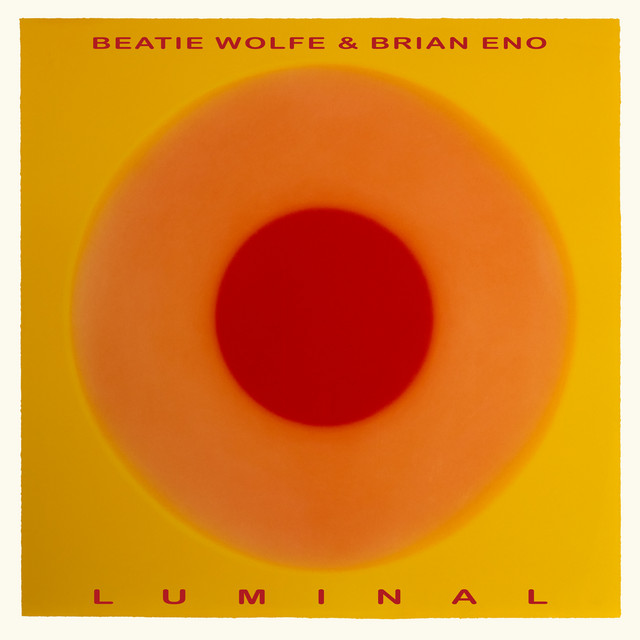
Brian Eno & Beatie Wolfe · 2025
Producer -
Eno (Original Motion Picture Soundtrack)
Brian Eno · 2024
Mixing Engineer Producer Recording Engineer -
Coldplay · 2024
Programmer -

Live and Let Live (Dark-Side Mix)
Peter Gabriel · 2023
Programmer -

Live and Let Live (Bright-Side Mix)
Peter Gabriel · 2023
Programmer -

50 Years of De-Evolution 1973–2023
Devo · 2023
Producer -
Four Kinds of Horses (Dark-Side Mix)
Peter Gabriel · 2023
Programmer -
Four Kinds of Horses (Bright-Side Mix)
Peter Gabriel · 2023
Programmer -
Peter Gabriel · 2023
Producer Programmer -
Brian Eno & Fred again.. · 2023
Producer