
David Gray
British singer/songwriter
Role
Genre
Group
Role
Genre
Group
David Gray's Gear


In recent years, Martin has been David Gray’s guitar of choice for live performances. So, when C.F. Martin approached him regarding the possibility of a namesake guitar, Gray embraced the opportunity. The 000C David Gray Custom Edition is much like the man’s music: understated, sophisticated and impressively realized. The Martin 000C David Gray Custom Edition guitar is a true 14-fret 000, with the traditional 15 3/16-inch wide, 4-1/16” deep body and short 24.9” scale that make this size both comfortable to hold and easy to play. Also conceived with comfort in mind is the rounded Venetian cutaway, which simplifies “up the neck” chords and notes. A unique combination of superb tonewoods gives the 000C David Gray a truly signature sound. The top of select Italian alpine spruce, paired with 5/16” Hybrid scalloped bracing, produces full, complex tone. Back and sides of genuine mahogany contribute note-tonote clarity across the strings. The modified V-shape neck, a generous 1-3/4” at the nut, is carved from genuine mahogany.
Find it on:


David Gray has used the Lowden 035 acoustic guitar, including on albums like "A New Day at Midnight" and "White Ladder," as referenced on the Lowden Guitars discography page.
Find it on:
-m.webp?v=1784240672)
He posted a series of videos on YouTube showing how to play the tracks from White Ladder. In them he is using a 1964 Martin 000-18.
Find it on:


David Gray
Models used O25c and an O35 “A new day at midnight” and “White Ladder”
Find it on:

Photographic evidence, but also chatter in his forum here.
http://www.davidgrayforum.com/threads/martin-000c-david-gray-custom-guitar.469/
For those who may be wondering the model is of David's Martin guitar with the Mother of Pearl inlay in the headstock; its a 1998 Martin D-42. David currently keeps and plays the guitar in Nashville Tuning. If you want a new D42, it'll cost you a cool $5,500.
Find it on:

David Gray: A Biography - Google Books Result https://books.google.com/books?isbn=0857120522 Michael Heatley - 2009 - ?Music
Babylon's bass line, taken off a Roland MC303 groovebox, was also simplified in the verse, allowing a shift from rhythm to melody. “It becomes more light-hearted,” explained engineer Polson, adding “It's nice to have some musical relief after the chorus has been banging away.” If old-time David Gray fans were looking for a ..
Also:
https://www.mixonline.com/recording/david-gray-375552 The “drawing board” consisted of Gray's electric and acoustic guitars (Martin, Lauden and Gibson), an Electro-Voice D257 microphone, a 4-track, an Akai S3000 sampler and a Roland Groovebox synth. (“About half the sounds on the album come from the Groovebox,” Gray explains.) Without a recording contract or a proper studio, Gray and his drummer and sometime bassist Clune began “messing around,” without any intention of making an album. “I was writing a lot of stuff, all kind of miserable, trying to get something going again, trying to find out what I was doing,” he says.
Find it on:

The Guardian photo: David playing a Tacoma BM6C Thunderhawk Baritone
Here is chatter from his own Forum:
http://www.davidgrayforum.com/threads/martin-000c-david-gray-custom-guitar.469/
The exceptionally large guitar, which is baritone guitar, that David plays from time to time and is featured on We Could Fall In Love Again Tonight, is a Tacoma BMC6 Baritone Thunderhawk. The standard tuning of that guitar is actually BDGCEB. Its a fairly inexpensive guitar, as its about $1,100.
Also..
Other acoustic guitars that David owns and used to play regularly in the past is a Harmony which is seen in the Shine music video and in short video extra on the Live In Slow Motion DVD, a Larivee which can be seen in the Wisdom music video, a Takamine, a thin model Guild, and the more famous big body Lowden which was used to record the entire White Ladder album and is seen through 95% of the Live At The Point DVD (the Guild and Takamine are seen in the DVD too).
Find it on:

The “drawing board” consisted of Gray's electric and acoustic guitars (Martin, Lauden and Gibson), an Electro-Voice D257 microphone, a 4-track, an Akai S3000 sampler and a Roland Groovebox synth. (“About half the sounds on the album come from the Groovebox,” Gray explains.) Without a recording contract or a proper studio, Gray and his drummer and sometime bassist Clune began “messing around,” without any intention of making an album. “I was writing a lot of stuff, all kind of miserable, trying to get something going again, trying to find out what I was doing,” he says.
Find it on:


minute 0:45
David Gray - Please Forgive Me (live in London Hammersmith)
Find it on:
-m.webp?v=1784241293)

In a MusicRadar interview, David Gray discusses using the Sennheiser e935 microphone for live in-studio performances.
Find it on:

The “drawing board” consisted of Gray's electric and acoustic guitars (Martin, Lauden and Gibson), an Electro-Voice D257 microphone, a 4-track, an Akai S3000 sampler and a Roland Groovebox synth. (“About half the sounds on the album come from the Groovebox,” Gray explains.) Without a recording contract or a proper studio, Gray and his drummer and sometime bassist Clune began “messing around,” without any intention of making an album. “I was writing a lot of stuff, all kind of miserable, trying to get something going again, trying to find out what I was doing,” he says.
Find it on:

After some time, Gray bought an ADAT to replace the 4-track. As they needed some more technical help on the project, Gray also brought in Iestyn Polson as producer. Polson, in turn, upgraded the duo to a Mac with a Logic MIDI sequencer to sync up the Groovebox and purchased an Audio-Technica 4033, bringing the mic count to a whopping two.
Find it on:

After some time, Gray bought an ADAT to replace the 4-track. As they needed some more technical help on the project, Gray also brought in Iestyn Polson as producer. Polson, in turn, upgraded the duo to a Mac with a Logic MIDI sequencer to sync up the Groovebox and purchased an Audio-Technica 4033, bringing the mic count to a whopping two.
Find it on:

For the mixdown, Polson and mixer George Holt borrowed an older series Soundcraft board that had a “cheap but warm” sound he prefers to the comparable Mackie. The Soundcraft, however, was quickly nicknamed “The Grumbler” because of a buzzing noise it made every few minutes due to a problem with the power supply. During the mixing, Polson had to stop to brush the corrosion off the wires. So they ended up mixing the album in Gray's front room to a Tascam DA-20 between the buzzes. “That and the drilling,” Polson laughs.
Find it on:

David Gray uses the Kawai K-3 ATX as his primary piano during his worldwide tours, as seen in his performance at the 2014 iTunes Festival in London.
Find it on:

David Gray's album "Life In Slow Motion" marks a shift from his previous lo-fi recording methods to a full-scale studio environment. This album, recorded between autumn 2003 and spring 2005, showcases his evolving musical aspirations. Central to this evolution is his use of the Yamaha C7 grand piano, which allowed for more expansive and intricate compositions. The Yamaha Artists page highlights Gray's association with the Yamaha C7, underscoring its role in the creation of this critically acclaimed work.
Find it on:

The Home/Studio piano was used by David for his how-to-play all the White Ladder Songs series in honor of the 20th Anniversary of the White Ladder Release. It was used for demonstrating Please Forgive Me and This Years Love.
Find it on:

In the official music video for "This Year's Love," David Gray is seen using a Toy Piano Jaymar.
Find it on:
This is a community-built gear list for David Gray.
- Find relevant music gear like Microphones, Guitars, Amplifiers, Effects Pedals, Pianos, Keyboards and Synthesizers, Software Plugins and VSTs, Instruments, and other instruments and add it to David Gray.
- The best places to look for gear usage are typically on the artist's social media, YouTube, live performance images, and interviews.
- To receive email updates when David Gray is seen with new gear, follow the artist.
Discography
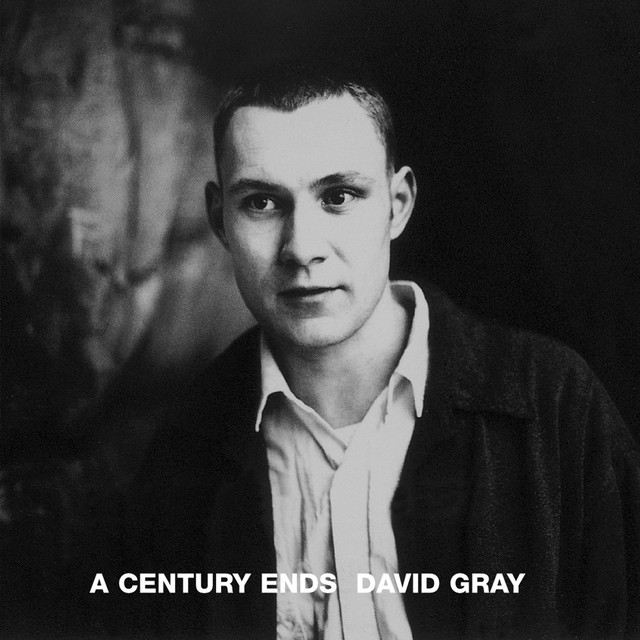
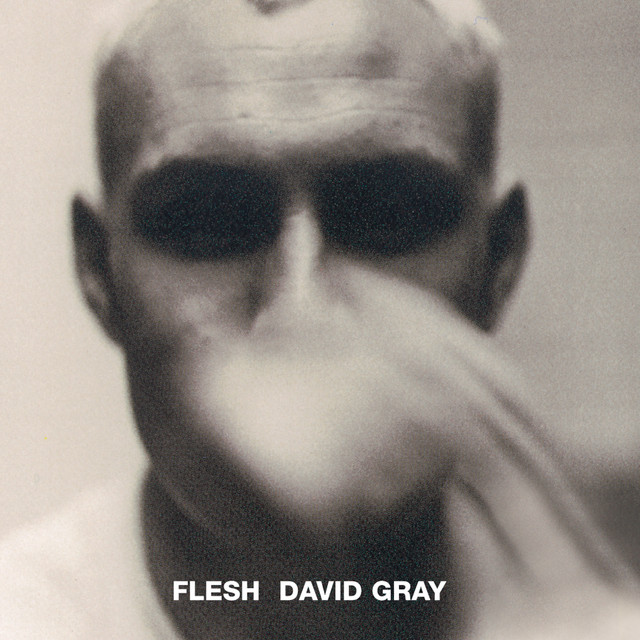
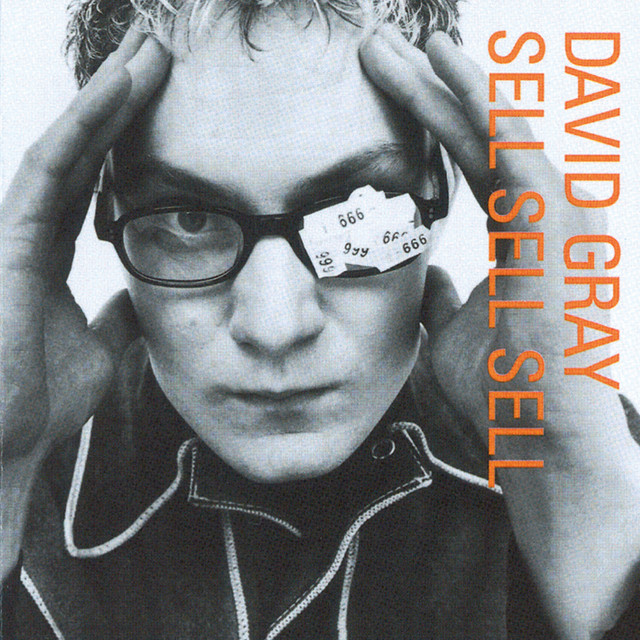

Album Credits
-
David Gray · 2019
Producer -

David Gray · 2019
Producer -
David Gray · 2005
Producer -
David Gray · 2002
Producer -
David Gray · 2002
Producer -
David Gray · 2001
Producer -
David Gray · 1998
Producer




