Dweezil Zappa
Role
Role
Dweezil Zappa's Amplifiers


There's no question that Peavey's Wiggy is a unique, eye-catching hunk of amp. Based on Dweezil Zappa's silver and blue Aston Martin, the sports car-themed Wiggy kicked up enough of a buzz at Winter NAMM to become one of the cover models for GP's May 2001 New Gear Issue.
"The look was almost as important as the sound," explains Zappa, who conceptualized and co-designed the amp with Peavey's engineering staff. "I wanted something that would be inviting--something that would entice guitarists to come on over and play it. And I wanted tree thematic coherence. The amp's slightly backlit gauges echo those on classic British roadsters."
But although looks were a primary concern, the Wiggy's stylishly rod-o-rific visage is matched by its tonal versatility. And the timbral side of the amp's design was also inspired by a less-than-conventional model. "I wanted the amp to sound like this unknown, '70s-era kind of' bass preamp I found in a dark corner of my dad's studio," says Zappa. "We were cleaning some stuff out, and there it was. I've never seen anything like it anywhere. I plugged a guitar into it, and it sounded pretty cool. It had an interesting distortion sound, and even at its most distorted, when you backed off your guitar volume, the tone got clean without getting thin. The concept was so clear that the Wiggy was basically complete on the first pass. It did everything I wanted it to do, and it looked right. Peavey's engineers were skeptical--they said,We usually have to run through the design process four or five times.' I said, `Nope. It's done!'"
The production model of the Wiggy couples a modified 100-watt Transtube head with a 2x12 closed-back cabinet loaded with Sheffield 1230 speakers. Features include a footswitchable gain boost, an effects loop (with a level switch), a resonance control for tuning the cabinet's low-end response (loose to tight), 5-band and 3-band EQ, and selectable impedance (4[Omega], 8[Omega], or 16[Omega]).
"The Wiggy is designed to be extremely responsive to performance dynamics and input levels," says Zappa. "Using your guitar's volume knob, you can get several different tones without touching the amp controls. The changes are mostly textural. A built-in compressor keeps the output levels relatively consistent--even when you bring down the guitar volume, from full distortion at 10 to a clean sound at 2. …
PUBLICATION: Guitar Player
VOLUME/ISSUE: Vol. 35, No. 11
PUBLICATION DATE: November 2001
CONTRIBUTORS: Molenda, Michael
"Infused with Zappa zaniness and guitar genius!"
"Wiggy comes with incredible EQ and tone controls not found on any other amp, thanks to the driving force behind this rockin' combination of TransTube technology and engineering wizardry: Dweezil Zappa. Its looks will turn your head and its sound will drop your jaw. Just punch the gas on this roadster-inspired rig to get the coolest tones you've ever heard."
" Step behind the wheel of this smooth-riding baby for a lazy Sunday afternoon drive, a Saturday night cruise on the strip, or a nail-biting 12-second rip down the quarter mile. Switching on the amp activates the hazard flashers (power indicator) while you plug in to HIGH OCTANE (high gain) or LOW OCTANE (low gain) jacks located just below the MORE (drive/boost) knob. Twist the RPM (gain) and MPH (master volume) controls to get things going, then sculpt your basic tone with the BATT, OIL, and TEMP (low, mid, and high) EQ knobs. There's also a BOOST control for post EQ fuzz. When you're ready to push things into the red zone, go for the WIGGY tone sliders (5-band More/Less tone control), the PRESENCE, T. DYNAMICS, and RESONANCE controls. Amplifier section outputs 100W into 4, 8, or 16 ohms (switchable impedance), footswitchable effects loop with level switch, preamp out and power amp in jacks, dual paralleled speaker output jacks, lighted control panel, footswitch included."
FEATURES 100W into 4, 8, or 16 ohms, selectable impedance HIGH and LOW OCTANE input jacks Footswitchable TransTube MORE front end (gain boost level) Hazard lights flash when MORE function is engaged RPM (gain) and MPH (master volume) controls 3-band BATT, OIL, and TEMP (low, mid, and high) EQ BOOST control for post EQ fuzz 5-band WIGGY graphic EQ PRESENCE and T. DYNAMICS controls RESONANCE switch Footswitchable effects loop with level switch PRE AMP OUT and POWER AMP IN jacks Dual paralleled SPEAKER OUTPUT jacks Lighted control panel Footswitch included SPECIFICATIONS 27"W x 9"H x 11-1/2"D 30-1/2 lbs.
Find it on:


According to Premier Guitar, Zappa uses the Port City Pearl head.
Find it on:
-m.webp?v=1783263565)
"The earliest sounds I made were on a Fender Music Master that was given to me by my dad at age 6. I plugged it into one of his spare Pignose amps."
Find it on:


"Next I got my green Charvel and played through Carvin X100B amps, also from what Frank was using on stage in the early 80's. I used that amp and an Ibanez UE 405 for the "Havin' A Bad Day" album. I remember that the delay in the Ibanez was main thing I used and it was mainly for the song "Electric Hoedown". I used this set up in mono."
Find it on:

"Around that time my rig changed a lot. I started using Peavey 5150s and Classic 100s. At one stage the rig consisted of three 4X12s powered by 3 different amps, creating a stereo outside, dry center array. I even had Fender Bassman as a center channel at one point."
Find it on:


There's no question that Peavey's Wiggy is a unique, eye-catching hunk of amp. Based on Dweezil Zappa's silver and blue Aston Martin, the sports car-themed Wiggy kicked up enough of a buzz at Winter NAMM to become one of the cover models for GP's May 2001 New Gear Issue.
"The look was almost as important as the sound," explains Zappa, who conceptualized and co-designed the amp with Peavey's engineering staff. "I wanted something that would be inviting--something that would entice guitarists to come on over and play it. And I wanted tree thematic coherence. The amp's slightly backlit gauges echo those on classic British roadsters."
But although looks were a primary concern, the Wiggy's stylishly rod-o-rific visage is matched by its tonal versatility. And the timbral side of the amp's design was also inspired by a less-than-conventional model. "I wanted the amp to sound like this unknown, '70s-era kind of' bass preamp I found in a dark corner of my dad's studio," says Zappa. "We were cleaning some stuff out, and there it was. I've never seen anything like it anywhere. I plugged a guitar into it, and it sounded pretty cool. It had an interesting distortion sound, and even at its most distorted, when you backed off your guitar volume, the tone got clean without getting thin. The concept was so clear that the Wiggy was basically complete on the first pass. It did everything I wanted it to do, and it looked right. Peavey's engineers were skeptical--they said,We usually have to run through the design process four or five times.' I said, `Nope. It's done!'"
The production model of the Wiggy couples a modified 100-watt Transtube head with a 2x12 closed-back cabinet loaded with Sheffield 1230 speakers. Features include a footswitchable gain boost, an effects loop (with a level switch), a resonance control for tuning the cabinet's low-end response (loose to tight), 5-band and 3-band EQ, and selectable impedance (4[Omega], 8[Omega], or 16[Omega]).
"The Wiggy is designed to be extremely responsive to performance dynamics and input levels," says Zappa. "Using your guitar's volume knob, you can get several different tones without touching the amp controls. The changes are mostly textural. A built-in compressor keeps the output levels relatively consistent--even when you bring down the guitar volume, from full distortion at 10 to a clean sound at 2
PUBLICATION: Guitar Player
VOLUME/ISSUE: Vol. 35, No. 11
PUBLICATION DATE: November 2001
CONTRIBUTORS: Molenda, Michael
Find it on:
-m.webp?v=1783249216)


According to Premier Guitar, Zappa uses the Marshall JTM50.
Find it on:
-m.webp?v=1783090740)
According to Premier Guitar, Zappa uses the Fender Super Reverb amplifier.
Find it on:



This is a community-built gear list for Dweezil Zappa.
- Find relevant music gear like Guitars, Amplifiers, Effects Pedals, and other instruments and add it to Dweezil Zappa.
- The best places to look for gear usage are typically on the artist's social media, YouTube, live performance images, and interviews.
- To receive email updates when Dweezil Zappa is seen with new gear, follow the artist.
-
Added to Equipboard on by
 michael
Gear IQ 42641
-
Updated
Discography

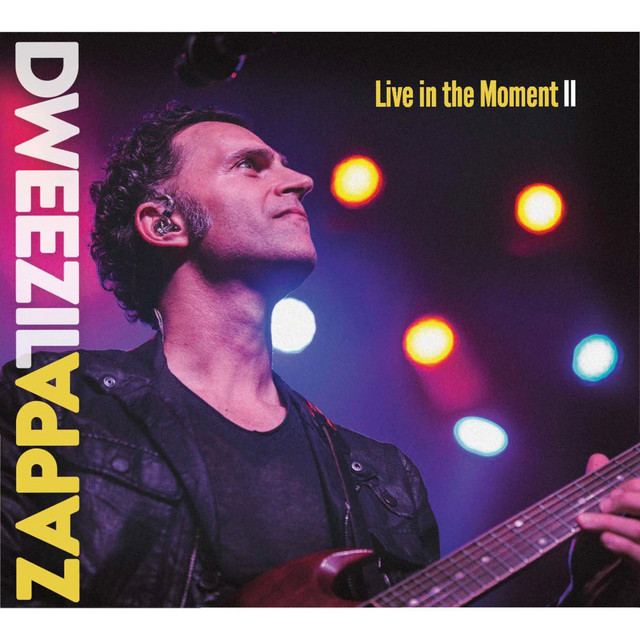
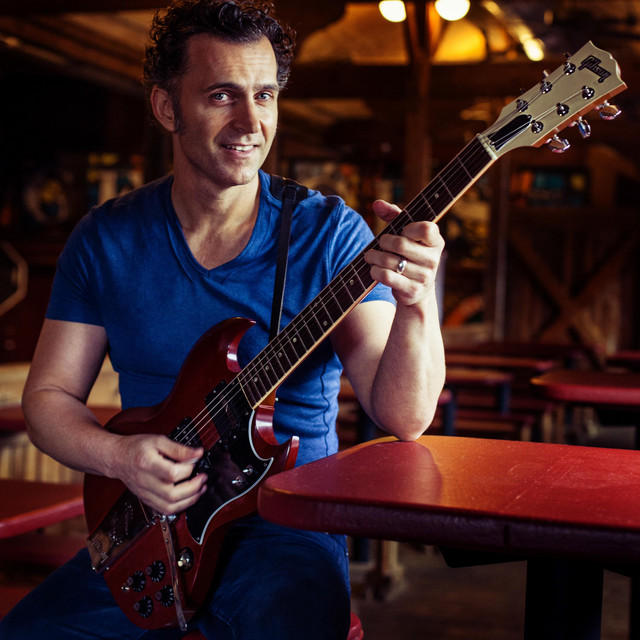
Album Credits
-
Dweezil Zappa · 2010
Producer -
Dweezil Zappa · 2006
Engineer Mixing Engineer Producer Programmer