Steve Morse
American guitarist
Role
Group
Role
Group
Steve Morse's Gear


Steve Morse can be seen playing a Fender Lead II in this picture.
Find it on:


"This is already an important part of my recording studio. It is very easy to use right away, and I"m looking forward to doing more in depth modeling with it. Without even looking at a manual, I dialed up some keeper sounds very quickly. Very impressed! Thanks for a great working piece of gear!"
Find it on:


In a reddit AMA, when asked which guitar strings he uses, Steve Morse replies:
"I'm using Ernie Ball RPS Super Slinky. I think. They're the .09 set with the double wound ends. I recently switched from using .10's . That's for standard tuning. On detuned with Purple, we have 10's and 11's. The new metal type of EB strings sound great on detuned guitars, I think. Normally, for regular tuning, I'm using the standard sets."
The link to this particular post can be found here.
Find it on:


At 2:59 in this video, Steve Morse's TC Electronic Hall of Fame Reverb pedal can be seen in the pedal board inside rack. His guitar tech mentions it and demonstrates its sound.
Find it on:


Steve Morse reveals his usage of the Boss OC-3 in this interview for Boss.
"I noticed in a Deep Purple video that you use an octave pedal a lot on solos. Is it the BOSS OC-3 Super Octave?
That’s one of them. I have four different rigs, actually five different rigs, but that’s definitely one of them."
Find it on:

According to rig rundown, he uses this signature model.
Find it on:


-m.webp?v=1783495886)
In a live 1978 performance of "The Bash" with Dixie Dregs, Steve Morse can be seen playing a Fender Telecaster. This performance is available on YouTube, uploaded by Jo Macdonald.
Find it on:


-m.webp?v=1783695437)
In this video, Steve Morse uses a TC Electronic Flashback Delay & Loooper. The description reads, "Steve Morse of Deep Purple, Dixie Dregs, etc. is creating his personal TonePrints for TC Electronic's Flashback Delay & Looper guitar effects pedal. He really likes what he hears at first, which is always a good starting point, and as he gets to mess around with the many parameters, he simply succeeds in creating his dream delay - a delay sound that he can't get anywhere else as he puts it!"
Find it on:

In this video at 0:30, you can see Steve Morse of Deep Purple, Steve Morse Band, Steve Morse and Manuel Barruecco, Steve Morse & Billy Sherwood, Angelfire, and Dixie Dregs, has an Engl Steve Morse Signature E656 head in the background.
According to Vintage Guitar interview, Steve used his signature amp with Dixie Dregs.
Find it on:

In this video, Steve Morse (Deep Purple) demos the Spark Mini Booster. He says, "It makes a nice boost...There's a cool feature about, if you hold the momentary switch down you get the boost for as long as you hold the switch down," at 0:30.
Find it on:

The Ernie Ball Music Man (Y2D) DarkLord model is based on the Steve Morse Y2D model, although it custom made for Joe Bonamassa; in his own words: The DarkLord guitar was designed by my former tech Dave Pate and myself... it was initially built for the series of shows with Black Country Communion in the winter of 2010. It has been in my solo band stable since 2011. Its important to remember it is still a Steve Morse model. The lovely cats at EB/MM asked if they could build a few. I was like: "As long as Steve is cool with it..."
The neck profile is based off of one of Joe's '59 Les Pauls, is chunkier than any other EB/MM neck, and also features jumbo frets. It shares the body style, pickups, compensated nut, 5-way switching, and bridge of the Morse Y2D but differs in that it has a reverse EBMM headstock, flame maple top with black burst finish, and chrome covers on the pickups.
The guitar features a poplar body, flame maple top, roasted (oil and wax rubbed) maple neck, rosewood fingerboard, and weights around 8.5 pounds (4 Kg). It features a compensated nut and a reverse headstock. There is one standard model and a BFR (Ball Family Reserve) one, which features a special inlay on the 12th fret.
Find it on:

Steve demonstrates his signature Music Man guitar in this video. According to this page of his website, "The history of this unique instrument goes back to Steve's college days. During that time, Steve crafted a guitar for himself, combining the elements for his ideal instrument: a Fender Telecaster body, Stratocaster neck, Gibson Tune-o-matic bridge, a set of Gibson frets, a 12-string tailpiece (make unknown), and a group of pickups (also unknown). He called it the Frankenstein Telecaster, and constantly revised and improved it over the years. In 1986, Steve was approached by Musicman to collaborate on creating a production model. This guitar has since expanded to several models, and over 50 choices and combinations of finishes."
According to Vintage Guitar interview, Steve used his signature model with Dixie Dregs.
Find it on:

In this Rig tour by Total Guitar Magazine Steve Morse say's "This pedal is a luxury I have with Deep Purple. This one is an octave above that I use for The Surprising to simulate some of the 12-string overdub I did in there." "Doing an octave up is a risky proposition so a little goes a long way! But I use octave down for a few things as well.”
Find it on:

A TC Polytune Mini is visible on Steve Morse's board at 0:20 in this video.
Find it on:



"Do you recall which guitar synthesizer you used?
It was like a pretty big size. It had a big old huge connector. I just remembered: it was a Roland (GR-700)." Steve Morse.
Find it on:
-m.webp?v=1783695411)
At 2:05 the this gear rundown video, there is a clear shot of Steve Morse's three Ernie Ball Volume Pedals.
Find it on:

A Digitech Whammy 4 can be seen at 2:59 in this video, at the back of Steve Morse's pedal board rack.
Find it on:

At 0:20 in this video, a Keeley Compressor can be seen on Steve's pedalboard.
Find it on:

This page of TC Electronic's website states that Steve Morse uses a TC Electronic Spark Booster.
Find it on:

"I used those for a lot of years. They’re good tuners. That’s all I used up until just a few years ago." - Steve Morse from this Boss US interview.
Find it on:

"Yeah, It’s pretty big. I still have that [CE-1] Chorus Ensemble, which is the best of BOSS—a big, heavy cast-iron thing. I bought that in Hollywood at our first recording session. It was awesome." - Steve Morse.
Find it on:

He uses six of those cabinets loaded with Celestion Vintage 30 speakers, according to rig rundown.
Find it on:
-m.webp?v=1783695548)
According to the 2017 Premier Guitar interview, Morse uses the TC Electronic G-Major II.
Find it on:

From Guitar World 1992 Interview:
GW: In the studio, you'll often use many different guitar sounds within the same song. It must be tricky to execute some of your material live with the trio.
MORSE: One of the pieces I really enjoy performing live is "Highland Wedding" [High Tension Wires]-a tune that originally had a lot of overdubs. Dave LaRue and I worked out a live arrangement where he plays a polyphonic bass part that's a combination of the original recorded bass track and some of the guitar parts. I do a lot of switching back and forth between fingerpicked, arpeggiated chords and single-note lines. I also use the guitar synth, which helps create some interesting textures and fills out the sound.
GW: Do you use the guitar synth much when performing live?
MORSE: I use a volume pedal to fade the synth in during sections of certain tunes. You'll always hear the regular guitar signal-it's never actually replaced by the synth sound. Most people in the audience probably don't even realize I'm using the synth; they probably think there's someone offstage playing a keyboard.
GW: What guitar synth are you currently using?
MORSE: An IVL Pitchwriter II going into a modified Ensonic ESQM module. It tracks very well and has some cool string and Moog-type sounds that translate well through a stage rig. Many guitar synths sound much better through headphones than when they're blasting through a speaker. A patch that sounds very "sparkly" through headphones often sounds shrill and distorted through an amplifier or PA.
Find it on:

The PolyTune Polyphonic Tuner Pedal is one of the TC Electronic products used by Steve Morse, according to this page of TC Electronic's website.
Find it on:

Steve Morse uses a TC Electronic Ditto x2 Looper pedal, according to this page of TC Electronic's website.
Find it on:
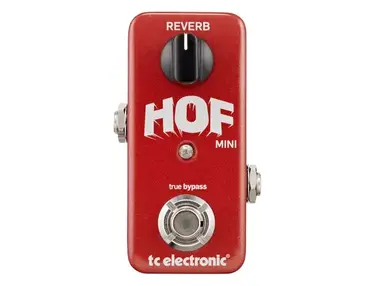
According to this page of TC Electronic's website, Steve Morse uses a TC Electronic Hall of Fame Mini Reverb Pedal.
Find it on:

Steve Morse is listed as an artist using TC Electronic's PolyTune 2 Mini, on TC Electronic's website.
Find it on:

He uses those speakers in his ENGL cabinets, according to his rig rundown.
Find it on:


In this image of Steve Morse on NBC's Today Show holding his Ernie Ball Music Man SM-Y2D guitar, clipped on the headstock his TC Electronic PolyTune Clip tuner can be seen.
Find it on:
This is a community-built gear list for Steve Morse.
- Find relevant music gear like Guitars, Amplifiers, Effects Pedals, and other instruments and add it to Steve Morse.
- The best places to look for gear usage are typically on the artist's social media, YouTube, live performance images, and interviews.
- To receive email updates when Steve Morse is seen with new gear, follow the artist.
-
Added to Equipboard on by
 michael
Gear IQ 42739
-
Updated
Discography
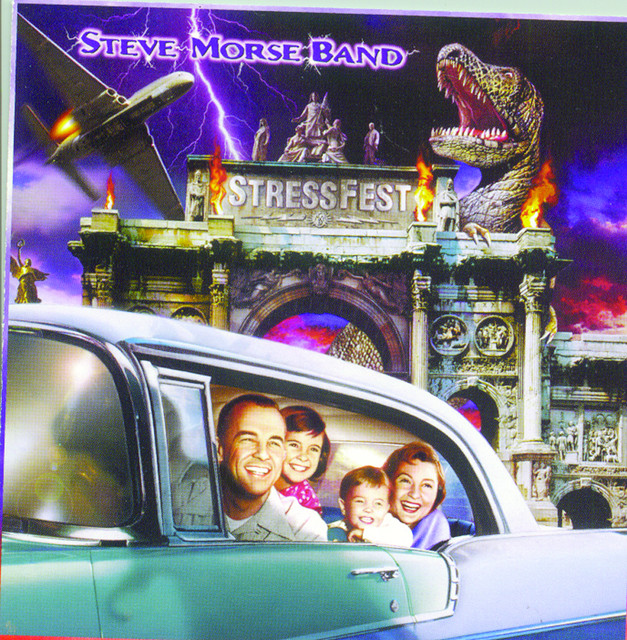
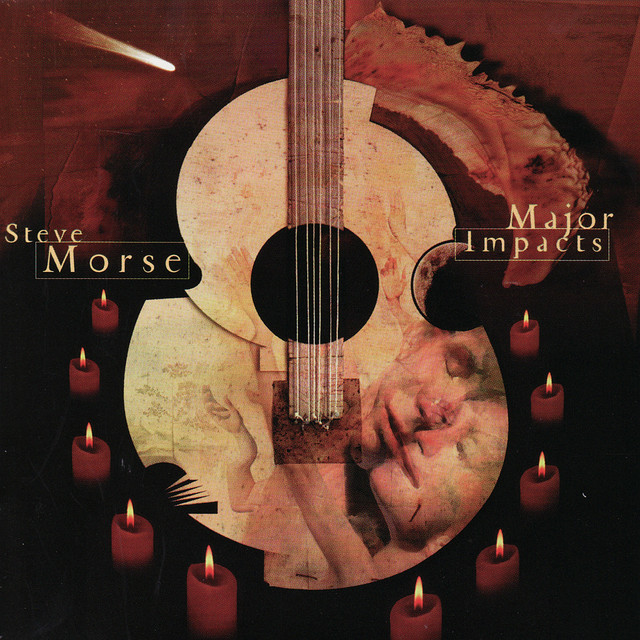
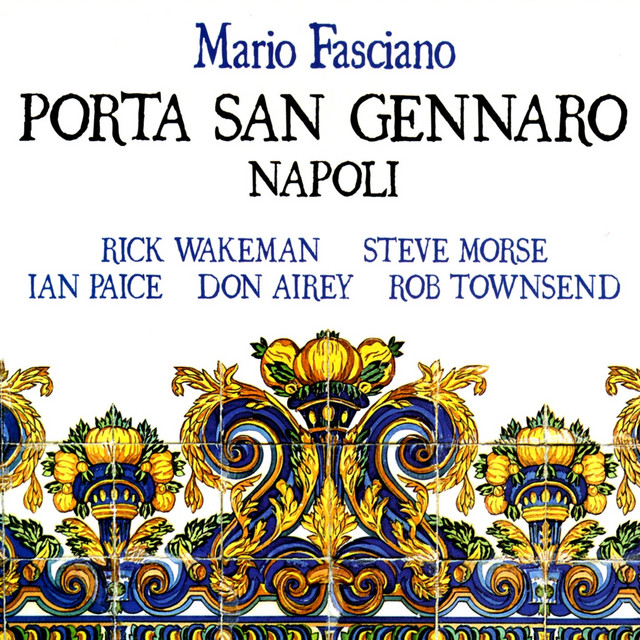
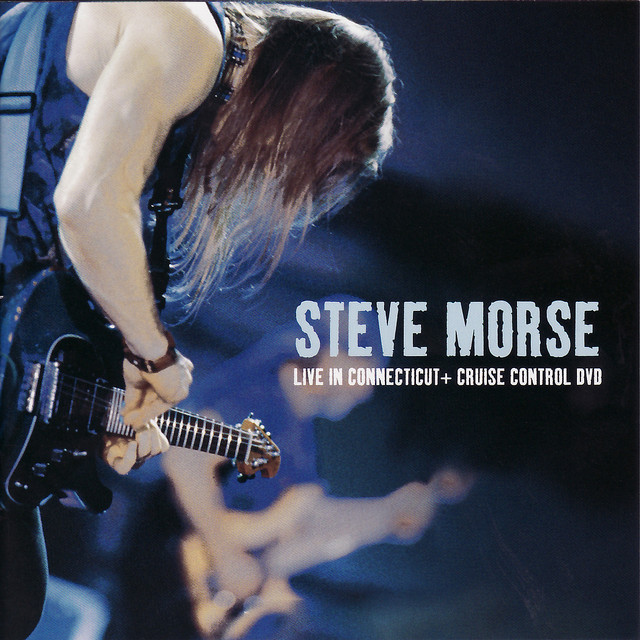
Album Credits
-
Steve Morse · 2009
Engineer Producer -
Steve Morse · 2005
Engineer Producer -
Steve Morse · 2001
Engineer Producer -
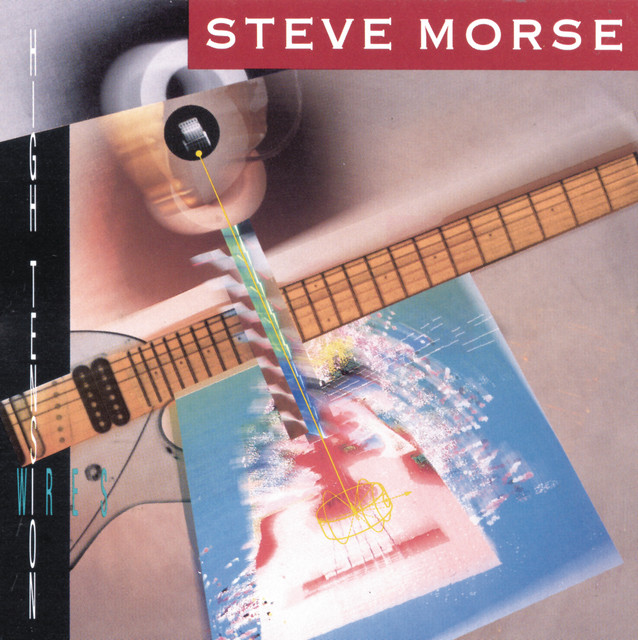
Steve Morse · 1989
Mixing Engineer Producer Recording Engineer




.webp)