This page about Peavey Wiggy 212 Cabinet is a stub. You can help improve it:


Pricing and availability




* Product prices and availability are updated by Equipboard every 24hrs and are subject to change. Equipboard may receive compensation for purchases made at participating retailers linked on this site. This compensation does not affect what products or prices are displayed, or the order of prices listed. For more information, please refer to our affiliate disclosure.
Description
Cabinet retro-roadster inspired styling and blue covering to complete your Wiggy rig. It features 2 - 12" Sheffield 1230 speakers; switchable stereo or mono operation; 16 ohms mono, 8 ohms stereo; and 150W mono, 75W per side stereo power handling. Closed back is removable. 2 - 1/4" input jacks.Features 2 - 12" Sheffield 1230 speakersSwitchable stereo or mono operation16 ohms mono, 8 ohms stereo150W mono, 75W per side stereoClosed-back configuration (back is removable)


Reviews
Owner Insights
We analyzed real musician discussions from forums and Reddit to find what players love, question, and tweak about Peavey Wiggy 212 Cabinet.
Features and functionality
-
The "MORE" knob requires a footswitch to engage, adding complexity to the setup process.
Source -
The power amp knob acts like a built-in attenuator, offering creative control over output levels.
Source -
The Wiggy was designed by Dweezil Zappa and features interactive active EQ controls and a five-band graphic EQ for wide-ranging, flexible sound shaping.
Source
User experience
Use cases and applications
-
Some users find it works well as a pedal platform when nearly clean tones are achieved.
Source -
Known for providing unique, non-traditional tones suitable for styles like Queens of the Stone Age and The White Stripes.
Source -
The amp can produce unconventional sounds, making it ideal for experimental music where "ugly" tones are appreciated.
Source
Value and pricing
5.0 out of 5
Based on 0 Reviews and 2 Ratings
Artist usage
Add artist
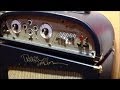
There's no question that Peavey's Wiggy is a unique, eye-catching hunk of amp. Based on Dweezil Zappa's silver and blue Aston Martin, the sports car-themed Wiggy kicked up enough of a buzz at Winter NAMM to become one of the cover models for GP's May 2001 New Gear Issue.
"The look was almost as important as the sound," explains Zappa, who conceptualized and co-designed the amp with Peavey's engineering staff. "I wanted something that would be inviting--something that would entice guitarists to come on over and play it. And I wanted tree thematic coherence. The amp's slightly backlit gauges echo those on classic British roadsters."
But although looks were a primary concern, the Wiggy's stylishly rod-o-rific visage is matched by its tonal versatility. And the timbral side of the amp's design was also inspired by a less-than-conventional model. "I wanted the amp to sound like this unknown, '70s-era kind of' bass preamp I found in a dark corner of my dad's studio," says Zappa. "We were cleaning some stuff out, and there it was. I've never seen anything like it anywhere. I plugged a guitar into it, and it sounded pretty cool. It had an interesting distortion sound, and even at its most distorted, when you backed off your guitar volume, the tone got clean without getting thin. The concept was so clear that the Wiggy was basically complete on the first pass. It did everything I wanted it to do, and it looked right. Peavey's engineers were skeptical--they said,We usually have to run through the design process four or five times.' I said, `Nope. It's done!'"
The production model of the Wiggy couples a modified 100-watt Transtube head with a 2x12 closed-back cabinet loaded with Sheffield 1230 speakers. Features include a footswitchable gain boost, an effects loop (with a level switch), a resonance control for tuning the cabinet's low-end response (loose to tight), 5-band and 3-band EQ, and selectable impedance (4[Omega], 8[Omega], or 16[Omega]).
"The Wiggy is designed to be extremely responsive to performance dynamics and input levels," says Zappa. "Using your guitar's volume knob, you can get several different tones without touching the amp controls. The changes are mostly textural. A built-in compressor keeps the output levels relatively consistent--even when you bring down the guitar volume, from full distortion at 10 to a clean sound at 2
PUBLICATION: Guitar Player
VOLUME/ISSUE: Vol. 35, No. 11
PUBLICATION DATE: November 2001
CONTRIBUTORS: Molenda, Michael
Genre Usage
Based on how artists on Equipboard use this gear, it is most commonly found in the following genres.
Used With
Based on how musicians on Equipboard use Peavey Wiggy 212 Cabinet, it is most commonly used with the following gear.

More Peavey Guitar Amplifier Cabinets

$797.47 - $899.99


.jpg?v=1784792607)


$598.00 - $699.99


$1,486.92 - $1,499.99


-m.webp?v=1784473288)


.jpg?v=1783969611)


Community setups


Similar


Gear Guides




Most Popular Guitar Amplifier Cabinets
Most Popular Brands
-
Added to Equipboard on by
 personwhale
GearIQ 131
-


