Joe Gore
Role
Genre
Credits
Role
Genre
Credits
Joe Gore's Gear


There are always at least two! I increasingly view analog and digital electric guitar as separate instruments. On the analog side, I use mostly guitar, pedals, and amps I’ve made myself. These days I veer away from using pedalboards in favor of devising ad hoc signal chains to suit the situation at hand. Fave gear that I didn’t make includes my Trussart Steelcaster, an old Gibson Trini Lopez, a ’63 Strat, a Carr Skylark amp, and a lovely brownface Fender Tremolux.
Find it on:


I felt like I’d been indoctrinated into some weird germanium cult. So when I developed my own take on those circuits, I named it Cult.
Find it on:

There are always at least two! I increasingly view analog and digital electric guitar as separate instruments. On the analog side, I use mostly guitar, pedals, and amps I’ve made myself. These days I veer away from using pedalboards in favor of devising ad hoc signal chains to suit the situation at hand. Fave gear that I didn’t make includes my Trussart Steelcaster, an old Gibson Trini Lopez, a ’63 Strat, a Carr Skylark amp, and a lovely brownface Fender Tremolux.
Find it on:

My favorite acoustic guitars are a 1941 Martin 00-17 steel-string and the Alvarez classical guitar I learned on as a teen, but tuned extra-low and strung with bizarre “rope core” strings for a hybrid nylon/steel-string effect.
Find it on:

"Duh isn’t as stupid as it looks." Joe Gore, as explained on his website.
Find it on:

"It’s easy to spend 20 minutes dicking around with the dials without nailing the perfect tone. I’ve always wished for a wild, highly variable fuzz that was a bit more “curated,” with easier access to the tones you’re likeliest to use. That’s what inspired the Filth Fuzz." Joe Gore, as quoted from Joe's inspiration behind the Filth on his website.
Find it on:

"With its labeled and detented selector knobs, you can call up favorite settings onstage. But for me, Gross’s forte is as a studio tool. It’s great for “texturizing” guitar overdubs—just spin the dials till you find a tone that sits perfectly in the track. It’s especially useful for doubling." Joe Gore, describing using the Gross Distortion in various situations.
Find it on:

There are always at least two! I increasingly view analog and digital electric guitar as separate instruments. On the analog side, I use mostly guitar, pedals, and amps I’ve made myself. These days I veer away from using pedalboards in favor of devising ad hoc signal chains to suit the situation at hand. Fave gear that I didn’t make includes my Trussart Steelcaster, an old Gibson Trini Lopez, a ’63 Strat, a Carr Skylark amp, and a lovely brownface Fender Tremolux.
Find it on:

There are always at least two! I increasingly view analog and digital electric guitar as separate instruments. On the analog side, I use mostly guitar, pedals, and amps I’ve made myself. These days I veer away from using pedalboards in favor of devising ad hoc signal chains to suit the situation at hand. Fave gear that I didn’t make includes my Trussart Steelcaster, an old Gibson Trini Lopez, a ’63 Strat, a Carr Skylark amp, and a lovely brownface Fender Tremolux.
Find it on:


There are always at least two! I increasingly view analog and digital electric guitar as separate instruments. On the analog side, I use mostly guitar, pedals, and amps I’ve made myself. These days I veer away from using pedalboards in favor of devising ad hoc signal chains to suit the situation at hand. Fave gear that I didn’t make includes my Trussart Steelcaster, an old Gibson Trini Lopez, a ’63 Strat, a Carr Skylark amp, and a lovely brownface Fender Tremolux.
Find it on:


On the digital side, however, I use a fixed setup: My guitar is a sort of hybrid Firebird/Jazzmaster made from Warmoth parts and filled with weird custom electronics, plus a Fishman TriplePlay MIDI pickup.
Find it on:


I play through a Universal Audio Twin interface into a MacBook Pro running Apple’s MainStage software.
Find it on:

Processed guitar and MIDI sounds exit the computer via the UA Twin, feeding a hardware Boomerang III looper, and then the house system and/or a pair of Fishman Loudbox amps.
Find it on:

When I play with Mental 99, I use my favorite guitar — a Trussart Steelcaster — tuned CGCDFA, low to high (like droped-D, but transposed down a whole step. I use an Apogee GIO as I/O and a MIDI controller — all processing is in the computer.
Find it on:



When I mic an amp, it’s usually with a single Royer 121 — that almost always sounds better to me than anything else. Since it’s a figure-eight pattern, you get the same depth you might obtain using a close-positioned dynamic mic and a more distant condenser. If I must use a dynamic, I’ll pick a Sennheiser 421.
Find it on:
-m.webp?v=1784645890)
When I mic an amp, it’s usually with a single Royer 121 — that almost always sounds better to me than anything else. Since it’s a figure-eight pattern, you get the same depth you might obtain using a close-positioned dynamic mic and a more distant condenser. If I must use a dynamic, I’ll pick a Sennheiser 421.
Find it on:

In response to an email from an online reviewer, Joe Gore confirmed that he used a 1960s Fender Telecaster for recording his work on Tom Waits’ Bone Machine.
Find it on:

According to an article by Joe Gore on tonefiend.com, the Systech Harmonic Energizer was used on his guitar tracks for Tom Waits's "All Stripped Down" and on "Jets" by Action Plus.
Find it on:
This is a community-built gear list for Joe Gore.
- Find relevant music gear like Guitars, Amplifiers, Effects Pedals, Bass Guitars, Pianos, Keyboards and Synthesizers, Microphones, Software Plugins and VSTs, Instruments, Studio Equipment, Headphones, and other instruments and add it to Joe Gore.
- The best places to look for gear usage are typically on the artist's social media, YouTube, live performance images, and interviews.
- To receive email updates when Joe Gore is seen with new gear, follow the artist.
-
Added to Equipboard on by
 raucusbacchus
GearIQ 1275
-
Updated
Discography
Album Credits
-
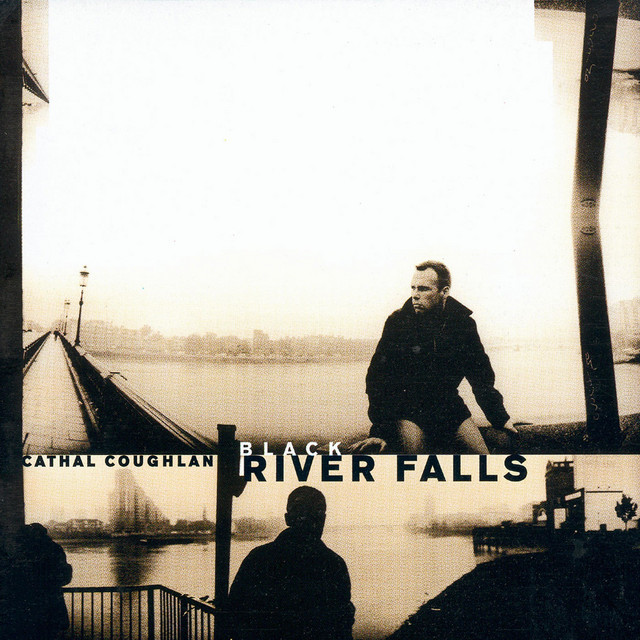
Cathal Coughlan · 2000
Recording Engineer