

By Gear Experts
Table of Contents

Equipboard
Equipboard is the world's largest community of artists and their gear. Read our review process.
We are reader-supported. When you buy through links on our site, we may earn an affiliate commission. Learn more.
Our Picks

Unbelievably inexpensive and great for beginners.
Read more


The Taylor GS Mini represents a masterful compromise between portability and tone, making it an exceptional choice for both traveling musicians and those seeking a compact instrument that doesn't sacrifice sound quality.
Read more
Martin X Series LX1E Little Martin Acoustic-Electric Guitar
A small guitar that is big on sound.
Read more

The Seagull S6 Original stands as a testament to intelligent design meeting affordability, making it an excellent choice for intermediate players looking to upgrade from entry-level instruments without breaking the bank.
Read more
The Yamaha FG800 stands as a testament to Yamaha's ability to create high-quality instruments at accessible price points, making it an ideal choice for beginners and intermediate players.
Read more


A reissue of an icon.
Read more
A balanced guitar that sounds great.
Read more
The Gibson J-45, often referred to as "The Workhorse" of acoustic guitars, has earned its legendary status since its introduction in 1942.
Read more-l.webp?v=1784804860)
The Martin D-28, widely regarded as the benchmark for dreadnought acoustic guitars, represents the pinnacle of traditional acoustic guitar craftsmanship.
Read moreIntroduction
The quest for the perfect acoustic guitar is a journey that combines artistry with craftsmanship, personal preference with technical specifics. Whether you're a beginner taking your first steps into the world of music or a seasoned guitarist seeking to expand your collection, choosing the right acoustic guitar can profoundly impact your musical journey. In this comprehensive guide, we'll explore the essential factors that influence sound quality, playability, and overall experience when selecting an acoustic guitar.
We'll take a close at the characteristics that make each guitar unique, from body shapes and tonewoods to construction methods and electronics. Through detailed reviews of this year's top models, practical advice on accessories, and expert insights into guitar construction, you'll gain the knowledge needed to make an informed decision that aligns with your playing style, budget, and musical aspirations. Let's embark on this exciting journey to find your perfect acoustic companion.
Why Invest in a Quality Acoustic Guitar?

The difference between a quality acoustic guitar and a basic model extends far beyond the price tag. A well-crafted instrument becomes an extension of your musical expression, producing rich, resonant tones that inspire creativity and progress. Premium guitars offer superior tonewoods that mature with age, enhancing their sound characteristics over time. The improved sustain, note clarity, and overall tonal balance of a quality instrument can make even simple chord progressions sound magnificent.
Better-constructed guitars typically also feature superior playability, with optimized action, comfortable neck profiles, and precise intonation. This enhanced playability not only makes practice sessions more enjoyable but also helps prevent bad habits that can develop from compensating for a guitar's limitations. When you consider that a well-maintained quality guitar can last decades while providing consistent performance, the initial investment becomes increasingly justified.
Key Factors to Consider When Choosing an Acoustic Guitar
The choice of an acoustic guitar depends on numerous crucial factors that significantly impact its sound, playability, and overall performance. Understanding these elements in detail will help you make an informed decision that aligns with your playing style and musical goals.

Acoustic Guitar Body Sizes
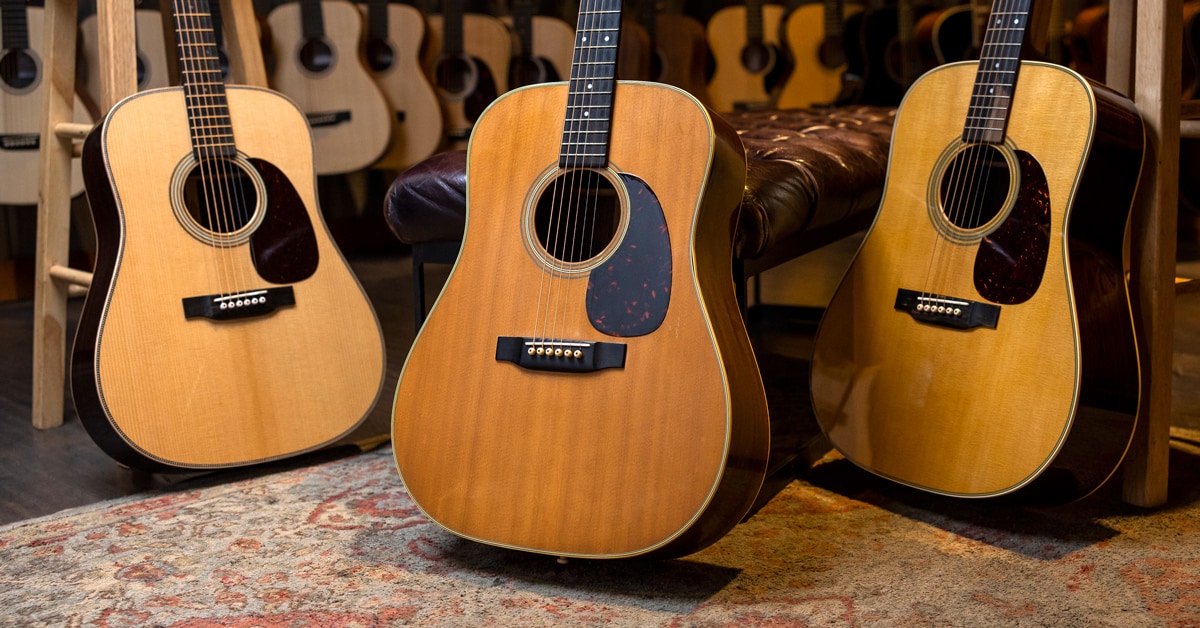
The acoustic guitar's body shape forms the foundation of its tonal character and playing comfort. Dreadnoughts, with their broad shoulders and deep bodies, remain the most popular choice, delivering powerful projection and rich bass response ideal for strumming patterns in country, bluegrass, and rock music. Their larger size produces a fuller, more resonant sound, though some players find them less comfortable during extended playing sessions.
Concert and grand concert bodies offer enhanced comfort through their smaller dimensions while maintaining excellent tonal balance. These bodies particularly suit fingerstyle players and performers who prefer a more intimate sound. Their reduced size creates a more focused midrange projection and improved playing comfort, especially for smaller players or those who perform seated.
Parlor guitars, with their distinctively small dimensions, provide a unique voice characterized by strong midrange presence and excellent clarity. These guitars excel in blues and folk music settings, where their focused sound and enhanced portability prove invaluable. Their comfortable size makes them perfect for travelers or players seeking a more intimate instrument.
Jumbo bodies represent the largest commonly available size, producing massive sound with enhanced bass response and incredible volume. These guitars particularly suit aggressive strummers and performers who need maximum acoustic projection. However, their larger size can challenge some players, making them less suitable for younger musicians or those with smaller frames.
Generally speaking, bigger guitars are more suited towards playing with a pick while smaller guitars are voiced more towards finger-style work.
Bigger guitars are louder, harder to play, and a bit bassier, but they can work in just about any context provided they’re being played by a good musician. Smaller guitars are more oriented towards treble and mid-range frequencies, but if they’re layered into the mix correctly they can work wonders on beefing up your song.
We advise you to try several different body styles and pick the style that is comfortable and the guitar that most inspires you to play.
Parlor/O and the OO
If you’ve ever seen a picture of an old Delta-blues guitarist, odds are they were using a parlor guitar. There are a few reasons that make parlor (or O depending on who you ask) guitars incredibly well suited to that type of music.
Since the parlor guitar is so small, it reaches its full sonic potential much easier than a bigger guitar. So if you’re a finger-style player you’ll get a much better tone with less effort. Parlor guitars were popular for a substantial time, only to be replaced by larger body styles when guitar players started needing extra volume to compete with big band instruments.
The next size up from a parlor guitar, the OO shares a lot of similar features. The primary difference from the parlor guitar is that you get a tad more bass and trade off some mid-range and treble.
These two guitars are combined here because of how wide the designation of parlor guitar is. There is not a set industry standard size for a parlor guitar, and the designation can easily include everything up to a OOO body size depending on how the manufacturer chooses to market the instrument.
OOO/OM
The OOO/OM guitar body styles are generally similar in volume to a dreadnought, but voiced more towards treble and mid-range frequencies.
Both OOO and OM body styles are perfect for musicians who want easy access to very usable flat-picking and finger-picking tones.
An OM guitar always has a more dramatic bend at the soundhole, while a OOO can sport a parlor guitar look.
The main difference between the two different models is scale length. A OOO will have a 24.9" scale length, while an OM will have a scale length of 25.4".
Grand Auditorium
Grand Auditorium body styles sound almost identical to a dreadnoughts. The main difference is that all of the frequencies are a bit tighter.
The Grand Auditorium body style is a great studio instrument, and a guitar that works well in live performance.
Dreadnought
Dreadnoughts work well for flat-picking and finger-picking alike, though the guitar does take more effort to play than smaller sized instruments. For the majority of acoustic guitar players, the dreadnought body style is the most popular.
Round Shoulder Dreadnought
The round shoulder dreadnought is similar to your average dreadnought. It does not have significantly more volume, but it does have a slightly deeper bass response.
Super Jumbo
Designed as a custom instrument in 1937 for the actor/musician Ray Whitely, the Gibson Super Jumbo (sometimes referred to as the SJ-200 or advanced jumbo) has a staggering amount of breadth in its response.
Super Jumbo type bodies don’t have a very deep or focused sound, but in a live performance or studio context this body style is unmatched in its ability to fill out a song.
Tonewoods and Their Impact
Selecting the right woods is a delicate balancing act, with luthiers carefully choosing each element to coax out the desired tonal qualities.
Spruce, particularly the revered Sitka variety, reigns supreme for the top. Its excellent clarity, dynamic range, and projection make it the go-to choice for many players. This wood strikes an ideal balance of strength and flexibility, allowing for powerful strumming while maintaining pristine definition in fingerpicked passages. Engelmann spruce offers similar qualities with a touch more warmth, while the mighty Adirondack spruce delivers maximum headroom for the most aggressive playing styles.
In contrast, cedar tops bring a distinctly different character to the mix. They provide a warmer, more immediate response, with a rich, harmonically complex voice. This makes them a favorite of fingerstyle virtuosos and those seeking a softer, more intimate sound. Cedar's quick reflexes and lush overtones shine in lighter playing, though they can compress under heavy-handed strumming.
But the tonal personality doesn't end with the top wood. The back and sides contribute significantly to the overall package as well. Rosewood, particularly the Indian and Brazilian varieties, add complex overtones and robust bass response, creating a three-dimensional soundscape with excellent projection. Mahogany, on the other hand, delivers a focused midrange with natural compression, making it a popular choice for recording and live performance. And then there's maple, offering bright clarity and exceptional projection, while minimally coloring the top wood's natural voice.
Read our in-depth guide to tonewoods for more information.
Construction and Build Quality
The internal structure of a guitar plays a crucial role in both sound production and structural integrity. Understanding these key components can help players and buyers make more informed choices.
The industry-standard X-bracing pattern, pioneered by Martin, provides excellent structural support while allowing the top to vibrate freely - a vital factor in producing a rich, resonant tone. Variations on this design, like scalloped bracing, remove material from the braces to reduce weight and increase top movement. This enhances bass response and overall volume.
Another important factor is the positioning of the X-brace intersection. Forward-shifting this point closer to the soundhole generally leads to increased bass response and volume. Some manufacturers employ alternative patterns like A-bracing or fan bracing, each offering its own unique tonal characteristics.
Regardless of the specific bracing used, the precision of the brace fitting and the quality of the internal wood selection play a significant role in determining the instrument's voice and longevity. Poorly fitted braces or subpar tonewood choices can compromise the guitar's acoustic properties and structural integrity over time.
Beyond the bracing, the construction of the neck and the methods used to join the body also influence sound and stability. Dovetail neck joints, though more labor-intensive to produce, often provide superior stability and efficient sound transfer compared to bolt-on designs. The quality of internal blocking, the bridge plate material, and the finish thickness all contribute to the overall acoustic properties and durability of the instrument.
Electronics and Modern Features
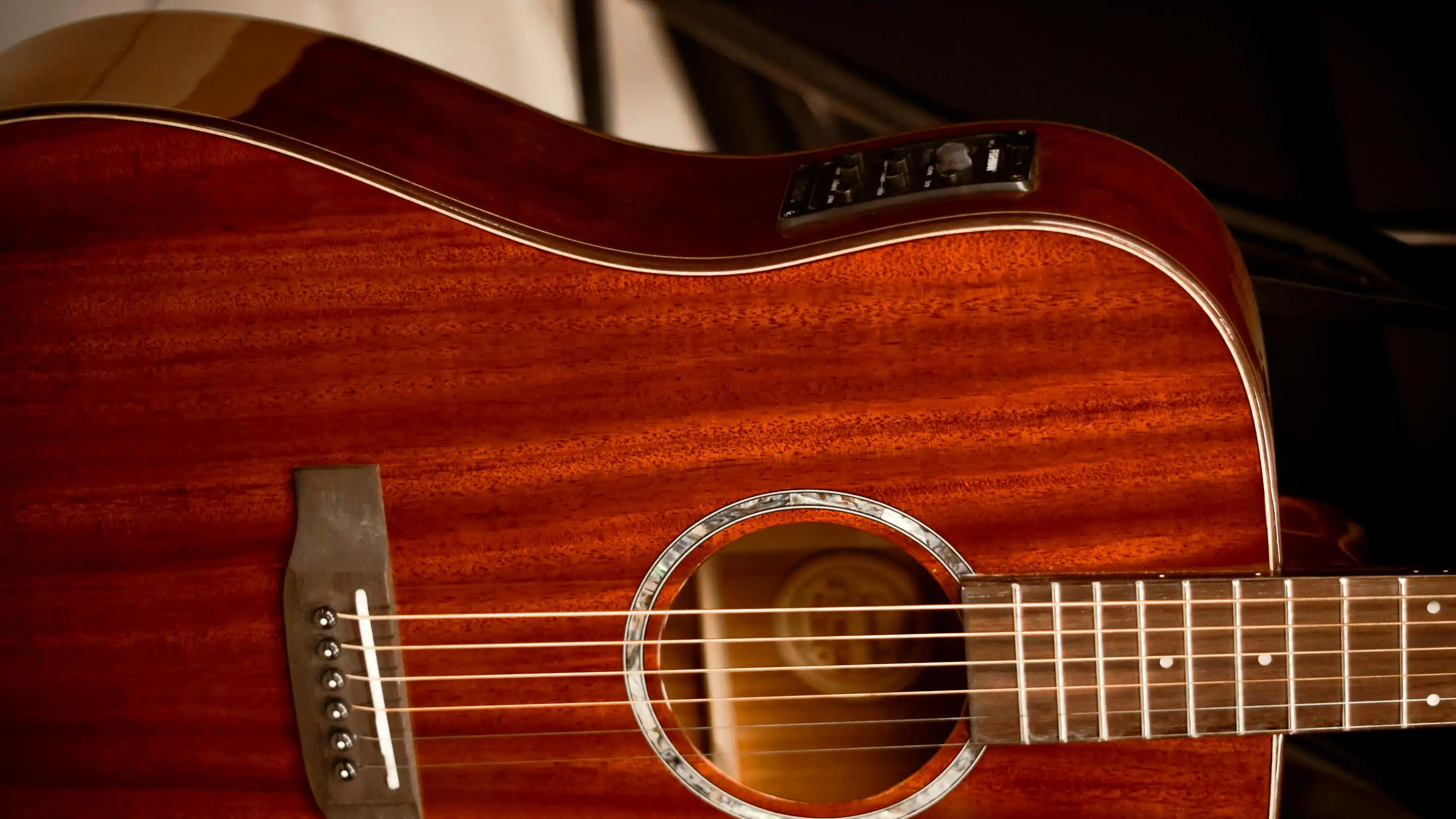
For performing musicians, the quality of onboard electronics becomes an important consideration. Modern acoustic-electric guitars feature sophisticated preamp systems offering multiple bands of EQ, built-in tuners, and various tone-shaping options. Undersaddle piezo pickups provide reliable amplified sound, while magnetic soundhole pickups offer alternative tonal options more resistant to feedback.
More advanced systems might include internal microphones that can be blended with undersaddle pickups for enhanced natural sound. Phase controls help manage feedback issues in live settings, while notch filters can target and eliminate problem frequencies. The placement and design of controls should allow easy access during performance without compromising the instrument's acoustic properties.
Jasmine S-35 Acoustic
4.0 (10)
A budget guitar for beginners.








Average Price: $105
Budget/Beginner
$200
$601+
Budget
Standard
High-end
- Exceptional value for beginners and budget-conscious players
- Warm, long sustain tone impressive for its price range
- Surprisingly comparable to more expensive models
- Ideal for travel and casual jams
- See 4 more
- Action out of the box may require setup
- Some sharp frets need attention
- Laminated body results in a harsher tone than solid wood guitars
- Stiff tuning pegs might be inconvenient for some users
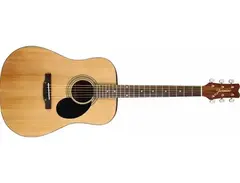
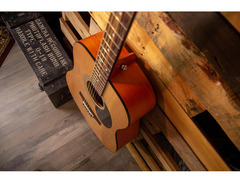
The Jasmine S-35 is the entry level guitar from Takamine, and it’s a good starter guitar that won’t break the bank.
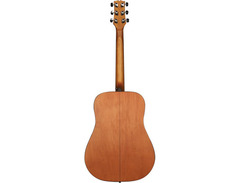
The top is made from laminated spruce, while the back and sides are made from agathis. Spruce is a bright tonewood, emphasizing high end frequencies. Agathis is generally a budget option to approximate the tone of mahogany.
The depth on this dreadnought is nothing short of outstanding given the price. There were no buzzes, fret problems, or finishing problems with the S35. The satin finish helps the guitar sound bright and resonate well.
The S-35 presents a great value for players just starting out.


Taylor GS-Mini
5.0 (33)
The Best Acoustic Guitar for $500


Average Price: $565
Standard/Professional
$200
$601+
Budget
Standard
High-end
- Compact size perfect for travel or casual playing around the house
- Beautiful, warm tone despite smaller size
- High-quality build with a classy satin finish
- Comes with a well-made gig bag for easy transport
- See 6 more
- Tuners may require upgrading for better tuning stability
- Minor cosmetic imperfections noted by some users
- Can buzz with aggressive strumming or heavier picks
- Smaller nut size may not be ideal for players with larger fingers
The Taylor GS Mini represents a masterful compromise between portability and tone, making it an exceptional choice for both traveling musicians and those seeking a compact instrument that doesn't sacrifice sound quality. This scaled-down grand symphony model particularly excels for fingerstyle players and singer-songwriters who need a reliable companion for both practice and performance. While its reduced size might suggest it's primarily for beginners or younger players, the GS Mini has found favor among professionals who appreciate its versatility and portability without compromising on the essential Taylor sound qualities.
The GS Mini's construction showcases Taylor's commitment to quality, featuring a solid Sitka spruce top paired with layered sapele back and sides. The scaled-down grand symphony body measures 23-1/2" in length, 16-1/8" in width, and 4-7/8" in depth, making it notably more manageable than full-sized alternatives. The neck consists of hard rock maple with an ebony fretboard, offering 20 frets with clean inlays. The shortened scale length of 23-1/2" contributes to easier playability, while the patented Taylor neck design ensures consistent action and intonation. The NuBone nut and Micarta saddle enhance sustain and tonal clarity.
Despite its compact dimensions, the GS Mini produces a remarkably full-bodied sound that belies its size. The solid spruce top delivers crisp articulation and excellent projection, while the layered sapele contributes to a warm, balanced tone with surprising depth in the mid-range. The guitar responds exceptionally well to both fingerpicking and strumming, with enough volume to hold its own in small ensemble settings. While it may not match the room-filling presence of a full-sized dreadnought, the GS Mini offers impressive dynamic range and tonal clarity that makes it suitable for recording and performance.
Taylor's reputation for precision manufacturing is evident in the GS Mini's construction. The scaled-down size actually contributes to improved structural integrity, making it less susceptible to the stresses that can affect larger instruments. The layered wood construction of the back and sides offers excellent stability across varying environmental conditions, while the solid spruce top is resilient enough to withstand regular play while allowing the tone to mature over time. The fretwork is immaculate, and the protective finish is both aesthetically pleasing and durable. The included padded gig bag provides adequate protection for travel.
Priced in the mid-range segment, the GS Mini delivers exceptional value for its price point. The combination of Taylor's build quality, practical portability, and impressive sound characteristics makes it a compelling investment for both developing players and professionals seeking a travel instrument. While there are less expensive compact guitars available, few can match the GS Mini's balance of quality, playability, and tone. The guitar's resale value typically remains strong, reflecting its durability and continued market demand. Considering its versatility and construction quality, the GS Mini represents a smart long-term investment for serious players.
See how artists use this








Martin X Series LX1E Little Martin Acoustic-Electric Guitar
4.5 (84)
A travel guitar with full-size tone.



Average Price: $533
Standard/Professional
$200
$1001+
Budget
Standard
High-end
- Perfect size for travel and smaller players
- Superior build quality compared to Baby Taylor
- Rich, full sound despite small size
- Includes a sturdy gig bag with backpack straps
- See 6 more
- Heavy neck can throw off balance
- Factory setup may require adjustments
- Built-in Fishman tuner is imprecise
- Only a one-year warranty for Mexican-made units
- See 1 more
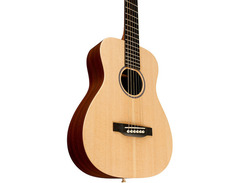
The Martin LX1E has mahogany back and sides, but the solid Sitka spruce top is what really gives this guitar its tone and makes it sound as great as it does. The solid top also receives the same hand rubbed treatment as Martin’s higher end guitars do. Martin’s “Modified” bracing pattern also adds to the tone and durability of the guitar.
Electronically, the Fisherman Isys T electronics gives the player a lot of extra features like a low battery indicator, built-in tuner, in addition to standard controls like volume, phase-reversal switch, and a contour to help with EQ. This all translates into the guitar sounding great unplugged or amped up, and the built-in tuner eliminates your need to buy a tuner or bring another piece of equipment on the road. This model also includes a gig bag, which is convenient for carrying it around, and this guitar becomes a great starter pack featuring all you need to venture into a great acoustic for the beginner.
This guitar has a 23” scale as opposed to Martin’s standard 25.4” scale, making it one of the smallest Martin guitars available. However, the smaller size makes this full-sounding guitar great for younger players, helps beginners learn chords more easily, and helps advanced players create chords their full-sized fretboards might not allow.
After all, if this guitar is good enough for Ed Sheeran and under $500, we are impressed.
See how artists use this










Seagull S6 Original
4.5 (29)
A guitar with warmth and complexity.

Average Price: $636
High-end/Boutique
$200
$601+
Budget
Standard
High-end
- Excellent craftsmanship; attention to detail is evident
- Ready to play out of the box
- Deep sound with emphasized bass
- Wider nut ideal for players with thicker fingers
- See 6 more
- Laminated cherry back and sides may deter purists
- Chunkier "C" shaped neck might be uncomfortable initially
- Original strings may not suit all playing styles
- Headstock design is polarizing
- See 2 more
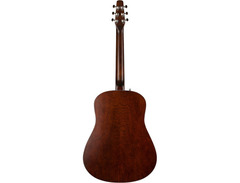
The Seagull S6 Original stands as a testament to intelligent design meeting affordability, making it an excellent choice for intermediate players looking to upgrade from entry-level instruments without breaking the bank. This Canadian-made guitar particularly suits folk musicians, fingerstyle players, and singer-songwriters who appreciate excellent craftsmanship and unique tonal characteristics. Its versatility makes it equally appropriate for home practice, recording, and small venue performances, while its distinctive aesthetics set it apart from traditional designs.
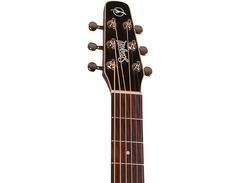
The S6 Original showcases innovative design elements, starting with its solid cedar top, which is pressure-tested for optimal stiffness-to-weight ratio. The back and sides are crafted from wild cherry, a sustainable alternative to traditional tonewoods that offers unique sonic properties. The distinctive tapered headstock increases string tension at the nut, improving tuning stability and reducing the need for string trees. The neck is made from silver leaf maple with a rosewood fingerboard, featuring a slightly wider nut width of 1.8" that benefits fingerstyle players. The compound curve top design enhances structural integrity while contributing to the guitar's distinctive voice.
The cedar top provides a warm, mature tone right out of the box, unlike spruce tops that typically require time to open up. The wild cherry back and sides contribute to a bright, focused sound with excellent mid-range definition and controlled bass response. This combination produces a balanced tone that records exceptionally well and cuts through in live settings without being overly aggressive. The guitar's voice particularly complements fingerstyle playing, offering excellent note separation and sustain. While it excels in intimate settings, the S6 provides enough projection for small ensemble work and can handle various playing styles from delicate fingerpicking to energetic strumming.
Seagull's commitment to quality control is evident in the S6's construction. Each guitar undergoes extensive quality checks at the Canadian factory, ensuring consistent performance and reliability. The pressure-tested solid cedar top is quarter-sawn for stability, while the three-layer laminated cherry back and sides offer excellent resistance to environmental changes. The semi-gloss custom finish protects the wood while allowing it to breathe and vibrate naturally. The integrated set neck design and dual-function truss rod provide excellent stability and adjustability, while the compensated tusq nut and saddle enhance intonation accuracy across the fingerboard.
The Seagull S6 Original delivers exceptional value, offering features and build quality typically found in much more expensive instruments. The use of sustainable, locally-sourced materials not only keeps costs reasonable but also provides environmental benefits. While it may lack the cache of more prestigious brands, the S6's performance and build quality make it a genuine alternative to guitars costing twice as much. The instrument's durability and consistent quality control mean it will serve as a reliable companion for many years, making it an excellent investment for developing players or working musicians on a budget.
See how artists use this










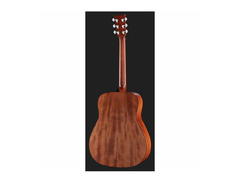
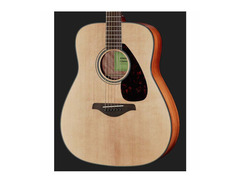
Yamaha FG800M
4.5 (7)

Average Price: $285
Standard/Professional
$200
$601+
Budget
Standard
High-end
- Solid top offers superior tone quality not typical in budget guitars
- Immaculate fretwork enhances playability and comfort
- Stays in tune exceptionally well, reducing maintenance needs
- Offers crisp, clear sound with impressive sustain and volume
- See 4 more
- Factory setup may have high string action, requiring adjustment
- Additional setup may be necessary for fingerstyle players
The Yamaha FG800 stands as a testament to Yamaha's ability to create high-quality instruments at accessible price points, making it an ideal choice for beginners and intermediate players. This guitar particularly suits students, casual players, and those seeking a reliable second instrument without significant investment. Its versatility makes it appropriate for various musical styles, from folk and country to rock and blues, while its forgiving nature helps developing players build confidence and technique.
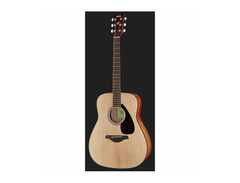
The FG800 features a solid spruce top, a significant feature at its price point, complemented by nato/okume back and sides. The traditional dreadnought body shape provides classic dimensions with a 25.6" scale length, offering familiar comfort and playability. The nato neck supports a walnut fingerboard with 20 frets and simple dot inlays. Yamaha's advanced scalloped bracing pattern, derived from extensive R&D and computer modeling, enhances sound projection and bass response. The die-cast chrome tuners offer reliable tuning stability, while the synthetic bone nut and saddle provide decent tone transfer without the cost of natural materials.
Despite its budget-friendly status, the FG800 produces a surprisingly mature sound, characterized by balanced tone across all frequencies. The solid spruce top, uncommon in this price range, contributes to good dynamic response and projection, while the nato/okume back and sides provide warm, pleasant overtones. The scalloped bracing helps deliver enhanced bass response without muddiness, making the guitar suitable for both strumming and fingerpicking styles. While it may not match the complex harmonics of premium instruments, the FG800's voice remains clear and musical, with enough projection for small performance settings and home recording.
Yamaha's manufacturing expertise shines in the FG800's construction quality, which exceeds expectations for its price point. The finish work is clean and consistent, protecting the instrument while allowing good resonance. The neck joint is solid and stable, contributing to good sustain and string vibration transfer. While some compromises are evident in the choice of materials, such as the laminated back and sides, these choices actually contribute to the guitar's durability, making it less susceptible to environmental changes. The fretwork is clean and even, and the overall setup typically requires minimal adjustment out of the box.
The Yamaha FG800 represents exceptional value for money, offering features and performance that often surpass guitars costing significantly more. The inclusion of a solid spruce top at this price point is particularly noteworthy, as this feature significantly influences sound quality and potential for tonal improvement over time. While it may lack the prestige of more expensive brands, the FG800's combination of playability, sound quality, and durability makes it an excellent choice for beginners or as a reliable backup instrument. The guitar's reputation for longevity and consistent performance further enhances its value proposition, making it a smart choice for budget-conscious players who don't want to compromise on essential quality.
See how artists use this



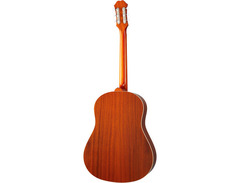
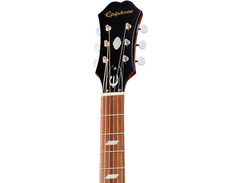
Epiphone 1964 Texan
4.5 (11)
Reissue of a legendary instrument.

Average Price: $746
Standard/Professional
$200
$1001+
Budget
Standard
High-end
The Epiphone Inspired by 1964 Texan is an inexpensive version of a legendary guitar. This reissue is a replica of the guitar that Paul McCartney made famous.
The main difference between the Epiphone Inspired by 1964 Texan and the original Texan guitar is that the reissue features a standard 1 11/16” nut width. The original guitar had a super thin neck for the time (1 5/8”) which while giving the guitar a unique feel would be a bit uncomfortable for musicians used to instruments with wider nuts.
The Epiphone Inspired by 1964 Texan features all solid tonewood construction. The top is a solid spruce, while the back and sides are solid mahogany. A solid wood guitar at this price point is relatively rare.
The Epiphone Inspired by 1964 Texan features a Shadow NanoFlex pickup system. This pickup system is active and features volume and tone controls.
This guitar features a crisp and clear mid-range in addition to bell-like and chiming highs. It has plenty of volume, and is a very articulate and responsive instrument.
This guitar puts a piece of history in every musicians hands, and because it’s relatively affordable it gives aspiring musicians a chance to play a guitar that’s an approximation of an instrument that’s inspired millions.
See how artists use this




Yamaha LL6M
5.0 (1)
Great balance and quality.

Average Price: $611
Standard/Professional
$200
$1001+
Budget
Standard
High-end
- Excellent build quality with attention to detail
- Comfortable C-shaped neck for extended play
- Great value with higher-end features at a lower price
- Versatile tone suitable for both fingerpicking and flatpicking
- See 6 more
- Sound can feel compressed or muffled to some users
- Thick finish may affect resonance
- Lacks solid back and sides (laminate construction)
- Heavier than some other acoustic guitars
- See 1 more
The Yamaha LL6M is a balanced choice and one of the best mid-level guitars made today.
The body style of the Yamaha LL6M also lends it some interesting characteristics. It’s bigger than a standard dreadnought, but it’s not quite as big as other guitars bearing the jumbo moniker.
The standout feature of the LL6M is the innovative Acoustic Resonance Enhancement (A.R.E.) wood top. Essentially, the A.R.E. process is used to replicate the molecular characteristics of an instrument that has been played for years. This results in an instrument that’s both more complex tonally and louder than a similarly sized guitar that has not had the A.R.E. treatment.
The materials used in the LL6M are impressive for a guitar in this price range. It features a solid Engelmann spruce top, which is a bit like the cedar of the spruce family. Engelmann is valued for it’s warmth and complexity. The back and sides of the LL6M are made from made from mahogany, further enhancing the warmth and depth of this guitar. This guitar comes with an SRT Zero Impact pickup, a passive pickup system.
The sound of the Yamaha LL6M ARE can best be described as warm and rich. It is great for any genre where warmth is prioritized over cutting through a mix. Considering it’s price point, it is one of the better options around for singer songwriters. It’s a great performing guitar, and it would sound good on just about any recording.
For it’s price and features it truly is an impressive piece of craftsmanship. If you want a no-nonsense and straightforward dreadnought that sounds big, balanced, and has nice ergonomics, this is the guitar for you.
Gibson J-45
5.0 (73)

Average Price: $2,904
High-end/Boutique
$200
$601+
Budget
Standard
High-end
- Superb craftsmanship with a classic sunburst finish
- Versatile sound suitable for various genres and settings
- Unique tonal profile with vibrant highs and bassy lows
- Comfortable to hold and play, even during long sessions
- See 6 more
- LR Baggs pickup may not meet all users' expectations
- No cutaway, limiting access to upper frets
- High price point, with recent significant price increases
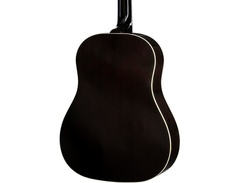
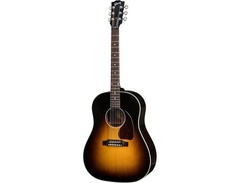
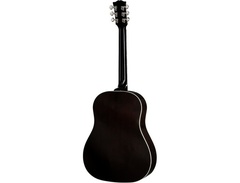
The Gibson J-45, often referred to as "The Workhorse" of acoustic guitars, has earned its legendary status since its introduction in 1942. This round-shoulder dreadnought is particularly suited for professional musicians, recording artists, and serious enthusiasts who appreciate vintage tone and classic aesthetics. The J-45 excels in country, folk, and rock genres, making it an ideal choice for singer-songwriters and rhythm guitarists. Its versatility allows it to seamlessly transition from studio sessions to live performances, while its rich heritage appeals to players who value traditional craftsmanship and time-tested design.
The J-45's classic design features a solid Sitka spruce top paired with solid mahogany back and sides, creating the foundation for its iconic sound. The traditional round-shoulder dreadnought body shape measures 16-1/4" wide at the lower bout, with a scale length of 24.75". The mahogany neck features a rosewood fretboard with 20 frets and classic dot inlays. Modern improvements include a compound dovetail neck joint, hand-scalloped X-bracing, and bone nut and saddle. The traditional sunburst finish not only provides aesthetic appeal but also helps disguise any wood grain inconsistencies, a practical consideration dating back to its wartime origins.
The J-45's sonic signature is characterized by a warm, full-bodied tone with pronounced mid-range presence and controlled bass response. The mahogany back and sides contribute to a focused sound with excellent projection, while the spruce top adds clarity and definition to individual notes. This guitar particularly shines in recording situations, where its balanced frequency response requires minimal EQ adjustment. The instrument responds dynamically to different playing styles, offering subtle nuances for fingerpicking while maintaining enough headroom for aggressive strumming. Its slightly compressed sound helps control unwanted overtones, making it particularly suited for ensemble playing and vocal accompaniment.
Gibson's dedication to traditional craftsmanship is evident in every aspect of the J-45's construction. The nitrocellulose lacquer finish allows the wood to breathe and age naturally, contributing to the instrument's tonal development over time. The hand-fitted dovetail neck joint ensures optimal vibration transfer between body and neck, while the traditional hide glue construction enhances resonance. Modern manufacturing techniques have improved consistency while maintaining the essential character that made the original J-45s legendary. The vintage-style tuners offer smooth operation and reliable tuning stability, while the bridge plate and bracing are engineered for long-term structural integrity.
With a retail price in thr thousands, the Gibson J-45 represents a significant investment. However, its value proposition extends beyond mere specifications. The combination of premium materials, skilled craftsmanship, and legendary tone justifies the price for serious musicians. The guitar's ability to appreciate in value over time, particularly with proper care, makes it a sound long-term investment. While less expensive alternatives exist, the J-45's unique combination of playability, tone, and heritage creates a compelling package for those seeking a professional-grade instrument with proven reliability and timeless appeal.
See how artists use this




Martin D-28
5.0 (46)
The Dreadnought Gold Standard
-s.webp?v=1784804860)

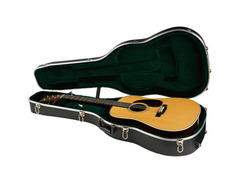
Average Price: $3,067
High-end/Boutique
$200
$601+
Budget
Standard
High-end
- Renowned for its articulate and thunderous sound, suitable for various music styles
- Simple yet elegant design with high-quality materials, no unnecessary embellishments
- Wide fretboard offers unique playability, reminiscent of a sitar
- Consistently praised for its beautiful and balanced tone
- See 6 more
- High action out of the box may require professional setup
- Not the easiest acoustic to play for beginners due to fret precision demands
- May distract from other responsibilities due to its captivating nature
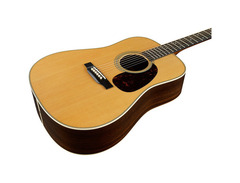
The Martin D-28, widely regarded as the benchmark for dreadnought acoustic guitars, represents the pinnacle of traditional acoustic guitar craftsmanship. This iconic instrument is particularly suited for professional musicians, serious collectors, and players who demand the ultimate in acoustic tone and projection. It excels in bluegrass, country, and folk music settings, where its powerful voice and rich harmonic content can truly shine. The D-28 is especially favored by flatpickers and rhythm players who need a guitar that can cut through in ensemble situations while maintaining tonal clarity and definition.
The D-28's construction features premium East Indian rosewood back and sides paired with a solid Sitka spruce top, the classic tonewood combination that has defined acoustic guitar sound for generations. The traditional dreadnought body measures 15.4" at the lower bout, with a standard scale length of 25.4". The mahogany neck features a modern high-performance taper for improved playability, while the ebony fingerboard hosts 20 frets with classic snowflake inlays. Forward-shifted X-bracing enhances bass response and overall volume, while the bone nut and saddle maximize string vibration transfer. Modern refinements include a composite bridge plate and upgraded tuning machines, maintaining tradition while incorporating contemporary improvements.
The D-28's sonic signature is characterized by powerful bass response, crystalline trebles, and complex harmonic overtones that have made it the standard against which other acoustics are judged. The rosewood back and sides contribute to a deep, rich bottom end with pronounced resonance and sustain, while the Sitka spruce top provides exceptional dynamic range and clarity. This combination produces the legendary "Martin boom" - a powerful, room-filling sound that remains articulate even under aggressive playing. The guitar responds beautifully to both delicate fingerpicking and powerful strumming, with each note ringing clear and true. Its balanced frequency response makes it particularly suitable for recording, where its natural EQ requires minimal adjustment.
Martin's legendary attention to detail is evident in every aspect of the D-28's construction. The nitrocellulose lacquer finish allows the wood to age and vibrate naturally, contributing to the instrument's tonal development over time. The dovetail neck joint ensures optimal energy transfer between body and neck, while the hand-fitted bracing is precisely scaled and positioned for maximum resonance. Quality control at Martin's Nazareth, Pennsylvania facility remains exemplary, with each instrument receiving careful attention during assembly and setup. The improved bridge plate design adds structural stability without compromising tone, while modern manufacturing techniques ensure consistency while maintaining traditional craft values.
No doubt, the Martin D-28 represents a significant investment. However, its value proposition extends beyond immediate gratification. The combination of premium materials, unmatched craftsmanship, and iconic tone has made the D-28 a benchmark for professional acoustic guitars. These instruments typically maintain their value exceptionally well, often appreciating over time when properly maintained. While the initial cost may be substantial, the D-28's longevity, reliability, and potential for appreciation make it a sound investment for serious musicians and collectors who understand the value of owning a piece of musical history.
See how artists use this








Essential Accessories for Acoustic Guitar Players
A well-chosen set of accessories can significantly enhance your playing experience and help maintain your instrument's condition. Let's explore each essential accessory in detail.
Guitar Picks
The humble guitar pick plays a crucial role in shaping your tone and technique. Start with a variety of thicknesses:
- Thin picks (0.46-0.60mm): Perfect for strumming patterns, offering flexibility and bright tone
- Medium picks (0.60-0.80mm): Versatile options suitable for both strumming and lead playing
- Thick picks (0.80-1.20mm): Ideal for precise lead work and bass-heavy playing
Consider materials like celluloid for traditional feel, Ultex for durability, and nylon for warm tones. Many players keep a selection of picks to suit different playing styles and musical genres.
Guitar Strings
String selection dramatically impacts your guitar's voice and playability. Phosphor bronze strings remain the most popular choice, offering warm, rich tones ideal for most acoustic styles. The 80/20 bronze strings provide brighter, crisper sound with enhanced projection. Consider these factors when choosing strings:
- String gauge: Light strings (0.012-0.053) favor fingerpicking, while medium strings (0.013-0.056) offer fuller tone
- Coated vs. uncoated: Coated strings last longer but cost more and slightly dampen tone
- Core shape: Hexagonal cores provide bright attack, while round cores offer smoother sound
Keep multiple sets on hand, as regular string changes maintain optimal tone and prevent corrosion issues.
Capos
A capo is a small clamp-like device that is placed across the strings of a guitar, typically at a specific fret. By raising the pitch of the open strings, a capo allows guitarists to play in different keys without having to change their fingering or chord shapes. A quality capo proves essential for expanding your playing possibilities and exploring different keys without complex barre chords. Consider these options:
- Spring-loaded capos: Offer quick position changes and consistent pressure
- Screw-adjusted capos: Provide precise tension control for optimal tuning
- Partial capos: Enable creative alternate tunings and unique chord voicings
Choose a capo that maintains consistent pressure across all strings to prevent buzzing and tuning issues.
Protection Accessories
Protecting your investment requires several key accessories:
- Hardshell case: Provides maximum protection for valuable instruments during storage and transport
- Padded gig bag: Offers convenient transportation for daily use while maintaining decent protection
- Humidifier: Essential in dry climates to prevent wood cracking and joint separation
- Microfiber cleaning cloth: Removes fingerprints and dust without scratching the finish
Tuning and Maintenance Tools
Regular maintenance ensures optimal performance and longevity:
- Electronic tuner: Choose between clip-on models for convenience or pedal tuners for enhanced accuracy
- String winder: Speeds up string changes and reduces hand fatigue
- Multi-tool: Includes essential hex wrenches and screwdrivers for basic adjustments
- Action gauge: Helps monitor and maintain proper string height
- Truss rod wrench: Enables neck relief adjustments when necessary
Support and Comfort Items
Enhance your playing comfort with these accessories:
- Guitar strap: Choose wide, padded designs for extended playing comfort
- Strap locks: Prevent accidental drops during performance
- Support stool: Maintains proper playing position during seated performance
- Pick holder: Keeps spare picks readily accessible during play
- Guitar stand: Provides safe, accessible storage while preventing wall damage
Recording and Performance Gear
For performers and recording enthusiasts:
- Acoustic preamp: Enhances amplified tone and provides additional control options
- DI box: Ensures clean signal transmission to mixing boards
- Soundhole cover: Prevents feedback during amplified performance
- Microphone stand: Enables optimal mic placement for recording or performance
- Cable management: Keeps instrument cables organized and prevents wear
Conclusion and Final Tips
Let's be honest - choosing your ideal acoustic guitar is like finding a musical soulmate. It's not just about the specs or the price tag; it's about that magical moment when you strum your first chord and think, "Yes, this is the one!"
Think of your guitar search as a musical adventure. Are you drawn to the thunderous voice of a dreadnought, perfect for those passionate campfire sing-alongs? Or perhaps you're seeking the intimate warmth of a concert-size companion for late-night songwriting sessions? Each body shape tells its own story - just like the tonewoods that bring it to life. A spruce top might give you that crisp, immediate response that makes every note sparkle, while cedar wraps your music in a warm, mellow embrace.
Here's our golden rule: let your ears and hands be your guide. Specs and reviews (like ours!) are great starting points, but nothing beats the experience of playing a guitar in person. Visit your local guitar shop, sit down with different models, and take your time. Close your eyes, strum a few chords, play your favorite riff. When the right guitar speaks to you, you'll know.
Top Ranked Acoustic Guitars on Equipboard


-m.webp?v=1784804860)
-m.webp?v=1784844515)

About the authors
Mason is a freelance music gear writer that contributes to Equipboard, Reverb, TuneCore, Music Aficionado, and more. He plays the guitar and mandolin and resides in Wyoming. Read more












.webp)