Joe Satriani
Role
Role
Joe Satriani's Gear


Featured in this November 20, 2011 Tumblr post.
‘32 Martin OM-28 Lightest and loudest acoustic guitar I’ve ever played!
Find it on:


Featured in this November 29, 2011 Tumblr post.
This beauty may need a more suitable owner soon. It’s a ‘58/'59
Find it on:


Used while composing Engines of Creation, as mentioned in Strange Beautiful Music: A Musical Memoir.
Compositionally, each song was built differently. I’d decided to work with a new piece of gear this time around, the Kurzweil K2000, a digital audio workstation (DAW) keyboard with these beautiful sounds in it. I’m not a keyboard player primarily, but whenever the mood struck me, I would turn that keyboard on, push RECORD, and just improvise. The DAW made it so easy and fun, so I started to use the keyboard as a writing tool for some of the songs, especially “Borg Sex,” “Until We Say Goodbye,” “Champagne?,” “Attack,” and “Slow and Easy.” Some of those keyboard performances wound up on the final recordings, too. Once I realized how simple it was, I could email Eric a MIDI file that he could open up and assign almost any sound to it he wanted. I could also send Eric a little audio file to cue him to the kind of sounds I was looking for.
Find it on:

Used for lead guitar on Not of This Earth, as stated by producer John Cuniberti in Strange Beautiful Music: A Musical Memoir. Satriani later writes that a unit was acquired for Studio 21 and first used for Is There Love in Space?.
Not of This Earth
John Cuniberti: As far as effects pedals, Joe was primarily playing through his orange Boss DS-1 Distortion pedal and CE-2 Chorus and that was pretty much it. All the echo-delay types of effects—reverbs, chorusing—we did with outboard gear. Typically, I would use a Universal Audio 1176 limiter for rhythm guitars and bass, and a Universal Audio LA-2A limiter for melodies and occasionally solos. Because again, those were limiters you would use for a singer, and since Joe’s phrasing and playing and arranging were that way, I tended to use the same processors as I would if there were people singing. An LA-2A’s not unusual for lead vocals, so of course that’s what I’d use on Joe’s melodies.
Is There Love in Space?
Before reuniting with John Cuniberti, Matt Bissonette, and Jeff Campitelli to record Is There Love in Space?, I started recording the new songs at Studio 21, my home studio, trying once again to break my own style down and rebuild it into something new. I was deeper into Pro Tools now and having much more success and fun with it. The new record would feature quite a bit of compositional variety, with lyrical-sounding melodies and more angular-sounding solos—and two vocal tracks!
At Studio 21, I was using a Korg Triton DAW keyboard, Universal Audio 1176 and LA-2A compressor/limiters, an Empirical Labs EL8S, old API EQs, the Millennia Media STT-1 mic pre, and Palmer speaker simulators. For guitar amps I had an interesting collection: Soldano, Mesa Boogie, Cornford, Vox, Wells, and several vintage Marshalls. Added to that group was my new Peavey JSX prototype head. Everything just started to sound better!
Find it on:

Featured in this October 9, 2020 video by IK Multimedia.
Find it on:

Used on "I Just Wanna Rock", as can be seen the mini-documentary of the recording of Professor Satchafunkilus and the Musterion of Rock starting at 4:37. It is also mentioned in this November 15, 2008 Ultimate Guitar interview. Satriani explained the recording process in this September 25, 2008 Guitar World interview.
Guitar World
GW Tell me about how you recorded all of the voices on the soon-to-be audience-participation favorite “I Just Wanna Rock.”
SATRIANI [laughs] It wasn’t as easy as you would think. People assume recording large groups of people is no biggie: you just gather everybody ’round a mic and—boom!—you’re done. Not so. After three or four passes, if you’re trying to record a crowd, or if you’re trying to make what sounds like a crowd with multiple tracks, the vocals can get in the way of the music.
GW And the voice of the robot on that track?
SATRIANI That’s my voice, recorded three times and heavily distorted, going [in a robotic voice]: “What is your purpose?” That’s what the robot is saying to the crowd. I was using low-fi distortion, a SansAmp and a couple of different plug-ins to change the intensity of my voice. But on the part where the robot is getting into it and saying, “I wanna rock! I wanna rock with you!” I used my Talk Box. I’d been threatening to use my Talk Box for years, but I couldn’t remember how to position the tube in my mouth. So I called ZZ in the room and said, “You gotta help me figure out how to work this thing.”
GW I’m trying to imagine what goes through a 15-year-old’s head: “Aw, jeez. I gotta help my dad with his damn Talk Box!” Are you “cool dad” when this happens, or “dorky dad”?
SATRIANI [laughs] Dorky dad, definitely! Face it: the human race has to progress, and that means that the younger generation will always be cooler than their parents.
GW Even if their parents are in the next room playing with a Talk Box?
SATRIANI Especially if their parents are in the next room playing with a Talk Box! [laughs]
Ultimate Guitar
What is your purpose? I couldn't tell what he was saying. Sorry.
I know, me neither. [laughs] It's very distorted. I recorded that at home, first. It was the first thing I recorded to see if it would be funny enough, you know? Once I got that I thought, Oh, that's cool. Then I thought, Well, then what happens? So I thought, Ok, he goes to a rock concert and it starts to humanize him and he wants to rock but he doesn't know how. So he starts to say, I wanna rock, I wanna rock, I wanna learn how to rock with you. And I looked around my room and I'm thinking, I need something to plug into that makes him less of a robot. And my eyes caught the Framptone talkbox, which I had been desperately trying to use for three records and I could just never come up with anything creative that was better than Peter Frampton or Richie Sambora or Joe Walsh, you know? [laughs]
But then I thought, Ah, ok, its not me it's the robot! So I used the talkbox to be that sound of the robot having rock 'n roll change its life. Then I recorded that and thought, Ok, now I can build a song around this. So then I wrote the song actually around those two recorded bits. Yeah, it's crazy.
Find it on:

A Voodoo Lab Pedal Power 2+ Power Supply appears at 1:35 in this rundown video of Joe Satriani's rig.
Find it on:

"With the straps we started with a big line and sort of edited down to sort of the best we had come up with. Of course, I'm using them now on stage and it’s a really strange thrill to look down once in a while when I'm playing and I see something that I've drawn hanging around me - it's pretty cool. The fact that we have the straps that I really like to wear is crucial, obviously. The material and the functionality that I like is important, so we got two things together: the art work and the function."
Find it on:

"Look at this finish - it's beautiful! It took us quite a while to find the right tones for this color, but I think this thing looks fantastic on stage. This guitar has the JSA body shape and the top is the solid englemann spruce top. That, of course, creates that beautiful sound. It's very responsive, great tone sounding wood. The JSA20 has got solid Rosewood on the back and sides - it's a beautiful pattern. The neck is a mahogany neck. The JSA line has a very comfortable neck for players of the electric guitar; I think they'll feel right at home. And you can play up way the neck - the intonation is fantastic! That transition from electric guitar to acoustic in the middle of a show is a piece of cake because of the way we built the neck and the feel of the fretboard. That's a very important point for me. In the JSA20, we've got the Fishman Acoustic Matrix pickup system and also the Fishman Aura Pro preamp, with presets by me. Of course, it's got an Onboard tuner, which is really cool. This is something that has been a new change for us in the JSA line. I thought that they built this guitar so good that I don't mind them putting a little hole up here and sticking some electronics there. That was my first concern with the original JSA, but I think that we've evolved the design of the guitar. So now we have this unit in it that sounds fantastic. We've got chrome Grover Tuners on it. They're fantastic, very accurate and got great tension on them. It also has Abalone rosette and body binding. The bridge and the fretboard are ebony. I've always liked that look as well as the sound. I think these guitars actually come strung up, so they use D'Addario EXP strings - which are the best!"
Find it on:

As seen on his official website, Joe has a classic 1958 Gibson ES-225 in his collection.
Find it on:

"The Cherry Red double-cutaway. I got that at Gruhn’s, in Nashville. I loved that guitar up until two weeks ago, when we did the photo shoot. I was like, “How come I haven’t played this recently?” So I plugged it into Sam’s half-stack there in the studio, and I just didn’t get anything from it. I was like, “Oh no,” which is the beginning of the reverse neurosis, where I tell myself, “I have to get rid of this because…”
Find it on:

"I struggled with that guitar. It’s one of those where you open the case, look at it, smell it, and fall in love. But if I can’t figure out how to play good music on it, eventually it starts to bother me that I’ve got this expensive guitar and there’s 100 guys out there who could play beautiful music on it. Instead, it’s in my closet. That really bothers me. It and the Cherry Red Special are on the list labeled “Maybe I should sell them and find another Hagstrom III or something…” (laughs) Who knows?"
Find it on:

"Michael Pearce got that for me. I’d mentioned to him I wanted one. I had a Rickenbacker and he said, “A lot of people who say they used the Rickenbacker, actually used Fender XII.” So he shows up one day with this beautiful Candy Apple Red XII, and I put it on just about every record. It’s just an amazing-sounding guitar. I learned that it does what the Rickenbacker doesn’t – but it doesn’t do what the Rickenbacker does (laughs)! The Rickenbacker goes “twang” like nothing else. Put it into an AC30, turn it up, and it’s the ultimate “fairy dust” guitar, for if you need a little sparkle for a bridge or chorus. Anytime I have difficult parts to play that need to be mellow, and not overtly twangy, I use the Fender. There’s a song called “Cool New Way,” on the Super Colossal record that’s just guitars with harmonics – no chording – and I put the Fender on the left channel and the Rickenbacker on the right, and they complemented each other so well. It led me to create the Ibanez JS-1200, and I actually took detailed pictures of this guitar’s finish and told Ibanez, “It would be nice to have a JS with this color.”
Find it on:

Satriani used this ’59 Gibson ES-335 on “Somethin’ Gone Wrong,” from Chickenfoot III.
Find it on:

Featured on Satriani's official Radial artist page.
The Reamp is the recording guitar player's best friend. It works great with bass and keyboards too. There is no other device out there that can take a recorded DI performance and have the amp receive it exactly as it would if you were plugging your guitar, or, bass straight in the input.
Find it on:


Listed under Satriani's Fulltone artist page.
Find it on:

The JS20th celebrates the 20 year association and collaboration between Joe Satriani and Ibanez Guitars.
Find it on:

"I have three original Donnie Hunt guitars. Donnie was an artist in the Bay Area who passed away a couple of years ago. He taught art at the Oakland School of Arts and Crafts, and basically painted everything in his environment – his loft, his phone, refrigerator, shoes, jackets, whatever. I had him paint a couple of guitars, then took him to Ibanez, and they basically hired him. I think he painted 300 versions, all incredibly different. Donnie also did a lot of embarrassing clothing from my early career! It was thrift-store stuff – very difficult to clean on the road! I originally had four of them, but my favorite one was stolen."
Find it on:

Listed for sale on Bananas at Large's website.
Find it on:

Listed for sale on Bananas at Large's website.
Find it on:

Joe Satriani's Moog Moogerfooger MF-104Z Analog Delay, part of his private collection, is listed for sale on Bananas at Large's website.
Find it on:

Joe Satriani uses the Way Huge Saucy Box Overdrive pedal, as evidenced by its listing on Reverb.com by Bananas at Large.
Find it on:

This Yankee HS-M12 Power Supply was part of Joe Satriani's private collection, as listed on Reverb.com by Bananas at Large.
Find it on:

"[Interviwer:] Which guitars do we hear on *What Happens Next?*
[Satriani:] It was a small group: my MCO, my MCP [Muscle Car Purple], and my JS25ART. The three guitars I had on tour wound up being the main guitars. Every once in awhile we’d throw in, you know, maybe a custom shop Strat or a Flying V or a Les Paul to be a twin to a JS guitar if we thought we needed something."
Find it on:

"Last year, to commemorate 25 years of Joe Satriani's celebrated JS signature guitar, Joe illustrated 50 black JS guitars with his unique and colorful graphic style. Each instrument was transformed into a one-of-a kind work of art and became known as the JS25ART guitars. The success of these guitars has inspired a 2nd release—the Limited Edition JSART2 guitars.
For this latest limited edition series, Joe started with a number of white JS signature guitars, and turned each one into a unique sonic piece of art. Illustrated by hand, no two are alike— a true testament to the guitar legend's bold creativity, both as an artist and a musician."
Find it on:

Listed on and sold on Bananas at Large's website. Despite the deletion of the listing, its URL still exists. The listing is further survived by this Pinterest post from Bananas at Large.
Find it on:

Visible at 3:17 in this documentary of the making of Satriani’s eponymous 1995 album.
Find it on:

To honor the world-renowned Joe Satriani Signature Series , the Ibanez R&D team worked closely with Joe to develop a finish that was worthy of both Joe's approval, and of the Chrome Boy moniker. Each and every JS1 Chrome Boy will have passed stringent Ibanez quality control standards, however due to the unique nature of this striking finish, some minor imperfections may be expected, are considered normal -ON the Ibanez website He's also promoting it in this video- https://www.youtube.com/watch?v=OfdGUyYwrVo
Find it on:

"The process of writing, arranging and ultimately recording began in Satriani's home studio, a spaceship-like enclave containing a Pro Tools HD2 system running on an Apple G5, a set of Roland V-Drums, a couple of keyboards and, of course, a whole lot of guitar amps."
Find it on:
This is a community-built gear list for Joe Satriani.
- Find relevant music gear like Guitars, Amplifiers, Effects Pedals, and other instruments and add it to Joe Satriani.
- The best places to look for gear usage are typically on the artist's social media, YouTube, live performance images, and interviews.
- To receive email updates when Joe Satriani is seen with new gear, follow the artist.
Discography




Album Credits
-
Always with Me, Always with You
Joe Satriani · 2024
Producer Programmer -
Joe Satriani · 2020
Producer Recording Engineer -
Bryan Beller · 2019
Recording Engineer -
Joe Satriani · 2018
Recording Engineer -

Joe Satriani · 2015
Producer -
Joe Satriani · 2013
Producer -
Joe Satriani · 2012
Producer -

Black Swans and Wormhole Wizards
Joe Satriani · 2010
Producer -
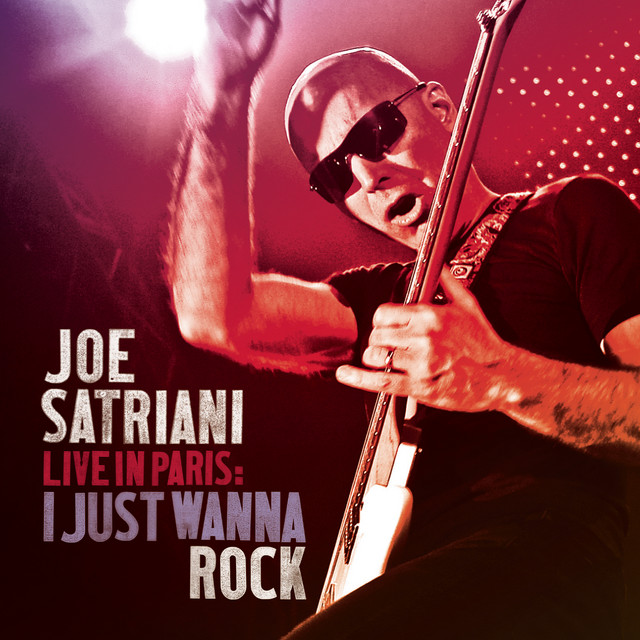
Live in Paris: I Just Wanna Rock
Joe Satriani · 2010
Producer -
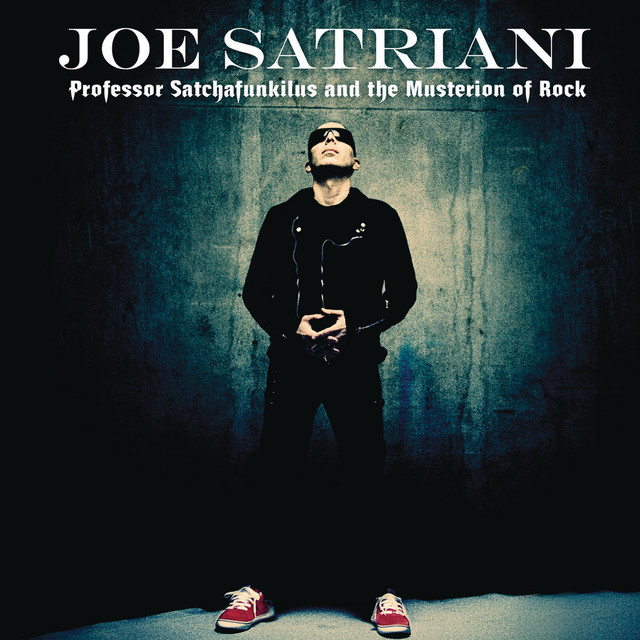
Professor Satchafunkilus and the Musterion of Rock
Joe Satriani · 2008
Mixing Engineer Producer -
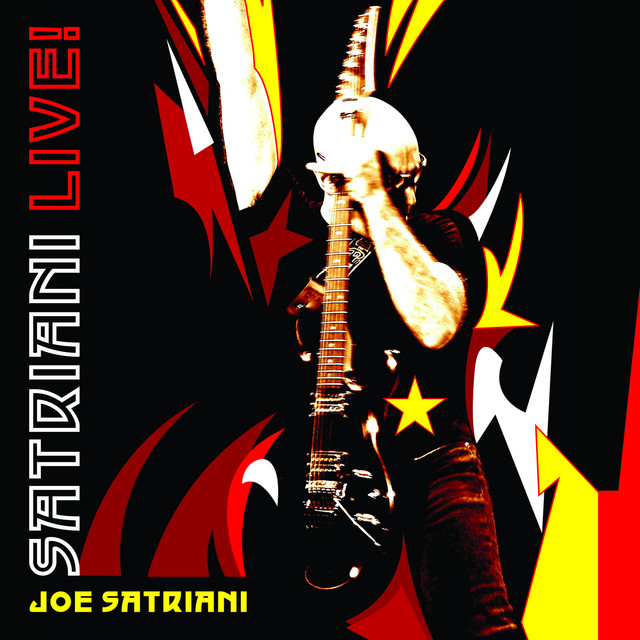
Joe Satriani · 2006
Producer -
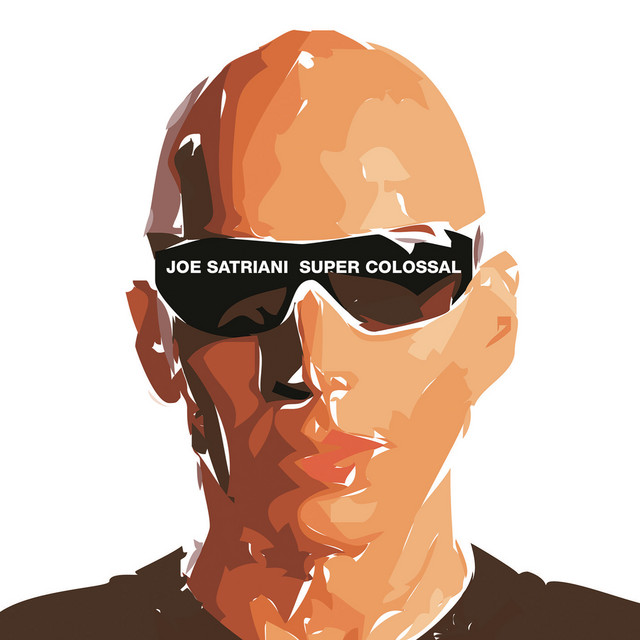
Joe Satriani · 2006
Engineer Producer






.webp)