
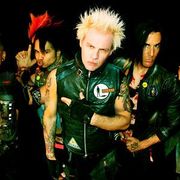
Jonathan Davis
vocalist for Korn
Genre
Genre
Jonathan Davis' Gear


At the end of this article about Giger's death it says "He was also the man who created Korn singer Jonathan Davis’ microphone stand. The stand is titled ‘The Bitch’ and has been used by Davis since 2002."
Find it on:


Jonathan can be seen playing the guitar at 1:20:53 in this video.
Find it on:

We did a big mic shoot out and settled on 2- an M49 that Barbra Streisand apparently rented when she recorded in LA and....an AT 4047. We were really surprised that it came down to these two, drastically different mics. Jonathan made the final decision when he announced that he refused to sing through a microphone that was neither old, attractive or expensive.
Find it on:


Used during recording of the Untitled album. Seen at 19:26.
Find it on:

This is all I’ve got now; I used to have racks of stuff. I record vocals, guitar and bass into an Apple MacBook Pro through a signal chain comprising little more than the Antelope Eclipse 384, an API Channel Strip and a Shure microphone.
Find it on:

A wireless KSM8 was used during Jonathans solo tour in 2018 which is mentioned at 1:53 in this interview.
Find it on:

Jonathan can be seen using the Open Labs Miko in episode 5 of "Through The Black Labyrinth".
Find it on:

In an article by EMusician titled "Frank Talk from Filipetti," it is mentioned that Jonathan Davis used a Neumann M 49 microphone on a previous record.
Find it on:

Jonathan can be seen using a Beta 87 wireless model with a Black and Blue replacement grill.
Find it on:

This is all I’ve got now; I used to have racks of stuff. I record vocals, guitar and bass into an Apple MacBook Pro through a signal chain comprising little more than the Antelope Eclipse 384, an API Channel Strip and a Shure microphone.
Find it on:

Jonathan can be seen recording with his CU-44X microphone at 3:42.
Find it on:


Seen tracking vocals with LCD XC headphones in an Instagram post.
Find it on:




Jonathan Davis, frontman of Korn, has been observed using a wireless version of the Shure Beta 57A microphone. While Shure doesn't officially offer a wireless Beta 57A, it can be achieved by modifying a wireless Beta 58A with a 57A's grille, as both models share the same capsule. This setup was mentioned in Revolver's article highlighting Davis' top vocal performances.
Find it on:

Jonathan used a wireless SM58 for solo shows in 2008 and can be seen at 0:08.
Find it on:


My favorite plug-ins are FabFilter Pro-Q, Saturn, and Volcano 2. I love the fact that I can look at a spectrum analyzer that's built in - I can carve it out while I'm looking at it. It's amazing!
Find it on:
-m.webp?v=1783575648)
On the previous record, we used a Neumann M 49. On this one, we used a Sanken CU44X into a Tube-Tech MP 1A mic pre, then into the line-in of a Neve 1073 mic pre, for a little EQ tweak. Out of there, it went into an 1176 and a Massenberg EQ. From there into a dB [now Lavery Engineering] converter ahead of the R1.
Find it on:

For vocals, the idea was to get Jonathan to fit and hold his own against a really intense wall of sound. I had consistently used Neve 1073's, but Frank Filipetti suggested we try a Tube Tech MP1A. We did a shoot out with every pre in the room and subsequently, I never went back to Neve's again. After the MP1A, we had a Rev D 1176 LN, then a MASSENBURG 8200 and, I'm pretty sure an inline1081 from the console at Village Recorder. Later, we added a DBX160SL on the back end of that chain because it seemed to add nice presence and top end.
Find it on:

Used on "Did My Time", as stated by Davis in this transcribed March 2005 interview.
KORN
"I Did My Time"
Producer: Jonathan Davis of Korn
Engineer: Frank Filipetti
"It's about clarity," says Korn frontman/producer Jonathan Davis, "especially with my stuff cause there's so much low-end and sh-t going on. A lot of mixes can come out not really that clear, and that's one of the reasons I love Frank, because he records great vocals. So any vocals that I do or produce, it has to be about clarity. I have a couple mics that I really like to use; the Sanken is one of my main ones. It's all about not f--kin' with it - just a little bit of compression, that's it."
Signal Path: Tracking
"I was out on the road at the time writing the lyrics," says Jonathan. "I sang a verse in New Orleans and shipped it off to Frank on Pro Tools, so actually we used two different mics when I recorded that. The first was a [Neumann] U 47 with my chain, my preamp [Tube-Tech MP 1A], and the stuff I did at the house [ElemenTree Studios] with Frank was a different process. We used the Sanken [CMU-44]. But with Frank, he totally knows. I listen to it and I really don't have to say anything, 'cause Frank knows me."
"The vocal signal path I used for Jonathan is a Sanken CMU-44, into a TUBE-TECH MP-1A mic pre," adds Filipetti. "From there it went to a Neve 1073, then into the [Universal Audio] 1176, and from there to a GML EQ. Then I brought it into the tape monitor on the SSL 6000, then to the Euphonix R-1. We also used the DBX 160SL on the return on playback to vary the levels slightly, but we didn't record with it. That was part of the chain as well. It's about 85% of what we came up with on the last record with some slight modifications. It's a different console to begin with and a different microphone. The mic we used the last time was an M 49. We chose the Sanken because it just has the best overall combination of lows and highs.
"Jonathan has a very powerful voice," he continues, "especially when he starts to get into it. Some mics pick up the low level detail very well and some mics can hold themselves with screaming really well, but this seemed to have a good combination of both. We were able to get a nice quality between Jonathan singing softly and Jonathan screaming out full-bore. After comparing a lot of other mics, we ended up with the Sanken. In fact the top two mics were the Sanken and the [Audio-Technica] AT4060."
As for the other key components in the chain, Filipetti explains: "The Tube-Tech provides the presence. It has more presence than any other mic pre that I've used and it has an incredible midrange. The 1073 was there just to add a little bit of that Neve crunch - we ran it pretty hot. And I also used a tiny bit of the low frequency and the high frequency EQ. Then I went to the 1176; after trying out a bunch of compressors on Jonathan's voice, the 1176 worked out best. It just seemed to hit him properly. We used that real high-end stuff on the GML, which added that over-end air, which it does incredibly well, and then brought it into the console. On some tracks at the end of the chain we added a DBX 160SL. On a couple tracks that just added a punch that worked out really nicely."
Vocal Philosophy
"My objective with Jonathan is what it is with everybody," says Filipetti. "Basically, the song lives and dies with the vocal. I tend to gravitate toward and work with singers who have real personality. I'm not looking for dancers who are singers. My approach is to make sure that all of that personality comes out; I don't want anything to get lost. I'm looking for all the little quirks and the harmonic things in their voice that make them special, and I look to bring that out. Sometimes it's a matter of just putting the proper mic in front of them. Sometimes it's a matter of adding more things in the chain, but basically, like I do with everyone, I always listen in the room to the singer and then try to capture as much of that as I can through the vocal chain."
Find it on:

Jonathan can clearly be seen using a wireless KSM9 live microphone.
Find it on:

This is all I’ve got now; I used to have racks of stuff. I record vocals, guitar and bass into an Apple MacBook Pro through a signal chain comprising little more than the Antelope Eclipse 384, an API Channel Strip and a Shure microphone.
Find it on:

This is all I’ve got now; I used to have racks of stuff. I record vocals, guitar and bass into an Apple MacBook Pro through a signal chain comprising little more than the Antelope Eclipse 384, an API Channel Strip and a Shure microphone.
Find it on:

Jonathan can be seen wearing a pair of LCD-2s in this gear rundown interview.
Find it on:


The Shure Anxient series receiver can be seen around 1:34 in this interview.
Find it on:

In a 2015 video by Antelope Audio, Jonathan Davis showcases the Antelope Audio Zen Studio Portable Audio Interface while debuting his song "Can You Hear Me."
Find it on:

In a video by Antelope Audio, Jonathan Davis is shown using Audio-Technica ATH-M50 Professional Studio Monitor Headphones while tracking vocals for his debut of "Can You Hear Me."
Find it on:



Jonathan used a pair of Beats By Dre Pros for vocal tracking on The Paradigm Shift.
Find it on:

Jonathan can be seen recording with the Shure SM7 in the behind the scenes video for Final Days.
Find it on:

Jonathan can be seen tracking vocals with Beats By Dre Studio headphones in the behind the scenes video for Final Days.
Find it on:

The Telefunken M251 and U-47 can be seen in the making of "A Different World".
Find it on:
This is a community-built gear list for Jonathan Davis.
- Find relevant music gear like Microphones, Guitars, Amplifiers, Effects Pedals, Drum Sets, Cymbals, Snare Drums, Drumsticks, Studio Equipment, Software Plugins and VSTs, Headphones, and other instruments and add it to Jonathan Davis.
- The best places to look for gear usage are typically on the artist's social media, YouTube, live performance images, and interviews.
- To receive email updates when Jonathan Davis is seen with new gear, follow the artist.
Discography
![After The Dark (The Philosophers) [Original Motion Picture Soundtrack] album cover](https://images.equipboard.com/uploads/album/image/313812/after-the-dark-the-philosophers-original-motion-picture-soundtrack.jpg)
Album Credits
-
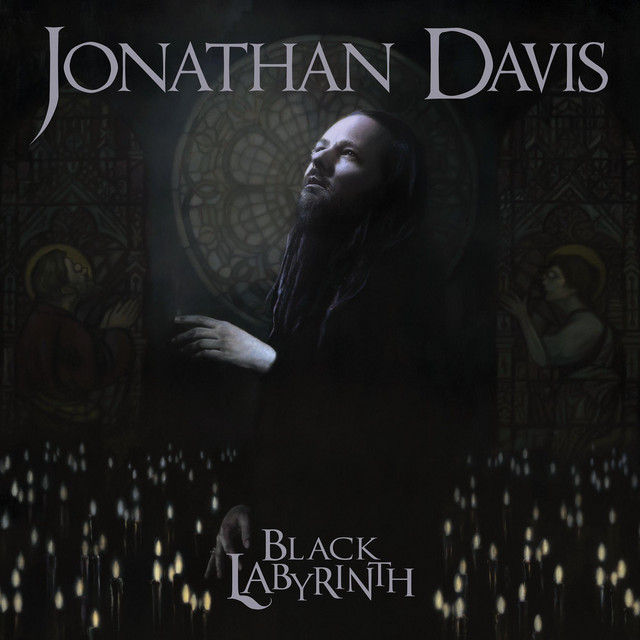
Jonathan Davis · 2018
Producer Programmer -

Jonathan Davis · 2018
Producer -
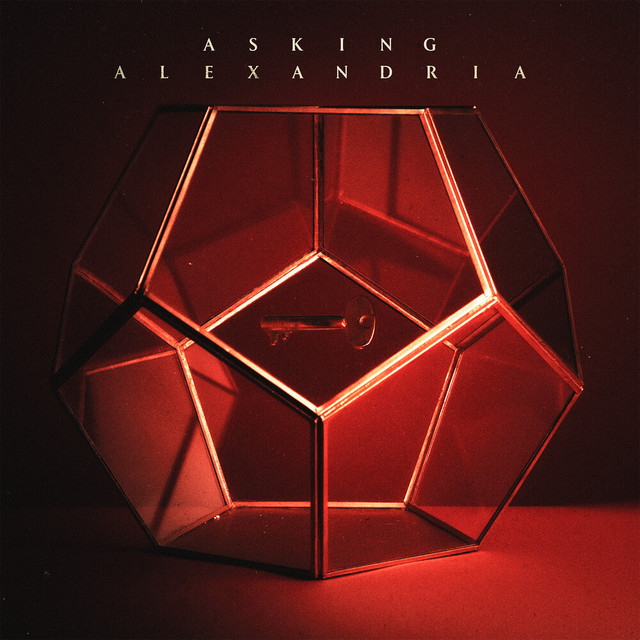
Asking Alexandria · 2017
Producer -

Asking Alexandria · 2017
Producer -

The Notorious B.I.G. · 2005
Producer -
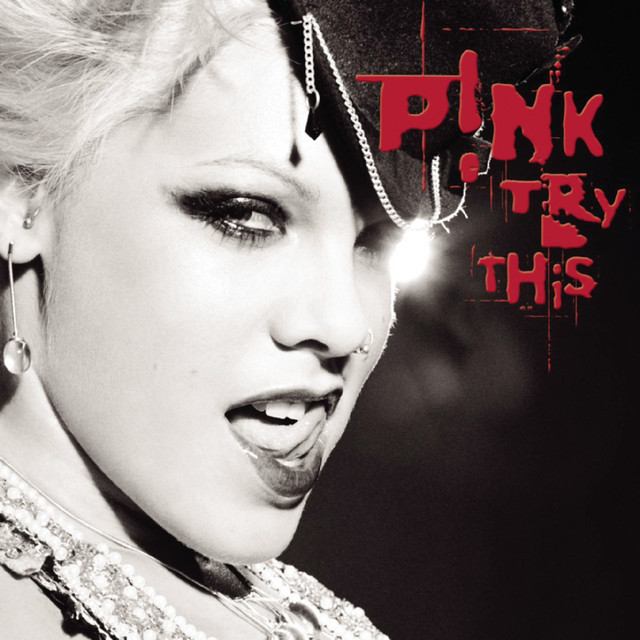
P!nk · 2003
Engineer Producer Programmer -
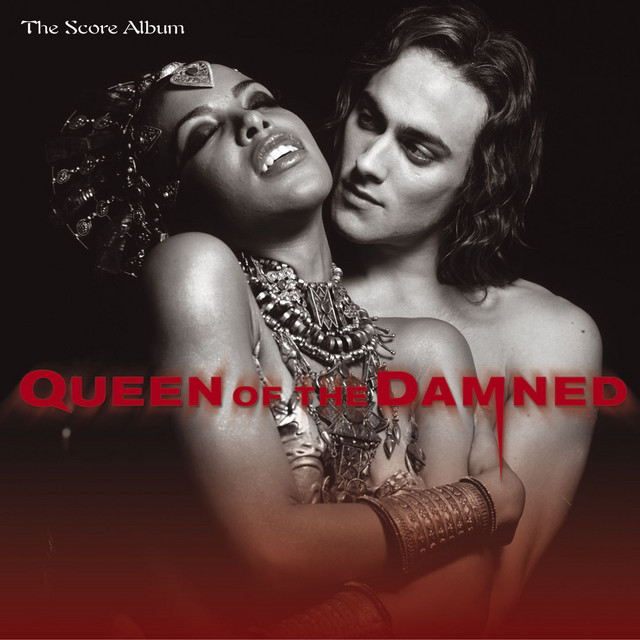
Queen Of The Damned - The Score Album
Jonathan Davis & Richard Gibbs · 2002
Producer







.webp)


