Paul Robb
Genre
Credits
Genre
Credits
Paul Robb's Keyboards and Synthesizers


Included in his studio are synthesizers such as the Roland MKS-70, two MKS-50s, a MKS-80 and D-50; Yamaha TX-81Z; four Oberheim Matrix 1000s, E-mu Orbit and Morpheus, and a Casio VZ-10M. Sample players include Kurzweil 1000AX+, Roland U-110, Oberheim DPX-1, E-mu Proformance Piano and Proteus (as well as the Proteus 2 and 3), Alesis NanoBass and samplers, including a Casio FZ-10M, two Akai S-1000s and three Akai CD-3000s. He also turns to E-mu Procussion, Roland R-8M, Alesis DM-5, Roland BD-1 and a Roland SPD-11 for drum sounds.
Find it on:


List of synthesizers at Paul Robb's studio:
Casio VZ10M. "There's one little sound called Teardrops in there, and it's the only sound I've ever used out of that box." Emu Morpheus. Emu Orbit. "These Emu boxes are just kind of one‑trick ponies, and once you have that trick you can't really use it too much. Nine out of 10 times when I use the Orbit I put it through distortion." Emu Proteus 1, 2 & 3. "I, like almost everyone else who owns them, use these a lot but tend not to admit it! But some of the most expressive orchestral sounds I have come out of that Proteus 2, the oboe especially." Kurzweil Acoustic Expander (AX). "I mostly use this for string samples. In some ways some of its string samples are more effective than those on very expensive sample libraries. Even though it's less realistic when you listen to it by itself, in a mix it really makes things come alive. I often use it in collaboration with a sampled string section, and it sounds great." Kurzweil Micropiano. "I have vast numbers of giant sampled grand pianos, but generally in a mix or for one low note you don't need a sampled Bösendorfer. Something that's kind of close enough to a piano is going to work for that. If it's an exposed solo piano then I'll go to a sample from a sample CD." Oberheim DPX1. "When this first came out it was great because you could load samples from several different samplers into it. I have an orchestral cymbal sample from the old Emulator III library in there and every time I do orchestral music I use that sound. I've lugged that 20lb box around with me for years just for that one sound!" Oberheim Matrix 1000 (x4). "The Matrix 1000 is my favourite box of all time, which is why I have four of them. A lot of times I'll use all four on the same sound, just slightly detuned, and I pan all the way across the stereo field from hard left to hard right. The only thing is, they don't respond well to heat, so I always leave them switched off unless I'm actually using them." Roland BD1 (bass and drums). "This has some good snares in it, and some good acoustic basses. That's mostly all I use it for." Roland SE1 (strings). "The reason I have so many modules is because I'm very lazy. If a sound isn't right I'm more likely to continue looking for another sound than I am to tweak the sound. Especially with these menu‑driven rackmount things, I don't want to get involved with that." Roland D50. "I just use this as my controller. I don't use any of those sounds any more." Roland JP8000. "When I do need to program sounds, the JP8000 usually does the job." Roland MKS50 (x2). Roland MKS70. Roland Super Jupiter MKS80. "I bought this in 1987. Along with the SPX90, it's the oldest piece of gear in the studio." Roland U110. "This is one of those boxes that's so old and strange that sometimes it's good to just throw it into a mix. There's a couple of electric piano sounds on there which sound nothing like an electric piano, but for that very reason they sound great." Yamaha TX81Z. "This is my only member of the FM synthesis family — it comes in handy because it has its own sound."
Find it on:

"I also have a Roland MKS50 and a Yamaha TX81Z, which I used to hate because it has those weird little bird harmonics on every single sound. But there are sounds on it that are just so great that you take them for granted, like the Alto Sax sound."
Find it on:

Included in his studio are synthesizers such as the Roland MKS-70, two MKS-50s, a MKS-80 and D-50; Yamaha TX-81Z; four Oberheim Matrix 1000s, E-mu Orbit and Morpheus, and a Casio VZ-10M. Sample players include Kurzweil 1000AX+, Roland U-110, Oberheim DPX-1, E-mu Proformance Piano and Proteus (as well as the Proteus 2 and 3), Alesis NanoBass and samplers, including a Casio FZ-10M, two Akai S-1000s and three Akai CD-3000s. He also turns to E-mu Procussion, Roland R-8M, Alesis DM-5, Roland BD-1 and a Roland SPD-11 for drum sounds.
Find it on:

Included in his studio are synthesizers such as the Roland MKS-70, two MKS-50s, a MKS-80 and D-50; Yamaha TX-81Z; four Oberheim Matrix 1000s, E-mu Orbit and Morpheus, and a Casio VZ-10M. Sample players include Kurzweil 1000AX+, Roland U-110, Oberheim DPX-1, E-mu Proformance Piano and Proteus (as well as the Proteus 2 and 3), Alesis NanoBass and samplers, including a Casio FZ-10M, two Akai S-1000s and three Akai CD-3000s. He also turns to E-mu Procussion, Roland R-8M, Alesis DM-5, Roland BD-1 and a Roland SPD-11 for drum sounds.
Find it on:

Included in his studio are synthesizers such as the Roland MKS-70, two MKS-50s, a MKS-80 and D-50; Yamaha TX-81Z; four Oberheim Matrix 1000s, E-mu Orbit and Morpheus, and a Casio VZ-10M. Sample players include Kurzweil 1000AX+, Roland U-110, Oberheim DPX-1, E-mu Proformance Piano and Proteus (as well as the Proteus 2 and 3), Alesis NanoBass and samplers, including a Casio FZ-10M, two Akai S-1000s and three Akai CD-3000s. He also turns to E-mu Procussion, Roland R-8M, Alesis DM-5, Roland BD-1 and a Roland SPD-11 for drum sounds.
Find it on:

Included in his studio are synthesizers such as the Roland MKS-70, two MKS-50s, a MKS-80 and D-50; Yamaha TX-81Z; four Oberheim Matrix 1000s, E-mu Orbit and Morpheus, and a Casio VZ-10M. Sample players include Kurzweil 1000AX+, Roland U-110, Oberheim DPX-1, E-mu Proformance Piano and Proteus (as well as the Proteus 2 and 3), Alesis NanoBass and samplers, including a Casio FZ-10M, two Akai S-1000s and three Akai CD-3000s. He also turns to E-mu Procussion, Roland R-8M, Alesis DM-5, Roland BD-1 and a Roland SPD-11 for drum sounds.
Find it on:

List of synthesizers at Paul Robb's studio:
Casio VZ10M. "There's one little sound called Teardrops in there, and it's the only sound I've ever used out of that box." Emu Morpheus. Emu Orbit. "These Emu boxes are just kind of one‑trick ponies, and once you have that trick you can't really use it too much. Nine out of 10 times when I use the Orbit I put it through distortion." Emu Proteus 1, 2 & 3. "I, like almost everyone else who owns them, use these a lot but tend not to admit it! But some of the most expressive orchestral sounds I have come out of that Proteus 2, the oboe especially." Kurzweil Acoustic Expander (AX). "I mostly use this for string samples. In some ways some of its string samples are more effective than those on very expensive sample libraries. Even though it's less realistic when you listen to it by itself, in a mix it really makes things come alive. I often use it in collaboration with a sampled string section, and it sounds great." Kurzweil Micropiano. "I have vast numbers of giant sampled grand pianos, but generally in a mix or for one low note you don't need a sampled Bösendorfer. Something that's kind of close enough to a piano is going to work for that. If it's an exposed solo piano then I'll go to a sample from a sample CD." Oberheim DPX1. "When this first came out it was great because you could load samples from several different samplers into it. I have an orchestral cymbal sample from the old Emulator III library in there and every time I do orchestral music I use that sound. I've lugged that 20lb box around with me for years just for that one sound!" Oberheim Matrix 1000 (x4). "The Matrix 1000 is my favourite box of all time, which is why I have four of them. A lot of times I'll use all four on the same sound, just slightly detuned, and I pan all the way across the stereo field from hard left to hard right. The only thing is, they don't respond well to heat, so I always leave them switched off unless I'm actually using them." Roland BD1 (bass and drums). "This has some good snares in it, and some good acoustic basses. That's mostly all I use it for." Roland SE1 (strings). "The reason I have so many modules is because I'm very lazy. If a sound isn't right I'm more likely to continue looking for another sound than I am to tweak the sound. Especially with these menu‑driven rackmount things, I don't want to get involved with that." Roland D50. "I just use this as my controller. I don't use any of those sounds any more." Roland JP8000. "When I do need to program sounds, the JP8000 usually does the job." Roland MKS50 (x2). Roland MKS70. Roland Super Jupiter MKS80. "I bought this in 1987. Along with the SPX90, it's the oldest piece of gear in the studio." Roland U110. "This is one of those boxes that's so old and strange that sometimes it's good to just throw it into a mix. There's a couple of electric piano sounds on there which sound nothing like an electric piano, but for that very reason they sound great." Yamaha TX81Z. "This is my only member of the FM synthesis family — it comes in handy because it has its own sound."
Find it on:

Casio VZ10M. "There's one little sound called Teardrops in there, and it's the only sound I've ever used out of that box." Emu Morpheus. Emu Orbit. "These Emu boxes are just kind of one‑trick ponies, and once you have that trick you can't really use it too much. Nine out of 10 times when I use the Orbit I put it through distortion." Emu Proteus 1, 2 & 3. "I, like almost everyone else who owns them, use these a lot but tend not to admit it! But some of the most expressive orchestral sounds I have come out of that Proteus 2, the oboe especially." Kurzweil Acoustic Expander (AX). "I mostly use this for string samples. In some ways some of its string samples are more effective than those on very expensive sample libraries. Even though it's less realistic when you listen to it by itself, in a mix it really makes things come alive. I often use it in collaboration with a sampled string section, and it sounds great." Kurzweil Micropiano. "I have vast numbers of giant sampled grand pianos, but generally in a mix or for one low note you don't need a sampled Bösendorfer. Something that's kind of close enough to a piano is going to work for that. If it's an exposed solo piano then I'll go to a sample from a sample CD." Oberheim DPX1. "When this first came out it was great because you could load samples from several different samplers into it. I have an orchestral cymbal sample from the old Emulator III library in there and every time I do orchestral music I use that sound. I've lugged that 20lb box around with me for years just for that one sound!" Oberheim Matrix 1000 (x4). "The Matrix 1000 is my favourite box of all time, which is why I have four of them. A lot of times I'll use all four on the same sound, just slightly detuned, and I pan all the way across the stereo field from hard left to hard right. The only thing is, they don't respond well to heat, so I always leave them switched off unless I'm actually using them." Roland BD1 (bass and drums). "This has some good snares in it, and some good acoustic basses. That's mostly all I use it for." Roland SE1 (strings). "The reason I have so many modules is because I'm very lazy. If a sound isn't right I'm more likely to continue looking for another sound than I am to tweak the sound. Especially with these menu‑driven rackmount things, I don't want to get involved with that." Roland D50. "I just use this as my controller. I don't use any of those sounds any more." Roland JP8000. "When I do need to program sounds, the JP8000 usually does the job." Roland MKS50 (x2). Roland MKS70. Roland Super Jupiter MKS80. "I bought this in 1987. Along with the SPX90, it's the oldest piece of gear in the studio." Roland U110. "This is one of those boxes that's so old and strange that sometimes it's good to just throw it into a mix. There's a couple of electric piano sounds on there which sound nothing like an electric piano, but for that very reason they sound great." Yamaha TX81Z. "This is my only member of the FM synthesis family — it comes in handy because it has its own sound."
Find it on:

Casio VZ10M. "There's one little sound called Teardrops in there, and it's the only sound I've ever used out of that box." Emu Morpheus. Emu Orbit. "These Emu boxes are just kind of one‑trick ponies, and once you have that trick you can't really use it too much. Nine out of 10 times when I use the Orbit I put it through distortion." Emu Proteus 1, 2 & 3. "I, like almost everyone else who owns them, use these a lot but tend not to admit it! But some of the most expressive orchestral sounds I have come out of that Proteus 2, the oboe especially." Kurzweil Acoustic Expander (AX). "I mostly use this for string samples. In some ways some of its string samples are more effective than those on very expensive sample libraries. Even though it's less realistic when you listen to it by itself, in a mix it really makes things come alive. I often use it in collaboration with a sampled string section, and it sounds great." Kurzweil Micropiano. "I have vast numbers of giant sampled grand pianos, but generally in a mix or for one low note you don't need a sampled Bösendorfer. Something that's kind of close enough to a piano is going to work for that. If it's an exposed solo piano then I'll go to a sample from a sample CD." Oberheim DPX1. "When this first came out it was great because you could load samples from several different samplers into it. I have an orchestral cymbal sample from the old Emulator III library in there and every time I do orchestral music I use that sound. I've lugged that 20lb box around with me for years just for that one sound!" Oberheim Matrix 1000 (x4). "The Matrix 1000 is my favourite box of all time, which is why I have four of them. A lot of times I'll use all four on the same sound, just slightly detuned, and I pan all the way across the stereo field from hard left to hard right. The only thing is, they don't respond well to heat, so I always leave them switched off unless I'm actually using them." Roland BD1 (bass and drums). "This has some good snares in it, and some good acoustic basses. That's mostly all I use it for." Roland SE1 (strings). "The reason I have so many modules is because I'm very lazy. If a sound isn't right I'm more likely to continue looking for another sound than I am to tweak the sound. Especially with these menu‑driven rackmount things, I don't want to get involved with that." Roland D50. "I just use this as my controller. I don't use any of those sounds any more." Roland JP8000. "When I do need to program sounds, the JP8000 usually does the job." Roland MKS50 (x2). Roland MKS70. Roland Super Jupiter MKS80. "I bought this in 1987. Along with the SPX90, it's the oldest piece of gear in the studio." Roland U110. "This is one of those boxes that's so old and strange that sometimes it's good to just throw it into a mix. There's a couple of electric piano sounds on there which sound nothing like an electric piano, but for that very reason they sound great." Yamaha TX81Z. "This is my only member of the FM synthesis family — it comes in handy because it has its own sound."
Find it on:

Included in his studio are synthesizers such as the Roland MKS-70, two MKS-50s, a MKS-80 and D-50; Yamaha TX-81Z; four Oberheim Matrix 1000s, E-mu Orbit and Morpheus, and a Casio VZ-10M. Sample players include Kurzweil 1000AX+, Roland U-110, Oberheim DPX-1, E-mu Proformance Piano and Proteus (as well as the Proteus 2 and 3), Alesis NanoBass and samplers, including a Casio FZ-10M, two Akai S-1000s and three Akai CD-3000s. He also turns to E-mu Procussion, Roland R-8M, Alesis DM-5, Roland BD-1 and a Roland SPD-11 for drum sounds.
Find it on:

Included in his studio are synthesizers such as the Roland MKS-70, two MKS-50s, a MKS-80 and D-50; Yamaha TX-81Z; four Oberheim Matrix 1000s, E-mu Orbit and Morpheus, and a Casio VZ-10M. Sample players include Kurzweil 1000AX+, Roland U-110, Oberheim DPX-1, E-mu Proformance Piano and Proteus (as well as the Proteus 2 and 3), Alesis NanoBass and samplers, including a Casio FZ-10M, two Akai S-1000s and three Akai CD-3000s. He also turns to E-mu Procussion, Roland R-8M, Alesis DM-5, Roland BD-1 and a Roland SPD-11 for drum sounds.
Find it on:

Included in his studio are synthesizers such as the Roland MKS-70, two MKS-50s, a MKS-80 and D-50; Yamaha TX-81Z; four Oberheim Matrix 1000s, E-mu Orbit and Morpheus, and a Casio VZ-10M. Sample players include Kurzweil 1000AX+, Roland U-110, Oberheim DPX-1, E-mu Proformance Piano and Proteus (as well as the Proteus 2 and 3), Alesis NanoBass and samplers, including a Casio FZ-10M, two Akai S-1000s and three Akai CD-3000s. He also turns to E-mu Procussion, Roland R-8M, Alesis DM-5, Roland BD-1 and a Roland SPD-11 for drum sounds.
Find it on:
This is a community-built gear list for Paul Robb.
- Find relevant music gear like Pianos, Keyboards and Synthesizers, Microphones, Software Plugins and VSTs, Instruments, Studio Equipment, Headphones, and other instruments and add it to Paul Robb.
- The best places to look for gear usage are typically on the artist's social media, YouTube, live performance images, and interviews.
- To receive email updates when Paul Robb is seen with new gear, follow the artist.
Album Credits
-
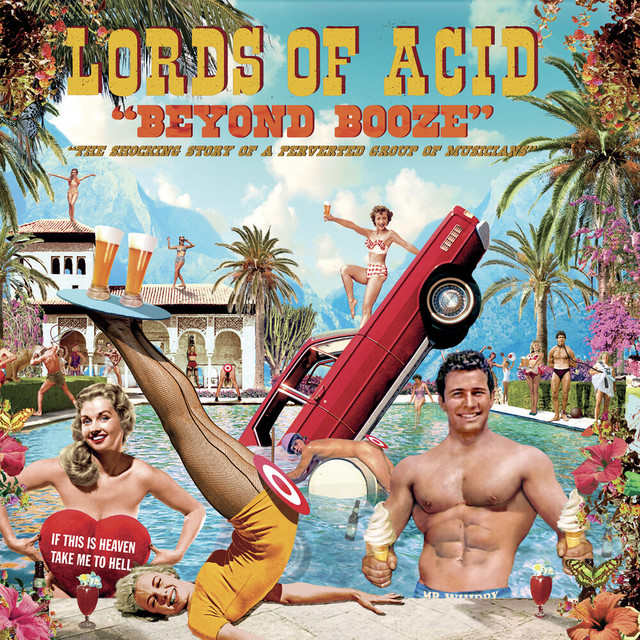
Lords of Acid · 2022
Producer