This page about Casio VZ-10m is a stub. You can help improve it:


Pricing and availability




* Product prices and availability are updated by Equipboard every 24hrs and are subject to change. Equipboard may receive compensation for purchases made at participating retailers linked on this site. This compensation does not affect what products or prices are displayed, or the order of prices listed. For more information, please refer to our affiliate disclosure.
Description
The Casio VZ-10m is a compelling choice for musicians looking to explore the depths of sound design without breaking the bank. This digital synthesizer module is known for its unique Phase Distortion synthesis, which offers a distinctive alternative to the more common subtractive and FM synthesis. Released in the late '80s, the VZ-10m has stood the test of time due to its ability to produce richly textured sounds, from lush pads to cutting leads.
Designed for versatility, the VZ-10m features a multi-timbral capability, allowing musicians to layer multiple sounds and create complex compositions. Its user interface may feel vintage, but with a bit of exploration, it becomes a powerful tool for crafting dynamic sounds. The module's MIDI compatibility ensures seamless integration with modern setups, making it a versatile addition to any studio or live rig.
Whether you're an electronic music enthusiast or a sound designer looking for something different, the Casio VZ-10m provides a playground of sonic possibilities. Its distinctive sound and robust feature set make it a hidden gem in the world of digital synthesizers.
Key Features:
- Phase Distortion synthesis for unique sound creation
- Multi-timbral functionality for complex layering
- Extensive MIDI compatibility
- 8 programmable algorithms for sound design
- Onboard effects for added sonic texture
- Compact rack-mountable design for easy integration
Videos

ProckGnosis
Casio VZ-10M - Exploring the Synth and Sounds
Casio VZ-10M - Exploring the Synth and Sounds
ProckGnosis
Casio VZ10m - Impressions

.soundisanartform.
Best Ambient Synth Shootout #76: Casio VZ-10m - Song 1

Christian's Sonic Spaces
Casio VZ-1 and VZ-10M - Better than Yamaha DX7? (patches and multi-tracked demos)

Mr Woofer
Mr Woofer - Phazed (Casio VZ-10M Demo) *New mix and mastering in 4K*
Mr Woofer
Best Ambient Synth Shootout #88: Casio VZ-10m - Song 2
Christian's Sonic Spaces
Synth meets Effects Episode 1: Casio VZ 10M (featuring Boss, EHX, DOD and Elektron effects)
Mr Woofer
Reviews
Owner Insights
We analyzed real musician discussions from forums and Reddit to find what players love, question, and tweak about Casio VZ-10m.
Features and functionality
-
The VZ-10m's editing process involves unconventional button placement for cursor movement, which can be initially confusing to navigate.
Source -
Produces unique sounds by exploiting aliasing, with the possibility of creating different tones on each key through intentional aliasing techniques.
Source -
Offers robust mono bass sounds that benefit from slight distortion, enhancing the overall sound quality when used in mono mode.
Source -
The VZ-10m is particularly adept at producing bell tones, leveraging its four ring modulators for expressive sound creation.
Source
Comparisons
-
Noted as Casio's counterpart to the Yamaha TX802, featuring distinctive elements like an XLR mix out and a 24 x 96 display, which were unique at its release time.
Source
Use cases and applications
-
The VZ-10m is appreciated for its stylish design, adding aesthetic value to its functional use in music production setups.
Source
Setup and maintenance
-
Adjusting the screen contrast via the manual can significantly improve readability, especially when the backlight has been replaced but remains dim.
Source
Critic Reviews
4.0 out of 5
Based on 0 Reviews and 1 Rating
Artist usage
Add artist

This is one of many pieces of gear listed in a 2007 Computer Music feature on Venetian Snares.


The heart of Linnell’s system is an Apple Macintosh IIci (1) running MOTU’s Performer sequencer and Mosaic notator (for horn arrangements), connected to an Opcode Studio Plus Two MIDI interface (2) and Timecode Machine sync box (3). A Cutting Edge hard disk (4) alongside Linnell’s Music Mart accordion (5) doubles as a pedestal for a Bundy bass clarinet (6) — which is not to ignore his prized Buescher bass sax (7). A Yamaha MJC8 (8) distributes MIDI to his E-mu Proteus FX (9) (“this is what I’m using live now”) and Vintage Keys (10), Roland R-8M percussion module (11) and U-220 (12), plus a Casio VZ-10M (13) bought in a closeout sale. “It’s the end of the legendary CZ line,” he laments. “It’s got some weird, cheap sounds you can’t get any other way.” An Akai S1000KB sampler (14) also serves as a master MIDI keyboard. When he’s in a picking mood, Linnell picks up a Gibson SG from the early ‘60s (15). A Boss TU-12H (16) helps keep it in tune.
The instruments, plus a Sennheiser 421 mike (17), feed a Tascam 688 eight-track cassette deck (18). “It has all these line inputs,” Linnell points out. “I can mix all my sequenced tracks and still have seven tape tracks for bass clarinet.” For effects, he uses a Urei 7110 compressor/limiter, Lexicon PCM42 delay (19). Yamaha SPX90II multieffect unit (20) and Korg DRV-1000 reverb (21). He mixes to a Sony TC-WR690 cassette deck (22) and Panasonic SV-3700 DAT (23), amplified by a Hafler PRO2400 (24) and Design Acoustics PS-10 speakers (25).


As cited in the gear list of this May '92 feature in Music Tech magazine


List of synthesizers at Paul Robb's studio:
Casio VZ10M. "There's one little sound called Teardrops in there, and it's the only sound I've ever used out of that box." Emu Morpheus. Emu Orbit. "These Emu boxes are just kind of one‑trick ponies, and once you have that trick you can't really use it too much. Nine out of 10 times when I use the Orbit I put it through distortion." Emu Proteus 1, 2 & 3. "I, like almost everyone else who owns them, use these a lot but tend not to admit it! But some of the most expressive orchestral sounds I have come out of that Proteus 2, the oboe especially." Kurzweil Acoustic Expander (AX). "I mostly use this for string samples. In some ways some of its string samples are more effective than those on very expensive sample libraries. Even though it's less realistic when you listen to it by itself, in a mix it really makes things come alive. I often use it in collaboration with a sampled string section, and it sounds great." Kurzweil Micropiano. "I have vast numbers of giant sampled grand pianos, but generally in a mix or for one low note you don't need a sampled Bösendorfer. Something that's kind of close enough to a piano is going to work for that. If it's an exposed solo piano then I'll go to a sample from a sample CD." Oberheim DPX1. "When this first came out it was great because you could load samples from several different samplers into it. I have an orchestral cymbal sample from the old Emulator III library in there and every time I do orchestral music I use that sound. I've lugged that 20lb box around with me for years just for that one sound!" Oberheim Matrix 1000 (x4). "The Matrix 1000 is my favourite box of all time, which is why I have four of them. A lot of times I'll use all four on the same sound, just slightly detuned, and I pan all the way across the stereo field from hard left to hard right. The only thing is, they don't respond well to heat, so I always leave them switched off unless I'm actually using them." Roland BD1 (bass and drums). "This has some good snares in it, and some good acoustic basses. That's mostly all I use it for." Roland SE1 (strings). "The reason I have so many modules is because I'm very lazy. If a sound isn't right I'm more likely to continue looking for another sound than I am to tweak the sound. Especially with these menu‑driven rackmount things, I don't want to get involved with that." Roland D50. "I just use this as my controller. I don't use any of those sounds any more." Roland JP8000. "When I do need to program sounds, the JP8000 usually does the job." Roland MKS50 (x2). Roland MKS70. Roland Super Jupiter MKS80. "I bought this in 1987. Along with the SPX90, it's the oldest piece of gear in the studio." Roland U110. "This is one of those boxes that's so old and strange that sometimes it's good to just throw it into a mix. There's a couple of electric piano sounds on there which sound nothing like an electric piano, but for that very reason they sound great." Yamaha TX81Z. "This is my only member of the FM synthesis family — it comes in handy because it has its own sound."
Genre Usage
Based on how artists on Equipboard use this gear, it is most commonly found in the following genres.
Used With
Based on how musicians on Equipboard use Casio VZ-10m, it is most commonly used with the following gear.

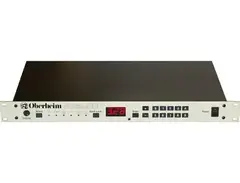


-s.webp?v=1784559441)


Similar
Add recommendation1 alternative for Casio VZ-10m, curated by the Equipboard community.

Rebranded version of the Casio VZ-10m. Same instrument, different shell.
More Casio Sound Modules
-m.webp?v=1784559513)
$322.00
in Sound Modules Rank


$170.00
in Sound Modules Rank

.png?v=1784615088)


$1,162.97 - $1,999.99
in Sound Modules Rank


$1,450.00
in Sound Modules Rank


$845.00
in Sound Modules Rank


$238.62
in Sound Modules Rank


$2,299.00 - $2,330.00
in Sound Modules Rank


$630.00
in Sound Modules Rank


$119.00
in Sound Modules Rank


$259.00
in Sound Modules Rank

.jpg?v=1784574736)


$550.00
in Sound Modules Rank


$3,900.00
in Sound Modules Rank


$4,999.99
in Sound Modules Rank


$445.00
in Sound Modules Rank


$1,216.25
in Sound Modules Rank


$65.62
in Sound Modules Rank


$75.00
in Sound Modules Rank


$175.00 - $289.00
in Sound Modules Rank


$49.99
in Sound Modules Rank


$139.00 - $1,500.00
in Sound Modules Rank


$4.76
in Sound Modules Rank


$500.00
in Sound Modules Rank


$674.59
in Sound Modules Rank

$199.99
in Sound Modules Rank


$2,099.00
in Sound Modules Rank


$507.07
in Sound Modules Rank


$400.00
in Sound Modules Rank

$699.00
in Sound Modules Rank


$41.16
in Sound Modules Rank


$292.31
in Sound Modules Rank


$200.00
in Sound Modules Rank


$400.00 - $1,299.99
in Sound Modules Rank


$107.38
in Sound Modules Rank


$30.00
in Sound Modules Rank


$109.00 - $125.00
in Sound Modules Rank


$739.00
in Sound Modules Rank


$313.99
in Sound Modules Rank

-m.webp?v=1784612258)
$323.00 - $489.00
in Sound Modules Rank


$384.93
in Sound Modules Rank


$276.29 - $368.00
in Sound Modules Rank
Community setups


Most Popular Sound Modules
Most Popular Brands
-
Added to Equipboard on by
 clusterchord
GearIQ 220
-


