Thomas Brenneck
Role
Genre
Credits
Role
Genre
Credits
Thomas Brenneck's Microphones



Used for practically everything on Charles Bradley's No Time For Dreaming and Menahan Street Band's Make the Road by Walking, as mentioned by producer Thomas Brenneck in this October 11, 2016 Electronic Musician article.
“When I first started making records, all I had was a Shure 565—an older version of the SM57. I made two records using only that microphone: Charles Bradley’s first record, No Time for Dreaming, and Menahan Street Band’s first record, Make the Road by Walking. I had literally bought these microphones really cheap on tour, and went home and made those records on an 8-track in my apartment. And then I mixed them at Daptone [Studios]. People like Mark Ronson would ask me, ‘Man, how did you get those drum sounds?’ I was like, ‘Well... [Laughs] one mic and a half-inch 8-track.’ With the limited gear that we had, we couldn’t do anything fancy. So it was really about capturing a great performance.”
Find it on:


Used on Charles Bradley's No Time for Dreaming, as mentioned in this March 15, 2011 Electronic Musician article.
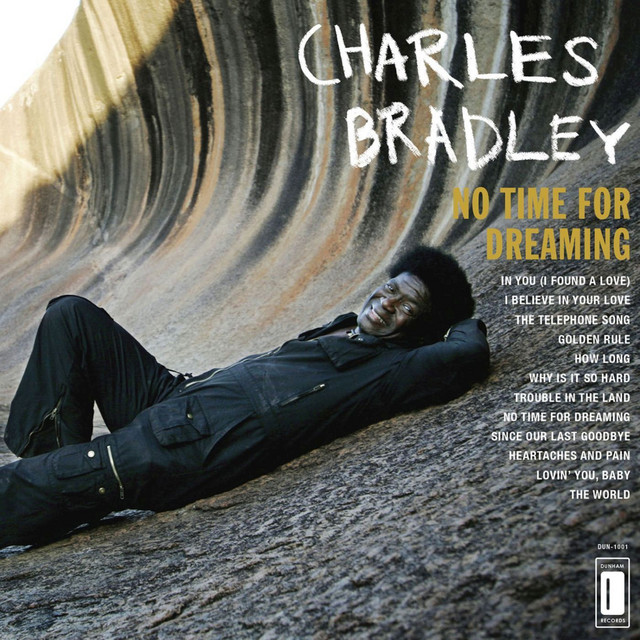
High-octane performances are at the heart of Bradley’s long-overdue debut album, No Time For Dreaming (Dunham, 2011). Started in 2005 in Brenneck’s former bedroom studio, the album is a reverent throwback to the days of Muscle Shoals, Stax, and Studio One, when entire bands would cram into a room with just a couple of microphones—in this case, Brenneck’s own six-piece Menahan Street Band, with only a Shure SM54 and an SM57 going into a TASCAM 12-channel mixer—and lay down a barrage of rhythm tracks that were bounced, squeezed, and compressed to make room on the tape for the wailing lead and background vocals.
Find it on:


Used on Charles Bradley's Changes, as mentioned in this April 7, 2016 Mix Online article.
“I use an Electro-Voice 664 on my guitar, and an EV RE15 on Leslie, the same mic I use for Charles’ vocals on the whole record,” says Brenneck.
Find it on:

Mentioned in this October 11, 2016 Electronic Musician article.
Brenneck takes a “less is more” approach when it comes to miking. Interestingly, his retro-sounding productions get their sound, in part, through the almost exclusive use of dynamic and ribbon mics, rather than condensers. “We use a lot of Electro-Voice RE15s and RE16s,” he says. “We also have an Electro-Voice 636. If we were cutting a large rhythm section, we got to this point where we would use the ribbons on the drums, use the same ribbon to overdub the horns, and everything else that’s live, just mike it up with similar-sounding dynamic mics.
Find it on:

Mentioned in this October 11, 2016 Electronic Musician article.
Brenneck takes a “less is more” approach when it comes to miking. Interestingly, his retro-sounding productions get their sound, in part, through the almost exclusive use of dynamic and ribbon mics, rather than condensers. “We use a lot of Electro-Voice RE15s and RE16s,” he says. “We also have an Electro-Voice 636. If we were cutting a large rhythm section, we got to this point where we would use the ribbons on the drums, use the same ribbon to overdub the horns, and everything else that’s live, just mike it up with similar-sounding dynamic mics.
Find it on:

Used on Charles Bradley's Changes, as mentioned in this April 7, 2016 Mix Online article.
“I use an Electro-Voice 664 on my guitar, and an EV RE15 on Leslie, the same mic I use for Charles’ vocals on the whole record,” says Brenneck.
Find it on:

Mentioned in this October 11, 2016 Electronic Musician article.
These days he uses three mics on the drums, which, most people would still think of as a pretty minimalist setup. “We usually have an RCA 77DX or an Altec 639 pretty far overhead,” he says. “About three feet or so above the kit, kind of going for a Motown type of sound. And then a kick and a snare mic. We have a small ribbon mic that we put on the kick. It’s an Altec, like the little brother to the 639B, the 671B. We call it the “Mini Bird Cage.” We don’t put it right in front of the kick, but we’ll put it in that spot off to the side of the kick where you might get a little from the bottom of the snare drum and an indirect kick drum sound. Then also an overhead, and a mic pretty much on the snare drum—on top, to blend in, kind of facing away from the hi-hat, just facing the snare, and trying to only get the crack from the snare. And the cymbals and tom toms are kind of in focus because of the overhead, and we have control over the kick and snare.”
It was used on Charles Bradley's Changes, as mentioned in this April 7, 2016 Mix Online article.
Brenneck captured drums with two Altec birdcage mics: a 639a overhead and a 671 ribbon on the kick. “Very little EQ, very little compression, and then I’d just check the phase and sum them to one track,” he says.
It was also used for Brenneck's guitar with The Budos Band, as featured in this September 18, 2012 Instagram post.
Setting up for a Budos recording session.
Find it on:

Mentioned in this October 11, 2016 Electronic Musician article.
These days he uses three mics on the drums, which, most people would still think of as a pretty minimalist setup. “We usually have an RCA 77DX or an Altec 639 pretty far overhead,” he says. “About three feet or so above the kit, kind of going for a Motown type of sound. And then a kick and a snare mic. We have a small ribbon mic that we put on the kick. It’s an Altec, like the little brother to the 639B, the 671B. We call it the “Mini Bird Cage.” We don’t put it right in front of the kick, but we’ll put it in that spot off to the side of the kick where you might get a little from the bottom of the snare drum and an indirect kick drum sound. Then also an overhead, and a mic pretty much on the snare drum—on top, to blend in, kind of facing away from the hi-hat, just facing the snare, and trying to only get the crack from the snare. And the cymbals and tom toms are kind of in focus because of the overhead, and we have control over the kick and snare.”
Find it on:

Mentioned in this October 11, 2016 Electronic Musician article.
These days he uses three mics on the drums, which, most people would still think of as a pretty minimalist setup. “We usually have an RCA 77DX or an Altec 639 pretty far overhead,” he says. “About three feet or so above the kit, kind of going for a Motown type of sound. And then a kick and a snare mic. We have a small ribbon mic that we put on the kick. It’s an Altec, like the little brother to the 639B, the 671B. We call it the “Mini Bird Cage.” We don’t put it right in front of the kick, but we’ll put it in that spot off to the side of the kick where you might get a little from the bottom of the snare drum and an indirect kick drum sound. Then also an overhead, and a mic pretty much on the snare drum—on top, to blend in, kind of facing away from the hi-hat, just facing the snare, and trying to only get the crack from the snare. And the cymbals and tom toms are kind of in focus because of the overhead, and we have control over the kick and snare.”
It was used on Charles Bradley's Changes, as mentioned in this April 7, 2016 Mix Online article.
Brenneck captured drums with two Altec birdcage mics: a 639a overhead and a 671 ribbon on the kick. “Very little EQ, very little compression, and then I’d just check the phase and sum them to one track,” he says.
Find it on:

Used on Charles Bradley's No Time for Dreaming, as mentioned in this March 15, 2011 Electronic Musician article.
High-octane performances are at the heart of Bradley’s long-overdue debut album, No Time For Dreaming (Dunham, 2011). Started in 2005 in Brenneck’s former bedroom studio, the album is a reverent throwback to the days of Muscle Shoals, Stax, and Studio One, when entire bands would cram into a room with just a couple of microphones—in this case, Brenneck’s own six-piece Menahan Street Band, with only a Shure SM54 and an SM57 going into a TASCAM 12-channel mixer—and lay down a barrage of rhythm tracks that were bounced, squeezed, and compressed to make room on the tape for the wailing lead and background vocals.
Find it on:


-m.webp?v=1783376945)
Mentioned and visible in this January 26, 2021 Instagram post.
It was nothing short of magic recording what would become Charles Bradley’s debut album No Time For Dreaming in a bedroom on 250 Menahan street many years ago. It’s hard to believe it’s been 10 years since it’s release. I had set up a humble recording situation consisting of a 1/2” 8 track tape machine and an sm58. For years in between tours with Sharon, Budos, El Michels, Lee, Amy, etc I would record as much music as possible at the crib. At some point I invited Charles over and played him what would become Menahan Street Bands debut Make The Road By Walking. He loved the music which meant the world to me and instantly asked if he could sing on it.
True story: The first time he came to that apartment i played him the instrumental of The World Going Up In Flames. He immediately asked for a mic and started singing. Within the hour we recorded the vocals to it. After that he would come back once or twice a month to share stories of his life which we would turn into songs.
Find it on:
This is a community-built gear list for Thomas Brenneck.
- Find relevant music gear like Guitars, Amplifiers, Effects Pedals, Studio Equipment, Software Plugins and VSTs, Headphones, and other instruments and add it to Thomas Brenneck.
- The best places to look for gear usage are typically on the artist's social media, YouTube, live performance images, and interviews.
- To receive email updates when Thomas Brenneck is seen with new gear, follow the artist.
-
Added to Equipboard on by
 eyeseeofficial
Gear IQ 161557
-
Updated
Album Credits
-
Freddie Gibbs · 2022
Producer -
King Princess · 2018
Mixing Engineer -
King Princess · 2018
Mixing Engineer -
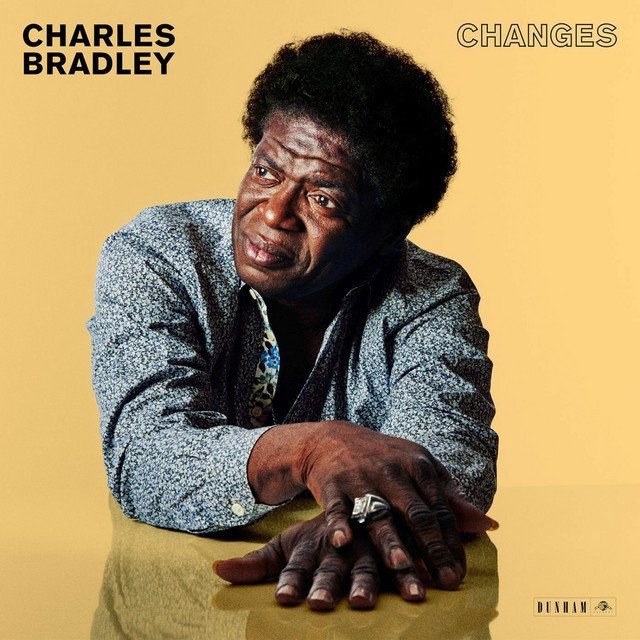
Charles Bradley · 2016
Engineer Mixing Engineer Producer -
Lady Wray · 2016
Producer -
Mark Ronson · 2015
Engineer -
The Black Box Revelation · 2015
Producer -
Black Lips · 2014
Producer -
Charles Bradley · 2013
Producer -
Charles Bradley · 2011
Producer
.webp)