

Pricing and availability
We compare 600+ stores and found this item at 1 store. Prices updated .
Store
Reviews
Price




Average Price: $1,800
High-end/Boutique
$499
$1500+
Price Tier
Budget
Standard
High-end
* Product prices and availability are updated by Equipboard every 24hrs and are subject to change. Equipboard may receive compensation for purchases made at participating retailers linked on this site. This compensation does not affect what products or prices are displayed, or the order of prices listed. For more information, please refer to our affiliate disclosure.
Description
Introducing the RCA 77-DX, a true icon in the world of musical instruments. Rich in history and renowned for its unique tone, this ribbon microphone has been the secret behind some of the most influential voices in music, from Elvis Presley to Frank Sinatra. Its switchable directionality feature and inviting tone are the signature characteristics that set the RCA 77-DX apart. This is not merely a microphone, but a time-honored piece of music history that continues to hold its value and charm.
Key Features:
- Ribbon microphone category
- Known for its unique tone and character
- Switchable directionality feature
- Recognized as a classic in the music recording industry
- Used by iconic musicians such as Elvis Presley and Frank Sinatra
- Continues to hold its value over time
Product specs
| Brand | RCA |
| Model | 77-DX Ribbon Microphone |
| Finish | Silver / Red Badge, Umber Gray |
| Year | 1960s |
| Made In | United States |
| Categories | Microphones |
| Microphone Type | Ribbon |
| Wired/Wireless | Wired |
FAQs
-
What is the primary application of the RCA 77-DX ribbon microphone?
-
The RCA 77-DX is widely used for recording vocals and brass instruments, known for its rich lows and silky smooth mids and highs, making it a staple in professional studios.
-
How does the RCA 77-DX differ from other ribbon microphones?
-
The RCA 77-DX features an improved magnet and transformer, offering higher output compared to earlier models, and includes a switch for attenuating low frequencies, enhancing its versatility in different recording scenarios.
-
Can the RCA 77-DX be used for live performances?
-
While the RCA 77-DX is primarily designed for studio use due to its delicate ribbon construction, it can be used in controlled live environments where its vintage sound character is desired.
-
What is the polar pattern of the RCA 77-DX microphone?
-
The RCA 77-DX features a variable polar pattern, allowing the user to switch between cardioid, bidirectional, and omnidirectional settings for versatile recording applications.
-
How would you describe the sound signature of the RCA 77-DX?
-
The RCA 77-DX is renowned for its warm, smooth sound, with a natural low-end response and detailed midrange, making it ideal for capturing vintage tones in vocal and instrumental recordings.
Videos

gearwire
RCA 77DX Ribbon Microphone And Its Adjustably Saggy Warmth
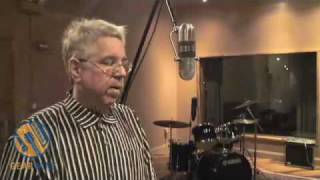
RCA 77DX Ribbon Microphone And Its Adjustably Saggy Warmth
gearwire
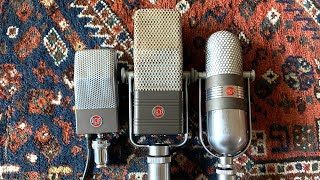
RCA Ribbon Microphone Shootout - RCA 44-BX, RCA 77-DX, RCA 74-B

Cole Picks Vintage
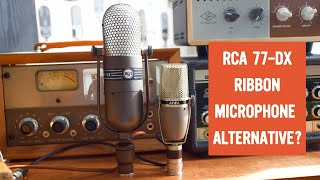
An Alternative to the RCA 77-DX Ribbon Microphone?
Cole Picks Vintage
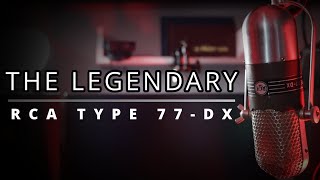
Exploring my legendary RCA Type 77-DX Ribbon Microphone

Geek Therapy Radio Podcast
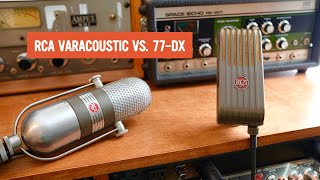
The RCA Varacoustic Vs. RCA 77-DX
Cole Picks Vintage
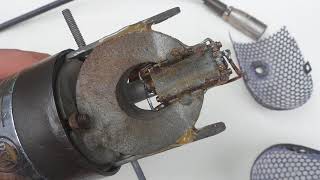
RCA 77DX Microphone Test And Check For Ebay Sale

Vintage Audio Workshop
Reviews
PROS
-
Natural, "live in your face" sound quality
-
Versatile across a variety of instruments and genres
-
Durable design, all parts can be repaired
-
Aesthetically pleasing, considered the most beautiful mic by some
-
Retains or increases in value over time
-
Tames harsh cymbal sounds effectively
-
Ideal for both baritone and tenor voices
CONS
-
Requires a high-gain preamp for optimal use
-
Performance may degrade without regular service
-
Some built-in interface preamps may introduce noise at high gain levels
Owner Insights
We analyzed real musician discussions from forums and Reddit to find what players love, question, and tweak about RCA 77-DX.
Features and functionality
-
RCA 77-DX and U87i are both multi-pattern mics costing around $2k, suitable for various recording scenarios.
Source
Value and pricing
-
The price gap between high-end and budget ribbon mics is smaller than that for condensers, influencing studio choices.
Source
Use cases and applications
-
Ribbon mics excel in specialized applications; for example, Beyer M160 is praised for drum rooms and guitar cabs.
Source
Setup and maintenance
-
Ribbon mics require preamps with significant gain; cheaper interfaces may cause noise issues due to insufficient gain.
Source -
Cigarette pack foil was historically used for on-the-spot ribbon replacements during broadcasts when original ribbons tore.
Source -
Ribbon tensioning should eliminate sag without removing corrugation, ensuring the ribbon remains centered and doesn't touch the magnets.
Source -
Avoid connecting or disconnecting ribbon mics with phantom power on to prevent damage; ensure cables are undamaged to prevent costly errors.
Source
Build quality
-
Transformer quality and foil thickness are critical in ribbon mics; thicker foil can sound muddy, while thinner foil is harder to manage.
Source
Mods and upgrades
-
Removing wind screens from ribbon mic housing can improve sound quality; upgrading the transformer is often beneficial for better performance.
Source
5.0 out of 5
Based on 0 Reviews and 3 Ratings
Artist usage
Add artist
Used for vocals on "I'm Gonna Find Another You", as stated by recording engineer Chad Franscoviak in this October 1, 2006 Mix Online interview.
For Mayer's vocal chain, Franscoviak says that most of the songs were recorded with a Neumann U47. For a couple of songs, he sang into a Neumann M269c, and on “I'm Gonna Find Another You,” which was recorded at Royal Studios in Memphis, he sang into Al Green's RCA 77 ribbon mic. From there, the chain included a Neve sidecar stocked with 1073 mic pre's and then a UREI silver-face 1176. “On a couple of songs, we did experiment with splitting his vocals into two channels — one of them would be kind of a clean and one of them would be kind of a gritty — and we would take the second channel and put it through a Fairchild 670 and really crush it,” Franscoviak explains. “Then we would either blend it together or choose one or the other for the mix.
“[Mayer] loves hearing his vocals really compressed, so he can be as dynamic as he wants to and it always sounds present to him,” he continues. “He likes way too much reverb when he's tracking, and then when we proceed into the mix, it will be reeled in a little bit. Generally, I will compress lightly going to tape or Pro Tools, and then in Pro Tools cream it with usually the Renaissance Vox.”

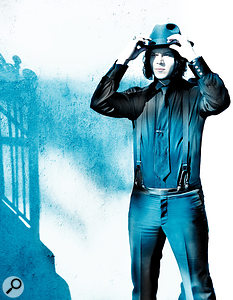
Producer Vance Powell - “On Blunderbuss I also used the Neve 33609 and RCA BA6A and an Ampex MX35 four–channel tube mixer to record the drums, but these sessions happened so quickly that I did not have a lot of time to set things up. There was not a lot of upright bass this time, but when there was one, I’d use an RCA 44 and something higher up like the RCA BK5A [cardioid ribbon mic]. There was an African drum on ‘Would You Fight For My Love?’, which had an AEA R92, electric bass would have been DI and a Neumann U67 on the amp, with maybe some compression from the [Fairchild] 670. I recorded Jack’s acoustic guitar with an RCA 77DX, and his electric almost always goes through his 1963 Fender Vibroverb in front of which I placed a U67, which went into the Neve 1073 desk and then straight to tape. I did not record any of Jack’s vocals, other than on the song ‘Just One Drink’ because that was done entirely live. I used a Shure SM57 or 58 on his vocals for that, and Josh recorded the backing vocals.”
.jpg?v=1784409024)
.jpg?v=1784409024)
Used on Richards' electric guitar for "Brown Sugar", as stated by mix engineer Jimmy Johnson in this September 21, 2018 ProSoundWeb interview.
On the guitar amplifiers, let’s see there were two different ones, on Mick’s I had a SM57, and then on the other I was using… I might have been using an RE15 on Keith. But I had a real problem with Keith because he was running a Fender Twin amp wide open, I mean that sucker was getting it.
I had a real problem with distortion going on, but I happened to remember that my maintenance guy, about a month before that, had left me a 20 dB pad that he had made, a homemade pad, so I just stuck it in between. So I dropped that level before it hit the front of the Universal Audio and it saved the day. Otherwise, I would have been hosed. I still thank God for that. I would have just been screwed. So on Keith’s amp… oh no, I remember what was on his amp, an RCA 77DX, because I was having to get that level down any way I could, it was a ribbon mic.
With the pad and that RCA, I made it, just barely. A lot of that had to do with how it sounded, and I was always real pleased with that guitar sound. (...) And the sound of Keith’s guitar is so good, and I really attribute it to that RCA DX77 with the pad, going into that Universal Audio tube console which warmed it up, too. Pretty wild, huh?

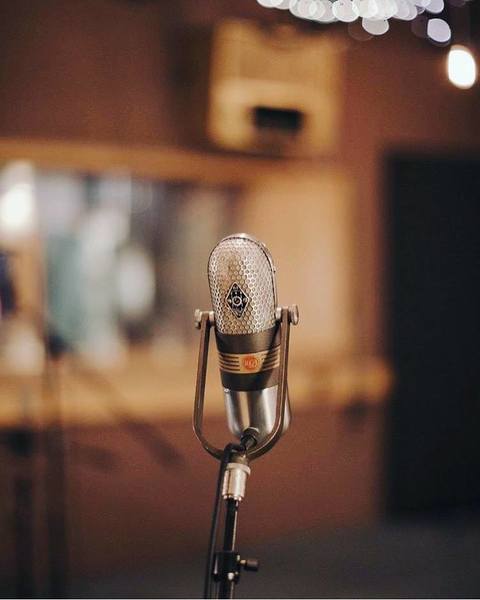
Mentioned in this Facebook post by SugarHill Recording Studios.
RCA released the 77 DX in 1954. This gem of a mic has a very dynamic frequency response depending on the angle in which it is positioned. It has recorded countless legends including Al Green, Elvis Presley, Frank Sinatra, Johnny Cash and more!! It is still widely used today especially for recording Brass instruments. Come try it for yourself.


Visible in this photo of Presley and mentioned in this Facebook post by SugarHill Recording Studios.
RCA released the 77 DX in 1954. This gem of a mic has a very dynamic frequency response depending on the angle in which it is positioned. It has recorded countless legends including Al Green, Elvis Presley, Frank Sinatra, Johnny Cash and more!! It is still widely used today especially for recording Brass instruments. Come try it for yourself.


Used for vocals on The Heart of Saturday Night, Small Changes, Foreign Affairs, Blue Valentine and Heartattack and Vine, as stated by producer "Bones" Howe in this February 2004 Sound on Sound interview. It is visible in "Bones Howe's layout diagrams for the Foreign Affairs sessions at Wally Heider Studio 4, showing the layout for the jazz band recordings" and the "[d]iagram for the Foreign Affairs sessions at Wally Heider Studio 4 showing the layout used for the orchestral track recordings" from the same interview.
Tom Waits's voice itself is a unique instrument. For that, Howe went back to his old standby, the classic RCA 77 DX ribbon mic. "The 77s have three cardioid settings," he explains. "V1 and V2 were different low-end cutoffs, and 'M' was for music recording. The V1 setting had a high cutoff, which made it good for radio announcing; the V2 position left a lot more low end in there and made it a great vocal microphone." The signal ran through a UREI 1176 compressor/limiter set with what Howe swears are the best parameter settings that can be configured on it for vocals: threshold/attack at 6, release at 7, and a 12:1 compression ratio. "Tom popped and spat a lot when he sang, so the 77 was perfect, because it's very hard to pop that microphone, so you didn't need a pop filter. Plus he liked to get right on the mic, so he would sit at the piano and I hung it from a boom so it would hang down in front of him. On some tracks we'd set it up directly in front of the band and he's stand in front of the drums and sing. On 'Step Right Up' you can almost hear him flipping pages of lyrics. He was always surrounded by the music and the records sound like it. We never used headphones. Never."
In this interview from the March/April 2008 issue of Tape Op Magazine, Howe stated the following, which affirms the use of the 77-DX on Waits' recordings.
My favorite mic was the [RCA] 77-DX, and I used it for vocals on everything I did. Years later I tried to find those mics and only a couple of people had them. They wanted a lot of money to rent them. Ribbon mics were amazing for brass, saxophone and vocals.


Used on the ride cymbal and hi-hats on Only by the Night, as stated by producer Jacques King in this December 2008 Sound on Sound interview.
"The microphones on the drums changed a lot from song to song. On the kick it could be a Beta 52, sometimes it was an RE20, or a [Sennheiser] 421, or a [Neumann] FET 47, or an NS10 [i.e. the driver from a Yamaha NS10 monitor used as a mic], or a combination. It depends on what I was trying to achieve. The mics were usually in front of the kick, or just barely inside. On one song, 'Crawl', I did put a U87 on the batter side of the kick, next to the pedal, which gives a very attack-orientated sound, with a Led Zeppelin-ish quality. On 'Sex On Fire' I used the 52, FET 47 and NS10 on the kick. I had all the kick mics on a Neve BCM10 sidecar and I'd submix them and run them through a GML EQ and then to one track on the tape. I didn't want to keep them separate. It was a matter of get the sound, make the decision, and move on.
"The snare was recorded in similar fashion to the kick. I had the option of various mics that all went through a BCM10 and were submixed, through a GML 580 EQ, then a [Empirical Labs] Distressor, just to give it some control and make sure the snare hit the tape at the right level. On the track sheet a transformerless Shure SM57 is indicated. It was something I read about a couple of years ago, and it's a really good thing. It gives a nicer, more transparent, usable sound that requires less EQ. You lose a bit of level, but typically the things that you record with a 57 are so loud anyway that it doesn't matter. So I asked the people at Blackbird to take the transformer out of one of their 57s and they were gracious enough to do this. After recording I also ran the snare and kick through an Eventide DSP4000 on a Big Muff setting, and recorded that in Pro Tools during the transfer to the computer.
"The toms were recorded with three Josephson E22S mics, which are a modern type, and they're fantastic on the toms. There were a rack of toms plus two floor toms, and I also submixed the tom mics via a BCM10 to a stereo pair, panning the toms as was appropriate for the track. The overheads were recorded with a Telefunken Elam 251 going through a Neve 1081 preamp/EQ, then an Urei 1176, and then to tape. The ride cymbal and the hi-hat were recorded with RCA77 ribbon mics, the ones that David Letterman used to have on his show. When I use a mono overhead, as I did in this case, I like using ribbons, for a good stereo spread between ride and cymbal.
"I had half a dozen mics up for the room sound: a Neumann U67, M49, AKG C12, RCA 44, and/or a Royer SF12 in the echo chamber. I'd leave the door to the echo chamber open so the sound of the drums was happening in there as well, and I'd move the room mics around to get the sound that I wanted for a particular song. I would then bus different combinations to the two room tracks, depending on the song. In the case of 'Sex On Fire' I used a U67 and an RCA 44 for Room 1, and an RCA4 4 and an SF12 for Room 2. Some of these mics went through Neve preamps, some through an old RCA tube mic that Blackbird customised. The combination of room mics was bussed through a Fairchild 670."
Both a 77-B and a 77-DX are on the ribbon micrcophone list for Blackbird Studios, where Only by the Night was recorded. Yet, according to part 1 of the Letterman FAQ page, Letterman's microphone was a 77-DX.
Yes, the microphone (an old RCA DX 77) does work, but is usually reserved for special occasions, such as when Dave is "playing along with the band" by hitting it with a pencil. The crew at NBC gave him the mic when he left. Dave's primary mic is the wireless "tie-clip" variety. There was a report that Dave's mike was stolen off his desk during the renovation of the Ed Sullivan Theater in the spring of 1996, but I can tell no difference in the replacement.

Used for vocals during the Daptone sessions of Back to Black, as is visible in ca. 2005 archival footage shown at 3:45 during this November 29, 2018 interview with Daptone founder and engineer Gabriel Roth/Bosco Mann.


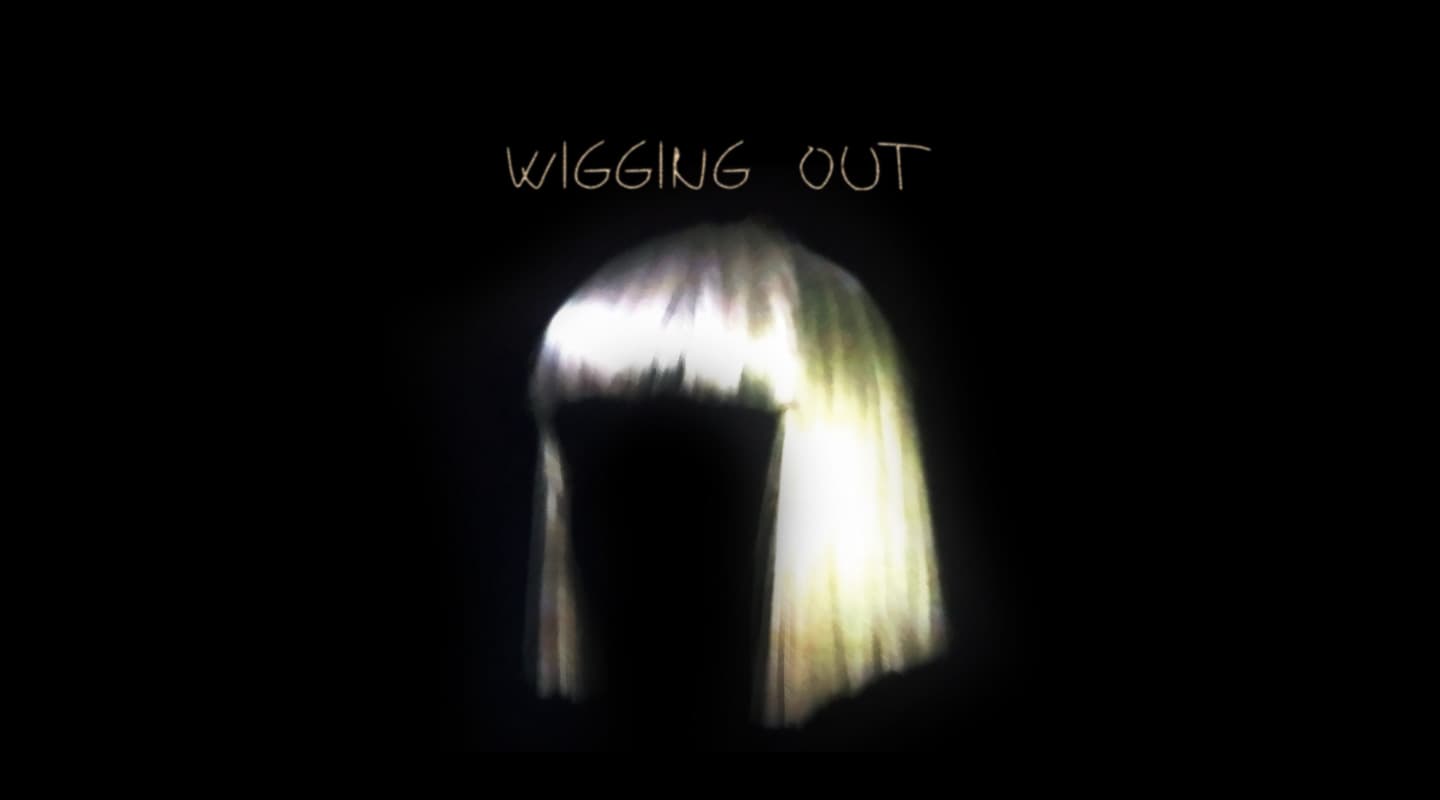
“My mic pres are… let me walk to my rack and shine a light so I can have a look… I have API 500-series mic pres, and two Neve 1073LBs and my two overhead and two kick mics go through my four Helios Type 69s. The overheads then go through a Manley Vari Mu limiter/compressor, and I have another Altec 1567a mixer which I send my two snare mics through before they go through a Urei 1176. I also use a distant Beyerdynamic ribbon mic on the drums, which goes through a Standard Audio Level-Or, and an important part of the drum sound on Sia’s record came from an RCA 77 ribbon, placed just in front of the kick."

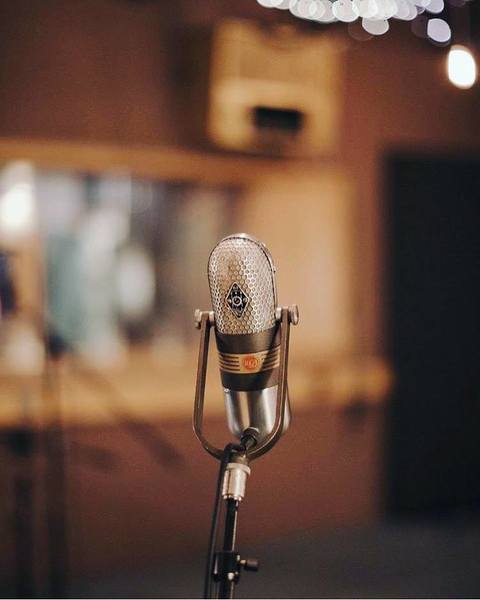
Mentioned in this Facebook post by SugarHill Recording Studios.
RCA released the 77 DX in 1954. This gem of a mic has a very dynamic frequency response depending on the angle in which it is positioned. It has recorded countless legends including Al Green, Elvis Presley, Frank Sinatra, Johnny Cash and more!! It is still widely used today especially for recording Brass instruments. Come try it for yourself.

Album Usage
The RCA 77-DX has been featured on the following albums:
![RCA 77-DX as heard on Atlantic City (Live in Jersey) [feat. Bruce Springsteen and Kings of Leon] by Kings of Leon & Zach Bryan (2025)](https://images.equipboard.com/uploads/album/image/586/atlantic-city-live-in-jersey-feat-bruce-springsteen-and-kings-of-leon.jpg)
Atlantic City (Live in Jersey) [feat. Bruce Springsteen and Kings of Leon]
Kings of Leon & Zach Bryan (2025)

No Better Than This
John Mellencamp (2024)

Fungii Mama
Billy Higgins & Cedar Walton (2023)
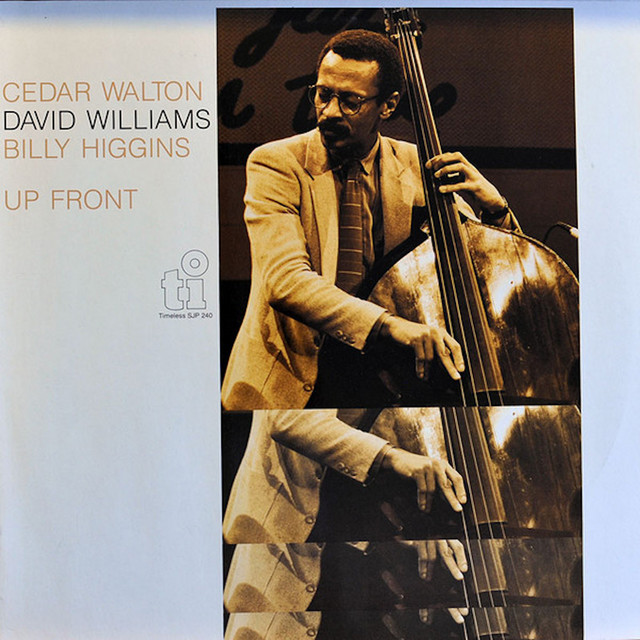
Up Front
Billy Higgins & Cedar Walton (2021)
Cannot Be, Whatsoever
Novo Amor (2020)
Gon' Boogaloo
C.W. Stoneking (2016)
Brown Sugar
The Rolling Stones (2015)
Would You Fight For My Love?
Jack White & Jack White (2014)
Oxymoron (Deluxe)
Schoolboy Q (2014)
Blunderbuss
Jack White & Jack White (2012)
Antibalas
Antibalas (2012)

I'm Shakin'
Jack White & Jack White (2012)
Sex On Fire
Kings of Leon (2009)
Only By The Night
Kings of Leon (2008)
Back To Black (Deluxe Edition)
Amy Winehouse (2006)
Complete Communion
Don Cherry (2000)
Dona Nostra
Don Cherry (1994)
Change Of The Century
Ornette Coleman (1960)
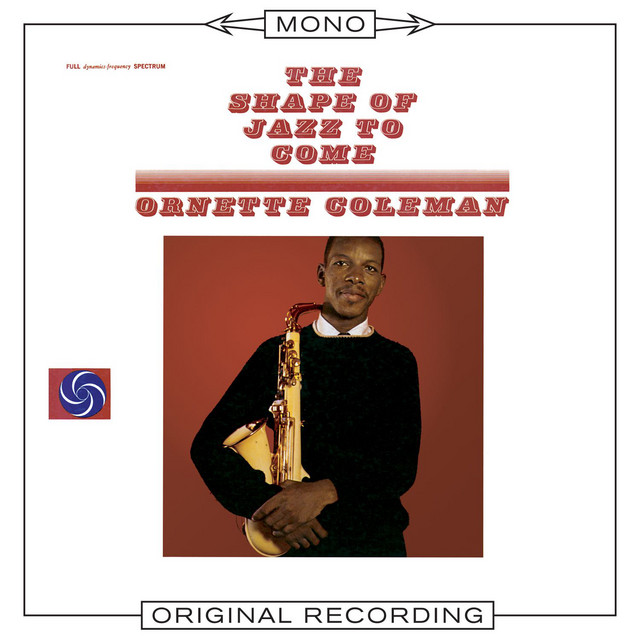
The Shape of Jazz To Come (Mono)
Ornette Coleman (1959)
Genre Usage
Based on how artists on Equipboard use this gear, it is most commonly found in the following genres.
Used With
Based on how musicians on Equipboard use RCA 77-DX, it is most commonly used with the following gear.


-s.webp?v=1784440566)


-s.webp?v=1784440121)


Similar
Add recommendation1 alternative for RCA 77-DX, curated by the Equipboard community.
More RCA Ribbon Microphones

$3,624.55
in Ribbon Microphones Rank


$1,449.99
in Ribbon Microphones Rank


$3,624.55
in Ribbon Microphones Rank


$850.00
in Ribbon Microphones Rank


$1,369.13
in Ribbon Microphones Rank


$2,200.00
in Ribbon Microphones Rank


$708.00 - $1,049.99
in Ribbon Microphones Rank


$1,499.00 - $1,599.00
in Ribbon Microphones Rank


$1,141.89 - $1,495.00
in Ribbon Microphones Rank


$332.49 - $411.00
in Ribbon Microphones Rank


$1,199.00 - $1,390.00
in Ribbon Microphones Rank


$999.00 - $1,439.00
in Ribbon Microphones Rank


$2,336.47 - $2,599.00
in Ribbon Microphones Rank


$382.00 - $519.00
in Ribbon Microphones Rank


$622.00 - $1,298.00
in Ribbon Microphones Rank


$149.00 - $249.00
in Ribbon Microphones Rank

$189.99 - $193.96
in Ribbon Microphones Rank


$95.00
in Ribbon Microphones Rank


$1,079.10 - $1,248.00
in Ribbon Microphones Rank


$1,037.00 - $1,599.00
in Ribbon Microphones Rank


$109.99 - $133.00
in Ribbon Microphones Rank

$222.00 - $349.00
in Ribbon Microphones Rank

$95.00 - $159.99
in Ribbon Microphones Rank

$2,589.00 - $4,299.00
in Ribbon Microphones Rank
.png?v=1784414220)


$35.00 - $169.00
in Ribbon Microphones Rank

$279.00 - $318.50
in Ribbon Microphones Rank

$300.00
in Ribbon Microphones Rank


$4,149.00 - $5,349.00
in Ribbon Microphones Rank


$75.00
in Ribbon Microphones Rank

Accessories & Related Items


Community setups


Gear Guides





Most Popular Ribbon Microphones
Most Popular Brands
-
Added to Equipboard on by
 tanya994
GearIQ 17
-


