
robcf's Reviews
25 reviews Back to robcf's Equipboard

252
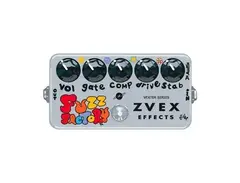
Fuzzy madness
I used this pedal since months but still have no clue what the control are really doing. This pedal makes dirty, noisy distortion that sound like a broken circuit. But that's what makes this pedal fun while tweaking around. However it's hard to dail-in the perfect fuzz-sound. But it's worth the search as there's no other pedal on the market like this one.
252
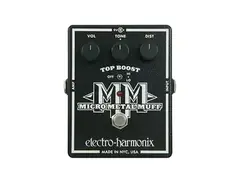
A muff without the fuzz
Calling this pedal a "muff" is misleading as this one has nothing to do with all the Big Muffs EHX is known for. It's not round or warm sounding at all. It's also not trying to emulate a tube-distortion. The Metal Muff delivers punishing distortion (say: "Metal Zone") with an tone-control that's basically scooping or boosting the mids to crazy levels as you turn the knob. The "Top Boost" is increasing the highs to almost uncontrolled levels, so better beware if you touch that switch. Maybe it's missing organic dynamics and seems more harsh, however it never ends up being muddy.
As much as this Metal Muff is all over the top, I still like it for being that way. If you're into making extreme metal like for example Anaal Nathrakh, this is the best pedal to go to.
252
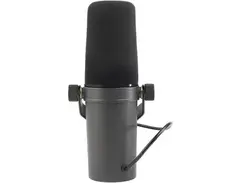
Alternative to condenser-mics
We use the SM7B for vocal recordings and it's sounds is awesome. The colouring is perfect for vocals rounding highs and giving bodily mids to the recorded vocal. You don't have to fool around with the EQs, just give it a little compression and it sounds "produced". You don't even need a popshield. But you'll need a strong micpreamp to get this mic going. This one rivals all those condensers mic shockingly well.
252
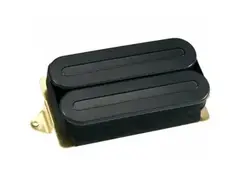
distort 'em all!
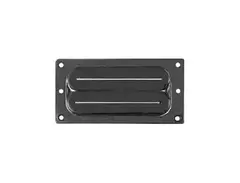
In search of the ultimate Death-Metal-pickup the output may seem the most important feature. The X2N even distorts in clean channesl and pushes every (!) amp into distortion. The character is not really bassy or harsh, despite the extreme output you’ll receive a balanced sound with round mids and some treble bite. If you are looking for a pickup that has tons of output while (surprisingly) providing an almost flat frequency curve - this is the one for you.
252
Fanboy acquisition
I'm a huge Pantera fan. I have seen them live 1994 and was flashed since. After years of playing guitar myself to the Pantera-classics I felt the need to get me a pair of the original Dimebag-pickup. Around 2004/2005 they weren't easy to find as some guy used the name for his own pickup company + Seymour Duncan released their Dimebucker. So I had to order the Bill Lawrence directly from the man himself. I have to admit: I had no idea how the sounded like and I couldn't even check them out as they didn't fit in any of my guitars. This pickup is huge and needs a deep guitar body to fit in. Finally after 10 years of resting in my cupboard of unused equipment it found its way to my RGIB (where it's screwed directly to the wood). The sound is really boomy with sharp high mids that add this pickup an interesting character. Really high output but less than the X2N for example. To my taste it could have tighter low-end. This pickup is not limited to brutal high gain distortion, it sound good in a crunch set if you use a treblebooster/tubescreamer.
-s.webp?v=1784014408)
252
the add-on to the SM57
I prefer the SM57 for guitar micing but to add more depth and bite to the signal the E906 is the best choice to my ear as a 2nd mic. It has got more focus on the high mids and gives high gain signals a really modern sounding response. Combined with the SM57 it's enables a good balance between the frequencies.
252
The standard to guitar micing
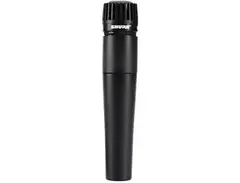
I used this mic since 20 year now for guitar micing. Of course it has absolutely no flat response. It adds more sizzling treble to the signal, but this does a big favor to the signal as it makes the whole guitar sound "open" and "fresh". Perfect for micing a speaker close to the center. But a good amount eq-ing is still recommended.
252
Pure stage-gold!
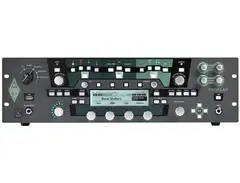
For studio-work I use the unpowered "toaster"-version since 5 years (but not solely!). For live performances the rackmount version was an obvious choice. Regarding the sound of the Kemper and the accuracy of profiling an original tube-amp I have to admit that this thing is not the absolute 100%-solution in every case despite all the praise you are reading elsewhere. Still this thing is a good alternative to using a tubeamp on stage especially when you have no crew to carry your stuff around.
It's well build and the handling of the controls are almost perfect and especially the powered version makes a lot sense on stage since you can route your signal to a cabinet and the DI-box at the same time plus feeding your inear-monitoring. To integrate and control other hardware the Kemper is not as versatile as a Helix. Also the effects-section feels limited in comparison to an AxeFX. But the focus of the Kemper is basically the amping itself and based on the use of it as an amp onstage, this is pure gold.

252
Good quality mixing reference
Very good quality headphones lasting for years without crumbling. I had the Beyerdynamic DT990 before but its boost in low-end and treble gave me a hard time mixing. The DT880 is way more flat in comparison with good resolution in the mids and a smooth bass response. The half-open-design might be bleeding on vocalrecordings, but for this the DT770 is more serviceable.
252
laser sword to the eyes
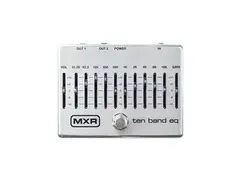
I use the MXR-EQ for pushing the signal in front of the preamp, like a tubescreamer but with more extreme settings. 10 bands are pretty much what’s needed if you don’t have a parametric device. The 2nd output lets me abuse it as a splitter. But be aware of its blue LEDs. So bright you need sunglasses to work with it. Otherwise good value.
252
no surprises
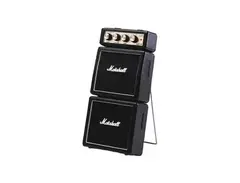
The small battery powered MS-4 is more of a joke than a real amp. Of course the small speakers sound neither big or loud. The headphone out is sharp and annoying. If you turn up you get a really fuzzy distorted sound with no definition just some flat mids. I recorded this a few times just for the effect of sounding “small”, but whoever can create a serious sound out of this deserves my respect. Maybe I should give it a try... but this may result in hard work.
252
The ultimate bass (for guitarists)
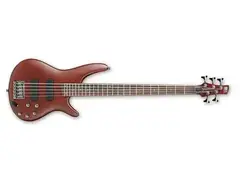
For guitarists it’s hard to get ahold of the basswork at times due to thicker necks. The Soundgear-basses of Ibanez have some of the most comfortable bass-necks on the market. They are fast and handy, especially guitarists will thank for that. Soundwise the active EQ works finely and lets you morph the sound of the bass in any direction you like. But this flexibility has a price as this bass lacks the character of basses that have significant coloration and frequency response like Music Man or Fender. But as with most gear, it’s a question of price. Especially for such a cheap price there’s nothing wrong with the solid Soundgear-bass.
252
More of everything.
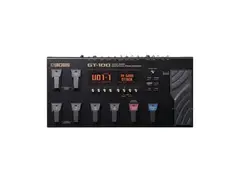
The BOSS GT-100 was a replacement for my GT-6 (that got lost and found again). While the GT-6 has its focus on the basic stomps the GT-100 expands to way more playful sound manipulation. More effects, more options, more controls. The amping section was improved a bit but couldn’t convince me but I used this one in 4-cable-method anyway. The only thing that is a step back from the GT-6 is the expression pedal that does not work as finely as before but feels a bit “steppy”. Otherwise as with all BOSS-equipment indestructible and the soundquality is very good. So when you’re looking for a compact way to replace a big collection of stompboxes, this is the way to go.
-s.webp?v=1783936816)
252
Pricey but almost indispensible
The Kemper controller is built like a tank and works without separate powering. Just connect it to the Kemper and it works. The guys at Kemper have been clever to go without an expression pedal, so this thing fits perfectly into a standard-rack. And you can add an expression pedal via cable connection if you really need one. The only bad thing about this one is the price. It’s a bit too expensive for what it really is: just a footswitch. On the other hand this is still the best solution for controlling the Kemper on stage.
252
Nothing missing here.
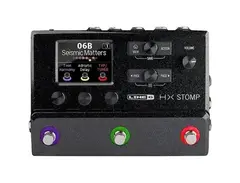
AxeFX and Kemper have set new standards in digital amping, but with the Helix-series Line6 got back on the map with a complete renewal: pedalfunction and a big step up in DSP-power and sound. But some may argue the original Helix was huge… not only in functionality but also in size. The Helix LT was a step in shrinking the whole thing. But the HX Stomp goes even further and squeezes the whole Helix to the size of a stompbox.
Of course in comparison to the original some features had to be reduced. Less routing options, less effect slots available and only 3 footswitches. So you have to really think about how to use it efficiently. But the controls are well thought out, you won’t miss a thing. And it works well in many situations, from DI to stompbox-use. The amps are way improved to the emulations on the POD. Especially for high gain this thing delivers the goods. Same for the effects. You can even import your own impulse responses which makes it even more flexible. Easily this thing became my flight rig. You get insanely big bang for the buck… and it still fits in your pocket (though this may look a bit like the “Sticky Fingers”-cover).
252
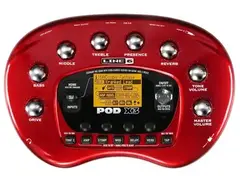
Reaching the next level of digital amping? Not really...
The X3 is (as most Line6-stuff) beautifully designed and valuable build. Fully packed with effects, amps, cab-emulation and fx-chain-options, so there is quantity and partly good quality. The feature of running 2 chains simultaneously is an interesting option, especially for bass. But the amp emulations were disappointing. I had a hard time to dail in something that delivers cutting mids as the distortion of the X3 delivered muddy and fizzy results in general. For clean sounds and bass the X3 had far more appropriate sounds. So this is a mixed bag as its core element (the digital amping) is also a weak point. 10 years after the inventive original POD has been released the X3 is far from having the same spark of revolution.
252
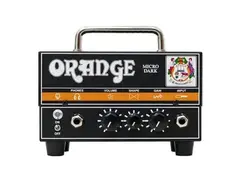
Size doesn't matter (at least in this case)
Way smaller than I expected and way louder than I hoped for. Don’t be fooled by its size. The Micro Dark is powerful enough to kick a 4x12-cabinet to rehearsal volume level. Soundwise it has in general scooped mids and a very heavy low-end. The highs are a bit fuzzy but acceptable.
The control options are kept very simple but the effects loop in the back makes up for it. To be honest I bought this for the fun of it. In combination with some pedals you can rival bigger (and more expensive) amps for sure.
252
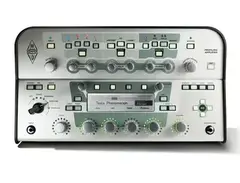
is this IT?
So much has been talked and written about the Kemper-amp, everybody seems to know this thing or at least has an opinion. Yes, it emulates pretty closely the sound of an amp-box-mic-setup and delivers many on-board-tools to tweak further into the realms of guitarsound. But still this thing has its limitations.
Yes, it reproduces the sound, but never 100%. The more complex the signal chain gets, the harder it gets for the Kemper to “catch” it. So if you’re working with multiple amps, multiple mics (including the mic phase) or distortion pedals it may not be the perfect blueprint you are heading for.
Also I feel the effect section is pretty good but could be improved in some parts. The delay effect is limited to basic functions, the noise gate has a clicky attack and the distortion-pedals mostly deliver useless dirt.
On the other hand you get one of best (maybe the best?) digital amps out there with one of the best emulation of tube amps, but it depends on what you are feeding in. As with all gear, it’s easy to work with it… but you still have to work with it.
-s.webp?v=1784014253)
252
The best At The noise Gate
If you’re absolutely in love with white noise ambience you should avoid this noise gate. For all fans of less minimalist noise should put this into every rig. This one does the job flawlessly especially in 4-cable-setting with an effects send/return-circuit. And as with all the other Boss-pedals, you can jump from a building with this one and best bet: this thing will survive. Anyway… don’t jump!
252
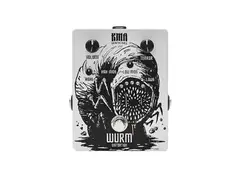
swedish death metal in a box
Swedish death metal of the early 90’s had a distinct guitar sound that can be described as muddy and brutal as hell. Lower mids growl through extreme amounts of distortion. Bands like Entombed, Dismember or Grave abused the original BOSS HM2, a pedal that works best in front of an power amp and some added gain on top. This Wurm-pedal here is a basically a boutique rebuild of the HM2 but with added equalizer-features and broader frequency response. And it works just as the original but with more accurate tweaking capabilities. If your willing to emulate the old Death Metal sound you will sure find it with this one.