
timebaby's Reviews
28 reviews Back to timebaby's Equipboard

387
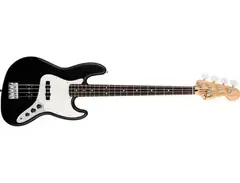
Sounds good, plays well
Fender’s MIM instruments from the ‘90s are due for a reappraisal. This is a solid bass at a good price point. The upsides are that it’s suited for a wide range of musical styles, not muddying up on the lower end even when picking fast. The high end is a little iffy; I’ve never quite been able to get that Big Black metallic treble out of it.
By far the worst thing about it is the weight, which is pretty unreasonable. I have gigged with it, but mainly in a scenario where the other guitarist and I switched off guitar/bass duties. I probably wouldn’t want to play it full time in a live setting.
387
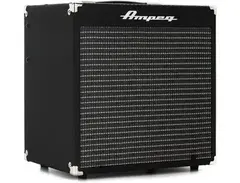
Excellent sound quality for the price
I've always been a fan of Ampeg's amps, and this one doesn't disappoint. It's a practice amp so the features are bare-bones, but it sounds incredible for such a cheap amp. It's not short on headroom, either. I keep the volume between 3 and 4, which is comfortable for a bedroom practice space, and it stays nice and clean if that's what you're looking for. The Super Grit Technology overdrive is nice enough, but I wasn't super impressed with it on this amp (I've tried the other amps in this series and the louder the amp, the better it sounds). I find it overdrives better by boosting the midrange and cranking the volume, but your tastes may vary.
For under $200, you can't beat this for a practice amp. Great headroom, good overdrive, and a 3 band EQ that will conjure up nearly any tone you want. I also like hitting it with a fuzz pedal for maximum doom.
387
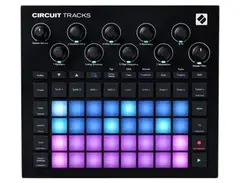
So close to greatness
There’s a lot to like about the Curcuit Tracks, in theory. It’s a compact groove box with a programmable internal synth engine, a fair number of sample slots, it’s own simple effects engine for reverb and delay, and other modern necessities for electronic music like side chain compression and ratcheting.
In practice, it doesn’t quite stick the landing, though. The main issue is that Novation forces you to do all the programming through their website, and somehow they decided it would be a good idea to make the synth sounds impossible to listen to without loading them into the Tracks’ internal memory. I don’t mind loading in samples through the site, though the option to add more than one at a time would be nice; but having to load your synth patches into the memory before you can hear them, then go back to the site to edit them, then reload them, and repeat until you’re happy, is an asinine design decision.
Other problems include a song mode that’s too fussy if you’re not making four on the floor dance music, and a single pair of stereo outputs which make recording a bit of a slog (unless you can get a mix you’re entirely happy with on the internal mixer, which I admit is probably good enough for most people who would buy a groovebox and not a pricier set up).
This isn’t a bad unit. Programming basic parts is pretty intuitive, though I often find myself wish for more steps instead of having to chain together separate 32 step sequences. The internal mixer is good (not great), the effects are pretty easy to use, and aside from the nonsensical synth programming, the Novation website through which all the patch programming flows is easy to use. As a cheaper, less functional alternative to something like the Elektron Digitakt, you can do a lot worse. I just wish Novation had done a little better.
-s.webp?v=1783807671)
387
Frustratingly limited
I want to give the Small Clone a better review. I used one for a long time as my primary chorus, and I'm sure I'll use it again, but at the time of writing, it just isn't giving me what I really want and I've replaced it with the Vibrato setting on the Earthquaker Aurelius.
My problem with the Small Clone isn't the quality of its chorus, which I would put up against any pedal on the market. It's the lack of control over its depth. As you're probably aware, the Small Clone doesn't have a depth knob, just a switch that toggles between a very high or very low depth. For me, the very high setting is just a little too much, and the very low setting is way too '80s and flangey. What's left is a pedal that has a single usable setting that constantly drove me crazy by being almost perfect.
The Small Clone is a classic and I would recommend it to anyone who's not as particular about modulation as I am, but for my personal use, it's just not tweakable enough.
387
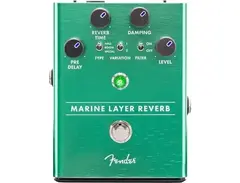
A Great, Affordable Every Day Reverb
As I've mentioned in other reviews, reverb is my favorite effect, and I currently have 3 on my board--this, the Afterneath, and the Catalinbread Soft Focus. The selling point of this one for me was its shimmer feature along with all the standard room and hall settings. As it turned out, I wasn't a fan of the shimmer. I find the octave up on the trails to be way too pronounced, and once I got the Soft Focus, which has the best shimmer I've found, I switched off the shimmer on this pedal for good.
However, I still love this pedal and use it as a basic, subtle reverb for when I'm not trying to go wildly over the top. Whether you crank up the reverb level and time, or dial it down to something much more natural, it always sounds good. It doesn't murk up your clean tone, and it doesn't get too crispy when you hit it with distortion or fuzz.
That's the good. The bad (aside from the problems with the shimmer I mentioned) is that there isn't a great deal of difference between the settings as far as their character. That's fine for me and how I use it, but you probably don't want it as your only reverb. In the same vein, there are no spring or plate settings, which seems like an oversight. Again, not a huge problem for me as I rarely use spring reverb, and the Soft Focus has me covered for plate sounds, but another reason to look elsewhere if you only want one reverb on your board.
Still, the sound is high quality even if the options are somewhat lacking, and the price is right. If you don't mind tinkering with software, something like the HOF is probably a better choice, but I'm a fan of the sound I get from this, and anyway, I'm always looking for an excuse to cram another reverb onto my board.
-s.webp?v=1783782658)
387
Weird Choice For a Remake
Of all the synths Uli could have chosen to resurrect, the Wasp has to be one of the least likely. But hey, that's cool, it's a neat vintage British synth that I'm glad to see get a second chance at life, regardless of how I feel about Behringer's business practices.
That said, this is a very specific unit. Like its name suggests, its bread and butter is buzzy lead sounds. To be honest, this is my first analog synth, so I'm far from an expert on their operation. But to my novice mind, this one seems to have a good range of controls, resulting in everything from traditional lead sounds to more experimental bloops and buzzes. I had hoped to use it mainly for dirty basslines, and haven't found it to be particularly great on that front, but it's a budget synth so I'm not complaining.
387
Wild Sounds On The Cheap
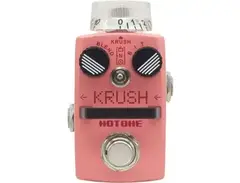
Occasionally I'll pick up a cheapo pedal just to get an idea of whether I want to spend more on a higher end model. This little guy is pretty great. As a preface for everything I'm about to say, I got this for $25.
So as for the main effect, the bitcrushing is pretty good. Not super accurate to what the effect is actually supposed to simulate, but it adds a really great crunch to drum samples.
There's also a very basic ring mod sound, which is fine if you like that effect. I've never had much use for it, but again this is a $25 pedal that does more than just one simple effect.
The switch that simulates an old-timey radio is actually useful. Of course it's essentially just a high pass filter, but I usually find this kind of "lo-fi" effect gimmicky and I actually like this one.
In case I hadn't already mentioned it, this is a $25 pedal. And if you crank it loud enough, you even get a pretty unusual overdrive/distortion. This is a real bargain if you just want to fool around with this sort of effect. Obviously something like the Dr. Scientist Bitquest is going to do a far better job, but this has to be the best value for money I've ever gotten out of a pedal.
387
Great inexpensive mixer
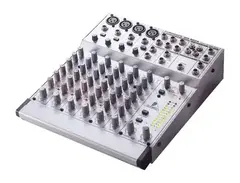
This is an extremely solid little mixer that I've been using in my bedroom studio since 2001. I don't have a lot of experience with different mixers, so I don't have a great grasp on what people want from them, but I do know that this one does everything I've ever needed it to. My only complaint is that I'd rather have volume sliders than knobs, but obviously that wouldn't have fit in the form factor. Great for running my synths into my audio interface.
-s.webp?v=1783777396)
387
ROMpler paradise
100% of its time, for better and worse. Some of its sounds are classics (run its strings and pianos through a good reverb and they're as good as much more expensive modern units), and some are horribly dated. You can get a lot out of it, but programming it takes an advanced degree in computer science. Expandable, but the expansion cards are way too expensive on the used market. I'm not the person to write a comprehensive review of a synth like this, but I can say that for all its faults, I find it impossible not to love, just like the decade that spawned it.
387
Solid Volume Control
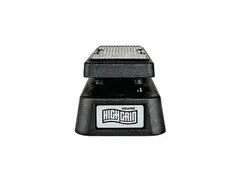
Ok, so I'm not really a player who tinkers a lot with volume. The styles of music I play tend to favor extreme tones, whether it's loud, saturated distortion/fuzz, or heavily layered time and modulation effects. I'm not someone who's going to "roll back the volume knob" to clean up a fuzz or an overdrive, because I just don't play the kind of music where that's particularly desirable. When I use this pedal it's basically for doing swells, or turning the volume down in a live setting between songs. The sweep is good enough for those purposes.
I will say that despite feeling like a brick, the teeth on the treadle got loose from the volume pot on mine, and I had to take it apart and reassemble it to get the full sweep back, so maybe the build quality could be better.
387
Great Gated Sounds, But Not Versatile
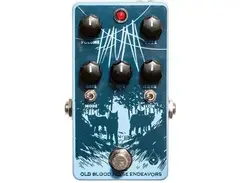
This is a weird pedal that makes me feel like I don't know how to use it. It seems like everyone I watch play one gets all kinds of sounds out of it, but personally I find it hard to get anything but the gated "splatty" sound, even with the gate control all the way down. That's a great tone, but I was hoping for this to give me everything I wanted in a fuzz from the gated, power-starved sound to Big Muff-like tones, and it just doesn't. Or at least I haven't figured out how to make it.
So yeah, top notch at what it does, but I was expecting it to do more. Maybe I'm the problem.
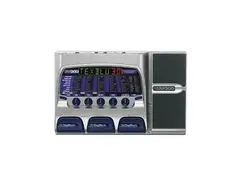
387
Gets too much hate, especially for the price
I feel like this unit has gotten a bad name due to Youtubers who plug it in and laugh at the presets. Admittedly, those are all about as subtle as a brick to the face, drenched in reverb, delay, and chorus for no reason other than to make sure you know good and well that you're getting lots of effects for your money.
Move beyond that, though, and you find a pretty terrific unit for the price. Digital distortion can be really dicey, but with the RP300's range of different distortion types, EQs, and cab emulation, you can find some good sounds if you have the patience. Its reverb, modulation, and delay are all great for a unit in this price range, plus you get wah, Whammy, or volume control from the expression pedal on top of that. Obviously there are much better multi-effects units, but I'm not aware of anything in this price range that comes close.
So what's the downside? Well, there are all those cheesy presets that can't be overwritten, which is pretty limiting. There's also not enough sweep on the expression pedal, which keeps the wah from being as good as it could be. Much worse is the build quality. The metal housing feels solid, but the footswitches and knobs are extremely cheap and plastic. I had to clean mine frequently or the footswitches would become spotty, and it never left my bedroom studio, so I can't imagine gigging with one. The knobs are also garbage, and have to be babied or they'll "miss" and not change parameters as you're turning them. So obviously, Digitech chose to prioritize cramming in as many sounds as possible over making a unit that could stand up to the kind of abuse a floor unit is going to take.
With all the great stuff out there from Line 6 these days, there's no reason for a serious player to get one of these. But for someone who's just starting out, it has everything you could hope for and a lot more (even a half-way decent tuner). And if you happen to still have one in your closet like me, you'll probably find yourself tempted to pull it out every now and then.
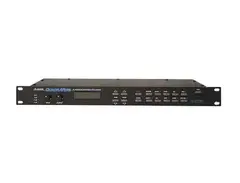
387
Past its prime, but still very useable
Alesis gear has never been top of the line, but back in the '90s you were thrilled to have it around if you were on a tight budget. I bought my Quadraverb over 20 years ago, and it's still going strong today. I don't make much use of its modulation sounds, which are all done far better by pedals and plug-ins these days. That said, its reverb is still excellent, especially on synths. You can even get more out of it by cranking the input knob to overdrive the reverb, which works better than you'd expect.
Like so many rack units and synths from this era, programming it is a bit of a pain, with lots of menu diving on its little LCD display, but it's not as bad as it could be. Choose one of the preset signal paths, edit each effect to your taste, and hit save. The buttons don't feel great, but at least the value up/down buttons speed up the longer you hold them which makes scrolling through the numerous built in and user programmable presets a little more convenient. It's probably not going to be anyone's primary effects unit these days unless you're intentionally going for the cheesier side of '90s rack sounds, but as a companion to your favorite hardware synth, it's a great affordable unit.
-s.webp?v=1768587889)
387
Very nice, period
If you don't know Danhausen, the pro wrestler whose wacky demon gimmick the pedal is based on, you've probably never heard of this pedal. That's too bad, because it's a great little fuzz, very similar to the Fuzz Factory.
The gimmick is based on the wrestler's catchphrase, "Very Nice, Very Evil." Step on the left switch once and you get a normal, high gain fuzz (very nice) which sounds especially great on bass. Step on it again and you get wild Fuzz Factory-like oscillations and feedback (very evil). The controls for this mode are hidden away inside the pedal, which is an unfortunate design decision, and really the only thing that keeps it from being a fixture on my board.
Since this had a relatively low production run and was basically made only for fans of the wrestler, it's probably not worth shelling out what it costs if you're not also a Danhausen fan (just get a Fuzz Factory), but if somehow you find one on the cheap, it's worth snapping up.
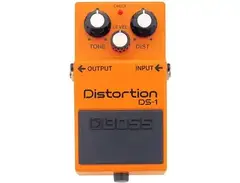
387
At least it's cheap
There are worse distortion pedals out there than the DS-1, and I know some people think that harshly criticizing any Boss pedal is blasphemy, but the DS-1 just isn't very good. Out of the box, it just feels like you can't push it hard enough to get the sound you actually want. There's no bite in the mid-range, nothing special about the character of the distortion, and out of control noise when you try to compensate for its shortcomings by cranking the volume. Of course a lot of this can be fixed by running it alongside an EQ pedal, but if you have to have a second pedal to make the first one worth playing, that's a bad sign.
Only recommended if you literally can't afford anything else of similar build quality, or if you're a tinkerer and want to do one of the many mods that vastly improve on its stock sound.
387
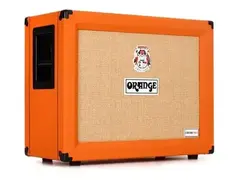
Hard to imagine a better solid state combo
I had always avoided Orange amps because I associated them with stoner metal, which is a genre I like but not one I play. I played this one for fun at Guitar Center, and was so impressed by both its clean and distortion sounds that I left with it that day.
For a solid state amp, the distortion is absolutely incredible. I love pedals, but this is my main distortion now. The only down side is that it's pretty saturated even at lower gain settings, and the mid frequency EQ doesn't get quite as biting as I'd like it to. Those are really minor complaints, though. Like I said, I love it so much it put me off of buying any more distortion pedals for the time being.
The clean channel is what really amazed me, though. I'm always looking for pedal platform amps, and running my board into the effects loop on the clean channel sounds gorgeous. Without the effects, it has a sparkle not unlike classic Fender amps, and I can't give a higher compliment than that.
For the money, I can't recommend this enough. Every bit as good as far more expensive combos.
387
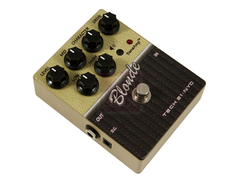
Makes the Legendary Sound Affordable
When I was playing in a gigging band with a practice space where we could get as loud as we wanted, I had a silver face Fender Bassman head, which I sold to downsize after that band split up. Of course I’ve never forgiven myself. But at least this pedal provides that nice sparkly clean sound at about 1/10th of the price. When I was playing through a cheapo Behringer combo amp that lacked any character, this lived on my board as an always on EQ. Once I upgraded to an Orange, it moved off the board and onto my shelf of studio toys. Still love it to death.
387
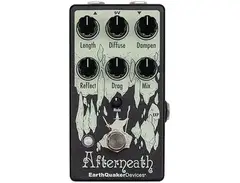
A Godsend for reverb freaks
Reverb is my favorite effect, and at times I want something that pushes all boundaries of good sense. In the past I had to chain several digital effects units together with cranked hall settings to get anything approaching what this pedal does in a Boss-sized footprint.
Like all Earthquaker pedals, it can be a bit cantankerous and unpredictable, but if you like borderline infinite reverb trails, this is the gold standard. Definitely not an always on background reverb; this is as in your face as it gets, and I can’t live without it.
387
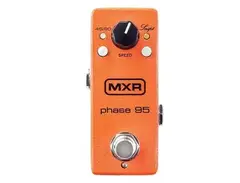
Does its job
I love gear like this that saves those of us who don’t care about collecting from paying through the nose for basic effects that are just expensive because they’re “vintage.” I especially appreciate it in the case of this pedal which showed me that I would have been really unhappy shelling out for one of the vintage units it contains.
That’s not to talk down a classic. The Phase 90 is my favorite phaser ever, and I would actually give this five stars if it was just a mini version of that pedal. But it also contains the Phase 45 circuit, which I find to be tinny and underwhelming. Having never played the original, I can’t say if that’s it’s natural sound or if this is a bad re-release, but I set this to the Phase 90 Script setting and forget it. And used like that, it’s perfect.