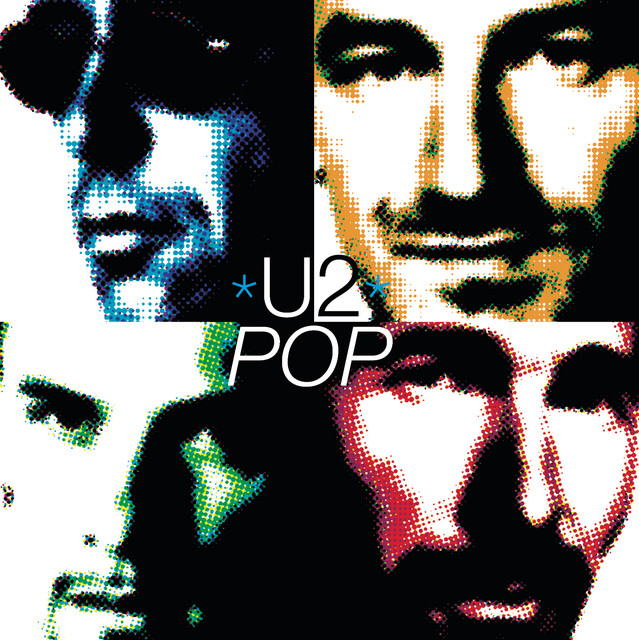
U2 – Pop
The music gear and equipment used by the artists, producers, engineers, and more involved in the making of the 1997 album Pop.
Music from Pop
Artists on Pop


Gear Used On Pop
Explore the instruments, equipment, software, and production tools used in the making of U2 – Pop (1997). Click more on each item to see exactly how it was used.
Effects Pedals used by The Edge on Pop

Avg price: $712.74
The Edge has utilized the Lovetone Doppelganger phaser pedal since the Pop era, as shown in a user-uploaded photo on BlogSpot.


Electro-Harmonix EH-1335/EH-3075 Hot Tubes
Avg price: $200.00
The Edge utilized the Electro-Harmonix EH-1335/EH-3075 Hot Tubes overdrive pedal during U2's Pop era, as evidenced by a photograph in the "Pop Pedals 2" album on Photobucket.
-m.webp?v=1784818685)
Electro-Harmonix Deluxe Electric Mistress
Avg price: $296.28
In this video that shows longtime U2 guitar tech Dallas Schoo inspecting Edge's Bob Bradshaw-designed rig prior to 1997's PopMart Tour, a Deluxe Electric Mistress pedal is visible at the 15-minute 31-second mark.

Electro-Harmonix The Clone Theory
Avg price: $138.53
In this video that shows longtime U2 guitar tech Dallas Schoo inspecting Edge's Bob Bradshaw-designed rig prior to 1997's PopMart Tour, a Clone Theory pedal is visible at the 15-minute 31-second mark (it's on the lower-right section of the shelf in this shot).


Electro-Harmonix EH-7811/EC-2020 Stereo Memory Man
Avg price: $549.82
In this video that shows longtime U2 guitar tech Dallas Schoo inspecting Edge's Bob Bradshaw-designed rig prior to 1997's PopMart Tour, a Small Cone pedal is visible at the 15-minute 31-second mark (it's in the upper-right corner of the drawer that is pulled out in this shot).
-m.webp?v=1784818736)
Avg price: $94.18
In this video that shows longtime U2 guitar tech Dallas Schoo inspecting Edge's Bob Bradshaw-designed rig prior to 1997's PopMart Tour, a Blue Box pedal is visible at the 15-minute 48-second mark.


-m.webp?v=1784732298)
Avg price: $650.00
In this video that shows longtime U2 guitar tech Dallas Schoo inspecting Edge's Bob Bradshaw-designed rig prior to 1997's PopMart Tour, a Superfuzz pedal is visible at the 15-minute 48-second mark. (It's in the upper-left corner of the shelf that is pulled out during this shot. Despite being unusually colored in black, the SUPERFUZZ legend can clearly be seen across the gray rubber tread.)
Guitars used by The Edge on Pop

This is most famously used in the "Discotheque" video, and was probably used for recording "Pop."
Amplifiers used by The Edge on Pop

Avg price: $333.17
In this video that shows longtime U2 guitar tech Dallas Schoo inspecting Edge's Bob Bradshaw-designed rig prior to 1997's PopMart Tour, a GSP-2101 rack unit is visible at the 13-minute 11-second mark.
Studio Equipment used by The Edge on Pop

In this video that shows longtime U2 guitar tech Dallas Schoo inspecting Edge's Bob Bradshaw-designed rig prior to 1997's PopMart Tour, a Replifex rack unit is visible at the 13-minute 11-second mark. (It appears to be used to create the distinctive modulated tone on "Staring at the Sun.")

DigiTech 2112 Studio Guitar System
In this video that shows longtime U2 guitar tech Dallas Schoo inspecting Edge's Bob Bradshaw-designed rig prior to 1997's PopMart Tour, a 2112 rack unit is visible at the 13-minute 10-second mark.

Avg price: $220.00
Used on the PopMart, as specified by tech Dallas Schoo in this September 1997 Guitar World interview titled "Closer to The Edge".
One irreplaceable effect is the Edge's Korg SDD-3000 digital delay. "That's one of his favorites because it has so much warmth," says Schoo. "Most of the albums were made with that delay." Other processors in the Edge's rack include a Roland SDE-3000 digital delay and Yamaha SPX90, Kolrg A3, Rocktron Repliflex, DigiTech 2112 and Eventide H3000 multi-effectors. He also carries a full array of pedals, indluding a Dunlop Fuzz Face, Dunlop and Bradshaw multiple-wah systems, several Boss distortion units, an Electro-Harmonix Big Muff, and Lovetone's Big Cheese distortion, Doppelganger phaser and Meatball envelope follower.

Larry Mullen, Jr.
Roles:
Microphones used by Larry Mullen, Jr. on Pop

Avg price: $614.38
Used for the bass drum on Achtung Baby and Pop, as explained by engineer Robbie Adams in this July 1997 Sound on Sound interview.
DECONSTRUCTING DRUMS
Three years ago, U2 engineer Robbie Adams explained in SOS how he recorded Larry Mullen's drums with just three mics, an approach he had picked up from Flood, who, said Adams, "is bored with all this traditional, big stereo nonsense." Flood explained that his way of recording drums was partly born from necessity, and partly from reading Mark Lewisohn's classic book on The Beatles' recording sessions: "When we were working on Achtung Baby, we had two drum kits set up, and I had very few channels on the desk, so that was a bit of a problem. I noticed from the photographs in the Beatles book how there was always one mic parked just above the drum kit. I thought it was maybe just for the photo or something, but then I saw it in other studio shots as well, and so, because of the problem I had with too few channels, I decided to try it out on one of the two kits. I put one mic on the bass drum -- an AKG D12 or Neumann U47 -- a Shure SM57 on the snare, and an SM58 as the overhead just above the kit.
"What started to happen was that people would prefer that drum sound, even though it's virtually mono. I also noticed that with Larry, who is a powerful drummer, when you put the drums in stereo you have to have the levels up higher on playback, whereas the mono drums were more powerful, even at lower levels. When I thought about it, I realised that if you're standing in front of a drum kit, you hear it in mono -- you don't hear the toms panning neatly from left to right in your ears. Also, a mic just above the kit compresses the sound. And that's the same effect that happens in the ears of a drummer or when you stand close to the kit; the sound is compressing in your ears because of the level of air pressure. So when you have a cheap, lo-fi overhead mic in that position, and add compression on a mic that's already compressing, it brings out the excitement, the same feel and natural balance that the drummer is getting."
"I've used the three-mic approach as a starting point ever since. You can do all sorts of things with it. For example, if the room you're recording in is rather dead, you can add a bit of room reverb just on the mad-sounding compressed mic. That will give the illusion of the drums having space, and yet the physical punch still comes from the middle. I will sometimes add two more overheads, like a 414 or 87, placed a bit higher up, or at the same height as the drummer's ears. A lot of the times we end up monitoring kick, snare and these higher overheads, and then if the track sounds a bit lame, we'll feed that extra low overhead mic in, which can bring out all the reflections that the drummer gets and that you may not hear normally. It's always good to experiment and listen to the sound the drummer gets in the room. When we were working on Pop in Miami, we were in a room that had very little character, so we put the two ambient mics right in the corner, pointing towards the ceiling, away from the drum kit, thus deliberately creating a woolly, booming drum sound that went well with the brightness of the drum kit. We were always pushing for character, and trying to stay as far away as possible from a generic rock drum sound."

Avg price: $16,111.00
Used for the bass drum on Achtung Baby and Pop, as explained by engineer Robbie Adams in this July 1997 Sound on Sound interview.
DECONSTRUCTING DRUMS
Three years ago, U2 engineer Robbie Adams explained in SOS how he recorded Larry Mullen's drums with just three mics, an approach he had picked up from Flood, who, said Adams, "is bored with all this traditional, big stereo nonsense." Flood explained that his way of recording drums was partly born from necessity, and partly from reading Mark Lewisohn's classic book on The Beatles' recording sessions: "When we were working on Achtung Baby, we had two drum kits set up, and I had very few channels on the desk, so that was a bit of a problem. I noticed from the photographs in the Beatles book how there was always one mic parked just above the drum kit. I thought it was maybe just for the photo or something, but then I saw it in other studio shots as well, and so, because of the problem I had with too few channels, I decided to try it out on one of the two kits. I put one mic on the bass drum -- an AKG D12 or Neumann U47 -- a Shure SM57 on the snare, and an SM58 as the overhead just above the kit.
"What started to happen was that people would prefer that drum sound, even though it's virtually mono. I also noticed that with Larry, who is a powerful drummer, when you put the drums in stereo you have to have the levels up higher on playback, whereas the mono drums were more powerful, even at lower levels. When I thought about it, I realised that if you're standing in front of a drum kit, you hear it in mono -- you don't hear the toms panning neatly from left to right in your ears. Also, a mic just above the kit compresses the sound. And that's the same effect that happens in the ears of a drummer or when you stand close to the kit; the sound is compressing in your ears because of the level of air pressure. So when you have a cheap, lo-fi overhead mic in that position, and add compression on a mic that's already compressing, it brings out the excitement, the same feel and natural balance that the drummer is getting."
"I've used the three-mic approach as a starting point ever since. You can do all sorts of things with it. For example, if the room you're recording in is rather dead, you can add a bit of room reverb just on the mad-sounding compressed mic. That will give the illusion of the drums having space, and yet the physical punch still comes from the middle. I will sometimes add two more overheads, like a 414 or 87, placed a bit higher up, or at the same height as the drummer's ears. A lot of the times we end up monitoring kick, snare and these higher overheads, and then if the track sounds a bit lame, we'll feed that extra low overhead mic in, which can bring out all the reflections that the drummer gets and that you may not hear normally. It's always good to experiment and listen to the sound the drummer gets in the room. When we were working on Pop in Miami, we were in a room that had very little character, so we put the two ambient mics right in the corner, pointing towards the ceiling, away from the drum kit, thus deliberately creating a woolly, booming drum sound that went well with the brightness of the drum kit. We were always pushing for character, and trying to stay as far away as possible from a generic rock drum sound."
-m.webp?v=1784818695)
Avg price: $3,628.63
Used for overheads on Pop, as explained by engineer Robbie Adams in this July 1997 Sound on Sound interview.
DECONSTRUCTING DRUMS
Three years ago, U2 engineer Robbie Adams explained in SOS how he recorded Larry Mullen's drums with just three mics, an approach he had picked up from Flood, who, said Adams, "is bored with all this traditional, big stereo nonsense." Flood explained that his way of recording drums was partly born from necessity, and partly from reading Mark Lewisohn's classic book on The Beatles' recording sessions: "When we were working on Achtung Baby, we had two drum kits set up, and I had very few channels on the desk, so that was a bit of a problem. I noticed from the photographs in the Beatles book how there was always one mic parked just above the drum kit. I thought it was maybe just for the photo or something, but then I saw it in other studio shots as well, and so, because of the problem I had with too few channels, I decided to try it out on one of the two kits. I put one mic on the bass drum -- an AKG D12 or Neumann U47 -- a Shure SM57 on the snare, and an SM58 as the overhead just above the kit.
"What started to happen was that people would prefer that drum sound, even though it's virtually mono. I also noticed that with Larry, who is a powerful drummer, when you put the drums in stereo you have to have the levels up higher on playback, whereas the mono drums were more powerful, even at lower levels. When I thought about it, I realised that if you're standing in front of a drum kit, you hear it in mono -- you don't hear the toms panning neatly from left to right in your ears. Also, a mic just above the kit compresses the sound. And that's the same effect that happens in the ears of a drummer or when you stand close to the kit; the sound is compressing in your ears because of the level of air pressure. So when you have a cheap, lo-fi overhead mic in that position, and add compression on a mic that's already compressing, it brings out the excitement, the same feel and natural balance that the drummer is getting."
"I've used the three-mic approach as a starting point ever since. You can do all sorts of things with it. For example, if the room you're recording in is rather dead, you can add a bit of room reverb just on the mad-sounding compressed mic. That will give the illusion of the drums having space, and yet the physical punch still comes from the middle. I will sometimes add two more overheads, like a 414 or 87, placed a bit higher up, or at the same height as the drummer's ears. A lot of the times we end up monitoring kick, snare and these higher overheads, and then if the track sounds a bit lame, we'll feed that extra low overhead mic in, which can bring out all the reflections that the drummer gets and that you may not hear normally. It's always good to experiment and listen to the sound the drummer gets in the room. When we were working on Pop in Miami, we were in a room that had very little character, so we put the two ambient mics right in the corner, pointing towards the ceiling, away from the drum kit, thus deliberately creating a woolly, booming drum sound that went well with the brightness of the drum kit. We were always pushing for character, and trying to stay as far away as possible from a generic rock drum sound."
Drum Hardware used by Larry Mullen, Jr. on Pop

Yamaha WHS860 Remote Wire Hi-Hat Stand
Larry Mullen Jr. used the Yamaha WHS-860 for the Discotheque music video.
Guitars used by Bono on Pop
Semi-Hollowbody Electric Guitars

This guitar was used by Bono during the Popmart tour for "Gone," as seen in this clip here.