Garth Hudson
Role
Genre
Group
Role
Genre
Group
Garth Hudson's Gear


“To begin at the beginning: In late 1961, having been pursued by Levon Helm and Ronnie Hawkins for some time, Garth Hudson was playing hard to get. Although asked to join The Hawks as pianist, Garth, feeling he couldn't match the rude power of his hammer-breaking predecessors, and mindful of the low opinion his family held of bar musicians, he coolly told Ronnie he preferred to play organ. Discussing this with his right hand man, Levon Helm, Ronnie decided that Garth had to be secured at any reasonable cost. They finally offered Garth two incentives: a retainer in addition to payment for gigs, hitherto referred to as music teacher wages for the benefit of his parents, and a new Lowrey organ, a model FL (Festival).
The Festival, Lowrey's first full-size console model, was physically influenced by the industry standard Hammond B2/B3 series, whose popularity among jazz and blues performers had as much to do with portability as it had to do with the legendary tonewheel sound - their "four-poster" style cabinets were gutted out, working musicians alternatives to the churchier-looking Hammond C3's and A100's. Portability was still a relative term, though, with a B3 weighing 425 pounds, and the Lowrey FL around 390. A separate external speaker, most commonly a Leslie rotary type, would be substituted for the internal ones.
Although outwardly resembling the B3, Lowrey made no attempt to mimic Hammond's trademark sound, which they regarded as inferior (it was, in terms of its resemblance to a pipe organ) and archaic (Hammonds' technology did have numerous limitations). Lowrey's market was the burgeoning home organ trend - essentially still classical style instruments with a peppering of novelty effects mostly inherited from the glamorous theatre organ "tradition". One of these effects, the exclusive Lowrey "glide" footswitch, particularly appealed to Garth. Originally intended to imitate a Hawaiian guitar or slide trombone, he modified the factory preset so that the organ pitch could be "bent" down a whole tone, rather than just a half-step. His solo in "The Shape I'm In", from The Last Waltz, is an obvious example of this effect, and his future Lowrey's would all have this alteration.
Another interesting feature of these early consoles was the stereo capabilities - Lowrey had separate outputs for upper and lower keyboards, and Garth would later use a separate Leslie speaker for each of these. Starting out he used a Leslie model 45 to the right of the Lowrey, and like all pre-'63 Leslies this was a single speed (fast/off) cabinet. The fast/off sound can be heard on the Hawks early singles, right through to Dylan's performances at the end of their European tour in 1966.”
Find it on:


"He also bought an early example of the Hohner Clavinet, a model II, which sat atop the Lowrey and offered a kind of electric harpsichord sound. This model was later played - famously - through a wah-wah pedal for the jaw-harp sound on "Up on Cripple Creek", and later still for The Band's cover of "Mystery Train"."
Find it on:

Shown around the 0:31 mark. Garth Hudson is seen playing a Yamaha CS-80 Synthesizer
Find it on:

"On the left is a Roland SH-2000 lead synth on top of what appears to be various rackmount mixers and other processors."
Find it on:
-m.webp?v=1783152119)

"By all accounts fewer than one hundred of these were ever produced. Atop the KC-1 was a Yamaha SY-2, another preset-based monophonic synth."
Find it on:

"The saxophones have also come and gone since Garth mimmicked those Lee Allen solos in the mid-fifties. Although basically relying on a Selmer Mk VI tenor, he also owns one now which once belonged to Vido Musso, the tenor legend from the Stan Kenton Band."
Find it on:

"The 103 Leslie, although often out of sight, probably served as amplification for the brass and string symphonizer."
Find it on:

"The transistorised model was a Lowrey Lincolnwood Deluxe, model TSO-25 and it made its debut at the Woodstock Music and Arts Festival in August 1969."
Find it on:

"In photos from this period I've also seen a Guild Echorec (by Binson) tape echo unit perched atop the clavinet. It was probably used for a chorus effect on the clavinet, as well as adding occasional delay effects to the Festival."
Find it on:

"Additional colour on Music from Big Pink came from an RMI Rock-Si-Chord, which supplied the shimmering percussive sounds on "In a Station" and other tracks."
Find it on:

In this photo, Garth Hudson can be seen playing a Farfisa Professional organ with The Band.
Find it on:

An RMI Electra-piano can be seen on the right of Hudson's keyboard rig.
Find it on:
-m.webp?v=1785078049)
In this photo from the Band’s concert at Sunday Break II on September 5, 1976, a Hohner Clavinet C can be seen on the left side of Garth’s keyboard rig (above left hand with white top).
According to this site, Garth replaced his old Clavinet II with the newer Clavinet C around 1973.
Find it on:

In a video from 1986 at the Lone Star Cafe, Garth Hudson is seen playing the Yamaha DX7, as documented by the Instagram post from thebandpodcast.
Find it on:

In this video of The Bands last waltz you can see Garth playing the accordion
Find it on:


In this article it is stated that Hudson used the synth on the “The Last Waltz”
Find it on:
This is a community-built gear list for Garth Hudson.
- Find relevant music gear like Pianos, Keyboards and Synthesizers, Microphones, Saxophones, Woodwinds, and other instruments and add it to Garth Hudson.
- The best places to look for gear usage are typically on the artist's social media, YouTube, live performance images, and interviews.
- To receive email updates when Garth Hudson is seen with new gear, follow the artist.
Discography
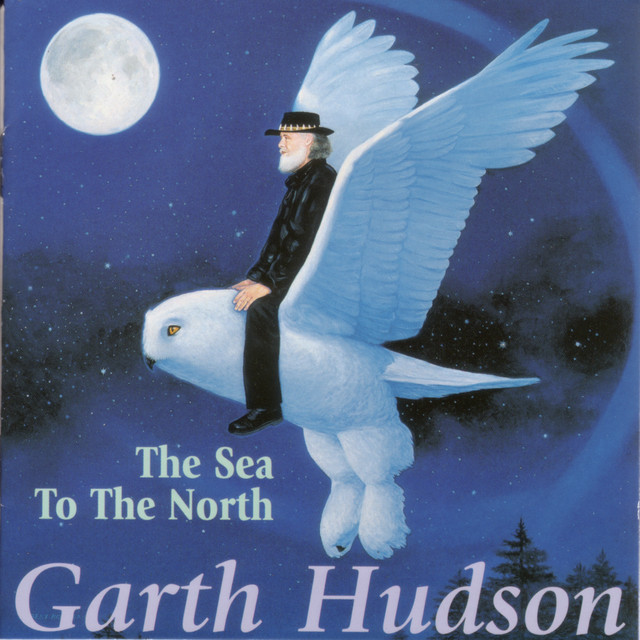
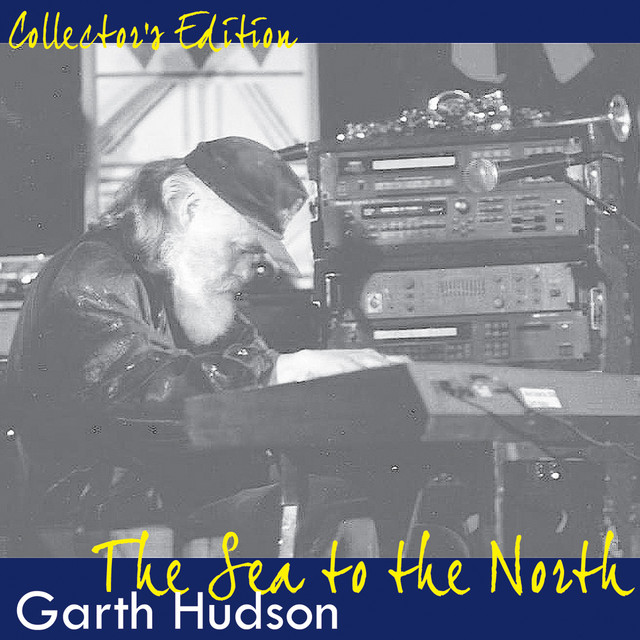









.webp)