John Fogerty
Genre
Credits
Genre
Credits
John Fogerty's Gear

-m.webp?v=1784333949)
John Fogerty recalls the song started to develop during a quick soundcheck at the Avalon Ballroom in San Francisco about spring 1968: "I plugged in to my amp and I started hearing an E7th chord with that swampy vibrato that I was making on my little Kustom amp. It just turned me on to be standing there – I was so excited that I was playing in front of a real audience in San Francisco; I was just charged; and suddenly, I was inspired. I turned to the band and said “just start playing E”, and I started screaming at the top of my range, just a melody and vowel sounds and consonants. --- Then suddenly, right in the middle of having this burst of inspiration, it went silent. The stage manager had pulled the plug out of my amplifier. I looked at him and said, “Why’d you do that?”, and he said, “Don’t worry about that, you’re not going anywhere anyhow.” --- I looked at him and said, “Not going anywhere? You give me a year, pal, and I’ll show ya who’s not goin’ somewhere!”" (John Fogerty on his official site in 1997).
Find it on:


According to John Fogerty's guitar tech, this is one of Fogerty's favorites - a 1971 Goldtop Les Paul 54’ reissue with P90 pickups. He has 3 or 4 of these in rotation. He has been using these as his main guitar for E standard tuning since 1995.
Find it on:


In this photo, Fogerty is photographed with Rickenbacker 325 back in 1969.
However, Fogerty possibly owns more of those guitars. Back in 1969, he used the 325 as his main instrument during the Creedence Clearwater Revival's heyday. The guitar had an "ACME" inscription on it, and he gave the guitar away (or sold it, there are different accounts of it) to a 12-year-old boy named Louie back in 1970. Rolling Stone wrote an article back in 2017, where it reported that this particular guitar has been bought back by John's wife, Julie Fogerty and presented to Fogerty as a Christmas gift in 2016.
Find it on:

Also, while they used Kustoms on several of the songs, they made equal use of Fender Vibrolux Reverb amps. The Vibroluxes had been tweaked a little bit by the band’s guitar tech. With the 2 10 inch speakers being replaced with a single 12 Inch JBL D120 Speakers in each amplifier. It also had the pre-amp modded for more gain. Fogerty often comically referred to his Modded Vibrolux as “Fat Albert” due to the new JBLs weight which made the amps very heavy. But the two amps are the guitar tone of the album for the most part.
Find it on:


-m.webp?v=1784818700)
According to John Fogerty's guitar tech, the CCR guitarist uses a Diezel guitar amp head, seen in this Premier Guitar interview at (13:37).
Find it on:

"John is a Russian Big Muff collector and has used them from time to time.
'That is a Russian, Civil War era Big Muff pedal making that noise in the middle (of Mystic Highway). A lot of people don’t know what I am talking about. I have quite a collection of Russian Big Muffs. They are very unique and I wanted to use that to add to that hippie vibe.' - John Fogerty in 2013"
Find it on:

Seen in this Premier guitar Rig Rundown at (11:16), this Phil Kubicki designed baseball bat guitar is one of a kind and sports Strat-style electronics.
Fogerty also mentions this guitar in the Vintage Guitar interview.
I should also mention that Phillip Kubicki built my baseball-bat guitar. It’s called “Slugger,” and it only knows one song – “Centerfield.” It’s nearly 20 years old, so I suppose it qualifies as vintage [laughs].
Find it on:
-m.webp?v=1784790553)
Around 15:26, John's technician shows Premier Guitar John's custom Fender Telecaster
Find it on:

In the first photo of this rig rundown, John Fogerty's Gibson Les Paul Custom Black Beauty, from 1974, can be seen.
He owns several of these guitars, as Billboard reports.
...and beside him rests a highly coveted Les Paul Custom “Black Beauty” that was used to record “Bad Moon Rising” and “Lodi” in 1969 (“I don’t tour with that one; it’s iconic to me”). With time the wood has dried, the glue has hardened, and the value has increased substantially: the Les Paul that retailed for $545 is now likely worth an estimated $10,000. “I still take them out because they sound better with age,”
Find it on:

Here, John can be seen posing with a Fender Stratocaster. He can also be seen playing this guitar in other settings as well.
Find it on:


-m.webp?v=1784844181)
In this image from Premier Guitar, John is using a Small Clone in his effect pedal setup.
Find it on:

Having logged more than 50 years on the guitar, starting with a Stella acoustic and then a single-pickup Danelectro Silvertone (the first electric for countless young players in the late ’50s), Fogerty has never given up his passion to get better—or to explore new gear. He still owns a few vintage axes from his Creedence days, but he’s also become a bit of a shredder on his Music Man Axis and a recently acquired Ibanez RG920." - excerpt from Premier Guitar report. (...) At the same time, he’s been refocusing on his Telecaster chicken-pickin’ technique, turning to the work of Johnny Hiland for guidance. “Usually I just put my Ibanez [920] on the bridge pickup and play all my Tele riffs on that,” he admits.
From a Premier Guitar article. I changed the source to show him with the actual guitar.
Find it on:

In this instagram post, he is seen jamming with his family. He’s using a Roland Micro Cube.
Find it on:

Your choice of guitars has changed quite a bit since Creedence. You started with the Rickenbacker, a Gibson ES-175, and a Les Paul Custom. You picked up a Telecaster to record 1973’s Blue Ridge Rangers, and then a Washburn Falcon for Centerfield? What drew you to the Falcon?
Well, it was some time during the “hot rod” days in the middle to late ’70s, and you were seeing pickups without covers everywhere. DiMarzio and Seymour Duncan were getting popular, and in my own fumbling way I was intrigued with all that. I’m pretty sure it was Leo’s Music in Oakland where I went and tried a bunch of different guitars, and I remember picking up the Washburn in that store. The pickups sounded really hot, especially on the bridge pickup. I think I was intrigued too because it had a through-the-body neck. That was very culturally correct at that time—you know, it gives you more sustain. I think it had brass hardware on it, and it had those pickups, but the neck and everything else was perfect. You could get a lot of different sounds out of it. At the time, I really thought that was gonna be my guitar for the rest of my life—at least for the Centerfield album, and certainly on “The Old Man Down the Road.” When I toured in ’86, I played it quite a bit.
Another Gibson ES-175 was stolen out of Fogerty's car, as he reports in the Vintage Guitar magazine. He also discusses this guitar briefly in an interview.
I’ve got a wonderful old Gibson ES-175 with a single P-90, but it’s right in the middle; it’s not neck, it’s not bridge. When I first picked it up, I had a thumbpick on, and the strap was adjusted just right, and it just fell into my hands. I started doing kind of a rockabilly thing, and I plugged it in, and it made you go there, of course. I had a 175 I recorded “Proud Mary” on, and had every intent of doing “Bad Moon Rising” on it, too. But it got stolen out of my car, and I quickly went down to the guitar shop, and said, “Now’s my chance; I’m getting a Les Paul.”
Find it on:


On John Fogerty's official website, it can be seen clearly that John is playing a blue Music Man Axis.
Find it on:

Here John can be clarly seen strumming on a 210.
Find it on:

According to John Fogerty's guitar tech at (14:58) in this Premier Guitar Rig Rundown, the CCR guitarist also uses Dr. Z amplifiers to amplify his Telecasters.
Find it on:

According to Premier Guitar.com in this article John Fogerty uses a Custom Diezel Herbert amp.
Find it on:

At 4:48 in the video, it is shown that John Fogerty's setup includes a Keeley Compressor.
Find it on:

In his setup, from Premier Guitar, John has a El Capistan delay.
Find it on:
-m.webp?v=1784845182)
At 19:44, John's technician points out that John uses a Strymon Big Sky.
Find it on:

In an article by Premier Guitar, John Fogerty is mentioned as using Ernie Ball Hybrid Slinky Guitar Strings (9-46) in the equipment section.
Find it on:

Here, John is playing a Crook Custom Telecaster-style guitar at a performance.
Find it on:

At 7:58, Fogerty's guitar tech shows Fogerty's 1968 Gibson Les Paul Custom. It has original pickups and this is one of his main, go-to guitars.
Find it on:


John Fogerty has used the DeArmond by Guild M-75 Semi-Hollow Guitar on notable occasions, including a performance on the Ed Sullivan Show and during the CCR/Booker T & The MGs Jam Session in Oakland in 1970.
Find it on:

According to John Fogerty's guitar tech at (13:44) in this interview, Fogerty uses a custom Ampeg cabinet fitted with two 15" guitar speakers for his Diezel amps.
Find it on:

At 20:03 in the Premier Guitar Video, John's rack also contains a Voodoo lab tremolo
Find it on:


At 20:20, John's effect pedal rack also uses a Box of War fuzz pedal.
Find it on:

John uses three of these pedals as shown at 20:32 of Premier Guitar's Rig Rundown of John Fogerty's effect pedals. They are affectionately named Moe, Larry, and Curly
Find it on:

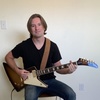
Here, John can be see holding a SJ with a pickup in the neck position.
Find it on:
This is a community-built gear list for John Fogerty.
- Find relevant music gear like Microphones, Guitars, Amplifiers, Effects Pedals, and other instruments and add it to John Fogerty.
- The best places to look for gear usage are typically on the artist's social media, YouTube, live performance images, and interviews.
- To receive email updates when John Fogerty is seen with new gear, follow the artist.
Discography
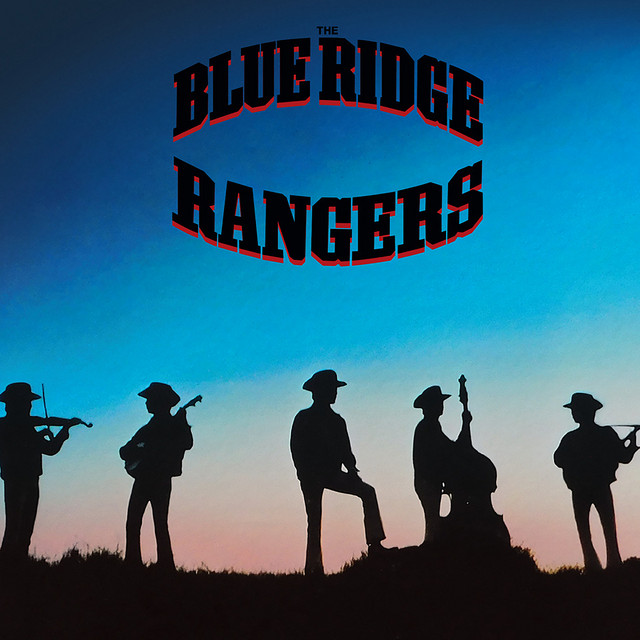
The Blue Ridge Rangers
1973
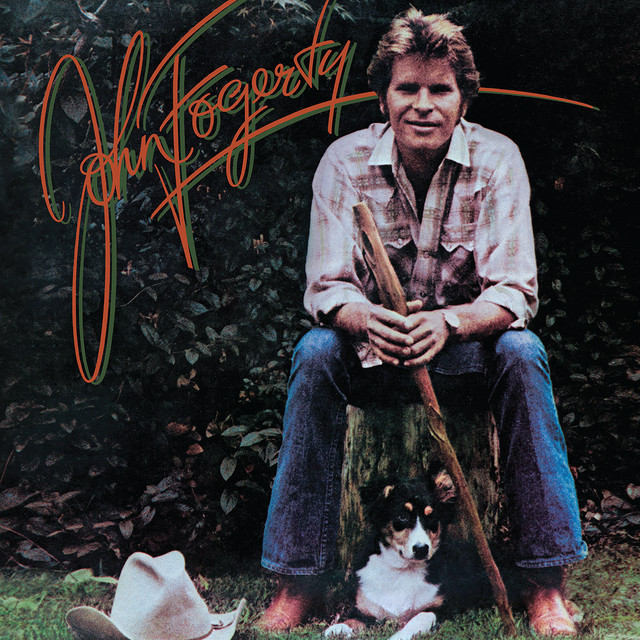
John Fogerty
1975
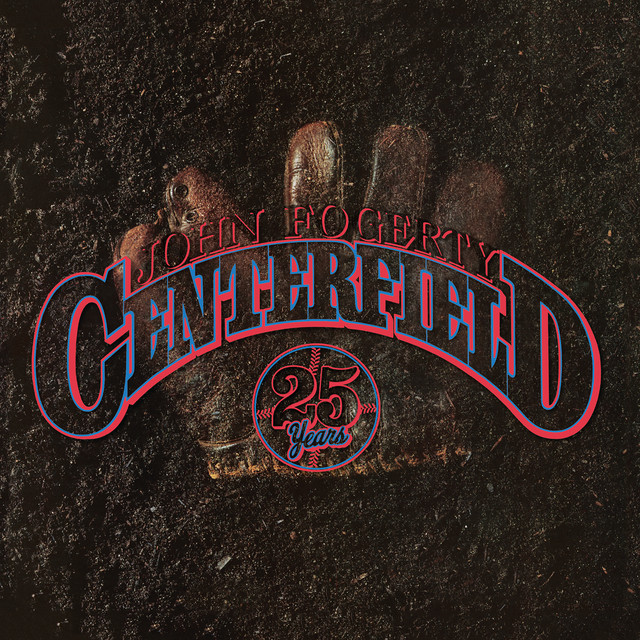
Centerfield (25th Anniversary)
1985
Eye Of The Zombie
1986
Blue Moon Swamp
1997
Premonition (Live 1997)
1998
Deja Vu (All Over Again)
2004
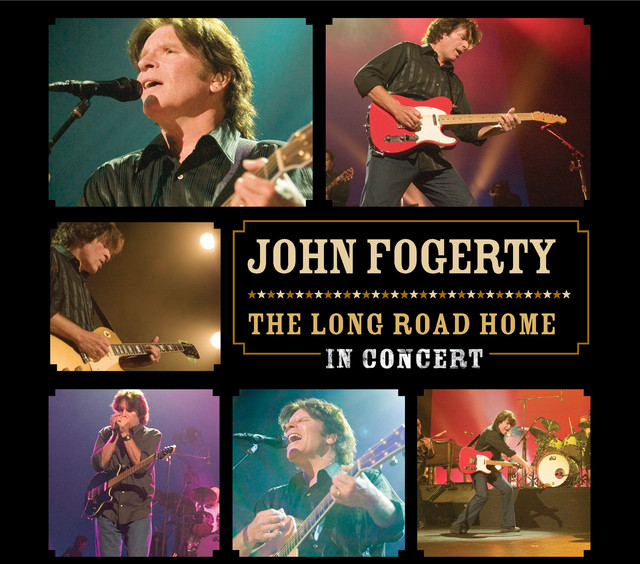
The Long Road Home - In Concert
2006
Revival
2007
The Blue Ridge Rangers Rides Again
2009

Wrote A Song For Everyone
2013
50 Year Trip: Live at Red Rocks
2019
Album Credits
-
John Fogerty · 2021
Mixing Engineer Producer -
John Fogerty · 2021
Producer -
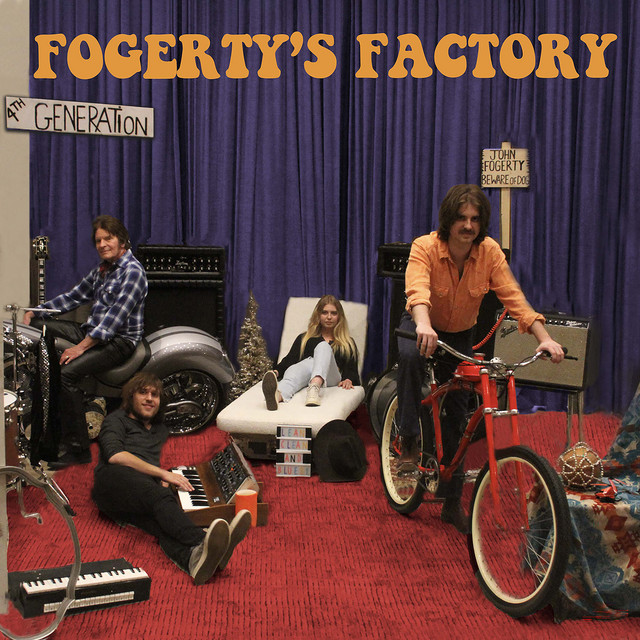
John Fogerty · 2020
Producer -
50 Year Trip: Live at Red Rocks
John Fogerty · 2019
Producer -
John Fogerty · 2013
Producer -
The Blue Ridge Rangers Rides Again
John Fogerty · 2009
Producer -
John Fogerty · 2007
Mixing Engineer Producer -
The Long Road Home - In Concert
John Fogerty · 2006
Mixing Engineer Producer -
John Fogerty · 2004
Producer -
John Fogerty · 1997
Producer -
John Fogerty · 1986
Producer -
John Fogerty · 1975
Producer