

Pricing and availability
We compare 600+ stores and found this item at 1 store. Prices updated .
Store
Reviews
Price




Average Price: $5
Budget/Beginner
$100
$401+
Price Tier
Budget
Standard
High-end
* Product prices and availability are updated by Equipboard every 24hrs and are subject to change. Equipboard may receive compensation for purchases made at participating retailers linked on this site. This compensation does not affect what products or prices are displayed, or the order of prices listed. For more information, please refer to our affiliate disclosure.
Description
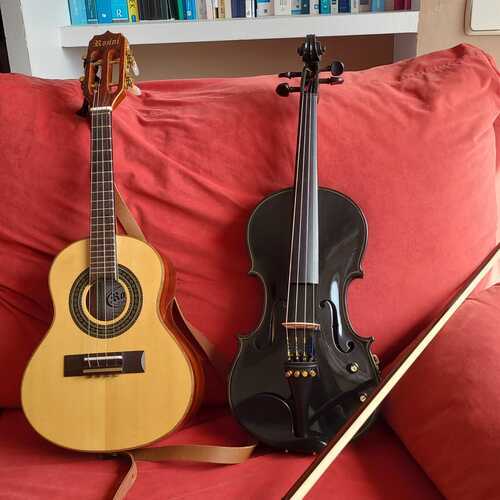
The cavaquinho is a small yet mighty string instrument, a staple in Brazilian music that delivers a bright and lively sound. This charming instrument is perfect for musicians looking to explore new musical landscapes, adding a unique flair to any ensemble. With a rich heritage rooted in samba and choro, the cavaquinho's distinctive tone cuts through with clarity and warmth, making it a versatile choice for both traditional and contemporary compositions.
Crafted with precision and care, the cavaquinho features a compact body that is easy to handle, making it ideal for both beginners and seasoned players. Its four nylon strings are tuned to D-G-B-D, allowing for a wide range of melodic possibilities. The instrument's lightweight design ensures comfortable playability, whether you're strumming on stage or jamming with friends.
Join our musician community to discover more about the cavaquinho's role in world music and connect with fellow enthusiasts. Whether you're a solo artist or part of a group, this instrument will undoubtedly enhance your musical journey with its vibrant and expressive sound.
Key Features:
- Compact and lightweight design for easy playability
- Four nylon strings tuned to D-G-B-D
- Delivers a bright and lively sound
- Perfect for exploring Brazilian music styles like samba and choro
- Suitable for both beginners and experienced players
Product specs
| Brand | D'Addario |
| Model | EJ93 Cavaquinho Strings |
| Finish | Standard |
| Year | 2015 - 2020 |
| Categories | Other Strings |


Reviews
Owner Insights
We analyzed real musician discussions from forums and Reddit to find what players love, question, and tweak about cavaquinho.
Setup and maintenance
-
Switching the cavaquinho strings to match ukulele thickness helps with fingerings when tuning to GCEA.
Source -
Use a soft bristle toothbrush and light dish soap to clean grime, being cautious to prevent water pooling on unfinished cavaquinho bodies.
Source -
The "2000" grit sandpaper is recommended for cleaning cavaquinhos without a protective finish, ensuring a gentle approach to mold and dust removal.
Source
Features and functionality
Comparisons
-
The cavaquinho's neck is smaller and frets more closely spaced, akin to a soprano ukulele, but with different tuning complexities.
Source -
The neck of a Brazilian cavaquinho is narrower than that of any ukulele, which may require adjustment in playing technique, especially for those accustomed to wider fretboards.
Source
Mods and upgrades
-
Restringing with nylon strings may reduce tension, potentially dulling the sound due to less vibration.
Source
User experience
-
Adapting to cavaquinho tuning can enhance skills across other string instruments through complex fingerings.
Source -
Many players find the cavaquinho’s tight string tension uncomfortable, especially compared to other string instruments, suggesting a steeper learning curve for beginners transitioning from ukuleles or guitars.
Source
Build quality
-
The Brazilian cavaquinho often features a very narrow neck, measuring approximately 27mm at the nut and 40mm at the soundhole, which can feel restrictive compared to ukuleles.
Source
Use cases and applications
-
The typical playing style for Brazilian samba on a cavaquinho involves rhythmic muting with the left hand, favoring closed chord shapes over open strings to match the music's syncopation.
Source
4.5 out of 5
Based on 0 Reviews and 2 Ratings
Genre Usage
Based on how artists on Equipboard use this gear, it is most commonly found in the following genres.
Used With
Based on how musicians on Equipboard use cavaquinho, it is most commonly used with the following gear.

Community setups
Show yours
More Ukuleles

$140.00 - $199.00
in Ukuleles Rank


$99.00 - $129.00
in Ukuleles Rank


$209.00 - $316.60
in Ukuleles Rank


$59.99 - $77.00
in Ukuleles Rank


$449.99 - $479.00
in Ukuleles Rank


$65.00 - $94.00
in Ukuleles Rank


$169.99 - $311.99
in Ukuleles Rank


$338.00 - $503.42
in Ukuleles Rank

.jpeg?v=1783369758)


$123.00 - $209.99
in Ukuleles Rank

$399.00 - $479.00
in Ukuleles Rank


$129.00 - $247.00
in Ukuleles Rank

$149.00 - $245.00
in Ukuleles Rank


$53.69 - $119.34
in Ukuleles Rank


$99.99 - $129.99
in Ukuleles Rank


$309.00 - $379.00
in Ukuleles Rank


$299.00 - $503.42
in Ukuleles Rank


$53.69 - $115.99
in Ukuleles Rank


$95.00 - $139.00
in Ukuleles Rank


$169.00 - $259.99
in Ukuleles Rank


$219.00 - $276.00
in Ukuleles Rank


$129.00 - $161.00
in Ukuleles Rank

$199.00 - $299.00
in Ukuleles Rank

$99.00 - $99.99
in Ukuleles Rank

$222.00 - $349.99
in Ukuleles Rank


$149.00
in Ukuleles Rank

$329.99 - $439.00
in Ukuleles Rank


$94.99
in Ukuleles Rank

$108.00 - $169.00
in Ukuleles Rank

$59.99 - $65.00
in Ukuleles Rank


Artist usage


Similar


Gear Guides






Most Popular Brands
-
Added to Equipboard on by
 zwoervleis
Gear IQ 108
-


