
John Entwistle
John Entwistle's Gear


Entwistle was often noted for his place in helping to pioneer and develop Rotosound's bass string design & tonality quality with the help of Rotosound founder & chairman James How.
From November 1975, Guitar Player interview:
What type of strings do you use?
Rotosound. I have to use them — I designed the flaming things! Poor Greg Lake, Chris Squire [laughs]. I was looking for bass strings which vibrated properly, and I couldn’t find a good E and A string on any set at all, except maybe for LaBella — they weren’t too bad. But I wanted a round-wound string. I was approached by Rotosound, and they said they’d make some strings for me, exactly what I wanted. So I went to the factory, and they brought out a set of their round-wound and asked what I thought of them. The E and the A didn’t vibrate properly, and the D and the G weren’t heavy enough. So I sat there all afternoon while they made me strings with different cores, and different gauges, and different types of wire, and finally got through the E, A, D, G, and got a balanced set. And I said, “they’re fine, make me as many sets as you can.” They started making them and said, “look, we’ll put your picture in the string sets, and we’ll put these strings on the market.” So they issued them as “Swing Bass,” and they’ve been out ever since. A lot of people use them and get the same sound as me. I wanted to get a sound like a piano, which is why I wanted round-wound strings; I found that I could play chords and get a lot more sustain out of wire wound, so that’s really why I set out to get the strings done.
In a seperate interview Entwistle stated:
From April 1995 Bassist interview:
[Q]: How did the link [with Rotosound] evolve?
[JE]: “It was in 1966 and I was looking for that Danelectro sound again. I tried everybody’s strings but the E and the A’s just didn’t work. It was the same with Rotosound but there was something about them that was almost there but not quite. To solve the problem I got in touch with James Howe[sic] and told him his D and G strings were great but the E and A didn’t vibrate properly. He told me to take my bass along to Rotosound and have some strings made until they got it right. After a couple of hours, we realised that the problem wasn’t in the wire winding, but in the core of the string. You could see that the strings vibrated in a big circle and that was wrong; the core needed to be thicker. We also made the overall gauges a bit heavier and they sent me away with 12 sets to use. A couple of days later they called and asked if I objected to them putting my name to the strings and selling them commercially. I told them I didn’t mind as long as they kept me supplied with free strings! But then we had to do the same with medium and short scale strings because I had loads of different basses by then. Those strings, the RS 66 sets, were the first that vibrated properly other than the Danelectros.”
The "Danelectro Sound" to which Entwistle is refering is the tone made by the stock bass strings on Danelectro's short-scale basses, which weren't available for general purchase.
Find it on:


“Frankenstein”
1965 sunburst (refinished in the mid-’70s to Fiesta Red/salmon pink) “Frankenstein” Fender Precision Bass with maple neck.
Assembled from various basses, including the chrome pickup cover from a Fender Jazz Bass; the neck pickups and circuitry from two of John’s three “dead” slab basses.
Serial no. 13081, stamped on neckplate.
Used beginning 1967.
[J.E.]: "I put this together in San Francisco on a day off part way through a Who tour. It’s the remains of five smashed basses hence the name ‘Frankenstein’. In the mid 70’s it was retired from stage work so I had it refinished from sunburst into its present pink colour. I used this baby from 1967 onwards through ‘Tommy’ and all the tours up to ‘Quadrophenia’... The neck, pickups and circuitry are from a ‘dead’ slab bass, the tailpiece from a Jazz bass, the pickguard from a black P bass and the machine heads from 2 white P basses...Two hours with a Phillips screwdriver and a soldering iron and I was ranting around my hotel room screaming 'It’s alive! it’s alive!'"
Quote from April 1994 Bassist interview:
[Q]: "Which sound was responsible for that amazing sound on ’Won’t Get Fooled Again’?"
[J.E.]: “That was Frankenstein, which I made from dead parts. I had a day off in San Francisco once and spent it screwing a bass together from five smashed Precisions including a couple of slab ones of which they only made about 20. I took the pickup and scratch plate from one of the slab Precisions, the neck from another, machineheads from a Jazz Bass, the body off a sunburst Precision and the tailpiece from another. The slab Precisions were like white, squared-off Telecasters, with a split pickup, a maple neck, black scratch plate and what looked like blue veins coming through the white paintwork. I don’t know what they used on them but those basses had a sound of their own, really raunchy with more of a growl than a regular Precision. I have about 35 Precisions, all with different colours and from different eras, but I always go back to Frankenstein."
[J.E.]: “I used Frankenstein through Hiwatts for the whole of ‘Tommy’, ‘Live At Leeds’ and ‘Who’s Next’ but by ‘Quadrophenia’ and ’Who By Numbers’ I was playing Gibson Thunderbirds. I felt I was getting stuck in a rut, using all the treble.
This Bass was sold in Sotheby’s May 2003 auction: estimated £5,000–£7,000; sold for £62,400.
Find it on:


In this list of Entwistle's equipment, we can see Entwistle with a Rickenbacker 4005L "Lightshow" Bass.
This Bass was also used for The Who's October 3rd 1973 appearance on “Top of the Pops”.
Find it on:

In this video, John is playing his 64 Thunderbird IV. On Gibson's website they write "One definite fan, though, was The Who’s John Entwistle who used both “reverse” and “non-reverse” Thunderbird IVs in the early ‘70s. He told Guitar Player magazine in 1975, 'Once I realized the Thunderbird was the bass I was going to be playing for a few years, I panicked because (Gibson had) stopped making them. I went to Manny’s (NYC guitar store) and told them to buy up the whole stock, so consequently I got 10 two-pickup Thunderbirds.'"
Find it on:

John Entwhistle can be seen in this video playing on his Status Buzzard Bass at 00:26.
Find it on:

John Entwistle is seen using a Danelectro Longhorn Bass, characterized by its bronze sunburst finish, two lipstick tube Alnico pickups, and distinctive "Coke Bottle" peghead. Thewho.net provides a user-uploaded photo that showcases this bass, known for its bolt-on neck with a Brazilian rosewood fingerboard and a masonite/poplar frame body.
Find it on:


“Alembic took two years to make the three basses for me. The other 4-string is in a Hard Rock somewhere. I sold it as its punishment for going wrong at the beginning of Live Aid.”
http://www.thewho.net/whotabs/gear/bass/bassendorsements.html
Find it on:

The late great John Entwistle with a Gibson EB-3 (possibly an EB-0) bass speaking with Rotosound’s sales director Alan Marcuson in 1966
Find it on:





In the early years of his live performances, John Entwistle occasionally played a Rickenbacker 4001, as shown in a user-uploaded photo on Flixster.
Find it on:

According to thewho.net, John used this Digitech preamp fed into RMP-1 loop as parts of his rig between 1999 and 2001. He used it for chorusing and overdrive.
Find it on:

Between 1968 - 1971, John played a customized DR103 as part of his setup.
Find it on:

Entwistle can be seen in a photo on VH1 playing his custom "Fenderbird" bass.
Find it on:

In this picture John can be seen with a Gibson G3 bass in his hands.
Find it on:

A young John Entwistle can be seen holding a EB-2 in his hands.
Find it on:

3 Oct. 1966, in CBS studios, London, John holding French horn. Leaning against the chair, the 1962 Fender Precision Bass, left, and on the floor, the 1966 “Slab” Fender Precision Bass. In background, two Marshall 8x12 cabinets for the guitar and bass.
Find it on:

According to the website thewho.net, John used this item as a part of his rig between 1996 and 1997.
Find it on:

According to the website thewho.net, John used this item as a part of his rig between 1996 and 1997. He used this item as an head for his two A.S.S 212 2x12" speakers.
Find it on:

Entwistle can be seen in this photo playing a Vox Sidewinder Bass.
Find it on:

According to TheWho.net John Entwistle played a Gretsch 6070 Hollow Body Bass in 1965.
Find it on:

John Entwistle played a custom Fender Explorer Bird from 1975-1978 for recording only. In this video (Who Are You? by The Who) you can see him playing it.
Find it on:

John: "I started out with an 18? speaker, which lived in an open-back cabinet. The rest of the band (we had no roadie at the time) objected to the heaviness of the cabinet with the 18? inside it. So we had the idea to hang the speaker on a six-inch nail and carry it in a separate cardboard box. Consequently every time I played a low E note the speaker would vibrate off the nail and fall on the floor behind the cabinet. I guess I learned how to play with just my left hand in this way — as I needed the right to hang the damn speaker back on the nail!"
Find it on:
-m.webp?v=1784646040)
Vox AC15, shared with PA. The Detours had two Vox AC-15s, one for Roger and Pete to share, and one for John and the PA.
Find it on:

One of his earliest amps were this marshall head and two 4x12 cabinets.
Find it on:

According to thewho.net, John used three PM1000 preamps as parts of his rig between 1999 and 2001.
Find it on:

The Fender Jazz Bass, as used on Substitute.
Find it on:

"Sold by John at auction in April 1988. It was the highest-priced Bass of all the ones that John sold, fetching approximately $33,000. John stated in the catalog that this was used on the U.K. Television show Top of the Pops in the early 1970s."
Find it on:

At 1:08 in the video, it is seen clearly that John was playing a Steinberger L2 bass (which surprised be because I never thought he used them). It only appears he used it in a few songs on the "Face Dances" album (1981), the song above "Don't Let Go The Coat" being one of them.
Find it on:

Entwistle can be seen on this page in photos playing an Alembic Series 1 bass.
Find it on:

One of his first amps where two of these Marshall 4x12 Cabinets.
Find it on:


Quotation from John Entwistle for Bass Culture magazine :
“Modulus Graphite made this prototype for me. Unlike all the other Buzzards, this one has no leds in the neck. I used this for almost every show on Ringo Starr’s All Star Tour of Japan and the USA.”
Find it on:
This is a community-built gear list for John Entwistle.
- Find relevant music gear like Microphones, Bass Guitars, Amplifiers, Effects Pedals, and other instruments and add it to John Entwistle.
- The best places to look for gear usage are typically on the artist's social media, YouTube, live performance images, and interviews.
- To receive email updates when John Entwistle is seen with new gear, follow the artist.
Discography

Smash Your Head Against the Wall (Deluxe Edition)
1971
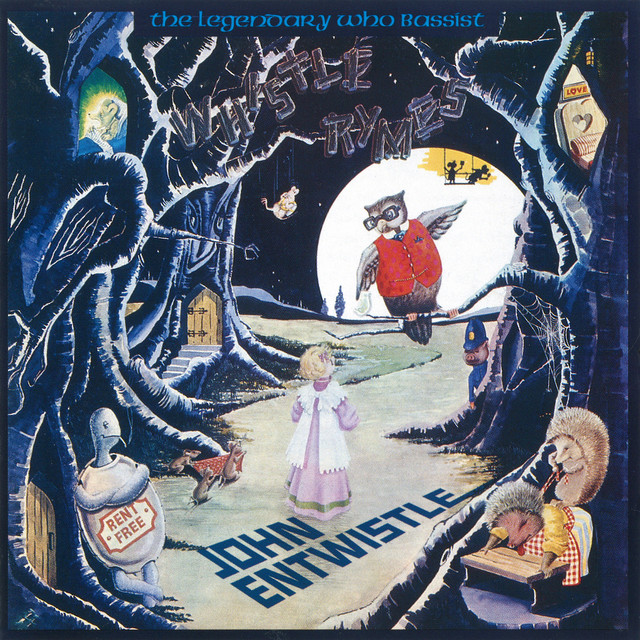
Whistle Rymes (Deluxe Edition)
1972
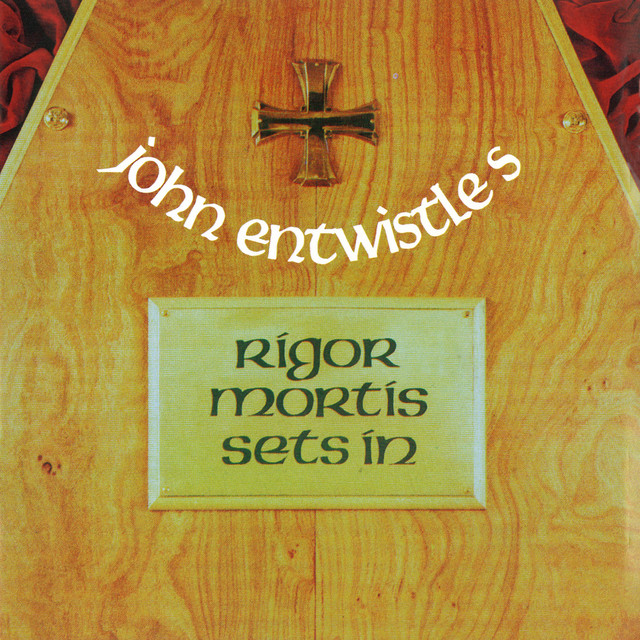
Rigor Mortis Sets In (Deluxe Edition)
1973

Mad Dog (Deluxe Edition)
1975
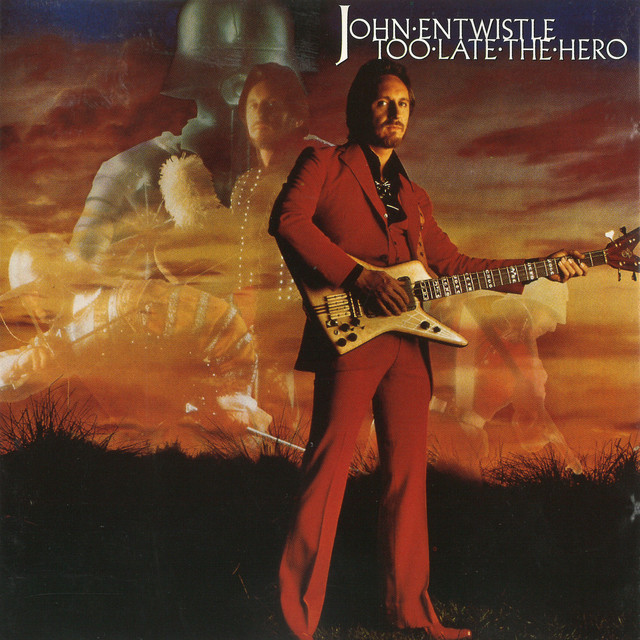
Too Late the Hero (Deluxe Edition)
1981

The Rock (Deluxe Edition)
1996

Left For Live - Deluxe
2002

Rarities Oxhumed - Volume One
2022

Rarities Oxhumed, Vol. 2
2024




.jpg?v=1784640200)


.webp)


