Best Keyboard Amps | Gear Guides Recording & Pro Audio


By Gear Experts

By Gear Experts
Table of Contents

Equipboard
Equipboard is the world's largest community of artists and their gear. Read our review process.
We are reader-supported. When you buy through links on our site, we may earn an affiliate commission. Learn more.
Our Picks

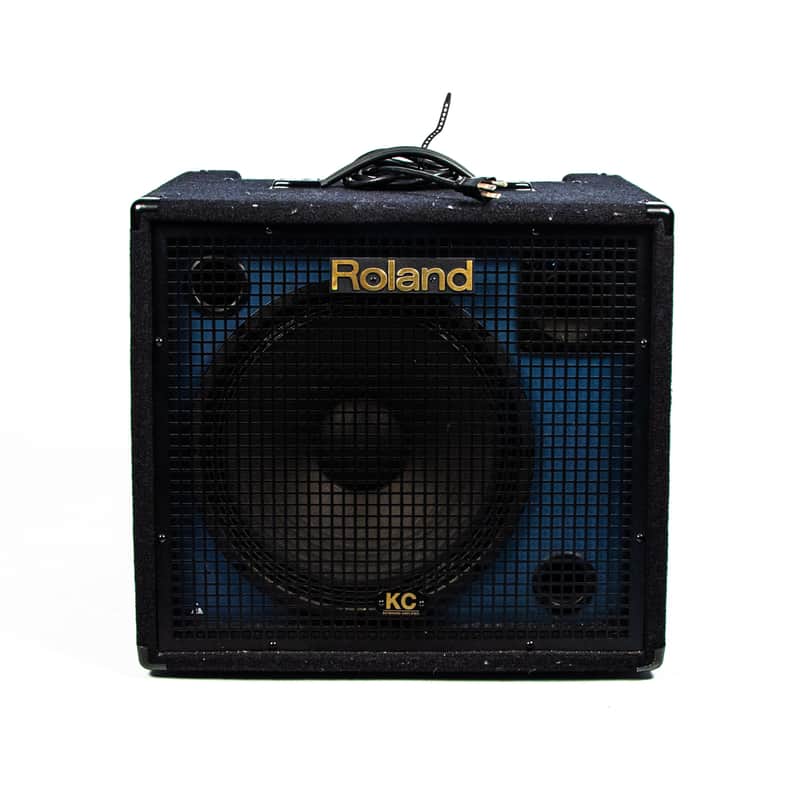
The Roland KC-550 is a rugged, versatile keyboard amp with stellar sound quality and ample power. Perfect for performers needing a reliable, clear, and powerful amp for various instruments. Heavy but worth it.
Read more


Behringer ULTRATONE K900FX Keyboard Amp/PA System
Feature-packed, 90-watt keyboard amp with great sound quality and durability. Not terribly heavy, perfect for small gigs, home practice, and solo performances. Fantastic value.
Read more


While the Peavey KB 2's 45 watts might not cut it for loud band settings, it's perfect for practice and solo performances. Lightweight and versatile with great sound quality, ideal for budget-conscious musicians.
Read more
Roland KC-110 Battery-Powered Keyboard Amplifier
While the Roland KC-110 lacks power for loud band settings, its portability and battery option make it perfect for home use, small solo gigs, and studio sessions. Clear sound and versatile inputs.
Read more
Behringer Ultratone KT108 15w Keyboard Amplifier
Lacks power and advanced features, but its lightweight design and great sound quality make it perfect for home practice and small solo gigs. Best value under $100.
Read moreKeyboard amplifiers come in many shapes and sizes, and many include all sorts of bells and whistles. If you play keyboards, synths, and digital pianos, a keyboard amp is essential for live performance, and can also be a great companion in your home or studio to get crystal clear sound out of your keyboards. Deciding which keyboard amp is right for you can be a little intimidating because of how many different models there are. Amplifiers in general are a bit of a confusing product category, just because there are so many different types. In this guide we’ll explain what makes a keyboard-specific amp, and make five great recommendations depending on your use and budget to get you started.
What Exactly is a Keyboard Amp?
The term “Keyboard Amplifier” is a little misleading, simply because a keyboard amp is not just for keyboards! We should mention that “keyboard” in this case refers to anything that makes sounds that has black & white keyboard keys, like a digital piano, workstation, or synth. The reason the “keyboard amp” label has stuck around is because of the amplifier’s sonic range; meaning, keyboards and synths have a multitude of sounds that span the sonic spectrum, from deep booming bass, shimmering strings and pads, bright pianos, high-pitched flutes and piccolos, to drums and percussion. The amplifier has to be able to handle that entire spectrum of sound, and reproduce it accurately.
You might be thinking, “shouldn’t any amplifier be able to do that?” Not exactly. Electric guitar amps for example are a completely different animal. Guitar amps are optimized for the range in the sonic spectrum relevant to electric guitars, which is typically 75 Hz to 5 kHz (source). Some electric guitar amps derive their power from tubes, which is a whole other thing entirely. If you were to buy a guitar amp you would really look into its character - Marshall sounds different than Fender, which sounds different than Vox, and these differences are very desirable. With a keyboard amp however, you’re looking to reproduce whatever sound your piano/keyboard/synth is putting out as neutrally as possible, so any character or coloration is definitely unwanted.
The good news is that because keyboard amps can handle the full sonic spectrum, people use them for far more than just keyboards; Electronic drums, vocals, bass guitars, and acoustic guitars are a few of the applications a keyboard amp can be well-suited to. In other words, you’re definitely getting your money’s worth by investing in one. Of course not all keyboard amps can handle all those instruments, but we’ll get to that shortly. All the keyboard amps we recommend in this guide actually have multiple channels, which means they can handle more than just one instrument at a time (e.g. a digital piano and a microphone for vocals simultaneously).
Keyboard amps are also sought after because they can double as a PA system. Most of them come with an auxiliary input which lets you plug in a music player like your smartphone or laptop. Perhaps you’re throwing a party and you need a powerful speaker to play music through, or you need to plug a microphone into it and deliver a speech to a bunch of people - you could grab your keyboard amp and absolutely use it in those ways.
What to Look For in a Keyboard Amp
All keyboard amps are definitely not created equal, but you probably already know that since you’re reading this guide! Here are some of the most important things to consider when finding the right one for you.
- Watts and speaker size: Watts refers to the amount of power the keyboard amp has, and it’s more or less the most important thing you should look at. The more watts an amp has, generally the louder it can get (there’s more to it than that, but that’s the simple version without getting too science-y). Keyboard amps with more watts are able to drive larger speakers. So if you see an amp that’s 180-watts with a 15-inch speaker, it’s vastly louder and more powerful than a 15-watt speaker with a 8-inch speaker. It really comes down to if you just want the amp for practice around the house, relatively small bar and coffee shop performances, or if you need one that can keep up at band practice with your friend’s enormous guitar amp.
- Inputs and outputs: Lots of keyboard amps are multi-channel, which means they have a built-in mixer that lets you plug in multiple instruments at the same time, and provide independent volume control for each channel. The amps we recommend in this guide all have at least two channels. This would come in handy if you play an instrument and sing at the same time, so both the instrument and microphone could go into your one amp. Outputs are important as well. If you end up performing in a big venue that has its own sound system, you can use your keyboard amp to just monitor your own playing, and feed the output to the front-of-house. Look for whatever inputs and outputs you think you need for your uses.
- Effects and other extra features: Some keyboard amplifiers include some digital effects; At the most basic level reverb and chorus, and some include many more than that. That’s usually not the focus of a keyboard amp, and as such we have yet to find one where the effects leave us extremely impressed. Still, it’s a useful inclusion (e.g. if you’re plugging in a mic and the vocals need a touch of reverb or chorus).
- Build quality and portability: Most keyboard amps are built with live performance in mind, and are overall pretty rugged. You probably won’t encounter a keyboard amp that looks like it will fall apart; they’re all pretty sturdy and tough. Portability can be a huge factor in your buying decision, as larger, more powerful keyboard amps tend to weigh a lot and makes transporting them a total pain. Then again a super portable lightweight amp might not be all that powerful, so you have to find a good middle ground.
Without further ado, here are the top 5 keyboard amps as recommended by Equipboard. We ordered them from the loudest/largest/most powerful, down to the smallest/most portable.
Roland KC-550
5.0 (11)




Average Price: $300
Standard/Professional
$249
$600+
Budget
Standard
High-end
- Power: 180 Watts
- Speaker Size: 15”
- Weight: 63 lbs
- Best For: Performance, small/medium/large venues, monitoring, band practice alongside drums and guitar amps
The Roland KC-550 is one of the most used and most highly recommended keyboard amplifiers out there today. It’s a powerhouse and a workhorse, and above all else is praised for how crisp, clear, and detailed it sounds across the volume range (for actually much more than just keyboards and digital pianos). It’s a bit pricey and a bit cumbersome to move around due to its weight, but those looking for a versatile, high-performance keyboard amp need not look much further.
We mean it when we say this thing is a workhorse for the performing musician - it’s certainly built that way. The KC-550 feels rugged with its metal grill and protective edges. It’s one of the most well-built keyboard amps out there, and if the dozens of user reviews are any indication, it’s extremely road-worthy. People have dropped it and taken it on gigs around the world, and it has held up for years and years. Be aware that this keyboard amp is definitely on the heavy side. It weighs about 63 lbs (29 kg), and with just a single handle on the top and no side handles, it can be a bit of a pain to lug around. Luckily casters are included, which allow you to roll it around more easily.
The Roland KC-550 has a lot of options and flexibility when it comes to inputs and outputs. It has a built-in 4-channel mixer, meaning that it has 4 stereo inputs to connect multiple instruments at the same time, each with their own volume control. Channel 1 also includes a balanced XLR input, which you can use to plug in a microphone. It also has a stereo AUX input (RCA jacks), so you can connect a portable music player or your laptop. A 3-band EQ lets you adjust the low, middle, and high frequencies so you can have fine grained control over your tone, and compensate for whatever room or venue you’re in if needed. You also get a few outputs, including headphones with its own volume knob, and a stereo output with both 1/4” and XLR jacks (XLR outputs are useful to connect to a mixing console). Roland also has something called STEREO LINK which allows you to chain two KC series amps together, for stereo operation (you can control both using just the one amp nearest you on stage). Most of the input and output jacks are mounted at a slant at the rear of the amp, and the volume knobs run across the top, making it very easy to make adjustments mid-performance.
Sound-wise is where the Roland KC-550 really shines. It is rated at a powerful 180 watts, and has a 15” woofer and 2” horn. The 15” woofer means this amp is very adept at handling bass notes. This amp sounds so good, that people use it for more than just keyboards and digital pianos. Electronic drums, vocals, bass guitar, and saxophone are amongst the uses we read about, and due to its power, range, and clarity it can even be used for small PA applications (remember, you can use the AUX input to plug in an external music player). Imagine a dance party like a wedding, a children’s birthday party, backyard BBQ, etc. Provided your venue and audience is of a modest size, the KC-550 has more than enough power for the occasion. In terms of amplifying your keyboard, the consensus is that this amp will bring the best out of your instrument. Your pianos, organs, and synths will sound rich and detailed across the whole frequency spectrum. This keyboard amp is also loud enough to where you could easily keep up with (and even overpower) the drummer and bass player. From a user review:
We have a six piece band, and I used only the KC 550 to amplify my [Korg] Kronos. The volume was set to under 1/2 volume, and my Kronos was crystal clear and louder that you could imagine. There was not one point in the evening that my keyboards were overpowered by anyone. The sound blended perfectly, and when it was time to solo I increased the volume about 15% on the Kronos and my keyboards were sharp, concise, and clear. This is the best keyboard amp that I have ever played through.
Bottom Line: Unless you just need a small keyboard amp for home use only, it’s hard to imagine a situation where the Roland KC-550 wouldn’t be the best tool for the job. Whether you play a keyboard or electronic drums, the KC-550 will make it sound its very best. Between the 15” speaker and the 180 watts on tap, this keyboard amp is plenty loud for small to medium venues, from coffee houses to churches. If you play a really large gig, you can use the KC-550 as a very high quality monitor for yourself, and you can use the outputs to send your signal to the house sound system. Sure, it’s heavy so transporting it might take a bit of effort; but with all the flexibility it offers, ability to double as a small PA, and rugged build quality, if you can swing the price tag as far as keyboard amps go this is the Best of the Best.
See how artists use this









Behringer ULTRATONE K900FX Keyboard Amp/PA System
5.0 (3)




Average Price: $299
Standard/Professional
$249
$600+
Budget
Standard
High-end
- Powerful and clear sound delivery, ideal for outdoor and large venues
- Versatile for multiple instruments, including guitars and MIDI keyboards
- Clear and crisp sound rendition for electronic drums and cymbals
- Enhances keyboard bass sounds, making them more like a real piano
- See 5 more
- Too powerful for small studio environments, can be overly loud at close range
- Internal FX less versatile compared to traditional guitar amps
- DSP-processor's settings are too similar, lacking variety
- Occasional strange noises (clicks/knacks), potentially due to ventilation issues
- Power: 90 Watts
- Speaker Size: 12”
- Weight: 42 lbs
- Best For: Performance, small/medium venues, monitoring, band practice alongside drums and guitar amps
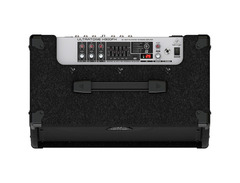
If you don’t like the weight of the Roland KC-550 and don’t quite need 180 watts, but still need a keyboard amp that can hold its own for live gigs in small venues, you should take a very close look at the Behringer Ultratone K900FX. Behringer nails the value-for-the-price sweetspot with this powerful, feature-laden 90 watt keyboard amp that costs less than half of the KC-550.
The K900FX is durable and definitely built for live use in mind. We actually think it looks nicer than the Roland KC-550, and it’s built just as well with reinforced corners and a metal grill. Out of dozens of reviews we only encountered a couple that complained about the electronics of this amp giving out about a year into use. Most owners have good things to say about its durability and longevity. Sometimes Behringer can be inconsistent with quality control, but chances are if the amp you buy works well right out of the box, it will serve you well for years to come. It weighs about 42 lbs (19 kg), so about 20 lbs. lighter than the Roland KC-550. It’s still not what we’d consider light, but carrying around 42 lbs is not outrageous, especially as compared to the Roland’s 63 lbs.
The Ultratone K900FX is packed with features. You get 3 channels, each with separate volume and FX SEND controls. Just like the Roland KC-550, channel 1 has a balanced XLR mic input. Unfortunately the ¼” inputs are mono. It also has a CD IN (stereo RCA jacks to plug in an MP3 player or laptop), a dedicated headphones output, a ¼” stereo output, and a SUB OUT to connect it to a subwoofer. You also get a 5-band EQ to sculpt your sound. A really interesting inclusion by Behringer on this amp is an effects section, with 100 effects presets. That way, if you need a touch of chorus, delay, reverb, etc. you can dial it in on the spot. So long as your expectation is not that these are award-winning digital effects, they can be useful in a pinch if your keyboards, electronic drums, or vocals need some effect processing.
In terms of sound quality, there’s really nothing bad to say about this amp. With its 12” woofer, 1” tweeter, and 90 watts of power, you get an amp that’s capable of being fairly loud with crystal clear highs and a very good bass response. It will gracefully handle not only keyboards, but electronic drums, vocals, acoustic guitar, and bass. If the 12” woofer is not providing enough bass for your needs, you can use the SUB OUT jack to connect a larger active subwoofer. One or two users had complaints about either the highs or lows not being adequate, but it’s likely a specific problem to their setup, and you can use the 5-band EQ if you feel like any frequencies need adjustments. So, the consensus is that the Behringer Ultratone K900FX sounds clean and crisp. The problem is that it might not be loud enough for live band levels. The reviews are admittedly very mixed on this. Some people say this amp has plenty of power and volume for 150+ person auditoriums, and yet others say it is hard to compete against the volume of drums and guitar amps in a live band situation. If you play in a loud rock band or the acoustics of your venue are unpredictable, we can definitely see how the K900FX would struggle to keep up (one reviewer mentioned that placing it on a speaker stand helps tremendously). Either way, if you’re playing a large venue with a dedicated sound system you can always use this keyboard amp as your monitor, which it works very well for.
Bottom Line: Don’t let the lack of volume complaints scare you off. Again, those comments are probably valid if you’re playing a very large venue or your band mates are extra loud. For most other scenarios including home practice, electronic drum monitoring, coffee house vocals/piano/acoustic guitar amplification, solo performances, and even small PA applications, the Behringer Ultratone K900FX is a great and inexpensive all-in-one amp solution. While we don’t love all the digital effects it comes with, reverb alone is extremely useful. It sounds great, it’s not too heavy, and the budget price tag is almost too good to be true.
Peavey KB 2 Keyboard Amp
3.5 (5)

Average Price: $332
Standard/Professional
$249
$600+
Budget
Standard
High-end
- Clean sound with full bass and nice highs
- Loud enough to fill a house at low volume settings
- Versatile with 3 separate input channels for multiple instruments and mic
- Durable build, suitable for those tough on gear
- See 5 more
- Lacks effects and modeling capabilities
- Inputs located on the back can be inconvenient for certain setups
- May not render extremely complex sounds well, not ideal for spatial/electronic music
- Higher frequencies distort at high volumes over time
- Power: 45 Watts
- Speaker Size: 10”
- Weight: 34 lbs
- Best For: Studio, practice, solo performance, small/medium venues, monitoring
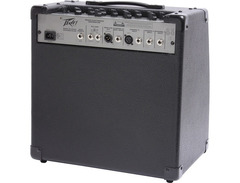
The Peavey KB 2 is a fantastic choice for anyone looking for a very high quality keyboard amp at a great price that is best suited for practice, solo performance, monitoring, and small venues. If you want your keyboard amp to be the sole amplification source on the stage for your audience, this might not be the best choice simply due to its 45 watt power capacity (unless the venue is small and you’re not competing with a drummer and guitar amps).
The Peavey KB 2 is built to a high standard and weighs about 34 lbs (~15 kg), which means it’s not too difficult to carry around using the top-mounted handle. This is a 3-channel amp, meaning it can support 3 instruments plugged in simultaneously. Channels 1 and 2 are ¼” inputs, and channel 3 has an XLR mic input as well. Each of the 3 channels has a knob to adjust the level, and a 2-band EQ for fine tuning (channel 3 actually has a 3-band EQ). You get a balanced XLR MAIN LINE OUT, a headphones output, and the handy inclusion of an effects loop send and return.
The Peavey KB 2 is rated at 45 watts, and has a 10” speaker. We would call this a medium-sized keyboard amp, meaning that it’s definitely loud and powerful enough for live use, but somewhat limited depending on the instruments you’re playing along with, and the size of the venue/audience. If you want to amplify your keyboards as part of a band with drums and loud guitars and bass, the KB 2 will unfortunately not quite be able to keep up. Not being able to be heard over other loud instruments is really the primary limitation of this amp. If you just intend to use it at home, or you play live solo in small-to-medium sized rooms, it will handle that beautifully. As one user review puts it:
This amp is all most solo acts will need to play a room that seats 50-80 people.
Another user review mentions a similar audience size, which should give you an idea of this keyboard amp’s sweet spot when it comes to live use:
I perform (sing with my keyboard) once or twice a week for audiences of 10 to 80 people and I LOVE using my Peavey KB 2... So far I have not needed to crank it up past halfway and the sound quality is terrific!
On its own the Peavey KB 2 is quite loud, and in case you’re playing a big, loud gig it makes a very versatile stage monitor for yourself (just use the XLR line out to hook up to the venue’s PA). In terms of instruments, the Peavey KB 2 is well-suited to handle keyboards, digital pianos, vocals, electronic drums, and drum machines. The bass response is good but not great, the limitation being the 10” speaker, so we wouldn’t quite recommend it for bass guitar. Power limitations aside, rest assured this amp sounds really good.
Bottom Line: Peavey is one of the most trusted names when it comes to mixers and amplification, so it’s no wonder the Peavey KB line of keyboard amps receives such high praise. In its price range, nothing else offers this combination of sound quality and features. Again, if you’re relying on the KB 2 to amplify a keyboard from the stage on its own and you play in a rock band with other instruments, this amp is probably not for you, and we would recommend the Behringer Ultratone K900FX or the Roland KC-550 instead. If you need a versatile 3-channel 45 watt keyboard amp for practice or solo performance, you really can’t go wrong, especially if you consider the budget-friendly price tag.
Roland KC-110 Battery-Powered Keyboard Amplifier
4.0 (2)


- Battery-powered for portability
- Multiple inputs for versatility
- Includes reverb effect
- Lightweight and easy to carry
- See 2 more
- May not produce desired sound for all digital pianos
- Limited bass output compared to larger amps
- Power: 30 Watts (15 + 15), 20 Watts if battery-powered (10 + 10)
- Speaker Size: 6” X 2
- Weight: 16 lbs
- Best For: Home, studio, practice, solo performance, small venues, monitoring
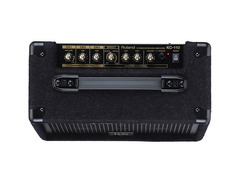
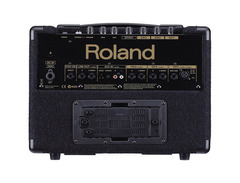
Now we’re going to talk about a keyboard amp that is extremely portable, perfect for hooking up to your digital piano or keyboards in your bedroom studio or home studio, and even perfect for small solo gigs, all while having pristine clarity in the highs, clear mids, and powerful bass response. Oh, and it’s so portable that it even has the option to run on batteries. We’re talking about the impressive Roland KC-110 3-channel 30-watt stereo keyboard amp.
At 16 lbs (~7 kg), the Roland KC-110 is very easy to tote around whether you’re moving it from room to room in your home or to and from gigs. Just like the rest of the Roland KC line of keyboard amps, this one is built very well and definitely feels like it can withstand some abuse. The inputs, outputs, and effects make this amp extremely versatile. It’s a 3-channel amp, meaning there are 3 inputs for instruments. Channel 1 is a mono input, and supports either an XLR mic input or a ¼” line input. What’s great is that channels 2 and 3 have L+R stereo inputs, so you don’t have to take up multiple channels to plug in a stereo instrument. You also have an AUX IN with the option of L+R RCA jacks, or a 1/8” jack, which makes plugging in an external music player or laptop very easy (the aux input has its own volume knob, which is a nice touch by Roland). For outputs, you have a main stereo L+R LINE OUT which you can feed into an external mixer or recording device, and of course you get an output for headphones. The knobs across the top of the KC-110 are fairly straightforward. Each of the 3 channels has a level knob, there’s a master volume, a 2-band EQ (LOW and HIGH adjustment) which applies to all channels, and a knob which lets you apply chorus or reverb to all channels at once. The quality of the reverb/chorus is decent, and while we appreciate the inclusion, it would be handy if each channel had its own effect volume (that way for example you could apply some reverb to vocals plugged into channel 1, and leave your piano in channel 2 unaffected).
This keyboard amp comes with a very handy tilt-back stand, which lets you angle the amp up so you can hear it more clearly when it’s on the ground. It also has a slot to be mounted atop a speaker stand, but unfortunately it’s a Roland proprietary size, so you’ll need to either buy an adaptor or a Roland speaker stand.
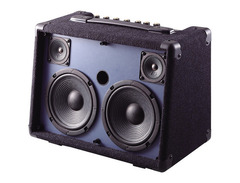
Where the Roland KC-110 truly shines is how it sounds. If you play in a rock band and frequently gig, this might not be the keyboard amp for you; it simply can’t keep up at those types of volume levels. However, if you’re looking to amplify keyboards, pianos, vocals, and even acoustic guitars and plan to use this amp at home or small intimate gigs, it really doesn’t get much better. It’s a stereo amp, meaning you get a distinct left and right stereo image without having to buy two amps. It’s rated at 30 total watts (15 + 15 for each of the two 6” speakers in it), and we're surprised that it sounds as good as it does. Earlier in this guide we called its big brother the Roland KC-550 a workhorse... the KC-110 is more of a “workpony” since it’s quite a bit smaller, but still extremely versatile!
Until I found this excellent AMP I was unable to reveal the great sound that my Privia PX-350 is capable to produce. My Roland KC-110 sounds crystal clear with enough professional inputs and outputs. I don't know, I am speechless to describe how nice is this amp. I absolutely recommend it.
It’s capable of producing some very impressive bass, and some nice sounding mids and highs. Your pianos, organs, and vocals will sound balanced and clear. For very bass-intensive sounds and even a bass guitar, you might find the bass is lacking, which shouldn’t be a surprise given the size of the KC-110’s speakers. Still, it can definitely get adequately loud for performing in a small-to-medium sized room. If you have a keyboard or acoustic guitar plugged into one channel, and a vocalist with a mic plugged into the other, you’ll be good to go for performing in coffee shops, bars, restaurants, small churches, and other intimate venues. If instead you’re on stage competing against the volume of a 100+ watt Marshall guitar amp... well, this amp will not be able to keep up.
One other feature that sets the Roland KC-110 apart from the rest is its ability to run on batteries. If you happen to be in a venue where power outlets are not within reach, or just want to use this amp as a mini PA for some outdoor event like a wedding or party, just load it up with 8 AA batteries. Keep in mind that when battery powered, the power drops down to 20 watts (10 per speaker).
Makes a great (high quality) battery-powered mini PA system for those remote outdoor wedding events and such.
Bottom Line: This is a truly impressive keyboard amp. We had high expectations from a company with such a long history as Roland, and the KC-110 blew us away. We’ll say it again - this is not an appropriately sized keyboard amp if you’re trying to keep up with drums, bass guitars, and electric guitars on stage. However it’s perfect for small solo gigs or with a couple of acoustic instruments. The Roland KC-110 is also extremely well-suited for the home or home studio. It’s small enough to where it can tuck away nicely under a desk, and it’ll make your keyboards, synths, and digital pianos sound great. Considering how good this amp is, the price is pretty fair. You can get a bigger, more powerful amp for less money if you go with Behringer or Peavey, but if you don’t need the extra watts the KC-110 gets a very strong recommendation from us.
Behringer Ultratone KT108 15w Keyboard Amplifier
4.5 (3)


- Power: 15 Watts
- Speaker Size: 8”
- Weight: 12 lbs
- Best For: Home, studio, practice, solo performance, small venues
It would be hard to argue that the Behringer Ultratone KT108 is not the best value-for-the-money amp out there. Earlier in this guide we recommended the 90 watt Behringer Ultratone K900FX. The Ultratone KT108 is the smallest of the Behringer Ultratone keyboard amps, at 15 watts and an 8” speaker. If you’re looking for a practice amp for your home studio, an improvement over your keyboard’s built-in speakers, or a keyboard amp for limited volume live use, the Behringer Ultratone KT108 is a great choice and you’ll have plenty of cash left over due to its sub-$100 price tag.
In terms of build quality and durability, the Ultratone KT108 is definitely well constructed. As with most keyboard amps, it is designed to be hauled around, and based on user reviews it holds up well to being banged around and dropped. It’s the most portable amp on our list at 12 lbs (~5.4 kg), and it’s also rather small, measuring about 13 inches tall and 14 inches wide.
Of the keyboard amps we recommend this is also the most basic in terms of I/O. Both the inputs and knobs are mounted on the front of the amp. We tend to prefer top or rear mounted controls, but that’s largely personal preference. This is a 2-channel amp, which means it can accommodate 2 instruments plugged in at the same time (unfortunately they are both ¼” TS mono connectors, so if you’re plugging in a stereo keyboard you’ll have to use up both channels). Each of the channels has a volume knob, and there’s also a 3-band EQ that affects both channels. The CD INPUT is basically an aux in, and you can plug in an MP3 player, laptop, or anything else that plays music (the CD INPUT is a ¼” TRS stereo plug, so you’ll likely need a converter or adaptor). Aside from a headphones output, there aren’t any other input and output options. It doesn’t have an XLR mic input, built-in effects, you can’t chain it to another amp, nor connect a subwoofer. Again, simplicity and value is the name of the game here.
Luckily the Behringer Ultratone KT108 sounds good. It doesn’t get very loud, which you would expect considering its 15 watts and 8” Bugera speaker. Aside from amplifying keyboards and digital pianos, people use this amp for electronic drums, acoustic guitar, and as a general purpose small PA (you can run vocals through it, but keep in mind it doesn’t have an XLR mic input). Bass-heavy sounds will suffer a bit, and you might get some weird rumbling tones if you try to push the bass too hard. If however your intention is to use the Ultratone KT108 for practice at home or small-room solo gigs, it will handle that just fine, giving you ample volume and clarity. The 3-band EQ helps to fine-tune your sound and adjust for whatever room you’re in.
This is a very good sounding small amp suitable for a piano bar setting. It is not for a big auditorium. It has clear professional amp sound in a small room or space.
Bottom Line: The Behringer Ultratone KT108 shines when it comes to basic keyboard amplification, provided you’re not playing sounds requiring a great bass response. Considering it’s a 15 watt amp, the volume you can get out of it is pretty decent. You don’t get the bells and whistles like on some other keyboard amps, but you also have to keep in mind that for the price, you probably cannot find another amp that even comes close to this quality. If you’re just starting out, want to improve upon your keyboard’s built-in speakers, or want a lightweight practice amp, the Behringer Ultratone KT108 is the Best Bang for your Buck.
Top Ranked Keyboard Amplifiers on Equipboard


About the authors
Michael R. Pierce is the co-founder of Equipboard and a lifelong musician with over 25 years of experience as a guitarist and gear enthusiast. He blends solid music theory chops (thanks to formal training in guitar, piano, and trumpet) with real-world experience, always exploring and experimenting across genres like rock, blues, and hip-hop. Michael launched Equipboard in 2013 after graduating from The University of Texas at Austin, leveraging his unique blend of musical passion, technological acumen, and community building. His current go-to rig features a Fender American Original ‘50s Telecaster, Analogman King of Tone, Strymon Flint, and a Fender ‘57 Custom Champ. Read more
Giulio Chiarenza is the co-founder of Equipboard and a lifelong multi-instrumentalist with a deep passion for music gear. Born in Italy and raised in the U.S., he holds a Computer Science degree from The University of Texas at Austin and blends technical acumen with decades of hands-on experience across guitar, piano, drums, and electronic production. Early in his career, Giulio was signed to a San Francisco-based EDM label, releasing both remixes and original tracks. These days, he helps steer Equipboard’s vision while personally testing and reviewing gear. He's never too far from his go-to guitar: a vintage 1978 Fender Telecaster Custom. Read more
New in Keyboard Amplifiers

$3,995.00 - $4,175.00

$3,995.00 - $4,175.00