Table of Contents

Equipboard
Equipboard is the world's largest community of artists and their gear. Read our review process.
We are reader-supported. When you buy through links on our site, we may earn an affiliate commission. Learn more.
Our Picks
-l.webp?v=1784818817)
Martin Backpacker (Steel-String)
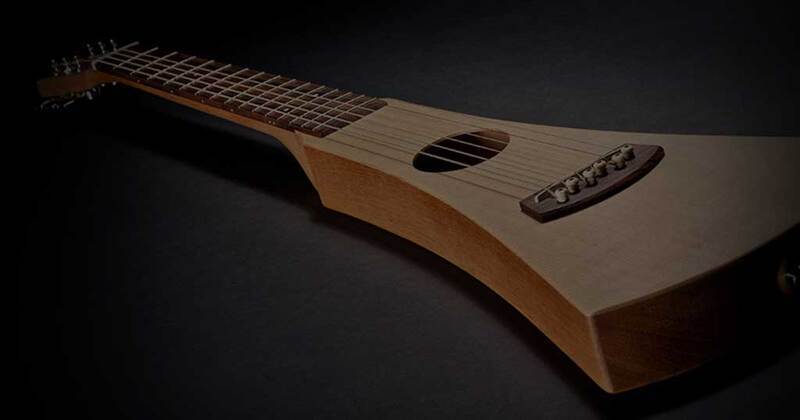
The Martin Backpacker has a good sound, and its neck feels like a full-size guitar, which is ideal for practicing & playing. Its non-traditional body shape makes it super-portable on airplanes and beyond.
Read more


Taylor BT2 Baby Taylor Acoustic Guitar
Nicely appointed entry-level Taylor that's great for travel.
Read more


Same feel as a Baby Taylor and Little Martin for less money.
Read more
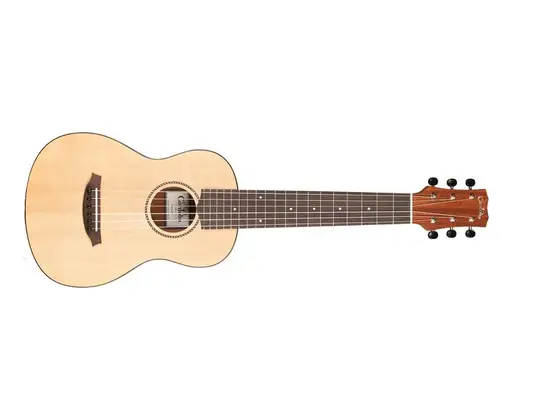
Awesome travel-friendly option for classical guitar players.
Read more
Traveler Guitar Ultra-Light Electric Guitar
Same scale length as an electric guitar in a SUPER portable & lightweight package.
Read more
Washburn's budget answer to the Martin Backpacker, and a hiker's best friend.
Read more
Unique performance-oriented acoustic-electric travel guitar that sounds phenomenal when plugged in.
Read moreIf you’re a guitar player you know how much of a hassle it can be to take your guitar anywhere. Aside from the fact that airlines have a well documented history of being jerks to musicians the world over, guitars are really just kind of awkward to travel with. It’s even worse if you’re primarily an acoustic musician.
Thankfully, crafty manufacturers have developed a solution to this problem. That’s right folks; today we’re going to be talking about how to select the best travel guitar for your needs. So if you’ve ever wanted a travel guitar but are overwhelmed with all the options you’ve come to the right place.
What is a Travel Guitar?
Simply put, a travel guitar is a guitar that’s small enough to be easily transported. Generally for acoustics a travel guitar is smaller than a parlor guitar but still features a full scale neck (that’s not to say that shorter scale guitars are uncommon). For electrics a travel guitar is still generally full scale (a neck as long as a standard guitar) but features some other space-saving feature, like tuning pegs below the bridge or in the body.
What Should You Look for in a Travel Guitar?
Above all, we would focus on portability when looking for a travel guitar. When it comes to acoustic travel guitars you’re not going to get the same bass-heavy, rich tone as you will from your full-sized dreadnaught. Jumbo style guitars have a lot of bass because of their size. Likewise, travel guitars will generally sound thinner, quieter, and less resonant than their full sized counterparts because they're built with portability in mind as opposed to just tone.
Electric travel guitars rely on their electronics so in general they'll sound pretty good. Sure, maybe not quite the same as your Les Paul or Strat - after all if a company puts in the highest quality materials it leads to an expensive guitar, and travel guitars are generally priced much lower than standard instruments. Definitely make sure to consider the pickup components when selecting your travel electric guitar to make sure you'll be able to achieve the tone you're looking for.
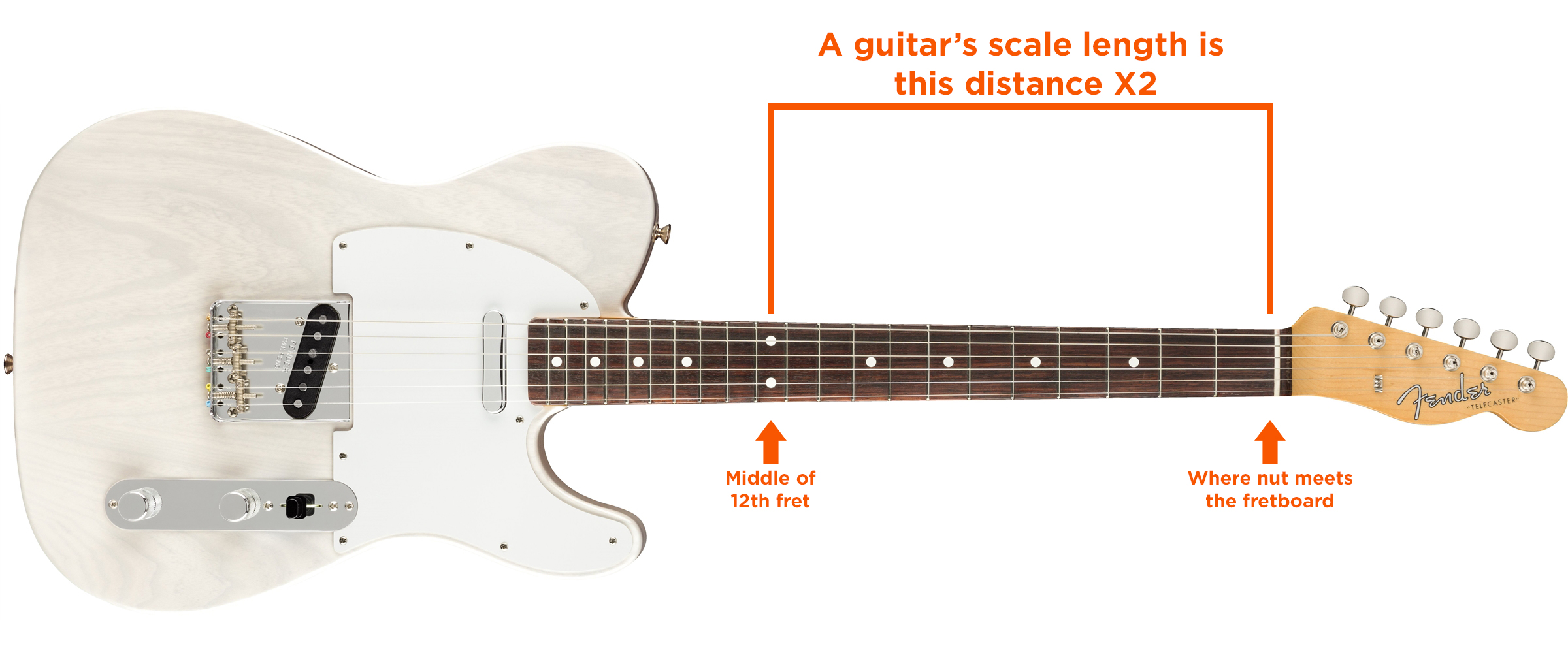
Finally, pay attention to the scale length. It's an important component to a travel guitar, since it deals with the area of the guitar where your hands operate. Two guitars can be totally different sizes, yet have a similar scale length. It's important that the scale length is not too dissimilar from your main, full-size instrument. Technique is honed with repetition, so practicing on a travel-sized instrument with a vastly different scale length from what you normally play might be less effective.
Types of Travel Guitars
The category "travel guitar" really just means that it's portable, and easier to bring aboard an airplane. Within the travel guitar category you'll encounter several different styles:
» Acoustic Travel Guitars (Standard Shape)
This is probably the most common travel guitar sub-category. Acoustic guitars are classified based on their body shape and size (you can review the different sizes here. There are Jumbo acoustics on the larger end, dreadnaughts in the middle, and parlor on the smaller end. Acoustic travel guitars are a step smaller than parlor. This won't be the most portable option because there is still a relatively large resonant body, but it's the most familiar to acoustic guitar players.
» Acoustic Travel Guitars (Non-standard Shape)
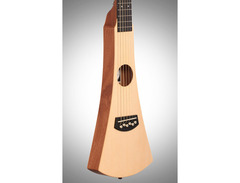
The Martin Backpacker is the best example of this. It looks more like an oar than it does a guitar. It can be a little awkward to play a non-standard shape acoustic guitar, so often a strap is required. The greatly reduced body size makes these guitars extremely portable, but the concession is the sound; it simply won't sound as deep and rich as a standard shape acoustic.
» Electric Travel Guitars
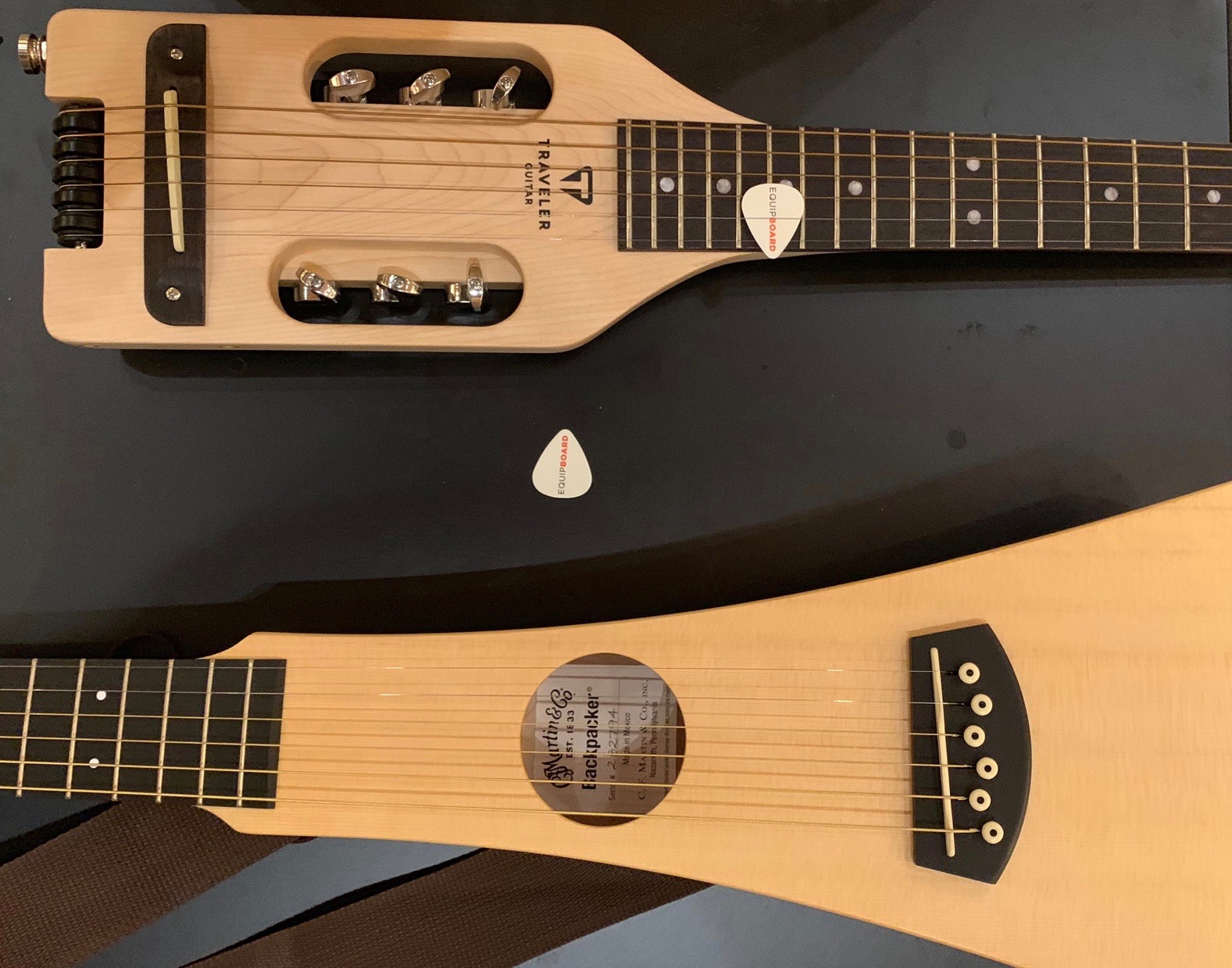
This is an interesting segment because there honestly isn't that much to choose from. You'll find something like a Squier Mini Stratocaster, which is quite simply a Strat that has been shrunk. Then there are more innovative options like those from Traveler Guitar, which is a re-imagined electric guitar purpose-built for travel. Perhaps this market segment is smaller because electric guitars are already pretty thin and a little easier to travel with than acoustics. Also, a travel electric guitar needs to be amplified eventually, so you'll be burdened to travel with some kind of amp.
» Acoustic-Electric Travel Guitars
Essentially a standard shape acoustic travel guitar with onboard electronics so that it can be plugged in and amplified. Martin, for instance, makes the Martin LX1 which is acoustic only, and the LX1E which is the exact same thing with the addition of a Fishman Sonitone preamp system. The Yamaha SLG200S Silent Guitar also fits into this category.
If you travel around and perform live, an acoustic-electric travel guitar is essential so you can plug into a venue's PA system and be heard no matter the size of the venue.
» Classical Travel Guitars
Travel-sized versions of nylon-string classical guitars.
Martin Backpacker (Steel-String)
4.5 (17)
-s.webp?v=1784818817)






Average Price: $319
Standard/Professional
$200
$601+
Budget
Standard
High-end
- Durable and withstands rough handling during travel
- Compact size, ideal for backpacking and travel
- Unique cigar-box-like sound, especially with bass strings
- Easy to transport, fits in tight spaces like airplane closets
- See 6 more
- High action can be uncomfortable for some players
- Top-heavy design requires a strap for comfortable play
- Limited volume and projection compared to full-sized guitars
- Thin sound, especially when strummed with a pick
- See 1 more
Established in 1883, Martin is inarguably one of the most prestigious manufacturers of acoustic guitars the world has ever seen. Though the Martin Steel String Backpacker Travel Guitar is a different animal compared to Martin's more well-known instruments, it benefits from the brand's cachet and is a great little travel guitar.
Interestingly, the Backpacker features a solid spruce top. It’s hard to say how much this benefits the guitar considering its dimensions, but it still increases the volume and tonal response to at least some degree considering the effect that solid wood has on an instrument.
The shape of the Backpacker is admittedly jarring at first - it looks like a very skinny triangle, and looks-wise has more in common with an oar than it does traditional acoustic guitars! The beauty of it is how portable it is while still maintaining standard dimensions for the string spacing and 24" scale length. This will make the transition from the Backpacker back to your main instrument (and vice versa) much less dramatic than it would otherwise be. Take note that it only has 15 frets as opposed to the 20+ more common to full sized guitars, which is an issue if you frequently solo that far up the neck.
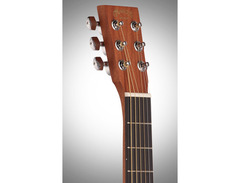
The hardware on this guitar is also impressive for the price, utilizing a compensated white TUSQ saddle, white plastic bridge pins, enclosed chrome finished gear tuners, and a white corian nut (corian is a white acrylic polymer, with tonal qualities that fall somewhere between bone and plastic). It comes strung with high quality Martin M170 Extra-Light 80/20 Bronze strings. The action on the one we got was nice and low.
So, what are its downsides? Obviously the sound of the Backpacker isn’t going to be like a full-sized dreadnaught, but that can and should be forgiven considering it's purpose-built for being a road warrior - camping, hiking, airplanes, etc. More significant is the fact that you cannot play this guitar on your lap like you could a traditional acoustic; a strap is necessary. Your playing position will take a little getting used to. We initially found the Backpacker slightly awkward to play since we have muscle-memory queues from holding a dreadnaught-sized acoustic guitar, but it's nothing a couple hours with it didn't fix.

With that out of the way, this is an awesome choice for a travel guitar. Once you get used to the unique body shape, you'll love how much the neck feels like a full-size guitar, which means your muscle-memory will transfer perfectly as you practice and play. The build quality is exactly what you'd expect from a brand like Martin, and it is priced really well given the brands' premium craftsmanship.
See how artists use this

.jpg)


Taylor BT2 Baby Taylor Acoustic Guitar
5.0 (7)


Average Price: $429
Standard/Professional
$200
$601+
Budget
Standard
High-end
- Ideal size for travel and portability
- Mahogany top offers warmer, fuller sound
- Low string tension allows for easy string bending
- Great sustain for a small guitar
- See 6 more
- Prone to structural issues like body and top separation
- Some users report buzzing on specific strings
- Requires careful humidity control to avoid damage
- Small body results in tinny sound for some players
- See 1 more
Taylor ranks amongst the top echelon of acoustic guitar manufacturers, so it's exciting to see an offering from them for a smaller, travel-sized guitar offered at a very attractive price-point.
The Baby Taylor definitely checks the box for portability. It's 3/4 dreadnaught, with a 22.75" scale length and 33.75" overall length. It has a respectable choice of materials all around, with a Tropical American Mahogany top and neck with a matte finish, layered Sapele back and sides, and ebony fingerboard.
This is an extremely light guitar and is a joy to pick up and play. The Baby Taylor's small size might pose a problem if you have particularly large hands. Aside from that, it's hard to think of any shortcomings.
It would make a perfect travel companion for any adult, and it's also a perfect size for kids. It of course is not going to project like a full-size acoustic guitar, but the sound it does produce is surprisingly good, rich, and resonant - it's a Taylor, after all.
See how artists use this


Martin LXM
4.5 (17)
Average Price: $250
Standard/Professional
$200
$601+
Budget
Standard
High-end
- Surprisingly loud with excellent resonance
- Comfortable to play, great for both beginners and pros
- Solid rosewood fretboard and bridge on older models
- Durable material ideal for harsh climates and travel
- See 6 more
- Stratabond neck is heavy and shifts the balance
- Faux wood finish on the top looks cheesy
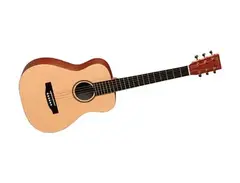
Taylor has the Baby Taylor, and rival Martin has their own travel-sized offering, the LXM Little Martin. These two guitars are very similar in terms of sound, fit, finish, and price, so your choice might just come down to your brand allegiance!
We decided the LXM is a better fit for a travel guitar recommendation over the LX1. The LX1 features a solid spruce top, and while that's the more desirable option in terms of tonewood, it requires more maintenance and is more susceptible to the elements. The LXM has a high pressure laminate (HPL) spruce pattern top, so you don't need to worry as much about climate factors like temperature, humidity , and let's face it... pets and kids. And speaking of kids, it's a very good sized guitar for smaller kid hands.
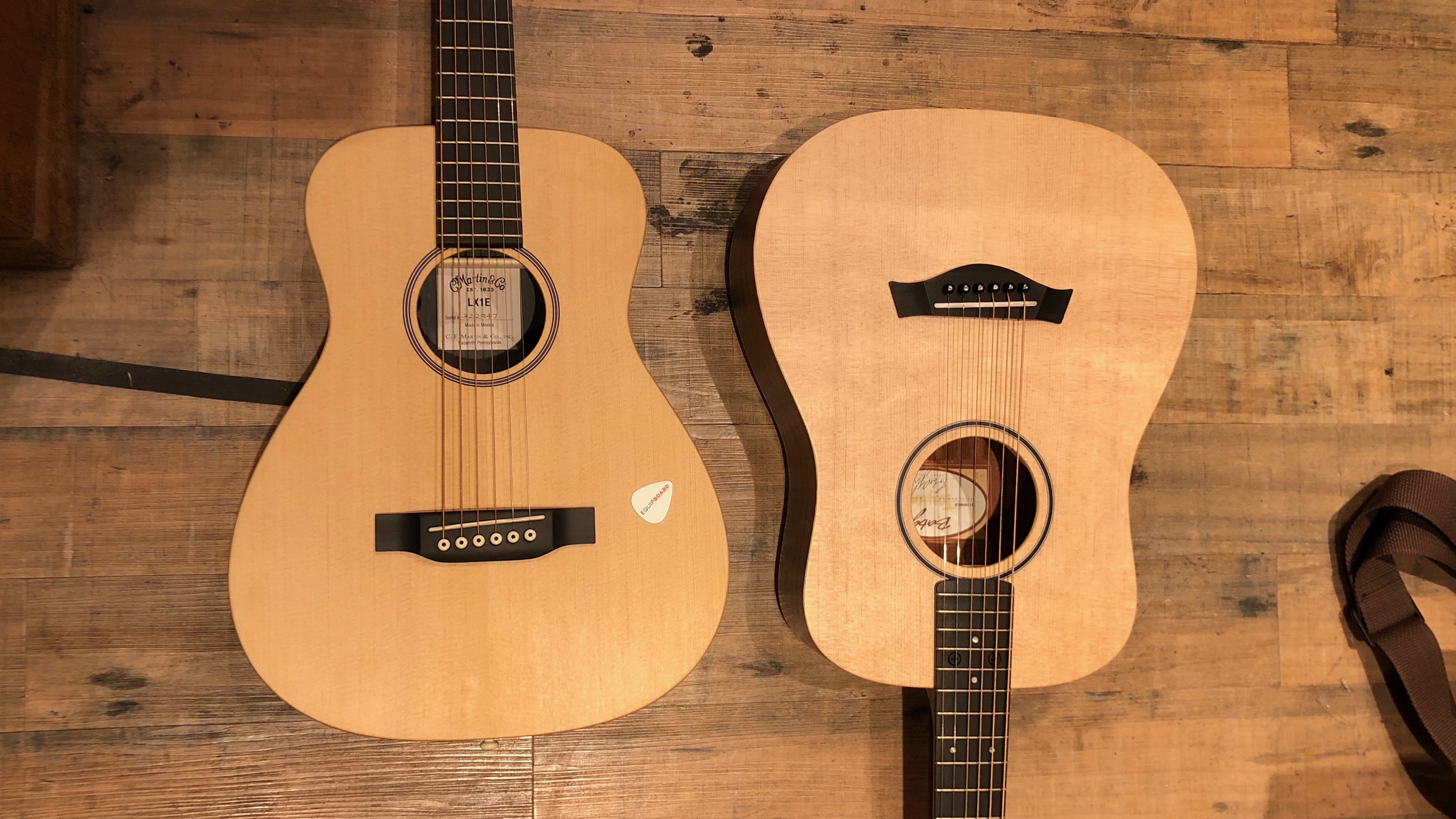
The Martin LXM is nicely appointed and ours had a good setup, strung with Martin MSP7100 Phosphor Bronze strings and low action with minimal buzz.
This guitar has 20 frets, a 23" scale length, and 34" overall length - that's within a quarter inch of the Baby Taylor. The two guitars feel very similar in terms of playability. Even though the LXM is a fraction of the price of a flagship Martin dreadnaught, you can definitely tell that Martin warmth and richness is there in the tone - slightly less bright and sparkly than the Baby Taylor.
Overall, a fantastic travel guitar option, and resistant to the elements due to its laminate top. Don't let the low cost fool you - it's worthy of the Martin name.
See how artists use this







.jpg)
Fender CT-60S Travel


Fender doesn't have the same pedigree as Martin and Taylor when it comes to acoustic guitars, but they know a thing or two about building quality instruments that musicians love to play. The Fender CT-60S is part of their "Travel" line of acoustics, and is a great option with a very attractive price tag.
It features a solid spruce top and laminated mahogany back & sides. Scale length is a portable 23.5". A nice touch are the rolled fretboard edges , which makes sliding up and down the neck a little more kid and/or beginner friendly.
A good way to think about this guitar is Fender's rival to a Baby Martin or Baby Taylor, over $100 less expensive, and thus slightly less fancy appointments. For example, the saddle and nut are plastic (of course upgrading those is an easy change you can make relatively cheaply).
This all begs the question - if the Fender CT-60S looks nice, is portable and travel-worthy, and is a joy to play and listen to (which it is), do the small appointments really matter? To us, it's not critical. Fender on the headstock might not mean as much as seeing Taylor or Martin up there, but if you're more comfortable spending closer to $200 as opposed to $400, this might just be your best bet.
Cordoba Mini M

- Remarkably high quality for a small instrument
- Excellent for travel and couch playing
- Plays smoothly with minimal adjustment required
- Larger neck size is comfortable and familiar
- See 6 more
If nylon string classical guitars are more suitable for you, the Cordoba Mini M should be on your short list.
One thing to note is it's tuned from A to a (ADGCEa) - as if you put a capo on the 5th fret of a standard tuned guitar. You can retune to E if you want.
It has a solid spruce top with mahogany back and sides, and a rosewood fingerboard. Scale length is 20" and the nut width is 1.96", so it has the feel of a full-size classical guitar (overall length is a nice and compact 30.5").
For its diminutive size, it's got a big tone. Nice and rich. The appointments are nice as well especially given its budget price, like a bone nut and saddle, and silver tuners with black buttons.
If you're a relatively new player and haven't yet built up your calluses from steel strings, or if your primary instrument is a full-size classical guitar, the very affordable Cordoba Mini M fits the bill perfectly for your travel guitar needs.

.jpg)
Traveler Guitar Ultra-Light Electric Guitar
4.5 (5)

Average Price: $336
Budget/Beginner
$400
$1001+
Budget
Standard
High-end
- Extremely portable, fits easily in overhead compartments
- Full-size neck provides authentic playing experience
- Sturdy construction with tight tolerances
- Stays in tune even with frequent travel
- See 5 more
- Tuners and components on the back may poke into body
- Too long for medium or small suitcases
- Bright, treble-heavy sound not ideal for everyone
- Higher price point compared to some standard-sized guitars
- See 1 more
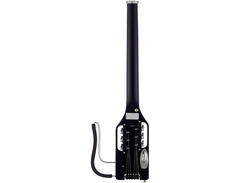
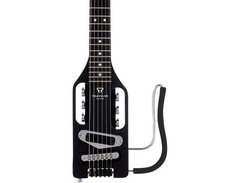
Entrepreneur Leon Cox, founder of Traveler Guitar, set out to design a guitar for the sole purpose of being ultra-portable. While the design of the Traveler Guitar Ultra-Light Electric Guitar is a far cry from a traditional guitar, rest assured this portable instrument doesn't feel all that much different.
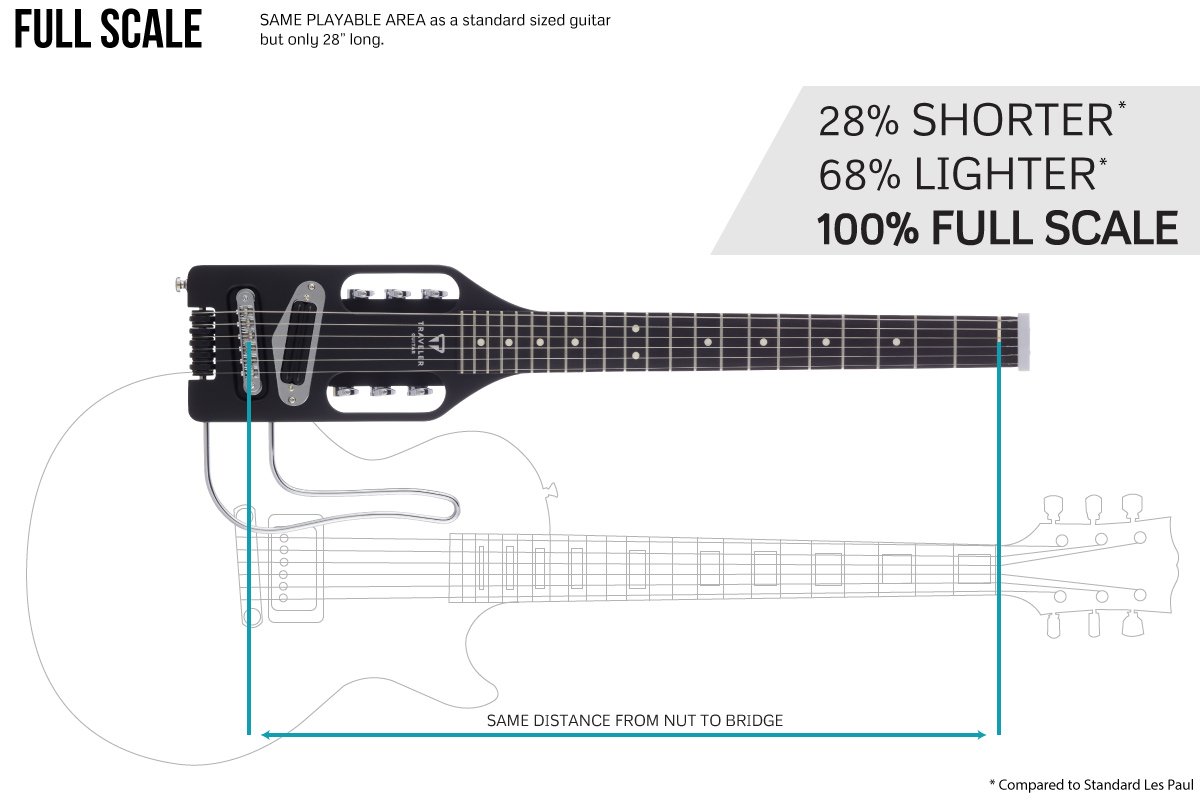
This mostly comes down to the scale length. The 24.75" scale length means Les Paul and SG players should feel right at home. The overall length of the guitar is 28", so it should fit in most airline overhead compartments with relative ease, and it can easily be stowed in a large travel suitcase should you go that route. It weighs a measly 3 lbs.
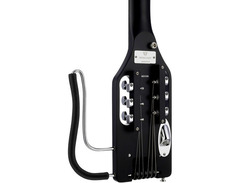
The guitar is similar in specs to the majority of guitars in this price range. The pickup is a dual-rail humbucker, so expect results similar to that of a Duncan designed pickup. The guitar features a 1/4" output on the rear of the body when you're ready to plug in.
The hardware quality is solid. The tuners also function just as well... except they are in the guitar's body, eliminating the need for a headstock!
Unlike the Martin Backpacker, the Traveler Guitar comes with a leg rest. It’s just a thin metal frame, so it has a tendency to be a bit slippery.
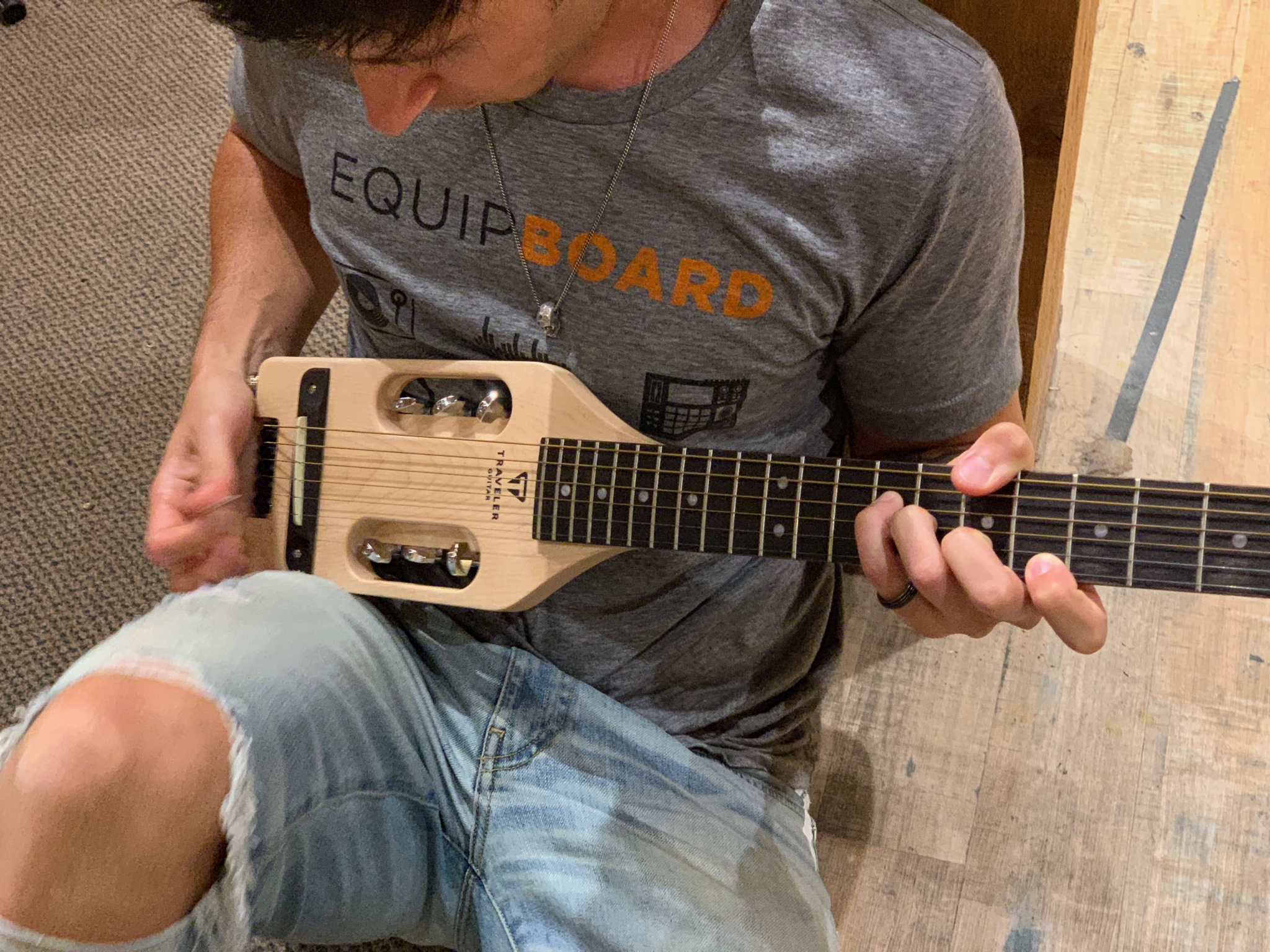
The Traveler Guitar Ultra-Light Electric Guitar is a great option for musicians looking for an ultra-portable electric guitar that replicates the feel of a full-sized one.


Washburn Rover Travel Guitar
3.5 (4)

- Great condition and sounds good with new strings
- Sturdy enough to handle all weather conditions
- Case includes straps for easy packing and transport
- Lightweight and easily fits in airplane overhead compartments
- See 4 more
- Sound can be a little tiny or banjo-like
- String width may be challenging for larger fingers
- Balance differs from average steel-string acoustic, takes getting used to
Think of the Rover as Washburn's budget offering to rival the Martin Backpacker. The two guitars are very similar in terms of size and feel.
In terms of tonewood you get a solid spruce top and mahogany back and sides. The scale length is 23.75". The sound you get out of it is a "sit around the campfire" volume as can be expected, with a little less warmth than the Martin Backpacker.
It suffers the same playability problem as the Martin, that is you either need to use a strap to get it in a comfortable playing position, or prop it up on your thigh at a high angle.
In our experience, the set up wasn't quite up to snuff. The action was a bit high, so some truss rod adjustment was needed as well as some sanding of the saddle (luckily it comes with two saddles, in case you mess up). With a decent setup job, the playability is quite nice.
For the outdoorsman who wants a guitar to hook up to their backpack and take to the beach, hiking, camping, etc. the Washburn Rover is an ideal option with a very friendly price tag.
Yamaha SLG200S
5.0 (3)



Average Price: $701
Standard/Professional
$200
$1001+
Budget
Standard
High-end
- Lightweight design ideal for travel
- Beautiful and precise construction with excellent wood tone matching
- Comfortable neck and fretboard
- Deep, rich, clear tone with versatile sound contours
- See 6 more
- Provided earbuds are large and uncomfortable
- Knobs feel less sturdy than expected
- Strap pins can become loose with movement
- Initial string gauge may feel heavy
- See 3 more
The Yamaha SLG200S Silent Guitar is a very innovative and interesting instrument. It's an acoustic-electric guitar , meaning it has onboard electronics which allow you to plug into an amp, mixing console, or headphones so you can hear yourself play. Because of this, be warned it's one of the pricier options when it comes to travel-friendly guitars.
Because there's no deep wood body, unplugged this guitar is whisper quiet. This is great if you just want to practice late-night when the family is asleep, but not so good around the campfire.
The SLG200S is geared more towards recording, and even more so to acoustic guitar performance. Plugging it into a speaker is where it truly shines.
The onboard controls include a tuner which works decently well, a volume knob, and a blend knob so you can choose how much of the sound comes from the piezo under-saddle pickup vs. SRT Powered sound (which is Yamaha's clever modeling system from recording acoustic guitars in a studio environment). Treble and bass knobs are helpful to sculpt your sound in a pinch, and you can choose to have one of three available effects active - room reverb, hall reverb, or chorus.
The I/O is pretty comprehensive. You can output straight to headphones, or plug into a mixing console, PA, amp, etc. There's even an AUX input which allows you to jam along to whatever other sound source you want (an awesome practice tool).
For portability, it's great. It has a 25" scale length and 22 frets on a rosewood fingerboard. The body of the SLG200S breaks down to fit in the included gig bag and should easily fit in overhead compartments on a plane.
Sound-wise, it's very nice. We played it through Apple earbuds, Beyerdynamic studio headphones, and plugged it into an audio interface into some JBL studio monitors. It sounds great, more or less like a mic'd acoustic guitar.
Overall, this is a very unique guitar. It solves the problem of being on stage with an acoustic guitar and dealing with feedback. Its looks are striking, which can be a good or bad thing (you get to decide). It's not a great portable guitar if you're looking for something to take to the beach or a hike - for those applications we suggest going purely acoustic. But if headphones, effects, amplification, and live performance are your needs in addition to portability, take a close look at the SLG200S.
See how artists use this










Top Ranked Steel-string Acoustic Guitars on Equipboard


-m.webp?v=1784804860)
-m.webp?v=1784844515)

About the authors

Mason is a freelance music gear writer that contributes to Equipboard, Reverb, TuneCore, Music Aficionado, and more. He plays the guitar and mandolin and resides in Wyoming. Read more
New in Steel-string Acoustic Guitars

$2,111.00 - $2,299.00


$2,285.00 - $2,499.00


$14,999.99 - $19,590.00


$4,199.99 - $5,190.00


$3,799.00 - $4,199.99