
Table of Contents

Equipboard
Equipboard is the world's largest community of artists and their gear. Read our review process.
We are reader-supported. When you buy through links on our site, we may earn an affiliate commission. Learn more.
Our Picks


In today’s musical climate, being able to easily amplify an acoustic instrument is a requirement for musicians who plan on performing. The days where micing was the norm have long since passed, and now convenience is key. Due to the widespread availability of acoustic-electric instruments virtually every gigging musician who specializes in acoustic instruments is expected to plug-in.
This is a double-edged sword, because while using a pickup system is way less hassle than using a microphone it can be hard to find an acoustic-electric guitar that retains an organic tone. Piezos have a tendency to sound a bit “quacky”, acoustic pickups tend to lose the rich overtones that define an acoustic guitars sound, and internal mics are prone to producing feedback at higher levels of volume.
If you’ve had a hard time trying to figure out how to select the best acoustic electric guitar for you needs you’ve come to the right place.
Acoustic-Electrics vs. Acoustics with Aftermarket Pickups
While everyone’s opinion is going to vary on this, we would say that buying an acoustic-electric guitar is going to be an easier option for the majority of guitarists. Aftermarket acoustic pickups either typically sound inferior to those that are pre-installed at the factory or they often require heavy modification to install.
With that being said, if you feel comfortable routing out your end pin to place a pickup system into your guitar then by all means go for it. We would just like to caution you that this process has the potential to destroy an instrument, and unless you shell out for a higher-end acoustic pickup the results are going to be pretty lackluster. In short, make sure you or someone that is working on your guitar know what you're doing.
Pickup Systems in Acoustic-Electric Guitars
Virtually every acoustic-electric guitar comes with either a piezo pickup or an internal microphone, with piezo variants being significantly more common. A piezo pickup uses pressure to generate a current, which in turn is amplified to create a sound somewhat reminiscent of an acoustic instrument. Internal microphones are smaller microphones placed inside of a guitars body, which while offering a more genuine sound can have a tendency to feedback when used at high volumes.
While piezos have their detractors, they do the job. You’re generally not going to get a tone that would fool other musicians, but even the cheapest piezo is still going to sound like a guitar to the inexperienced and that can be fine depending on your goals and audience. Cheap acoustic electrics can also be had for $200 or less depending on which model you buy, so if you’re just playing the occasional open mic you’re not going to be spending that much more than you would if you purchased a high-end aftermarket pickup.
Seagull S6 Original QI




A subsidiary of the venerable Godin Guitars, Seagull is a company that has gained notoriety for their innovative acoustic guitars and folk instruments. The line sources woods that aren’t commonly used utilized by their competition, giving them a strikingly unique tone that’s unavailable from any other manufacturer. In addition to their unique choices of wood, Seagull also features guitars made with an innovative design not found in similarly priced acoustic guitars as well as a highly regarded pickup system.
A perfect representation of Seagull’s overall quality is the Seagull S6 Original QI. The first thing to note about this guitar is that it’s made from a pairing of cedar and laminated Wild Cherry wood. This combination gives Seagull instruments a response that’s almost reminiscent of a classical guitar, with a clear yet understated high-end as well as a bold and focused low and low mid response.
A notable feature about Seagull guitars in general is the headstock. The headstock serves a very important purpose. It’s designed so that the tuners are in line with the nut slots, which helps to keep the guitar in tune by reducing tension that the strings experience in the nut slot. This actually does function pretty well, so while the difference in tuning stability between this instrument and a high-end model is going to be negligible the Seagull well likely have a better tuning stability than other guitars in this price range.
Another notable feature is that Seagull guitars have a slightly arched top. This helps to reduce the strain caused by the strings on the body, which is a definite plus if you’re going to be traveling with the instrument or switching back and forth between different tunings.
Lastly, the guitar comes with Godin’s QI system. The pickup is a transducer, which picks up vibrations from the soundboard/top of the instrument. This gives it a more natural response than a piezo. It also includes a bass, treble and volume controls. Even better, the QI system also features a built-in chromatic tuner.
The only real downside with this guitar is that it doesn’t come with a case, so if you plan on traveling with this guitar you’re most likely going to have to invest in a hardshell case.
Unplugged this guitar is a powerful instrument for fingerstyle musicians. Even though it does have steel strings the underlying tone is similar to that of a classical guitar. It’s high end is very full without being muddy, and the low end frequencies are incredibly focused and vibrant. With that being said, this does make the guitar a poor fit for some situations. Because it’s a darker voiced instrument it’s never going to cut through a mix like the more traditional pairing of rosewood and spruce. However, this can be compensated for if you use 80/20 strings.
While the unplugged tone is less versatile than some instruments, the QI pickup system does make this guitar just as versatile on stage as any other amplified acoustic instrument. You can adjust the EQ to be just as bright as any other guitar, so if you’re planning on gigging with it you’re not going to run into any problems there.
The Seagull S6 is a great sounding guitar in its own right, and at this price point it is an outstanding value for those looking for an acoustic-electric option.
Martin DRS1
5.0 (24)

- Rich, deep tones with excellent resonance for a full-bodied sound
- High-quality craftsmanship with a satisfying Martin sound and feel
- Versatile sound, great for multiple genres and playing styles
- Holds up well over time, maintaining its tone and audio quality
- See 6 more
- Battery holder is inconveniently located inside the sound hole
- Buttons could be better positioned on the body for easier access
Established in 1833, Martin is arguably the company responsible for the guitar as we know it today. In addition to a wide variety of other accomplishments, the company was the first to widely produce x-braced guitars. X-bracing is the industry standard for steel string instruments, as its one of the few bracing patterns that’s able to accommodate the tension that results from this type of string.
C.F. Martin, the namesake of the company, was a German luthier who emigrated to the United States. He actually came to the States as a result of a controversy between two craftsmen guilds, where the violin guild was attempting to prevent cabinet makers (at the time the majority of guitar makers actually belonged to the cabinet makers guild) from producing instruments. C.F. Martin, following the battle with the violin makers guild, chose to come to America where economic systems were less restrictive. Martin has made some of the most sought after instruments in the world, and are currently continuing to do so.
The DRS1 from Martin is an intermediate level guitar that comes from a venerable company. It has a 1 11/16” nut, which is well within the range that most guitarists would be comfortable with. The pickup system isn’t quite as versatile as some, featuring only a volume and tone control. But with that being said it is contoured in a way that will offer a robust tone. You also need to keep in mind that anything you plug into is going to have some tonal shaping capabilities, so if you need a different sound for a certain situation you’re still pretty likely to be able to dial in the tone you need.
Lastly, the hardware is all what you would expect from a guitar in this price range. So long as the initial set-up on the guitar was well performed you’re not going to have issues with things like tuning stability or intonation.
The body of the DRS1 is made entirely from solid sapele, which is similar to mahogany. There isn’t going to be a huge difference between the two woods, though sapele is regarded to be a bit sweeter sounding than the more focused mahogany. As far as volume and overall tonal response are concerned the DRS1 is exactly what you would expect from a solid-wood instrument. It’s head and shoulders above a laminate guitar. It does have that trademark Martin voice that no other company have been able to replicate.
The Martin Road Series DRS1 Dreadnought Acoustic-Electric Guitar is a fantastic option for any musician looking for a quality solid wood acoustic-electric instrument.
See how artists use this





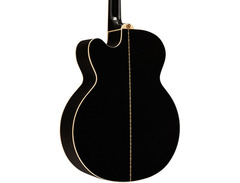
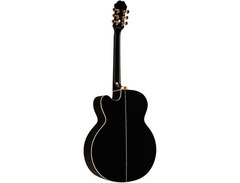
Epiphone EJ-200SCE/ BK
5.0 (14)



Average Price: $499
Standard/Professional
$200
$1001+
Budget
Standard
High-end
Founded in 1873 by Anastasios Stathopoulos, Epiphone is one of the most prolific producers of acoustic and electric instruments in the world. Believe it or not, while the current company may not have many designs to differentiate them from their parent company they actually used to stand on par with any other American manufacturers of musical instruments.
During its New York era, Epiphone and Gibson were actually bitter rivals. The two manufacturers were the main producers of archtop guitars, a high-end model that was heavily utilized in the pre-amplification era. Gibson actually purchased Epiphone in order to take over the company’s line of stand-up basses. These instruments were among the first laminated acoustic instruments, which at the time was highly desirable due to laminate’s resistance to temperature and humidity. Epiphone didn’t become the company we know today until amplification truly took over, which is when Gibson started using them as their budget line. While the company may have moved away from their roots, they still produce some pretty impressive instruments. A perfect example of which is the Epiphone EJ200SCE.
The first thing to note about this guitar is that it is made entirely from laminated woods. The electronics on this guitar are interesting to say the least. The guitar features two pickups, the NanoFlex and the NanoMag. The NanoFlex is a piezo-like, which in addition to sensing bridge vibrations also picks up vibrations from the top and body. The NanoMag is mounted on the end of the fretboard, and functions similar to a magnetic pickup. You can blend between the two, which gives you a lot of versatility you wouldn’t otherwise have. The guitar does also feature a preamp, which comes with a tuner, a phase switch, and a tuner.
While the guitar is made entirely from laminate, it does have a pretty proficient unplugged tone. This is likely due to the size of the body, which is capable of more resonance than a smaller instrument. While laminate doesn’t have many of the acoustic properties inherent to a solid tonewood, just because a guitar is made from laminate doesn’t mean that it won’t be a solid sounding instrument in its own right.
The plugged in tone of this instrument is a bit harder to judge objectively simply because of the options inherent to its pickup design. It’s another situation where you’re only going to get out what you put in. The guitar has a pretty wide range of tones available, so if you’re not willing to take some time dialing in a sound that works well for your needs you’re probably not going to have the best experience. On the other hand, because this guitar has the options it does it can compete with more expensive pickup systems.
The Epiphone EJ-200SCE is a versatile choice for the musician looking for a reasonably priced gigging guitar, but if you’re more focused on the acoustic tone of your instrument you would be better off looking at a different model.
See how artists use this




.jpg)


Taylor 214ce
5.0 (30)


Average Price: $983
Standard/Professional
$200
$1001+
Budget
Standard
High-end
- Stunning Koa appearance and quality build
- Exceptional playability; neck feels smooth and fast
- Well-balanced sound with deep lows and bright highs
- Excellent projection and power, suitable for various styles
- See 6 more
- Some quality control issues, like glue spots and fretboard bumps
- Occasional setup problems; high action reported
- Comparatively costly for features, similar sound available on cheaper guitars
- Some buzzing issues with bass E string reported
Bob Taylor, the founder of Taylor guitars, is a musical luminary on par with Leo Fender. In 1972 at the age of 18 he started making acoustic guitars of his own. Around this time he also took up a job at American Dream, a guitar making shop that he would eventually come to own. This eventually snowballed into the Taylor we know today, a company that’s renowned for their high-end acoustic guitars and innovative designs. While Taylor originally set out to make acoustic guitars, their acoustic-electric offerings aren’t anything to turn your nose up at. The guitars have become the weapon of choice for a variety of professional and hobbyist musicians the world over, and given their track record that isn’t likely to change any time soon.
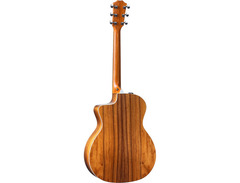
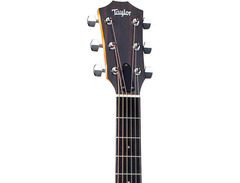
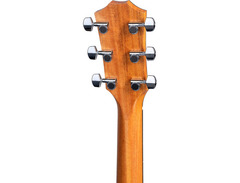
A perfect example of Taylor’s commitment to quality, the Taylor 214ce is a great option for any musician looking for a guitar that sounds great on the stage and unplugged. This guitar is a grand auditorium body shape. This body style was designed by Bob Taylor, and is intended to be a compromise between guitarists who want to flatpick and those who want to fingerpick. While this does result in a guitar that doesn’t truly excel in either (more on this later) it does give the guitar a versatility that some smaller instruments lack. This model features a solid spruce top and laminated rosewood back and sides.
Taylor’s pickup system has been very well received, and why it’s design may not appeal to every musician you would be hard pressed to say that it’s not very good. The company utilizes a body sensing pickup, which helps to better approximate the sound of a plugged in instrument. As far as overall specifications are concerned, keep in mind that Taylor is a truly modern guitar manufacturer. This includes things like their nut width (1 11/16”) as well as neck shape. This is going to impact you to varying degrees depending on your personal preferences, but if you’re looking for a guitar with a more vintage feel you may want to search elsewhere, as this is a modern players' guitar.
This guitar is a laminate instrument, and solid wood guitars with reasonable pickup systems can definitely be found at the price of the 214ce without too much issue. However, the Grand Auditorium body shape really does help to make this guitar pretty unique for the price point. It’s arguably one of the most versatile body shapes, because the body style is just as well suited to strumming and hard picking as it is delicate fingerstyle passages.
The laminate also doesn’t hamper the guitar overly much. Sure, it may not sound quite as good as solid wood back and sides tend to but the majority of musicians aren’t going to feel like the sound of this guitar is holding them back in any way. There are varying degrees of laminate, some that approach the sound of solid wood and some that do not. We would comfortable say that the Taylor is in the former category as opposed to the latter.
The most important thing to keep in mind about Taylor is that they’ve always had excellent quality control. It’s an area that they really excel at, regardless of the level of guitar. So while there are solid wood acoustic-electric guitars that can be had for the price of the Taylor remember that you’re paying for Taylor’s quality assurance in addition to the guitar.
See how artists use this










Gibson Hummingbird
4.5 (44)
-s.webp?v=1784957710)
-l.webp?v=1784957710)
Average Price: $3,619
High-end/Boutique
$200
$601+
Budget
Standard
High-end
- Iconic design with a unique, hand-etched pickguard admired by many owners
- Rich, full-bodied sound with a balance between bright and dark tones
- Warm, resonant mahogany back and sides project an amazing tone
- Inspiring aesthetics and craftsmanship make it a joy to own and play
- See 4 more
- High purchase price, making it less accessible for budget-conscious buyers
- Some setups may require adjustments for action out of the factory
- Occasional minor cosmetic issues, like rough edges or unfinished areas
Founded in 1902, Gibson is a uniquely American company. They've been with Western music through it's most important innovations, and the guitars produced by the company continue to end up in the hands of professional musicians and hobbyists alike. The company was first established as "The Gibson Mandolin-Guitar Mfg. Co., Ltd." As evidenced by their original name, Gibson has made more than just acoustic and electric guitars. Something a lot of musicians don't know about the company is that they actually made banjos and lap steel instruments in addition to amplifiers, all of which continue to be highly prized by musicians to this day. While the company today focuses mainly on guitars (though they are still turning out quality mandolins), they've never moved away from their roots. Every Gibson instrument is just as well crafted as those produced during the early days of the company, a trend which we don't see stopping any time soon.
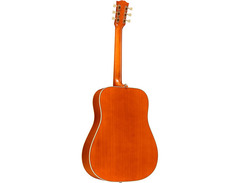
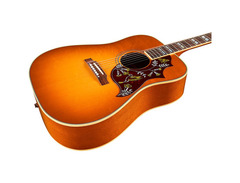
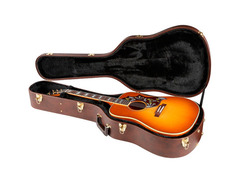
A perfect example of Gibson's commitment to quality, the Gibson Hummingbird Acoustic-Electric Guitar is a great instrument for any musician looking for a professional quality guitar that's equally at home in the studio and on the stage.
The most important thing to know about this guitar is that, like with many high-end guitars, while the components of the guitar may not be all that unique they're assembled to a level of quality that far exceeds that of budget minded instruments. At this price range you're paying more for craftsmanship than wood and hardware, so don't shy away from an expensive instrument just because there are others available made from the same tonewood.
A feature of this guitar that sets it apart from other acoustic electric instruments is that it features an L.R. Baggs Element pickup system. L.R. Baggs is head and shoulders above the majority of other manufacturers who produce acoustic-electric instruments, with only other high-end companies consistently producing pickups that are on a similar level of quality. This pickup is engineered to pick up vibrations from the entire guitar rather than just the bridge, and while it's not a perfect acoustic tone it's surprisingly lifelike.
Lastly, the Hummingbird has a very distinct visual appeal. This doesn't really have an impact on the tone, but it's definitely a unique feature that you're not going to find on any other guitar.
Gibson is highly regarded for their acoustic instruments. They're actually one of the "big three", in America; peers to both Martin and Taylor. Their instruments are geared more towards breadth than the more focused tone of a Martin or Taylor. This results in a very sweet sounding guitar that's a good fit for playing a supportive role in a mix. It should be noted that if you're playing this guitar unplugged in an acoustic ensemble it may not cut through as well as a more focused instrument, but it really is a great rhythm instrument.
Plugged in the guitar offers a very realistic acoustic tone. Of course no pickup is going to sound exactly like an unplugged instrument, but the Gibson Hummingbird is close enough that so long as you're playing through a solid P.A. or amp you're going to be so close that the majority of people won't be able to tell the difference.
The Gibson Hummingbird is an American classic, and its modern incarnation is a worthy follow up to its decade's long legacy. There is little wonder why so many professional musician's still rely on the Hummingbird.
See how artists use this







Top Ranked Acoustic-Electric Guitars on Equipboard


$366.00 - $549.00
4.5 (48)
4.5 (48)

$399.99 - $499.99
4.5 (35)
4.5 (35)


$499.00 - $666.00
4.5 (84)
4.5 (84)
About the authors

Mason is a freelance music gear writer that contributes to Equipboard, Reverb, TuneCore, Music Aficionado, and more. He plays the guitar and mandolin and resides in Wyoming. Read more
New in Acoustic-Electric Guitars


$1,196.99 - $1,399.99













.webp)