By Gear Experts
Table of Contents

Equipboard
Equipboard is the world's largest community of artists and their gear. Read our review process.
We are reader-supported. When you buy through links on our site, we may earn an affiliate commission. Learn more.
The Definitive Guide to the Teenage Engineering OP-1
The Teenage Engineering OP-1 isn't just a synthesizer; it's a cultural icon. Since its release in 2011, this portable powerhouse has captivated musicians, producers, and sound designers with its unique blend of playful design, powerful features, and workflow-enhancing quirks. This guide dives deep into the OP-1's history, features, workflow, and impact, providing a comprehensive resource for both curious newcomers and seasoned users.
A Brief History of Innovation
Teenage Engineering, a Swedish company known for its innovative design and engineering, introduced the OP-1 at the NAMM show in 2010, with its official release in 2011. It wasn't just another synth; it was a statement. In a market dominated by complex interfaces and menu diving, the OP-1 offered a refreshing approach: a visually engaging, tactile, and immediately gratifying experience. Its design philosophy drew inspiration from vintage portable electronics, blending a retro aesthetic with cutting-edge technology. This unique approach quickly garnered a dedicated following, solidifying the OP-1's status as a modern classic.
What Makes the OP-1 Unique?

The OP-1's charm lies in its holistic approach to music creation. It's not just a synthesizer; it's a sampler, sequencer, 4-track tape recorder, and even an FM radio, all packed into a remarkably compact and durable aluminum chassis. The OP-1 offers an all-in-one workflow, seamlessly integrating synthesis, sampling, sequencing, and recording, fostering a fluid and intuitive creative process.
For the technically inclined, the OP-1 boasts a powerful synthesis engine with features like FM synthesis, wavetable oscillators, and granular synthesis. The Digital synth, for example, offers a unique blend of digital and analog-style waveforms, allowing for a wide range of sounds from classic synth leads to gritty, experimental textures. The Cluster synth, inspired by granular synthesis, creates evolving and dynamic soundscapes by manipulating short audio fragments. These sophisticated synthesis engines, combined with the extensive modulation options (LFOs, envelopes), provide a deep level of sonic exploration and allow users to craft truly unique and expressive sounds.
This eliminates the need for complex setups and allows for spontaneous experimentation. The device also boasts unique sound engines, from the gritty digital tones of the Digital synth to the warm, evolving textures of the Cluster synth, offering a diverse palette of sonic possibilities. The OP-1's color-coded interface and tactile controls encourage hands-on interaction, and the graphics on the screen are not just decorative; they provide visual feedback and enhance the creative process. The 4-track tape recorder is a central element of the OP-1's workflow, allowing for layering, overdubbing, and applying tape-style effects like wow and flutter, giving recordings a distinct lo-fi character.
The built-in microphone, line input, and FM radio allow for easy sampling of any sound source, and the sampler is simple yet powerful, offering various editing options and loop points. Finally, the OP-1’s compact size and robust construction make it ideal for travel and live performance, and its long battery life ensures hours of uninterrupted creative flow.
Exploring the OP-1's Ecosystem
The OP-1's interface is divided into four main modes, each represented by a distinct color. The Synth mode (blue) provides access to the various synthesis engines, each with its own set of parameters. The graphical interface provides visual feedback for each parameter, making sound design intuitive and engaging. The Drum mode (red) is designed for creating drum patterns, allowing for sampling, sequencing, and manipulating drum sounds. The sequencer is visually represented as a grid, making it easy to create complex rhythms. The Tape mode (green) is the heart of the OP-1's recording workflow. The 4-track tape recorder allows for layering, overdubbing, and applying tape-style effects. Bouncing tracks allows for further layering and creative sound design. The Mixer mode (yellow) allows for mixing the four tape tracks, applying effects, and adjusting levels. It also provides access to the master effects and EQ.
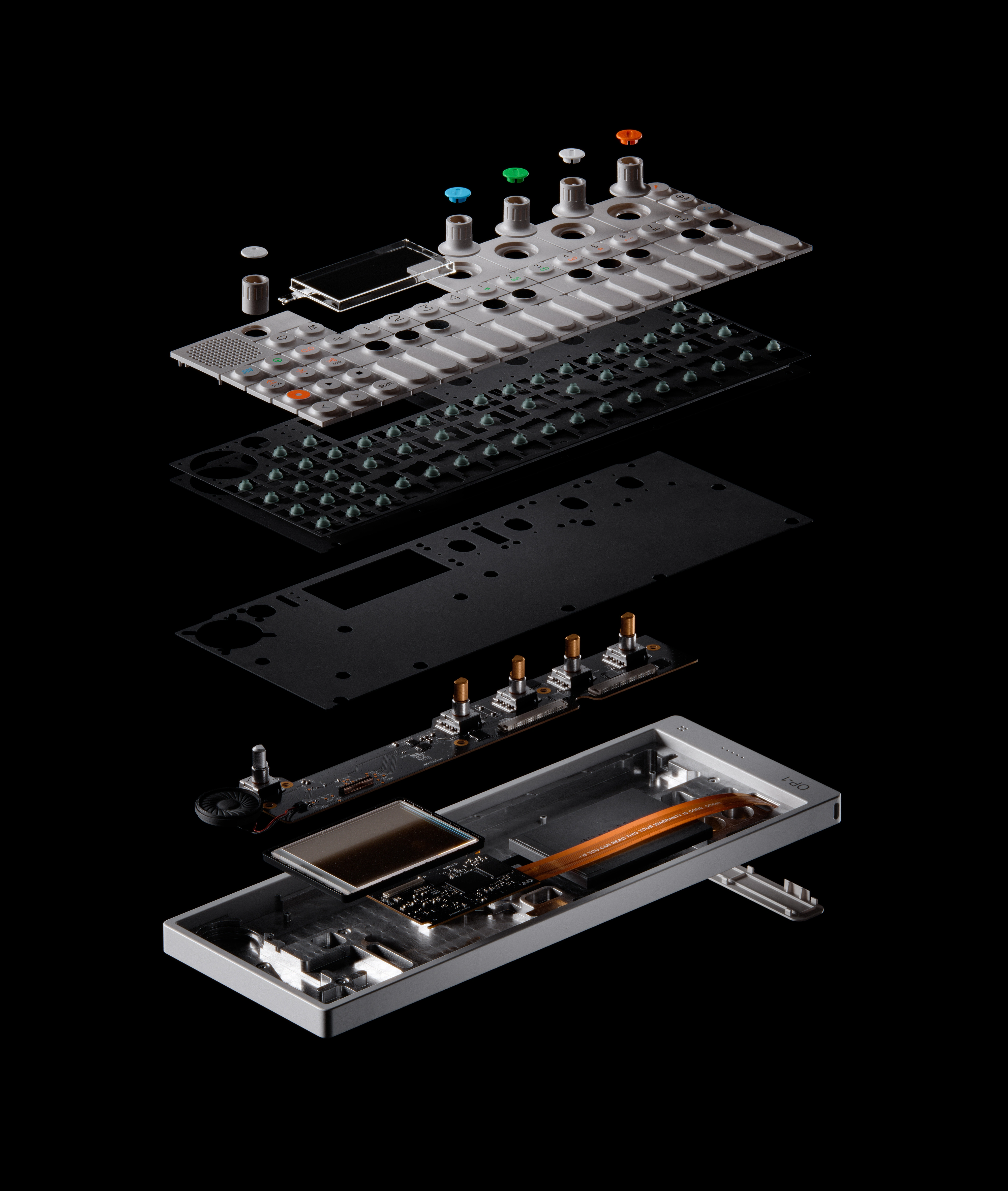
Beyond these core modes, the OP-1 offers a wealth of additional features. LFOs (Low-Frequency Oscillators) can be used to modulate various parameters, adding movement and dynamism to sounds. The OP-1 features a range of built-in effects, including delays, reverbs, filters, and distortions. The powerful sequencer allows for creating intricate patterns and melodies. And, in a quirky but useful addition, the FM radio allows for sampling radio broadcasts.
Workflow Examples and Creative Techniques
Several creative workflows are possible with the OP-1. For example, to create a Lo-Fi Hip-Hop Beat, one might sample a dusty record from the FM radio, chop it up in the Drum mode, layer a warm synth pad using the Cluster engine, and record everything to the tape, adding some wow and flutter for a vintage vibe. For sound design with the Digital Synth, one can explore the unique waveforms and parameters to create glitchy textures, evolving soundscapes, or punchy basslines. For live performance, one could use the sequencer to trigger loops, manipulate effects in real-time, and sample on the fly to create dynamic and engaging performances.
The OP-1's Influence and Legacy
The OP-1 has had a significant impact on the music industry, influencing the design of other instruments and inspiring a generation of musicians. Its portability and unique workflow have made it a favorite among touring artists, bedroom producers, and experimental musicians alike. Its use by prominent artists like Bon Iver, Thom Yorke, and Childish Gambino has further cemented its status as a cultural icon.
OP-1 vs. Alternatives
While the OP-1 offers a unique combination of features, it's essential to consider alternatives depending on your needs and budget. The Korg Volca Series offers affordable and compact synthesizers with specific functionalities. The Arturia MicroFreak is a versatile hybrid synthesizer with a unique digital oscillator and analog filter. The Akai MPC One/Live II are powerful standalone samplers and sequencers with a focus on beat-making. However, none of these alternatives fully replicate the OP-1's all-in-one workflow, portability, and unique design aesthetic.
Is the OP-1 Right for You?
The OP-1 is ideal for musicians who value portability and all-in-one functionality, unique and inspiring workflows, hands-on creative experiences, and distinctive sound design. If you prioritize affordability or require extensive polyphony, other options might be more suitable. Check out our guide to the top synthesizers to learn more about selecting the rigth synth for you.
Conclusion
The Teenage Engineering OP-1 is more than just a synthesizer; it's a creative tool that encourages experimentation, fosters unique workflows, and inspires musicians to create in new and exciting ways. Its iconic design, powerful features, and enduring appeal have solidified its place as a modern classic in the world of music technology. It's an investment, but for many, it's an investment in their creativity.
Top Ranked Synthesizers on Equipboard


About the authors
Juan Spinelli is a multi-instrumentalist musician, but more of a guitarist than anything else. Based in Buenos Aires, Argentina, he started playing at a very early age and learned various instruments such as flute, clarinet, percussion, didjeridoo, cavaquinho, bass and more. Today, he also works as a music producer and sound engineer, collaborating in several projects in his city and with artists from all over the world. Read more
New in Synthesizers


$2,299.00 - $3,699.00


$2,499.00 - $3,190.00


$153.14 - $1,999.99


$1,098.00 - $1,299.00

$406.00 - $579.99


$1,938.00 - $1,999.00

$1,199.99 - $1,399.00







.webp)