Table of Contents

Equipboard
Equipboard is the world's largest community of artists and their gear. Read our review process.
We are reader-supported. When you buy through links on our site, we may earn an affiliate commission. Learn more.
In 1978, a Silicon Valley engineer named Dave Smith introduced an instrument that would redefine electronic music forever. The Sequential Prophet-5 wasn't just another synthesizer, it was the first commercially available, fully programmable polyphonic analog synth. Before the Prophet-5, creating and recalling complex sounds required painstaking manual adjustment of dozens of knobs and sliders. After it, musicians could store their carefully crafted patches and recall them instantly at the push of a button. This single innovation transformed synthesizers from temperamental laboratory instruments into reliable musical tools, and every keyboard that followed owes a debt to Dave Smith's vision.
The Prophet-5 solved problems that had plagued electronic musicians for years: tuning instability, lack of voice memory, and the sheer impracticality of lugging modular systems to gigs. By embedding a Z80 microprocessor into an analog signal path, Sequential Circuits bridged the gap between the warmth of voltage-controlled oscillators and the precision of digital control. The result was a synthesizer that sounded as good as it was practical, delivering punchy, articulate tones that cut through any mix while offering the kind of patch recall that seemed like science fiction just months earlier.
The Genesis of a Game-Changer

Before Sequential Circuits became synonymous with polyphonic synthesizers, the company built its reputation on digital sequencers. Dave Smith, a trained engineer working in Silicon Valley's burgeoning tech scene, founded Sequential in the mid-1970s with products like the Model 800 and Model 600, which helped musicians control and sequence their modular systems. Smith understood microprocessors intimately from his day job, and he recognized an opportunity that seemed obvious in retrospect but revolutionary at the time: combining those microprocessors with analog synthesizer chips to create an instrument with memory.
In early 1977, Smith quit his full-time position to focus entirely on building what he initially called the Model 1000, working alongside engineer John Bowen. Prog rock legend Rick Wakeman, already a Sequential customer and advocate, suggested the project deserved a more majestic name. The Prophet was born, though not without growing pains. Smith and Bowen originally designed the Prophet-10, a ten-voice behemoth, but the instrument proved unstable and overheated rapidly, causing catastrophic tuning problems. The solution was pragmatic: cut the voice count in half, creating the five-voice Prophet-5.
The Pre-Prophet Landscape
Musicians in the late 1970s faced a frustrating dilemma. Monophonic synthesizers like the Minimoog delivered fat, expressive sounds but could only play one note at a time. Polyphonic instruments existed, notably the Yamaha CS-80 and Oberheim's Four-Voice. The CS-80 offered a very limited, analog-based memory system, but these instruments were prohibitively expensive, temperamental, and, most crucially, lacked the stable, reliable digital patch memory that the Prophet-5 would introduce. Every time you wanted to recall a sound, you had to manually recreate it by adjusting every parameter, hoping your notes were accurate enough to get close to the original. For touring musicians, this meant carrying notebooks full of knob positions and spending precious soundcheck time dialing in patches.
The Prophet-5 eliminated this nightmare. When Smith demonstrated the instrument at the January 1978 NAMM Convention, the response was immediate and overwhelming. Within weeks, Sequential had accumulated 400 orders at a retail price approaching four thousand dollars, an enormous sum for the era but justified by what the Prophet offered: five voices of true polyphony, 40 programmable patch memories, and rock-solid tuning stability. The Z80 microprocessor made it all possible, storing every knob position digitally and recalling sounds with perfect accuracy.
Revisions and Refinement
The Prophet-5's production life from 1978 to 1984 saw three major hardware revisions, each with distinct sonic characteristics. Revision 1 and Revision 2 models used chips from Solid State Music (SSM), particularly the SSM2030 VCO, SSM2040 filter, SSM2050 envelope generator, and SSM2020 VCA. These early units were hand-assembled and possessed a certain organic warmth, though they could be prone to instability and required careful calibration.
Revision 3, introduced later in the production run, represented a major redesign that swapped the entire SSM chipset for Curtis Engineering (CEM) components: CEM3340 VCOs, CEM3320 filters, and CEM3310 envelope generators. The Curtis chips offered superior stability and consistency, making Rev 3 the most reliable Prophet-5 variant, though some enthusiasts argue it traded a bit of the earlier revisions' character for precision.
The differences between chipsets aren't just technical minutiae. The SSM-based Prophet-5s have a slightly grittier, more unpredictable quality that some producers prize for organic textures, while the CEM-based Rev 3 delivers cleaner, more consistent performance that better suits modern studio work. Both approaches have their devotees, and the debate over which revision sounds "best" continues among synthesizer collectors and historians.
The Sound and the Science
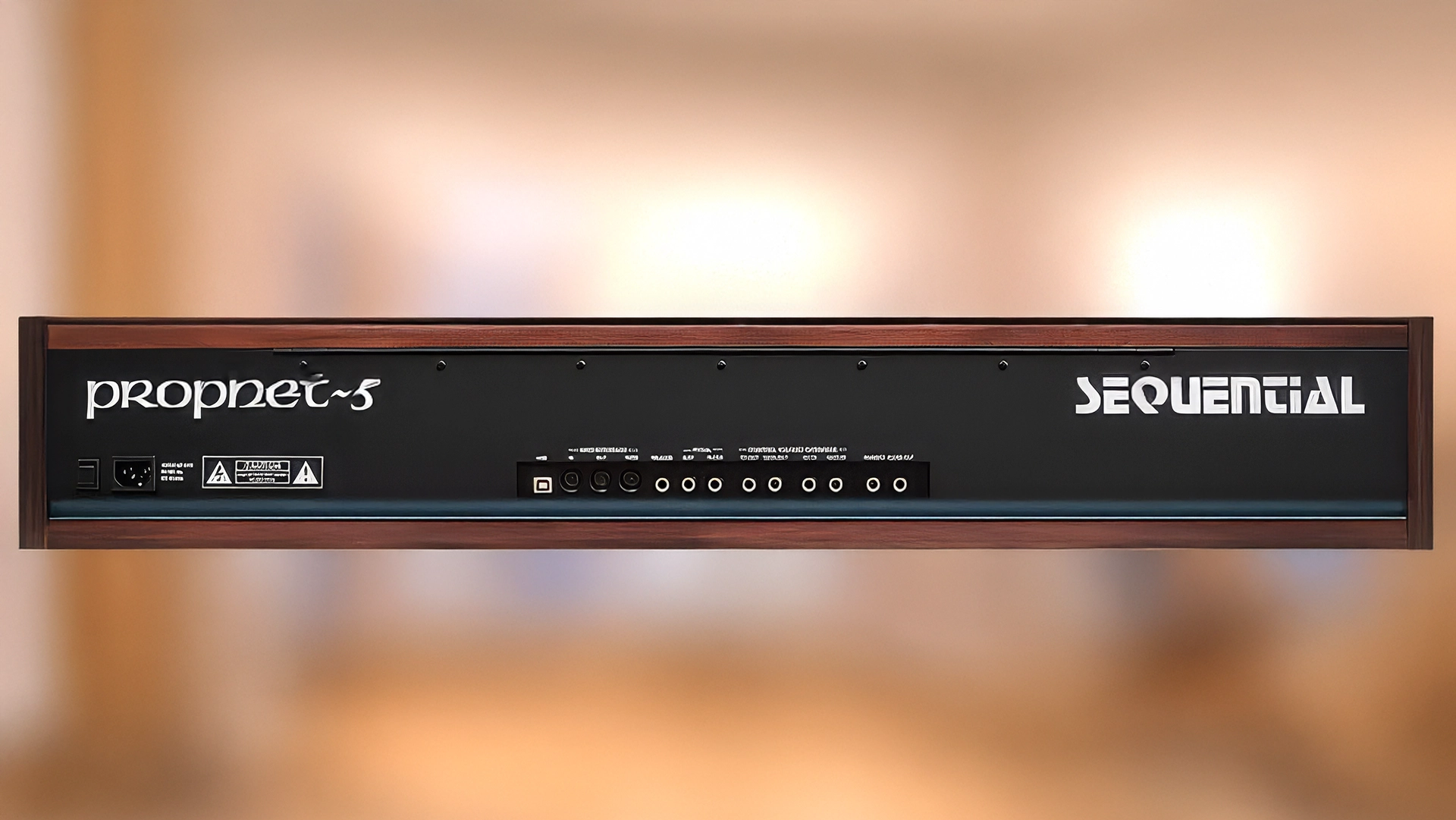
What made the Prophet-5 legendary wasn't just its programmability, it was the distinctive voice it brought to electronic music. Unlike the silky, smooth character of Roland's Jupiter series or the thick, dark rumble of a Minimoog, the Prophet-5 carved out its own sonic identity: punchy, articulate, with prominent midrange presence and a brassy quality that cut through dense arrangements. Engineers and producers often describe it as having an unmistakably "American" character, cleaner and more aggressive than its European and Japanese contemporaries.
Architecture and Signal Flow
Each of the Prophet-5's five voices featured a classic subtractive synthesis architecture: two voltage-controlled oscillators (VCOs) per voice, each offering sawtooth, triangle, and pulse waveforms with variable pulse width. A four-pole, resonant lowpass filter shaped the tone, controlled by its own dedicated ADSR envelope generator. A second envelope controlled the voltage-controlled amplifier (VCA), determining how notes evolved dynamically. A single, shared low-frequency oscillator (LFO) could modulate pitch, pulse width, or filter cutoff across all voices simultaneously.
This architecture was proven and familiar, similar to what you'd find in a Minimoog or ARP Odyssey, but the Prophet's implementation prioritized clarity and punch over warmth. The Curtis chips in the Rev 3 models especially delivered fast, snappy envelopes and precise filter tracking, making the Prophet-5 ideal for percussive stabs, bright pads, and cutting lead lines.
The Poly-Mod Section
If one feature defines the Prophet-5's sonic signature, it's the Poly-Mod section, Sequential's elegant solution to complex modulation routing. Poly-Mod allowed Oscillator B and the Filter Envelope to act as modulation sources, targeting Oscillator A's frequency, Oscillator A's pulse width, or the filter cutoff frequency. The routing possibilities unlocked sounds impossible on competing polysynths: metallic filter sweeps, evolving harmonic textures, and the Prophet's trademark oscillator sync sweeps.
The genius of Poly-Mod lay in its polyphonic implementation. Unlike a global LFO affecting all voices identically, Poly-Mod operated independently per voice. When you set Oscillator B to low-frequency mode and routed it to modulate Oscillator A's pitch, you effectively created five separate LFOs, one for each voice. The slight phase differences between voices created chorusing, detuning effects that made even simple patches sound rich and animated. Combined with oscillator sync, where Oscillator A's cycle resets to match Oscillator B's frequency, Poly-Mod enabled the screaming, metallic sync sweeps that became ubiquitous in 1980s pop and film scores.
Unison Mode
For solo leads and massive bass lines, the Prophet-5 offered Unison Mode, which stacked all five voices (ten oscillators total) to play a single note. The resulting sound was enormous: thick, slightly detuned due to natural oscillator drift, and powerful enough to anchor any arrangement. Combined with the Poly-Mod routing and oscillator sync, Unison Mode delivered the searing brass leads heard on The Cars' "Let's Go," where keyboardist Greg Hawkes created one of the most recognizable Prophet-5 patches in pop music history. That sound, a brassy, slightly metallic lead with a bit of sync grit, became so closely associated with the Prophet-5 that hearing it instantly evokes the late 1970s and early 1980s.
Prophet-10: Double the Power
In 1981, Sequential introduced the Prophet-10, essentially two Prophet-5s combined into a single, dual-keyboard instrument with ten voices of polyphony. On paper, it was spectacular: twice the voice count, twice the sound, and the ability to layer or split patches across both manuals. In practice, early Prophet-10s were notoriously temperamental, suffering from the same overheating and tuning stability issues that plagued the original Prophet-10 prototype and forced Smith to create the Prophet-5 in the first place.
Later Prophet-10 units, particularly those built with Curtis chips, improved significantly in reliability. The instrument found its way into high-end studios where its massive sound became a secret weapon for producers and composers. Brad Fiedel famously used a Prophet-10 to create the cold, mechanical soundtrack for The Terminator (1984), crafting the film's iconic theme in an unusual 13/16 time signature that perfectly captured the relentless, inhuman nature of the cyborg antagonist.
The MIDI Revolution and the Digital Crash
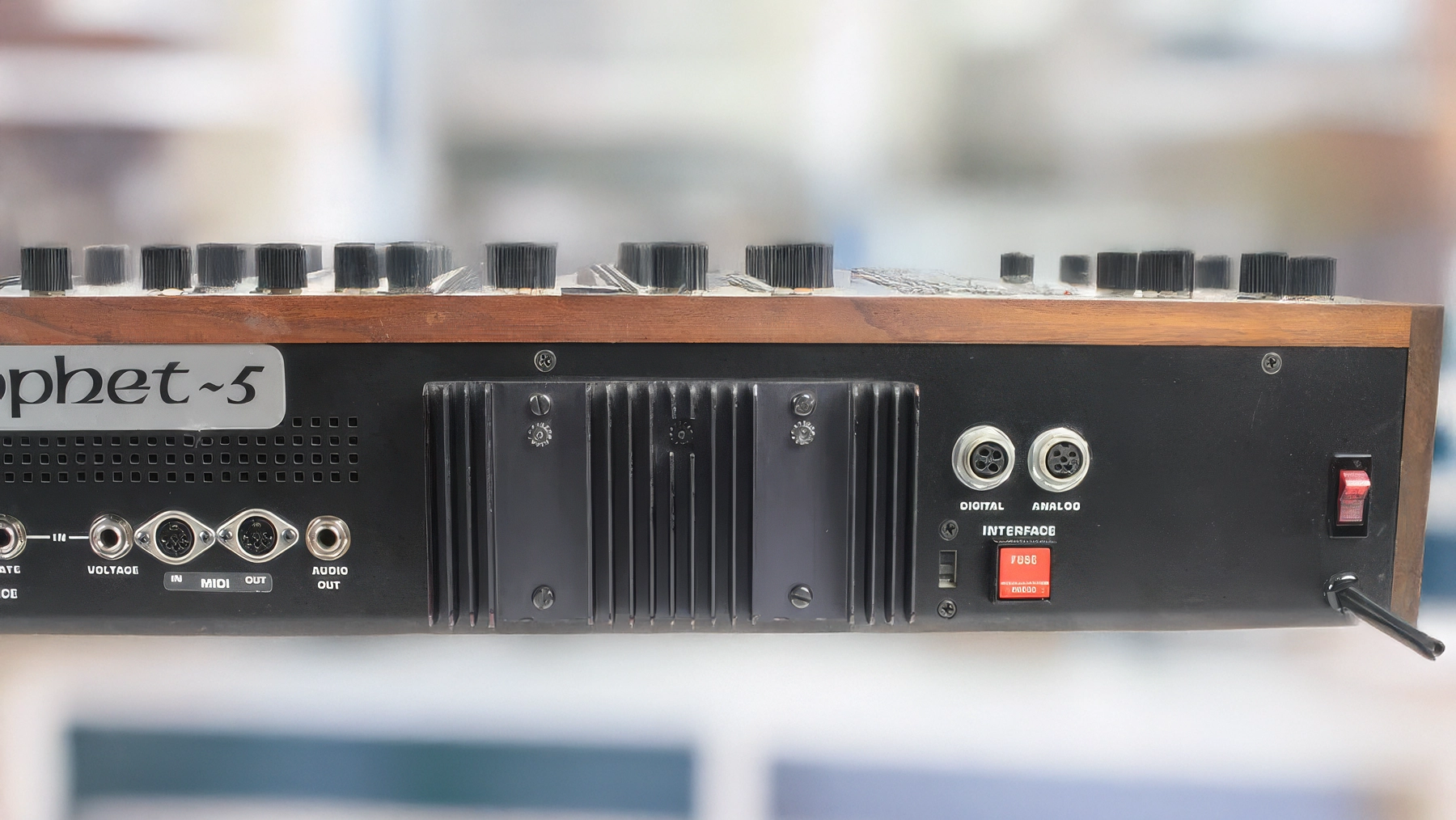
Dave Smith's impact on electronic music extends far beyond the Prophet-5. In 1981, as synthesizer manufacturers proliferated and instrument incompatibility became a growing problem, Smith presented a paper at the Audio Engineering Society convention proposing a universal communication standard for electronic instruments. The idea met resistance initially, manufacturers were protective of their proprietary systems, but Smith's persistence and diplomatic skill eventually brought Roland, Yamaha, Korg, and Kawai to the negotiating table.
The Birth of MIDI
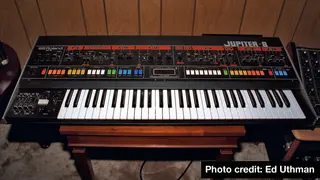
By the January 1983 NAMM Convention, Smith had refined the specification and coined the acronym: Musical Instrument Digital Interface, or MIDI. At that show, Sequential demonstrated the Prophet-600, the first synthesizer with built-in MIDI connectivity, connected to Roland's newly announced Jupiter-6. The two instruments, from competing manufacturers, played in perfect tandem, sending note data, velocity information, and continuous controller messages back and forth. The crowd was stunned. The MIDI specification was officially published in August 1983, and the music industry would never be the same.
MIDI's significance cannot be overstated. It standardized communication between synthesizers, drum machines, sequencers, and eventually computers, enabling the complex multi-instrument setups that define modern production. Smith and Roland's Ikutaro Kakehashi received Technical Grammy Awards in 2013 for their work, a rare honor that acknowledged MIDI's foundational role in contemporary music. The Prophet-600, despite having a slightly less refined sound than the Prophet-5, was a landmark in its own right: it utilized analog Voltage Controlled Oscillators (VCOs) whose tuning was stabilized by the central microprocessor. This hybrid digital-analog control system provided rock-solid tuning stability at a lower cost than the traditional VCO design. Crucially, the Prophet-600 holds an irreplaceable place in synthesizer history as the instrument that introduced MIDI to the world.
The Digital Wave
Ironically, the same year that MIDI launched, Yamaha introduced the DX7, a six-operator FM synthesizer that would ultimately contribute to Sequential Circuits' decline. The DX7 offered sixteen-voice polyphony, was highly affordable compared to analog flagships, and produced glassy, bell-like tones that sounded futuristic and modern. FM synthesis, which modulates the frequency of one sine wave oscillator with another, created complex harmonic spectra impossible with traditional subtractive analog synthesis.
The DX7 became a phenomenon, selling over 150,000 units and defining the sound of mid-1980s pop, R&B, and jazz. Its infamous difficulty to program, stemming from FM synthesis's mathematical complexity, mattered less than its preset sounds: electric pianos, bells, and bright pads that seemed to scream "the future is here." Analog synthesizers suddenly felt dated, and companies like Sequential struggled to compete. By 1987, Sequential Circuits closed its doors, unable to weather the digital revolution it had ironically helped enable through MIDI.
Legacy Statement
Even in defeat, Dave Smith's contributions outlasted every manufacturer. MIDI remains the backbone of electronic music production forty years later. Every digital audio workstation, software synthesizer, hardware controller, and stage piano speaks the language Dave Smith created.
The Renaissance: DSI to Sequential

Dave Smith didn't stay away from synthesizers long. In 2002, he founded Dave Smith Instruments (DSI) with a clear mission: merge the soul of analog synthesis with the precision and flexibility of modern digital control. His timing was perfect. A new generation of producers and musicians, weary of the sterile perfection of software synthesizers, craved the warmth, unpredictability, and hands-on immediacy of analog gear.
Prophet '08: The Modern Classic
In 2007, Dave Smith Instruments released the Prophet '08, an eight-voice analog polysynth that served as a spiritual successor to the Prophet-5. The '08 used digitally controlled oscillators (DCOs) rather than pure VCOs, sacrificing some of the organic drift and warmth of fully analog oscillators in exchange for rock-solid tuning stability. It featured Curtis filters, extensive modulation routing via a four-slot modulation matrix, and onboard effects including reverb, delay, and chorus.
The Prophet '08 hit a sweet spot: it was affordable compared to vintage Prophet-5s, which had become expensive collector's items, and it offered modern conveniences like MIDI, USB connectivity, and patch storage without compromising the analog signal path.
Prophet-6: The Purist's Choice
In 2015, Dave Smith released what many consider his masterpiece: the Prophet-6, a modern reimagining of the Prophet-5 built with the wisdom of four decades of synthesizer design. The Prophet-6 uses genuine analog VCOs, not DCOs, giving it the slight instability and warmth that purists crave. It features dual filters per voice (a lowpass and a highpass), studio-quality digital effects, and a powerful arpeggiator and polyphonic step sequencer.
The Prophet-6 doesn't just recreate the Prophet-5; it refines and expands it. The build quality is exceptional, with a solid steel chassis, premium Fatar keybed, and knob-per-function interface that makes programming intuitive. Sonically, it captures the punchy, articulate character of the original while adding modern flexibility.
Prophet Rev2: The Versatile Workhorse
The Prophet Rev2, released in 2017, updated the Prophet '08 architecture with significant improvements. Available in eight-voice and sixteen-voice configurations, the Rev2 added waveshape modulation (continuously variable pulse width on all waveforms, not just square waves), a sub-oscillator per voice, and an expanded eight-slot modulation matrix. The polyphonic step sequencer accommodates up to 64 steps with six notes per step, and the effects engine expanded to include vintage-style BBD (bucket brigade device) delays, ring modulation, and distortion.
The sixteen-voice Rev2 is particularly powerful in split or stack modes, where you can allocate voices independently across keyboard zones or layer two eight-voice patches for massive, intricate textures.
Prophet-X and Beyond
Dave Smith also explored hybrid synthesis with instruments like the Prophet-X and Prophet-12, which combined analog filters and amplifiers with digital oscillators capable of sample playback and wavetable synthesis. These instruments represent Dave's vision of the future: leveraging the best aspects of both analog and digital domains to create sounds impossible with either technology alone.
Prophet-5/10 Rev4: The Faithful Rebirth
In 2020, shortly before Dave Smith's passing in 2022, Sequential released the Prophet-5 Rev4 and Prophet-10 Rev4, faithful reissues of the original instruments built with modern manufacturing techniques and component sourcing. The Rev4 uses genuine Curtis CEM3340 VCOs and features a switchable filter that lets you choose between the Rev 3 Curtis filter sound and a new SSI2140 filter designed by Dave Rossum (who created the original SSM2040 filter) to authentically recreate the Rev 1 and Rev 2 sound.
This switchable filter design is brilliant, allowing players to access all three classic Prophet-5 tones in a single instrument with modern reliability, USB MIDI connectivity, and consistent build quality. As Dave Smith himself said, it's "the best of all Prophet-5s," combining the sonic heritage of each revision with none of the maintenance headaches that plague vintage units.
The Soundtrack of a Generation
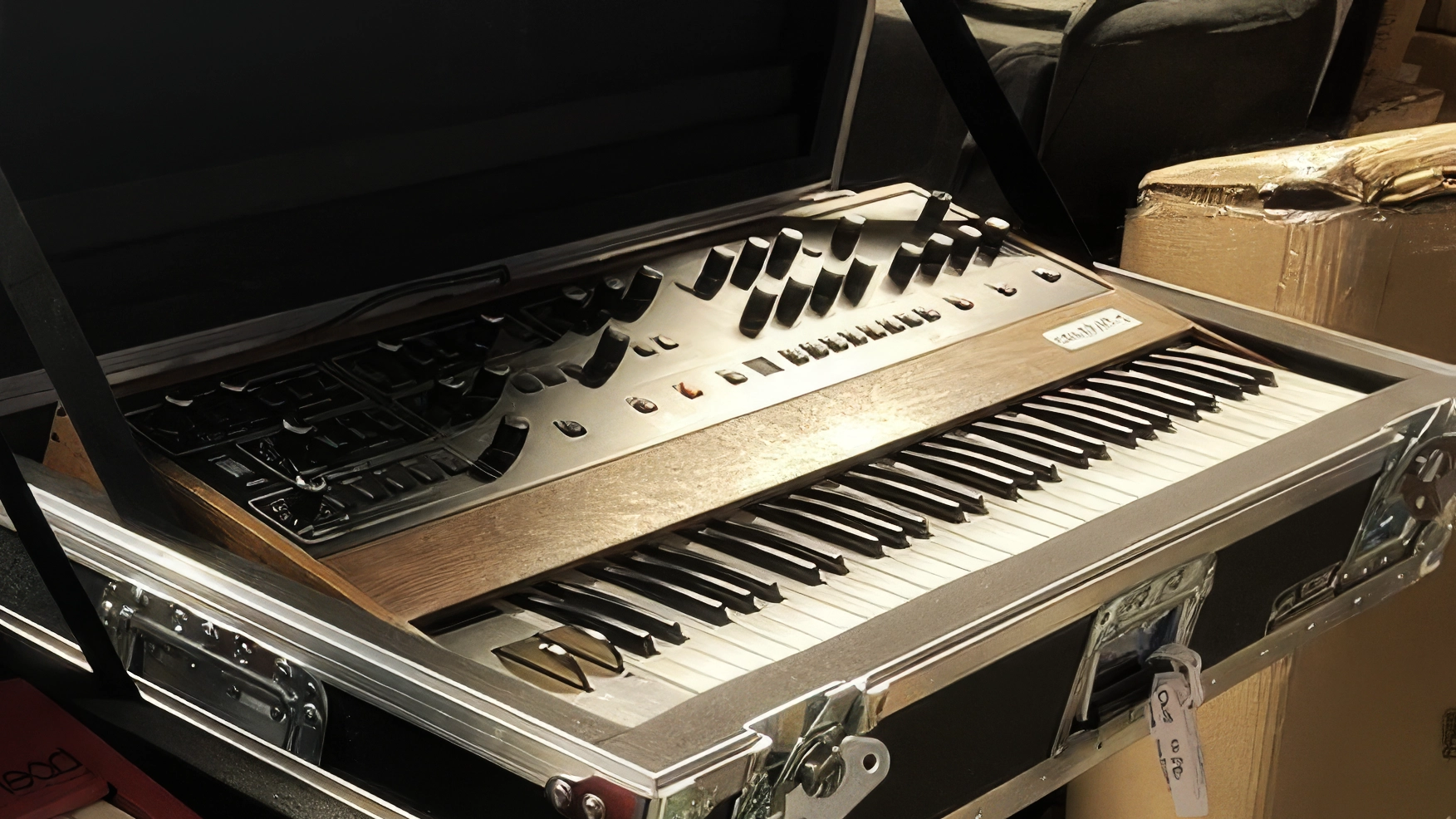
The Prophet-5's cultural footprint extends across decades and genres, from new wave and synth-pop to film soundtracks and contemporary electronic music. Its distinctive voice appears on countless recordings, often providing the sonic signature that defines an era.
Phil Collins used the Prophet-5 extensively in his early solo work, most famously on "In the Air Tonight" from his 1981 debut album. The ethereal pads and melodic textures that underpin the track's atmospheric verses came from Prophet-5 presets that Collins and engineer Hugh Padgham found difficult to recreate, ultimately keeping the original demo recordings because they captured a feeling that polished studio takes couldn't match. That slightly raw, immediate quality became part of the song's enduring appeal.
Japan explored the Prophet-5's more experimental side, particularly its Poly-Mod capabilities, on tracks like "Ghosts" from their 1982 album Tin Drum. The metallic, evolving tones that shimmer throughout the song showcase the Prophet's ability to create complex, modulated textures that feel simultaneously organic and otherworldly.
Hall & Oates incorporated the Prophet-5 into their Philly soul sound, most notably on "I Can't Go For That (No Can Do)" from 1981. The instrument's punchy bass and bright, percussive pads provided the perfect foundation for the duo's smooth vocal harmonies.
Radiohead brought the Prophet-5 into the 21st century with "Everything In Its Right Place" from their 2000 album Kid A. Thom Yorke's haunting, detuned piano-like texture came from a Prophet-5 Rev 3, demonstrating the instrument's continued relevance decades after its introduction. The Prophet's slightly unstable, chorusing quality gave the track an unsettling, otherworldly atmosphere that perfectly matched the album's exploration of digital alienation and human fragility.
Beyond individual tracks, the Prophet-5's sound became embedded in the vocabulary of electronic music. Its brassy leads define early MTV-era pop. Its lush pads underpin countless film and television scores. Its percussive stabs and punchy bass lines drive dance tracks across genres. The Prophet-5 didn't just appear on hit records; it helped create the sonic template that subsequent generations of producers and composers would follow.
Gear Evolution Table
| Model | Year | Voices | Engine | Innovation | Legacy |
|---|---|---|---|---|---|
| Prophet-5 | 1978 | 5 | Analog VCO | First programmable poly synth | The icon |
| Prophet-600 | 1982 | 6 | Analog DCO | First MIDI synth | Historic milestone |
| Prophet-10 | 1981 | 10 | Analog VCO | Dual Prophet-5 engine | Massive sound |
| Prophet '08 / Rev2 | 2007 | 8/16 | Analog DCO | Analog revival | Modern studio workhorse |
| Prophet-6 | 2015 | 6 | Analog VCO | Modern spiritual successor | The purist's choice |
| Prophet-X | 2018 | 8/16 | Hybrid | Sample + synth | The hybrid frontier |
| Prophet-5 Rev4 | 2020 | 5 | Analog VCO | Switchable filters, USB MIDI | Faithful rebirth |
Frequently Asked Questions
Who was Dave Smith?
Dave Smith was the founder of Sequential Circuits, creator of the Prophet-5 synthesizer, and co-inventor of MIDI alongside Roland's Ikutaro Kakehashi. His innovations in programmable polyphonic synthesis and universal instrument communication fundamentally shaped modern music production.
Why is the Prophet-5 legendary?
The Prophet-5 was the first commercially available synthesizer combining true polyphony with programmable patch memory, solving problems that had plagued musicians for years. It made complex sounds instantly recallable and brought studio-quality analog synthesis to stages worldwide.
What's the difference between Prophet-5 and Prophet-6?
The Prophet-5 is the original 1978 analog icon, now faithfully reissued as the Rev4 with switchable filters. The Prophet-6 is Dave Smith's modern reimagining, featuring genuine analog VCOs, dual filters per voice, expanded modulation, and contemporary conveniences like effects and sequencing.
What does Poly-Mod do?
Poly-Mod routes Oscillator B and the filter envelope as polyphonic modulation sources targeting Oscillator A's frequency or pulse width, or the filter cutoff. This enables complex, evolving timbral motion and the Prophet-5's signature metallic sync sweeps.
Why did Sequential Circuits close in 1987?
The rise of digital synthesis, particularly the Yamaha DX7's affordable FM synthesis and massive polyphony, made analog synthesizers seem dated to mid-1980s consumers. Sequential couldn't compete with the price and polyphony of digital instruments, despite analog's superior warmth and character.
What makes the Rev4 Prophet-5 special?
The Rev4 features a switchable filter allowing you to choose between the Curtis CEM filter sound of the Rev 3 and Dave Rossum's new SSI2140 filter recreating the Rev 1/2 character. It offers all three classic Prophet-5 tones with modern reliability and USB connectivity.
Conclusion
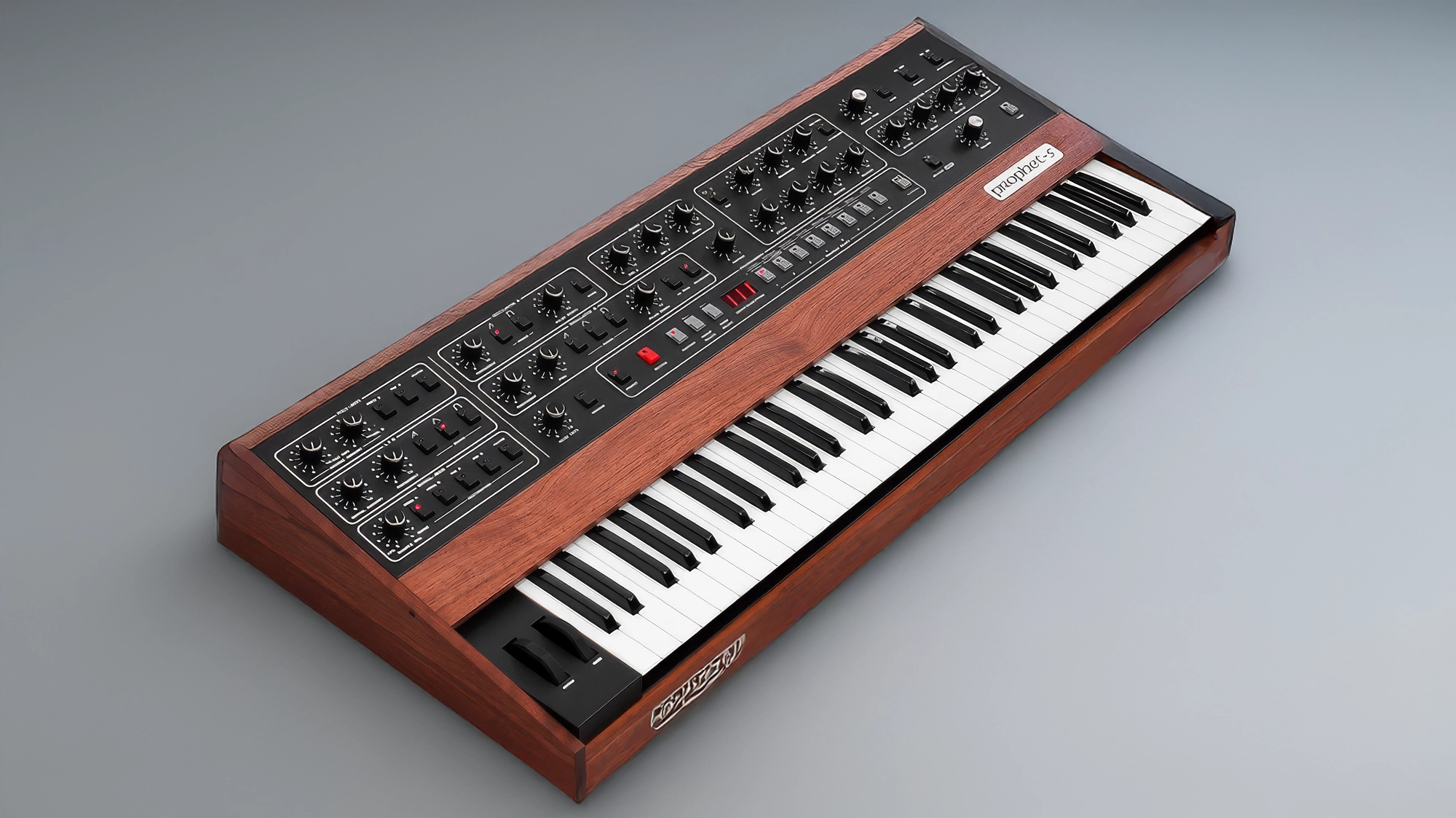
The Sequential Prophet-5 changed synthesis forever by proving that programmable polyphony and analog warmth could coexist in a practical, reliable instrument. Dave Smith's vision, combining Silicon Valley engineering with musical intuition, created not just a synthesizer but a new paradigm for how electronic instruments could function. The Prophet-5's punchy, articulate voice defined an era of music, from new wave and synth-pop to film soundtracks and beyond, while its technological innovations, particularly microprocessor-based patch memory and later MIDI, established foundations that remain essential today.
The lineage continues through Sequential's modern instruments. The Prophet-6 delivers refined analog purity for those seeking the warmth of true VCOs with contemporary reliability. The Prophet Rev2 offers deep flexibility and excellent value with its sixteen-voice polyphony and expanded modulation. The Prophet-5 Rev4 provides an authentic connection to history with its switchable filters spanning all three original revisions. Each instrument honors Dave Smith's legacy while serving the needs of today's musicians, whether in studios crafting intricate productions or on stages delivering powerful performances.
More than four decades after its introduction, the Prophet-5 remains not just relevant but revered. Its influence permeates every corner of electronic music, from the presets embedded in software synthesizers to the workflow expectations musicians bring to any keyboard.
Which Prophet is right for you:
• Prophet 5 Rev4 - for players who want the classic sound and can spend real money. • Prophet 6 - for touring and studio pros who want modern reliability and effects. • Rev2 - for producers who need deep modulation and lots of polyphony for the money. • Prophet 600 or software emulations - for budget and hybrid setups.
About the authors

S. Jino is an accomplished multi-instrumentalist and music producer based in Kolkata, India, distinguished by his self-taught mastery and unique blend of technical acumen and musical performance. His extensive experience was forged through hands-on dedication, starting with the full restoration of a broken guitar. Jino's capabilities span keyboards, pedals, and advanced digital production, reflecting a comprehensive skill set developed independently. As a significant contributor to the music scene, Jino regularly performs with worship bands and college ensembles. He has also established himself as a reliable and authoritative professional in freelance mixing, mastering, and original music creation. Inspired by the innovative sounds of Brian May and David Gilmour, and influenced by Kolkata's vibrant metal community, Jino is committed to the intricate art of vintage gear restoration and the continuous exploration of music and technology fusion. His current professional setup, featuring a meticulously restored nameless guitar, a Fender Player Strat, and a Boss Katana 50. Read more








.webp)