
Adrian Belew
Genre
Credits
Genre
Credits
Adrian Belew's Gear


In this video posted to Adrian’s Facebook page, he shows off some of the pedals in his home studio, including a big-box V1 EQD Grand Orbiter.
Find it on:


I have been using D'Addario guitar strings for what, 20 years or more? hundreds of strings I've changed. what I admire about a great product is quality and consistency. but what's even more impressive is when a company actually improves its product without changing what it is you love about it. D'Addario has just put out a new type guitar string called NYXL and I'm happy to report it is indeed better. the strings seem to hold tuning sooner and more effectively than any others I know of. good work guys!
Find it on:


Visible in Stompbox: 100 Pedals of the World's Greatest Guitarists, as can be seen in the quick browse video at 0:08.
Find it on:

Adrian Belew's first fretless guitar was a Fender Musicmaster that he purchased in the early 1980s and had Seymour Duncan convert to fretless. According to a Facebook post by Adrian Belew, he used this guitar on his solo album Lonesome Rhino.
Find it on:


This was a custom guitar made for Adrian Belew by Neurotec, an offshoot of Fernandes Guitar.
Adrian used this guitar on Tori Amos' Strange Little Girls.
Find it on:

Belew purchased a GR-700 when it was released in 1984 and used it throughout the 80s and 90s, as known from the following sources:
One Two Testing, February 1985, "Adrian Belew"
What was your favourite instrument of 1984?
"It would be the Roland GR700 guitar synthesiser, because it has increased my musical vocabulary so much. Being a guitarist who concentrates on sound and tonal colours and things of that nature, I find the 700 so useful because that's the area in which it excels. It's the first time with guitar synthesis that you've been able to create a sound from scratch, like a keyboard player would do, and also to be able to store that sound on a cartridge. It's very convenient. Having had the GR700 for about four months now, I'm definitely in love with it. I've really incorporated its little quirks into my music now.
"It does of course have some tracking problems, which is something everyone says when the 700 is mentioned. I've found ways of minimising that — bearing in mind that I don't use the guitar that comes with it, I use guitars I've had a while and am comfortable with. It doesn't track as well as the previous guitar synth, the 300, presumably because it's digital and it's converting the signal from the guitar into digits. So if the guitar signal is in the least bit confusing to the computer inside the 700 then it doesn't know how to read that signal, it doesn't know what to convert.
"So the intonation of your guitar becomes ultimately the most important thing — if you play a note that is clean and clear to the computer it'll probably track it fine. If not you're likely to get bleeps or something, or no note at all. It takes a couple of hours adjusting to get right, including getting the individual pickup volumes right.
"You have to be aware that you can get too deeply involved in it — it is, for me, simply an orchestrating tool. It's not something to replace the other facets of my playing. I think it would be pretty easy for someone who was playing it to get so involved in it that soon all they'd be playing was synth and no guitar. It's not the instrument for everyone, certainly — if you want to play fast arpeggios or power chords or things like that then you're biting the wrong dog."
Downbeat, December 1986, "Adrian Belew: Twang Bar King" by Gene Santoro
It's not too surprising, then, to find that Desire Caught By The Tail frequently finds him doing just that, albeit with completely instrumental pieces of more ambitious musical scope. Coupling the nearly 200 sounds he's developed for the Roland GR-700 guitar-synth ("I even found a way to make it play itself!") with his increasingly adept use of backwards tracking and vari-speeding, Adrian Belew has taken a commercial risk that pays off artistic dividends — and, once again, helps redefine the voice of the guitar.
ADRIAN BELEW'S EQUIPMENT
Adrian Belew says, "I'm using four guitars now. First are the two Twang-Bar Wonderbeast guitars with artwork by Mike Goetz. Each has a different tuning — one is normal, the other has the G tuned up to A so I can get different voicings and avoid pentatonic scales. Starting off at the headstock, they have bow-and-tuning heads, thereby eliminating the need for retaining bars which stop you from being able to play in the back of the head or bend strings at the nut. They have Seymour Duncan pickups, Kahler tremolo arms, and all the guts from the Roland synthesizer. The same is true of the third guitar I use, except that the artwork is by Laurie Anderson, and that it's tuned to the same tuning as my dobro, E-B-E-E-B-E, with heavier gauge strings, the low E being a .052 and the high E being a .012. Usually I use medium-light Gibson strings, with the high E being a .010 and the low E a .042 I use Fender medium picks. The fourth guitar is my battered 1967 Stratocaster from the David Bowie period, with a broken bass pickup [laughs] and it feeds back better than any other guitar I have.
"My two amps are Roland JC-120s — I've used one on everything from 1977 on. Right now, my floor situation looks something like this — I have the GR-700, the Roland SDE-3000 delay, an Ibanez harmonizer, a Big Muff fuzztone, a Foxtone fuzztone, the Electro-Harmonix echo-flanger — which makes the wonderful metallic insect sounds on Desire — the new Roland compressor — I always use lots of compression — a Roland pitch-shifter, and the Electro-Harmonix 16-second delay, which I've had converted to do backwards tape loops."
Facebook, Adrian Belew, November 14, 2021
trivia points for Here:
•May 1, 1990 begins with the rather spooky sound of my GR-700 synthesizer playing itself! the title refers to the evening martha and I met in orlando, florida at the Peabody Hotel following the sound and vision show I had just done with david.
Facebook, Adrian Belew, November 21, 2021 & adrianbelew.net, Discography, "the experimental guitar series volume 1: guitar as orchestra"
trivia points for Guitar As Orchestra:
•having released 4 pop-ish records in a row I was due to make a 180 degree turn. by this time I had worked extensively with 3 different guitar synth models (Roland gr-700, gr-50, and gr-1) and written a library of several hundred sounds. they weren’t samples, they were programs created by long late night experimentation. I felt it was time for someone to build an orchestra using only guitar.
•you can’t imagine the first-time thrill of playing my guitar and having it sound like a piano. a whole new universe appeared!
•having listened to this record for the first time in many years I was surprised at how ahead of its time it truly was. some of the better pieces would still make good film score material today. IMHO
•there really isn’t much in the way of trivia points since the whole record, be it tympani, harp, piano, or bassoon is guitar synthesizer. even the “audience applause” at the beginning was made with a guitar synth. so instead I will reprint here some of the liner notes from the record:
adrianbelew.net, Discography, "desire caught by the tail"
the most important instrument I used throughout the record was the Roland GR-700 guitar synthesizer (picture three). mine was sent to me by roland, directly from japan. it was such a new instrument they hadn’t yet written a manual for it! over many months time I wrote 200 different sounding programs with it. that was a big reason why I ended up making such an avant-garde record.
my GR-700 which I still have, does quirky things others don’t do. for example, if I plug a guitar chord into the expression pedal without plugging the other end INTO something, the synthe goes crazy and plays itself!! a good example of that sound is what you hear throughout track 7 called Guernica.
adrianbelew.net, Discography, "op zop too wah"
during the making of the record there was a 4-day period where everyone would be absent. my family on vacation and ken visiting his parents left me in the house/studio alone. before ken left I had him set up the means for me to record myself drumming (with a slight bit of flanging for the sound I wanted.) for 4 days I did nothing but play drums (picture four). practicing to get myself up to speed, I would sometimes record sections of soloing. by the time ken returned I had several performances I was happy with and chose one for Word Play Drum Beat. for lyrics I recorded friends of mine saying single words suggestive of violence. someone says “pipe”, I add “bomb.” someone says “hair”, I add “trigger.” so my word changed the meaning of their word.
then comes a quick flurry of snippets: my GR-700 playing itself, train cars coupling, and a british woman saying “what is that?!”
[...]
there is truly not a sadder song I have written than The Ruin After The Rain, considering the very personal tragedy it was written about. not something I care to reveal. I don’t consider myself much of a pianist, this is about as good as I get. it was played on my trusty old Howard (picture eight) from the days of Mr. Music Head. howard still resides in my living room. the choruses are filled out with horn sounds from the GR-700 and chords on the dobro. and of course a splash of rain at the end.
Innerviews, "Adrian Belew: The Love Bubble" by Anil Prasad (2022)
Desire Caught by The Tail (1986).
[...]
I had one more record left in my Island Records contract for three albums, and had just got the Roland GR-700 guitar synthesizer from Japan. I was probably one of the very first people to get one. It had a Japanese-only manual and I was left to figure it out on my own. I started furiously programming it.
I loved it so much. It was a big old giant analog guitar synthesizer—the first of its kind. I was programming sounds like cello, piccolo flute, and oboe, and deciding what to do with all of this work.
Vintage Guitar, November 2022, "Adrian Belew: Still Going Up"
You pioneered guitar synthesizers 40 years ago, but the technology never really caught on.
Yeah, and my favorite was the Roland GR-700, which used cartridges to store sounds, but they went dead after about five years. Guitar synths may be considered relics by some people, but I’m thrilled with all the unique sounds and inspiration they afforded me over the years. Now, I don’t use any unless I need a particular sound on a record.
Find it on:

Belew lists the SDE-3000 among his "floor situation" equipment in the December 1986, Downbeat interview "Adrian Belew: Twang Bar King" by Gene Santoro.
ADRIAN BELEW'S EQUIPMENT
Adrian Belew says, "I'm using four guitars now. First are the two Twang-Bar Wonderbeast guitars with artwork by Mike Goetz. Each has a different tuning — one is normal, the other has the G tuned up to A so I can get different voicings and avoid pentatonic scales. Starting off at the headstock, they have bow-and-tuning heads, thereby eliminating the need for retaining bars which stop you from being able to play in the back of the head or bend strings at the nut. They have Seymour Duncan pickups, Kahler tremolo arms, and all the guts from the Roland synthesizer. The same is true of the third guitar I use, except that the artwork is by Laurie Anderson, and that it's tuned to the same tuning as my dobro, E-B-E-E-B-E, with heavier gauge strings, the low E being a .052 and the high E being a .012. Usually I use medium-light Gibson strings, with the high E being a .010 and the low E a .042 I use Fender medium picks. The fourth guitar is my battered 1967 Stratocaster from the David Bowie period, with a broken bass pickup [laughs] and it feeds back better than any other guitar I have.
"My two amps are Roland JC-120s — I've used one on everything from 1977 on. Right now, my floor situation looks something like this — I have the GR-700, the Roland SDE-3000 delay, an Ibanez harmonizer, a Big Muff fuzztone, a Foxtone fuzztone, the Electro-Harmonix echo-flanger — which makes the wonderful metallic insect sounds on Desire — the new Roland compressor — I always use lots of compression — a Roland pitch-shifter, and the Electro-Harmonix 16-second delay, which I've had converted to do backwards tape loops."
Find it on:





Used in the 1990s, as known from the following:
adrianbelew.net, Discography, "inner revolution"
the guitar parts for This Is What I Believe In rely on a Roland GR-50 guitar synthe. with it I could pitch each string to have a different harmony note mixed with the original note of each string. thereby creating some very unique chords and running figures reminiscent of the style robert fripp and I played in the 80’s crimson.
Facebook, Adrian Belew, November 14, 2021 & adrianbelew.net, Discography, "here"
trivia points for Here:
[...]
•the ethereal sounds in Fly were made with a Roland GR-50 guitar synth. the song was written and recorded with a dobro (picture 4) tuned to DADDAD. I used a koto (picture 5) for the harp-like glissandos. the long low notes at the very end are my voice being manipulated.
Facebook, Adrian Belew, November 21, 2021 & adrianbelew.net, Discography, "the experimental guitar series volume 1: guitar as orchestra"
trivia points for Guitar As Orchestra:
•having released 4 pop-ish records in a row I was due to make a 180 degree turn. by this time I had worked extensively with 3 different guitar synth models (Roland gr-700, gr-50, and gr-1) and written a library of several hundred sounds. they weren’t samples, they were programs created by long late night experimentation. I felt it was time for someone to build an orchestra using only guitar.
•you can’t imagine the first-time thrill of playing my guitar and having it sound like a piano. a whole new universe appeared!
•having listened to this record for the first time in many years I was surprised at how ahead of its time it truly was. some of the better pieces would still make good film score material today. IMHO
•there really isn’t much in the way of trivia points since the whole record, be it tympani, harp, piano, or bassoon is guitar synthesizer. even the “audience applause” at the beginning was made with a guitar synth. so instead I will reprint here some of the liner notes from the record:
Find it on:

Used on Elevator, as mentioned in this interview from the November 2022 issue of Vintage Guitar.
What else was on your pedalboard?
A Keeley compressor, Eventide H9, Empress Fuzz, and a Strymon Deco. In concert, I don’t use amps – I use in-ear monitors and Electro-Voice full-range monitors.
Find it on:
-m.webp?v=1783177151)
Used on Elevator, as mentioned in this interview from the November 2022 issue of Vintage Guitar.
What else was on your pedalboard?
A Keeley compressor, Eventide H9, Empress Fuzz, and a Strymon Deco. In concert, I don’t use amps – I use in-ear monitors and Electro-Voice full-range monitors.
Find it on:


Listed on Reverb.com in 2018 by Belew's childhood neighbor, who points out the the guitar appears in The Noise (Live at Fréjus). It the concert film, it is used for "Matte Kudasai", "Heartbeat" and "Larks’ Tongues In Aspic Part II".
This 81 Ibanez Blazer (strat style) was owned and played by Adrian Belew of King Crimson/Talking Heads/Frank Zappa and more. The you tube link listed shows Adrian playing this very guitar with King Crimson in 82' (see 8:45 in the video) This guitar was customized for Adrian and has an active "hot switch" as well as the rare 1st series Floyd Rose locking tuning whammy bar system.
Not only was guitar played on stage with some of the most influential bands in history, it still plays great.
I own this guitar because I grew up on the same street when he lived in Urbana, Il.
Find it on:
-m.webp?v=1783203354)
In this May 11, 2024 Instagram post, Belew shares a picture of a receipt for the purchase of a Distortion+ from the Guitar Center on 7402 Sunset Boulevard. He erroneously reports it as a Dyna Comp in the accompanying caption of the post, but he acknowledges his mistake in reply to a comment pointing this out. The receipt itself is dated July 21, 1977.
something special happened this past week. Ahmet Zappa called to tell me they had located a long-lost piece of luggage from my days with frank. (first of all much thanks to Ahmet and Melanie for sending it back to me. I hope it wasn't too much trouble.)
the suitcase is old school but in reasonably good shape. made by Dunlap Trunk and Leather Shop in Knoxville, Tenn. I printed my parent's home address on the front: 117 Valley Drive, Florence, Ky. 41042.
I didn't take it on tour with me, I just brought my meager belongings with me. I was pretty poor at the time. later I bought a canvas duffel bag to tour with.
the contents of the case tell the story of my life in july of 1977. I was rehearsing for 3 months with Frank preparing to do my first-ever professional tour. there's my American Airlines ticket and a cigar box full of receipts.
one receipt was for my MXR Dyna Comp compressor I bought on Frank's account at Guitar Center. the First Guitar Center on Sunset!
[...]
tonyevans4632 Looks like it says mxr dist + to me but potato potarto
theadrianbelew @tonyevans4632 you're right! my mistake.
Find it on:

Adrian Belew is confirmed to use the Empress Effects Compressor MKII, as listed on the Empress Effects Artist page.
Find it on:

on source audio artist page you can see his board
Find it on:
-m.webp?v=1783203286)
In the YouTube video titled "Adrian Belew Guitar Rig Rundown for King Crimson BEAT Tour with Steve Vai, Tony Levin & Danny Carey" by Premier Guitar, Adrian Belew provides a detailed overview of his rig. At the 5:52 mark, he is seen using the Source Audio Artifakt Lo-fi Elements pedal.
Find it on:

Adrian Belew uses the RJM Music Mastermind GT-16, as seen in the Premier Guitar Rig Rundown video for the King Crimson BEAT Tour.
Find it on:

Adrian Belew is confirmed to use the JAM Pedals Dyna-ssor, as seen in the Premier Guitar video titled "Adrian Belew Guitar Rig Rundown for King Crimson BEAT Tour with Steve Vai, Tony Levin & Danny Carey," where his gear setup is detailed.
Find it on:

In a Facebook post dated November 22, 2025, Adrian Belew expressed his admiration for a custom-made Goldtop Fender Showmaster.
Find it on:
This is a community-built gear list for Adrian Belew.
- Find relevant music gear like Microphones, Guitars, Amplifiers, Effects Pedals, Software Plugins and VSTs, Keyboards and Synthesizers, Instruments, and other instruments and add it to Adrian Belew.
- The best places to look for gear usage are typically on the artist's social media, YouTube, live performance images, and interviews.
- To receive email updates when Adrian Belew is seen with new gear, follow the artist.
Discography
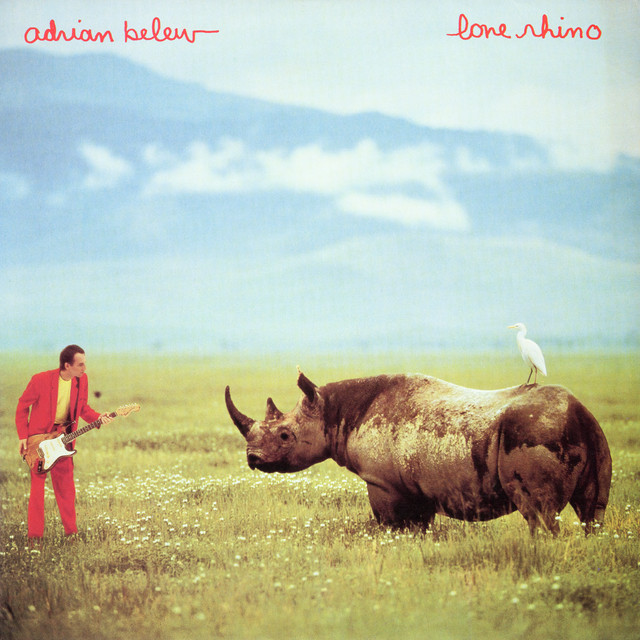
Lone Rhino
1982
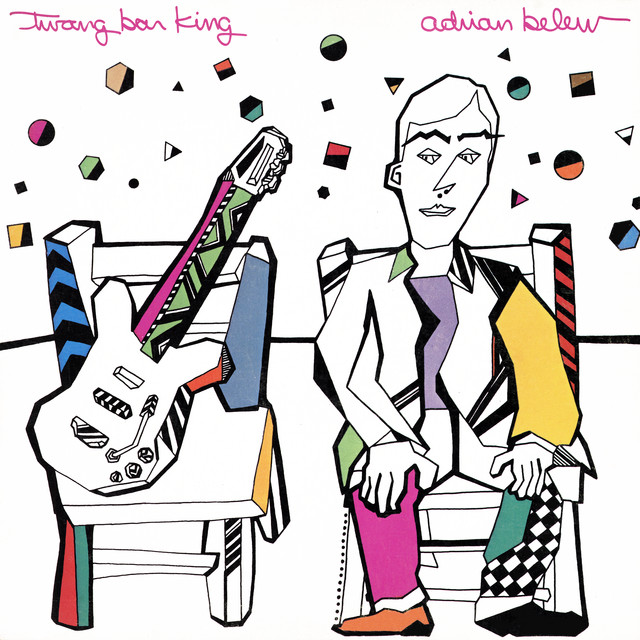
Twang Bar King
1983
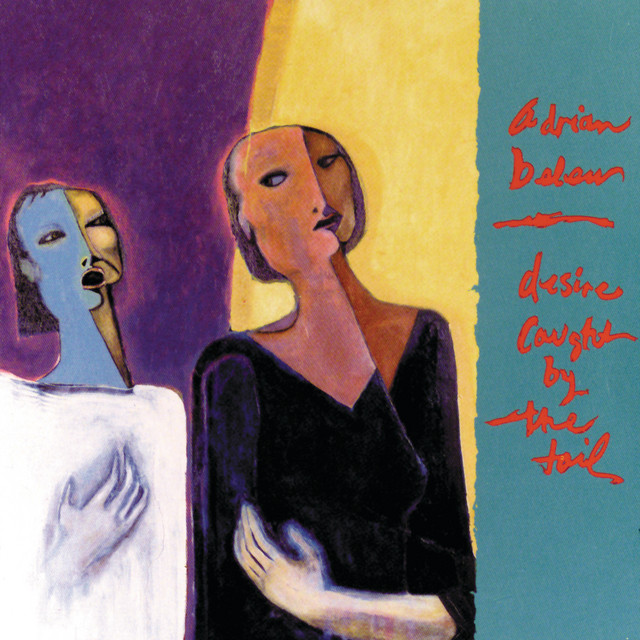
Desire Caught By The Tail
1986
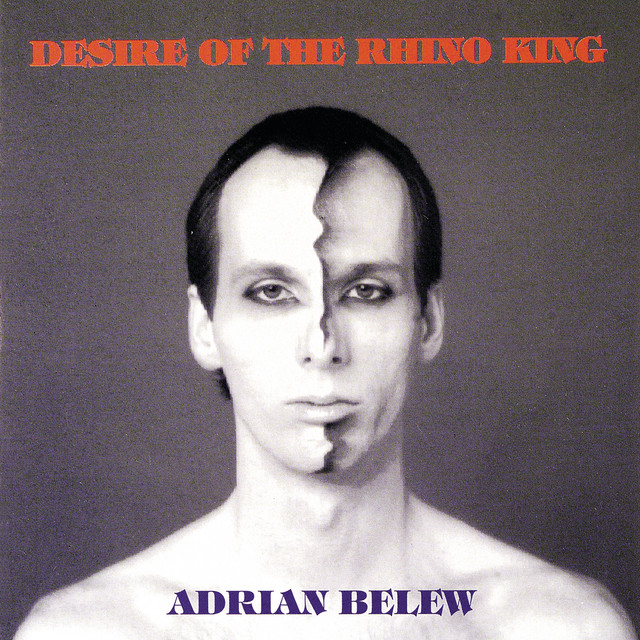
Desire Of The Rhino King
1991
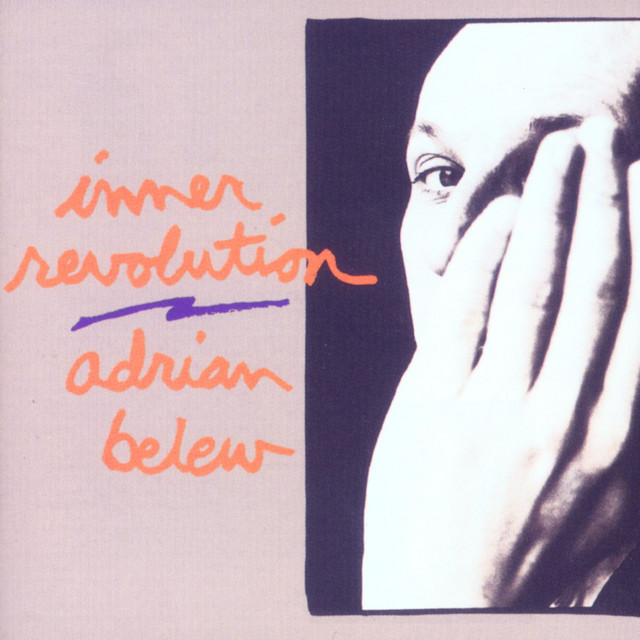
Inner Revolution (US Internet Release)
1992
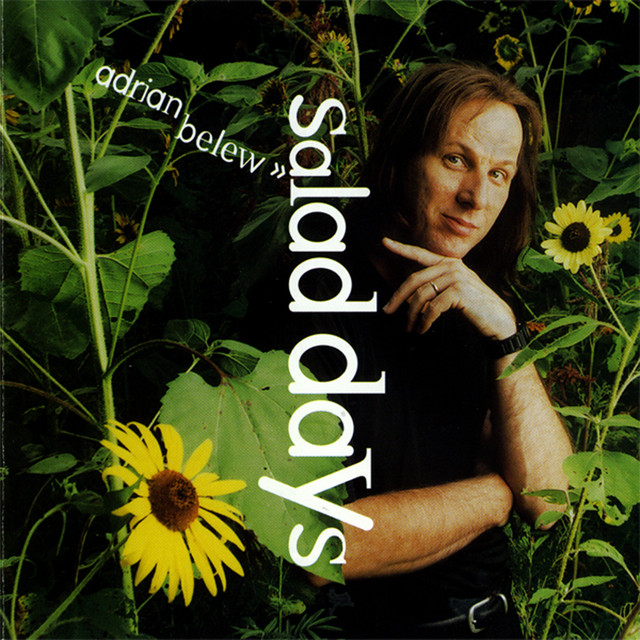
Salad Days
1999
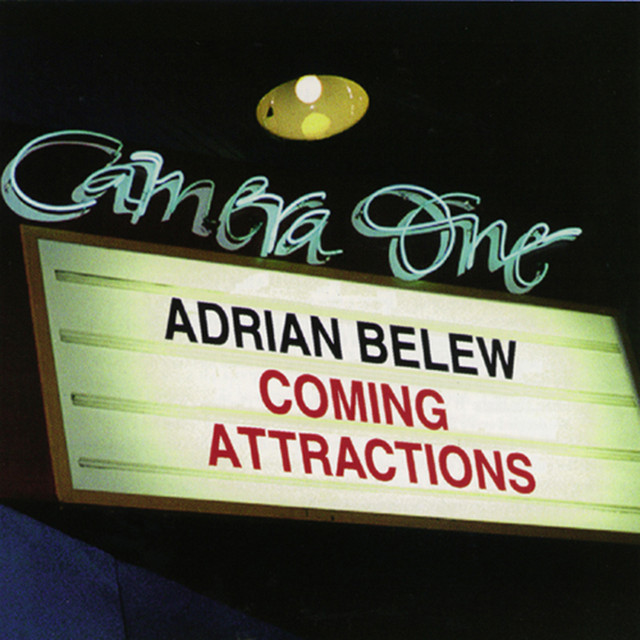
Coming Attractions
2000
Side One
2005
Side Two
2005
Side Three
2006
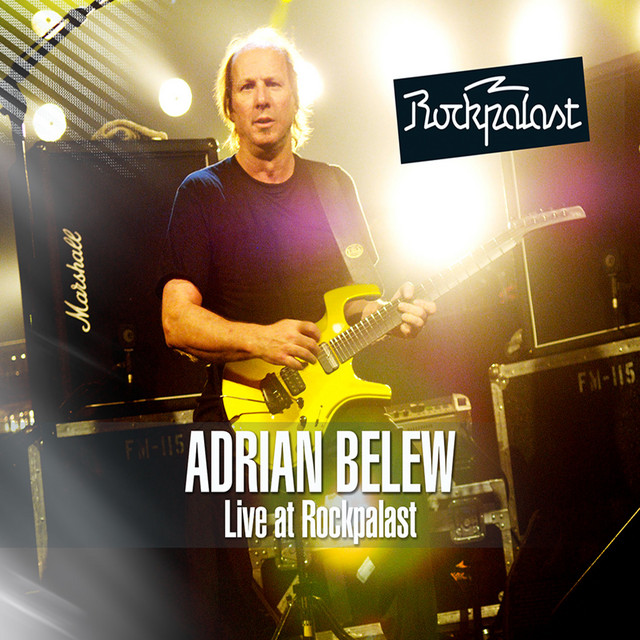
Live at Rockpalast Forum, Leverkusen, Germany 3rd November, 2008
2015
pop sided
2019
Album Credits
-
Adrian Belew · 2005
Producer -
Adrian Belew · 2005
Producer -
Kevin Max · 2001
Producer -
Jars of Clay · 1995
Producer -
Adrian Belew · 1991
Producer -
Adrian Belew · 1983
Producer -
Adrian Belew · 1982
Producer








.webp)

