
Pricing and availability




* Product prices and availability are updated by Equipboard every 24hrs and are subject to change. Equipboard may receive compensation for purchases made at participating retailers linked on this site. This compensation does not affect what products or prices are displayed, or the order of prices listed. For more information, please refer to our affiliate disclosure.
Description
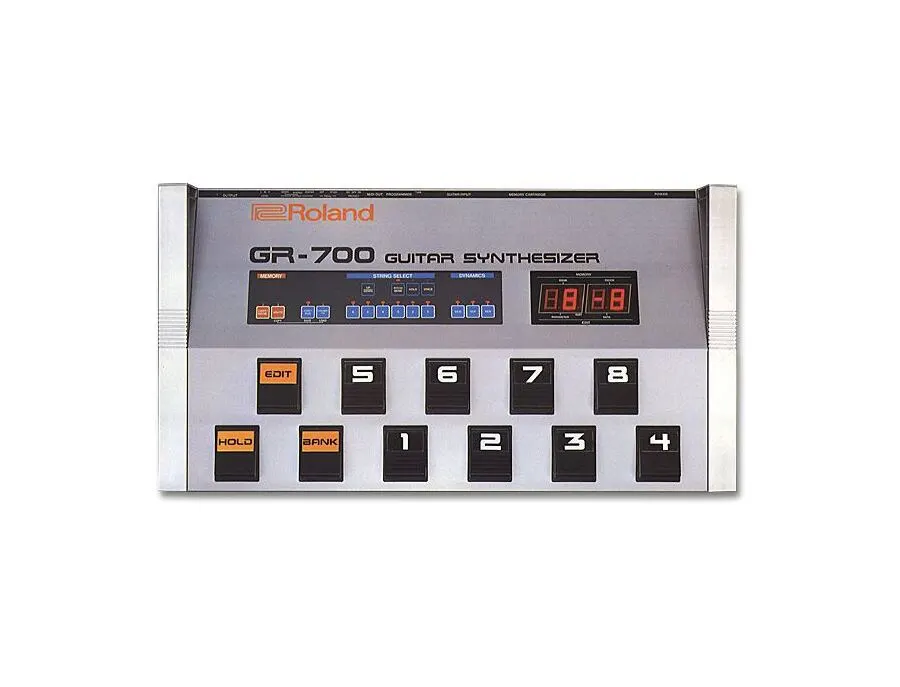
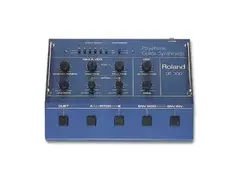
Step into a world of sonic exploration with the Roland GR-700 Guitar Synthesizer, a pivotal piece in the evolution of guitar synthesizers. Designed for guitarists eager to break boundaries, this pedal offers a seamless fusion between the traditional feel of a guitar and the expansive sound universe of a synthesizer. Engineered with Roland's commitment to innovation, the GR-700 is equipped with a dedicated synthesizer module that allows for a vast array of sound textures, from lush pads to punchy leads.
This pedal is not just about sound; it's about performance. The GR-700 features intuitive controls that provide real-time modifications, ensuring that your creativity remains unhindered. Paired with Roland's unique pitch-to-MIDI tracking technology, it offers precision in note detection, translating your guitar's nuances into expressive synthesizer sounds. Whether you're on stage or in the studio, this pedal empowers you to blend genres and craft unique soundscapes that resonate with your musical vision.
Key Features:
- Dedicated synthesizer module for diverse sound textures
- Real-time modification controls for on-the-fly adjustments
- Roland's pitch-to-MIDI tracking technology for precise note detection
- Seamless integration with compatible Roland guitar controllers
- Multi-patch memory storage for easy access to your favorite settings
- Rugged design built to withstand the demands of live performance
- Versatile output options for connecting to amplifiers or mixing desks
Videos

Analogger
Roland GR-700 Guitar Synth & 707 Guitar Controller
Roland GR-700 Guitar Synth & 707 Guitar Controller
Analogger
Roland Gr-700 Guitar synth - Sounds Demo

skaboosh
Roland GR-700 Guitar Synthesizer | CME Vintage Gear Demo | Joel Baumann

Chicago Music Exchange
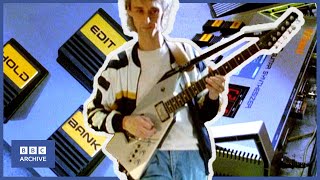
1985: MARK WOOD on the Roland GR-700 GUITAR SYNTH | Micro Live | Classic BBC Music | BBC Archive

BBC Archive
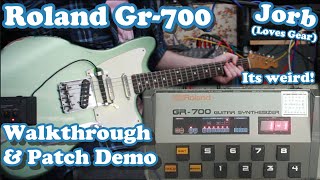
Roland GR-700 Guitar Synth // Demo & Walkthrough

Jorb
Steve Hackett Blistering Roland GR-700 Analog Guitar Synthesizer Solo with Steve Howe

WayneJoness
Reviews
Owner Insights
We analyzed real musician discussions from forums and Reddit to find what players love, question, and tweak about Roland GR-700 Guitar Synthesizer.
Comparisons
-
The Roland GR-700 is often compared to the Boss SY-1000, with the latter offering full sound programming control without needing a specialized pickup.
Source
Features and functionality
Use cases and applications
User experience
Critic Reviews
4.5 out of 5
Based on 0 Reviews and 3 Ratings
Artist usage
Add artist

For "Easter Sunday, " which was recorded on Easter Sunday, 1983, in Toronto, Fripp improvised with a Roland GR-700 synthesizer, and soloed on top of that with a Takamine acoustic, followed by a Les Paul with a fuzz box played through a Fender Princeton amp.

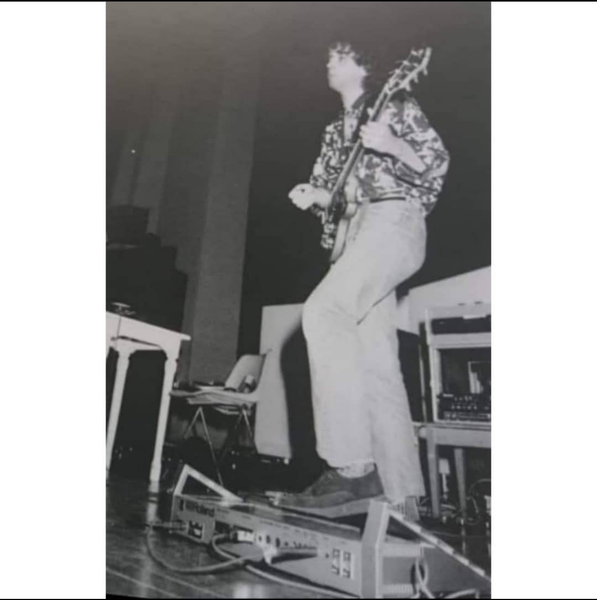
En esta foto podemos ver a un joven Gustavo Cerati utilizando su Roland G808 con el módulo GR700 en una clínica durante 1986. Durante ese mismo año y para la revista El Musiquero, Cerati contaba sobre esta guitarra sintetizador, y que la utilizaba más que nada para componer los arreglos de synths en los demos de Soda, que luego eran reinterpretados en el estudio por el Zorrito Quintiero ya con sintetizadores.


In this interview with Boss, Andy Summers confirms usage of this guitar-synth. It reads, "I remember seeing a Police video where you were playing a Roland GR-700 guitar synth."
"I don’t remember which one was which. Was that the silver one?"
"Yes."
"Yeah, I used that one. I don’t have it anymore unfortunately. I think I did some stuff with Robert Fripp with it back when we did a couple of albums together."


Belew purchased a GR-700 when it was released in 1984 and used it throughout the 80s and 90s, as known from the following sources:
One Two Testing, February 1985, "Adrian Belew"
What was your favourite instrument of 1984?
"It would be the Roland GR700 guitar synthesiser, because it has increased my musical vocabulary so much. Being a guitarist who concentrates on sound and tonal colours and things of that nature, I find the 700 so useful because that's the area in which it excels. It's the first time with guitar synthesis that you've been able to create a sound from scratch, like a keyboard player would do, and also to be able to store that sound on a cartridge. It's very convenient. Having had the GR700 for about four months now, I'm definitely in love with it. I've really incorporated its little quirks into my music now.
"It does of course have some tracking problems, which is something everyone says when the 700 is mentioned. I've found ways of minimising that — bearing in mind that I don't use the guitar that comes with it, I use guitars I've had a while and am comfortable with. It doesn't track as well as the previous guitar synth, the 300, presumably because it's digital and it's converting the signal from the guitar into digits. So if the guitar signal is in the least bit confusing to the computer inside the 700 then it doesn't know how to read that signal, it doesn't know what to convert.
"So the intonation of your guitar becomes ultimately the most important thing — if you play a note that is clean and clear to the computer it'll probably track it fine. If not you're likely to get bleeps or something, or no note at all. It takes a couple of hours adjusting to get right, including getting the individual pickup volumes right.
"You have to be aware that you can get too deeply involved in it — it is, for me, simply an orchestrating tool. It's not something to replace the other facets of my playing. I think it would be pretty easy for someone who was playing it to get so involved in it that soon all they'd be playing was synth and no guitar. It's not the instrument for everyone, certainly — if you want to play fast arpeggios or power chords or things like that then you're biting the wrong dog."
Downbeat, December 1986, "Adrian Belew: Twang Bar King" by Gene Santoro
It's not too surprising, then, to find that Desire Caught By The Tail frequently finds him doing just that, albeit with completely instrumental pieces of more ambitious musical scope. Coupling the nearly 200 sounds he's developed for the Roland GR-700 guitar-synth ("I even found a way to make it play itself!") with his increasingly adept use of backwards tracking and vari-speeding, Adrian Belew has taken a commercial risk that pays off artistic dividends — and, once again, helps redefine the voice of the guitar.
ADRIAN BELEW'S EQUIPMENT
Adrian Belew says, "I'm using four guitars now. First are the two Twang-Bar Wonderbeast guitars with artwork by Mike Goetz. Each has a different tuning — one is normal, the other has the G tuned up to A so I can get different voicings and avoid pentatonic scales. Starting off at the headstock, they have bow-and-tuning heads, thereby eliminating the need for retaining bars which stop you from being able to play in the back of the head or bend strings at the nut. They have Seymour Duncan pickups, Kahler tremolo arms, and all the guts from the Roland synthesizer. The same is true of the third guitar I use, except that the artwork is by Laurie Anderson, and that it's tuned to the same tuning as my dobro, E-B-E-E-B-E, with heavier gauge strings, the low E being a .052 and the high E being a .012. Usually I use medium-light Gibson strings, with the high E being a .010 and the low E a .042 I use Fender medium picks. The fourth guitar is my battered 1967 Stratocaster from the David Bowie period, with a broken bass pickup [laughs] and it feeds back better than any other guitar I have.
"My two amps are Roland JC-120s — I've used one on everything from 1977 on. Right now, my floor situation looks something like this — I have the GR-700, the Roland SDE-3000 delay, an Ibanez harmonizer, a Big Muff fuzztone, a Foxtone fuzztone, the Electro-Harmonix echo-flanger — which makes the wonderful metallic insect sounds on Desire — the new Roland compressor — I always use lots of compression — a Roland pitch-shifter, and the Electro-Harmonix 16-second delay, which I've had converted to do backwards tape loops."
Facebook, Adrian Belew, November 14, 2021
trivia points for Here:
•May 1, 1990 begins with the rather spooky sound of my GR-700 synthesizer playing itself! the title refers to the evening martha and I met in orlando, florida at the Peabody Hotel following the sound and vision show I had just done with david.
Facebook, Adrian Belew, November 21, 2021 & adrianbelew.net, Discography, "the experimental guitar series volume 1: guitar as orchestra"
trivia points for Guitar As Orchestra:
•having released 4 pop-ish records in a row I was due to make a 180 degree turn. by this time I had worked extensively with 3 different guitar synth models (Roland gr-700, gr-50, and gr-1) and written a library of several hundred sounds. they weren’t samples, they were programs created by long late night experimentation. I felt it was time for someone to build an orchestra using only guitar.
•you can’t imagine the first-time thrill of playing my guitar and having it sound like a piano. a whole new universe appeared!
•having listened to this record for the first time in many years I was surprised at how ahead of its time it truly was. some of the better pieces would still make good film score material today. IMHO
•there really isn’t much in the way of trivia points since the whole record, be it tympani, harp, piano, or bassoon is guitar synthesizer. even the “audience applause” at the beginning was made with a guitar synth. so instead I will reprint here some of the liner notes from the record:
adrianbelew.net, Discography, "desire caught by the tail"
the most important instrument I used throughout the record was the Roland GR-700 guitar synthesizer (picture three). mine was sent to me by roland, directly from japan. it was such a new instrument they hadn’t yet written a manual for it! over many months time I wrote 200 different sounding programs with it. that was a big reason why I ended up making such an avant-garde record.
my GR-700 which I still have, does quirky things others don’t do. for example, if I plug a guitar chord into the expression pedal without plugging the other end INTO something, the synthe goes crazy and plays itself!! a good example of that sound is what you hear throughout track 7 called Guernica.
adrianbelew.net, Discography, "op zop too wah"
during the making of the record there was a 4-day period where everyone would be absent. my family on vacation and ken visiting his parents left me in the house/studio alone. before ken left I had him set up the means for me to record myself drumming (with a slight bit of flanging for the sound I wanted.) for 4 days I did nothing but play drums (picture four). practicing to get myself up to speed, I would sometimes record sections of soloing. by the time ken returned I had several performances I was happy with and chose one for Word Play Drum Beat. for lyrics I recorded friends of mine saying single words suggestive of violence. someone says “pipe”, I add “bomb.” someone says “hair”, I add “trigger.” so my word changed the meaning of their word.
then comes a quick flurry of snippets: my GR-700 playing itself, train cars coupling, and a british woman saying “what is that?!”
[...]
there is truly not a sadder song I have written than The Ruin After The Rain, considering the very personal tragedy it was written about. not something I care to reveal. I don’t consider myself much of a pianist, this is about as good as I get. it was played on my trusty old Howard (picture eight) from the days of Mr. Music Head. howard still resides in my living room. the choruses are filled out with horn sounds from the GR-700 and chords on the dobro. and of course a splash of rain at the end.
Innerviews, "Adrian Belew: The Love Bubble" by Anil Prasad (2022)
Desire Caught by The Tail (1986).
[...]
I had one more record left in my Island Records contract for three albums, and had just got the Roland GR-700 guitar synthesizer from Japan. I was probably one of the very first people to get one. It had a Japanese-only manual and I was left to figure it out on my own. I started furiously programming it.
I loved it so much. It was a big old giant analog guitar synthesizer—the first of its kind. I was programming sounds like cello, piccolo flute, and oboe, and deciding what to do with all of this work.
Vintage Guitar, November 2022, "Adrian Belew: Still Going Up"
You pioneered guitar synthesizers 40 years ago, but the technology never really caught on.
Yeah, and my favorite was the Roland GR-700, which used cartridges to store sounds, but they went dead after about five years. Guitar synths may be considered relics by some people, but I’m thrilled with all the unique sounds and inspiration they afforded me over the years. Now, I don’t use any unless I need a particular sound on a record.

"I'm proud to say that I toured the entire Rebel Yell tour which was ten months long, with one of GR-707 and the floor unit. I still have it, and I have it because it is a bit of history to me. There's not many instruments that I held on to that long but that really meant something to me, to be the first in the Unites States with that instrument and to maybe help promote guitar synthesizers. I've always been a big synth fan."


In a WASTOIDS podcast, Nick Reinhart discusses his use of the Roland GR-700 Guitar Synthesizer.


"Do you recall which guitar synthesizer you used?
It was like a pretty big size. It had a big old huge connector. I just remembered: it was a Roland (GR-700)." Steve Morse.


On Steve Hackett's official website, he lists the Roland GR-700 guitar synthesizer as one of his pedals.

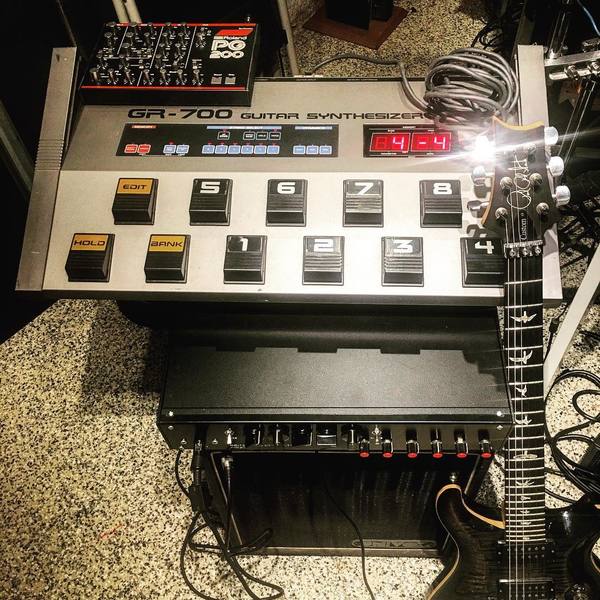
Past-Future. Future-Past Roland GR700 analog guitar synthesizer, PG200 programmer


In the "No Drumkit Required" article from Muzines, Mike Rutherford is noted for using the Roland GR-700 guitar synthesizer.
.jpeg?v=1784782055)
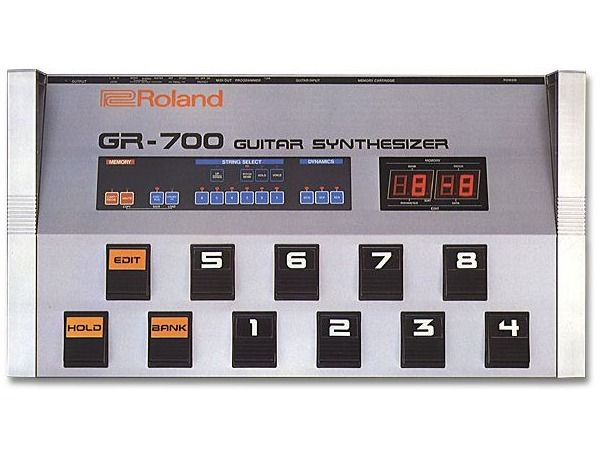
Wendy Melvoin played a Roland G-707/GR-700 guitar synth system with Prince in the mid-1980s.


Presently the Schecters and Giffin are the favourites, and the Yamaha SG90 still comes in for some use. There are acoustics as well such as a Martin D28, and 12-string Ovations – "the first acoustic I've ever heard with a pickup inside it that sounds as good as a mike." He does have a Roland GR300 guitar synth, "but I played it on the last album and ran out of things to do." The latest acquisition, a new GR700, is being evaluated by a mate.
Album Usage
The Roland GR-700 Guitar Synthesizer has been featured on the following albums:
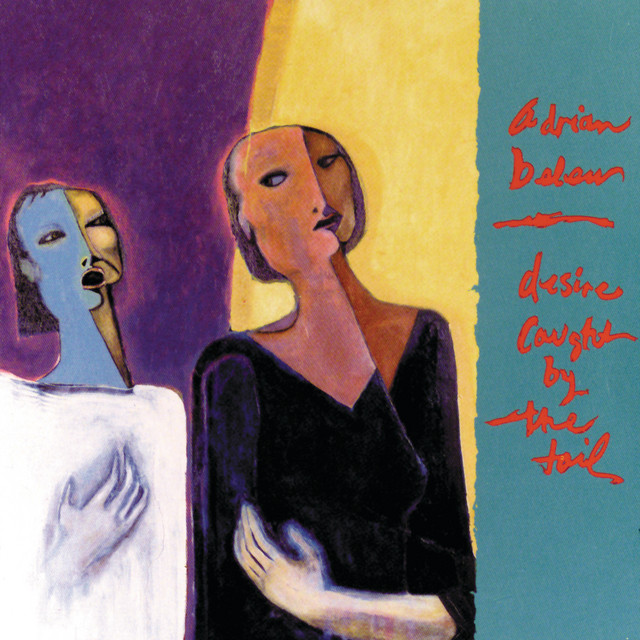
Genre Usage
Based on how artists on Equipboard use this gear, it is most commonly found in the following genres.
Used With
Based on how musicians on Equipboard use Roland GR-700 Guitar Synthesizer, it is most commonly used with the following gear.



-s.webp?v=1784891297)



Similar
Add recommendation3 alternative and related items for Roland GR-700 Guitar Synthesizer, curated by the Equipboard community.


$225.00

$281.22
More Roland Guitar Synth Pedals

$599.99 - $1,044.99
in Guitar Synth Pedals Rank


$125.10
in Guitar Synth Pedals Rank


$180.00
in Guitar Synth Pedals Rank


$1,189.00
in Guitar Synth Pedals Rank


$119.14
in Guitar Synth Pedals Rank


.png?v=1784922058)

$190.00
in Guitar Synth Pedals Rank


$350.00
in Guitar Synth Pedals Rank

$110.00
in Guitar Synth Pedals Rank


$229.01 - $279.00
in Guitar Synth Pedals Rank


$209.00 - $259.50
in Guitar Synth Pedals Rank


$129.99 - $247.00
in Guitar Synth Pedals Rank


$219.00 - $277.40
in Guitar Synth Pedals Rank


$204.11 - $259.50
in Guitar Synth Pedals Rank


$185.00 - $259.50
in Guitar Synth Pedals Rank


$160.00
in Guitar Synth Pedals Rank

-m.webp?v=1784905613)
$208.00
in Guitar Synth Pedals Rank

.jpeg?v=1784917540)


$184.58 - $259.50
in Guitar Synth Pedals Rank


$177.86 - $199.00
in Guitar Synth Pedals Rank


$259.00 - $395.00
in Guitar Synth Pedals Rank


$563.55 - $989.99
in Guitar Synth Pedals Rank


$299.00 - $336.00
in Guitar Synth Pedals Rank


$299.00 - $336.00
in Guitar Synth Pedals Rank

$189.00
in Guitar Synth Pedals Rank

-m.webp?v=1784977250)
$259.00 - $324.80
in Guitar Synth Pedals Rank

-m.webp?v=1784958580)
$229.00 - $283.80
in Guitar Synth Pedals Rank


$255.00 - $269.00
in Guitar Synth Pedals Rank


$170.05 - $199.00
in Guitar Synth Pedals Rank


$550.00
in Guitar Synth Pedals Rank


$420.00
in Guitar Synth Pedals Rank


.jpg?v=1784940345)

$179.00
in Guitar Synth Pedals Rank


$185.00 - $259.50
in Guitar Synth Pedals Rank


$199.00 - $259.50
in Guitar Synth Pedals Rank


$225.00
in Guitar Synth Pedals Rank


-m.webp?v=1784905643)
$249.00 - $249.99
in Guitar Synth Pedals Rank


$822.00 - $1,319.99
in Guitar Synth Pedals Rank


$106.44 - $151.50
in Guitar Synth Pedals Rank


$180.00 - $248.00
in Guitar Synth Pedals Rank


$165.00 - $199.99
in Guitar Synth Pedals Rank


$562.00 - $846.99
in Guitar Synth Pedals Rank

Community setups


Gear Guides




.jpg)
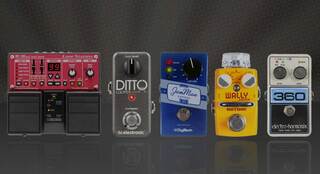

Most Popular Guitar Synth Pedals
Most Popular Brands
-
Added to Equipboard on by
 jpc
jpcGearIQ 445
-


