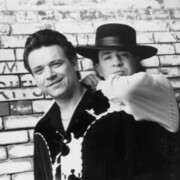
Billy Gibbons
Role
Genre
Role
Genre
Billy Gibbons' Amplifiers


"The other out goes to a new prototype Magnatone 50s watt amp with an English sounding bass tone like a Plexi. It's all handwired. Actually it's the first amp," says Billy Gibbons's guitar tech about the Magnatone Super 59 Amp.
Find it on:


"After the two effects we have about six amplifier outs. Two of the outs go to my Voodoo Modified JMP1 Marshall heads. The Voodoo mods make these amps amazing. They sound so much better than they used to. We have two of them: the main one is setup for Billy's main dirty sound and goes to the Marshall 120-120 power amps; the second Marshall JMP1 has a clean sound that goes to a direct box straight to tape for recording purposes because they record every night," says Billy Gibbons's guitar tech about the Marshall JMP-1 Tube MIDI Guitar Preamp.
Find it on:


"The Voodoo mods make these amps amazing. They sound so much better than they used to. We have two of them: the main one is setup for Billy's main dirty sound and goes to the Marshall 120-120 power amps," says Billy Gibbons's guitar tech about the Marshall ValveState Pro 120/120 Power Amp.
Find it on:

Marshall official website puts class 5 as one of the amps Billy Gibbons uses.
Find it on:

Quote from "The History of Marshall" by Michael Doyle
"[…] Naturally there are many modern Marshalls that can come close to approximating the Bluesbreaker sound but the most surprising one is the old 5005 (Lead 12) solid-state combo so beloved by Billy F Gibbons. He recorded such guitar greats as "My Head's in Mississippi" with this amp, and I am eternally in his debt for bringing it to my attention!."
Find it on:

Used for ZZ Top's First Album, Rio Grande Mud, Tres Hombres, Fandango!, Tejas and Degüello, as recalled by Gibbons in this December 3, 2009 Guitar World article (reprinted from an interview in the November 1996 issue).
“La Grange”
Tres Hombres (1973)
“That is straight guitar into amp: a 1955 Strat with a stop tailpiece through a 1969 Marshall Super Lead 100. That fuzz sound in the lead and in the front and back end of the composition is just pure tube distortion. Pickup-setting differentials account for the different tones. The opening part was played on what we used to call ‘the mystery setting’ in the dark days before the existence of the five-way toggle switch, when finding that perfect ’tweener [in-between setting of a three-way pickup selector] required dedication.
“That Marshall amp, which was a trusted friend through the first six records, was an import brought over by Jeff Beck’s at-the-time tech. I had four of those babies, and they were my main road amps for years. I ran them through cabinets with those [Celestion] Greenback speakers. They still retain a distinctive, rich, enjoyable tone and are well worth owning. I must, however, advise anyone fortunate enough to find one to beware of the variable power plugs. The 220[-volt] setting doesn’t work very well outside of the 220 countries, as I can tell you from experience. We had more than a few paper-clip nights over the years [due to blown fuses].”
“Tush”
Fandango! (1975)
“The first three albums were recorded exclusively at the Robin Hood Studios outside of Dallas, and the special sound that always seemed to be accessible there was due in part to the fact that the equipment was nailed to the floor and nothing ever moved so you could always count on a sound. Quite a good sound, I must say.
“ ‘Tush’ was Pearly Gates, my beloved Les Paul, played through the same Marshall Super Lead, and we sure enough did stop and enjoy the G tuning for the composition’s slide element. This song was largely straight guitar to amp, but I also utilized a real odd, esoteric device called the Cooper Time Cube, which was a simplistic application of the complex world of physics. In a small rack-mounted can sits a small speaker, right up next to maybe 50 feet of one-inch rubber tubing, which is coiled, spring-like. The sound waves actually take longer to travel, having to make these corners, creating a type of delay which is quite unlike the familiar sound of a digital delay. That was a real left-field piece of gear which they had—and still have, I might add—in that studio. Some of the guitar sounds that appear to be doubled on the early albums are actually the byproduct of that oddball Cooper Time Cube.”
Find it on:



"For speakers we use Eminence the Governor," says Billy Gibbons's guitar tech about the Eminence Red Coat The Governor 12" 75W Guitar Speaker.
Find it on:


-m.webp?v=1777705588)
Purchased sometime before Eliminator, as stated by engineer Terry Manning in this February 15, 2005 ProSoundWeb forum reply.
[Tue, 15 February 2005 09:20]
tenaciousJay wrote on Mon, 14 February 2005 12:05
Terry I wonder if you could comment on the guitar sound in Eliminator. What I always heard it was all Rockman - but was there an amp mixed in as well? And thoughts on the direction of that album as a whole - it certainly was a huge change in sound, even if there were hints of it on earlier albums.
The full story of the making of Eliminator (the politics, the chicannery, the technical aberrations, the high social drama, the exodus, the payback) is one that I cannot tell. Even if I could, there certainly wouldn't be room for it here! It probably won't even make it into "the book" (or the movie). Just don't forget that truth is often stranger than fiction!
However, I will address certain specific musical or technical issues, and I'll begin with your guitar amp question.
THERE WAS ABSOLUTELY NO ROCKMAN USED ON THIS RECORDING!
Not a little bit, not a tiny bit; NOT ANY. I don't know how these stories get started. Billy may indeed have used Rockman at a later date, after I left the situation, but I did not allow it when I was working with him. He did bring one in to try, but I was not satisfied with the sound, compared to an amplifier.
Find it on:

Marshall claims that this iconic amp was used by Billy Gibbons of ZZ Top
Find it on:

According to Gibbons's artist profile on the Orange's page, he uses the Orange Micro Dark guitar head.
Find it on:

Here’s what Eliminator engineer Terry Manning said Billy used on Eliminator:
“The amp used, almost exclusively, on Eliminator was a Legend. This was about a 50w hybrid unit, employing a tube/valve preamp and a transistor power amp. This is the amp which has a finished wood case, and a rattan-type cane grill. It has one 12” Celestion speaker.
Find it on:

"Both the Marshall power amps and the Magnatone go to these Demeter Iso boxes which are just an enclosed single 12 with Heil microphones," says Billy Gibbons's guitar tech about the Demeter SSC-1 Silent Speaker Iso Cab.
Find it on:

"I monitor through this. We don't mic any on-stage cabs. Right now we're using some Magnetones 4-12s. We have 2 Demeter Iso boxes loaded with an Eminence Governor and a Man of War in the other. That's right off the power amps. One is run off the power amp, the other is run off this Mojave Scorpion. Now the Mojave Scorpion is separate; it's always on, it doesn't see the EQ, it's set completely different. It's basically there for when Billy turns down for the older songs. Where there's is as much gain is when he turns down - those JMP1s will not clean up. They're not responsive at all, they get a lower grind to them. So this amp comes in with all that. So he gets all that stringy stuff and it mixes in really well with the Marshall. It is EO 34s but it's set up more like a Hiwatt because it has the high volume and low volume for the EQ, but it does sound Marshall-like," says Billy Gibbons's guitar tech about the Mojave Scorpion 50-W Amplifier Head.
Find it on:

Used for "Cheap Sunglasses", as recalled by Gibbons in this December 3, 2009 Guitar World article (reprinted from an interview in the November 1996 issue).
“Cheap Sunglasses”
Deguello (1979)
“This song was actually written during a trip from the Gulf Coast up to Austin, Texas. A bright spot of creativity flared as we were passing the hamlet of La Grange, and I recited all three verses of ‘Cheap Sunglasses’ within the space of 20 miles. And that’s the way they stayed. Though that may sound simplistic, the lyrics speak for themselves. ‘Simplistic’ is indeed a word which may come to the minds of some.
“The lead track was performed on a fake Fender guitar, which I used for the wiggle stick—there is a little dive bomb in the solo section. I played it through a Marshall Major, a short-lived 200-watt beast, which had one blown tube. Hence the rather bulbous, rotund sound. There’s also a little bit of digital delay for that Bo Diddley impersonation at the tail out, and a Maestro Ring Modulator, which produces the strange tag to each verse. It appears three times, and it’s a pretty funny sound. That is one insane effect put to good use.”
Find it on:

Featured on the official ZVEX artist page.
Billy Gibbons of ZZ Top uses the Nano Amp and SHO, among other ZVEX pedals he owns.
Find it on:

At the back of his rack we spotted a 50s Tweed Twin which he uses sometimes.
Find it on:


In a 2015 Rig Rundown by Premier Guitar, Billy Gibbons' guitar technician discusses the use of the BigTone Studio Plex MKII amplifier head in ZZ Top's setup.
Find it on:

"@billyfgibbons @zztop with his #blackstar #artisan 15 #TheSoundInYourHead #TBT"
Find it on:

In a Sweetwater YouTube video titled "Billy Gibbons Talks Magnatone Amps," Billy Gibbons discusses his use of the Magnatone Custom 410, highlighting its exceptional sound quality for blues and rock music.
Find it on:

"1987 Lee merged Metaltronix and Perfect Connection into one large factory in Northridge California. The Northridge factory was like a mini Fender, we where doing all the manufacturing under one roof. We showed the “Blues 59 Amplifier for the first time at the winter Namm show because we were asked by Billy Gibbons (ZZ-Top) to come up with an amp that was more for the southern market. Metaltronix was growing and adding new products each year. Lee came up with a new kind of distortion pedal called the “Maniac”, which was in production when the company came to a complete halt in 1990 with a try by the investors to take over the company. Things could not be cleared up in court so in 1990 Metaltronix/Perfect Connection was closed, Bummer!"
Find it on:

According to a video by Premier Guitar, the Trainwreck Circuits Express amplifier, specifically the 1987 model known as "Sarah," originally was a personal amp of Ken Fischer's before being sold to Billy Gibbons.
Find it on:

In this Instagram post of a photo of Billy Gibbons at home, a Crate Powerblock is seen.
Find it on:
This is a community-built gear list for Billy Gibbons.
- Find relevant music gear like Guitars, Amplifiers, Effects Pedals, and other instruments and add it to Billy Gibbons.
- The best places to look for gear usage are typically on the artist's social media, YouTube, live performance images, and interviews.
- To receive email updates when Billy Gibbons is seen with new gear, follow the artist.
Discography
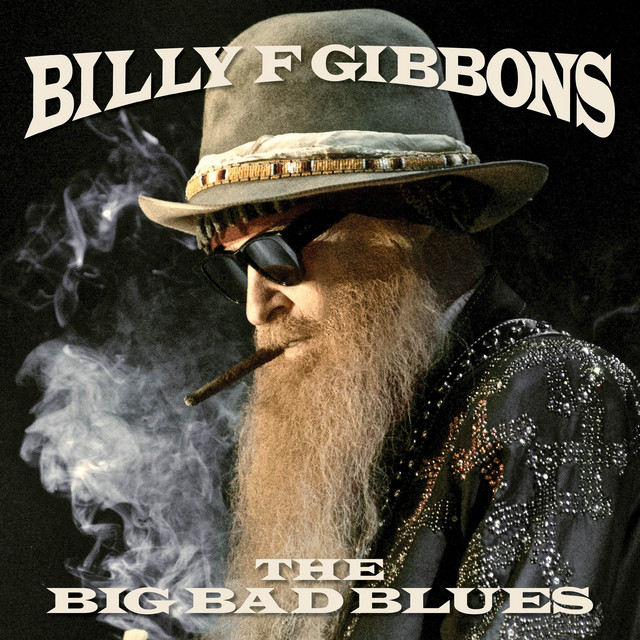
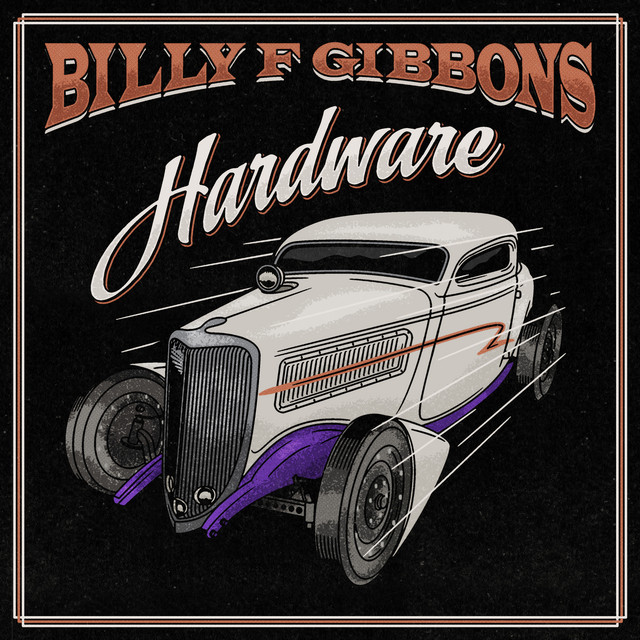



.jpg?v=1782932350)