
Chris Vrenna
member of Tweaker
Role
Genre
Role
Genre
Chris Vrenna's Gear


While recording 2 A.M. Wakeup Call, Vrenna used some virtual synths, lots of outboard synths, live drums, a live acoustic guitar, a six-string Taylor and a nylon string guitar, plus he borrowed a couple of 12-strings from some friends for a couple parts. There is a lot of live bass on the record as well. "We used a five-string Fender jazz deluxe, which is a really good-sounding solid instrument, and it was all recorded through the Line 6 Bass Pod," says Vrenna. “We did some direct stuff with the guitar, but we used the Mesa Boogie Triaxis. That one is pretty awesome for direct I/O".
Find it on:


While on tour supporting Björk, Oldham had time to visit Vrenna in L.A., so they recorded his vocals with a Soundelux 47 FET mic, Vintech X73 preamp/EQ and a Universal Audio 1176 compressor.
Find it on:


“The whole thing started with the guitar riff,” Chris explains, “a big heavy metal-sounding thing. We basically got a click going, then we recorded the riff. I like tube gear, so I use a Mesa/Boogie TriAxis for the big sounds, and also a Marshall JMP-1 [both rack modules]. They’re the best sounding and most natural recording boxes I’ve found for guitar. I use a Line 6 Pod too, but more for the clean stuff.” For this track, the guitar was recorded through the TriAxis into a Neve mic pre, into a Yamaha 02R, and onto the Apogee Rosetta AD en route to Pro Tools. “I tend to use the Neve channel for guitars,” says Chris, “the APIs for drums, and the Summit TD-100s and GMLs for synths.”
Find it on:
-m.webp?v=1784331781)
Software synth-wise, he uses "all the Native Instruments stuff. I really like Battery. The B4 is on the Tweaker record in a few different places…"
Find it on:


Vrenna says that most of the bass and guitar parts on the album were recorded direct. “Every single bass sound — and everyone's going to shoot me for saying this — is a [Line 6] Bass Pod Pro,” he says. “But then I come out of the Bass Pod Pro and always put that through my Summit Audio TD-100 tube DI. I don't use the compression within the Pod. I put that through an API and then my ADL tube compressor. Then that goes in. I use [the Pod] for its tones and then do other stuff.” As for the guitars, “A lot of the heavy guitar stuff is the Mesa Tri-Axis and the Recto Directo, things like that. Most of it is direct.” When he did choose to mike the amp, he used either a Shure 57 or a Sennheiser 421.
Find it on:


Because he is a drummer capable of writing his own beats, Vrenna never uses loops. For programmed sounds, he often uses Battery and employs the drum sounds his synths have. “I tend to just start from some of those and layer stuff,” he remarks. “I just layer sounds underneath and then make my own stuff, and then put those through pedals.” With limited space in the crib room, Vrenna uses a compact Yamaha custom drum kit. Vrenna pads the room down when he records vocals, but then he pulls the padding off the walls for a boomier drum sound. Longtime friend and engineer Bill Kennedy, whom the drummer has known since his NIN days, helped him experiment with different ways to mike the kit and they created a good overall scheme. To record the kit, Vrenna placed a vintage AKG D-12 inside the kick and a Yamaha NS-10 (used as a mic rather than a speaker) outside the kick. “It gives you a nice sub,” he says. “You put that in front of the kick head.” For the snare, he placed a Shure SM7 on top and a Sennheiser 441 below. Sennheiser 421s are used on the two toms and either an AKG 451 or a Shure SM7 on the hi-hats. He favors the 451 because while the SM7 “gives a nice, thick chunky hi-hat, being such a small room, I kind of needed to thin it out.”
Find it on:

My sampler is still an E-mu: the E4 Ultra. I still use it every day of my life. They discontinued them because they've gone software, as well with the new E-mu X Series, so I've been picking up used E-mu's out of the recycler and eBay and building a couple more hardware samplers just so I have them.
Find it on:

"I love the HotHands effect boxes. They sound fantastic and the wireless ring controller allows me to improvise my effects beds every night."
Find it on:

While recording 2 A.M. Wakeup Call, Vrenna used some virtual synths, lots of outboard synths, live drums, a live acoustic guitar, a six-string Taylor and a nylon string guitar, plus he borrowed a couple of 12-strings from some friends for a couple parts. There is a lot of live bass on the record as well. “We used a five-string Fender jazz deluxe, which is a really good-sounding solid instrument, and it was all recorded through the Line 6 Bass Pod,” says Vrenna.
Find it on:

"I do like all the Eric Persing [of Spectrasonics] stuff: Stylus, Trilogy and Atmosphere in particular…"
Find it on:

"I do like all the Eric Persing [of Spectrasonics] stuff: Stylus, Trilogy and Atmosphere in particular…"
Find it on:


In terms of keyboards, Vrenna notes, “I just like big, shiny keyboards with lots of lights. My sampler is still an E-mu: the E4 Ultra. I still use it every day of my life. They discontinued them because they've gone software, as well with the new E-mu X Series, so I've been picking up used E-mu's out of the Recycler and eBay and building a couple more hardware samplers just so I have them.” His arsenal also includes a Waldorf Microwave XT, Kurzweil K2000/R, Roland V Synths, an old Virus updated “as far as it will go,” a Nord Lead 2, Alesis Andromeda A6 and “a good old trusty JP8000.”
Find it on:

In terms of keyboards, Vrenna notes, “I just like big, shiny keyboards with lots of lights. My sampler is still an E-mu: the E4 Ultra. I still use it every day of my life. They discontinued them because they've gone software, as well with the new E-mu X Series, so I've been picking up used E-mu's out of the Recycler and eBay and building a couple more hardware samplers just so I have them.” His arsenal also includes a Waldorf Microwave XT, Kurzweil K2000/R, Roland V Synths, an old Virus updated “as far as it will go,” a Nord Lead 2, Alesis Andromeda A6 and “a good old trusty JP8000.”
Find it on:

Vrenna says that most of the bass and guitar parts on the album were recorded direct. “Every single bass sound — and everyone's going to shoot me for saying this — is a [Line 6] Bass Pod Pro,” he says. “But then I come out of the Bass Pod Pro and always put that through my Summit Audio TD-100 tube DI. I don't use the compression within the Pod. I put that through an API and then my ADL tube compressor. Then that goes in. I use [the Pod] for its tones and then do other stuff.” As for the guitars, “A lot of the heavy guitar stuff is the Mesa Tri-Axis and the Recto Directo, things like that. Most of it is direct.” When he did choose to mike the amp, he used either a Shure 57 or a Sennheiser 421.
Find it on:

Because he is a drummer capable of writing his own beats, Vrenna never uses loops. For programmed sounds, he often uses Battery and employs the drum sounds his synths have. “I tend to just start from some of those and layer stuff,” he remarks. “I just layer sounds underneath and then make my own stuff, and then put those through pedals.” With limited space in the crib room, Vrenna uses a compact Yamaha custom drum kit. Vrenna pads the room down when he records vocals, but then he pulls the padding off the walls for a boomier drum sound. Longtime friend and engineer Bill Kennedy, whom the drummer has known since his NIN days, helped him experiment with different ways to mike the kit and they created a good overall scheme. To record the kit, Vrenna placed a vintage AKG D-12 inside the kick and a Yamaha NS-10 (used as a mic rather than a speaker) outside the kick. “It gives you a nice sub,” he says. “You put that in front of the kick head”.
Find it on:

His recording chain includes a mixture of vintage and contemporary analog gear: an API Lunchbox with EQs, a pair of API mic preamps, a Vintech X73 preamp, a full rack of GMLs, a pair of Avalon U5 DIs and a pair of Summit tube TD-100s…
Find it on:



Things are very organized around Vrenna’s studio. All the essential hardware and synths are within reach, and the drum room is just around the corner. At the center of the studio is the essential Pro Tools rig stocked with four 888 A-D converters and multiple Line 6 Amp Farm cards—all running through a 933mHz Power Mac G4 tower. “I’m getting another Mix Farm in there soon because I’m doing everything else via FireWire,” he says.
Find it on:

Things are very organized around Vrenna’s studio. All the essential hardware and synths are within reach, and the drum room is just around the corner. At the center of the studio is the essential Pro Tools rig stocked with four 888 A-D converters and multiple Line 6 Amp Farm cards—all running through a 933mHz Power Mac G4 tower. “I’m getting another Mix Farm in there soon because I’m doing everything else via FireWire,” he says.
Find it on:

“The whole thing started with the guitar riff,” Chris explains, “a big heavy metal-sounding thing. We basically got a click going, then we recorded the riff. I like tube gear, so I use a Mesa/Boogie TriAxis for the big sounds, and also a Marshall JMP-1 [both rack modules]. They’re the best sounding and most natural recording boxes I’ve found for guitar. I use a Line 6 Pod too, but more for the clean stuff.” For this track, the guitar was recorded through the TriAxis into a Neve mic pre, into a Yamaha 02R, and onto the Apogee Rosetta AD en route to Pro Tools. “I tend to use the Neve channel for guitars,” says Chris, “the APIs for drums, and the Summit TD-100s and GMLs for synths.”
Find it on:

“The chopped guitar effects parts you hear started out as straight, sustained guitar chords through an Electrix Filter Factory. Then I put up a 32nd-note grid in Pro Tools, started chopping out slices, and added a small 3ms fade at the head and tail of each piece. It’s the best way to get super-tight tremolo-type patterns.”
Find it on:

"I’ve owned a lot of gear, but only two pieces of gear have done a consistently perfect job for me, and those are my Mac 9600 and the 02R."
Find it on:

Metric Halo Channel Strip was used to make what Chris describes as “a baby guitar.”
It’s my favorite effect. I love that plug-in. It does ‘radio EQ’ better than anything else.
Find it on:

Chris Vrenna is associated with using the Line 6 DL4 Delay Modeler, as highlighted in the artist profile on Sourceaudio.
Find it on:

When it comes to gear, Vrenna is all about analog and analog/digital hybrids. He loves his Korg microKORG with its superior Vocoder.
Find it on:

"I do like all the Eric Persing [of Spectrasonics] stuff: Stylus, Trilogy and Atmosphere in particular…"
Find it on:

In terms of keyboards, Vrenna notes, “I just like big, shiny keyboards with lots of lights. My sampler is still an E-mu: the E4 Ultra. I still use it every day of my life. They discontinued them because they've gone software, as well with the new E-mu X Series, so I've been picking up used E-mu's out of the Recycler and eBay and building a couple more hardware samplers just so I have them.” His arsenal also includes a Waldorf Microwave XT, Kurzweil K2000/R, Roland V Synths, an old Virus updated “as far as it will go,” a Nord Lead 2, Alesis Andromeda A6 and “a good old trusty JP8000.”
Find it on:

In terms of keyboards, Vrenna notes, “I just like big, shiny keyboards with lots of lights. My sampler is still an E-mu: the E4 Ultra. I still use it every day of my life. They discontinued them because they've gone software, as well with the new E-mu X Series, so I've been picking up used E-mu's out of the Recycler and eBay and building a couple more hardware samplers just so I have them.” His arsenal also includes a Waldorf Microwave XT, Kurzweil K2000/R, Roland V Synths, an old Virus updated “as far as it will go,” a Nord Lead 2, Alesis Andromeda A6 and “a good old trusty JP8000.”
Find it on:
-m.webp?v=1784526505)
Vrenna says that most of the bass and guitar parts on the album were recorded direct. “Every single bass sound — and everyone's going to shoot me for saying this — is a [Line 6] Bass Pod Pro,” he says. “But then I come out of the Bass Pod Pro and always put that through my Summit Audio TD-100 tube DI. I don't use the compression within the Pod. I put that through an API and then my ADL tube compressor. Then that goes in. I use [the Pod] for its tones and then do other stuff.” As for the guitars, “A lot of the heavy guitar stuff is the Mesa Tri-Axis and the Recto Directo, things like that. Most of it is direct.” When he did choose to mike the amp, he used either a Shure 57 or a Sennheiser 421.
Find it on:

Because he is a drummer capable of writing his own beats, Vrenna never uses loops. For programmed sounds, he often uses Battery and employs the drum sounds his synths have. “I tend to just start from some of those and layer stuff,” he remarks. “I just layer sounds underneath and then make my own stuff, and then put those through pedals.” With limited space in the crib room, Vrenna uses a compact Yamaha custom drum kit. Vrenna pads the room down when he records vocals, but then he pulls the padding off the walls for a boomier drum sound. Longtime friend and engineer Bill Kennedy, whom the drummer has known since his NIN days, helped him experiment with different ways to mike the kit and they created a good overall scheme. To record the kit, Vrenna placed a vintage AKG D-12 inside the kick and a Yamaha NS-10 (used as a mic rather than a speaker) outside the kick. “It gives you a nice sub,” he says. “You put that in front of the kick head.” For the snare, he placed a Shure SM7 on top and a Sennheiser 441 below. Sennheiser 421s are used on the two toms and either an AKG 451 or a Shure SM7 on the hi-hats. He favors the 451 because while the SM7 “gives a nice, thick chunky hi-hat, being such a small room, I kind of needed to thin it out.”
Find it on:


Though Vrenna does most of his recording work in Pro Tools, he still likes his “trusty [Yamaha] 02RV2. It's seven years old. I have it loaded with four AES cards, which gives me 32 [channels]. Then I have one extra 888/24 set up as a hardware insert box, where I just have XLR snakes. I can use all my external stuff while I'm mixing.”
Find it on:
This is a community-built gear list for Chris Vrenna.
- Find relevant music gear like Drum Sets, Cymbals, Snare Drums, Drumsticks, Studio Equipment, Software Plugins and VSTs, Headphones, and other instruments and add it to Chris Vrenna.
- The best places to look for gear usage are typically on the artist's social media, YouTube, live performance images, and interviews.
- To receive email updates when Chris Vrenna is seen with new gear, follow the artist.
Discography
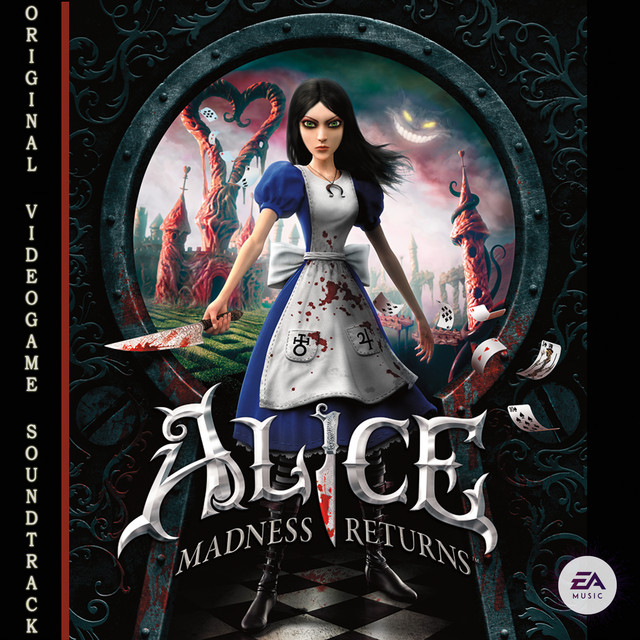
Album Credits
-
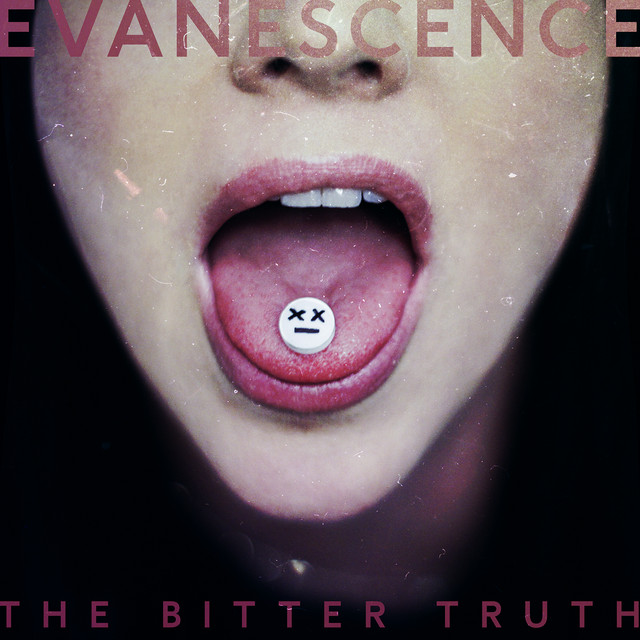
Evanescence · 2021
Programmer -
Evanescence · 2019
Programmer -
Dawn of Ashes · 2013
Mixing Engineer Recording Engineer -
The Birthday Massacre · 2011
Producer -
Slipknot · 2008
Producer -
Chris Vrenna · 2001
Engineer Mixing Engineer Producer


.webp)

.webp)
