Pricing and availability
We compare 600+ stores and found this item at 1 store. Prices updated .


* Product prices and availability are updated by Equipboard every 24hrs and are subject to change. Equipboard may receive compensation for purchases made at participating retailers linked on this site. This compensation does not affect what products or prices are displayed, or the order of prices listed. For more information, please refer to our affiliate disclosure.
Description
ChannelStrip 3 by Metric Halo is the ultimate tool for any musician or producer seeking to refine their sound with precision and ease. This all-in-one channel strip plugin is the culmination of nearly two decades of innovation, featuring a versatile EQ, gate/expander, and compressor—all integrated to provide unparalleled control over your audio.
Designed for both Mac and Windows environments, including Pro Tools 10 and 11, ChannelStrip 3 offers seamless integration into your workflow. Whether you're fine-tuning a vocal track or sculpting the perfect drum sound, the robust set of features ensures that every detail is polished to perfection. The EQ section offers a spectrum of sculpting possibilities, while the gate/expander and compressor modules allow you to manage dynamics with surgical precision.
The interface is intuitive and user-friendly, enabling you to make adjustments swiftly without losing focus on the creative process. ChannelStrip 3 not only enhances your sound but also expands your creative potential, making it an indispensable tool for both novice and seasoned audio engineers.
With Metric Halo's reputation for quality and precision, ChannelStrip 3 is crafted to meet the high standards of professional studios while remaining accessible to indie creators. Transform your audio tracks with clarity and warmth—experience the difference that ChannelStrip 3 can make in your music production.
Key Features:
- All-in-one channel strip plugin with EQ, gate/expander, and compressor
- Compatible with Mac and Windows, including Pro Tools 10 and 11
- Intuitive interface for efficient workflow
- Enhances sound clarity and warmth
- Suitable for both novice and professional audio engineers
Product specs
| Plugin Format | VST, AU, AAX |
| Operating Systems | Mac, Windows |
FAQs
-
Is the Metric Halo ChannelStrip 3 compatible with Pro Tools 11?
-
Yes, the Metric Halo ChannelStrip 3 is compatible with Pro Tools 11, allowing seamless integration into your existing workflow.
-
What new features does the Metric Halo ChannelStrip 3 offer compared to previous versions?
-
The ChannelStrip 3 includes a new user interface, resizable UI options, a built-in limiter, and the "MIO Comp" character from the MIOStrip hardware, enhancing its versatility and usability.
-
Can I use my existing ChannelStrip 2 presets with ChannelStrip 3?
-
Yes, ChannelStrip 3 allows you to open your existing ChannelStrip 2 presets seamlessly, ensuring session compatibility and ease of transition.
-
Does the Metric Halo ChannelStrip 3 include spectrum analysis tools?
-
Yes, it features SpectraFoo spectrum analysis on the EQ and sidechain graphs, providing detailed visual feedback for precise audio adjustments.
-
Is there a sidechain listen feature in the Metric Halo ChannelStrip 3?
-
Yes, the ChannelStrip 3 includes sidechain listen functionality for both the gate and compressor, offering enhanced control over dynamic processing.
Videos

Metric Halo
An Introduction to ChannelStrip 3
An Introduction to ChannelStrip 3
Metric Halo
Favorite Plugin - Metric Halo ChannelStrip 3

StreamLaz
Compressors on Drums | Metric Halo ChannelStrip 3

AntiTeatar Music
Reviews
Owner Insights
We analyzed real musician discussions from forums and Reddit to find what players love, question, and tweak about Metric Halo ChannelStrip 3.
Features and functionality
Comparisons
-
Unlike Metric Halo, FabFilter Pro-Q 3 has a toggle to adjust Q values manually, highlighting their differing design philosophies.
Source -
Brainworx SSL9000J and Amek strips are recommended as alternatives, praised for their sound quality and subtle TMT feature, contrasting with Metric Halo's iLok requirement.
Source
Software and compatibility
User experience
-
Owners highlight that the exact replication of EQ settings across different plugins can be challenging, as each has unique algorithmic responses.
Source -
Metric Halo ChannelStrip 3's visual EQ aids users who prefer visual feedback despite the traditional ear-based mixing approach of channel strips.
Source
Critic Reviews
5.0 out of 5
Based on 1 Review and 3 Ratings

787
AWESOME Compression!
The MH Channel Strip 2 is the best compressor I have when it comes to mixing drums. With barely any tweaking, you can add tons of punch to your drums, especially on kicks and snares. BUT, it isn't always cheap. Wait until it is on sale and pick it up.
Version: Metric Halo ChannelStrip 2Artist usage
Add artist

In this interview Pharrell's engineer Andrew Coleman talks about the plugin he uses including Metric Halo's Channel Strip. "plus plug-ins like Metric Halo's Channel Strip and Waves' Renaissance compressors and the Sony Oxford Compressor — but we know exactly what to expect from each combination."


In this video at 1:37 the protools analysis of her unreleased song "Fantasize" shows the use of this plugin
.jpg?v=1784921365)
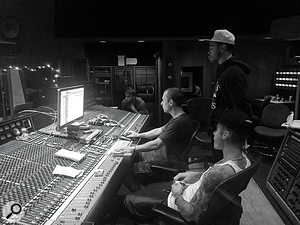
Used on Purpose, as stated by mix engineers Josh Gudwin and Andrew Wuepper in this May 2016 Sound on Sound interview about the mixing of the title track and others.
Gudwin picks out a few other interesting tracks, beginning with a vocal track named ‘vcls’. “That track contains a vocal sample that Blood made of Justin’s vocal. I’m just touching that with the LFO Tool for a bit of pumping, I take out some high frequencies with the Pro-Q 2, and then use the SoundToys Microshift for a slight pitch-shift/chorusing effect. ‘Sry1V’ below that is the vinyl sound in the track. ‘$JBU’ is the main lead vocal bus, on which I have the UAD 1176, Waves De-Esser, Manley Massive Passive, Metric Halo Channel Strip. The sends are to the generic aux tracks at the bottom of the sesion: verb, ping-pong delay, Dimension D. Below the lead vocal bus is the print track of a Bricasti outboard.”
Wuepper: “There are two tracks called ‘Bric’ around the main vocal bus; the one above is the print from the Bricasti effect that was used on the percussion, and the one below is the print of the Bricasti reverb on the vocal. Next are Josh’s vocal delays. Putting delays on audio snippets [ie. copying short vocal clips to new tracks and applying delays as inserts, rather than automating a send from the main vocal track] is a pretty interesting way of doing things. I’ve not seen anyone else do this, but it makes it easier for Josh to manipulate these delays and to go deeper into the effect. He can really fine tune the delay times and decay lengths and so on. Sometimes the feedback you get with plug-ins can act a little weird, and this approach allows him to have more control.”
Gudwin: “The five green tracks are all vocal throws and delays. I don’t like to automate delay throws via aux tracks. The top green track is the master track for the delays, ‘JB Throw All’, and it has a compressor and an SPL Vitalizer. The ‘1147’ delay track has the UAD Cooper Time Cube, with a quick ping-pong-y flutter delay that I use to widen, and the track called ‘1167’ has a basic eighth-note delay from the Echo Boy. The ‘A’ insert is Auto-Tune, but it’s not working on these tracks. When needed, our vocal tuning is normally done by Chris ‘Tek’ O’Ryan in Melodyne. I sometimes do it myself, if I have the time do it, in the stand-alone version.
“The blue vocal tracks below the vocal delay tracks are the main lead vocal comp tracks, and on many of them I have the UAD SSL Channel Strip, UAD LA-2A, and the Waves C6 multiband compressor, and sometimes also the Pro-Q 2 EQ. The ‘DLYP’ track has a delay pan effect, with the SoundToys Primal Tap delay and Panman auto-panner, SSL Channel Strip and the P&M Vinylizer. ‘White’ and ‘Master’ are printed reverbs recorded in two rooms at Henson. They are my main plug-in vocal reverbs, and the green tracks below are pitched with the Elastic Audio X-Form [in Pro Tools] and effected with the Waves H-Compressor for a pumping effect. I pitched the reverbs up an octave or two, and I mixed them in very low. The ‘PCM’ and ‘PC1’ tracks are prints from ping-pong delays from the Lexicon PCM42 outboard.
“Justin’s backing vocal tracks all go to the group track called ‘JBG1’, on which I have a Waves De-esser, an SSL Channel and the C6 multiband compressor, plus there are a number of delays and reverbs via the sends. Trevon’s backing vocals all go to ‘JBTR’, which has similar effects. I wanted to fill the song up a bit more, and sometimes it’s not the most enjoyable process for an artist to sing all these background parts. Plus a different vocalist will add a different texture to the song, as long as it complements the lead vocal and the record. As I mentioned, Julia added her vocals during the final mix in New York, and her group track also has the De-esser, SSl Channel and C6. Right at the bottom are some effects tracks, with the Dimension D and group delay throws, and so on.
(...) 'Love Yourself'
(...) Next are Justin’s vocals, with I overdubbed in New York. Almost all the regular vocal tracks have the UAD SSL Channel, LA2 and the Waves C6 multiband compressor. These three plug-ins work great on his vocals, so I tend to stick with them. Each of the vocal tracks has slightly different settings from them. They all go to Justin’s lead vocal bus above them, which has the FabFilter Pro-DS de-esser and the Pro-2 EQ. Justin’s lead vocals also go through the Bricasti, and the effect is printed. My own four backing vocals went through a vocal bus on which I had the SSL Channel, and a compressor, but they didn’t do much, nor did the sends. These vocals are very much in the background, I just wanted to add some texture really quickly. Finally, at the top of the session everything went through a Master track, on which I had the UAD SSL channel, mainly for compression set to mid-attack and auto-release — without drums you don’t need the slow attack and quick release — a Massey EQ, boosting 100Hz and 16kHz, a FabFilter Pro-L for level, and the Sonnox Oxford Inflator to add some sheen.”
'What Do You Mean?'
(...) “There were a few more complicated vocal effects, like the ‘JG FX’ track, on which I used the Vitalizer doing some spatial expanding, a UAD Fatso to thicken it up, and I then cut some low mids with an EQ, and used a de-esser. This effect track gave more depth to the vocal and made him sound more like an angel! Underneath that are two ‘Radio’ tracks [which sound like they could have come straight from Peter Gabriel’s ’80s Fairlight experiments]. I used Auto-Tune to pitch the vocals up, and then put on a SoundToys AlterBoy, which changed the formant, and then I’m filtering 350Hz and below.
“Below the ‘radio’ tracks are all my vocal delay tracks, in green as usual, with the bus for all delay throws at the top. One delay track, ‘Splaater’, is a flutter delay with Auto-Tune and the Cooper Time Cube, and the other two have the Waves H-Delay and SoundToys Echo Boy. They’re both quarter-note delays, but with different feels. Below the delay tracks are some ad lib tracks, and all the actual lead vocals, pulled out over several tracks. Most of them have my regular trio of UAD SSL Channel, LA2 and Waves C6 plug-ins, and all vocals are sent to the ‘JB Buss’, on which I have the FabFilter DS de-esser, a Manley EQ doing light cuts at 330Hz, 560Hz and 3kHz, and then a whole bunch of sends to my regular aux tracks at the bottom: a hall reverb, a plate reverb, a light quarter-inch delay, a light ping-pong delay and a Dimension D.
“Further down are four Justin backing vocal tracks, which go to a bus above them, ‘JBG1’, on which I have the SSL Channel, boosting highs and cutting lows and doing some heavy compression, a UAD 33609 compressor, and then the Waves Enigma [phaser/flanger] on a Mutron setting, adding some sweeping sounds. The sends are once again hall and plate reverbs, a quarter-note and a ping-pong delay and a UAD Roland Dimension D. Once Justin had decided to go with my rough mix, I spent another half hour on it, doing some EQ adjustments, and that was it.”


In this interview, Benny says "I will use the same plug-ins I told you about before, and things like the [Metric Halo] Channel Strip for my EQ"


Rihanna's engineer stated, "The Metric Halo ChannelStrip 3 has dynamics and an EQ section. In the early days when plug-ins weren't so DSP efficient, it was handy to have all-in-one plug-ins. The Metric Halo was modelled after the SSL, and before the Waves SSL bundle came out I used it to imitate the sound of an SSL. Here it gives the bass more roundness; the EQ is the main part I used. I added a bit of 2.2kHz, 315Hz and 80Hz," according to Sound On Sound's article "Inside Track: Rihanna 'SOS' & 'Unfaithful'."


Metric Halo Channel Strip was used to make what Chris describes as “a baby guitar.”
It’s my favorite effect. I love that plug-in. It does ‘radio EQ’ better than anything else.


Used for vocals on "Say So", as stated by mix engineer Clint Gibbs in this July 2020 Sound on Sound interview. An image of the settings can be found here.
"All vocal audio tracks have the same signal path: Metric Halo Channel Strip 3, Avid Bomb Factory BF-76, Avid Dyn-3 De-Esser and in the case of the lead vocals, the FabFilter Pro‑Q 3, all on the inserts, plus sends to the quarter- and eighth–note delays and reverb. These are all part of the recording template, and came from Kalani. I am familiar with the settings, because I worked on them, so I didn't change them. The Metric Halo is doing a high-pass, the BF-76 has all buttons in to give it that pop vocal sound. I added the Q 3, cutting 1dB at 279Hz and at 740Hz. I like to do tons of minimal EQ cuts with many plug‑ins.
"The lead vocal audio tracks also have a send called Voc SC, which goes to the side-chain input of the Waves F6 on the Keys bus. It helps make a little extra pocket for the vocal. It creates dynamic dips in the 900Hz and 2kHz range when she is singing. I also have this F6 on the 808 bus of the remix, doing the same thing. All lead vocal audio tracks go to the LD Vocal aux, which has another instance of the Q 3, taking out quite a bit of low end to make space for the bass, and the McDSP AE600 dynamic EQ, taking out problem areas only when they occur. I do a lot of vocal riding on the lead vocal bus, pushing up specific syllables.
"There's also a track called Echo FX Clean. When I have to mute a word, I will take the word before it and will delay it with some reverb to fill the empty space. The additional plug‑in by Vengeance, the VPS philta XL filter, is doing a high and a low cut to give it more of that radio sound. The other vocal tracks are treated in similar ways as the lead vocals, though the BG2 bus has the Valhalla Vintage Verb, with a 2.4s reverb, Mix at 18 percent. I think that came from Kalani, but I added the FabFilter Pro‑DS, because I wanted to take the 's' frequency out of the reverb. All vocals go to the Vocals bus, which has the UAD 1176, switched off, and the JSTClip for some level boosting. The Vocal Rear track is the parallel, with -20dB compression on the 1176. This is where I get my vocal loudness from.

Used for Minaj's feature on Doja Cat's "Say So" remix, as stated by mix engineer Clint Gibbs in this July 2020 Sound on Sound interview.
"All vocal audio tracks have the same signal path: Metric Halo Channel Strip 3, Avid Bomb Factory BF-76, Avid Dyn-3 De-Esser and in the case of the lead vocals, the FabFilter Pro‑Q 3, all on the inserts, plus sends to the quarter- and eighth–note delays and reverb. These are all part of the recording template, and came from Kalani. I am familiar with the settings, because I worked on them, so I didn't change them. The Metric Halo is doing a high-pass, the BF-76 has all buttons in to give it that pop vocal sound. I added the Q 3, cutting 1dB at 279Hz and at 740Hz. I like to do tons of minimal EQ cuts with many plug‑ins.
"The lead vocal audio tracks also have a send called Voc SC, which goes to the side-chain input of the Waves F6 on the Keys bus. It helps make a little extra pocket for the vocal. It creates dynamic dips in the 900Hz and 2kHz range when she is singing. I also have this F6 on the 808 bus of the remix, doing the same thing. All lead vocal audio tracks go to the LD Vocal aux, which has another instance of the Q 3, taking out quite a bit of low end to make space for the bass, and the McDSP AE600 dynamic EQ, taking out problem areas only when they occur. I do a lot of vocal riding on the lead vocal bus, pushing up specific syllables.
"There's also a track called Echo FX Clean. When I have to mute a word, I will take the word before it and will delay it with some reverb to fill the empty space. The additional plug‑in by Vengeance, the VPS philta XL filter, is doing a high and a low cut to give it more of that radio sound. The other vocal tracks are treated in similar ways as the lead vocals, though the BG2 bus has the Valhalla Vintage Verb, with a 2.4s reverb, Mix at 18 percent. I think that came from Kalani, but I added the FabFilter Pro‑DS, because I wanted to take the 's' frequency out of the reverb. All vocals go to the Vocals bus, which has the UAD 1176, switched off, and the JSTClip for some level boosting. The Vocal Rear track is the parallel, with -20dB compression on the 1176. This is where I get my vocal loudness from.
(...) "The Nicki Minaj remix happened very last minute. I got a text from her engineer, Aubry 'Big Juice' Delaine, saying, 'Here's a link for Nicki's vocals.' I opened it up and realised they were for 'Say So'. So I hit up the label and they confirmed that we were doing a remix. As I was mixing, I was getting updated versions of the vocals, verses, and so on. We did the mix, got it mastered, it was all approved, and the day before the remix was supposed to come out, someone wanted to change the beat underneath her vocals. All of a sudden there was an emergency!
"I got an email from Tyson Trax, saying: 'Here are the new beat stems for Nicki.' Among other things they contained some heavy 808s. I had an hour to mix in these new beat stems, because the remix was supposed to be released in Australia a few hours later. I pasted these new beats in just above the vocal VCA of the original session, and in Nicki Minaj's first verse I deactivated the clips from the original beat files for this section. But because the original did not have 808s, they killed my mix bus. I had to automate a new limiter during this part of the remix.
"I put Nicki's vocal at the bottom of the session, and just needed to pair them with the track. I added all plug‑ins on her vocals that you see in the session, but I did not need to do much, because the processed stems Big Juice sent me sounded great! The SoundToys Little Radiator adds a little warmth, and the Metric Halo Channel Strip boosts some top end while also cutting some low end. There are two Waves C6 plug‑ins dynamically suppressing 177Hz and 700Hz, with a -6dB range. There was some build-up in those frequencies that didn't work with the mix. On the inserts of the individual vocal tracks there also is a Waves Q8 doing two sharp 4-6 dB cuts at 10kHz and 11kHz, which was to tame some 's' harshness.
"One of the 808 audio tracks has the FabFilter Pro‑Q 2, with a high pass at 20Hz and a cut around 40Hz, and the Oeksound Soothe on a 'melodic bass control' setting. On the 808s aux bus and 808 parallel bus I have the FabFilter Saturn, Timeless, and the Waves F6. These 808 buses obviously were added for the remix. My approach with them was similar to that of the bass aux. The Saturn is only active on the parallel track, and is a bit dirtier on the 808 than on the bass. The F6 is side-chained to the vocal to suppress the mids of the 808 while Nicki is rapping. The Timeless also is only active on the parallel track, and adds a light chorus that spreads the 808 out slightly."


Used for vocals on "Gum Body", as stated by mix engineer Jesse Ray Ernster in this June 12, 2020 MusicTech interview. An image of the settings for the "Lead Vox" channel can be found here.
BURNA’S VOCAL: “A big part of the job of a mixer is knowing when not to change things,” insists Ernster, “Burna’s vocal usually doesn’t require much work, and this song was no exception! His vocal stem arrived with all processing and effects printed into the track, and it sounded identical to the approved reference mix that he had grown accustomed to hearing, so my job was to enhance subtly, without changing the vibe too much!”
The first plug-in on the vocal chain was the Metric Halo Transient Control, with the sustain knob turned down to tame some of the effects and cut down room reverberation that had bled into the microphone, for a closer, more up-front vocal. Next, Ernster deployed the trusty bx_SSL E channel plug-in to boost 4.3khz and 13.5khz to help emphasize some of the consonants of Burna’s vocal, for better intelligibility.
Not one to believe in magic frequencies, Ernster’s technique is to “sweep around until the sound feels better to my ears.” Liking where the vocal was sitting against the track, but with certain phrases poking out unevenly, Ernster reached for a compressor. But his favourites – Rev E 1176, CLA-76 – all altered the ratio between vocals and effects too much, making the voice sound washed out. “I ended up rolling with a combo of clip-gain automation and some subtle compression on the Metric Halo Channel Strip. That glued the vocal into place without changing the character that we all loved from the reference mix.”
“After that, I used an instance of Soothe to tame a few whistley resonances that were poking through and causing harshness at 2.9khz and 5.3khz. The final step in the vocal processing sees the Acustica Amber3 (which emulates the Avalon AD2055) boosted at 25khz for some “silky air”. “I usually reach for the Crane Song Phoenix as a final touch to pull a bit of grit forward, and in this scenario, I used the Luster/Sapphire setting with a 68% mix. Finally, I used a FabFilter ProQ3 to cut 0.73dB at 490hz to dial back a resonance.”
VOCAL FX & DEPTH: “Lately, I’ve been focusing on depth within my mixes,” says Ernster. “It’s crucial to me that the singer is glued into a similar sonic environment as the rest of the arrangement.”
“I sent Burna’s vocal to a series of effects busses that I used to fuse the vocal into the metaphorical space of the song. On this song, I used a few different simple Waves H-Delay tracks set at 1/2, 1/4, 1/8th, 1/16th note, and a quick slap setting. All of these fed into reverb tracks with Revibe II, Valhalla VintageVerb (Dirty Plate), and Lexicon Medium Hall. I adjusted the blend of these multiple effects auxes until the blend felt glued, but also still similar enough to the reference mix – just better and deeper.”
Album Usage
The Metric Halo ChannelStrip 3 has been featured on the following albums:

![Metric Halo ChannelStrip 3 as heard on SOS [Nevins Electrotek (Club)] by Rihanna (2006)](https://images.equipboard.com/uploads/album/image/293608/sos-nevins-electrotek-club.jpg)
Genre Usage
Based on how artists on Equipboard use this gear, it is most commonly found in the following genres.
Used With
Based on how musicians on Equipboard use Metric Halo ChannelStrip 3, it is most commonly used with the following gear.

-s.webp?v=1784988158)




More Channel Strip Plugins

$37.00 - $149.00
in Channel Strip Plugins Rank


.jpg?v=1784894312)

$37.00 - $40.00
in Channel Strip Plugins Rank


$79.00 - $399.00
in Channel Strip Plugins Rank


$33.00 - $34.99
in Channel Strip Plugins Rank


$37.00 - $39.99
in Channel Strip Plugins Rank


$90.00 - $249.00
in Channel Strip Plugins Rank


$33.00 - $34.99
in Channel Strip Plugins Rank


$39.99 - $40.00
in Channel Strip Plugins Rank


$47.00 - $49.99
in Channel Strip Plugins Rank


$37.00 - $40.00
in Channel Strip Plugins Rank


$37.00 - $40.00
in Channel Strip Plugins Rank

$37.00 - $40.00
in Channel Strip Plugins Rank

$37.00 - $39.00
in Channel Strip Plugins Rank


$99.00 - $169.00
in Channel Strip Plugins Rank


$37.00 - $79.00
in Channel Strip Plugins Rank


$99.00 - $199.99
in Channel Strip Plugins Rank

$37.00 - $39.99
in Channel Strip Plugins Rank


$19.99 - $159.00
in Channel Strip Plugins Rank

$18.90 - $20.00
in Channel Strip Plugins Rank


$37.00 - $39.99
in Channel Strip Plugins Rank

$39.00 - $149.00
in Channel Strip Plugins Rank


$33.00 - $34.99
in Channel Strip Plugins Rank


$29.99 - $34.99
in Channel Strip Plugins Rank


$29.99 - $34.99
in Channel Strip Plugins Rank


$181.00 - $199.00
in Channel Strip Plugins Rank

$37.00 - $40.00
in Channel Strip Plugins Rank

$149.00 - $162.00
in Channel Strip Plugins Rank

$29.99 - $34.99
in Channel Strip Plugins Rank


$74.25 - $99.00
in Channel Strip Plugins Rank

$94.00 - $99.00
in Channel Strip Plugins Rank

$49.00
in Channel Strip Plugins Rank


$37.00 - $99.00
in Channel Strip Plugins Rank


$94.00 - $99.00
in Channel Strip Plugins Rank


$39.00
in Channel Strip Plugins Rank
Community setups


Similar


Gear Guides







Most Popular Channel Strip Plugins
Most Popular Brands
-
Added to Equipboard on by
 trakatiks
GearIQ 424
-