
Pricing and availability


* Product prices and availability are updated by Equipboard every 24hrs and are subject to change. Equipboard may receive compensation for purchases made at participating retailers linked on this site. This compensation does not affect what products or prices are displayed, or the order of prices listed. For more information, please refer to our affiliate disclosure.
Description
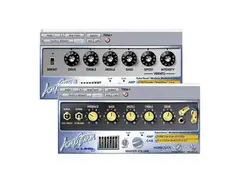
Unleash your sonic creativity with the Line 6 Amp Farm, a powerhouse amp simulator plugin that's been a staple in the audio production world for over two decades. This versatile tool allows you to emulate the sound of a fully miked guitar amp and cabinet right inside your DAW, transforming your recording sessions with its vast array of options. From studio legends like Fender, Marshall, and Vox, the Amp Farm offers more than a dozen meticulously modeled amp heads and combos to craft your ideal tone.
Amp Farm is not just for guitarists—it's a creative canvas for all your audio tracks, breathing life into drums, keyboards, and vocals with its dynamic distortion and tube warmth. The software supports up to a 192kHz sample rate, ensuring unparalleled audio quality that stands up to the demands of modern production. With 48 cab simulations and four microphone setups, you can mix and match components for a custom sound palette, whether you're live-tracking or perfecting pre-recorded mixes.
Compatible with any 64-bit DAW that supports AU, VST, or AAX formats, Amp Farm 4.0 integrates seamlessly into your workflow, offering full programmability and automation for ultimate control. Whether you're crafting platinum albums or scoring cinematic soundtracks, Amp Farm is the industry standard for authentic amp modeling.
Key Features:
- Over a dozen re-creations of world-class amp heads and combos
- 48 cabinet simulations with four microphone setups
- Mix and match amps and cabinets for diverse soundscapes
- Process live inputs or refine pre-recorded tracks
- Fully programmable and automatable
- Adds tube warmth and dynamic distortion to any audio
- Supports up to 192kHz sample rates
- Compatible with AU, VST, AAX (64-bit only) formats


Reviews
Owner Insights
We analyzed real musician discussions from forums and Reddit to find what players love, question, and tweak about Line 6 Amp Farm.
Software and compatibility
-
It's possible to download Amp Farm from the Line 6 website by leaving hardware and OS fields blank; licensing requirements may vary based on account history.
Source
Comparisons
-
Pod Farm, an alternative to Amp Farm, can be accessed through second-hand Line 6 UX1 or UX2 interfaces, with prices starting around £20 on secondary markets.
Source
Use cases and applications
-
Some users find Amp Farm's simplicity and sound quality preferable over newer, feature-rich alternatives like Helix or Amplitube, especially for straightforward amp simulation needs.
Source
3.0 out of 5
Based on 1 Review and 1 Rating

41028
not terrible
these old amp models hold up okay. Amp farm uses the same simulations as the early pods but they use your converters and processor if you have nice stuff going into your computer these can sound pretty decent versus a pre-HD pod.... also excellent sources other than guitar.
Artist usage
Add artist

In this interview with Guitarist magazine from September 05, 2014, Bradfield discussed his Mosrite Ventures guitar. "I tend to use Line 6’s Amp Farm with this one," he said. "I do that quite a lot to be honest, to get the best tone."

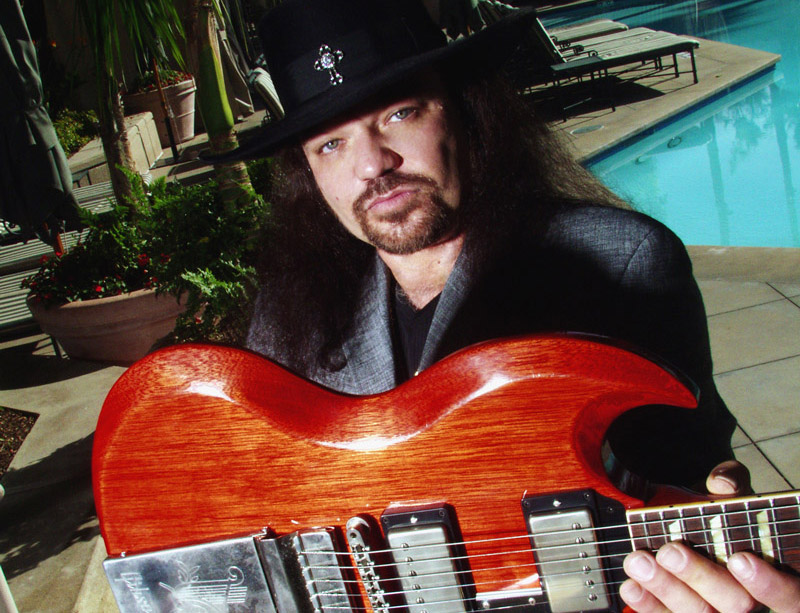
We also used Line 6 Amp Farm [software] in the studio, which sound like just about any kind of amp.


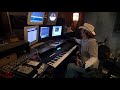
Things are very organized around Vrenna’s studio. All the essential hardware and synths are within reach, and the drum room is just around the corner. At the center of the studio is the essential Pro Tools rig stocked with four 888 A-D converters and multiple Line 6 Amp Farm cards—all running through a 933mHz Power Mac G4 tower. “I’m getting another Mix Farm in there soon because I’m doing everything else via FireWire,” he says.


From the "Tech Talk" section of the old KMFDM website:
Question (Sean): I was wondering how you guys track your vocals and what equipment you use to put the distortion effects on them?
Answer (Sascha): The vocals are recorded once there is some semblance of an arrangement of a new song. Often, while we record the vocals new ideas come up that will then force the track to be re-arranged. The distortion varies, but more often than not I use the Ampfarm plug-in. It's by far the best sounding smooth distortion available. Another way I do it, is to re-amp the vocals and record them onto a cassette tape, with Dolby noise reduction on. Then I play back the tape with Dolby noise reduction off and re-record it into Pro Tools. Various degrees of realy nice sounding distortion can be achieved that way.

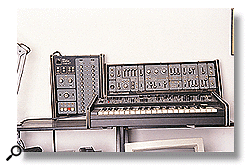
"I hardly ever use any outboard gear now. I've got an old Yamaha REV7 which I like and an Alesis Quadraverb, but everything else is a plug-in. I'm a big fan of Line 6's Amp Farm, and all the plug-ins which simulate the analogue world, funnily enough. This has given synthetic sounds a new lease of life. A synth can sound like something which has been miked up through a cabinet, for example. You can use so many multiple effects on the same sounds, and mutate sound sources so much, that I can't imagine ever going back to the way things were before. The snobbery about plug-ins is that so many dance records just use them for ear candy and don't really explore the possibilities, but they are the most sophisticated and creative thing to happen to modern music since the first synthesizers appeared. You can try things on Amp Farm which took hours to do with a mic and a cabinet."


"That's a part that was originally a vocal melody, but I didn't like it as a vocal, so I used it for an instrumental part instead. I'm playing it really fast -- like a mandolin. In the left speaker, I overdubbed a part that hits one note through the entire chord progression. The guitars ran through the Amp Farm -- I think we used the Vox AC30 model."


"“That existed until I hooked up with Line 6. Remember when Amp Farm came out? I beta-tested the software. They brought over the very first Flextone and said, ‘Check this out; it’s like your Deluxes.’ I played it and said, ‘Well, yeah, it sounds real good, but I can’t tell if it’s like my Deluxes.’ I A/B’ed it with my Deluxes, but they were hyped up, different amps. I think of it as cloning, so I asked them to get me the amp that was the mother of this amp, the one they cloned it from. They brought over this pre-CBS blackface, and I A/B’ed the mother, the organic clone, and the software clone. I recorded an instrumental on all three amps, and had the engineer switch between the three without me looking, to see if I could pick out which one was which. I could always tell which one was the organic amplifer; there was something missing. But between the mother amp and the software, I could not tell the difference. So I figured, I’m not stupid; I’ll just start using the software. So I started recording in Amp Farm."

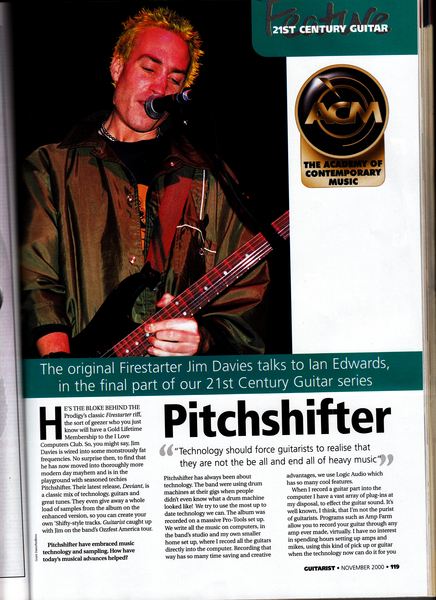
Mentioned in this November 2000 Guitarist interview.
When I record a guitar part into the computer I have a vast array of plug-ins at my disposal, to effect the guitar sound. It's well known, I think, that I'm not the purist of guitarists. Programs such as Amp Farm allow you to record your guitar through any amp ever made, virtually. I have no interest in spending hours setting up amps and mikes, using this kind of pick up or guitar when the technology now can do it for you in seconds. I'm sure some guitarists think that it's a total cop-out, but to me it's just the next logical step.

Genre Usage
Based on how artists on Equipboard use this gear, it is most commonly found in the following genres.
Used With
Based on how musicians on Equipboard use Line 6 Amp Farm, it is most commonly used with the following gear.


-s.webp?v=1784790553)



More Line 6 Amp Simulator Plugins

$399.99
in Amp Simulator Plugins Rank


$199.00 - $219.00
in Amp Simulator Plugins Rank


$199.99 - $479.98
in Amp Simulator Plugins Rank


$33.00 - $34.99
in Amp Simulator Plugins Rank


$49.00 - $99.00
in Amp Simulator Plugins Rank


$0.00
in Amp Simulator Plugins Rank


$199.99
in Amp Simulator Plugins Rank


$105.00 - $299.99
in Amp Simulator Plugins Rank


$39.99 - $75.00
in Amp Simulator Plugins Rank

$161.00 - $299.00
in Amp Simulator Plugins Rank

$53.00 - $299.00
in Amp Simulator Plugins Rank


$95.00 - $99.00
in Amp Simulator Plugins Rank

$0.00
in Amp Simulator Plugins Rank

$450.00
in Amp Simulator Plugins Rank


in Amp Simulator Plugins Rank


$33.00 - $35.99
in Amp Simulator Plugins Rank

$69.00 - $1,649.99
in Amp Simulator Plugins Rank

$43.00 - $49.00
in Amp Simulator Plugins Rank

$39.99
in Amp Simulator Plugins Rank


$49.00 - $329.00
in Amp Simulator Plugins Rank

$29.00 - $399.00
in Amp Simulator Plugins Rank
.jpg?v=1784685191)

$43.00 - $49.00
in Amp Simulator Plugins Rank

$29.99 - $34.99
in Amp Simulator Plugins Rank


$144.00
in Amp Simulator Plugins Rank


$105.00
in Amp Simulator Plugins Rank


$91.00 - $99.00
in Amp Simulator Plugins Rank

$39.99 - $75.00
in Amp Simulator Plugins Rank

$39.00 - $99.00
in Amp Simulator Plugins Rank

$29.99 - $1,289.99
in Amp Simulator Plugins Rank


$99.00
in Amp Simulator Plugins Rank

$29.99 - $75.00
in Amp Simulator Plugins Rank

in Amp Simulator Plugins Rank


Accessories & Related Items


Community setups


Similar


Gear Guides






Most Popular Amp Simulator Plugins
Most Popular Brands
-
Added to Equipboard on by
 nikfarr
GearIQ 15320
-


