Four Tet
Role
Genre
Group
Role
Genre
Group
Four Tet's Gear


Visible in this photo from this August 2021 Sound on Sound interview.
Find it on:





A Launchpad Mini is visible in the video at 0:57. The red & white logo at the bottom identifies it as the original Mini, not a Mini mk2 (which has an all white logo) or mk3 (which has no logo there).
Find it on:

Visible in this photo from this August 2021 Sound on Sound interview.
Find it on:


Pro Audio 9 is mentioned in this July 2003 Sound on Sound interview.
Hebden's main tool for creating and manipulating sounds is Ross Bencina's cult shareware program Audiomulch, an idiosyncratic modular virtual studio package for PC platforms which is downloadable from www.audiomulch.com. He also uses Syntrillium's Cool EditPro to chop up and trim audio, before assembling the results in Cakewalk's Pro Audio 9.
(...) "To get the right feel of the beat and to get the basic loop working right, I use Audiomulch loads, but then I transfer everything over into Cakewalk, and then I start chopping it up, and then I start making all the variations in the drums. I usually take a whole bar or so from a record, and then start to add other sounds to it to get the sound I want. If the bass drum's not quite right I might get that and I might add other sounds to that, or if there's a bit I don't like in the drum loop I might chop it out and replace it with something else. It's often the case that my drum loops may be a combination of two or three drum loops from something else."
Find it on:

At 1:25 in this YouTube video (Episode 19 of the "Beat This" series), you can see a pair of KRK ROKIT 6 monitors positioned on the table behind Four Tet's laptop.
Find it on:

Four Tet demonstrates his use of the Pioneer DJM-900 Nexus during his live sets at 2:21 of this YouTube video from the Red Bull Music Academy New York 2013 series.
Find it on:

At 0:33 in this YouTube video (How I PLAY: Four Tet's MODEL 1 LIVE DJ Set-Up), Four Tet is going over the channels of his setup.
Find it on:

Visible in this photo from this August 2021 Sound on Sound interview.
Find it on:

In a 2011 photo shared by Four Tet on Instagram, the Pro-Ject Debut III turntable is visible in his studio. This is the space where he created "Locked" and collaborated with Burial on "Nova."
Find it on:


Visible in this October 25, 2017 Instagram post.
Find it on:


Mentioned in this July 2003 Sound on Sound interview.
Hebden's approach to working with computers is very much based on destructive processing and manual editing, and he tends not to use plug-in effects: "I only use about two plug-ins. I use the TC Native EQ and the Waves C1 compressor quite a lot, and some reverbs, but not much. Everyone's records end up sounding the same, so I really haven't explored plug-ins at all."
Find it on:
-m.webp?v=1783177050)
At 6:29 the NS-10M can be seen at the backround.
Find it on:


At 1:00 (and throughout), you can see the UC-33 to the right of Four Tet's signature SP-303.
Find it on:

At 2:45 of Streaming from Isolation set, Four Tet hovers over his modular gear and additional FX, positioned to the right of his standard Pioneer CDJ setup.
Find it on:


In a YouTube video uploaded by Four Tet, the artist is seen using the E&S DJR 400 mixer throughout the entire performance.
Find it on:

Visible in this photo from this August 2021 Sound on Sound interview.
Find it on:


Per this photo from an October 27, 2017 feature for Noisegate one of Kieran's studio spaces features Mackie MR5 MK2s. Full credit to EB member @pablot for finding this article.
Find it on:

Visible in this photo from this August 2021 Sound on Sound interview.
Find it on:


Visible in this April 21, 2018 Instagram post and this photo from this August 2021 Sound on Sound interview.
Find it on:

Visible in this April 21, 2018 Instagram post and this photo from this August 2021 Sound on Sound interview.
Find it on:

Visible in this photo from this August 2021 Sound on Sound interview.
Find it on:

Visible in this photo from this August 2021 Sound on Sound interview.
Find it on:

Mentioned in this July 2003 Sound on Sound interview.
"I've got two laptops for live use. They each run different programs, and I've got a Pioneer DJM600 DJ mixer, which has got a sampler on it as well, and effects and things. On one of the computers I run Audiomulch. I use that to run a lot of the drum sequences, but the thing about Audiomulch is that you can set up any sort of studio situation you want, so I might have a channel running and it's got like a programmed drum sequence from one of my tracks, but it's going into a mixer, and also running through a couple of granulators, and stuff like that, and I've got faders on them so I can bring in all these mad glitchy sounds.
"On the other computer I just run two or three instances of Cool Edit. You can play Cool Edit a bit like a musical instrument if you put it on a loop setting — you can grab little bits of the file and loop them, so all the melodies and main parts from the album I just have on loops, and I can kind of play them. Stuff can be going in time and I can be manipulating it with one computer, and then I can play all the noises and melodies over the top. No two shows are ever remotely the same, they're all totally different, and sometimes even I'm completely surprised at what ends up coming out. I've got the sampler on the mixer, and if something good's going on, I can take a sample of it and keep it looping and then start doing other variations at the same time. So, effectively I've got three things going on at the same time, all with different possibilities."
Find it on:

Mentioned in this July 2003 Sound on Sound interview.
When it comes to computer hardware, Hebden's requirements are fairly conventional. "I put the computers together myself, and buy in exactly the bits that I want. I need really fast hard drives to do as much audio as possible, and I don't put loads of other crap in them. PCs are much cheaper than Macs and you can build them yourself. You can exploit a PC in so many more exciting ways — you can get a lot more interesting free software, and you get a lot more control over what you're doing. I've got a Soundblaster Live soundcard in the PC, and I'm getting better sound these days because I don't have to use the sound outputs from the computer any more, I just run the optical cable from the computer into the DAT machine, and then always listen through the converters on the DAT machine, which sounds better. I don't bother having any compressors or EQ here, because when I get to the mastering stage, they're always going to have better shit at the mastering place than I can afford. Having said that, on my last album we didn't change anything much, we probably added a very little bit of treble here or there, but otherwise the sound on the record is pretty much identical to the sound of the finished product in here."
Find it on:

At 0:20 (and throughout) you can see the soundcard above the SoundBITE Pro DJ Loop.
Find it on:

Visible in this April 21, 2018 Instagram post and this photo from this August 2021 Sound on Sound interview.
Find it on:
This is a community-built gear list for Four Tet.
- Find relevant music gear like Studio Equipment, Software Plugins and VSTs, Headphones, DJ Setup, and other instruments and add it to Four Tet.
- The best places to look for gear usage are typically on the artist's social media, YouTube, live performance images, and interviews.
- To receive email updates when Four Tet is seen with new gear, follow the artist.
Discography
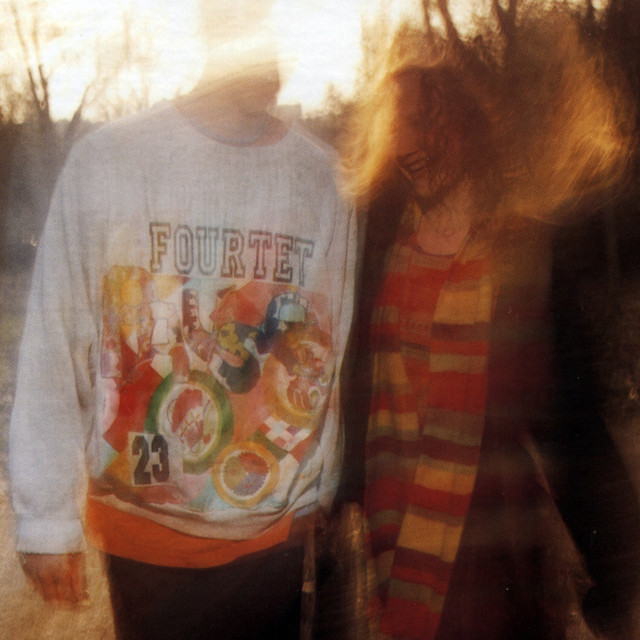
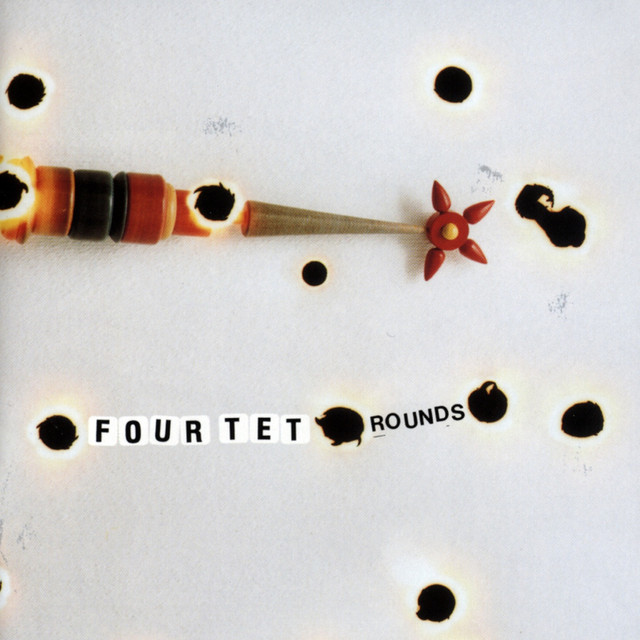
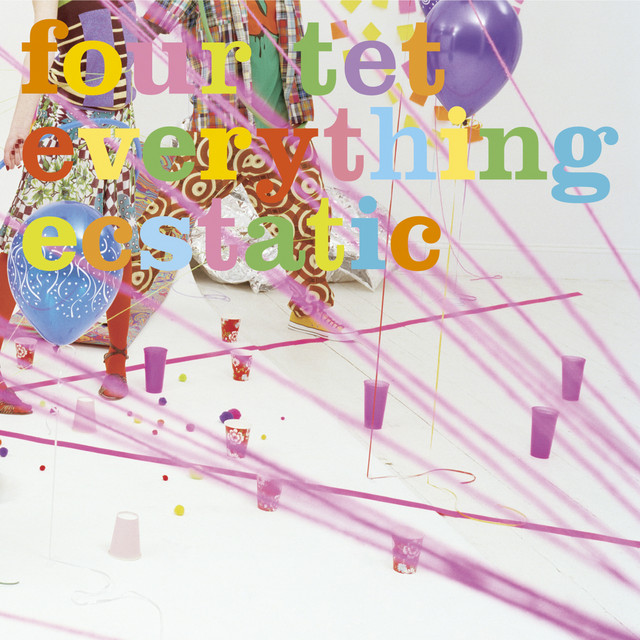
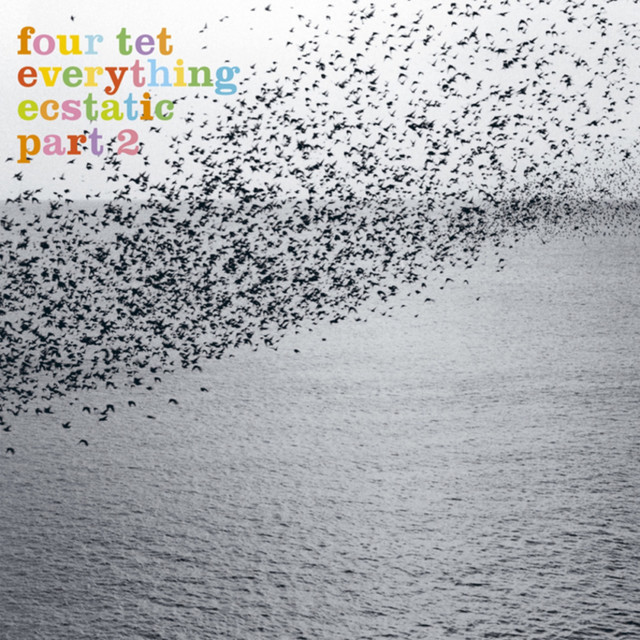
Album Credits
-
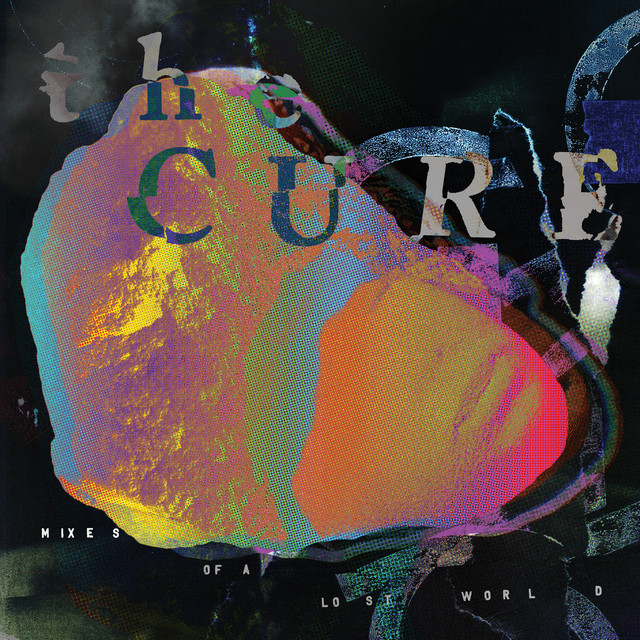
The Cure · 2025
Mixing Engineer -
The Cure · 2025
Mixing Engineer -
Fred again.. · 2025
Producer Programmer -
Skrillex & Four Tet & Sonny Moore & Fred again.. · 2023
Producer Programmer -
Skrillex & Sonny Moore · 2023
Mixing Engineer Producer Programmer -
Baby Keem & Fred again.. · 2023
Producer -
Fred again.. · 2022
Producer -
Burial & Four Tet · 2022
Producer -
Madlib · 2021
Mastering Engineer -
Skrillex & Four Tet & Sonny Moore · 2021
Mixing Engineer Producer Programmer -
Thom Yorke & Burial & Four Tet · 2020
Producer -
Four Tet · 2017
Producer