
Graham Massey
Genre
Group
Credits
Genre
Group
Credits
Graham Massey's Studio Equipment


"Mostly it's a 303 put through a [Yamaha] SPX-90 pitch changer so that it sounds really ugly."
Find it on:


"It was the sort of vibe we wanted to capture for 'Pacific State', so we sampled up some chords on a Juno 106 — when you put the chorus on it and put on loads of filter so that it's quite muted, you get that warm atmosphere, and we sampled that into a Casio FZ1 keyboard as a chord: one note on the keyboard would play that chord, and the same chord was played on a Roland D50 using the 'warm strings' preset. The pad sound was therefore a combination of those two things layered, with some additional filtering on the FZ1."
Find it on:

"The drums on 'Pacific State' were actually from a 909, not an 808, and the clap pattern's quite important on it. It's pretty unusual. Also, to add to the sort of tropical nature of things, we added the bird sound from the Akai library that came with the S900. It's called 'Canadian Loon'. Then the track hung about for a fairly long time until the 101 bass line added a nice feel.”
Find it on:

"The texture of the drum machines on it is a combination of a (Roland) 606, which was a crisp and dry drum machine. The 606 appears quite a lot on Ninety. It's got that biscuit tin quality in the snare."
Find it on:

"Back then we had the multi-track tape, and we'd try to fit an album on one roll. We had a bit of tape left at the end of recording this album, so we multi-tracked a load of [Roland] R8 drum machines, where you can use the pitch slider, and basically did 24-tracks of pitch sliding the R8 on a load of random sounds- and that's what this track is."
Find it on:

'We bought the basic studio off of someone else for 10 grand: the Fostex B16, rack of effects, JBL G1 1 monitors and TAC Scorpion desk. We had a Scorpion in the studio we first started out in - it's got a hard edge to it, quite a warm, analogue-ey sound. Ideally I'd like something with MIDI - I've got a little MIDI mixer from Tascam at home - just for trimming down after, and for the MIDI mutes. In the studio we rely heavily on the Amek Mozart automation system - we love that. It makes it so easy to carve stuff out when we're mixing."
Find it on:

'We bought the basic studio off of someone else for 10 grand: the Fostex B16, rack of effects, JBL G1 1 monitors and TAC Scorpion desk. We had a Scorpion in the studio we first started out in - it's got a hard edge to it, quite a warm, analogue-ey sound. Ideally I'd like something with MIDI - I've got a little MIDI mixer from Tascam at home - just for trimming down after, and for the MIDI mutes. In the studio we rely heavily on the Amek Mozart automation system - we love that. It makes it so easy to carve stuff out when we're mixing."
Find it on:

"We recently got an old ARP sequencer, which is like having a [TB-]303 for the [ARP] 2600." Graham enthuses. "Exclusively Analogue are building us an interface for it that goes the other way round to normal: you can use a CV sequencer with a MIDI keyboard. I love the randomness of a CV sequencer; you can sit at it for ten minutes and come up with stuff you'd never come up with if you sat at a computer screen. We're into different ways of sequencing like that. For instance, we've used the Oberheim Cyclone arpeggiator quite a lot."
Find it on:
-m.webp?v=1783318437)
"Graham Massey infamously named his band ‘808 State’ after the famous Roland TR-808 drum machine, which – along with the TB-303 – was an essential component to the way the band produced their music."
Find it on:
-m.webp?v=1783349877)
"It's just a matter of what you can get your hands on", Massey confirms. On Newbuild the group used almost exclusively Roland gear, with a TR808, TR909, TB303, four SH101s and a Juno 106 which sports a broken key and a note which sticks on every patch except patch 41.
Find it on:

"When we first started messing with computers, we had an Atari 1040, running Hybrid Arts SMPTE track software in conjunction with recording on tape to build layers,”
Find it on:

"But the kick drums are a [Oberheim] DMX as opposed to 909, so it's got that hard, low bit quality, which makes it feel Electro."
Find it on:

"We always had a problem sync'ing the Roland gear, because some of it wasn't MIDI, and it was only after Newbuild that we started to sync more successfully using a Korg KMS 30 MIDI synchronizer, with DIN Sync providing a 24 or 48 pulse?per?quarter?note signal. It took a while for us to get that together."
Find it on:

"We bought the basic studio off of someone else for 10 grand: the Fostex B16, rack of effects, JBL G1 1 monitors and TAC Scorpion desk. We had a Scorpion in the studio we first started out in - it's got a hard edge to it, quite a warm, analogue-ey sound. Ideally I'd like something with MIDI - I've got a little MIDI mixer from Tascam at home - just for trimming down after, and for the MIDI mutes. In the studio we rely heavily on the Amek Mozart automation system - we love that. It makes it so easy to carve stuff out when we're mixing."
Find it on:

A token nod to contemporary keyboard equipment comes courtesy of the Waldorf Microwave and Proteus 1.
"We've had them for over a year. The Waldorf is just horrendously complicated, but generally I find we're using about four sounds out of it; the 'Scanalogue' is a good one. The big crunchy sound in 'Cubik' is made up of about three or four sounds from the Waldorf, put in an FZ1 and multi-sampled. We still use the FZ because we've got a big library for it, and it's a lot easier to use than the Akai. The Proteus is pretty bog standard - we don't tend to use it a lot, mainly because a lot of people use it. We used the Moog sound on it before we got the Moog."
Find it on:

When it comes to signal processors, the group haven't exactly gone overboard on the digital variety. A couple of MIDIverb IJs handle most of their reverb requirements, while a Yamaha REV7 is used for short pre-delays. A Yamaha SPX90, which Price and Massey characterise as "tinny", is confined to providing weird panning effects, while delays.come from a Korg DDL. In fact, the group are just as likely to turn to a variety of old guitar pedals for their effects.
Find it on:

The standard writing procedure is to demo the rough ideas either at home or in their 24-channel Allen & Heath GS3/Fostex E16 equipped facility.
Find it on:

"We have used Cubase live, but not on every night of a 54-date tour!" says Graham. "Last time we did a lot of dates, we did get a bit bored with always doing the same thing with DAT, so we took the Atari out and did a few introductory-type things with Cubase and the S1000."
Find it on:

The standard writing procedure is to demo the rough ideas either at home or in their 24-channel Allen & Heath GS3/Fostex E16 equipped facility. From there they will invariably go and track the song at Vibes Studio in Oldham. "Vibes is a fairly cheap studio," explains Graham, "with an Amek Mozart and SuperTrue Automation. It's a system that we're used to now, and we've written that way for ages. Most groups - our contemporaries - write directly off the computer with a sampler. But we've always used tape and have only just started getting into writing on a computer. Its something we should have done a long time ago. It's important that we're all compatible so now we just take disks into the studio."
Find it on:

"We're getting away from that a bit at the moment. The place we were working at then had a 1-inch 16-track with a real punchy sound to it. This is a B16, and since we got a bigger sampler - the S1100 - with a mammoth memory, we keep more on disc."
Find it on:

Oberheim Matrix 1000 is included in the equipment list.
Find it on:

Yamaha QY10 is included in the equipment list.
Find it on:

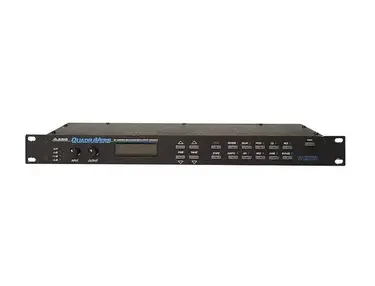

E-mu Vintage Keys was used on the track "Quincy's Lunch," according to the liner notes for State to State 2.
Find it on:

This video shows Graham Massey playing and discussing the Roland AIRA TR-8.
Find it on:


This is a community-built gear list for Graham Massey.
- Find relevant music gear like Guitars, Amplifiers, Effects Pedals, Pianos, Keyboards and Synthesizers, Microphones, Studio Equipment, Software Plugins and VSTs, Headphones, and other instruments and add it to Graham Massey.
- The best places to look for gear usage are typically on the artist's social media, YouTube, live performance images, and interviews.
- To receive email updates when Graham Massey is seen with new gear, follow the artist.
-
-
Updated
Discography
Album Credits
-
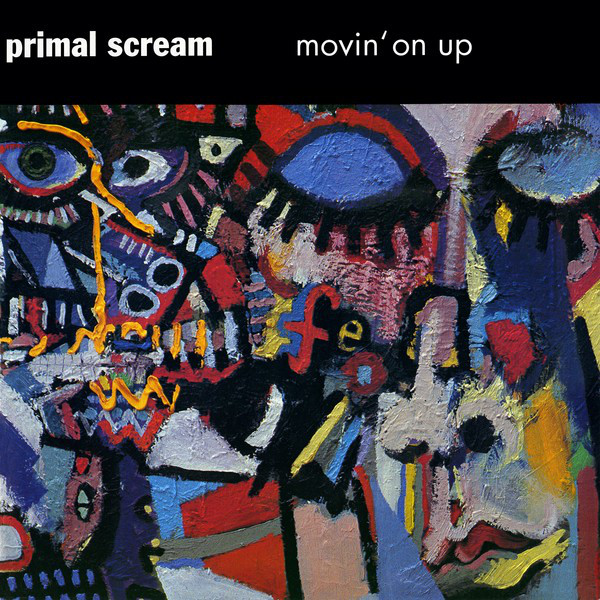
Primal Scream · 2019
Producer Programmer -
Björk · 2002
Mixing Engineer Producer -
Björk · 1997
Mixing Engineer Producer -
Björk · 1996
Producer -

Björk · 1995
Producer Programmer -
Björk · 1995
Producer Programmer -
The Sugarcubes · 1992
Producer


.webp)


